
Category The Hunger Games
The Democrat party broke the economy: Mark Levin
Ainsley Earhardt Published originally on Rumble on November 2, 2022
Mark Levin, host of ‘Life, Liberty & Levin,’ discusses how the Democratic ideology ’does not work’ on ‘Fox & Friends.’

Tell Vlad I’ll Have more Flexibility after the Election
Blog/Corruption
Posted Nov 2, 2022 by Martin Armstrong
“This is my last election. After my election, I have more flexibility.” – President Barack Obama
This damning and impeachable offense has been forgotten. Former Russian President Dmitry Medvedev nominated Vladamir Putin as prime minister, but the two men worked jointly to head Russia. Barack Obama was running for his second term in 2012 and met with Medvedev at the Nuclear Security Summit in Seoul, South Korea. After putting on a show for reporters, Obama was caught on a hot mic telling Medvedev he would have “more flexibility” for a quid pro quo deal regarding missile defenses. This is treason and an impeachable offense.
Everyone accused Trump of “Russian collusion” and working with Russia to rig the election. The public has forgotten that there is video evidence of former President Obama, who was working with then-Vice President Joe Biden, engaging in illegal activities and asking Medvedev to relay to Putin that he would be able to aid Russia once re-elected. “I understand. I transmit this (inaudible) to Vladimir.”
A sitting president admitted he would no longer be required to answer to the people after securing his final election. So while Biden acts tough on Russia, this is a small glimpse of what goes on behind the scenes.
Eurozone Inflation Reaches New High – Recession Incoming
Armstrong Economics Blog/European Union Re-Posted Nov 2, 2022 by Martin Armstrong
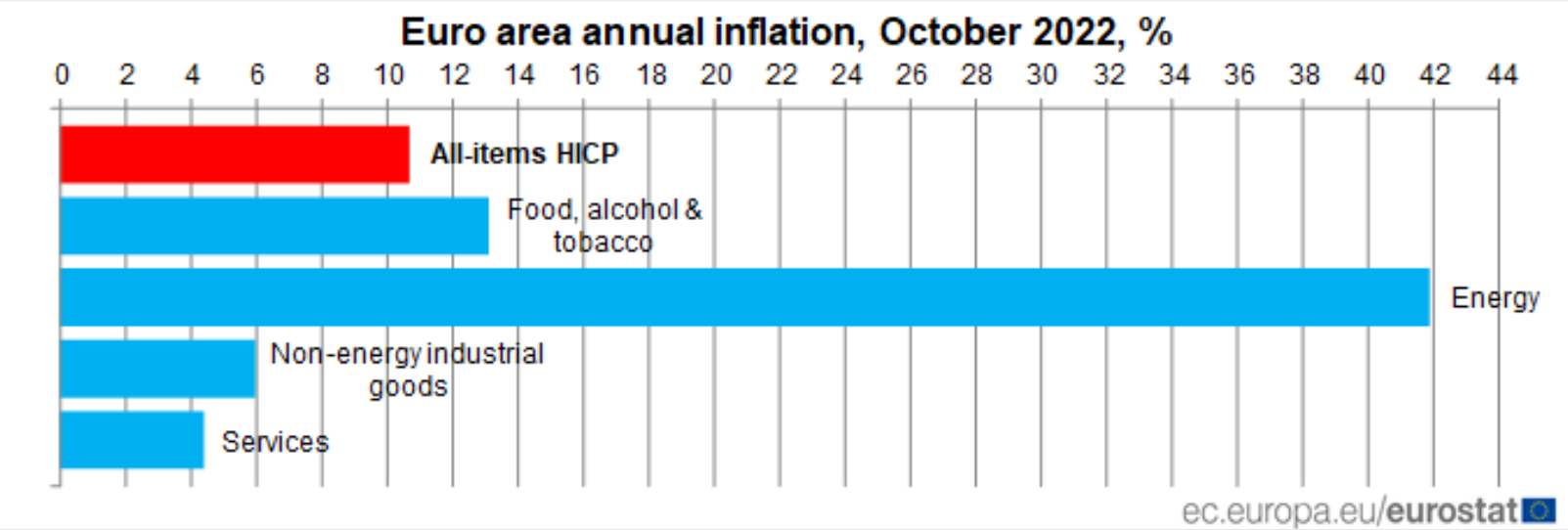
Inflation in the Eurozone hit a new record in October, according to Eurostat who reported a 10.7% rise. That marks an increase from September’s 9.9% posting and an all-time high since Eurostat began compiling Eurozone data in 1997. The European Central Bank (ECB) attempted to curb inflations with another 75 bps hike last week. The ECB knows that inflation is here to stay. They recently changed their annual inflation target for next year to 5.8% compared to the 3.6% they were predicting three months ago. They can’t release the actual figures without causing a panic.
Economic growth “slowed significantly in the third quarter of the year and we expect a further weakening in the remainder of this year and beginning of next year,” ECB head Christine Lagarde warned. Inflation is hitting some countries harder than others. Estonia (22.4%), Latvia (21.8%), and Lithuania (22%) all experienced nearly double the average inflation rate this October.
The downturn will not be equal across the Eurozone. The managing director of the International Monetary Fund (IMF), Kristalina Georgieva, is warning that half of the 19 countries in the bloc will fall into a recession. “Europe is affected more severely by the increase of energy prices. The heat on European economies is such that we actually expect half of the countries in the eurozone to experience at least two quarters of negative growth. In other words, a recession,” she said, without naming the countries,” Georgieva warned. She further stated that the IMF’s pre-pandemic projections compared to current projections differ by a loss of half a trillion euros.
“I am not going to sugar-coat it: 2023 will be tougher than 2022. Next winter for Europe may be even harsher than this winter,” she declared. “Why? Because European policymakers acted very swiftly to fill gas storage. If conditions remain as they are with Russia not providing gas to Europe, how is this gas storage going to be filled next year?”
Another question comes to light – can Europe remain untied amid a serious recession? The ECB will use the same strategy in an attempt to fix the broken system for the entirety of the Eurozone instead of looking at each individual economy. Let’s not forget that deeply indebted countries will only face higher costs that they likely will not be able to repay. The ECB dug its grave in 2014, and they do not have the tools to handle the current crisis. It is easy for Europe to appear as a united front when there is peace and prosperity. The real test will come when everything crashes down, and fairness goes out the window.
Biden Says There are 54 States – not 50 – Get with it folks!
Armstrong Economics Blog/Politics Re-Posted Nov 1, 2022 by Martin Armstrong
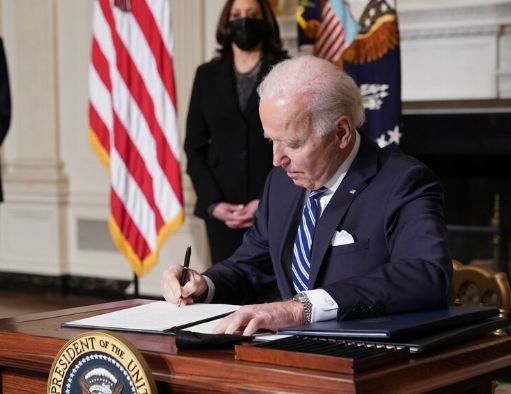
President Joe Biden has once again raised the question if he is mentally competent to lead the nation as he pushes us into World War III. At a campaign rally in Pennsylvania, Biden declared that there are “54 states” in the United States despite the fact that there are only 50. Obviously, since Democrats reject any claim about his mental capacity when he signs whatever they put in front of him, so he must be assuming Ukraine is a state given all the money he sends them, Britain, and Germany for they do whatever the US instructs them to do, which merely leaves the 4th being a mystery.
Biden Tweets Energy Policy – Lower Oil Prices and Increase Production, or He Will Raise Taxes and Increase Regulation
Posted originally on the conservative tree house on November 1, 2022 | Sundance
Joe Biden does not write his tweets, that is certain. However, whoever is writing on his behalf sure has an odd way of promoting administration energy policy.
In a Tweet last night [link here] Joe Biden demands oil companies’ lower prices and increase production, or he will raise their taxes and increase regulation:
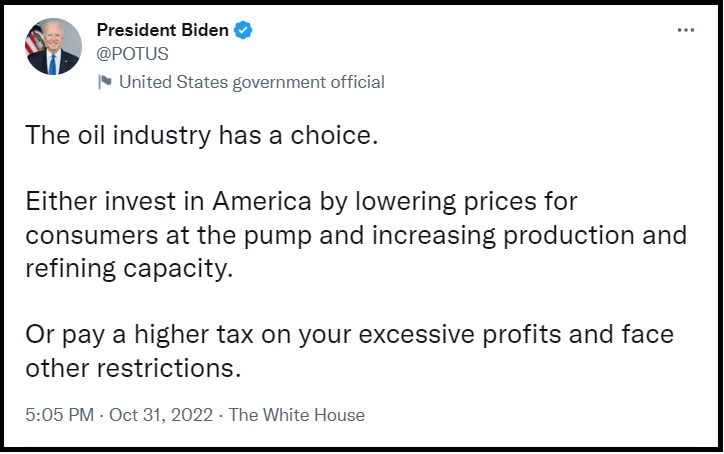
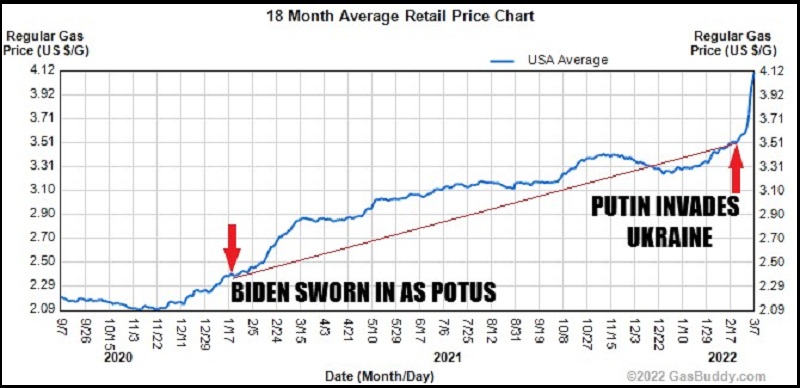
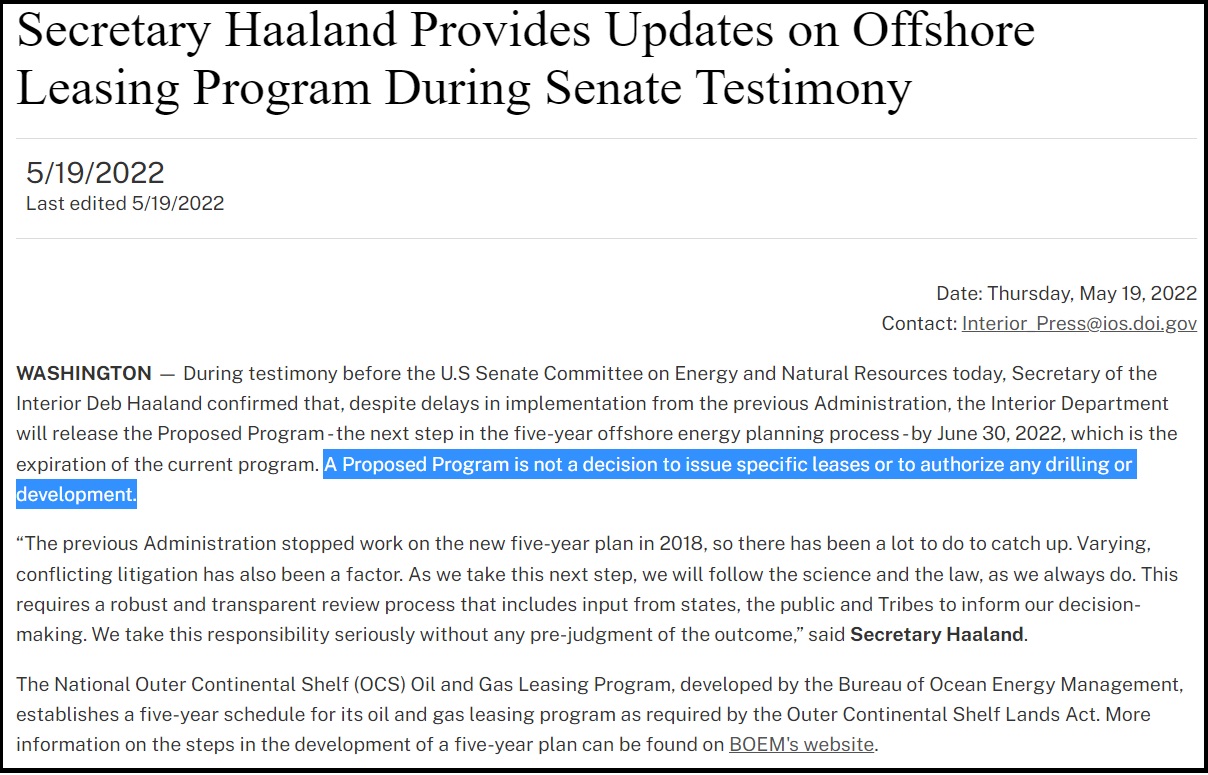
In essence, lower the prices and increase production or Joe Biden will increase the prices and lower production. How does this make sense?
The Polls Are Crazy
Armstrong Economics Blog/Politics Re-Posted Nov 1, 2022 by Martin Armstrong
COMMENT: Marty: I received an email from Barack Obama today (subject line: “My promise to you”) letting me know that I have an opportunity to support the Democrats in the upcoming election. It also said, “You are receiving this email because you supported the DNC in the past.” I’m Canadian. I’ve always lived in Canada. And I have certainly never supported the DNC. Curious marketing strategy.
JH
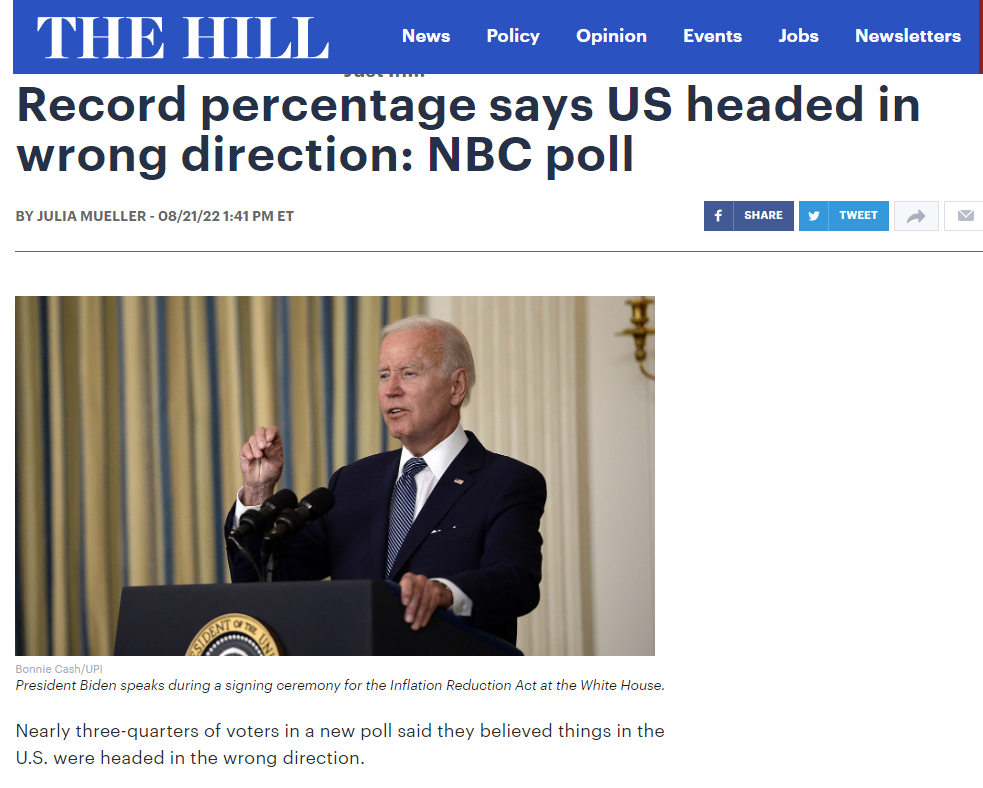
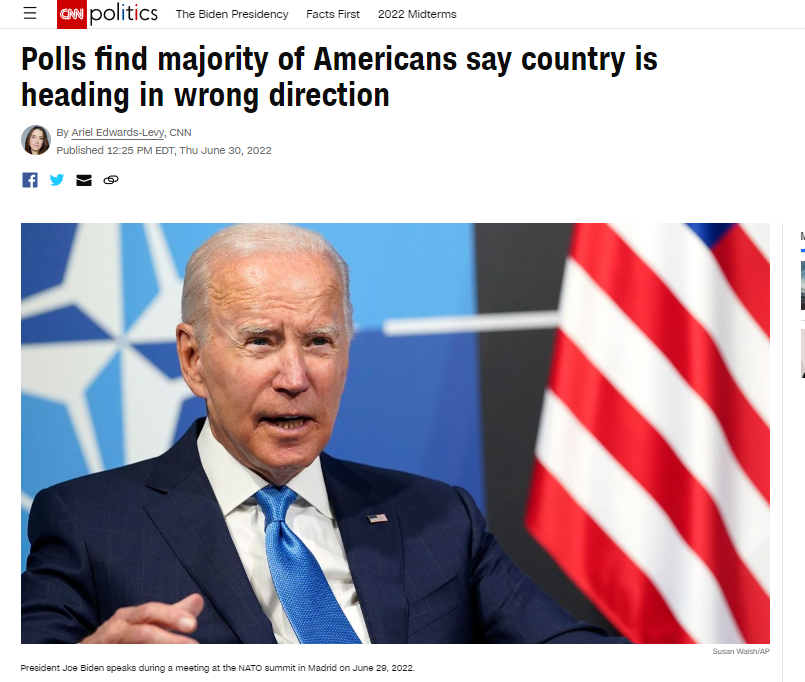
REPLY: I get them too. I was wondering if they hacked the Republicans, T-Party, or whoever got my email. This is not going to be an election that will ever be accepted regardless of who wins. With the polls showing still that over 70% of Americans think the country is headed in the wrong direction under the Biden Administration, it is hard to see how the Democrats could win anything. So, with the computer should massive civil unrest into 2023, I do not think we are headed into peace and tranquility.
A Nation Divided Cannot Stand
Armstrong Economics Blog/Politics Re-Posted Oct 31, 2022 by Martin Armstrong

QUESTION: What do you think about the attack on Pelosi’s husband?
GH
ANSWER: While the media is calling it right-wing fringe and their old standby QAnon, that is just the standby explanation. However, I would suspect that it may have been targeting him because of all the inside trading claims that have involved the Pelosis. The real problem here is that the country is becoming way too divided. Both sides are going to be at risk I fear after the election for I think you will find that neither side accepts the result. Violent attacks like this are outrageous and they will only fuel the divide even more. This is part of the civil unrest the computer is projecting and I fear this will only get worse in 2023. Politicians are supposed to represent the country – not one group pitting them against another. Unfortunately, this is just part of how empires, nations, and city-states collapse. Just look at how divided this is now. Post-2032 will look like a whole different political landscape.
It was Abraham Lincoln who said, “a house divided against itself cannot stand.” That was over slavery. This time it is over Marxism relying on climate change.
Public Confidence in Russia is Down
Armstrong Economics Blog/War Re-Posted Oct 31, 2022 by Martin Armstrong

The world forgets that war only benefits a select few who safely sit in their ivory towers while the general population suffers. Antidepressant prescriptions soared by 70% in the first nine months of 2022. The top comment online in response to this article began with, “I am sure some Russians are good, but….”
This would be akin to the world believing Americans are inherently bad due to our government’s part in Syria, Afghanistan, Iraq, etc. Newsweek reported that Russians spent $81.1 million in those nine months on antidepressants. In Moscow, 1,300 packages were delivered per 10,000 adults. So 13% of the city is being treated for depression currently. RBK stated that the increase in antidepressant usage is due to war, fears of shortages, and sanctions. Antidepressant spending also increased after Putin announced a partial mobilization of troops on September 21.
A Russian public opinion fund survey found that around 70% of the population experienced anxiety after the mobilization announcement. Around 35% of participants in this particular study reported anxiety during the week of September 18, but that nearly doubled the following week to 65%.
Not every Russian citizen is lining up to die for their country, and it is safe to say most do not want war. Human nature is the same wherever you go, but overall rhetoric has demonized Russians for simply existing.
Any aspirations for a future have been put on hold as Russians are uncertain if they will be met with the full force of NATO. Grocery stores look very different today from less than a year ago, as common brands have been replaced with obscure knockoffs and some products are no longer available. Hundreds of thousands have fled their country, but they are not warmly received. It is becoming increasingly difficult for Russians to leave their homeland, and those who are forced to stay fear what is to come.
Young Americans Cannot Afford to be Healthy
Armstrong Economics Blog/Inflation Re-Posted Oct 31, 2022 by Martin Armstrong

The Nationwide Retirement Institute conducted a study to determine how Americans are handling rising prices. Nearly one in five respondents (18%) said they had to forego a meal or grocery shopping due to inflation. Gen Z (28%) and Millennials (23%) reported higher rates of skipping meals. Over the past year, two in five households (40%) relied on food banks.
This is having an impact on health. Around 17% said that they no longer can afford healthier food options, which are notoriously more expensive than cheap, calorie-rich junk food. Fourteen percent admitted that they canceled or postponed plans to see a doctor, and 11% skipped out on their annual physical altogether due to the costs involved. An alarming 10% said that they are unable to afford their prescription medication. The younger generations like Gen Z (17%) and Millennials (19%) said that they cannot afford mental health care.
Staying healthy has become a luxury, as 14% of respondents had to downgrade their health insurance plans. Again, Gen Z (23%) and Millennials (20%) have been forced to sacrifice more than other generations. These two generations are also priced out of the housing market and strapped with debt. They are less likely to start families and are worse off than their parent’s generation. This will create a ripple effect as people who are unable to meet their basic needs will struggle to be productive members of society.
 Centinel2012