Thomas Sowell on Intellectuals and Society


Published on Dec 16, 2009

SUBSCRIBE 114K
The author of more than a dozen books, Dr. Sowell is now a senior fellow at the Hoover Institution. In his newest work, Intellectuals and Society, he will discuss why so many disasters of our time have been committed by experts or intellectuals. You may remember FDRs Brain Trust which according to later studies is a prolonged the depression by several years. The wiz kids at the pentagon under McNamara who managed to mess up the Vietnam War, you can run through an impressive list of things, of disasters brought about by people with very high IQ


Dan Britt – Orbits and Ice Ages: The History of Climate


Published on Feb 8, 2012

SUBSCRIBE 33K
Another lecture in IHMC’s award winning lecture series. http://www.ihmc.us Climate change has become a major political issue, but few understand how climate has changed in the past and the forces that drive climate. Most people don’t know that fifty million years ago there were breadfruit trees and crocodiles on the shores of the Arctic Ocean, or that 18,000 years ago there was a mile-thick glacier on Manhattan and a continuous belt of winter sea ice extending south to Cape Hatteras. The History of Climate provides context of our current climate debate and fundamental insight how the climate works. Dr. Daniel Britt is a Professor of Astronomy and Planetary Sciences at the Department of Physics, University of Central Florida. He was educated at the University of Washington and Brown University, receiving a Ph.D. from Brown in 1991. He has had a varied career including service in the US Air Force as an ICBM missile launch officer and an economist for Boeing before going into planetary sciences. He has served on the science teams of two NASA missions, Mars Pathfinder and Deep Space 1. He was the project manager for the camera on Mars Pathfinder and has built hardware for all the NASA Mars landers. Britt currently does research on the physical properties and mineralogy of asteroids, comets, the Moon, and Mars under several NASA grants. Honors include 5 NASA Achievement Awards, election as a Fellow of the Meteoritical Society, and an asteroid named after him; 4395 Dan Britt. He is currently President of the Division for Planetary Sciences of the American Astronomical Society. He lives in Orlando with his wife Judith. They have two sons, ages 16 and 21.

Trade Deficits & the Confusion Caused by the Methods used to Calculate it


QUESTION: Marty, just reported this past week America’s trade deficit hit a record $891 billion while, in the same week, unemployment report fell to 3.8%. Does this refute the conventional economic belief that trade deficits take away jobs and output?

Cheers, TGM

ANSWER: What is reported as trade is not simply trade. The numbers are all screwed up. It tracks actual goods as well as services and that includes capital flows. The accounting system is set up in such a way that capital investment buying bonds, stocks, and real estate go into the Capital Account. However, all dividends and interest earned by a foreigner on US assets then are accounted for in the Current Account. It is the Current Account that people report as trade which is not correct because it also includes interest and dividends. Thus, the more foreigners invest in a country, the more it will erroneously appear to be expanding the trade deficit as interest and dividends flow back on their capital investment.

Scottish Independence & BREXIT


QUESTION: Marty,
Big fat question for you regarding the UK and the SNP.
You seemed to support Scotland breaking away from the UK in 2014, but since then you’ve voiced your concern on the socialist policies of the SNP. I share that concern, as do a growing number of people here, in not so sunny Scotland.

Unfortunately, SNP seems to have introduced a few more taxes into the system in the last year. One of which is that the higher tax band in the rest of the UK has been raised to 50K, whilst in Scotland, it has been kept at 43k. The other latest tax is that if the company you work for have parking spaces and you drive to work and park your car there, you can be hit with around £450 per year.

Looking back on the history of UK general elections, the SNP hit a high point in the October 1974 general election, polling almost a third of all votes in Scotland and returning 11 MPs to Westminster. They then dropped to under 6 seats till the 2015 election, where they went from 6 seats (in 2010) to 56 in 2015. You could argue the rise to 56 seats was due to the fact people either wanted independence or voted for them as they were happy to be led by them in Scotland but not wanting to be independent. They dropped to 35 seats in 2017, primarily due to people being fed up with the independence record being regurgitated over and over.

To summarise then, the large rise in ’74 followed by a big drop in its support at the 1979 General election, followed by a further drop at the 1983 election. Will we see this again? Big rise in 2015, followed by a large drop in 2017 and the same again in the next election?

Personally, I think the tax rises will take a big toll on their support and they will get hammered in the next election.

Many thanks for your thoughts and wisdom.

G


ANSWER: I love Scotland. Every time I flew in to Edinburgh to do an institutional conference for a day, I was introduced as a 7th generation Scotsman – never an American. The separatist movement is separate and distinct from the SNP, which is one step to the right of communism. I was living in London when “Braveheart” came out. I remember going to the movies there, and on the way out everyone was saying how some member of their family was Scottish.

That said, the SNP socialist policies are brain dead and this idea that they must remain part of the EU is beyond stupidity even for someone who is dead mentally. There is absolutely no economic validity to remaining inside the EU. The British have NEVER won anything of significance in the European court. What will it take to make the British realize that they are not really welcome in the EU for resentment remains that it was the Brits who saved Europe from both Napoleon and Hitler.

Ann-Medal-Union-Scotland - 2The Scots voted for independence in a referendum which was clearly rigged by London and the EU. But that was the prelude to BREXIT, which the government is doing its best muck up again over this unwarranted fear over trade. The economy will turn down very hard in Europe in 2019 into 2020 before bottoming. This will alter the politics ahead rather significantly. In Brussels, they will be blaming the Brits, while the Italians will begin to voice their opinion that the Brits got it right after all.

Cyclically, the United Kingdom that was first created back on May 1st, 1707, under Queen Anne (1707.331). On the 309.6 year cycle of the Economic Confidence Model, we arrived at 2016.9315. The BREXIT vote took place on June 23rd, 2016 (2016.476). A referendum on Scottish independence from the United Kingdom took place on Thursday, September 18th, 2014 (2014.715). That meant the Scottish vote was 307.384-years from inception. This was cyclically a confirmation that BREXITwould, in fact, succeed in 2016.

However, the true Scottish Separatist/Nationalism Movement actually began back in 1934 during the economic hard times of the Great Depression. It was in 1934 when the Scottish National Party (SNP) was founded, making its primary goal the future independence of Scotland. The party gradually began gaining ground after World War II, which was propelled by the discovery of rich oil resources in the North Sea during the 1970s. Then in 1974, the SNP won 30% of the Scottish vote and 11 seats in Parliament after campaigning on the slogan “It’s Scotland’s oil!”

Of course, the first major step toward Scottish independence came in 1995. The first and greatest reason for creating a Scottish Parliament in 1999 was that the people of Scotland demanded and deserved the human right to democracy. The UK Government’s white paper on Scottish devolution, Scotland’s Parliament, was published in July 1997. It set out proposals for a new Scottish Parliament and drew heavily on the Scottish Constitutional Convention’s 1995 (see the report: Scotland’s Parliament, Scotland’s Right).

A referendum was held on September 11th, 1997 to ask the Scottish people whether they wanted a Scottish Parliament and whether it should have tax-varying powers. In that 1997 referendum, the Scots voted in favor of devolution of powers, which meant that although Scotland remained part of the United Kingdom, its government gained a broad range of new powers. It would have the power to set its own tax rates as well. Among these new powers was also the right to control education and healthcare. This lead to the creation of a Scottish Parliament for the first time since it was dissolved in 1707. At the peak of the economy in 2007, the SNP won an upset victory in the Scottish parliamentary elections, ending some 50 years of Labour Party dominance. Then the SNP leader Alex Salmond became the first elected minister of Scotland. He won a second term in 2011 and was able to use his party’s historic mandate to secure approval for a referendum on independence for Scotland.

It took just two 8.6-year cycles from 1995 to the beginning of the separatist movement in 2012. In 2012, Salmond and British Prime Minister David Cameron signed an agreement to hold that referendum in 2014. Subsequent negotiations lowered the voting age in the referendum for 16 and determined that it will pose a single question: “Should Scotland be an independent country?”

The problem the SNP faces is they have mixed up independence, socialism, and remaining in the EU rather than the UK. In this regard, they have truly lost their way and do not comprehend either trade of the fact that socialism is collapsing right in front of their face.


How Did Socrates do at the 1929 High?


QUESTION: You said Socrates has been back tested. What did it write technical the day of the high in 1929?

PO

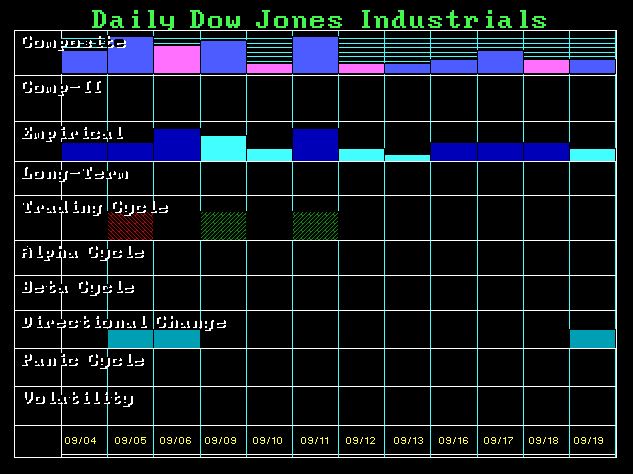
ANSWER: It has learned from all the data globally. Here is the technical analysis it wrote for 9/3/1929 without human editing:

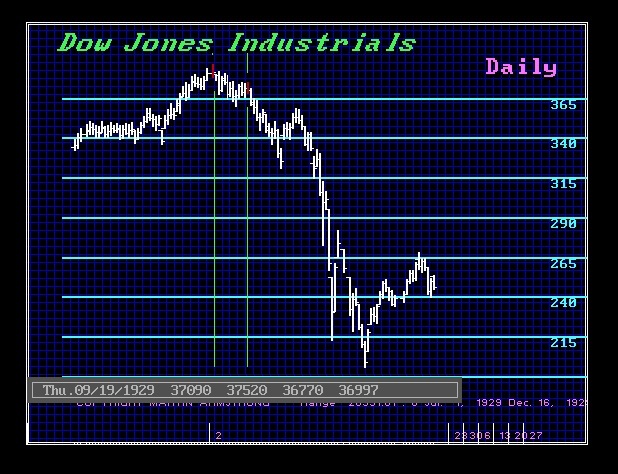
The market scored a new major high on 09/03/1929 which is up 4 days from the last cyclical low. The broader rally has been over the past 17 days with a rise of 14%. This market has exceeded intraday 2 of three projected resistance points and it has closed below 2 others. Our underlying pivot providing some support lies at 37806. At the moment, the projected extreme resistance stands at 39120. Given the closing was weak, a lower opening followed by a break of this low of 37823 would warn that we may have an important temporary high in place as of this session.

The Uptrend Channel Resistance stands above the market at 39415 while the bottom of this Channel rests at 37966. Meanwhile, resistance provided by the top of this Channel will stand at 39648 for the next session.

The view from our Energy Models, the fact that the market is making new intraday highs in price and our Energy Models are declining, this warns of a divergence, which has been going on for the past day. Therefore, this immediate rally may prove to be unsustainable when such a divergence appears.


Here was the array. Note that it called for a 2-day correction into the 5th a bounce with a back to back Directional Change. There was a low on the 13th with a 4-day rally/consolidation and the 19th was the next Directional Change. The Panic then began on that Friday 20th. The Directional Changes are pretty good indicators.


Note: The Alpha cycles have been combined in the new arrays for display purposes. They were cycles only from high. The Beta Cycles were derived exclusively from lows

Food Riots of 1795 Due to Climate Change


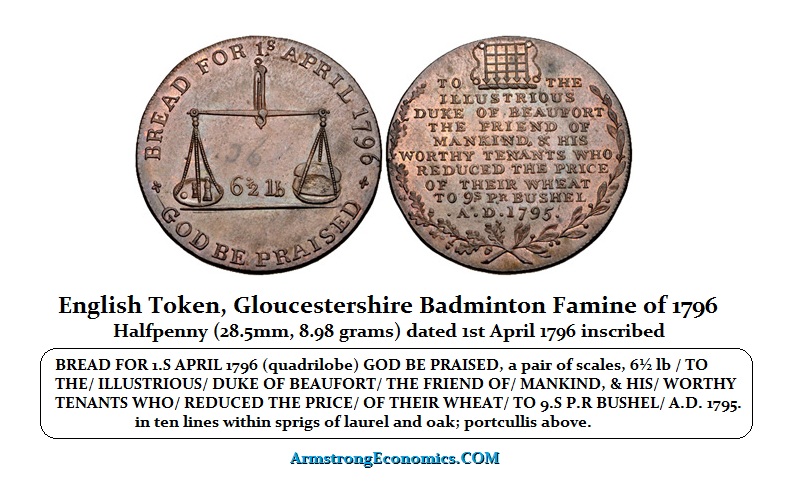
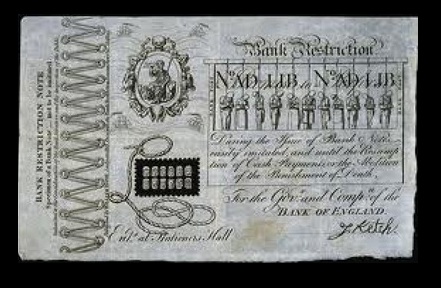
The British had a long tradition of striking tokens for political purposes. There was Climate Change back then as well and it resulted in massive riots over shortages of food. The British also even issued a protest Bank of England note that stated the mere possession of a counterfeit was punishable by death. The protest was people who unknowingly accepted a bank note that was counterfeit were being routinely hanged, but the law also meant that all their assets were then forfeited to the Crown and any family was thrown out on the street. Therefore, there has been a wealth of private tokens issued by the British to record various political issues over the centuries.
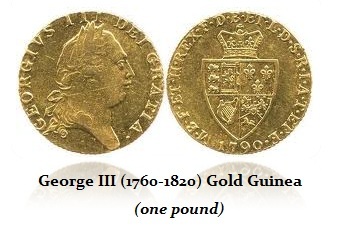
On February 1st, 1796, the weather had turned bitterly cold and crops had been failing. There were food riots emerging over the price of bread which culminated in in an assault upon King George III and Queen. In fact, Queen Charlotte was struck by a stone as she and King George return from a trip to the theatre.

It was during the extremely cold winter of 1794-1795 where even the Thames River froze over and temperatures reached -6 (21c). A deep freeze began on December 20th, 1794, and continued until February 7th, 1795. Even when the thaw came, this resulted in major flooding of the rivers which devastated the surrounding farmlands. The weather resulted in a great famine.

According to the Geast chronicler, the government had to act providing the poor a public subscription that provided bread and coal to be sold at a subsidized price. In some exceptional cases, it was provided free only when it was obvious the people could not pay. The number of deaths between 1794 and 1795 more than doubled because of the weather and crop failures. The death records of this period show that as food became scarce, disease spreads. About one-third of the deaths are attributed to disease rather than just hunger. Clearly, when there is malnutrition, diseases such as Small Pox spread rapidly.

Nevertheless, as spring and summer arrived during 1795, it never really warmed up very much. There were recorded frosts well into June of 1795. Countless animals also died from the bitter cold as the grounds froze and nothing grew. The wheat harvest of 1794 had been very poor, for the summer showed extreme volatility in temperature. As we see today, the summer of 1794 was very hot and dry resulting in crop failures during that season due to the lack of rain. Today, they would call this proof of Global Warming when in fact historical records reveal such extreme swings between heat and cold are not modern events.
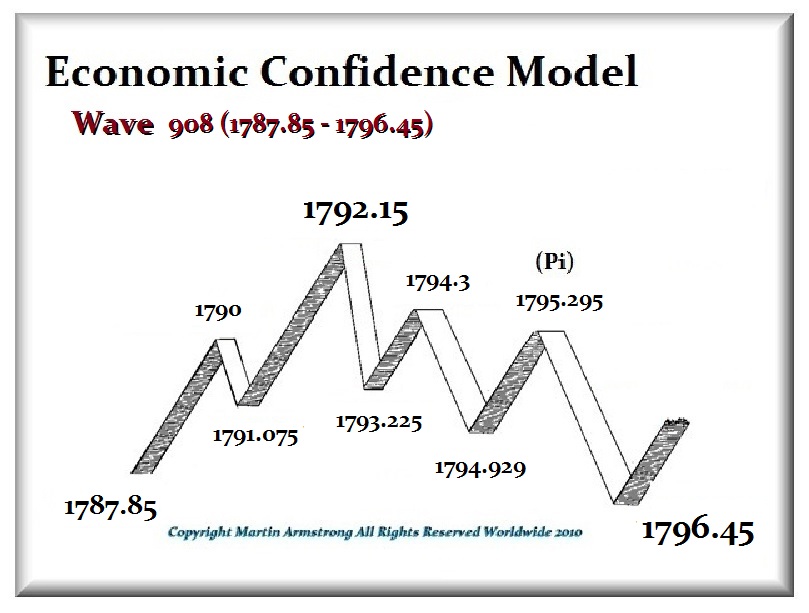
The prices of all agricultural and livestock products rose dramatically.  Then, the extreme cold and floods of the following winter affected crop production and prevented farmers from undertaking fieldwork. The bad weather during the spring of 1795 was also detrimental to agricultural production. A sack of flour costing £2.4s. [£2.20] in 1794 cost £4.3s. [£4.15] in 1795. Food prices soared because of the weather.

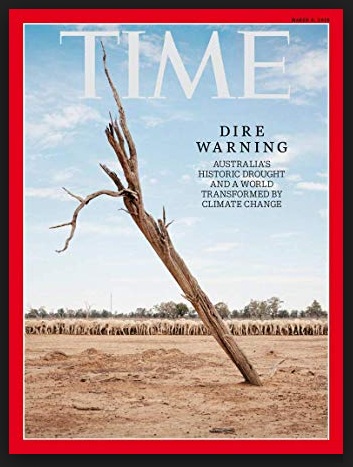
Our models are warning that we DO NOTface Global Warming, but these same dramatic swings in temperature with colder winters and dryer summers. TIME Magazine on March 4th, 2019, ran a piece on the Australian drought and attributed it, of course, to human-caused climate change. The exact same patterns of the 1790s demonstrate that this is a natural cycle, not unknown to history, and it must be understood what is really happening or millions of people will die waiting to people to end airfare and stop driving their cars and politicians to find someone else to tax.

Great Britain had been at war with Revolutionary France since 1793, therefore much of the wheat that was produced was bought by the government to supply the army and navy. Moreover, the war at that time prevented the importation of grain into Britain by ship for they would be attacked in the war. This combination of war and weather brought the country to the brink of famine and food riots. By the summer of 1795, the price of bread had doubled at around 1s [5p] for a 4lb loaf. The weekly wage of a skilled worker was around 10s [50p] per week. The lower skilled laborers were paid as little as 5s per week. We can see that bread at 1s could be 20% of the weekly wage.

As prices soared, millers would hoard grain in anticipation of continually rising prices. Why sell now when you could get more next week? We see the same thing take place during storms. Prices soar and even things like air tickets and gasoline rise in front of a hurricane. This is human nature. It always takes place despite laws against price gouging in a crisis.

During 1795 and 1796, the shortages, high prices, and profiteering practices all combined to produce food riots throughout the country. There was a riot involving about 200 people that erupted in Tewkesbury, England, on Tuesday, June 24th, 1795. Flour was waiting at Tewkesbury Quay to be transported by water to Birmingham where prices were even higher. On the following day, Henry Fowke, the Town Clerk of Tewkesbury, wrote to the Home Secretary, Lord Portland, reporting the event.

My Lord

I do myself the Honour of addressing Your Grace on the subject of extreme Rioting at this place yesterday. Several Quantities of Wheaten Flour were forcibly taken out of the Barges at the Quay & carried off by divers Persons, chiefly Females – The civil force was convened with all possible Dispatch, & after much difficulty & confusion, the Riot was suppressed, & the ringleaders committed to the county rather than the Borough Goal, as more secure – The appearance of the Town this morning, I have the pleasure to say, is pacific. I have thought it my Duty to acquaint Government, through Your Grace, of this transaction. With the greatest respect, I am My Lord, Your Grace’s most obedient servant

Henry Fowke
Town Clerk of the Borough of Tewkesbury
Tewkesbury 25th June 1795

(Home Office: Domestic Correspondence, George III (Letters & Papers), National Archives HO 42/35 (online).)

Many people were arrested and the government feared there would be yet another riot in an attempt to free them from prison many of whom were women. As a response, the government transported the prisoners to Gloucester. Many of those detained women and the city’s gaol register records the details of the charges and names four of the prisoners. They were charged effectively as terrorists. They were charged with inflicting the terror of his Majesty’s subjects and in breach of the peace. They would remain in prison until trial in late July. Many were able to carry off sacks of flour which had been the property of a James Lamb who was presumably the buyer in Birmingham rather than the seller in Tewkesbury.

As is said, starve a man and the most honest soul will become a thief.

The Hong Kong Dollar Peg – When Will it Break?


Hong Kong’s intervened to support the Hong Kong dollar for the first time since August 2018 after the exchange rate fell to the lower end of its trading band against the greenback. The Hong Kong Monetary Authority bought HK$1.507 billion ($192 million) of their own currency during London and New York trading hours on Saturday.

The Hong Kong dollar peg to the US dollar has come under a lot of pressure. The problem they face is simply that such a peg also imports the inflation or deflation of the currency to which a peg is created. As the Greenback rises in the political-economic sea of international finance, it will become impossible to hold the peg.


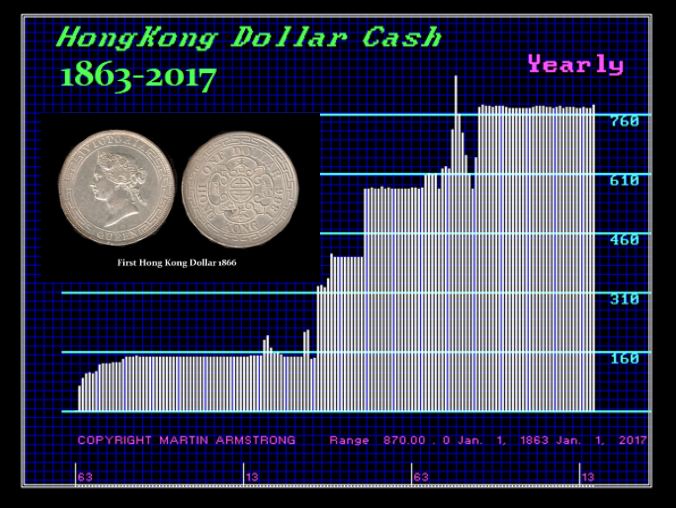
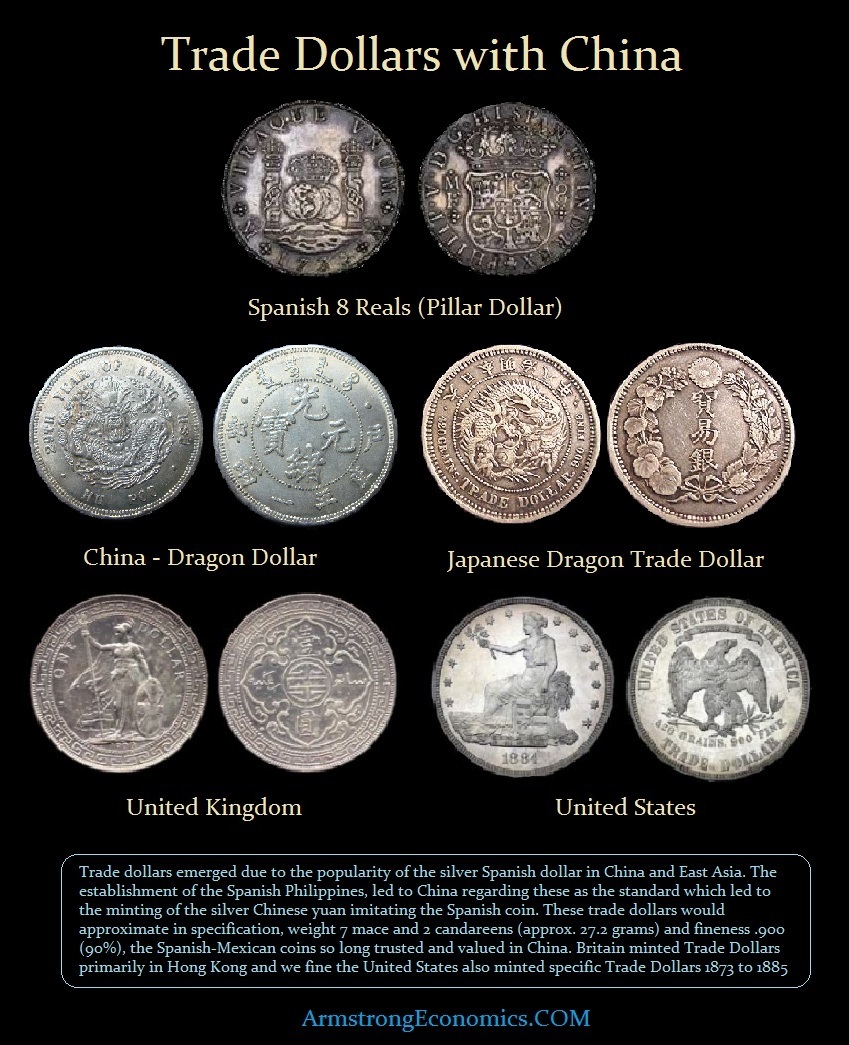
In 1863 the Hong Kong Government declared the silver dollar – then a kind of international currency issued by many nations – to be the legal tender for Hong Kong, and in 1866 began issuing a Hong Kong version of the silver dollar. The silver standard became the basis of Hong Kong’s monetary system until 1935, when, during a world silver crisis, the Government announced that the Hong Kong dollar would be taken off the silver standard and linked to the pound sterling at the rate of HK$16 to the pound.

In 1972, the Hong Kong dollar was pegged to the U.S.dollar at a rate of HK$5.65 = US$1. … Between 1974 and 1983, the Hong Kong dollar floated. On 17 October 1983, the currency was pegged at a rate of HK$7.8 = US$1, through the currency board system.

The problem Hong Kong will face is as the financial crisis in Europe erupts, this will push the Greenback higher. If Hong Kong keeps desperately trying to hold the peg, they will import DEFLATIONand turn their economy down very hard all because of international events. The models we showed at the Singapore Conference targeted 2019 for an important turning point.