Leaving The EU’s Customs Union Is The Only Logical Step For A Truly “Global Britain”


Tyler Durden's picture

Authored by Vincenzo Scarpetta via Open Europe,

As UK Prime Minister Theresa May prepares to trigger the Article 50 EU exit mechanism on Wednesday, Open Europe has published a new report, entitled, ‘Nothing to declare: A plan for UK-EU trade outside the Customs Union.’

The study concludes that leaving the EU’s Customs Union is the only logical step for the UK to pursue an independent trade policy and achieve a truly ‘Global Britain’ outside the EU. Open Europe assesses different models of collaboration outside a customs union, and argues that the UK and the EU should aim for full cooperation on the practicalities and administration of customs as part of a comprehensive UK-EU free trade deal.

A dozen key points on customs

  • The UK should leave the EU’s Customs Union (EUCU). The UK Government has stated its intention to leave key parts of EUCU (the Common External Tariff and the Common Commercial Policy). Open Europe’s assessment is that leaving these and EUCU overall is correct. Brexit means the UK must be able to shape its own trade policy. It can only do so outside of EUCU.
  • The UK should not seek a ‘half-in, half-out’ arrangement, which would be the worst of all worlds. The UK should leave EUCU entirely to maximise opportunities. Prime Minister Theresa May has suggested that she is open to being an “associate member” of EUCU or remaining a signatory to elements of it. Open Europe believes that, while it is sensible to keep an open mind, no ‘half-in’ option is better than being fully out. Nonetheless, the UK should consider retaining membership of some relevant conventions.
  • It is in both the UK’s and EU’s interest quickly to secure full cooperation on the practicalities and administration of customs as part of a comprehensive Free Trade Agreement (FTA). Such an agreement could be a chapter in a UK-EU FTA or an accompanying, discrete customs facilitation agreement. The EU already has agreements on customs facilitation with non-members, including Switzerland and Canada. A comprehensive UK-EU FTA will ensure the continuation of tariff-free UK-EU trade and minimise customs delays.
  • There will inevitably be a degree of cost to the UK economy associated with leaving EUCU.Some costs will be one-off adaptation costs (e.g. technology investment which may have benefited the UK anyway); other costs will be on-going frictional costs to UK-EU trade. These costs can be minimised and may be offset by trade liberalisation with non-EU partners.
  • The UK must take action now to minimise costs and seize new opportunities. Some steps are unilateral, domestic reforms; others are bilateral with specific EU members (above all Ireland); other negotiations need to happen at EU level, or indeed more broadly.
  • There will also be costs to the EU economy and these costs will be much greater if full customs cooperation with the UK is not secured. The costs to the EU economy will be greatest in those countries and industries which export the most to the UK. If comprehensive customs cooperation and an FTA are secured, these costs will be minimised.
  • There are challenges and opportunities from leaving EUCU but these vary from sector to sector, and even between companies in the same industry. Individual companies will need to look carefully at their supply chains and consider making adjustments where appropriate.
  • Free trade does not require a customs union and over half of UK trade happens without it.Most UK trade (51.5% in 2015) is not with the EU. Non-EU trade takes place without a customs union and is growing faster than trade with the EU. In 2015, the US was the largest recipient of UK goods exports (16.6%). There is no EU-US FTA, let alone a customs union.
  • Companies with complex supply chains can trade without a customs union. For example, automotive supply chains cross the US-Canada border. Both countries are North American Free Trade Agreement (NAFTA) members, but are not in a customs union. Nonetheless, leaving EUCU will challenge companies with complex supply chains. To address challenges, the UK and EU need an FTA to eliminate tariffs, to agree liberal cumulation so more products transformed in either the UK or EU can be considered as originating anywhere else in the UK or EU, and to cooperate and use technology to minimise bureaucratic delays and costs.
  • The UK should ‘grandfather’ – i.e. replicate – the FTAs that the EU has concluded with third countries. The UK, as an EU member, is currently party to over 30 FTAs with over 60 non-EU countries. The Canada-EU FTA, CETA, is one example. Discussions on how to ‘grandfather’ these agreements should be underway bilaterally between the UK and third countries but also need to engage the EU. Protecting these agreements will secure the freest possible trade, safeguarding existing global supply chains, and supporting growth in global trade.
  • There is an extremely strong economic case for full UK-EU customs cooperation; the question of whether it is achieved or not is primarily political as much as practical.Reaching a comprehensive UK-EU customs agreement will be technically easier than other trade agreements. As an EU member, the UK’s customs systems are already fully recognised by EU members and the UK already applies EU product standards. Businesses across the EU are used to tariff-free trade – so there will be less pressure to defend specific industries.
  • The UK and EU should consider a transition period to extend the UK’s EUCU membership for one or even two years. Theresa May has suggested “phased implementation” for new arrangements on customs systems. The two-year Article 50 timetable is a challenging limit for negotiations. A transitional period would increase chances of a favourable deal for both sides, and minimise potential disruption to UK and EU business. It would also give governments and business time to adapt, including by upgrading customs procedures and IT. Agreement on a transition period is most useful early in the Brexit negotiations to reduce the risk of companies making rushed decisions on changes.

The extended version of the executive summary is available here.

To read the full report, click here.
California’s Congresswoman Maxine Waters Calls for Trump Impeachment Because Putin Invaded Korea?


The long list of reasons Maxine Waters says Trump should be impeached simply reflect why she is totally incapable of being anyone’s representative in Congress. She said Putin supplied the bombs for Aleppo that killed children. First of all, that took place under Obama before the election, and it is plainly documented that it was the USA supplying arms to al-Qaida and the Obama Administration tried to distance itself when mass graves were discovered where the rebels were killing numerous people with US supplied arms. How can you impeach Trump for something that took place before the election? The mass graves were discovered December 26th, 2016.

Then, Waters says Trump should be impeached because Russia hacked the DNC and exposed all the lies the Democrats were fostering. Obama himself said Russia did not hack the voting machines. Obama  plainly said“We stand behind our election results, which accurately reflect the will of the American people.” Assuming Russia did the hacking of the DNC, no Democrat ever said all the emails exposing the lies were false. The hack simply showed the truth. If the Democrats keep talking about Russia hacking the DNC enough without admitting there was no hack of voting machines, they hope to make people think Russia actually changed the vote.

But the most insane part is she then said Trump should be impeached because Putin invaded Korea. Sorry, Putin did not invade Korea and if he did, the West would probably cheer if it was the North. She is just totally incompetent to serve in Congress. You cannot impeach a president for something he may have done prior to office. She confuses her timelines and obviously has no sense of geography. This is the quality of people California sends to Washington along with Dianne Feinstein and Nancy Pelosi.

ECB under Pressure to Reverse Direction


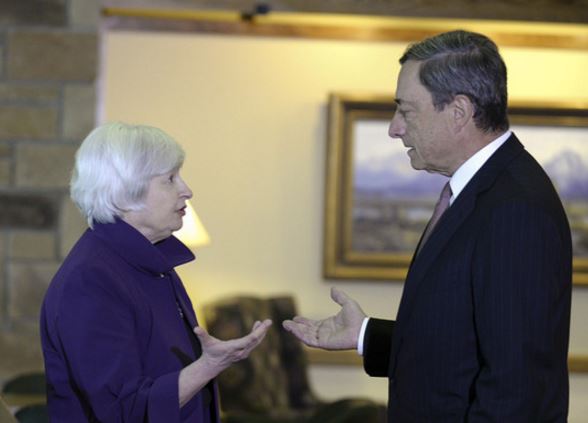
yellen-draghi

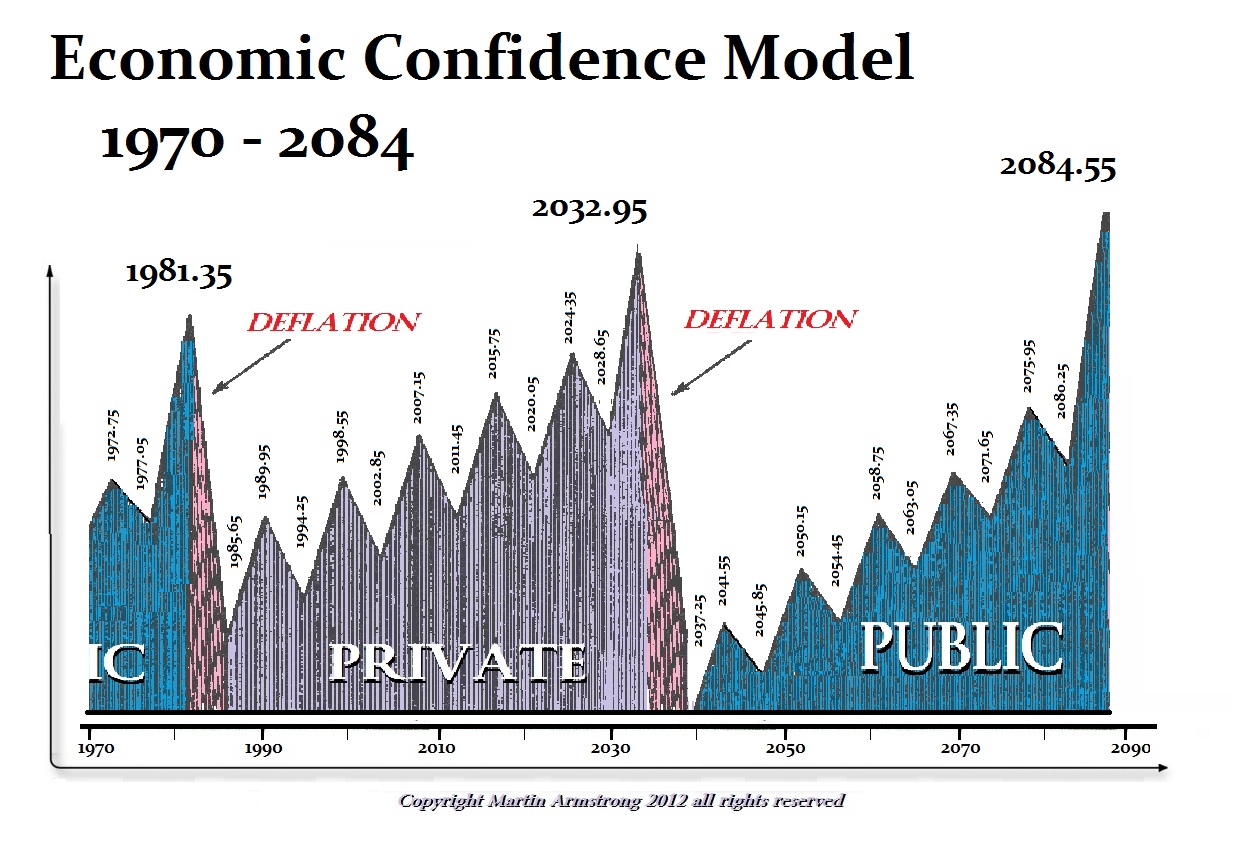
The European Central Bank (ECB) is coming under fresh pressure to increase interest rates, not merely from the standpoint that the Federal Reserve has been doing since the turn in our Economic Confidence Model 2015.75, when the first rate hike took place in December 2015. While there was little immediate reaction to the Fed’s decision to raise rates once again, Mario Draghi is struggling to explain his failed policy of negative rates that have utterly failed to reverse the downward pressure in the economy of Europe since 2008.

russia-capital-flows-10-13-2016


Euro outflows 2016

The latest data coming from the ECB and Eurostat is causing Draghi sleepless nights and cold sweats. Non-euro area investors have been net sellers of Eurozone debt securities in 2016 for the first time since the introduction of the euro. The total net outflows of investment capital from the Eurozone debt securities amounted to €192 billion in 2016, up from €30 billion in purchases during 2015. Once the ECM turned October 1st, 2015 (2015.75), indeed everything in global capital flows shifted right on time.

ECM-1970-2084

The bulk of the net sales have been government debt securities totaling €116 billion. Our model, on the other hand, has been forecasting the shift away from government debt to private sector assets. The latest data from Eurostat confirms that that forecast was also correct. The non-euro area investors remained net purchasers of only Eurozone equities, but that did decline by about 50% to from €268 billion in 2015 to €126 billion in 2016.

The Real Reason Governments are Blaming Youtube for Terrorism 


Governments do not and never had appreciated “Free” Speech; and our founders knew that and its why we have the 1st and 2nd amendments.

WW III Is Near as Russia Is Militarizing Rockets to Take Out US Satellites Leaving Amerca Defenseless 


It’s obvious to anyone with military training that in today’s world, if there was a war, the wind would be the one that dominated in space. Take out your opponents satellites and GPS and you are finished.

Occam’s Razor – If You Listen To Every Nunes Public Statement in Sequence…


Source: Occam’s Razor – If You Listen To Every Nunes Public Statement in Sequence…

The Case Against FBI Director Comey Grows – Intel Committee Chair Devin Nunes Explains Need for White House SCIF Visit…


Source: The Case Against FBI Director Comey Grows – Intel Committee Chair Devin Nunes Explains Need for White House SCIF Visit…

RyanCare Failure Means Trump Wins BIGLY – What Fake News Won’t Report | Mike Cernovich Periscope


Published on Mar 24, 2017

MAGA Mindset: Making YOU and America Great Again http://amzn.to/2dmvXlM
Gorilla Mindset: How to Control Your Thoughts and Emotions to Live Life on Your Terms – http://amzn.to/2bV3yRt

https://twitter.com/Cernovich
https://www.periscope.tv/Cernovich
http://www.dangerandplay.com/

This is a mirror channel, the official channel of Mike Chernovich is here https://www.youtube.com/user/DangerAn…
please subscribe to Mike, click the bell, to receive notifications when he goes live

SUBSCRIBE to see more similar videos
https://www.youtube.com/channel/UCw5p…

Why 60 Minutes Failed: Fake News Narrative Exposed


Published on Mar 27, 2017

MP3: http://www.fdrpodcasts.com/#/3633/why…
Soundcloud: https://soundcloud.com/stefan-molyneu…

On Sunday March 26th, 2016, 60 Minutes did a highly rated expose on Fake News: “The phrase ‘fake news’ has been used by Trump to discredit responsible reporting that he dislikes. But 60 Minutes’ investigation looks at truly fake news created by con-artists.”

While examining websites which create admittedly fictional hoax stories and Russian bots which can inflate social media statistics – Scott Pelley took aim at lawyer Mike Cernovich, in a segment which only further demonstrated the mainstream media’s dishonesty.

Link: http://www.cbsnews.com/news/how-fake-…

Freedomain Radio is 100% funded by viewers like you. Please support the show by signing up for a monthly subscription or making a one time donation at: http://www.freedomainradio.com/donate

Get more from Stefan Molyneux and Freedomain Radio including books, podcasts and other info at: http://www.freedomainradio.com

Amazon Affiliate Links
US: http://www.fdrurl.com/Amazon
Canada: http://www.fdrurl.com/AmazonCanada
UK: http://www.fdrurl.com/AmazonUK

The Plight of Mall REITs Linked to Poor Retail Market


From Crush the Street, by Joshua Enomoto

It’s one of the great contradictions of the real economy. Despite soaring job growth and surprisingly robust sentiment, the retail market continues to underperform. Even more bizarre, U.S. consumer sentiment hit multi-year record highs recently. In fact, this confidence barometer has been on the rise since 2008. If so many people are that enthused about the economy, why don’t retailers and the retail market have anything to show for it?First off, a large spike occurred in the inflation expectation index between December of last year through the end of February. That would suggest that consumers are buying products “in bulk” to avoid what they anticipate is a rise in prices. It’s not such a far-fetched idea. Ever since the Great Recession when so many families’ savings were gutted, a cynical and survivalist mentality may have proliferated. The retail market would receive a temporary boost, but over the long-term, the trend would not last.In fact, that’s exactly what we’re seeing. The last three months registered strong nominal sales for several retailers. The problem is that the total revenue is being split and allocated towards different sectors like e-commerce — these are competitive channels that simply didn’t exist 20 years ago.

Major retailers now have to compete on two fronts — the online world, and the traditional brick-and-mortars. The former is growing by leaps and bounds at the expense of the latter. Because of this dramatic shift in consumer shopping behavior, multiple companies are forced to close their doors. Why have them open and incur steep overhead costs when you can make better sales online?

retail market, mall REITs

From a business perspective, it makes perfect sense. But as more companies wake up to this trend, the retail market risks fracturing. That’s because when the big shops close for good, they eliminate the foot traffic that was once there. This siphoning inevitably spells trouble for already embattled retail real estate investment trusts, or REITs.

Mall REITs control the vast properties occupied by major shopping centers and strip malls. For decades, business was good. Anybody that wanted anything in the pre-internet era had to go to a retail establishment, and retailers were willing to pay top dollar for prime real estate. Mall REITs were making money hand over fist.

But all that changed with e-commerce. Physical location no longer carried the magnitude of advantage it once did. As consumers began buying discretionary items through their computers, the brick-and-mortars fell below their break-even point. When they closed, they took the cash flow of mall REITs with them.

The initial closures were the mom-and-pops. But when the majors started collapsing, mall REITs suddenly found themselves in a sea of red ink. And that’s exactly why so many publicly-traded variants have fallen underwater. There’s no one to pick up the slack. Worse yet, in the retail market, nobody wants to.