Posted originally on the CTH on November 1, 2024 | Sundance
On January 17, 2017, just three days before President-Trump was sworn into office, outgoing President Obama had a secret conference call with progressive media allies.
Again, this is three days before Trump took office, when the Obama White House and Intelligence Community were intentionally pushing the Trump-Russia conspiracy story into the media in an effort to disrupt President Trump’s transition to power. President Obama is essentially asking his progressive allies to help defend his administration. Part of the 20-page transcript is below:
Barack Obama– […] “I think the Russia thing is a problem. And it’s of a piece with this broader lack of transparency. It is hard to know what conversations the President-elect may be having offline with business leaders in other countries who are also connected to leaders of other countries. And I’m not saying there’s anything I know for a fact or can prove, but it does mean that — here’s the one thing you guys have been able to know unequivocally during the last eight years, and that is that whether you disagree with me on policy or not, there was never a time in which my relationship with a foreign entity might shade how I viewed an issue. And that’s — I don’t know a precedent for that exactly.
Now, the good news there, I will say, is just that there’s a lot of career folks here who care about that stuff, and not just in the intelligence agencies. I think in our military, in our State Department. And I think that to the extent that things start getting weird, I think you will see surfacing objections, some through whistleblowers and some through others. And so I think there is some policing mechanism there, but that’s unprecedented.
And then the final thing that I’m most worried about is just preserving the democratic process so that in two years, four years, six years, if people are dissatisfied, that dissatisfaction expresses itself. So Jeff Sessions and the Justice Department and what’s happening with the voting rights division and the civil rights division, and — those basic process issues that allow for the democratic process to work. I’d include in that, by the way, press. I think you guys are all on top of how disconcerting — you guys complain about us — (laughter) — but let me just tell you, I think — we actually respected you guys and cared about trying to explain ourselves to you in a way that I think is just going to be different.
On balance, that leads to me to say I think that four years is okay. Take on some water, but we can kind of bail fast enough to be okay. Eight years would be a problem. I would be concerned about a sustained period in which some of these norms have broken down and started to corrode.
Q Could you talk a bit more about the Russia thing? Because it sounds like you, who knows more than we do from what you’ve seen, and is genuinely —
THE PRESIDENT: And can say less. (Laughter.) This is one area I’ve got to be careful about. But, look, I mean, I think based on what you guys have, I think it’s — and I’m not just talking about the most recent report or the hacking. I mean, there are longstanding business relationships there. They’re not classified. I think there’s been some good reporting on them, it’s just they never got much attention. He’s been doing business in Russia for a long time. Penthouse apartments in New York are sold to folks — let me put it this way. If there’s a Russian who can afford a $10-million, or a $15- or a $20- or a $30-million penthouse in Manhattan, or is a major investor in Florida, I think it’s fair to say Mr. Putin knows that person, because I don’t think they’re getting $10 million or $30 million or $50 million out of Russia without Mr. Putin saying that’s okay.
Q Could you talk about two things? One is, the damage he could do to our standing in the world through that. I mean, just this interview he gave the other day, and what you’re worried about there. And then the other side — and you sat down with him. I found the way in which he screamed at Jim Acosta just really chilling. If you just look at the face in a kind an authoritarian or autocratic, whatever word you want to use, personality — would you, on those two?
THE PRESIDENT: On the latter issue, EJ, you saw what I saw. I don’t think I need to elaborate on that.
Q But you sat down with him privately. I’m curious about —
THE PRESIDENT: Privately, that’s not — his interactions with me are very different than they are with the public, or, for that matter, interactions with Barack Obama, the distant figure. He’s very polite to me, and has not stopped being so. I think where he sees a vulnerability he goes after it and he takes advantage of it.
And the fact of the matter is, is that the media is not credible in the public eye right now. You have a bigger problem with a breakdown in institutional credibility that he exploits, at least for his base, and is sufficient for his purposes. Which means that — the one piece of advice I’d give this table is: Focus. I think if you’re jumping after every insult or terrible thing or bit of rudeness that he’s doing and just chasing that, I think there’s a little bit of a three-card Monte there that you have to be careful about. I think you have to focus on a couple of things that are really important and just stay on them and drive them home. And that’s hard to do in this news environment, and it’s hard to do with somebody who, I think, purposely generates outrage both to stir up his base but also to distract and to — so you just have to stay focused and unintimidated, because that’s how you confront, I think, a certain personality type.
But in terms of the world — look, rather than pick at one or two different things — number one, I don’t think he’s particularly isolationist — or I don’t think he’s particularly interventionist. I’m less worried than some that he initiates a war. I think that he could stumble into stuff just due to a lack of an infrastructure and sort of a coherent vision. But I think his basic view — his formative view of foreign policy is shaped by his interactions with Malaysian developers and Saudi princes, and I think his view is, I’m going to go around the world making deals and maybe suing people. (Laughter.) But it’s not, let me launch big wars that tie me up. And that’s not what his base is looking from him anyway. I mean, it is not true that he initially opposed the war in Iraq. It is true that during the campaign he was not projecting a hawkish foreign policy, other than bombing the heck out of terrorists. And we’ll see what that means, but I don’t think he’s looking to get into these big foreign adventures.
I think the bigger problem is nobody fully appreciates — and even I didn’t appreciate until I took this office — and when I say “nobody,” I mean the left as well as the right — the degree to which we really underwrite the world order. And I think sometimes from the left, that’s viewed as imperialism or sort of an extension of a global capitalism or what have you. The truth of the matter, though, is, if I’m at a G20 meeting, if we don’t initiate a conversation around human rights or women’s rights, or LGBT rights, or climate change, or open government, or anti-corruption initiatives, whatever cause you believe in, it doesn’t happen. Almost everything — every multilateral initiative function, norm, policy that is out there — it’s underwritten by us. We have some allies, primarily Europe, Canada, and some of our Asia allies.
But what I worry about most is, there is a war right now of ideas, more than any hot war, and it is between Putinism — which, by the way, is subscribed to, at some level, by Erdogan or Netanyahu or Duterte and Trump — and a vision of a liberal market-based democracy that has all kinds of flaws and is subject to all kinds of legitimate criticism, but on the other hand is sort of responsible for most of the human progress we’ve seen over the last 50, 75 years.
And if what you see in Europe — illiberalism winning out, the liberal order there being chipped away — and the United States is not there as a bulwark, which I think it will not be, then what you’re going to start seeing is, in a G20 or a G7, something like a human rights agenda is just not going to even be — it won’t be even on the docket, it won’t be talked about. And you’ll start seeing — what the Russians, what the Chinese do in those meetings is that they essentially look out for their own interests. They sit back, they wait to see what kind of consensus we’re building globally, they see if sometimes they can make sure their equities are protected, but they don’t initiate.
If we’re not there initiating ourselves, then everybody goes into their own sort of nationalist, mercantilist corners, and it will be a meaner, tougher world, and the prospects for conflict that arise will be greater. I think the weakening of Europe, if not the splintering of Europe, will have significant effects for us because, you may recall, but the last time Europe was not unified, it did not go well. So I’m worried about Europe.
There are a lot of bad impulses in Europe if — you know, Europe, even before the election, these guys will remember when we were, like, in Hanover and stuff, and you just got this sense of, you know, like the Yeats poem — the best lacked all conviction and the worst were full of passion and intensity, and everybody on their heels, and unable to articulate or defend the fact that the European Union has produced the wealthiest, most peaceful, most prosperous, highest living standards in the history of mankind, and prior to that, 60 million people ended up being killed around the world because they couldn’t get along.
So you’d think that we’d have the better argument here, but you didn’t get a sense of that. Everybody was defensive, and I worry about that. Seeing Merkel for the last time when I was in Berlin was haunting. She looked very alarmed.
Q What can you share with us about what foreign leaders, like Merkel and others, have expressed to you about what happened here in this election and what’s happening internationally generally since November 8th?
THE PRESIDENT: I think they share the concerns that I just described. But it’s hard for them to figure out how to mobilize without us. This is what I mean — I mean, I’ll be honest, I do get frustrated sometimes with like the Greenwalds of the world. There are legitimate arguments to be made about various things we do, but overall we have been a relatively benign influence and a ballast, and have tried to create spaces — sometimes there’s hypocrisy and I’m dealing with the Saudis while they’re doing all kinds of stuff, or we’re looking away when there’s a Chinese dissident in jail. All legitimate concerns. How we prosecute the war against terrorism, even under my watch. And you can challenge our drone policy, although I would argue that the arguments were much more salient in the first two years of my administration — much less salient today.
You can talk about surveillance, and I would argue once again that Snowden identified some problems that had to do with technology outpacing the legal architecture. Since that time, the modifications we’ve made overall I think have been fairly sensible.
But even if you don’t agree with those things, if we’re not there making the arguments — and even under Bush, those arguments were made. I mean, you know, they screwed up royally with Iraq, but they cared about stuff like freedom of religion or genital mutilation. I mean, there was a State Department that would express concern about these things, and push and prod and much less NATO, which you kind of would think, well, that’s sort of a basic, let’s keep that thing going, that’s worked okay.
So I think the fear is a combination of poor policy articulation or just silence on the part of the administration, a lack of observance ourselves of basic norms. So, I mean, we started this thing called the Open Government Partnership that’s gotten 75 countries around the world doing all kinds of things that we’ve been poking and prodding them to do for a long time. It’s been really successful making sure that people know what their budgets are and how they can hold their elected officials accountable, and we’re doing it in Africa, in Asia, et cetera. And now, if we get a President who doesn’t release his tax returns, who’s doing business with a bunch of folks, then everybody looks and says, well, what are you talking about? They don’t even have to, like, dismantle that program, it’s just — our example counts too.
Q Mr. President, can I ask you to go to kind of a dark place for a second in terms of —
THE PRESIDENT: I was feeling pretty dark. (Laughter.) I don’t know how much — where do you want me to go exactly?
Q I can bring us lower, trust me.
Q The John McCain line, everything is terrible before it goes completely black. (Laughter.)
Q I know that you feel that there’s a lot you can’t say on the Russia story, but just even speaking hypothetically, if there were somebody with the powers of U.S. President who Russia felt like they could give orders to, that Russia felt like they had something on them, what’s your worst-case scenario? What’s the worry there in terms of the kind of damage that could be done?
And also domestically, with a truly malign actor, if he’s, way worse than we all think he might be, and he wanted to use the powers of the U.S. government to cause — to advance his own interests and cause other people harm that he saw as his enemies, are there breaks out there that you see? What are the places where you worry the most in terms of damage being done?
THE PRESIDENT: Okay, on the foreign policy, the hypothetical is just — I can’t answer that because I’ll let you guys spin yourselves.
What I would simply say would be that any time you have a foreign actors who, for whatever reason, has ex parte influence over the President of the United States, meaning that the American people can’t see that influence because it’s not happening in a bilateral meeting and subject to negotiations or reporting — any time that happens, that’s a problem. And I’ll let you speculate on where that could go.
Domestically, I think I’ve mentioned to Greg the place that I worry the most about. I mean, I think that the dangers I would see would be — and we saw some hints of this in my predecessor — if you politicize law enforcement, the attorney general’s office, U.S. attorneys, FBI, prosecutorial functions, IRS audits, that’s the place that I worry the most about. And the reason is because if you start seeing the government engaging in some of those behaviors and you start getting a chilling effect, then looking at history I don’t know that we’re so special that you don’t start getting self-censorship, which in some ways is worse, or at least becomes the precursor.
We have enough institutional breaks right now to prevent just outright — I mean, you would not, even with a Supreme Court appointment of his coming up, Justice Roberts would not uphold the President of the United States explicitly punishing the Washington Post for writing something. I mean, the First Amendment — there’s certain things that you can’t get away with.
But what you can do — it’s been interesting watching sort of a handful of tweets, and then suddenly companies are all like, oh, we’re going to bring back jobs, even if it’s all phony and bullshit. What that shows is the power of people thinking, you know what, I might get in trouble, I might get punished. And it’s one thing if that’s just verbal. But if folks start feeling as if the law enforcement mechanisms we have in place are not straight, they’ll play it straight. That’s dangerous, just because the immense power — one of the frustrations I’ve had over the course of eight years is the degree to which people have, I think in the popular imagination and certainly among the left, this idea of Big Brother and spying and reading emails and writing emails — and that’s captured everybody’s imaginations.
But I will tell you, the real power that’s scary is just basic law enforcement. If the FBI comes and questions you and says it wants your stuff, and the Justice Department starts investigating you and is investigating you for long periods of time, even if you have nothing to hide, even if you’ve got lawyers, that’s a scary piece of business, and it will linger for long periods of time.” …. (Much More Continues after Page, 10)
Posted originally on Oct 29, 2024 By Martin Armstrong
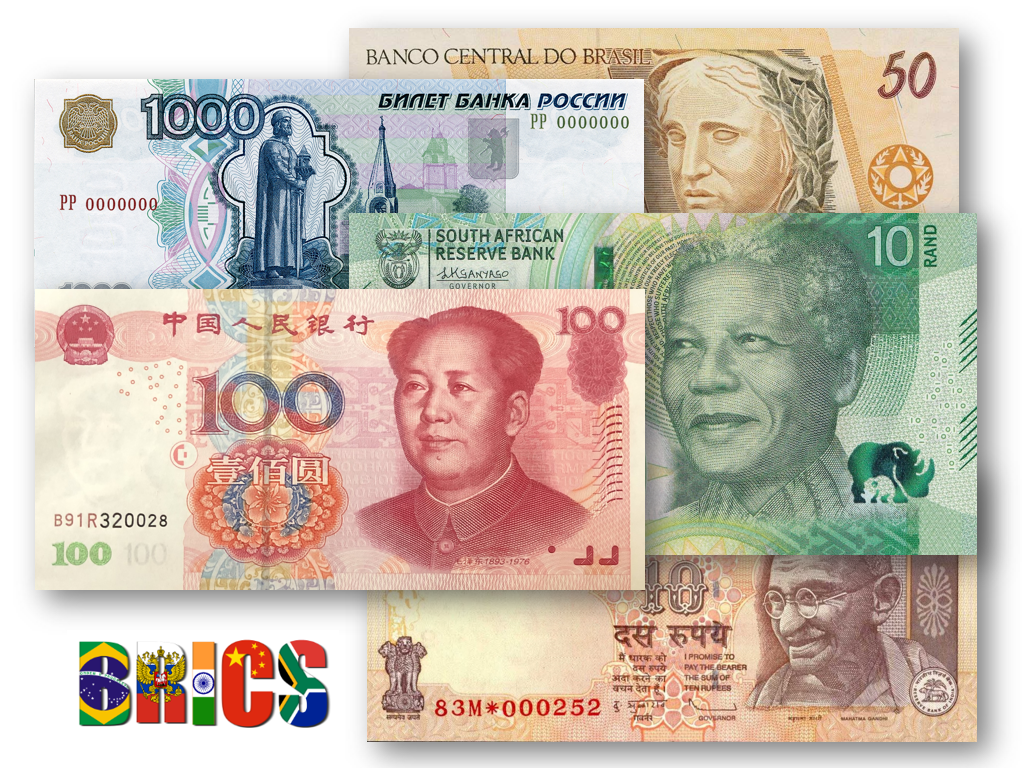
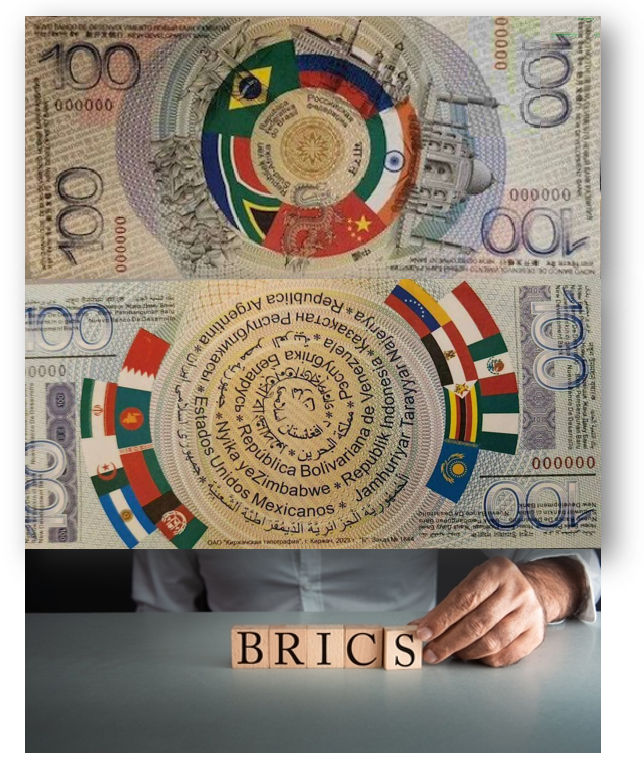
QUESTION: Marty, I know you will not say who you advise, but we know you were the only Western analyst called in by China during the Asian Currency Crisis. People have also seen you in India at that famous hotel that the terrorists attacked. China even issued a white paper on how their central bank uses Capital Flow Analysis, which you invented. That said, my question is: The BRICS had everyone expecting a gold-backed currency if that failed. You also said in an interview that the new BRICS currency would not displace the dollar. Would you comment on why a gold-backed BRIC note would fail since they seem to have taken that position from you?
QB
ANSWER: The BRICS currency was created for geopolitical reasons when the Neocons transformed the SWIFT system into an economic weapon and even threatened China that they would do the same to them if they supported Russia. Once that occurred, the Neocons transformed the entire world’s monetary system into a weapon of war. That is why we have the BRICS. It had nothing to do with killing the dollar or backing their currency with gold.
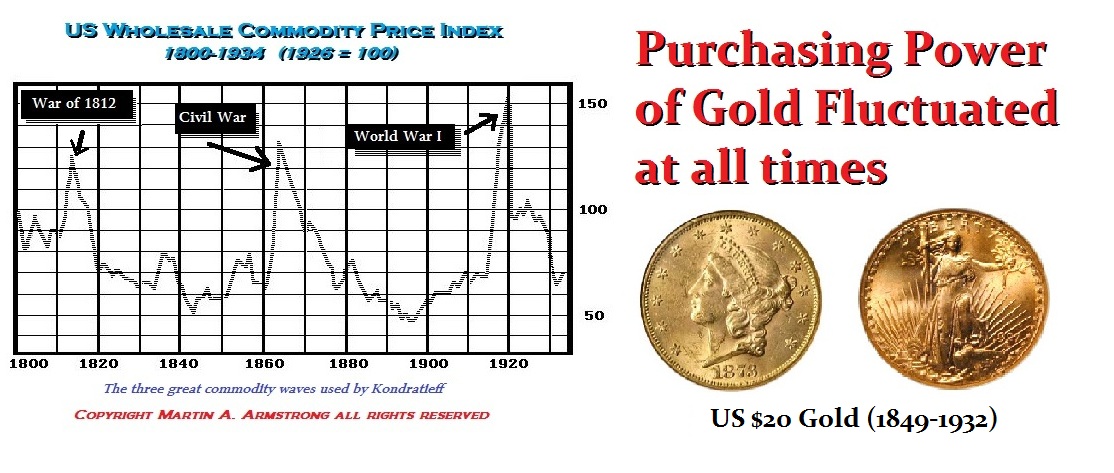
Many hoped for an official announcement regarding a gold-backed currency, which failed to materialize. Look—a gold-backed currency would be massively deflationary. The money supply could not expand with the population or in times of need without new discoveries. Just because a currency is gold does not eliminate inflation or deflation. All the gold discoveries during the 19th century in California, Alaska, and Australia caused havoc economically. Then there were wars. The fact that gold was the currency did not prevent inflation.
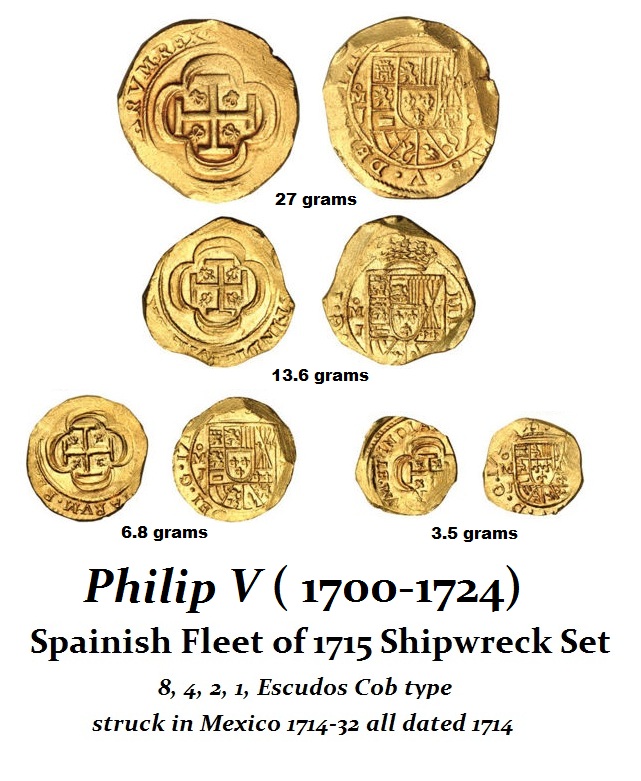
Spain defaulted 7 times. All the gold and silver they brought back from the New World caused massive European inflation. Those who preach that a gold standard is the answer know nothing about history.
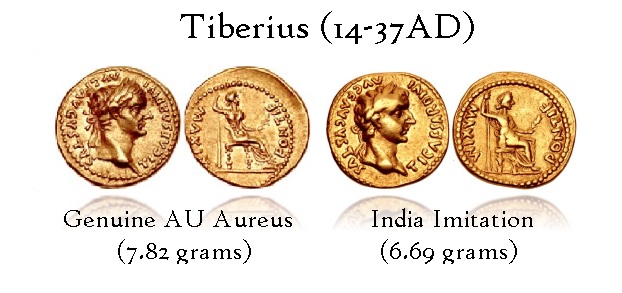
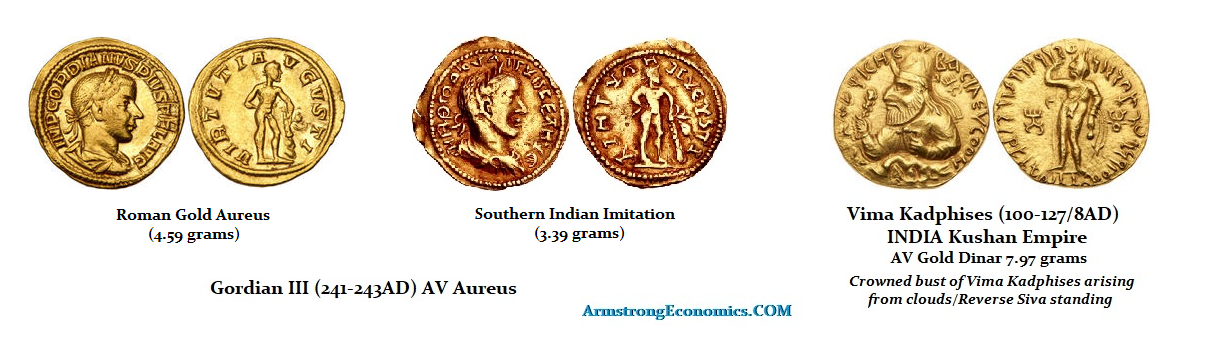
They blame “fiat currency” as if this will solve all the problems by eliminating it. There were booms and busts throughout ancient times long before there was paper money. ALL currency is fiat, even when it is gold. I have shown that Southern India routinely imitated Roman gold coins because they had a premium over gold – fiat. Northern India and the Kushan Empire did issue their own coinage mainly because they traded more with China. Southern India stuck imitation Roman gold coins for about 250 years. That confirms that the Roman coinage was worth more than the metal content.
BRICS Will Not be a Gold-Backed Currency or a Dollar Killer
They made the same claims about the Euro. That, too, did not work out well. Why? The value of a currency is the productive capacity of its people—not its gold reserves. Japan and Germany lost the war and rose to the top of the economic food chain because their people were productive. The United States has the largest CONSUMER-BASED economy, so everyone needs to sell their products here. That means that they must sell in dollars. The US is also strong militarily. That also adds to the foundation of the currency.
It is time we abandon all of these old, stupid economic theories, leftovers from the 18th and 19th centuries. The economy has evolved since then. The Neocons are destroying the dollar. They are undermining the future of the United States, and when we lose another one of their endless wars, the financial capital will shift from New York to Beijing. Just as war killed Britain, so will it kill the dollar and the United States.
Posted originally on Oct 28, 2024 By Martin Armstrong
Kuwait has forced over one million citizens to hand over their biometric data in one of the most extreme pushes for digital ID. Kuwait introduced a national electronic ID (eID) that they say will assist with identification verification, digital signatures, E-government access, and the secure exchange of data. The deadline to file for this mandatory program was September 30 and the consequences for failing to comply were swift.
On October 1, the Ministry of Interior announced that those who failed to submit their data would be prohibited from all electronic services such as withdrawals, transfers, and account transfers. One cannot even withdraw cash. Around 35,000people have been blocked out of their bank accounts and are unable to even view the balance. A few weeks later, those in noncompliance has their electronic bank cards deactivated. Visa, MasterCard, and K-Net all abided by the government’s rule.
Beginning on November 1, The Kuwait Banking Association stated it will implement a “complete block” on all accounts, which means one cannot even withdraw funds if they go to the bank in person. Expatriates have until December 31 to submit their biometric registration.
The government has reported an uptick of 6,000 new registrants per day compared to 600 since they began blocking citizens from accessing their own bank accounts. The government called this a “phased approach,” believing they’ve offered leniency to the public.
The issue here is that governments globally are strapped for funds and believe that they can increase revenues by at least 35% if they hunt down their citizens for taxes. Then we have the layer of the Great Reset put forth by Klaus Schwab and the World Economic Forum that is aiming to create a One World Government complete with a global database to track absolutely everyone. Australian journalist Maria Zaric has called it a “digital prison.” Once you’re locked in, you’re locked in. People will be less likely to speak out against the government, protest, or refuse vaccinations if they know their government can immediately exile them from society. This is more than a mere identification as it provides the government with instant access to all of your information and they will track your every movement. This is only the beginning of a massive wave of tyranny. Our computer has been warning that we have been entering into a more authoritarian mode that will reach a head in 2032.
Posted originally on Oct 18, 2024 By Martin Armstrong
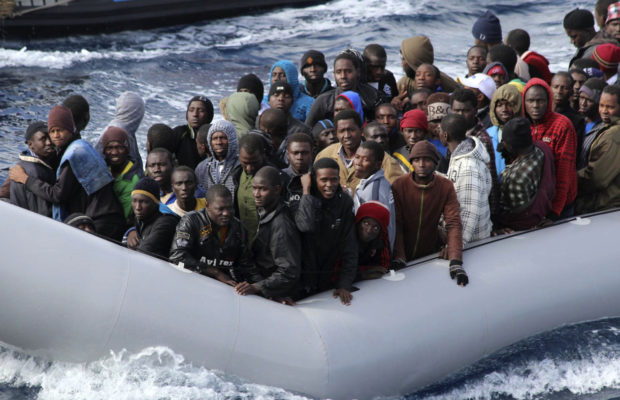
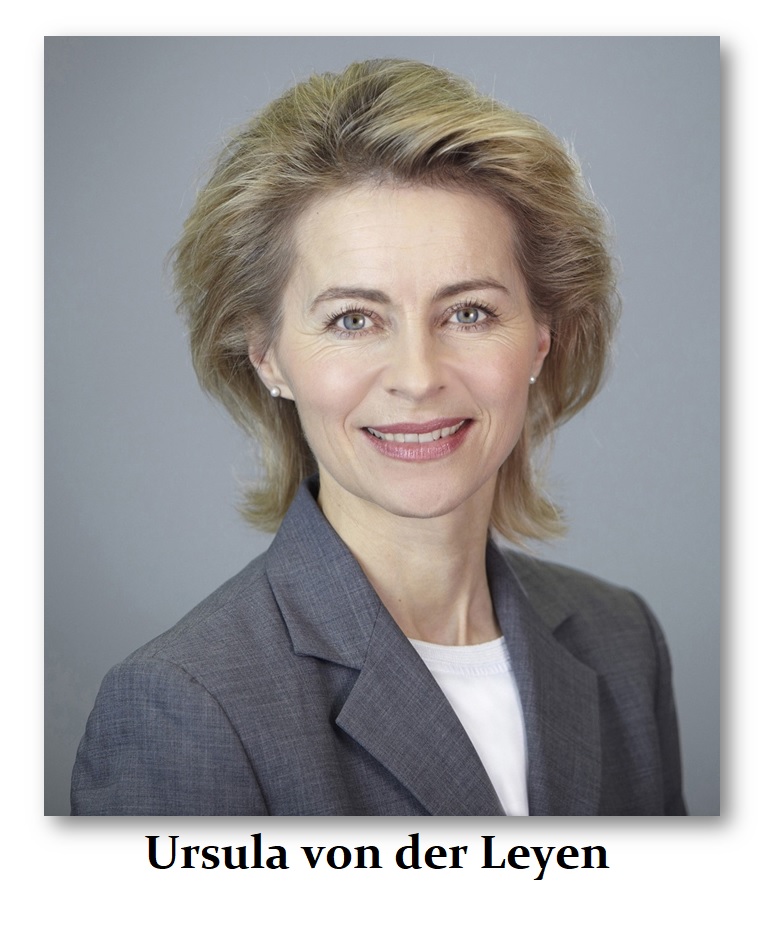
The European Union is beginning to change its stance on its open border policy. Over 1.14 million sought asylum in the EU last year, a completely unsustainable population spike. European Union Commission President Ursula von der Leyen has faced harsh criticism from member states throughout the bloc who are calling upon Brussels to address the situation. Von der Leyen has now expressed interest in creating “return hubs” to house and deport migrants whose applications are denied.
I reported that Italy saw a 64% reduction in illegal migration under President Giorgia Meloni, who promised to curb immigration once elected. Instead of building shelters to house migrants with taxpayer funds, Meloni sought to build detention centers. Centri di Permanenza per il Rimpatrio (CPRs) or Repatriation Centers were extremely controversial but effective. Thousands of migrants were detained and deported if their application for asylum was denied. Word traveled that conditions in these centers were less desirable, making Italy less desirable for would-be intruders.
Ursula von der Leyen supported Meloni once she realized migrants were spilling into the rest of the bloc from Italy and has pointed to Meloni’s “out of the box thinking” to stop the inflow of newcomers. Specifically, the European Commission president stated that the Italy-Albania protocol proved effective whereby both nations signed a treaty that permitted Italy to send asylum seekers found in international waters back to Albania where they are then held in detention centers. “We should also continue to explore possible ways forward as regards the idea of developing return hubs outside the EU, especially in view of a new legislative proposal on return,” von der Leyen writes. “With the start of operations of the Italy-Albania protocol, we will also be able to draw lessons from this experience in practice.”
Now, 17 members of the EU sent a document to Brussels earlier in the month demanding border reform. “People without the right to stay must be held accountable. A new legal basis must clearly define their obligations and duties,” the members said. “Non-cooperation must have consequences and be sanctioned.” Suddenly, leaders of European nations realized that they were beneath Brussels in terms of power and had lost the ability to secure their own borders.
The 17 member nations are demanding that Brussels implements rules to detain and deport migrants who could be a threat to national security. Furthermore, they want to non-EU nations to accept their own citizens back once they are deported. As with everything, money rules all and these nations are willing to use trade and monetary gifts or aid as leverage, as Italy did with numerous African nations under the Mattei Plan.
Countless EU nations are attempting to control their borders, and in doing so, Brussels is relinquishing its power. Poland even attempted to announce a temporary suspension of asylum seekers the same week that Ursula voiced concern over the migrant crisis. The forced cohesion of the European Union is coming undone.
Posted originally on the CTH on October 11, 2024 | Sundance
After initially seeing this on social media without context, I had to go look at the originating source material.
At first blush, it looks creepy, weird and ridiculous. After going to the source to see the reasoning for it, even with context it is creepy, weird and ridiculous.
I have come to the researched conclusion that “Leftism” is factually a mental disorder, requiring adherents to be part of a tribal mentality. If the tribe does stupid stuff, the individual does stupid stuff; that’s how modern Democrats operate, including their voting patterns. The arc of this modern slope goes from the self-centered, narcissistic “we are the world” stupidity (early 1980’s), all the way to today.
This video with Gretchen Whitmer is a small case study example. WATCH: (mute your sound)
.
The podcaster is a troubled and typical millennial known as Liz Plank. Together with Governor Gretchen Whitmer it does appear they decided to mock Holy Communion using a Dorito as the sacrament. Kamala Harris previously said Doritos chips (diabetes fuel) were her favorite snack.
The podcast is in full below. You only need to watch 20 seconds to get the context of the interview. The uptalking millennial is the epitome of a Kamala Harris supporter. Liz Plank is like many millennials, an adult child. Unfortunately, Plank is also what people currently call an “influencer.”
I have created this site to help people have fun in the kitchen. I write about enjoying life both in and out of my kitchen. Life is short! Make the most of it and enjoy!
This is a library of News Events not reported by the Main Stream Media documenting & connecting the dots on How the Obama Marxist Liberal agenda is destroying America









 Centinel2012