Posted originally on Jul 8, 2025 by Martin Armstrong
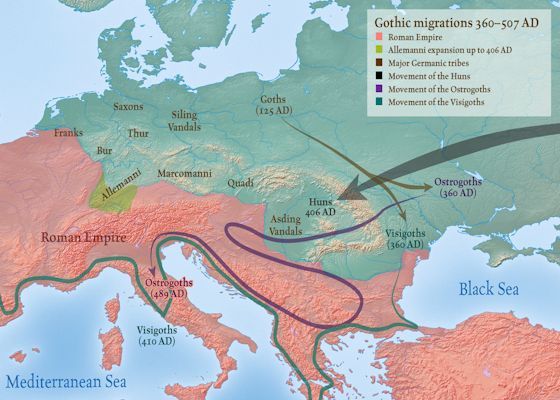
The globalists refuse to declare the migrant crisis an “invasion,” but we have history’s guidance to show us what happens when an unsustainable number of people enter a nation. The Goths, a non-military group considered migrants, are a perfect example. These men, women, and children sought refuge within the Roman Empire. This was not an invading army but rather a fleeing population seeking safety from the Huns. The Goths, long-time foes of the Romans, appealed to be admitted to Roman territory due to the threat they faced and needed to seek asylum. This event led to significant consequences and marked a turning point in the history of the Roman Empire.
The great Gothic migration involved hundreds of thousands of men, women, and children. While, to some degree, the growing unrest in the East pushed them southward, there is also little doubt that the border defenses of the Roman Empire had also been seriously weakened by the political instability and economic pressures that were building within Rome itself. Of course, the rumor of great plunder and riches available in Roman territory acted like a magnet much in the same way as the rumors of streets paved in gold in America prompted great European migrations during the 19th and early 20th centuries or the outdated stereotype of the American Dream.
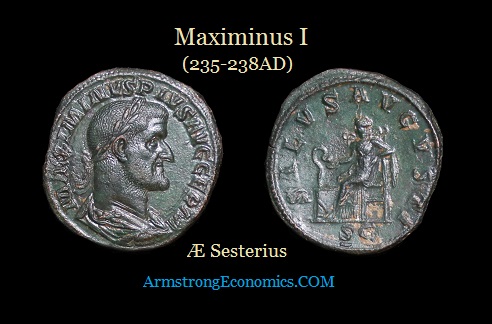
By 238 AD, the Gothic position was so threatening to the Roman Empire that Emperor Maximinus was forced to pay them vast amounts of tribute, similar to how countries currently pay all expenses for migrants. While his aim may have been to buy time, this demonstrated weakness on the part of the Romans, who were still in the middle of internal political struggles for power. Internal imperial rivalries ultimately defeated Maximinis. Within less than four years thereafter, the Goths began a series of raids along the Danube.
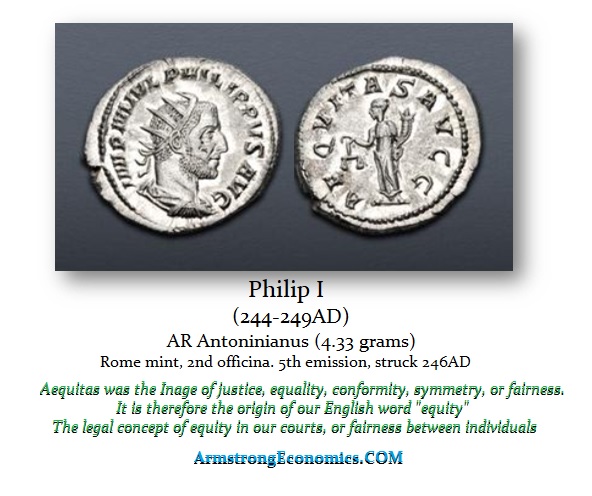
A decade later and Philip I attempted to quell the influx of migrants, but died while battling his successor, Trajan Decius. Rome was simply decaying gradually from internal struggles, which weakened the economy and constantly pitted one legion against another in a struggle for power. We see internal struggles today throughout the West as politics continue to divide the people. The Romans did not consider the Goths to be a force that would threaten the entire Empire, but rather more as a barbarian force looking for plunder rather than power.
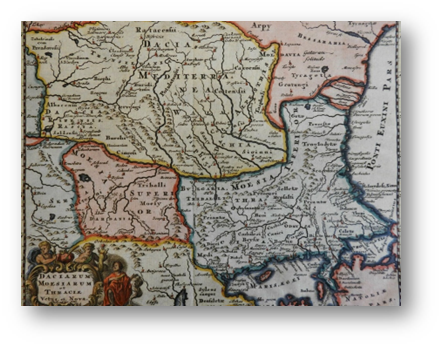
Trajanus Decius declared the Goths an enemy and attempted to force them out of the empire, only for the masses to return a year later. The Goths were prepared this time and formed several strategic alliances with enemies, such as the Dacian Carpi. This led to a full-scale invasion, and the Roman Empire suddenly found itself besieged as war raged on in Moesia, Dacia, and even in Thrace, while the main body of the Gothic invasion was preparing a descent into the region of the Black Sea.
After many battles, the Goths emerged as the new masters of the entire Danube territory, all the way to the Black Sea. Trebonianus Gallus emerged as the new Emperor who could do nothing to reverse the Empire’s humiliating defeat. The Goths now turned to Illyricum and Thrace, burning and plundering their way across the region. By 253 AD, the Goths set sail along the Black Sea, headed straight for Asia Minor, which was wide open and waiting to be plundered.
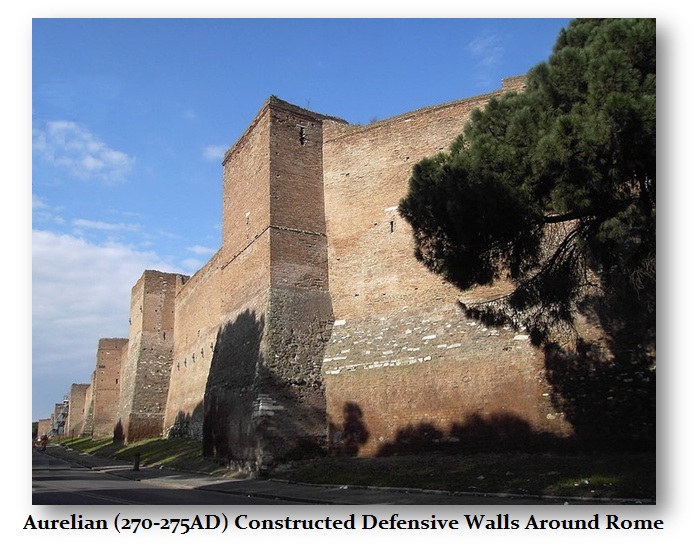
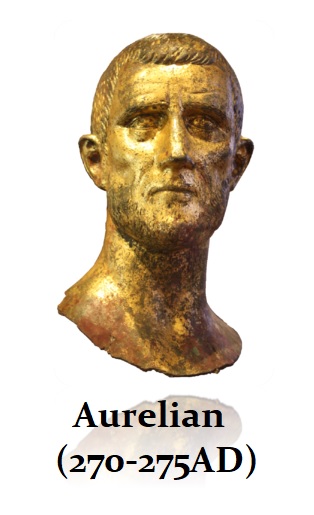
The Roman Empire was declining until Emperor Aurelian came to power and began restorative efforts, including anti-immigration policies. He not merely launched defensive measures, he moved on the offensive against the Goths and demolished them through a series of battles. The Goths were driven out of the Balkans and into Dacia. Aurelian also greatly restored the Black Sea defenses, which helped those regions rebuild their economies as well. However, Aurelian failed to pursue the barbarians into the Roman province of Dacia, pulling back and establishing the new border once again along the natural border as originally defined by Augustus – the Danube.
Aurelian’s decision to redraw the borders left Dacia in the hands of the Carpi and the Goths. Once the Goths were contained, they began to divide into two distinct groups – Ostrogothic and Visigothic kingdoms. These groups would evolve into powerful states that would ultimately bring down the Roman Empire in the West.
Those in favor of the Gothic migration stated that the newcomers would increase tax revenue and benefit the Roman economy. It was a humanitarian crisis and Rome’s responsibility to solve. Instead, the unsustainable influx of Gothic refugees contributed to the eventual fall of the Western Roman Empire. The event marked a turning point in Roman history and was part of a period in which the Roman Empire nearly collapsed under the combined pressures of invasion, civil war, plague, and economic depression. History always repeats.
Posted originally on Jul 7, 2025 by Martin Armstrong
The primary difference between mutual funds and ETFs (exchange-traded funds) is that while an open-end mutual fund is priced once based on the market closing, ETFs, as well as closed-end mutual funds, trade all day. This actually goes back to the Panic of 1966 when mutual funds were open-ended but traded on the exchange and were bid up and down based on emotion rather than net asset value. The crash took place because mutual funds were, at times, selling well above net asset value.
If we look at the reforms post-1966, investors in mutual funds buy or sell them directly from the mutual fund companies themselves. That creates a different tax structure than an ETF in which purchases go to the market and the ETF is simply created by purchasing the underlying basket.
Mutual funds and most ETFs are governed by the Investment Company Act of 1940. Therefore, this legislation treats them like a pass-through company. When a mutual-fund investor wants to sell, the fund sells shares of appreciated stock to generate cash, which creates a taxable capital gain. Since most funds operate as simple pass-through vehicles, those tax liabilities from the gains accrue to all investors in the fund, including those who have not sold any holdings.
ETFs actually do avoid that type of tax issue. ETFs are not direct buyers or sellers of shares as a mutual fund. The ETF is created by a market maker with a special contract with the ETF provider. The investor has the newly created ETF share, which is created by purchasing all of the holdings in the underlying ETF. This basket of shares is given to the ETF issuer, thereby creating the ETF shares.
Because an ETF is not a direct buyer of the underlying shares as in a mutual fund, the ETF itself is not a buyer or seller. The basket of shares is swapped and is therefore an in-kind transaction; thus, there is no pass-through capital-gains tax bill. This is the tax advantage of an ETF over a mutual fund.
Posted originally on CTH on June 29, 2025 | Sundance
“Elbows up” and knees bent. As expected given the nature of their dependency, the Canadian government has rescinded the digital services tax against U.S. tech companies.
The June 30th collection is halted and the Canadian government led by Mark Carney will be bringing legislation to rescind the tax entirely.
CANADA – […] Minister of Finance and National Revenue, the Honourable François-Philippe Champagne, announced today that Canada would rescind the Digital Services Tax (DST) in anticipation of a mutually beneficial comprehensive trade arrangement with the United States. Consistent with this action, Prime Minister Carney and President Trump have agreed that parties will resume negotiations with a view towards agreeing on a deal by July 21, 2025.
The DST was announced in 2020 to address the fact that many large technology companies operating in Canada may not otherwise pay tax on revenues generated from Canadians. Canada’s preference has always been a multilateral agreement related to digital services taxation. While Canada was working with international partners, including the United States, on a multilateral agreement that would replace national digital services taxes, the DST was enacted to address the aforementioned taxation gap.
The June 30, 2025 collection will be halted, and Minister Champagne will soon bring forward legislation to rescind the Digital Services Tax Act. (LINK)
In the bigger picture Canada has a serious problem.
Canada is entirely dependent on the USA; there is no part of the Canadian economic system that can survive without total dependence on the USA. The Canadian economy is currently stagnant and their leftist government is desperate to find a way to collect revenue somehow, any way possible. Additionally, President Trump is going to end the USMCA trade agreement and shut down a majority of the benefits Canada has been extracting.
The most remarkable aspect to this reality is the denial within Canada. There are maybe a handful of honest Canadian economists, financial types and/or pundits who understand economic matters that are willing to outline and explain the details of Canada’s vulnerability…..
…. The rest are in denial, shouting ‘elbows up’ as if that is going to change the inevitable. The pretending is strong amid the snow Mexicans. Their denial is a mass formation psychosis. Stunningly so.
Posted originally on CTH on June 28, 2025 | Sundance
CTH has continually said that almost no one in Canada has any grasp of what is about to happen within their economy, specifically because only a handful of people realize what President Trump intends to do.
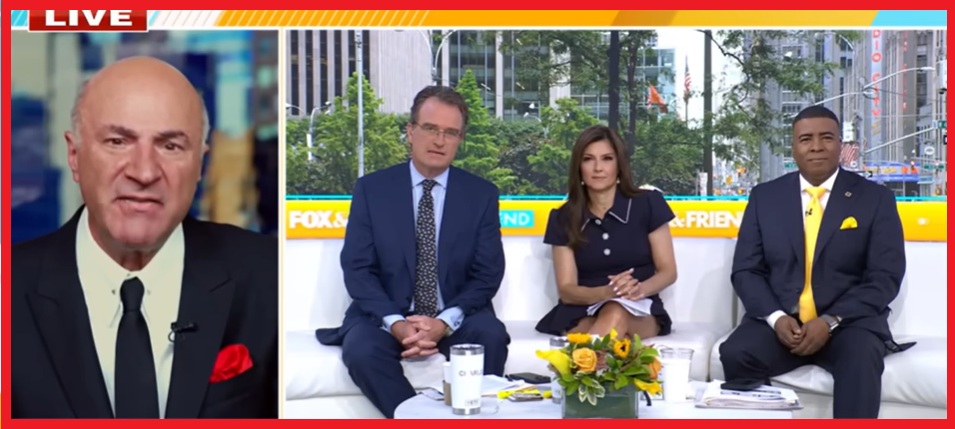
This interview with Kevin O’Leary is a case study in what I have been warning about. If you have any financial affiliation with O’Leary Ventures or ancillary investments that touch on a dependency therein, be forewarned.
O’Leary is only a few months away from exploding against President Trump in a manner that will make the Elon Musk statements about Epstein and Trump seem small by comparison. As yet another Canadian financial voice that just doesn’t get it, O’Leary has no idea the USMCA is about to end. And when it does, oh boy… he will go bananas.
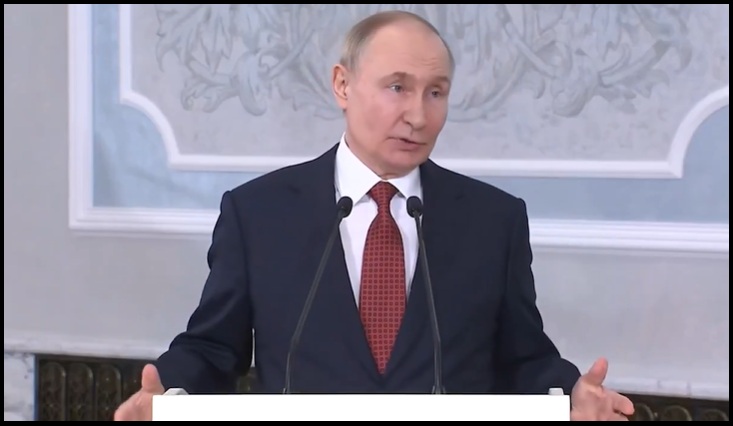
Russian President Vladimir Putin answered questions from the media earlier. One of the questions was about President Trump against the backdrop of peace efforts, the middle-east conflict and Ukraine.
President Putin’s response is very interesting. I am placing here as a datapoint for my own analysis without reading too much into it at the moment. All of the points are converging in one direction. WATCH:
BREAKING: Putin says he deeply respects Trump, whom he describes as a courageous person who’s trying to do the right thing by bringing about world peace.
“I believe he truly wants peace in Ukraine and the Middle East, though it may be harder than he expected.” pic.twitter.com/utXlbaiPNf
Congratulations Treepers. If you have followed the discussions [SEE HERE] you can see how we are on the cusp of a big geopolitical change. GET THE BBB PASSED and things begin to unfold. All of the datapoints go in one direction.
Posted originally on CTH on June 27, 2025 | Sundance
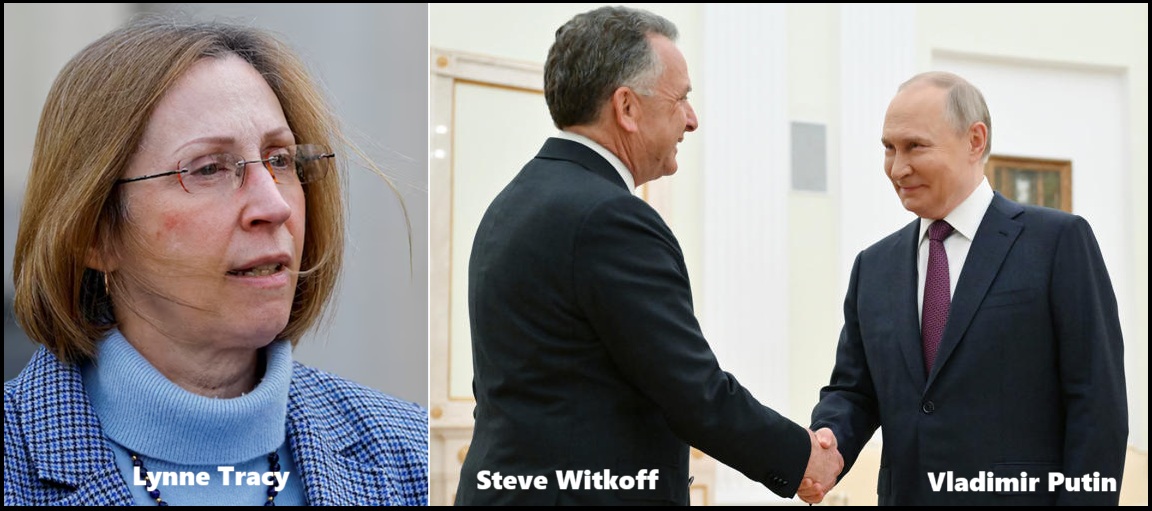
U.S. Ambassador to Russia, Lynne Tracy, who was appointed by Joe Biden, has departed her position in Moscow as U.S. Ambassador to Russia. There has been no announced name for replacement. [¹Get the friggin’ BBB passed!]
Remember, in the last 20+ years, no American official has spent more face-to-face time with Vladimir Putin than U.S. Special Envoy, Steve Witkoff. On behalf of President Trump Witkoff has held multiple meetings and discussions with Russian President Vladimir Putin lasting more than 4 and 5 hours at a time. U.S. Ambassador Lynne Tracy was not present.
Do not forget, nor overlook this baseline fact.
MOSCOW, June 27 (Reuters) – Lynne Tracy, the U.S. ambassador to Russia, is leaving Moscow, her embassy said on Friday, noting she had served through one of the most strained periods in relations between Moscow and Washington.
The departure of a career diplomat appointed under the administration of former president Joe Biden comes as Russia and the United States discuss a potential reset in their ties which sharply deteriorated after Moscow launched its full-scale war in Ukraine in 2022.
[…] “I am proud to have represented my country in Moscow during such a challenging time. As I leave Russia, I know that my colleagues at the embassy will continue to work to improve our relations and maintain ties with the Russian people,” the embassy cited Tracy as saying in a statement.
[¹We anticipate that once the BBB is completed, obviously there will be a celebration – a news cycle for the White House and legislative leadership to promote & celebrate, and then President Trump will likely shift straight into the details of the trade agreements being constructed in the background by Secretary Lutnick, Secretary Bessent and USTR Jamieson Greer.
As the trade aspect is underway from the oval office, expect Secretary Rubio and Steve Witkoff to be reengaged with Ukraine-Russia. By mid July we should see multiple announcements of trade agreements, while simultaneously the foreign policy focus of Rubio and Witkoff should start to materialize into substantive change.]
Posted originally on Jun 26, 2025 by Martin Armstrong
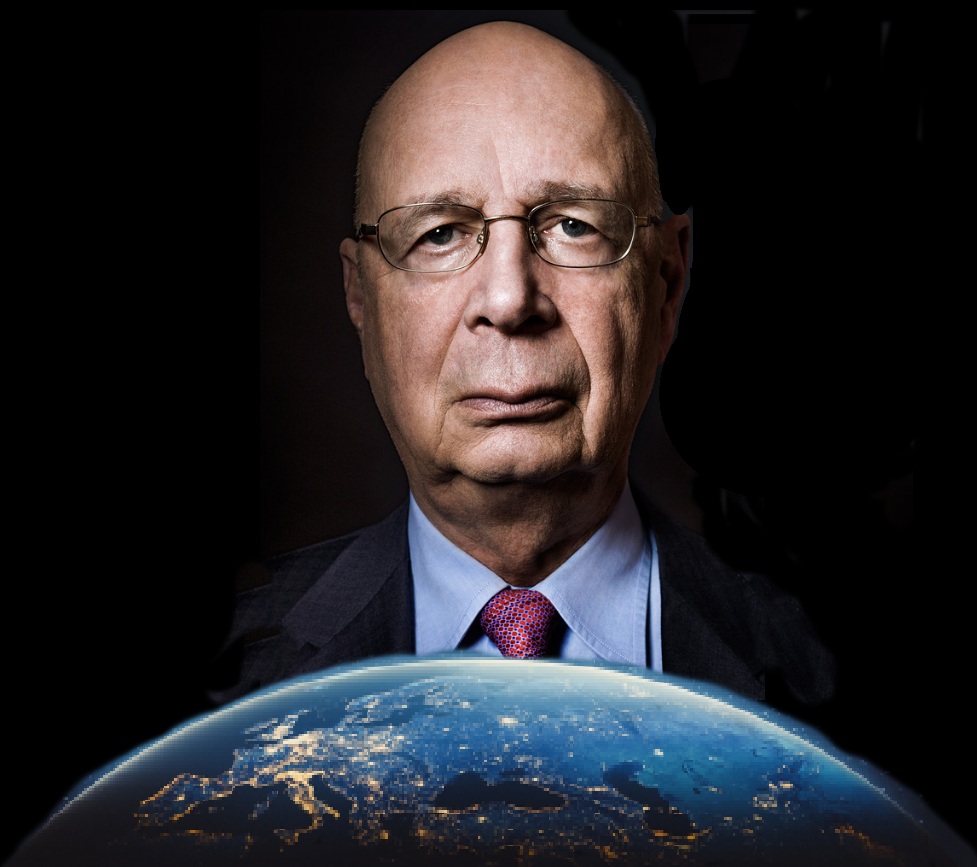
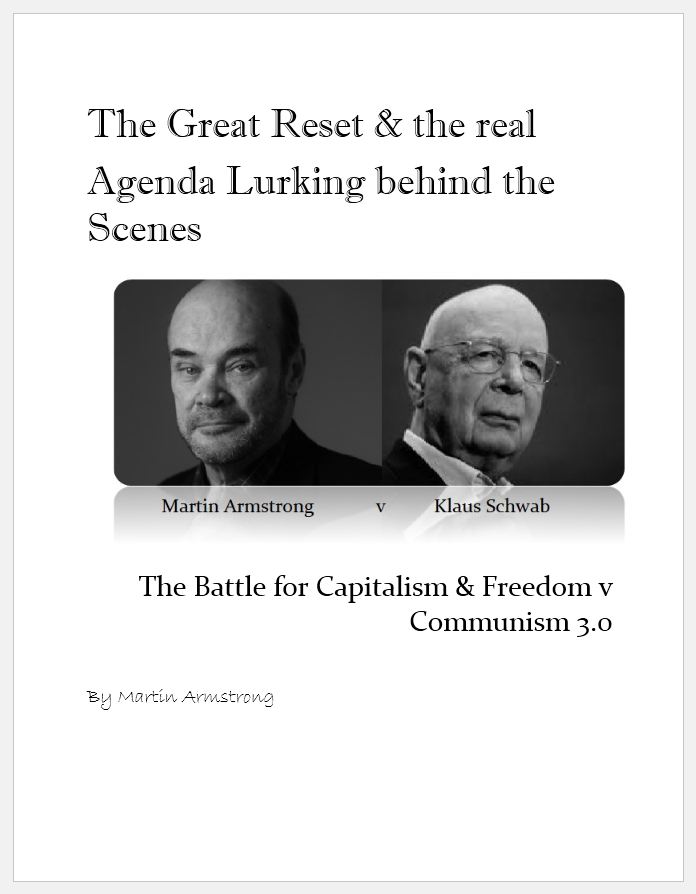
World Economic Forum founder Klaus Schwab stepped down from his chairman position at the organization on April 20, 2025, amid accusations of fraud. Our computer had forecast that the WEF would enter a declining trend with the 2024 ECM turning point. This staged coup happened about 37 years after the first Davos meeting (8.6 x 4.3). From our model’s perspective, this was right on time. Now, Schwab and the WEF are working to repair ties.
An anonymous whistleblower claimed that Klaus Schwab and his wife collaborated with USAID to steal tens of millions in funding. The whistleblower has always been anonymous, and it remains very suspicious that the very organization he created would turn on him after receiving an anonymous letter that they admitted may not have been credible. Something like this would never be acceptable in any court of law, especially if it’s anonymous. It would be the worst or the worst hearsay, where you cannot even point to who made the allegation.
Back in April, the WEF said its board unanimously supported the decision to initiate an independent investigation “following a whistleblower letter containing allegations against former Chairman Klaus Schwab. This decision was made after consultation with external legal counsel.”
Now, the WEF is attempting to repair its relationship with its founder ahead of the next Davos meeting. Bloomberg reported that the WEF would like to “normalize their relationship [with Klaus Schwab] in order to safeguard the forum and the legacy of the founder.”
Peter Brabeck-Letmathe has replaced Schwab for the time being, but is less of a commanding force. Schwab’s sudden departure has caused instability in the organization and its ongoing mission. Board members are concerned that support for the organization will begin to decline as this situation remains unresolved.
The World Economic Forum’s annual revenue in 2024 was 440 million francs ($543 million), with the majority of proceeds coming from member companies and fees. Yet, the number of people registered to attend the 2025 Davos event is on par if not slightly exceeding the number of participants from the year prior.
Schwab’s departure has damaged the Davos brand. There is a possibility that the organization is attempted to rebrand after Agenda 2030 failed. The WEF attempted to move away from its zero tolerance stance on ESG initiatives after they became widely unpopular among the big industry players and shifting governments. The brand has attempted to integrate the importance of digital transformation and AI to remain relevant as the tech gurus grow in power and popularity. Those who are familiar with Klaus Schwab know the phrase, “You will own nothing and be happy.” These words have been widely unpopular and caused a type of sinister chaos to surround the brand that was once respected as the high-brow institution of globalist elites.
European Central Bank President Christine Lagarde was slated to replace Schwab in 2027 when her term ends, and all reports claimed that he was prepared to remain in the chairman role for an additional two years to ensure Lagarde could take his place. What changed seemingly overnight that would cause the organization to discard Schwab before he was due to retire?
Schwab denies any misconduct and filed lawsuits against the whistleblowers, calling the accusations “calumnious” and “unfounded.” He believes “character assassination” was the premise of the claims.
I am no fan of Klaus Schwab, as everyone knows. I disagree with his theories from start to finish. Nevertheless, something doesn’t smell right here. This appears to be an internal coup, perhaps to distract attention from the question of alleged funds for the WEF from USAID, or to try to salvage the failed Agenda 2030. Perhaps they will claim that no misconduct had occurred since DOGE did not raise concerns or there is a possibility that those behind the internal coup are concerned that Schwab’s counter lawsuit could uncover new corruption. The investigation into Schwab has not concluded, but after only three months, the WEF would like to wrap it up. It appears that the WEF does not want to welcome Schwab back; rather, they would like to ensure an amicable resolution to maintain both the brand’s reputation as well as the founder’s.
Posted originally on Jun 26, 2025 by Martin Armstrong
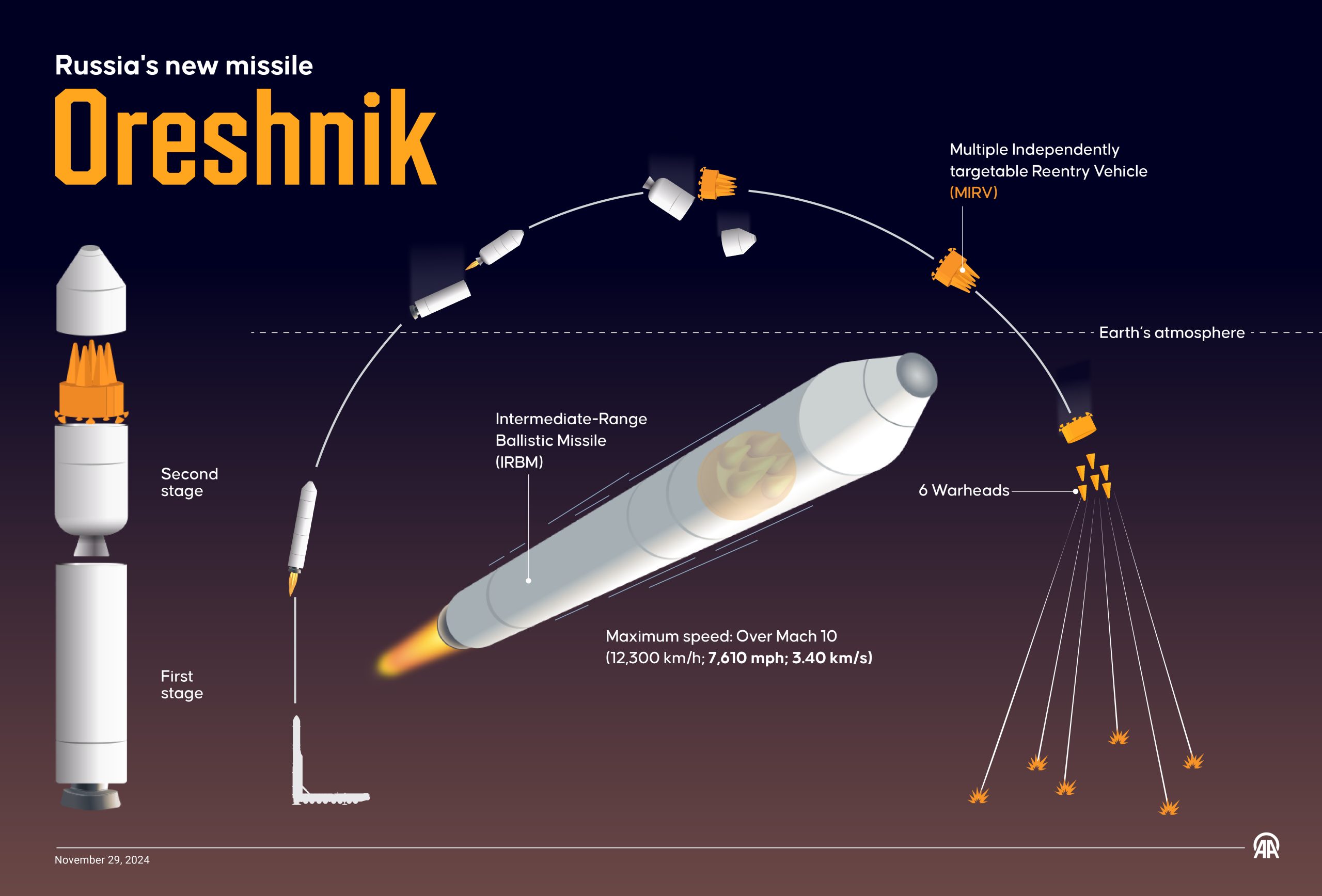
Russia is increasing production of its Oreshnik missile system as NATO pledges an additional $40 billion to Ukraine. The nuclear-capable Oreshnik missile is a powerful system with the capacity to travel 3,415 miles, effectively enabling Russia to strike anywhere in the West from Europe to the United States.
“Serial production of the latest Oreshnik medium-range missile system is under way,” Putin told a graduating class of military cadets in televised comments. The system became operational on November 21, 2024, and used in an attack whereby it carried multiple independently targetable reentry vehicles (MIRV) payload and six warheads that were each capable of releasing submunitions. The first use of the system involved dummy warheads that still caused destruction due to hypersonic kinetic energy. It is widely believed that the first use of the Orsenhnik system was more of a psychological move than an actual strike. In fact, Moscow notified Washington 30 minutes before deploying the missile. Moscow wanted to reveal to the world that it is ready to employ this new lethal technology.
This technology effectively intimidates the West with its long-range capabilities, although Moscow states it is only ramping up production of its mid-range missile system. Moscow needs the West and NATO to know that it has the capacity to attack if cornered. Putin has claimed that this weapon cannot be intercepted and has the capacity to evade missile defense systems. Traveling at 3 km per second, existing defense systems simply would not have the time to act. The Oreshnik can also be controlled mid-flight through aerodynamic control surfaces or gliding warheads, which masks its route. Putin has also stated that this system has the power to ruin underground targets without using nuclear payloads.
It remains to be seen whether the Oreshnik missile system is “impossible to intercept,” as Putin claims. The weight behind the increased production is a clear indicator that Russia is preparing to defend itself against NATO if needed. These weapons would benefit Russia in a global conflict and are not necessarily strategically necessary for its current battle in Ukraine.
Posted originally on Jun 23, 2025 by Martin Armstrong
Russia’s recent strike on Boeing facilities in Ukraine has been portrayed as an attack on American business. The Dow-listed company has maintained operations in Ukraine despite the ongoing war and partnered with Ukrainian aircraft manufacturer Antonov in 2023 on joint defense projects.
“This is not just an attack against Ukraine, but also an attack where American business is being hit,” Andy Hunder, President of the ACC in Ukraine, which represents nearly 700 U.S. and international investors and corporate members, told the Kyiv Independent. “This is a war against a world where American businesses are making money and thriving,” he added.
The strike took place after Ukraine’s massive attack during Operation Spiderweb that destroyed hundreds of Russian drones and 41 war planes across four Russian airbases.
The media is portraying the strike on Boeing as an attack on American business. Similarly, the media portrayed the attack on German defense company Rheinmetall, which opened a new facility in Ukraine last year to produce military vehicles, as an attack on German business. The fact of the matter is that this is a time of war, and Russia is targeting defense manufacturing facilities.
If nations began opening or expanding defense manufacturing operations, say in Iran, then Israel and the US would take that as a sign of aggression, if not a direct threat to national security. Russia has repeatedly stated Western aggression is escalating tensions and prolonging the war. So not only are the EU, UK, and US sending countless funding and equipment to Ukraine, but private ventures from these nations are developing almost every piece of warfare equipment there.
The target was not America or Germany; rather, the target was defense manufacturing facilities. Several Western arms manufacturing facilities have opened joint ventures in Ukraine. Germany plans to open additional Rheinmetall facilities. Flensburger Fahrzeugbau Gesellschaft is working with a private Ukrainian weapons manufacturer to build a service center in Ukraine. The KDNS is another German-Franco joint venture in Ukraine that is mass producing weapons to kill Russians. Denmark opened MyDefence to produce counter-drone technology. The United Kingdom has joint ventures BAE Systems and Babcock.
The United States remains the top supplier of arms to Ukraine through private arms manufacturers, supplying around 43% of the weapons used in warfare. However, the majority are produced domestically and imported to Ukraine. The Western-backed military-industrial complex has had a stronghold in Ukraine since the war began. These manufacturers were not operating in Ukraine before 2022. Russia naturally has an incentive to destroy these facilities, but that certainly does not indicate Russia is targeting European nations or the US.
Posted originally on Jun 23, 2025 by Martin Armstrong
COMMENT: Marty, it is disgraceful that people take your work and issue books pretending it is their research. Yet it is even more shameful that Donald Trump isn’t calling you for advice instead of these people who couldn’t find the door in a room if the lights went out. You stated clearly that Iran’s nukes were irrelevant, for Russia, China, or North Korea could place them there just as Russia did during the Cuban Missile Crisis. Then what? I can see your concern. This is not a solvable issue, and it was just made worse. Your computer is always correct.
KW
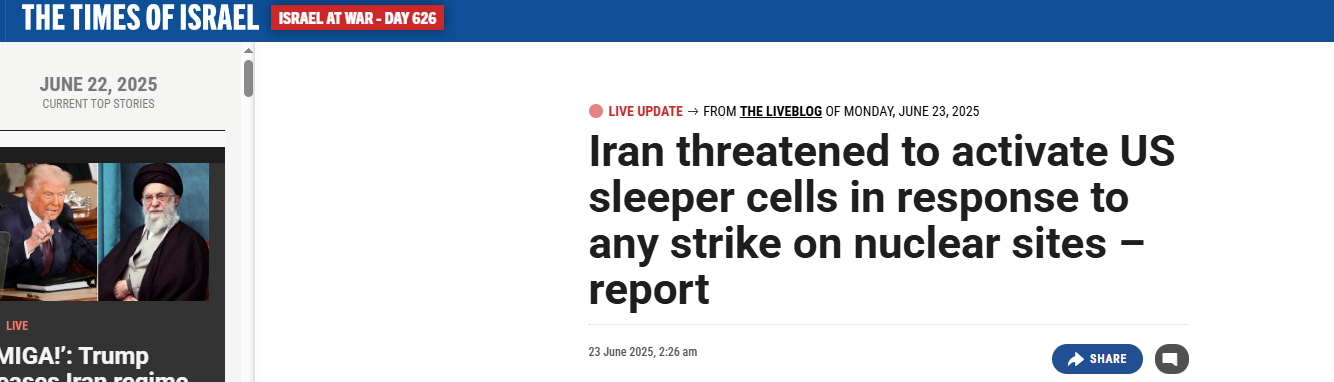
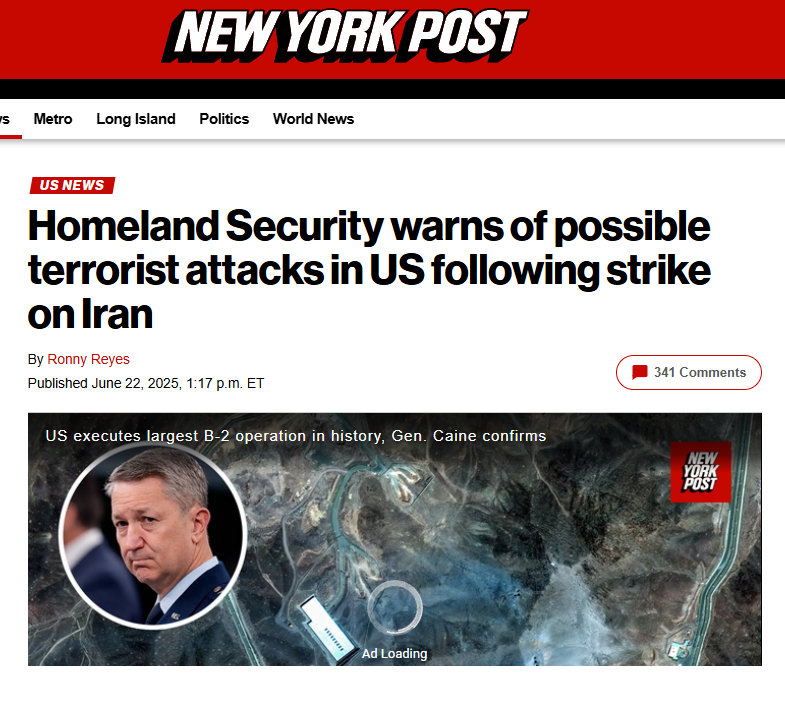
When I was barely a teen, I was climbing a tree and fell. I didn’t get hurt from the fall, but when I fell, I took down a Yellow-Hacket hornet’s nest. Fortunately, I was not too far from home, and I ran like hell with bees attacking me all over. I fear this is what we have just done for the Neocons; they only look at what is immediately in front of their nose, with no thought for what comes next. There are sleeper cells in major cities in Europe and the United States. The Neocons think that they have won, and Iran has no cards. They always assume they are superior, yet they have lost every single war from Korea, Vietnam, to Afghanistan and Iraq, and they said they would win Iraq in 3 weeks or less, and then invade seven countries.
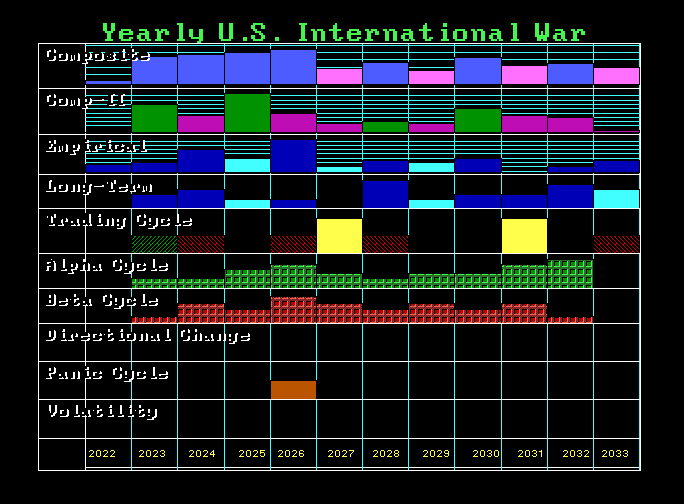
While the Neocons look only at their immediate objective, they are INCAPABLE of ever comprehending the UNINTENDED CONSEQUENCES. This is NOT the end, but the beginning, and that is according to our computer, not my personal opinion. I wish it were my opinion, for then we would have a shot at that statement being wrong. We have a Panic Cycle in 2026 when it comes to international war.
President Donald Trump has just delivered the dream of the Neocons, and he does not even know it. He wrote on Truth Social:
“There is not another military in the World that could have done this. NOW IS THE TIME FOR PEACE! … This is an HISTORIC MOMENT FOR THE UNITED STATES OF AMERICA, ISRAEL, AND THE WORLD. IRAN MUST NOW AGREE TO END THIS WAR.”
By dropping powerful bombs on Iran’s nuclear facilities at Fordow and elsewhere, Trump has acquiesced to the behest of Israel, and that was a fateful choice, for it demonstrated that the United States has chosen sides not simply with Iran. Still, it is reverberating behind the veil of the Middle East as a one-sided gunboat diplomacy. The growing concern is that the USA may no longer be able to deal impartially in the Middle East.
Iran’s Sunni neighbours are just 200 miles away at most. This is well within reach of Iran’s short-range missiles. Since Iran’s neighbors are hosts to key US military bases, there is a rising fear that they can be dragged into the major Middle East conflict. Then some question the loyalty of the United States if the US must choose between Israel and the Arab world.
The last time we saw war in the Middle East, there was also a major shock and fragmentation of the entire region. The 2003 US-led invasion of Iraq resulted in irreparable damage to the region, costing the USA $3 trillion. The UNINTENDED CONSEQUENCE was the ensuing mayhem, which benefited Iran by removing their arch enemy Saddam Huesin. The action by the Neocons inflamed sectarian tensions in the entire region and led to the birth of the Sunni jihadist group ISIS.
Whatever Iran’s response, America’s foreign policy is more closely aligned with Israel’s than it has ever been. As previously noted, Netanyahu seems to be calling the shots with President Trump scrambling to keep pace with his supposedly junior ally, a Neocon through and through. Now, despite years of claiming he would avoid wars and other foreign entanglements, President Trump has just bet his entire presidency on a dramatically aggressive act in Iran that does violate international law, and there was undoubtedly no declaration of war. Trump will now go down in history as the American president to ever strike another country with bombers without a formal war. At least in the Gulf War, the US invoked Article 5 of NATO. President Trump is also the first to have overtly joined Israel in an attack on an adversary. That is a severe issue that history will not forget.
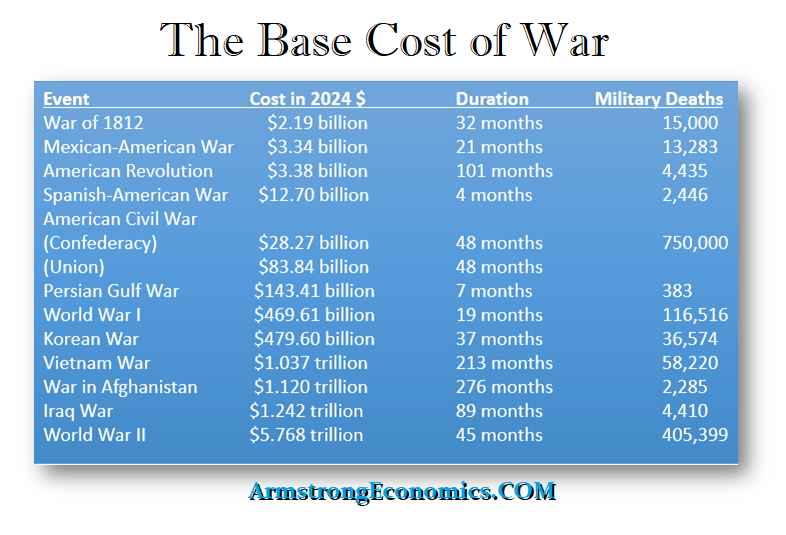
Our National Debt has risen dramatically, all because of the endless wars of the Neocons. They do not care about the people or our country. All they care about is the destruction of their enemies to satisfy their raw hatred. We are facing sovereign defaults around the world, all because of perpetually borrowing with no intention of ever paying back the debt.
We are still paying interest on World War I and II, along with Vietnam, Korea, Afghanistan, and Iraq. This one will be many trillions, and it will contribute to the collapse of the world monetary system post-2030.
We have just entered the Thucydides Trap. This highlights the profound and often perilous instability caused by a major shift in global power, which is what is now unfolding. The hubris of the United States, in believing it is invincible, was promoted by the Neocons, just as it was in ancient Athens. This lesson from history serves as a stark warning that the natural friction between a rising and ruling power is a prime historical catalyst for catastrophic conflict, emphasizing the critical need for skillful statecraft, clear communication, and crisis management mechanisms to navigate this dangerous phase peacefully. This lesson from history highlights a powerful pattern that warrants serious attention, particularly in the context of US-Russia and US-China relations.
Thucydides (c. 460-395 BC) in his seminal work, History of the Peloponnesian War, identified the fundamental cause of the devastating 27-year war between Sparta and Athens. He wrote:
“It was the rise of Athens and the fear that this instilled in Sparta that made war inevitable.”
The Trap refers to the structural stress created by a major shift in the balance of power. The established power (like Sparta) feels threatened by the rising power’s (like Athens’) growing influence, wealth, and military capabilities. Simultaneously, the rising power demands greater recognition, influence, and a role in shaping the system commensurate with its new power. This mutual fear, suspicion, and rivalry often lead to miscalculation, crises, and ultimately, war – even if neither side actively desires it. Hence, the computer projects that WWIII is inevitable.
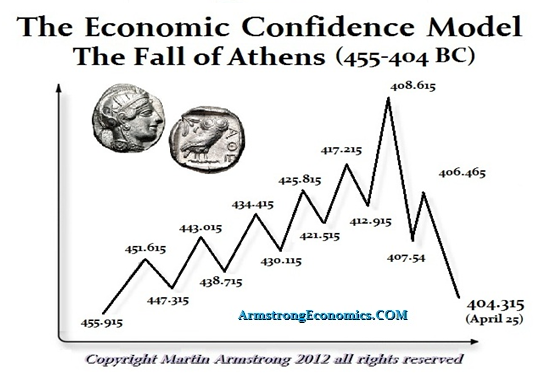
The Peloponnesian War (431-404BC) was fought between Sparta and Athens, the two superpowers of ancient Greece at the time. Each was dominant in its own way, and the war was essentially a clash between these two giants. Athens ended in defeat in 404 BC, precisely on schedule with our ECM model.
Sparta and its allies (specifically Thebes) struck the first blow. However, the war’s origins involve decades of tension and specific provocations not unlike the relationship between the United States, Russia, and China. In early 431 BC, a small force of Thebans (members of the Spartan-led Peloponnesian League) launched a surprise night attack on the city of Plataea, a long-standing ally of Athens within Boeotia (Theban territory). Thebes sought to eliminate Plataean resistance to Theban dominance over Boeotia, much like Israel versus Iran. They sought to bring Plataean firmly into their sphere. They were also encouraged by pro-Theban Plataean citizens who opened the gates, not unlike Israel’s sympathizers inside Iran.
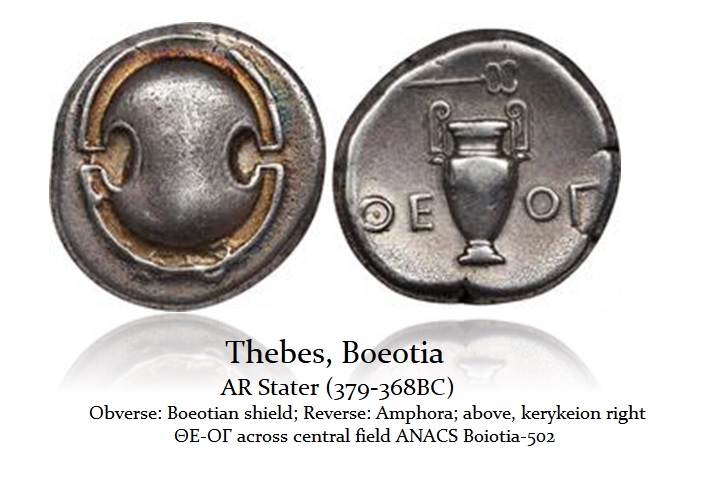
The initial coup attempt failed. Plataean citizens rallied, captured many Thebans, and executed them. This act was a clear violation of the existing Thirty Years’ Peace treaty. This attack by Sparta’s most powerful ally is widely considered the first overt military action of the war. It gave Athens justification to mobilize and support Plataea. The city-state of Plataea was located in Boeotia. The dominant power in Boeotia was Thebes, which did issue prolific coinage (featuring the Boeotian shield) as the leader of the Boeotian League. There are no coins issued by Plataea, for they appear to have used the coinage of Thebes.
After the failed Theban attack on Plataea and the execution of the Theban prisoners, Sparta, as the leader of the Peloponnesian League, formally declared war on Athens. This declaration followed failed negotiations in which Sparta demanded that Athens lift sanctions against Megara (another Spartan ally) and effectively cede its empire. This demand would have led to Athens’ empire being surrendered, which would have been a committed act of geopolitical suicide. Hence, it was resoundingly rejected.
So, while Thebes struck the first physical blow, Sparta, as the leader of the opposing alliance, formally initiated the state of war. I should point out that Sparta was a Communist State and never issued coinage to prevent people from attaining wealth. Everyone was to provide military service.
The historian Thucydides, who lived through the war, argued that the real cause was deeper than any single event. This was rooted in the rivalry between the two superpowers, not unlike today, with the USA and Europe on one side and Russia and China on the other. Thucydides wrote in his History of the Peloponnesian War.
“The growth of the power of Athens, and the alarm which this inspired in Sparta, made war inevitable.”
After the Persian Wars, Athens transformed the Delian League (originally a defensive alliance) into an Athenian Empire, using its powerful navy to dominate other Greek city-states, extract tribute, and interfere in their affairs. It even moved the treasury from Delos to Athens and funded the construction of the Parthenon. Athens was mainly a maritime power.
Sparta, the traditional land power and leader of the more conservative Peloponnesian League, viewed Athens’ growing power, wealth, and democratic influence with deep suspicion and fear. They saw it as a fundamental threat to their own security, way of life, and leadership in Greece.
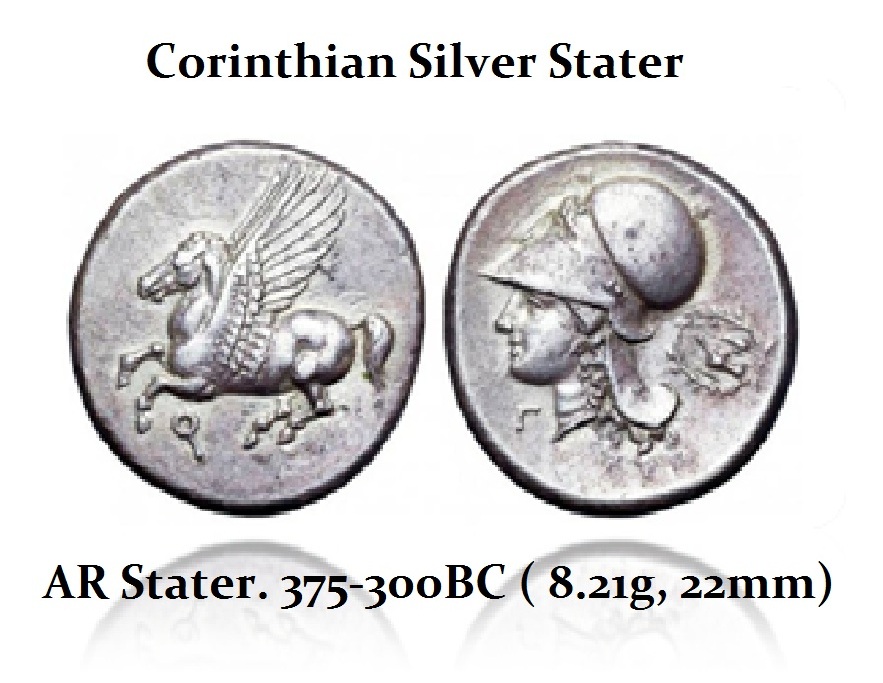
There had been a civil war in Epidamnus, which drew in Corcyra (Corfu) and then Corinth (Sparta’s key ally). Corcyra, not part of either league, appealed to Athens for help against Corinth. Athens made a defensive alliance with Corcyra and sent ships, which fought against Corinthian ships at the Battle of Sybota (433 BC). This directly involved Athens in a conflict against a major Spartan ally, heightening Spartan fears of Athenian expansionism. This is what Trump just did by attacking Iran, an ally of both Russia and China.
The Potidaea Revolt (432-429 BC), which was a Corinthian colony, but also a tribute-paying member of the Athenian Empire, revolted with encouragement from Corinth and Sparta. Athens besieged Potidaea. Corinthian troops fought alongside the Potidaeans against the Athenians. This created another direct military clash between Athens and a key Spartan ally (Corinth), further straining relations and giving Sparta’s allies strong grievances against Athens.
Athens banned Megara in 432BC (a Spartan ally strategically located near Athens) from the ports and markets of the Athenian Empire, crippling its economy. This was not unlike the idea of the Neocons imposing sanctions on Iran. Sparta strongly protested this as a violation of the Thirty Years’ Peace and used it as a key justification for war. This economic sanction was seen as particularly harsh and aggressive, providing Sparta with a specific casus belli and rallying support among its allies who feared similar treatment. This is my concern about the attack on Iran that can be seen as religious.
The fundamental cause, as Thucydides argued, was Sparta’s deep-seated fear of Athens’ growing power and imperial ambitions, which made a major conflict seem inevitable to them. Therefore, while Sparta formally declared war, the aggressive actions of its ally Thebes provided the immediate spark, and decades of Athenian expansion created the tinderbox. The Peloponnesian War began with Sparta and its allies taking the offensive against Athens and its empire. This is very similar to Israel’s attack on Iran, akin to Thebes’ attack on Plataea, which can then draw in the superpowers – USA, Russia, and China.
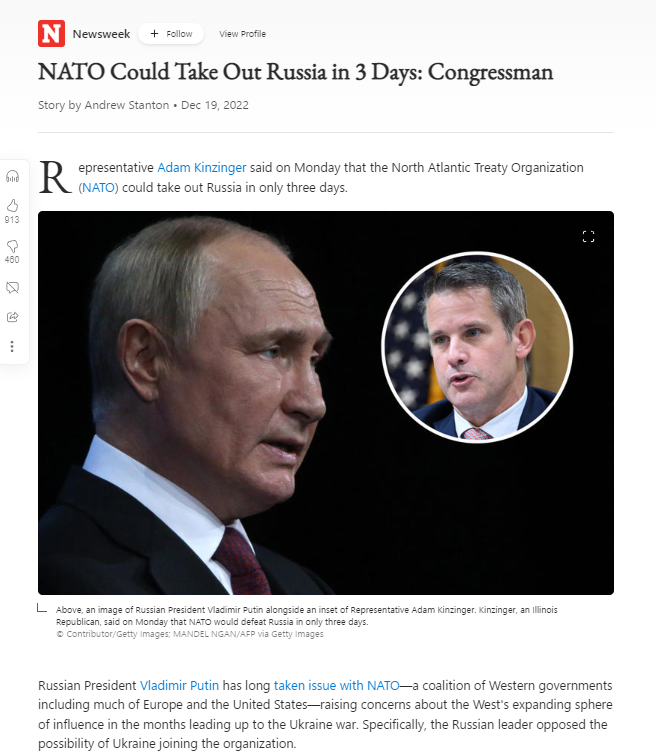
The likelihood of Iran surrendering is ZERO. The Neocons have, as always, judged their target by what they think rather than the thinking process of their target. They have portrayed Trump as a warring president, yet he, too, thought one strike would end the war, listening to the same people who said they could win Vietnam and Iraq would fall in 3 weeks. Like Adam Kinzinger, who boasted that we could defeat Russia in 3 days. They talk to each other and believe their own BS and pat each other on the back for their brilliance.
Even Cicero once said, “Laws are silent in time of war.” Herodotus once said, “For war never ends as expected. Once begun, it takes its own course.” (Herodotus, The Histories, 7.49). And the fake news will keep telling us that Iran is devastated, as is Russia, and we can defeat them in just a few days.
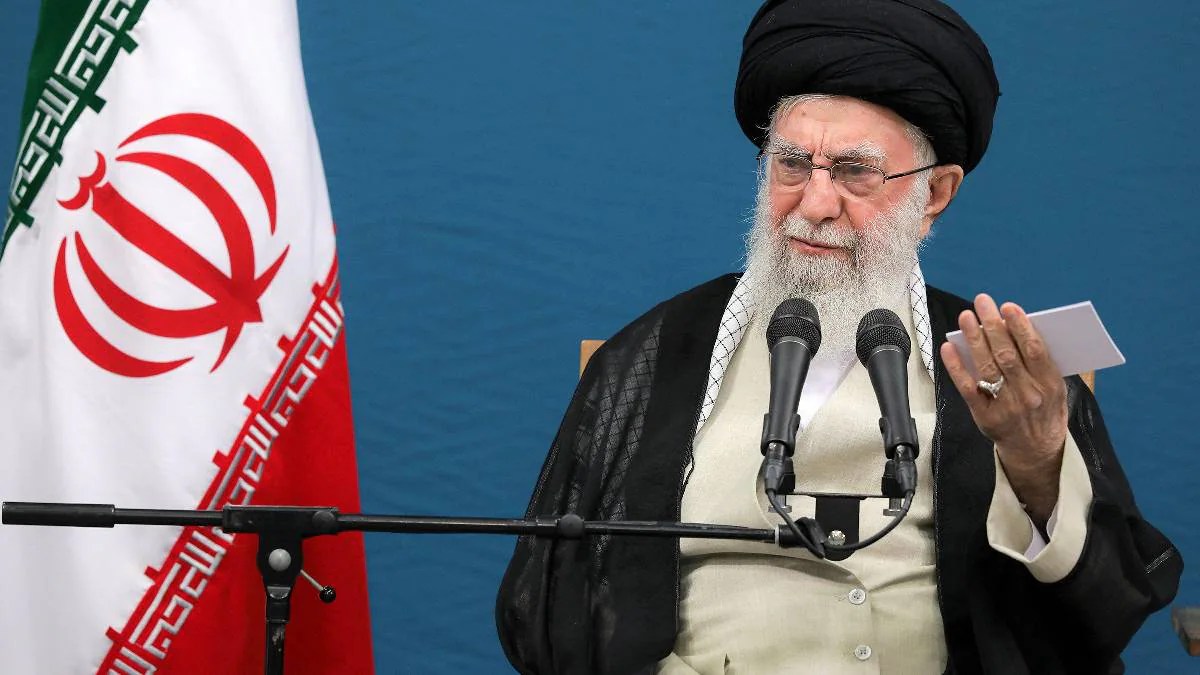
Iran’s defiant leaders fired 40 missiles at Israel on Sunday. As expected, the Neocons never understand their adversary – NEVER! Iran now will feel that almost any action is justified if they are to create weapons to deter future attacks. They would most likely urge their allies to give them nukes. If you understand the background of Ayatollah Ali Khamenei, you would immediately comprehend that he will give very little credence to Mr Trump’s claim this weekend that the bombs have “obliterated” the nuclear programme and that Iran should surrender. Iran’s nuclear project is widely dispersed so that the destruction of one does not end their program. It was designed to expect an attack and to survive.
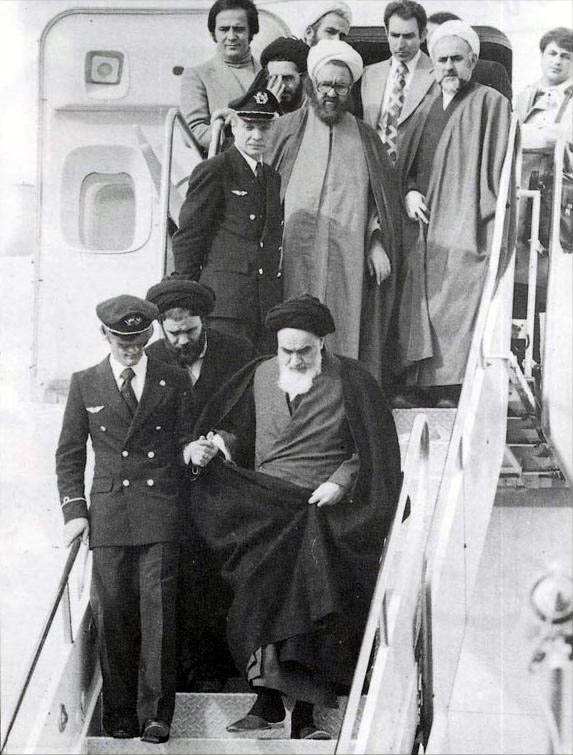
Ayatollah Khamenei’s background is that of a revolutionary cleric who rose through the ranks of the opposition to the Shah, became a key lieutenant to Khomeini, held high office during the Iran-Iraq War, and was chosen as Supreme Leader primarily for his political loyalty and experience within the system, despite initial questions about his religious credentials. His tenure has been characterized by consolidating theocratic control, resisting Western influence, and upholding the core principles of the Islamic Revolution. He no more cares about Iran as a country than the Neocons care about the United States or Europe. They are all motivated by their resolve, if not hatred, of their opponents.
Khamenei became an active opponent of Mohammad Reza Shah Pahlavi’s regime in the 1960s and 1970s. His activism led to multiple arrests and periods of imprisonment by the Shah’s secret police (SAVAK) throughout the 1960s and 70s. He was also tortured during this time. I explained that when Trump was shot, people were saying he would now reverse his rhetoric. I said no, when you face a near-death attempt on your life, you LOSE all sense of any fear of death. You have more resolve and realize that they tried to kill you because you are right.
During periods of freedom and exile within Iran (including in Mashhad and Kirman), Ayatollah Ali Khamenei continued organizing opposition, translating revolutionary texts (like works by Sayyid Qutb), preaching against the Shah, and building networks crucial to the revolution.
Upon the death of Ayatollah Khomeini in June 1989, the Assembly of Experts faced the critical task of selecting a new Supreme Leader. Ayatollah Ali Khamenei, while a senior figure and President, was not considered a top-ranking religious authority (Marja’) at the time. His theological credentials were lower than those of other potential candidates. However, due to his proven loyalty to Khomeini and the revolution, his political experience, his organizational skills within the clerical establishment, and likely the backing of powerful networks within the IRGC and IRP, he was selected as the new Supreme Leader. To address the issue of his religious rank, he was quickly promoted to the rank of Ayatollah (and later Grand Ayatollah/Marja’), though this remains a point of contention among some traditional Shi’a clergy outside Iran.
As Supreme Leader, Khamenei has systematically consolidated power over the military (especially the IRGC), the judiciary, the media, and key economic sectors. He has ultimate authority over all branches of government and key state institutions. A staunch advocate of Khomeini’s doctrine of Velayat-e Faqih (Guardianship of the Islamic Jurist), his resistance to Western (especially US) influence, Islamic unity, technological advancement, and support for “oppressed” groups, such as the Palestinians, ultimately prevailed. The Neocons clearly fail to understand their target. These Neocons constantly make every single mistake driven by their fanaticism, no different than they talk about the Islamic terrorists. Both believe only in their myopic view of the other.
The UNINTENDED CONSEQUENCES that these Neocons have again overlooked are the reality that this attack will by no means end this war, and Iran will not surrender. This will lead to terrorist attacks and civil unrest in Europe. As always, these Neocons only look at their personal hatred and never care about the people or the country.
I have created this site to help people have fun in the kitchen. I write about enjoying life both in and out of my kitchen. Life is short! Make the most of it and enjoy!
This is a library of News Events not reported by the Main Stream Media documenting & connecting the dots on How the Obama Marxist Liberal agenda is destroying America










 Centinel2012