Armstrong on Russia Today


Posted originally on Apr 9, 2025 by Martin Armstrong 

RT 4 9 25 R

COMMENT: I just saw you here on RT (Russia Today) explaining the tariffs. What a marvelous job. Nobody knew that interest and dividends are part of what people call the trade deficit. You appear on TV in Russia explaining the world, but not in America. They are still prejudiced by what the bankers did to you. Thank you for your insight into Trump’s being a businessman, not a politician. The world needs to understand him better.

Yuri

REPLY: I have been criticized by some I know in Washington for appearing on Russian TV. My response is blunt – I don’t give a shit. As President Kennedy said, we all breathe the same air and are all human with our flaws and strengths. I do not subscribe to being prejudiced against a whole people for past events or one person. I have gone to dinner with outright Neocons who, personally, I believe are traitors to humanity. My father taught me long ago to NEVER judge others by your own standards. You must understand their thinking process to grasp why they acted in the past and why they may respond in the future. Everyone and every creature will act in their own self-interest.

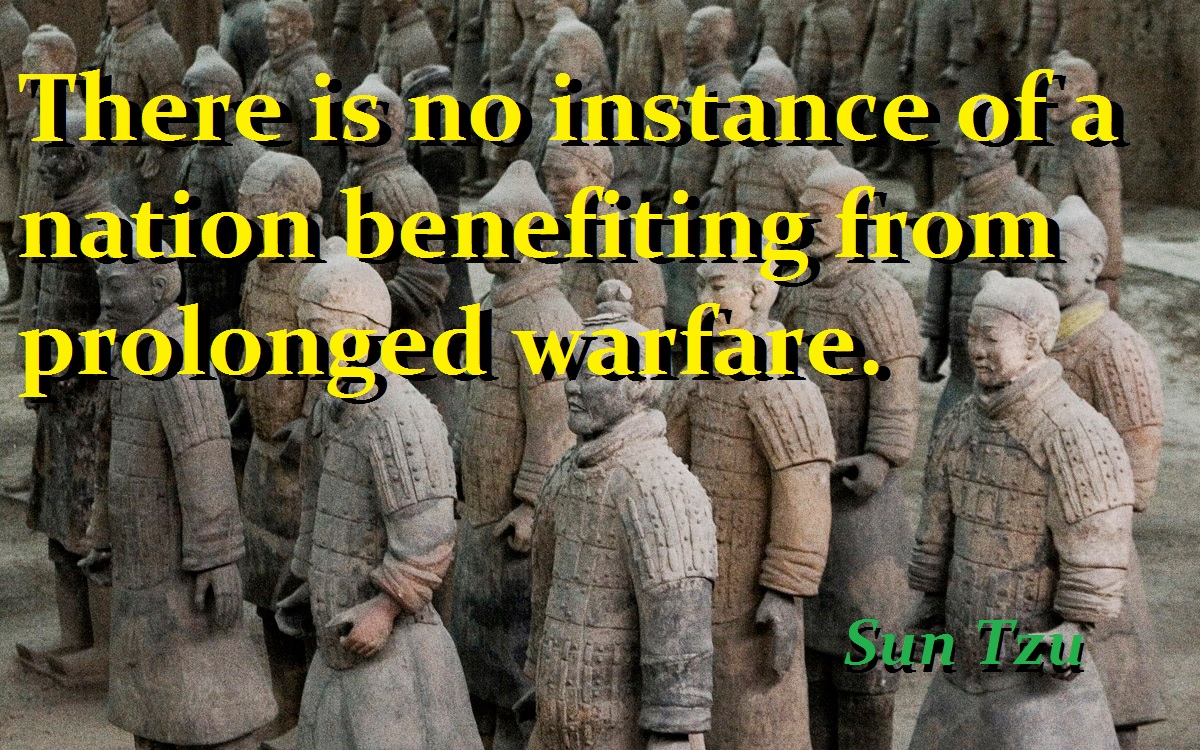
Sun Tzu

I learn as much by doing an interview in Russia as they get from me. I like to hear the questions, for it shows me what is at the top of their thinking process. It is the Neocons who tell leaders never to talk to the enemy. Why? Because you may come to an agreement and settle on peace.

Reagan Explains Socialism to a Child


Posted originally on Apr 6, 2025 by Martin Armstrong 

Current Status: Russian President Vladimir Putin


Posted originally on CTH on March 31, 2025 | Sundance

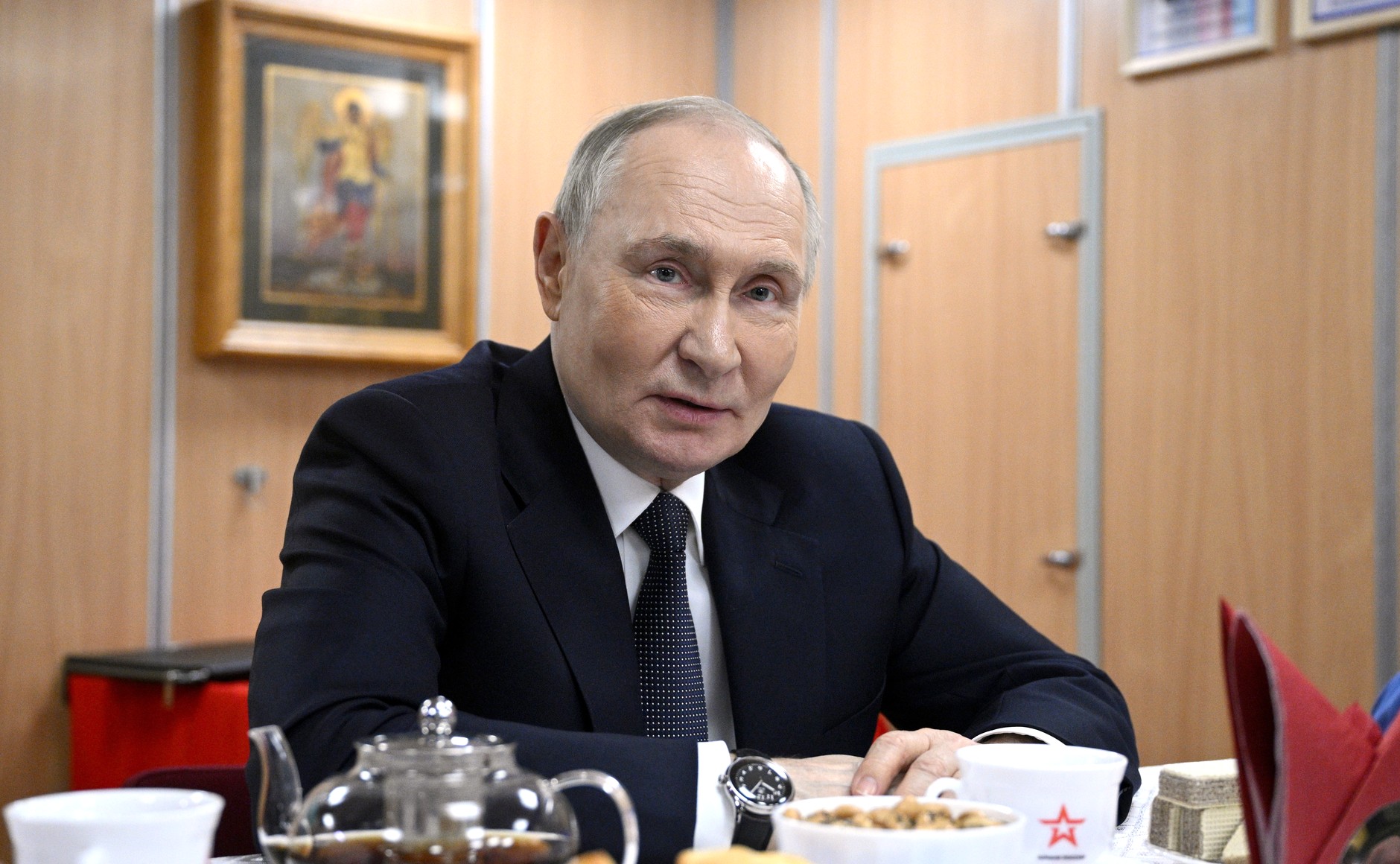
Russian President Vladimir Putin recently (3/27/25) visited the Commander and Crew of the latest Russian nuclear submarine, the Arkhangelsk.

The Arkhangelsk is a Project 885M Yasen-M ship, the latest fourth-generation multipurpose nuclear-powered submarine capable of carrying any sea-launched missiles and effectively hitting targets both at sea and on land. The submarine was completed and delivered to the Russian Navy on December 27, 2024. “Its crew has recently completed its basic training and is now ready to carry out its duties at sea.”

President Putin’s full remarks are HERE.

♦ Could you share your assessment of the latest developments and how the special military operation has been unfolding?

Vladimir Putin: “Of course, I can.

To put it briefly, we are gradually moving towards achieving all the objectives we set for ourselves at the start of the operation. Some would have liked these advances to happen at a quicker pace, but we have gathered steady momentum and have been confidently advancing our positions. But I would like to frame this question in a different way.

What I want to say is that we were not the ones who started or launched hostilities. It all started in the wake of the 2014 coup d’etat in Ukraine. Western countries supported it, and this was how hostilities broke out in southeastern Ukraine.

We tried to resolve these issues by peaceful means for eight years. Taking Crimea and its people, as well as the people of Sevastopol under our wing was something we had to do. And we went to great lengths and were unrelenting in our efforts to resolve all matters concerning Donbass and Lugansk by peaceful means.”

“It turned out, and everyone knows this today, that both the Ukrainian authorities and their Western curators were unfortunately misleading us and trying to trick us. Former leaders who used to stand at the helm of several leading Western nations, including former President of France Hollande and Ms Merkel, the former German Chancellor, stated openly that they needed these Minsk agreements merely to deliver more weapons to the Ukrainian regime and to prepare it for a military confrontation with Russia. However, during these eight years, the people in Donbass, Lugansk and Donetsk faced outright genocide, and I mean real genocide. But the Ukrainian regime’s Western curators preferred to turn a blind eye to these developments, forcing us to try to stop the war which started in 2014 by military means. We were not the ones who started it.

By the way, even when the armed conflict escalated into open confrontation in 2022, we were still offering to settle all the outstanding issues by peaceful means. Moreover, as I have said many times, we reached an agreement with Ukraine during our talks in Istanbul. I must mention that we had an agreement on matters that are being raised all the time these days and are viewed as something impossible. I am referring to de-Nazifying and demilitarising efforts. In fact, we had a deal on these issues, and it was all set forth in the agreement, I mean its draft. Ukraine’s head negotiator initialled a summary of this document. They initialled and signed this document, which means that it was acceptable to them.

We know what happened next. After that, their European curators arrived, including former UK Prime Minister Boris Johnson, who convinced the Ukrainian leadership to keep fighting until there are virtually no Ukrainians left and to inflict a strategic defeat on Russia.

He probably forgot that we have crews like the one you are in, and that we have means like this submarine. He probably forgot, or maybe they ignore altogether what the Russian people represent, what they stand for and what they have in their hearts and souls when it comes to ¹defending their Fatherland.

Overall, we can clearly see what is happening right now. Our troops have the strategic initiative along the entire contact line. Only recently, I said that we would squeeze them into a corner, but now we have reason to believe that we are set to finish them off. I think that people in Ukraine need to realise what is going on.

Our Armed Forces have been gathering momentum and acting increasingly effectively. Major General Mikhail Gudkov, who took part in combat action, can tell you about it.

He commands the Pacific Fleet’s 155th Naval Infantry Brigade. I believe that this is one of the best brigades in our Armed Forces. The Defence Minister and the Chief of the General Staff believe that Major General Gudkov’s achievements must be replicated across our Armed Forces, primarily by the naval infantry units, which have been quite effective in combat. They are actually very good. It would not be an exaggeration to say that these are elite units within the Armed Forces, just like the paratroopers and the special operations units.

Although I should note that earlier today, just before arriving here, I received another report from the Chief of the General Staff. Other units of the Armed Forces have gained significant momentum.

Regarding the marines, I have already stated that they are performing superbly. Since both the Defence Minister and the Chief of the General Staff believe that your experience should be replicated across other units, I have decided to transfer you to a new position, elevating your level of responsibility. You are hereby appointed Deputy Commander of the Navy of the Armed Forces of the Russian Federation.”

♦ Petty Officer II class Ivan Domnin. Today, the entire world’s attention is focused on the negotiations between Russia and the United States. Unexpectedly, we have begun dialogue and rapprochement with our main rival. If possible, I would like to hear first-hand about the progress and the outcomes of these talks.

Vladimir Putin: “Do not concern yourself with this; simply carry out your service and fulfil your duty. (Laughter.)

That was a joke. I understand that everyone in the world and in our country is closely following these developments.

In this regard, I would like to state – first and foremost – that, in my view, the newly elected President of the United States sincerely wishes to end this conflict for a number of reasons – I will not list them now, as they are numerous. But in my opinion, this aspiration is genuine.

It is clear that the conflict I have just mentioned and briefly characterised in terms of recent developments, remains complex and requires thorough discussion and consideration.

We stand for resolving all these issues by peaceful means, as I have just stated, reinforcing the measures we have taken from the very beginning – first, second, and third.

Therefore, we advocate resolving these issues through peaceful means, but with the elimination of the root causes that have led to the current situation. We must undoubtedly ensure Russia’s security from the long-term historical perspective. Any step taken to achieve this objective will be welcomed by us, and we will work with any partners who strive towards this goal.

This includes not only the United States but also the People’s Republic of China, India, Brazil, South Africa, all BRICS nations, and many others, such as the Democratic People’s Republic of Korea, with which we have a signed treaty. Article 4 of this treaty outlines in detail our mutual obligations for support. Cooperation with this country is also progressing in both military-technical and defence spheres.

We are prepared to work with Europe as well, despite their inconsistent behaviour and constant attempts to lead us up the garden path. Nevertheless, we have grown accustomed to this. I trust we will avoid making mistakes rooted in excessive trust towards our so-called partners.

But in general, they have a problem over there, which is never highlighted, just mentioned in passing. I am highlighting it. What is it? Ultranationalists have had considerable influence in Ukraine from the start, in fact, since the collapse of the Soviet Union. These people hold openly neo-Nazi views, and they even use the term in Ukraine, so we were not the ones who invented it. Curiously, few people mention this now, either.

In 2017, the United States Congress added a provision to the government spending bill that prohibited financing or having any relations with units like the Azov militia unit. An American lawmaker directly described that paramilitary group as terrorist and anti-Semitic.

Moreover, although the amendment was not supported by the Senate at that time, in a year or two, its sponsors, including the oldest member of the US Congress, supported that legislation, and it was adopted by Congress. The US Congress recognised Azov as a terrorist, anti-Semitic, and neo-Nazi organisation.

Has anything changed since then? No. Essentially, Azov has not changed. It has remained the same. However, in 2022, the State Department decided that US military aid could go to that controversial unit because it had been integrated into the Armed Forces of Ukraine – apparently, the bill allowed this interpretation. The fact that it was integrated into the official armed forces changed nothing. Their views and actions remained the same as they were at the start.

If anything, it has become worse, because now they plan to strengthen these units, including Azov, and elevate them to divisions. This means that such people now have even more weapons at their disposal. They have more supporters, people they have persuaded to fight for them by implanting their views.

What happens next? As a result, the current civil authorities in Ukraine have no legitimacy in accordance with the country’s constitution. Ukraine has held no presidential election, while according to the constitution, all key officials are to be appointed by the president, including regional government bodies, governors and so on. So, if the president is illegitimate, so are all the others.

So, under these circumstances of de facto illegitimacy, neo-Nazi formations receive additional weapons and recruit new personnel. What does this lead to, what could it lead to? It results in de facto power being in their hands. This, in turn, means that it is already unclear with whom to sign documents and what effect such documents might carry, for tomorrow new leaders may come to power through elections and declare: “We do not know who signed those papers, so goodbye.”

The issue is not just this uncertainty; it is that these neo-Nazi formations, such as Azov, among others, are effectively beginning to run the country. This raises the question: how is it possible to conduct negotiations with them?

In such situations, international practice follows a well-established path. Within the framework of the United Nations peacekeeping operations, there have been several cases of what is termed external governance or temporary administration. This occurred in East Timor, I believe in 1999, in parts of the former Yugoslavia, and in New Guinea. In short, such precedents exist.

In principle, it would indeed be possible to discuss, under UN auspices with the United States and even European countries – and certainly with our partners and allies – the possibility of establishing a temporary administration in Ukraine. To what end? To conduct democratic elections, to bring to power a competent government that enjoys public trust, and only then to begin negotiations on a peace treaty and sign legitimate agreements that would be recognised worldwide as consistent and reliable.

This is just one option; I do not claim that others do not exist. They certainly do. At present, there is no opportunity – and perhaps no possibility – to lay out every detail, as the situation is evolving rapidly. But this remains a viable option, and such precedents exist within UN practice, as I have already noted.

Ultimately, we advocate for the resolution of all conflicts, including this one, through peaceful means. But not at our expense.”  (Full Remarks)

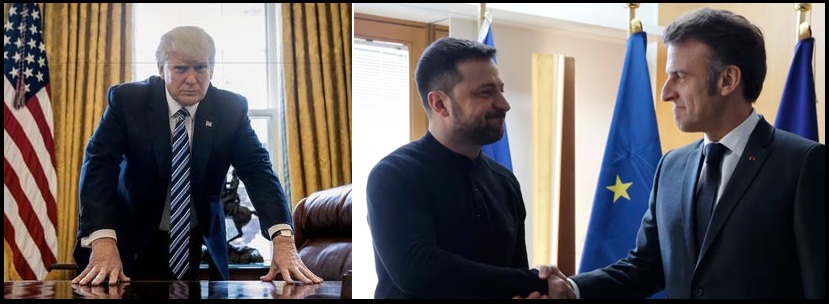
Factually, a civil war was ongoing in Ukraine for well over a decade. NATO exploited that civil war to create a U.S. proxy war against Russia.  Zelenskyy is not negotiating for peace; he’s buying time against what Trump wants to do.

He’s buying time for the EU/UK and corrupt NATO interests to organize a separate funding mechanism for continuation of war. The UK/France have promised to provide the intel service. The EU/UK now need to organize the funding mechanisms. They are doing it currently.

A generally belligerent Volodymyr Zelensky, who will not accept any terms for negotiated peace (so far), continues playing the victim and saying Russia is violating terms needed for peace.   NATO and the EU alliance continue telling Zelensky to keep fighting; Zelensky rejects anything that stops the fighting; NATO and the EU alliance continue demanding that President Trump support Zelensky.  That’s the current cycle.

Putin knows the game, that’s why he is keeping up the offensive action.

At some point in this great game of ‘ceasefire’ pretense, President Trump is going to cut the gordian knot.

.

[¹After spending three months in Russia last year, I penned a review of my experience.  Many “Russian experts” took exception to my use of the term “fatherland” calling it the wrong gender to describe the modern relationship between the Russian Federation government and the citizens therein. – SEE HERE – Please note, the USSR system no longer exists and as President Putin factually describes it, I was correct.]


Prime Minister Carney Declares Canada’s “Relationship with America is Over”


Posted originally on CTH onMarch 28, 2025 | Sundance

Canada Prime Minister Mark Carney delivers a speech to the nation notifying the Canadian people that the era of an economic and military collaborative relationship between the United States and Canada is over.

As the majority of Canadians cheer, the Prime Minister said that Canada as a free independent and sovereign nation will now embrace its connections to the United Kingdon and European Union and seek to replace their national dependency on the United States by severing ties in North America and entering a new era of close relations with Great Britain and Europe.

When questioned if Canada would join the European Union, a seemingly natural fit for the ideologically aligned country, Prime Minister Carney said, “nothing is off the table.”   In a rather remarkable end to the confrontation, the Carney says the economic and military ties between the USA and Canada are officially declared severed.  WATCH:

“We as Canadians, have agency”… What does that even mean?

.

President Trump asked Prime Minister Trudeau and the Canadian government to close the border to narcotraffickers and shutdown the pipeline of Chinese fentanyl.  The Canadian govt chose not to and Prime Minister Mark Carney continues the refusal.

The entire Canadian border enforcement system, agents, support personnel, the entire operation for 5,000-mile border consists of 300 people.  Not exactly a strong commitment to border security.

President Trump asked the Canadian government to remove trade tariffs, remove non-tariff trade barriers, and initiate reciprocal trade. The Canadian govt chose not to.

President Trump asked the Canadian govt to stop being a pass-through for Chinese goods that violates the USMCA. The Canadian govt chose not to.

President Trump asked the Canadian govt to open access to U.S. banks and financial services. The Canadian govt said no.

President Trump asked the Canadian govt to live up to the NATO commitment of 2.5% GDP spending on military defense. The Canadian govt said no, you will defend us free of charge and just accept it.

Now, members of the Canadian government are saying they want to “inflict the maximum amount of pain on Americans possible.”

Canada destroyed most of their heavy industry and chases the climate change hoax in all economic policies. Canada is destroying itself, no help from the UK or EU is needed.

Canada imported Steel and Aluminum from China, then shipped it into the USA, undercutting U.S. industry and trying to weaken U.S. heavy industry to match their own level of dependence.  Eventually, President Trump said ENOUGH!

Installed Prime Minister Mark Carney Schedules Canadian SNAP Election for April 28th


Posted originally on CTH on March 24, 2025 | Sundance

Interim installed Canadian Prime Minister Mark Carney has confirmed the snap election for Canada is scheduled for April 28, 2025.

Given that Conservative Leader Pierre Poilievre generally sealed his fate with criticism of President Trump while aligning himself with a surging patriotic-leftist movement, it is now expected that Mark Carney will win the election.

Politico has an article about the dynamic underway, and the following quotes are noteworthy:

CANADA – […] Trump has even taken credit for turning the Liberals’ fortunes around.

“Before I got involved and totally changed the election — which I don’t care about, probably, it’s our advantage, actually — but the Conservative was leading against, I call him Governor Trudeau. The conservative was leading by 35 points,” he said Friday, while exaggerating the polls.

“I think Canada is a place, like a lot of other places, if you have a good candidate, the candidate is going to work,” Trump said.

[…] Canadians have responded to Trump’s intimidation tactics with an outburst of patriotism. They are canceling spring break plans, buying made-in-Canada products, damaging Teslas and booing “The Star Spangled Banner” at professional sporting events.

Carney’s campaign slogan is “Canada Strong” while Poilievre’s is “Canada First.”

[…] In a recent interview with Fox News, the president was asked about how his recent treatment toward Canada appears to be helping the Liberal party.

I don’t care,” he said. “I think it’s easier to deal, actually, with a liberal and maybe they’re going to win, but I don’t really care.

Trump went on to say Poilievre “is stupidly no friend of mine” because of the “negative things” he has said about the president.

Poilievre has tried to frame the comments as proof that Trump is endorsing Carney, while the Conservative leader attempts to revamp his strategy to meet the moment. (read more)

From the perspective of President Trump, the main asset in the arsenal of the Canadian tariffs is “energy.”  As a consequence, having a strong “climate change” prime minister up there will mitigate any use of the energy sector and help the strategic North American economic strategy of President Trump.

{GO DEEP}

Boycotts by Canadians are generally welcomed in the U.S. hospitality industry, not coincidentally an industry of great familiarity to President Trump.   Canada simply doesn’t have any tariff weapons in their arsenal for countervailing duties.

The latest strategy by the Canadian government is to rent billboards in various red states, trying to convince Americans they need Canada more than they need Donald Trump’s reciprocity tariffs.  It is a dubious proposition at best, and a little funny all things considered.  But hey, the feels. [Prompted]

Canadians Boycott US Travel


Posted originally on Mar 17, 2025 by Martin Armstrong 

airplan air travel airtravel

Canadians are outraged at US President Donald Trump’s repeated threats to annex Canada. Canadian consumers began boycotting American products and are now boycotting America in general as tourism sank by nearly a quarter this February. Statistics Canada reported a 23% decline in trips via car from the US this February, marking the second consecutive monthly decline, while trips to the US by air declined 2.4%.

Based on personal conversations with Canadian friends, I do not believe this decline is simply correlated with the falling Canadian dollar or unfavorable exchange rate. The US was the top travel destination for Canadian tourists, and many state and local economies depend on those tourism dollars. Canadian license tags nearly equate to US tags in the spring and summer months down here in Florida. Yet, Canadians are genuinely outraged by Trump’s comments on their nation becoming a US state and want to boycott the US and anything manufactured here. I have even heard of companies canceling conferences in the US due to tensions.

Hotel reservations near the Canadian border have seen notable decreases as well. Niagara Falls, New York, reported a 8.1% decline in Saturday night bookings and Bellingham, Washinton, recently saw a 10.8% dip. Canadian travel agency Flight Centre rang the alarm that booking to the US in February plummeted an alarming 40% YoY.

There were over 20.4 million visits to the US from Canada in 2024, aiding in $20.5 billion in spending. The US Travel Association believes a 10% decline in Canadian tourism could shed $2.1 billion from the US economy and cost up to 14,000 jobs. The association noted that if the current trend continues, the US economy will lose at least $4 billion in tourism. Tourism states like Florida, New York, Nevada, Texas, and California will experience the worst repercussions of this travel boycott.

Canada is a sovereign nation, and the people wish to keep it that way. We had an excellent relationship with our neighbors to the north despite political warfare. Now, it seems as if anti-American sentiments are growing across Canada since President Trump has been keen on potentially annexing it.

For our Canadian readers— as you know with Trudeau and now Carney, our leaders do not always speak on behalf of those they claim to represent. Americans have no desire to annex Canada. In fact, the majority on both sides of the political spectrum thought Trump was simply mocking Trudeau when he proposed making Canada a state. The majority of Americans respect Canada’s sovereignty and wish we could lay this topic to rest already.

Monetary History ofCanada


Posted originally by Martin Armstrong on March 12


Early 1600s: Beaver pelts are the one universally accepted medium of exchange, though wheat and moose skins are also legal tender

Mid 1600s: Wampum, or strings and belts made from shell beads, becomes legal tender in colonial New England. Eight white beads or four purple beads buy one penny.

Canada Playcard Money - 3

June 8, 1685: The first issue of card money occurs, which is printed on playing cards. The practice is criticized because it’s easy to counterfeit.

1722: Copper coins are introduced, though merchants didn’t like them; they continued to let people buy goods based on their own credit standing.

Eighteenth century: The lack of a standard currency and the differences in ratings given to the many coins in circulation in the colonies, “undoubtedly hindered trade and was a major source of economic inefficiency.”

Canada 1819 First Bank Note

1817: The Montreal Bank (subsequently the Bank of Montreal) issued the first bank notes in Canada after its establishment in 1817. Other banks soon followed suit. The notes were well received and became the main means of payment in British North America.

Canada 1911 $500

1854 – 1914: The Dominion of Canada is under the gold standard. The value of the Canadian dollar was fixed in terms of gold and valued at par with the U.S. currency. Both U.S. and British gold coins are legal tender in Canada.

July 11, 1864: The greenback sinks to less than 36 cents (Canadian), an all-time peak for the Canadian dollar, from close to parity in early 1862. It subsequently recovers through the decade and the currencies trade around par until the outbreak of the First World War.

Canada 1954 $1000

Mid-1950: Canadian dollar depreciates. The federal government cancels fixed parity, putting it at odds with the International Monetary Fund, and the Canadian currency appreciates.

Aug. 20, 1957: The Canadian dollar hits a peak of $1.06 (U.S.).

May 2, 1962: The government establishes a new par for the Canadian dollar, fixing it at 92.50 cents (U.S.) with a fluctuation band of 1 per cent.

May 31, 1970: The government floats the Canadian dollar amid a growing budget surplus and rising inflation.

April 25, 1974: The dollar hits a high of $1.04 (U.S.) against the greenback as global demand boosts the price of raw materials. The strength sparked fear about Canada’s export industries at a time when the unemployment rate was already high.

Nov. 15, 1976: The Parti Québécois is elected, causing markets to “make a major reassessment of the Canadian dollar’s prospects.” At the same time, commodity prices start to soften, inflation picks up. By 1979, the currency slides to 84 cents (U.S.).

August, 1981: The Bank of Canada’s key rate hits 21.2 per cent. By 1982, the dollar traded below 77 cents (U.S.).

Feb. 4, 1986: The Canadian dollar hits a record low of 69.13 cents (U.S.) as falling commodity prices hurt the economy.

1988-1989: The currency rebounds somewhat to close the decade at 86 cents (U.S.).

1990s: The currency weakens again, closing the decade at 69.29 cents (U.S.). Inflation and interest rates fall and commodity prices soften.

1998: The international crisis in emerging markets such as Russia and Latin America causes the dollar to slide as low as 63.11 cents (U.S.).

2002: The currency hits a record low of 61.98 cents (U.S.) on Jan. 18, 2002.

2006: The loonie tops 90 cents (U.S.), prompting calls for parity. It then weakens for much of the balance of the year.

2007: The loonie takes flight again. On May 31, it topped 94 cents (U.S.) – the highest level in 30 years. Later that year it hit parity in September. That fall the loonie hit its modern-day intra-day high of $1.10 (U.S.), and hit its highest closing price of $1.08 (U.S.) on Nov. 6, 2007.

2008: The loonie continued to trade near parity until it dipped below that level on July 21, 2008.

2009: The Canadian dollar closed at a recent low of 76 cents U.S. on March 9, 2009, before restarting a rapid ascent higher against a basket of international currencies.

2010: The loonie touches parity for the first time in 20 months on April 6, 2010.

POSOBIEC: The Russians Have Cut Off The Ukrainians And Their Supply Lines


Posted originally on Rumble By Bannon’s War Room on: Mar 8, 2025, at 12:00 am EST

North Korean Troops in Ukraine May Never Return Home


Posted originally onMar 3, 2025 by Martin Armstrong 

NorthKorea.Russia

North Korean dictator Kim Jong-un has refused to repatriate the bodies of soldiers killed fighting on behalf of Russia. Reports are circulating that Russia has repeatedly asked the nation to transfer bodies, but Pyongyang refuses as it fears civil unrest.

The only information that the people of North Korea can access is what the government provides and most do not know the extent of the war abroad. They have been brainwashed to believe that the rest of the world is living in dire conditions far worse than their own. The regime is allegedly worried that accepting the dead would stain Kim’s invincible carefully orchestrated image and cause outrage among the people who have been living in utter poverty and despair.

What’s worse is that Kim allegedly will not accept the injured either. What happens to the thousands of North Korean troops when the war ends? They now know of the world outside North Korea—the lies have been exposed. Democracy is not an oppressive system and people outside their nation live FAR better than one could have possibly imagined. An inkling of dissent is enough to send the current regime into a tailspin.

The troops cannot defect as North Korean law dictates that THREE GENERATIONS of one’s family must be punished if someone commits a crime. If someone defects, their entire family will be killed or sent off to labor camps. Ukraine could decimate North Korea by shattering the illusion created by the Kim dynasty, but the men have been ordered not to surrender. Ukrainian troops have described their foes as outright suicidal, with many detonating grenades beneath their chin rather than face capture. One Ukrainian soldier said a North Korean troop called out “General Kim Jong Un” before taking his life.

There are now at least 3,000 to 4,000 deceased bodies awaiting proper burial. Between 10,000 to 12,000 men have been sent to Russia thus far, and North Korea said it plans to continue sending troops to Russia in exchange for economic relief.

North Korea ECM 2 1

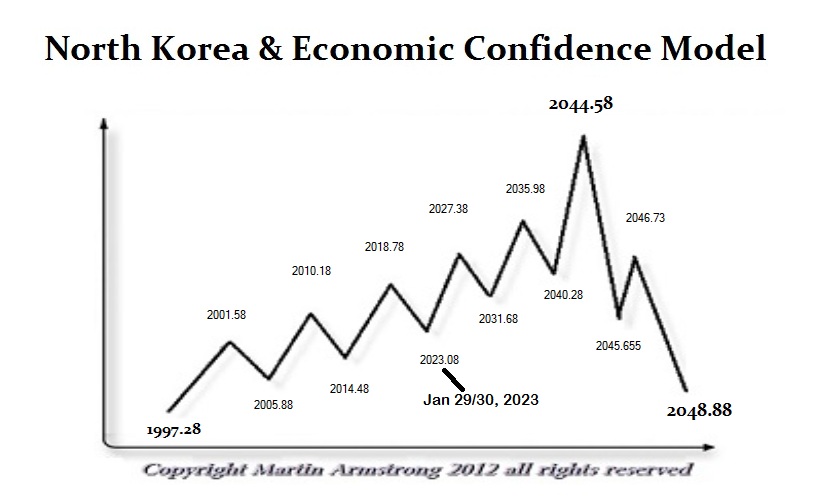
The 72-year Revolutionary Cycle for North Korea is set to turn up in 2025, suggesting potential for significant changes or upheaval within the country.

North Korea is one of the most militarized nations in the world, hosting 1.2 million troops. Some believe that those deployed to Russia have such a strong loyalty to their leader that they plan to use their battleground experience to continue supporting Kim’s regime back home. But what happens if Pyongyang does not allow these men to return? How effective can rhetoric be when thousands of sons, husbands, nephews, neighbors, and friends never return?

On the other hand, what happens if these men do return home but begin to question their loyalty? Empires fall when the military turns against the very people they have sworn to protect. These men have the potential to form the most powerful alliance and coup that could be capable of the unthinkable—destroying the Kim dynasty and freeing the people of North Korea.

Chrystia Freeland Canada Needs to Arm Nuclear Against the USA


Posted originally on Mar 2, 2025 by Martin Armstrong

Chrystia Freeland, Klaus Schwab’s stooge, has gone rogue and is pitching to become the next prime minister of Canada. She claims that the world is looking to Canada to be the new leader of the Free World. She is advocating joining with NATO against the United States, with Britain and France adding as nuclear powers, all to protect this leftist agenda because they know they are losing support globally. She said:

“The US is turning predator, and so what Canada needs to do is work closely with our democratic allies, our military allies. I would start with our Nordic partners, specifically Denmark who is also being threatened, and our NATO European allies. I would be sure that France and Britian were there who possess NUCLEAR WEAPONS and I will be working urgently with these partners to build a closer security relationship that guarantees our security in a time when United States can be a threat.”

We live in Interesting Times