A Technical Study in the Relationships of Solar Flux, Water, Carbon Dioxide and Global Temperatures, April 2019 Data


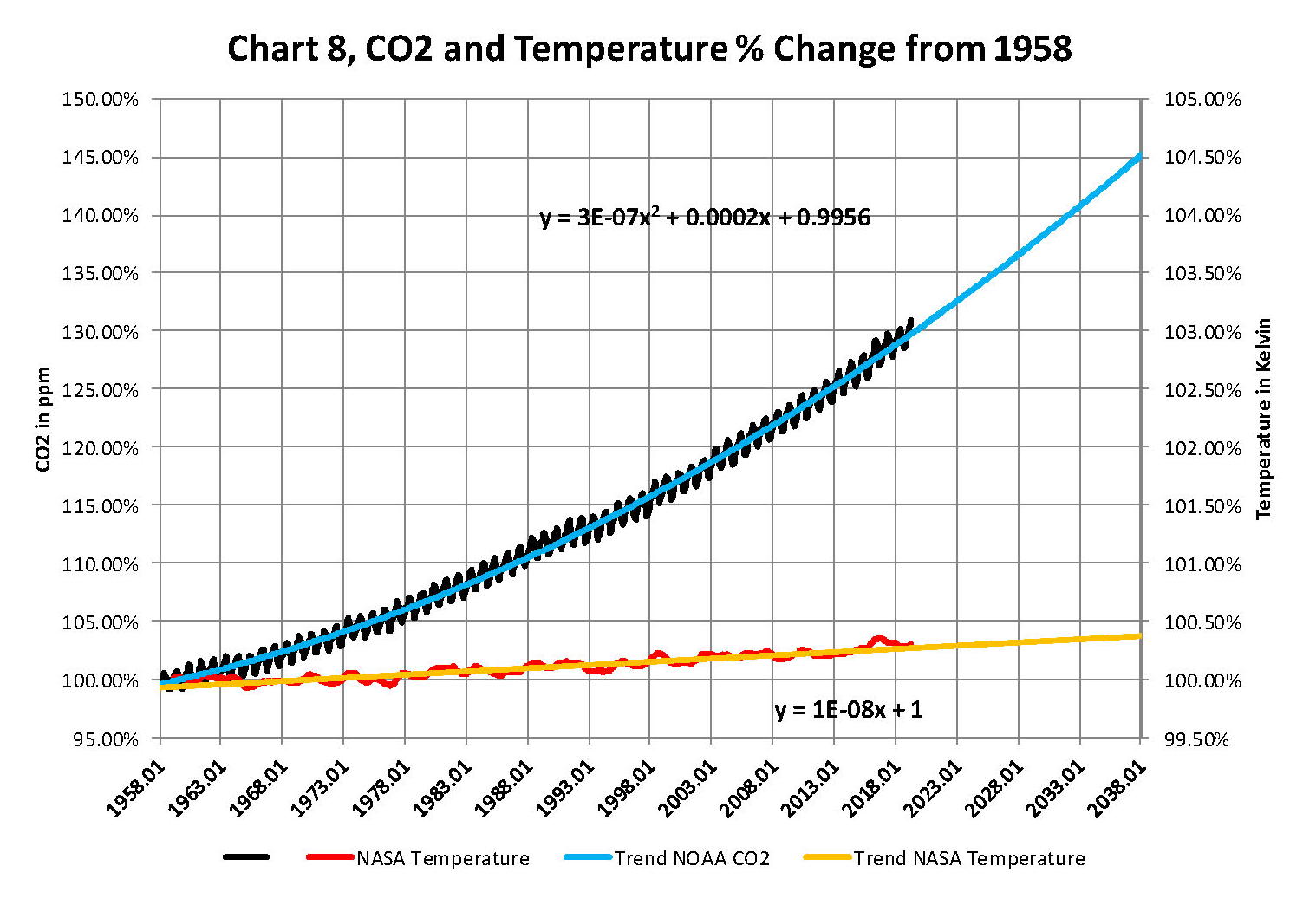
From the attached report on climate change for April 2019 we have the two charts showing how much has the global temperature actually gone up since we started to measure CO2 in the atmosphere? To show this graphically Chart 8 was constructed by plotting CO2 as a percent increase from when it was first measured in 1958, the Black plot, the scale is on the left and it shows CO2 going up about 30.0% from 1958 to April of 2019. That is a very large change as anyone would have to agree.  Now how about temperature, well when we look at the percentage change in temperature from 1958, using Kelvin (which does measure the change in heat), we find that the changes in global temperature (heat) are almost un-measurable. The scale on the right side had to be expanded 10 times (the range is 40 % on the left and 4% on the right) to be able to see the plot in the same chart in any detail. The red plot, starting in 1958, shows that the thermal energy in the earth’s atmosphere increased by .30%; while CO2 has increased by 30.0% which is 100 times that of the increase in temperature. So is there really a meaningful link between them that would give as a major problem? The numbers tell us no there isn’t.

The next chart is Chart 8a which is the same as Chart 8 except for the scales which are the same for both CO2 and Temperature. As you see the increase in energy, heat, is not visually observably in this chart hence the need for the previous chart 8 to show the minuscule increase in thermal energy shown by NASA in relationship to the change in CO2. Based to these trends, determined by excel not me, in 2028 CO2 will be 428 ppm and temperatures will be 15.0o Celsius and in 2038 CO2 will be 458 ppm and temperatures will be 15.6O Celsius. This is what the data shows no matter what the reasons are, so I have no idea how the IPCC gets to predict that the world will end in ten or even twenty years.

The full 37 page report explains how these charts were developed and why using NASA and NOAA data are used with out change to prove that The New Green Deal is not required and any attempt to compliment that plan will be a world wide disaster.

Click on the link below for the full report that you can download.

BLACKBODY TEMPERATURE 2019-04 Data

Printing Money to Cover the Cost of Government


QUESTION: Hi Marty,
I have read that Lincoln’s treasury issued “Greenbacks” to help fund the North during the civil war.
1. Was this a direct printing, issuing of paper currency, aka like your “The Solution” ? (Bill Still, creator of the money masters documentary claims such…)
2. Others claim that it was meant all along to be backed by gold, and they point to the Specie Payment Resumption Act of January 14, 1875 as evidence..
So many different conflicting opinions / explanations out there, and was hoping you would tell us all what you believe about the Greenbacks. Thanks once again for all you do!

DC

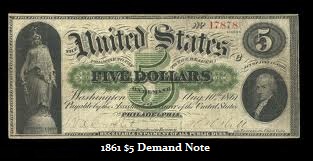
ANSWER: Paper currency was issued to fund the Civil War beginning in 1861. Demand notes were issued between August 1861 and April 1862 to fund the American Civil War in denominations of 5, 10, and 20 USD. Demand notes were the first issue of paper money by the United States that achieved wide circulation. They were used to pay expenses incurred during the Civil War including the salaries of its workers and military personnel.

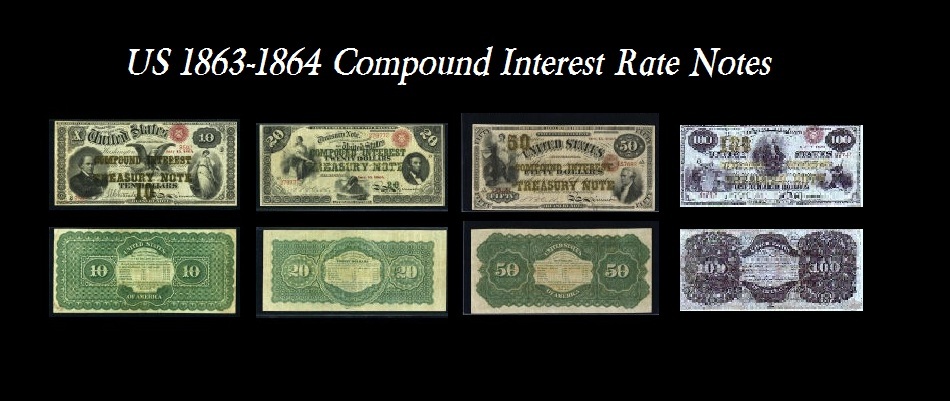
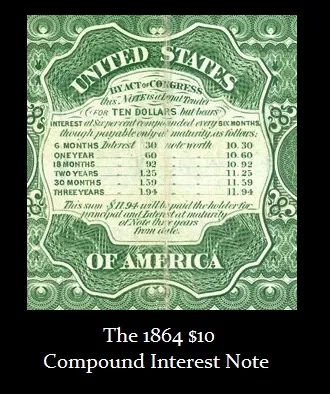
There was a reluctance to accept the demand notes, for there was no intent on redeeming them in gold. Instead, the government issued currency that was really a form of circulating bearer bonds. They were interest-bearing notes that had the table on the reverse, expressing the value of the note in terms of interest.

Demand notes became known as “greenbacks,” which distinguished them from the interest-bearing notes that displayed the interest table on the reverse. The demand note only had green ink.

The demand notes were discontinued, and their successors were the legal tender notes. The legal tenders could not be used to pay import duties, which were the taxes imposed at that time (indirect taxation). Demand notes took precedence and were acceptable. As a result, most demand notes were redeemed.

Therefore, the issue of paper money to pay the expenses worked. There was no such promise to repay these notes in gold when they were issued.

World Trade


COMMENT: Hi Marty

I agree with Trump. Assembling in the U S is not sufficient. We need the supply chain parts (eg manufacturing ) in the US. What do we do when we get in a war with say China – do we submit an order to china for parts to assemble a ship? Does not fly.

Kyle Bass and Bannon have come out speaking about the duty american companies have to our country. They use our legal system, tax system, to date favorable non tariffs and other incentives — where is the pay back to us? The days when our country was simply for sale and being sold out by politicians is gone – or we won’t have much of a country left. We have lost about half of our manufacturing jobs since nafta.

It needs to stop. Too bad if countries whine and cry that we can no longer be taken advantage of
We have been used and abused for a long time…people are sick of it.

thanks for the blog

Alice

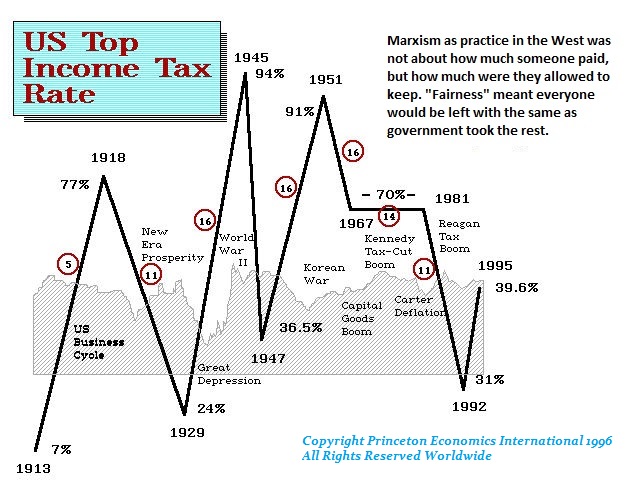
REPLY: It is true that parts are shipped and then the final assembly takes place in the USA. But we also have to ask why did manufacturing leave in the first place? I testified before the House Way & Means Committee on this topic back in 1996. They wanted to know why no American companies got contracts in China to do the Yellow River Dam, which went to the Germans. I explained that Americans are taxed on worldwide income whereas Europeans pay taxes on what is earned in their territory. Why should someone pay taxes on income generated outside the USA when they are not using any services in the United States? It turns out that we are economic slaves because whatever we produce anywhere belongs to the government. It is no different from the 19th century – we are still the property of the state.

What we must understand is that American companies began to set up offshore just to be competitive. It was not that labor was $5 an hour v $15. That is the popular image they create to target corporations. The real problem is our tax code looks like the brainwave of a schizophrenic.

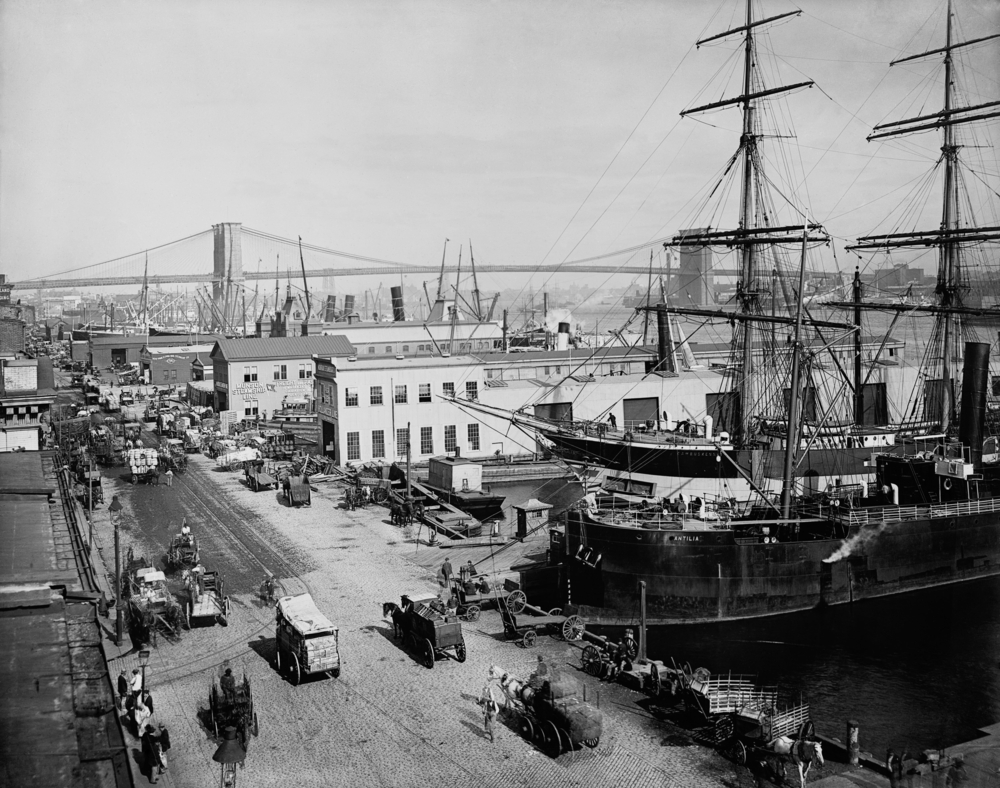
On top of that, we had a period of really hostile unions. Just look at New York City. Here is a photo of horse-drawn express wagons, moored ships, and piers at New York City’s South Street Seaport back in 1901. New York City was the largest port for trade. The unions became so corrupt and militant, they simply drove the port to other cities. There is nothing left in New York City anymore.

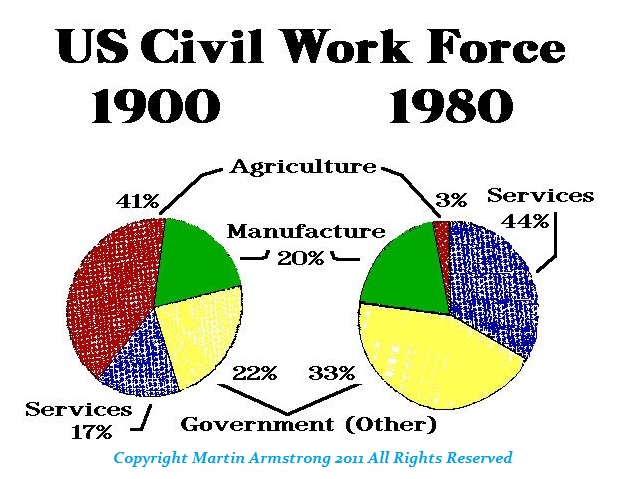
Then there was the fact that the militant unions took the position that they were exploited so the quality of their work declined. The Germans and Japanese offered quality and that was fair competition which eventually forced changes in the United States. Instead of workers, not much is done by robots. If we are really concerned about jobs, then address the elimination of income taxes which would make American workers more competitive. Restore the Constitution to indirect only.

Corporate Buy Backs


Many people are confused as to why corporations have been buying back their shares in mass. The latest figures for 2018 are in and they demonstrate that the S&P 500 listed companies spent more on dividends and buybacks in 2018 than they actually made in total reported earnings ($1.26 trillion vs $1.1 trillion). What is really fascinating is that of the 500 listed companies, 444 have bought back their own shares. Buybacks alone have actually come in at 66% of reported earnings over the last five years. Since 2014, buybacks and dividends combined have exceeded the total increase in S&P 500 market capitalization by $1.3 trillion. In other words, buybacks alone represent 87% of the increase in S&P 500 market capitalization during that period.

Buying back shares at this stage has been massive, but companies have been taking advantage of the cheap interest rates. When interest rates collapsed to artificially low levels, it became economically more efficient to buy back the shares at such a low cost, and this, in turn, will increase the dividend yields. This mix of low interest rates has had a reverse impact on equities. There is no question that companies are keenly aware of just how important their buyback programs are to their share prices. As long as interest rates are cheap, then it’s hard to see them stopping unless the cost of borrowing forces them to do so. This is also setting the stage for a shortage in equities when capital begins to realize that there is a huge problem brewing on the public debt side of the balance sheet.

World View v Domestic & Why It Has Been Always Wrong


COMMENT: Mr Armstrong, I want to thank you for I listened to the forecasts of analysts who said Europe and Emerging Markets were the best places to invest because the US was overpriced and would crash. I was introduced to you by a friend. I listened. I cut my losses and switched to the domestic market. Your analysis saved my future.

I cannot thank you enough.

HA
REPLY: I was a hedge fund manager. I used to manage a fund for Deutsche Bank (Track Record). The reason analysis is so bad is because of regulation. We have the SEC & CFTC and the regulations between them are incompatible. You could never have a fund domestically where you would actually hire a fund manager who made that decision for you. Because of the regulation, you had fragmentation. Funds that sold Munis, other tech, others IPOs, high growth, etc., etc. etc. There was no domestic fund that would make those decisions for you because there was no single entity that served as the regulator as is the case outside the United States. Too many chiefs and no Indians, as they say.

The offshore hedge fund began, not a real hedge, but as a fund where the manager made the decision and could invest in anything. Today, hedge funds have lost their way. The idea that they would offer an alternative strategy that would move opposite to standard funds was really a sales job. Often, hedge funds have not performed because of biased domestic views. That was NEVER the way I managed the fund. I was named “Hedge Fund Manager of the Year” back in 1998 because my strategy was to make that decision on a global scale of what to be in and out of. I was not trying to lose money deliberately as a hedge when the market rallied and I saw its mirror image. I never got that idea of a hedge fund nonsense. My job was to pick the winners on a global scale and avoid the danger areas like Russian back in 1998.

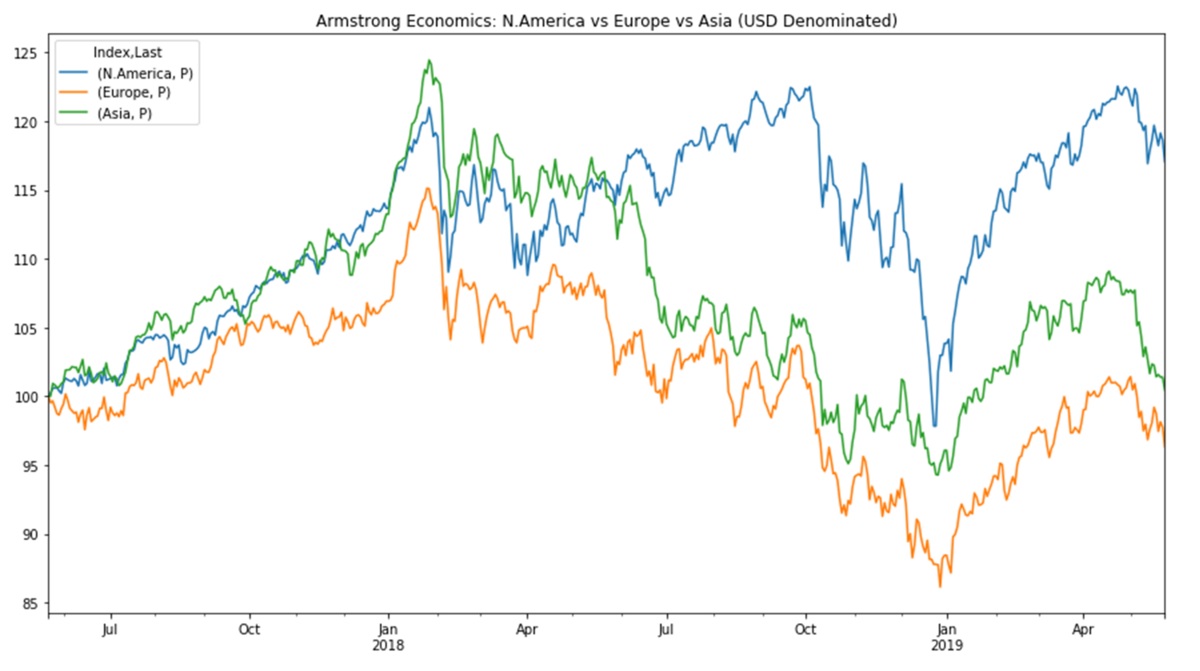
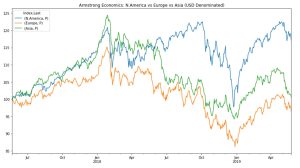
If we look at the world in REAL VALUE terms, that means we MUST look at everything filtered through currency. Here is our index of the world. We take Europe and Asia, combine the indices and then replot them in dollars. This clearly shows that we ABSOLUTELY MUST include currency into the analysis. We can see that the US share market has dramatically outperformed everything else in the world.

I had to always consider geopolitical risks. Knowing when there was a risk of war or political uprising was important. Understanding the trends in weather was critical, as was evident from the Great Depression. Even keeping an eye on earthquakes and correlating that to the global economy was also obvious from hist – e.g. the 1923 Japan Earthquake and the 1906 San Francisco Earthquake that eventually contributed to the creation of the Federal Reserve. The realization that the world economy was dynamic meant we had to respect the various different influences each factor played in the outcome of the whole.
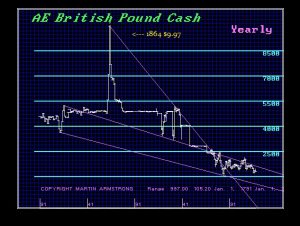
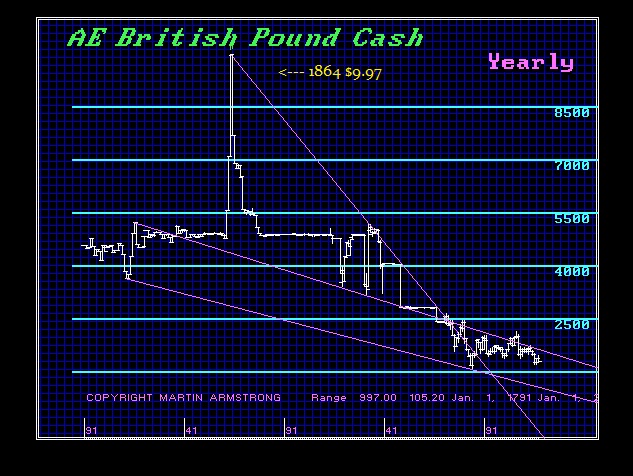
Yet, none of this would be possible without also considering capital flows and currency movements. The currency became the means for capital to vote on a global scale as to who it trusted and who it did not. Here we can see that the British pound reached $9.97 in 1864 against the dollar. It fell to $1.03 in 1985. The trend of the currency cannot be ignored.
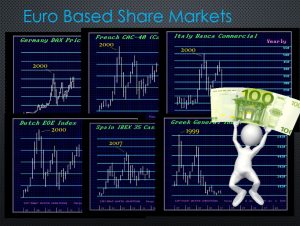
Here are the share markets based in euros. All peaked in 1999 to 2000, except Spain which entered the euro late. How any analyst could recommend Europe two years ago was just nuts. This demonstrates that they do not understand international capital flows or the importance of the currency in making such forecasts.
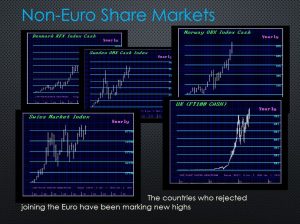
 

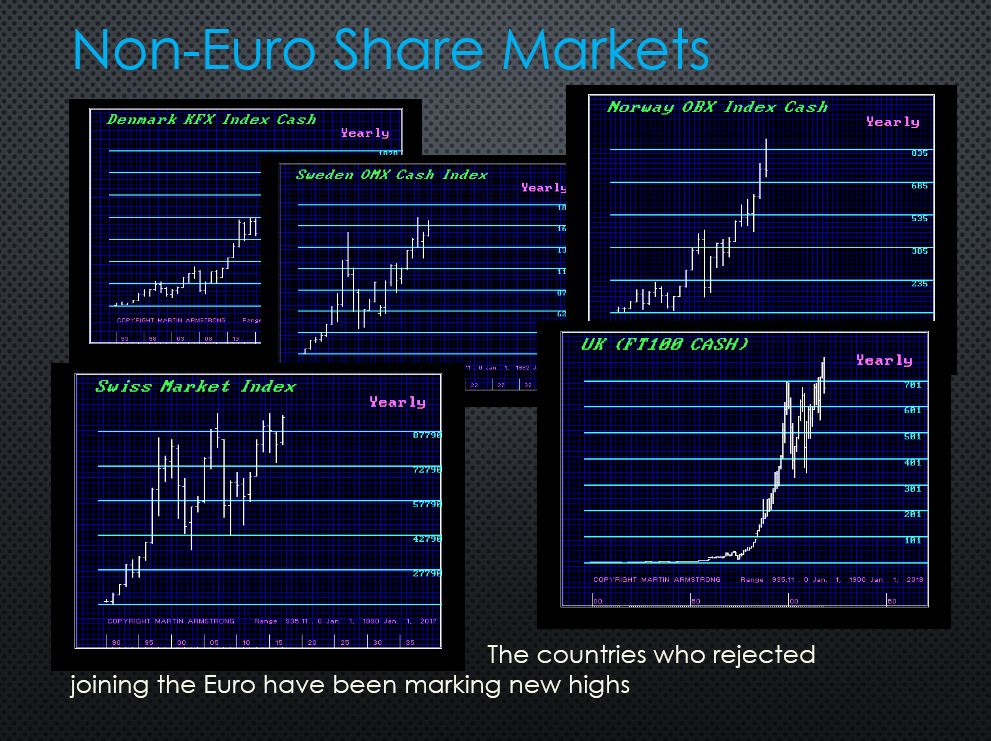
Now, look at the European share markets that are NOT in the Eurozone. They have all made record highs. The difference has been the currency and regulations pouring out of Brussels with self-interest in maintaining the European Project, even though it has failed.

This is not my opinion v everyone else. This is simply looking at the facts, not propaganda, and letting the fact lead to the conclusion.