The Consequence of War that Led to the German Hyperinflation


QUESTION: Everyone has a chart of the German DAX postwar. I have never seen a chart of the German stock market before the war. Do you have any?

HVS

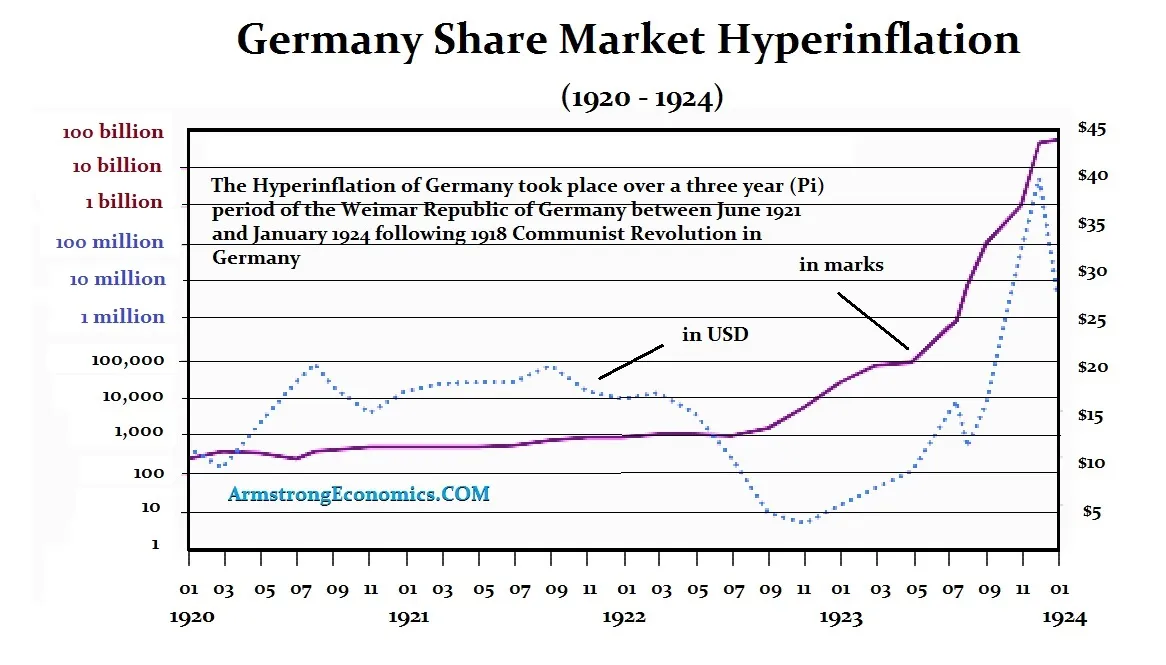
ANSWER: Yes. However, you must understand that because the world was on a gold standard, the arbitrage volatility was reflected in the bond and share markets when the currency was fixed. This is why the German share market closed in August 1914, along with just about everyone else. Here is a chart that show the performance of the German share market during the hyperinflation period. We have the DAX also extended back in time. But don’t forget, the DAX is a total return index. If we plot just price, you will see that the German share market looks very much like France.

The primary stock exchange in Germany was in Berlin. However, there were 21 exchanges in total. The origins of the Frankfurt Stock Exchange date back to medieval trade fairs during the 11th century. By the 16th century, Frankfurt developed into a wealthy and busy city with an economy based on trade and financial services. Annuities in particular were the hot items back then. It was in 1585 when the bourse was established to trade in fixed currency exchange rates. Currencies actually led to exchanges rather than shares. Eventually, Frankfurt developed into an early share market, competing with London and Paris. Mayer Amschel Rothschild and Max Warburg became very influential in the financial trade of Frankfurt.
The Frankfurt Stock Exchange had been a major international center. It was completely wiped out by World War I and its consequences. Back then, foreign shares and bonds traded on cross exchanges since money was fixed. German investors at the start of World War I dumped foreign bonds and shares, fearing that their capital would be restricted or confiscated. This is also why all the exchanges simply closed in Europe. Any capital they managed to free up from the sale of foreign investments was reinvested mostly in German government bonds. They were patriotic and believed in their government. However, by the end of the war, the Frankfurt Stock Exchange lost all foreign securities listings for bonds or shares. Frankfurt lost its standing as an international stock exchange entirely, and that would only begin to resurface in 1949.

In Europe, the fear of catastrophic declines in stock prices was met with controls at first. Overall, stocks and bonds were not allowed to trade below the price they had been trading at on July 31, 1914. Restrictions were also placed on capital. Money movement was highly restricted to preventing any large outflows of capital, forcing many into black markets. One means was to buy collector stamps and coins. They would then export especially rare stamps and then sell them in America. After two world wars, most of the rare stamps happened to be in America and gradually returned to Europe during the late 1960s.

With these restrictions in place, markets reopened in Europe. The London Times began printing stock prices for London and Bordeaux on September 19th and for Paris on December 8, 1914. In January 1915, all shares were allowed to trade on the London Stock Exchange, though with price restrictions. The St. Petersburg exchange reopened in 1917, only to close two months later due to the Russian Revolution. The Berlin Stock Exchange did not reopen until December 1917.

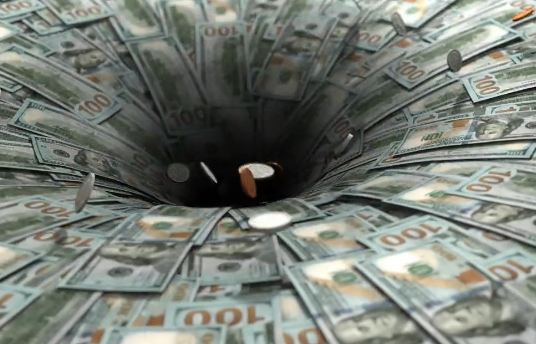
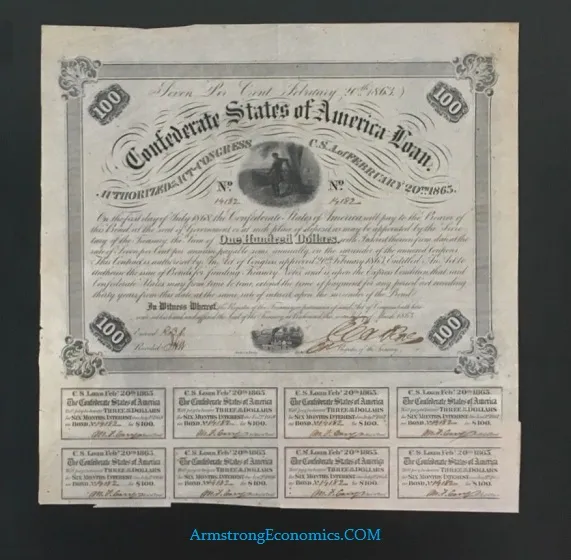
The loss of the war meant those who had invested in German bonds suffered the same fate as those Americans who invested in Confederate bonds. Indeed, to fund World War I, Germany relied more on raising money by selling bonds than imposing taxes. This had the net effect of wiping out the savings of the middle class and upper class. During the hyperinflation going into 1923, the losses in bonds were devastating, but in contrast, equities became a prized object among speculative investors. The Frankfurt stock exchange saw unprecedented losses in the bond markets and shares became the speculation objects that rose sharply going into 1923.

The German war costs covered by taxation, including state and federal combined, was only 13.9% which was lower than 18.2% taxation imposed in Great Britain for the war effort. German debt exploded after 1916. That is when the federal government’s short-term floating debt grew relentlessly, and by the end of the war it accounted for nearly one-third of the German national debt. The seriousness of the German debt crisis, which led to the postwar hyperinflation, was the fact that after 1916 German banks began to purchase more of the government’s floating debt. Government debt dominated the market and banks took on more public debt than private. When the public debt was marginalized by hyperinflation, it also wiped out the banking system.
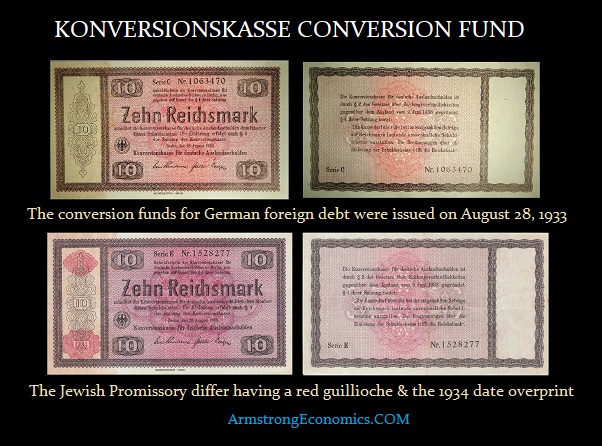
By the end of the war, the international contacts of the Frankfurt Stock Exchange had been lost. Inflation set in and reached its first peak in 1923. In October 1929, the Germany stock exchange prices crashed dramatically on the 25th. The world economic crisis ruled the following years. The economy only began to stabilize in 1932. The following year, the Nazis took over and centralized the nation’s economic policy. The Frankfurt Stock Exchange was merged with the Mannheim Stock Exchange and the number of exchanges nationwide was reduced from 21 to nine. Under the stringent Nazi economic regime, free trade was suffocated as Hitler defaulted on external debt. The majority of capital assets was directed to benefit the war economy. He even issued conversion fund certificates that were exchanged one for one with German marks if you sought to leave the country. This was part of the currency controls but they were worthless once you left the country.
 

Study of the Blackbody Temperature of Earth, Written first in 2017 update monthly


The purpose for this paper

This paper is not meant to be a peer-reviewed work; but it is meant to give a foundation for a more serious study of the subject matter presented here which is of determining the basis of developing a global temperature. The key is the base which what is the base temperature of the planet and, of course, it is  the solar radiation received from the sun. Therefore, the energy absorbed by the planet must equal the energy emitted by the planet and we can calculate this using the Stefan-Boltzmann Law the the result is called the blackbody temperature. The energy flux emitted by a blackbody is related to the fourth power of the body’s absolute temperature. In the case of the earth use means and averages that temperature is -18.8 degrees Celsius but wait the current temperature around 14.6 degrees Celsius today that is a difference of 33.4 degrees Celsius; where did that come from. The answer is that is the greenhouse effect. and at least 85% of that is form the water in the atmosphere making water the primary green house gas by far.

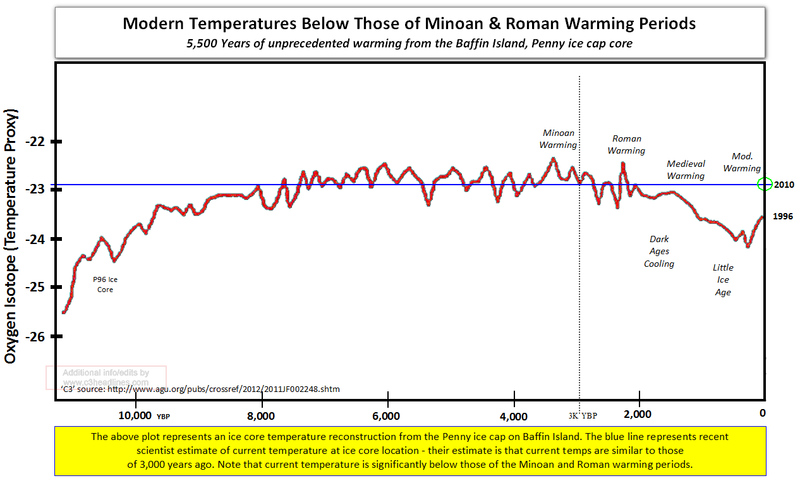
This paper has been written to show the read the basics of the science of determining the key variables that make up earth the temperature. What you will find is that the planet has been very stable over time and that its currently much cooler than it ever has been.  The following chart is developed from ice core and is onlyu one of many that show the same thing.

There are three areas of interest.

1) The amount of thermal energy that reaches the planet from the sun.
2) The amount of thermal energy that is initially absorbed by the planet.
3) The process on the planet that ‘temporarily’ holds thermal energy on the planet.

In this paper I will give a frame work for determining all three aspects.

Part One, the blackbody temperature of the planet
Part Two, the planetary greenhouse effect
Part Three, the probable range of temperatures on the planet

Appendix

NASA Table Land Ocean Temperature Index (LOTI) April 2008
NASA Table Land Ocean Temperature Index (LOTI) current to the date of this paper

The link below will allow you to download the paper, if you want, and at no cost.

BLACKBODY TEMPERATURE PAPER

The Real “An Inconvenient Truth,” Written in 2014


From the Background in the book

Back in 2004 as my work on a PEM fuel cell research project wound down there were concerns building in the news that the various regulatory programs, both in the US and else ware, were adversely affecting energy production. This was a subject of which prior experiences to include the one winding down were familiar to me from work done when I worked at General Electric, first in their R&D labs near their main production facility in Schenectady, New York and later in Erie Pennsylvanian building Diesel Electric Locomotives. With some time now available it didn’t take long with the now well established web resources for me to acquire additional technical knowledge on this subject.

After tentative research started Al Gore’s documentary “An Inconvenient Truth” was released in 2006; this documentary was produced by Davis Guggenheim and it was a story about how the burning of fossil fuels were destroying the planet. It seemed to be targeted at young adults without the education to discern truth from fiction and it was very successful in achieving negative awareness on the subject. Unfortunately, the message in that documentary was not factually correct and appeared to be only an emotional appeal to support the regulation of Carbon Emissions’ (CO2) in some form of Carbon Tax. Governments always need more money and this seemed to be a way for them to achieve that end. Unfortunately, almost all our energy comes from carbon based fuels and the proposed taxes would significantly add to the cost of producing energy. Since cheap energy is the very heart of a modern industrial society this would have disastrous economic effects.

An interesting fact, Al Gore was one of the investors that had helped set up a Carbon Trading exchange in Chicago along with a young Barack Obama (on the board of the major investor The Joyce Foundation located in Chicago) that they named the Chicago Carbon Exchange CCX in 2003. When The House of Representatives bill HR 2454 (American Clean Energy and Security Act of 2009) was not passed by the US Senate in 2009 the CCX exchange folded the following year, 2010. Gore has been very vocal on this subject and if HR 2454 had been passed by the US Congress Gore would have become very wealth; so the question is was his involvement because he believed what he was promoting or because what he was promoting would have made him very wealthy?

By 2007 it was becoming clear that there were holes in the theory (Anthropogenic Climate Change) that was used to justify the reduction of carbon and that changed my view that this might be a real issue into the realization that this was going to be very bad and unnecessary if HR 2454, or any like bill, actually implemented. By 2008 this project was taking up a significant amount of my time and after the financial collapse, almost full time for a couple of years. During this time a method was found to model the world’s climate that appeared to work; and by 2012 it was virtually certain that this model was showing what was actually going on in the climate at the macro level.
This book is a summary of almost a decade of technical work which started in 2004, ten years ago. Although my background is neither physics nor chemistry those subjects and others such as climatology are part of my technical background as well as mathematics and statistics. Then forty years of experience as an engineer, researcher and inventor, much in the field of energy, does allow one to study and make observations on the movements of things especially when they have very obvious patterns. This book is based on observations and modeling and that is certainly something that someone with an economics and engineering background can do even without a PhD. But I should add here that this is not a book in the normal sense; it’s more a series of discussions taken from various papers and studies that I’ve written over the last decade.

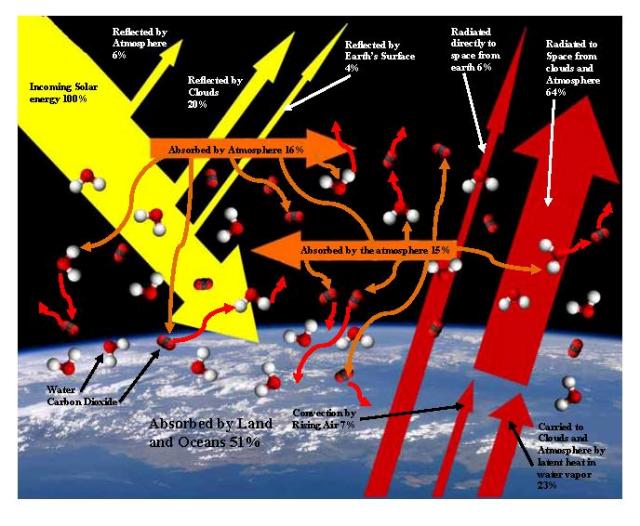
This is a graphic of the energy flows in the Earths atmosphere the represents the energy flows that keep the Earths Temperature Stable that I created after I understood what was happening. Will Happer was instrumental in my education on the “real” physics involved! 

I have tried to put the works in an order that makes sense but since this is a composite there is some duplication in a few places.
Predicting what will happen tomorrow or years from now has never been easy, and never will be since there are always the messy and unforeseen things that get in the way. But having said that when a forecast is desired and a model or simulation is constructed and there is sufficient relevant information available, it may be possible to construct a model that works — as long as conditions do not change. Finding information that correlates into causal relations is the key to the success of any model; but it’s also very easy to fall into the trap of correlation but no cause and effect as data streams often move together but for many and varied reasons, some of which are not causal.

For example we have a road coming from the south going north turning to the west and entering a gap in some mountains that are in the way. There is also a railroad line coming from the east and going west passing though the same gap for the same reason and they run parallel to each other as that is the best way through the mountains. For the time they are both in the gap they run together and in the same direction so that a train and a car could be traveling next to each other and maybe even at the same speed through the entire gap. An observer in the mountains could say after observing both moving together and in the same direction that both were going to the same place. That observer could not know that only a few miles up the gap the road and the track would go their separate way.

We have the same situation with anthropogenic climate change where from the 1970’s until just a few years ago when both CO2, as measured by NOAA, and global temperatures, as measured by NASA seemed to be going up at a similar rate. The issue wasn’t that they were or weren’t moving together but whether it was coincidence or correlation with cause and effect. Models that are designed and built around incomplete data no matter how well indented to not work once the conditions change. During this period it is a fact that both moved together, just like the car and train, but before then and ever since, they were going their own separate ways.

Since all have to agree that a model is only as good as the forecasts it makes and therefore the current global temperature reductions which are not shown in any of the IPCC climate models means that there is something wrong or something missing. In this book we will show a different way of looking at climate that gives significantly better predictive results. This alternative model is significantly more accurate than that of the IPCC models and is therefore by definition a better model. The reason this is so is that there are many problems with the assumptions used to build the IPCC climate models which are at the heart of the anthropogenic climate change debate, and the debate is far from settled.

The balance of this book is showing how the IPCC climate assumptions are incomplete and how when those assumptions are modified that a model can be designed that actually works. This is original research based on information easily found on the web. It is the opinion of the author that this model is valid and has correctly identified the key variables.

Since this book was written I have made some revisions but the basic principles are the same.


The link below will allow you to download the book, if you want, and at no cost.

The Real “An Inconvenient Truth”

Book on Economics, Written in 1994


From The introduction to my book …

I first had the idea of writing a book such as this about ten years ago. It seemed to me that each of us learns something of value as we go through life, but most of us do not succeed in passing along our knowledge to others before we die. This, then, is my attempt to pass on to others what I, over my fifty-odd years, have come to believe are the truths of life and what I believe may be a path into a better future. Much of what I write about involves economic issues, since I am an economist by training. Economics, however, is a social science, and my excursions into other areas of the social sciences are therefore not totally out of line.

I have had a great deal of “life” experience (both educational and professional) and this book thus covers many subject areas. While analyzing these subjects, I have tried to be logical and objective (as I have tried to be all my life), and hopefully this proclivity is reflected herein. You, the reader, will probably disagree with some or much of what I have written. That’s fine if your disagreement is based on fact; it’s unacceptable, however, if your disagreement is the result of prejudice and preconceived ideas.
Throughout this book, I have included editorial writings, which I felt were astute, and which help to illuminate my ideas. In each case, I have credited the author and distinguished his/her writing from my own.

Much of what I write about could be construed as anti-religious; it is not. It has not been my intention to support or deny the existence of God or a Supreme Being.
A thought that should be kept in mind when reading this book is that virtually nothing we do today is done as it was in the past. By this I mean the “near past”–remember that radio was invented only ninety-nine years ago, and it has been only ninety-one years since the first powered flight. Most of the technology that we now take for granted has been developed in the past fifty years. The corollary to this is that our ideas and attitudes must also be different from those of the past. Try to imagine how people will regard the “absurdly primitive” last decade of the twentieth century in the year 2045 (when all that we know today will have been gone for fifty years). The point is to keep an open mind, don’t pre-judge, and don’t be too certain about anything.

We live in a world of fantastic ideas if only we can keep an open mind!

The link below will allow you to download the book, if you want, and at no cost.

Power Economics

Freeman Dyson Discusses The Benefits Of CO2


Published on Apr 6, 2019

SUBSCRIBE 19K
Freeman Dyson is considered the world’s leading theoretical physicist. The New York Times once described him as “infinitely smart.”

In 2009 John Kerry – Arctic To Be Ice-Free By 2014


Published on Apr 15, 2019