Posted originally on CTH on August 22, 2025 | Sundance
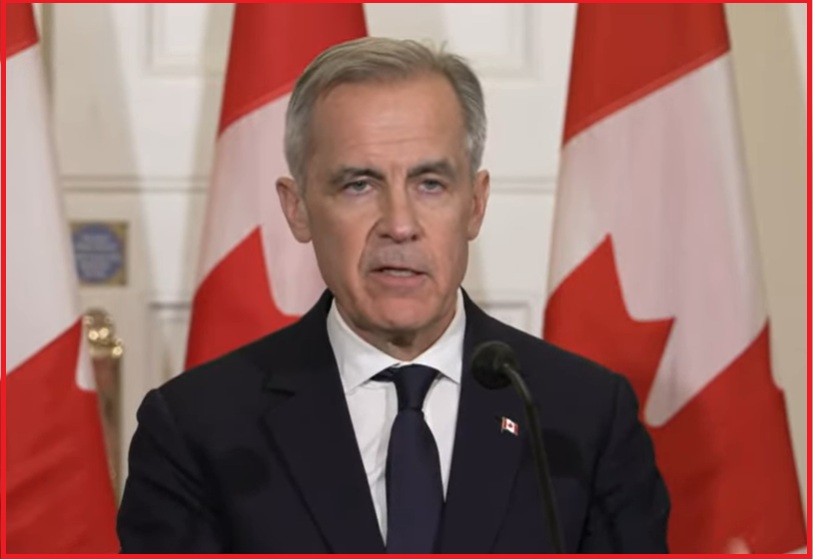
The Canadian govt led by Prime Minister Mark Carney has completely capitulated to the power and influence of President Trump.
While explaining how the United States has fundamentally changed the entire landscape of global trade, the leader of the Snow Mexicans announces he is dropping all countervailing and retaliatory tariffs against the USA and getting nothing in return. Total and complete surrender by Canada; there is ZERO upside for Canada – NADA, Zippo, Zilch.
Prime Minister Mark Carney made the announcement, then faced the ire of the assembled media who were furious about the details within the statement. The Canadian people had been promised an “elbows up” fight to the end. Instead, today they got down on their knees and begged Trump to retain the USMCA.
Complete and utter capitulation by Canada. No digital services taxes. No countervailing duty tariffs. No reciprocity tariffs on Steel and Aluminum. No retaliatory tariffs (reciprocal/baseline). Meanwhile, the USA keeps 50% tariffs on steel and aluminum against Canada, and Canada only gets 25% tariffs against U.S. steel/aluminum.
In addition, Canada has pledged to continue gaslighting their citizens, while wasting time, effort and resources on a hope to retain the USMCA, while refusing to admit to themselves that President Trump intends to dissolve it. WATCH:
.
If that recap sounds bad for Canada, trust me – it’s way worse. Really bad, horrible – terrible even. So far beyond bad, the light from where horrible starts could not reach the Canadian terrible place for a year. Not good.
Posted originally on Aug 20, 2025 by Martin Armstrong |
The headlines in Canada celebrate that inflation has fallen to 1.7% in July, but as in America, the people are not experiencing a notable downturn in prices. Politicians pat themselves on the back, claiming victory over inflation, yet the very reason CPI came down was because energy prices fell after the consumer carbon tax was suspended. This reflects a temporary change due to economic policy rather than a trend.
Take energy out of the mix and the real story becomes clear. Food prices continue to rise, up 2.8% from June, and that impacts every household. Every nation is experiencing a sharp uptick in food prices.
The real crisis, however, is in the labor market. Employment declined by 0.2% in July, meaning 41,000 Canadians lost their jobs. The official unemployment rate held steady at 6.9%, but the more telling figure is the employment rate, which fell to 60.7%. That reflects the true weakness beneath the surface.
Immigration policies have hurt Canadian youth. Unemployment among those aged 15 to 24 has surged to 14.6%, the highest level since September 2010. This is the lost generation Canada is creating with young people priced out of housing, burdened with debt, and now unable to secure employment. Historically, when youth unemployment spikes, we see social unrest and political upheaval follow. This is not simply an economic number but a warning sign of civil discontent that will only intensify.
Canada’s decline is systemic. The policies in Ottawa are driving investment out of the country. While they boast about “beating inflation,” the cost is economic stagnation and rising unemployment. We are watching the same cycle unfold in Canada that we’ve seen throughout Europe: governments destroying their own economies under the illusion that they can centrally plan prosperity.
Posted originally on Aug 19, 2025 by Martin Armstrong |
German Foreign Minister Johann Wadephul has come under fire for stating that it would be unwise to send troops into Ukraine. “We are the only European troop contributor to station a combat-ready brigade in Lithuania. Doing that and also stationing troops in Ukraine would probably be too much for us,” Wadephul told the Table Today Podcast.
Sending troops to Ukraine is highly unpopular in Germany among the citizens, despite the government’s eagerness to support Ukraine with manpower. The foreign minister suggested that Germany could provide military and technical support without entering Ukraine. Critics claim he is simply attempting to appease the people and betraying Ukraine by not offering to send men into combat. He also voiced another unpopular opinion—working with the United States to potentially provide security guarantees.
“We are now hearing signals from Washington that they are prepared to do so [provide security guarantees], and this must then be worked out together with the Europeans, with Germany naturally having to play an important role,” Wadephul said in the interview, adding Berlin could provide military and technical help, among other things.
The Bundeswehr deployed 4,800 troops to Lithuania, and again, critics believe it is ridiculous to say that the military is stretched too thinly to deploy others directly to Ukraine. It will cost Germany an estimated 800 million euros annually to maintain their current presence in Lithuania. No one thinks of the cost involved with sending troops into Ukraine, which is of little importance compared to the broader implications of sending troops and then actively forcing the entire nation and the European Union to fight on behalf of Ukraine.
The neocons are waiting for that “push comes to shove” moment. The people are extremely vocal about their point of view on the matter. Those looking at the numbers and logic alone are warning against deployment. Anyone who understands history is keenly aware that German is on the brink of completely entering a war against Russia that it is unprepared to fight. The entire EU will become involved in the war if Germany sets foot into Ukraine, as Germany is the economic powerhouse supporting the bloc, and France, the second most powerful in terms of finance, has similar wartime ambitions. It appears that push will come to shove by next year on 2026.45 when our computer indicates a central turning point between the EU and Russia.
Posted originally on Aug 19, 2025 by Martin Armstrong |
COMMENT: Mr. Armstrong, I just wanted to thank you for participating in our board meeting. We had come to the same conclusion that all of this talk of BRICS and de-dollarization was being promoted by people in the conspiracy category, lacking any honest experience in international commerce. Before the meeting, we called one, and our Chairman listened. They could not answer any real economic question. The claims that this is the end of dollar hegemony only exposed their lack of expertise.
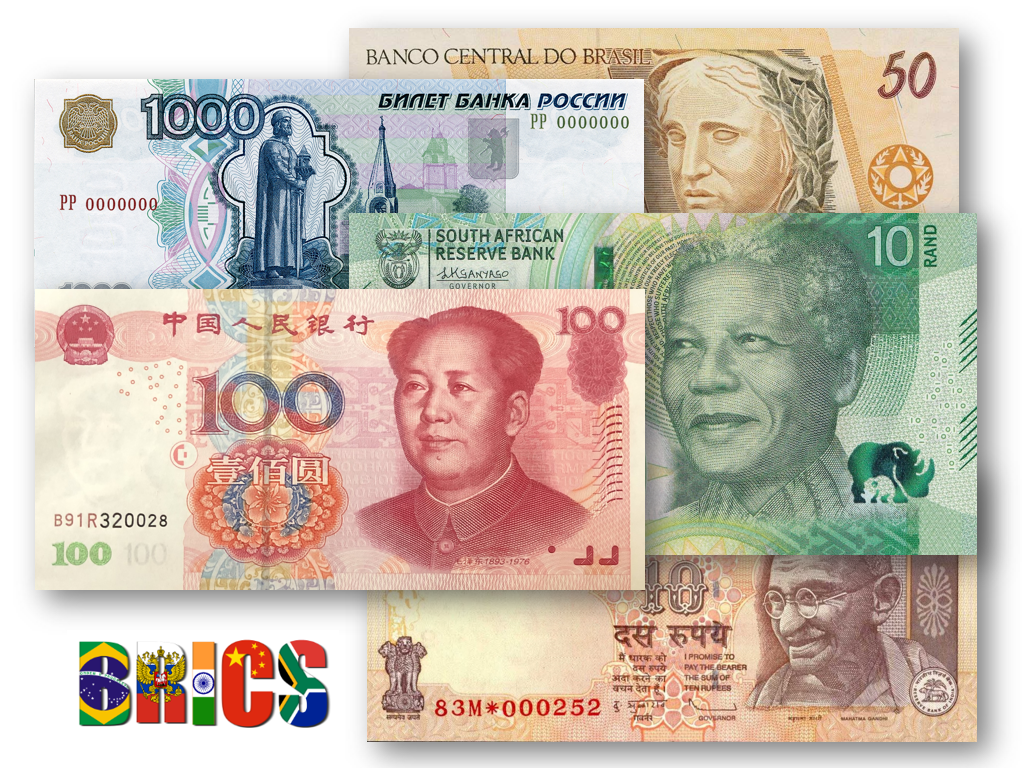
Trump’s tariffs, Biden’s sanctions, and the freezing of Russian assets were all supposed to kill the dollar as Russia, China, India, Brazil, and South Africa were to construct parallel financial systems as if they would no longer sell to the United States. Then there was the mention of backing by gold. Our chairman was very impressed that you could answer every question. You pointed us in the right direction with common sense and your real-world experience.
Thank you once again. As you said, us is about one third of the entire world consumer market, and global financial transactions to IPO are predominantly in dollars. Our Chairman will be at your WEC personally this time.
SFD
ANSWER: Thank you. Because this is such an important topic and I do not have the time to attend every board meeting internationally, I thought it best that I lay out the gist of our discussions. Your company is in the global business, and it is pathetic how the majority of these people preach the same nonsense without understanding world commerce. The US dollar’s dominance in international finance is clear despite BRICS, but its share varies across different areas. Before World War II, countries issued their debt in British pounds in order to sell it in London.
U.S. Multinational Dominance: U.S. companies earn massive profits overseas. This is the PRIMARY reason why these analysts do not understand world commerce. Apple, Microsoft, and Pfizer all generate more than 50% of revenue abroad. In 2022, U.S. multinationals earned $1.6 trillion from foreign affiliates (BEA data). Then there is the Intellectual Property (IP) and Services such as our firm with offices around the world. The US is a net exporter of IP, royalties, and high-value services (e.g., Google’s ad revenue abroad).
The US traditionally runs a goods deficit (manufacturing) of $1 trillion/year but a services surplus of $300 billion if we look at the accounting based on the ownership of companies rather than location, US overseas affiliate sales ($6 trillion/year) dwarf foreign affiliate sales in the US ($4.5 trillion/year). Now throw in the net IP receipts ($100 billion surplus), the U.S. likely shows a net Trader Surplus on an ownership basis.
When combined with services, IP, and overseas profits, the overall balance shifts to a surplus. The US benefits disproportionately from globalized production because its firms capture value through branding, R&D, and IP—elements obscured by traditional trade metrics. This highlights why trade deficits alone are an incomplete measure of economic health. Looking at the ownership-based accounting better reflects where value is captured in global supply chains. I have argued this in Washington, but it goes in one ear and out the other.
Global Trade Invoicing & Settlement (Primary Focus):
Approximately 40-50% of all global trade (exports) is invoiced in US dollars. This means the prices of goods traded internationally are set in dollars, regardless of the countries involved. Over 80% of global trade finance (letters of credit, etc.) is conducted in dollars!!!!! Around 88% of global foreign exchange (FX) transactions involve the US dollar on one side (according to the BIS Triennial Survey). This underpins trade settlements and makes the whole stupid argument of de-dollarization laughable, for they are mixing geopolitical with economics.
SWIFT data (payment messages) accounts for roughly 46-48% of international payment messages (by value) that are denominated in USD (as of mid-2024). This is a key indicator of actual settlement currency. Given that the latest consumer spend at the end of 2025 amounts to $55.5 trillion, of which the American consumer is now $17.9 trillion, US consumer spending accounts for 32.3% of the entire world! So, will BRICS displace the dollar? Come on. They said the same BS about the Euro. The United States is the LEAST socialist country, and that above all accounts for its Dominant Share of the world economy. Despite having only about 4% of the world’s population, the U.S. consistently accounts for nearly one-third of global consumer spending. This underscores the immense size and importance of the U.S. consumer market to the global economy and thus the dollar.
The dollar’s dominance does impact consumer spending globally because many goods that consumers buy locally are imported in other countries. If those imports were invoiced and paid for in dollars, fluctuations in the dollar’s value could affect local prices (inflation/purchasing power). This is why your key commodities like oil, metals, and grains are predominantly priced in dollars. Changes in the dollar affect the cost of energy and raw materials globally, impacting production costs and ultimately consumer prices for a vast array of goods. When the US is about 1/3rd of the world’s consumer spending and about 50% of all world trade, that is why they are priced in US dollars rather than the pesos.
The next HUGE area these one-issue analysts ignore is the Debt & Financial Markets. Countries and corporations borrowing in dollars face repayment costs affected by dollar strength, influencing their economies and potentially consumer spending power within those countries. This has often been one area that I get called into a lot. Currency Pegs/Reserves have been a critical issue over the years. Many countries manage their currencies relative to the dollar or hold significant dollar reserves, influencing their domestic monetary policy and economic stability. This includes Foreign Exchange Reserves. The dollar constitutes about 59% of allocated global foreign exchange reserves held by central banks (IMF COFER data Q1 2024).
Approximately 75-80% of emerging market (EM) external sovereign bonds are denominated in US dollars. For corporate EM bonds, the share is slightly lower, around 60-70%. As I pointed out, before World War II, EMs would issue their debt in British pounds because that was where there was a market to sell their debt. Today, the pound has been replaced with dollars, and the FINANCIAL CAPITAL OF THE WORLD is now New York – not London or Paris.
Of the Sovereign Debt issues globally (Government Issuance), that works out to be 75-80% USD-denominated (e.g., IMF, BIS, and J.P. Morgan EMBI Index data). For example, as of 2023, over 75% of EM government bonds held by foreign investors were in USD. Turn to the corporate world. There we see 60-70% USD-denominated corporate debt issues (e.g., Bank for International Settlements data). This is even higher in sectors like commodities or multinationals.
New York City is unequivocally the world’s leading global financial center, and its banks play a dominant role in key aspects of international banking. This ensures the dollar’s role in global transactions. The vast majority of international trade and finance is conducted in USD. NYC banks are at the heart of that system. On a clearing basis alone, the Clearing House Interbank Payments System (CHIPS) in NYC clears roughly $1.5 trillion daily in cross-border USD payments. That represents a massive share of global USD flows.
Then there is the Correspondent Banking network. Major NYC banks act as correspondent banks for thousands of banks worldwide, facilitating their international USD transactions. Investment Banking (Capital Markets) takes place in the heart of the NYC-based banks (Goldman Sachs, JPMorgan Chase, Morgan Stanley, Citigroup) and this consistently dominates global aspects of Mergers & Acquisitions, Equity and Debt underwriting (IPOs, bond issuances), and Sales & Trading (especially of US Treasuries, the world’s most profound and most important bond market). Even if we look at the global investment banking fee revenue, you will find that more than 50% takes place in New York City.
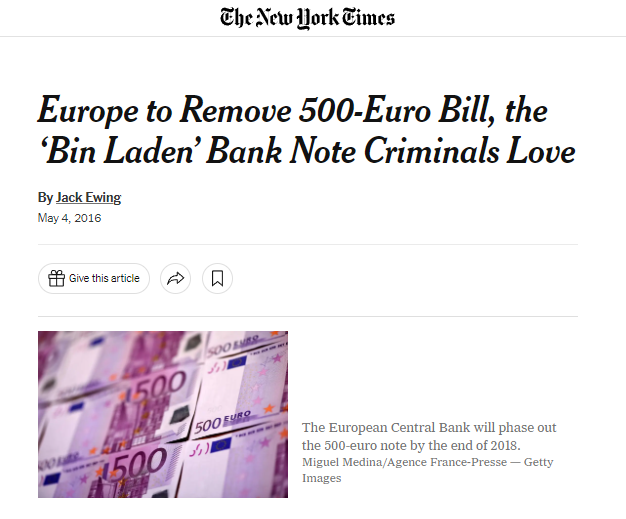
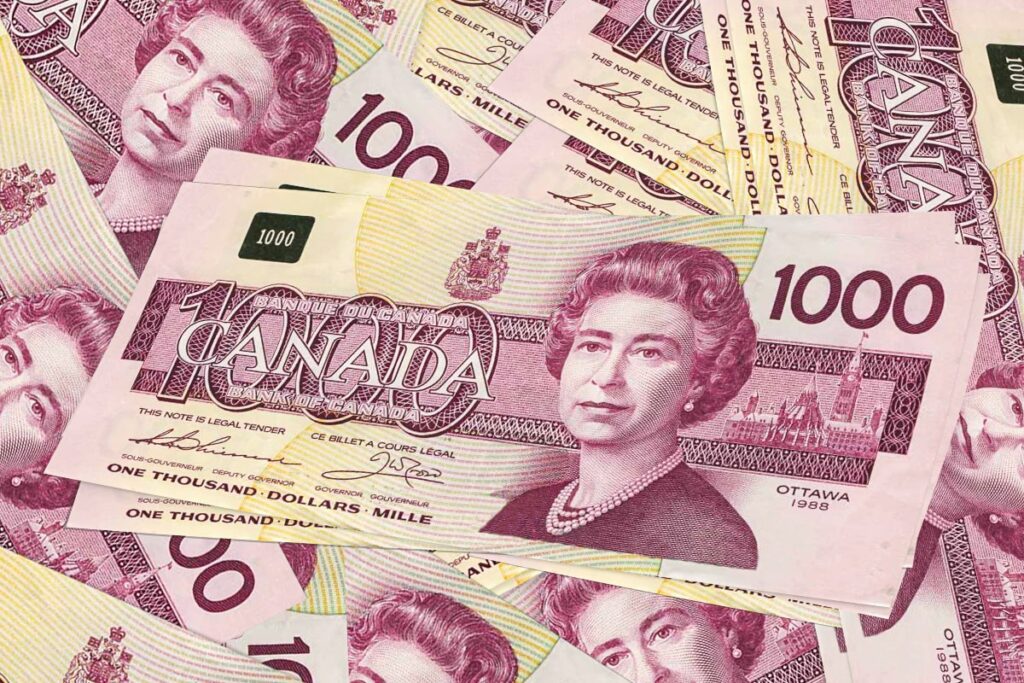
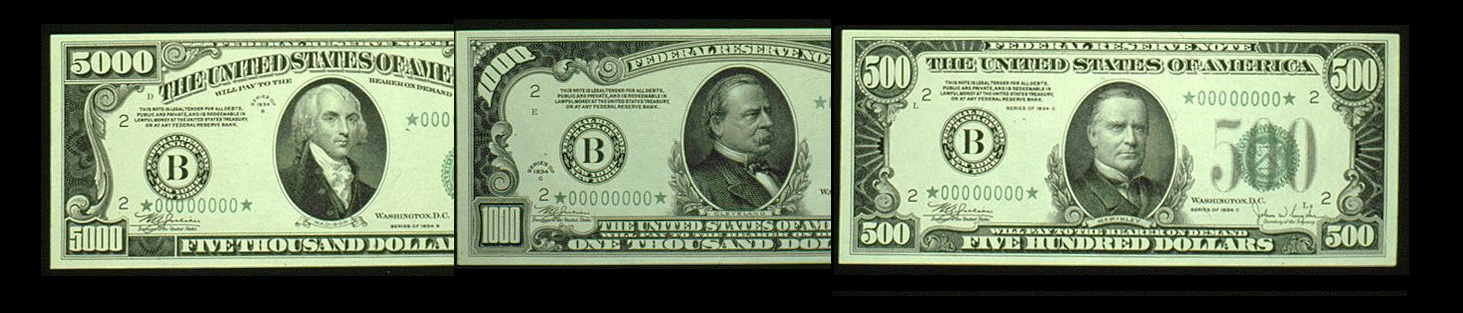
Europe and Britain, along with India and Switzerland, cancelled their currency. The $500 and $1,000 Canadian banknotes were withdrawn from circulation and are no longer legal tender as of January 1, 2021. However, they can still be redeemed at banks or the Bank of Canada for their face value, and they may hold additional value for collectors. Trump has proposed bringing back the $500 bill. Yet, while Roosevelt stopped issuing high-denomination bills, they are still valid. This is a MAJOR issue that the dollar remains the reserve currency around the world – it is TRUSTED!!!!!! While 60% of all U.S. bills circulate abroad, about 80% of $100 notes dominate foreign holdings due to their high value and portability.
The dollar is involved in roughly 40-50% of trade invoicing, over 80% of trade finance, and about 46-48% of international payment settlements. Research has shown that allocating world commerce according to ownership rather than location results in the US having a trade surplus, not a deficit.
The dollar remains the undisputed dominant global reserve and transaction currency, involved in the vast majority of cross-border financial flows. All of the nonsense about “de-dollarization,” with some countries (like China, Russia, Brazil) increasing the use of other currencies in bilateral trade agreements, is a distraction. Such a shift is gradual and hasn’t significantly eroded the dollar’s overall global share, and cannot until the economic changes, and that will not come until AFTER 2032.
Anyone who says the BRICS are displacing the dollar cannot possibly have any experience in world finance.
Posted originally on Aug 15, 2025 by Martin Armstrong |
Entering the forest has become illegal in three Canadian provinces—Newfoundland, Nova Scotia, and New Brunswick. Entering woodlands can result in massive fines or even jail time. Why? The Canadian government believes it must ban the public from accessing nature to prevent forest fires.
Air Force veteran Jeff Evely committed a crime by participating in an outlawed act of civil disobedience by walking into a woodland area in Nova Scotia. The veteran was issued a C$28,872.50 fine for simply entering public lands.
“This law views people as the problem – not dangerous activities. This law is anti-human, and should someone find themselves on the wrong end of a charge – a massive charge, $25,000 dollar fine, for going into the woods, you can expect a constitutional challenge and a judicial review of this order,” Constitutional lawyer Marty Moore of the Justice Centre for Constitutional Freedoms stated regarding the ban.
Humans are responsible for climate change, the climate zealots insist. The dry climate and natural cyclical pattern of fires is to be ignored. Former Prime Minister Justin Trudeau authorized the Canadian Armed Forces to respond to wildfires raging in Alberta earlier in the year, and sent troops to help assist during the wildfires that raged throughout California. Trudeau blamed climate change for the ongoing fires—and what luck as a carbon tax could assist in quelling climate change.
“The federal carbon tax will help deal with weather disasters such as fires in northern Alberta. Extreme weather events are extraordinarily expensive for Canadians, our communities and our economy. We need to be taking real action to prevent climate change. That’s why we’re moving forward on a price on pollution right across the country, despite the fact that Conservative politicians are trying to push back against that,” Trudeau commented.
The World Economic Forum published an article in 2018, detailing how its young leader, Trudeau, would implement a “carbon tax on those unwilling to tackle climate change.” The Greenhouse Gas Pollution Pricing Act (GHGPPA) carbon tax began at C$20 per tonne of CO2 in 2019 and increased by C$10 per year, reaching C$50 per tonne by 2022. The government then stated it needed to increase the tax by an additional C$15 per tonne per year beginning in 2023 until 2030 when the total cost will reach C$170 per tonne.
Canadian households have been burdened with the carbon tax as this is not merely for massive corporations or polluters. The people are always the target of climate laws as the entire premise of climate change regulation is control. The carbon tax for Canadian households started in 2019 at C$20 per tonne and increased steadily to C$80 per tonne by 2024. The Parliamentary Budget Officer (PBO) estimated that the carbon tax will cost the average Canadian household between C$377 and C$911 in the fiscal year 2024-25 after rebates. By 2030, Canadian families can expect the tax burden to soar to C$2,773 in certain provinces like Alberta.
Politicians are not to question the carbon tax or the climate change agenda. “His ideology is so strong, he would rather watch the country burn and Canadians suffer than continue to fight against climate change and put the Canada carbon rebate in their pockets,” Trudeau said of Poilievre, who opposed the carbon tax.
It began with lockdowns for COVID-19, and now the government has the power to lock down public lands to protect “national security.” Simply walking into the woods could cost someone tens of thousands of dollars if not jail time, and are people to accept this fate? Similar to how the carbon tax continues to increase, the authoritarian power granted to government under the premise of climate change will continue to build if left unchecked.
I have created this site to help people have fun in the kitchen. I write about enjoying life both in and out of my kitchen. Life is short! Make the most of it and enjoy!
This is a library of News Events not reported by the Main Stream Media documenting & connecting the dots on How the Obama Marxist Liberal agenda is destroying America














 Centinel2012