German Minister of Economics, Robert Habeck, Under Fire as Energy Driven Reality of Economic Collapse Starts Sinking In


Posted originally on the conservative tree house on September 7, 2022 | Sundance

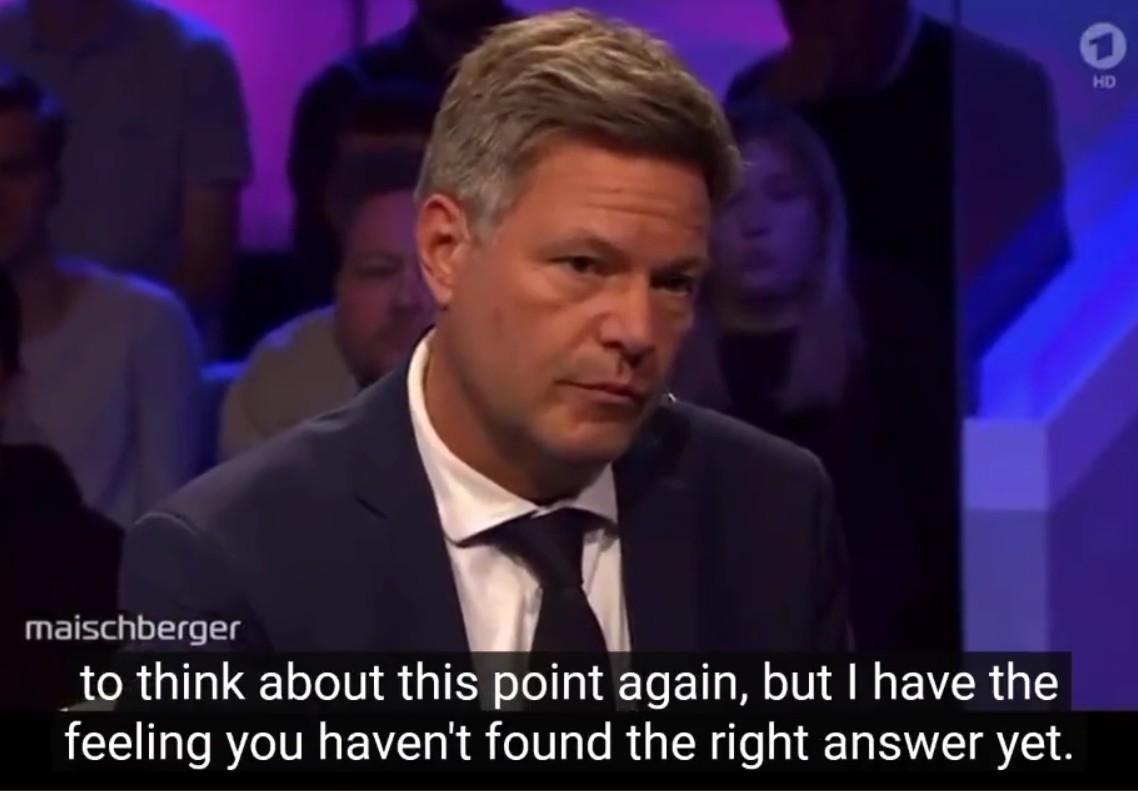
German Minister of Economics Robert Habeck is under fire after his comments during an interview with an ARD broadcaster on Tuesday evening.

The conversation surrounded the astronomical rise in the price of energy taking all the income away from people who would purchase other goods and services. As Germans no longer can afford purchases, the stores and businesses can no longer operate.  Minister Habeck was asked if that means a wave of bankruptcies and business closures are forecast.

Mr. Habeck responded that businesses can stop operating, but that doesn’t mean they will go insolvent.  Just because the business loses most or all of their revenue, doesn’t mean they will go bankrupt.  That doesn’t make sense, Minister Habeck was pressed to apply commonsense. If businesses close to save money, workers are not employed. If workers are not employed people do not earn income.  If people do not earn income, the economy worsens.

Habeck had no response other than an economically detached “Green Party” perspective that businesses will not go bankrupt just because they are not operating. However, his facial expressions reflect that he knows what comes next, total economic collapseWATCH: 

(Reuters) – German Economy Minister Robert Habeck faced a backlash on Wednesday for saying he could imagine parts of the economy stopping production due to rising energy prices that German firms say are threatening their existence.

Asked whether he expected a wave of insolvencies at the end of this winter due to companies’ rising energy bills, Habeck said “No, I don’t. I can imagine that certain industries will simply stop producing for the time being.”

The answer, in an interview with ARD broadcaster on Tuesday evening, sparked criticism of the minister in charge of Europe’s biggest economy, with mass-selling Bild newspaper saying Habeck “has no idea about the economy.”

Friedrich Merz, the conservative opposition leader, also took the opportunity to criticize Habeck, Germany’s second most popular politician, saying he and his ruling coalition were not taking energy and economy questions seriously.

“One could see how helpless Mr. Habeck you are with these questions last night on German television,” Merz told the lower house of parliament.

Habeck’s comments come as economists and industry groups warn that rising energy prices are a growing risk for Germany’s medium and small-sized businesses, which form the backbone of the economy.  (read more)

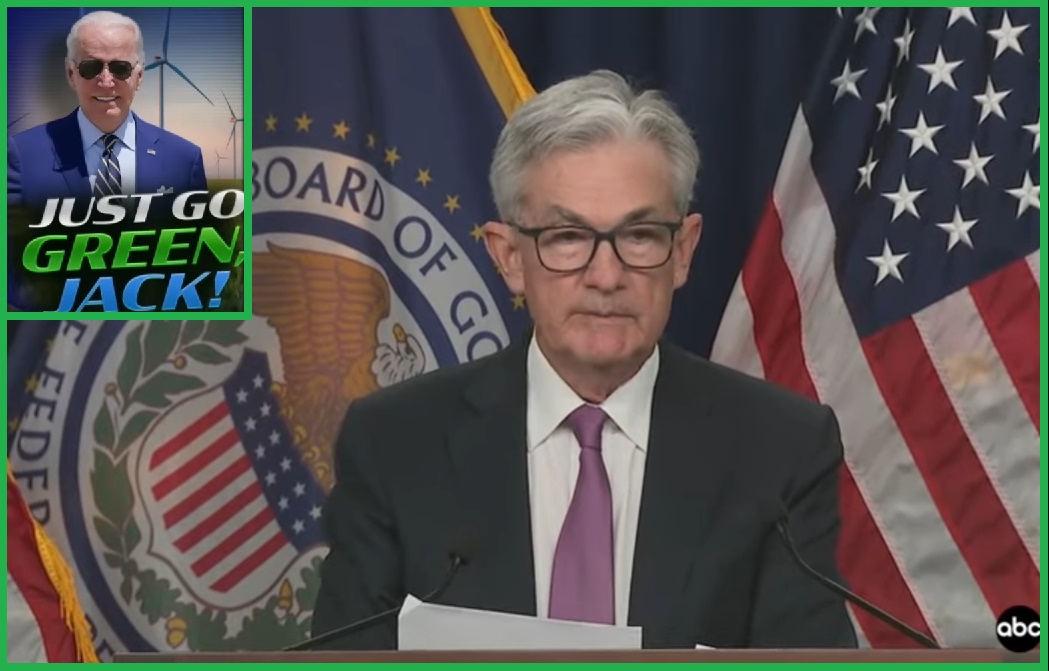
Things are about to get very spicy in Germany as the reality of the unsustainable Build Back Better agenda starts to sink in.  The intellectual disconnect from an economic minister to the consequences of an energy policy removing trillions of dollars from the economy is stunning.

Two More EU Aluminum Smelters Going Offline Due to Excessive Energy Costs, Aluminum Shortages Predicted


Posted originally on the conservative tree house on September 6, 2022 | Sundance 

On one hand losing the ability to manufacture aluminum is bad news for any economic activity that requires the use of aluminum.  However, on the other hand, this politically guided ‘new world’ we are going toward doesn’t need aluminum, because you cannot eat it.

Predictably 2023 is going to be the beginning of several ‘Build Back Better’ decades where the ownership of material things disappears.  When your wages are focused on sustaining yourself with housing, food and energy, all of those other purchases become mere indulgences.

Sustainable life in equity with the needs of the planet, means returning to the era when you received an orange or a piece of chocolate as a Christmas gift, and you are thankful. Cars, appliances, phones or other types of luxury durable goods are indulgences which become out of reach for the worker class.  Thus, removing smelters, iron works, factories and other heavy industrial machines only makes sense.

As meager wage earnings are focused on purchases to sustain life, there is little room for indulgences.  As the World Economic Forum has stated, we will own nothing and we will be happy.  Happiness experiences will be provided and the virtual metaverse will fill our needs.

LONDON, Sept 1 (Reuters) – Two more European aluminium smelters are powering down as the region’s energy crisis shows no signs of abating.

Slovenia’s Talum will reduce output to just a fifth of capacity and Alcoa (AA.N) will curtail one line at its Lista plant in Norway.

Close to 1 million tonnes of European primary aluminum capacity is now offline and more may follow as a notoriously power-hungry sector struggles to cope with soaring energy costs.  (read more)

Again, I return to the imagery surrounding our foundational questions, and hopefully things are starting to make sense.

California Governor Reminds All Correct Thinking Citizens to Remain Committed to Scarce Energy Resource Allocation


Posted originally on the conservative tree house on September 6, 2022 | Sundance

Comrade Citizens, it is important we stop thinking wrong thoughts about increasing the supply of abundant, natural energy resources as a tool to offset the sustainability of human life which might include selfish pursuits of happiness.  Correct thinking citizens view themselves as parasites upon our great planet, especially in California.

To affirm equity needs of our collective society as the electricity resource becomes increasingly scarce, California Governor Gavin Newsom reminds everyone to change their habit for electricity use and embrace the new era of scarcity.  Habits must be changed comrade citizens if we are to collectively work toward our communal energy goals and climate change aspirations.

As dear leader clearly expresses in his plea for voluntary compliance, we can get through this transition and embrace the new scarcity mindset if we just accept our responsibility to the collective need of a better society, a place where the rules will always be in our interests.  WATCH:

.

Yes, we can comrades.  Yes, we can.

Wow, Europe Household Electric Bills Estimated to Jump by $2 Trillion Next Year, That’s 12% of Their GDP


Posted originally on the conservative tree house on September 6, 2022 | Sundance

What is predicted to happen in Europe is just stunning, literally stunning.

♦Context – According to official data from the World Bank, the combined Gross Domestic Product (GDP) of the European Union was just over $17 trillion US dollars in 2021. That is the last calculated measure.  The combined GDP value of European Union represents roughly 12.78 percent of the world economy.

According to analysts for Goldman Sachs, the current energy crisis in Europe has increased electricity prices at a rate that is increasing almost daily.  Within the data it is now estimated that households within the EU will pay an additional $2 trillion for electricity in the next year.

Put that $2 trillion into context with their GDP, and that scale of energy cost would be wiping out 12% of the purchasing strength within the total EU economy.  Forget about buying anything else, if this analysis is correct Europeans will be buying food and energy, nothing else.

If you consider what that means, it is bordering on full economic collapse of western Europe.

What is being described above is what we posited when we outlined the impact of the “Energy Economy” {Go Deep}.  When you suck 12% of the purchasing power out of an economic engine simply to maintain the status of current energy use, everything else starts to collapse.

Also keep in mind we are only talking about the direct impact of $2 trillion in electricity cost.  The downstream consequence is far greater because everything created, produced, or manufactured, including food, is dependent on electricity – which will drive the final cost to produce of all those products even higher.

The damage is almost unimaginable in scale.

[Fortune] – European households should brace for an expensive winter owing to the continent’s deepening energy crisis that will likely send electricity and heating bills soaring.

Energy affordability in Europe is reaching a “tipping point” that could peak next year, with total spending on bills across the continent growing by 2 trillion euros ($2 trillion), a Goldman Sachs research team, led by Alberto Gandolfi and Mafalda Pombeiro, said in a note published Sunday.

Many European households are already feeling the bite of a steadily worsening energy crisis, brought on by Russian natural gas producers intermittently pausing flows along the critical Nord Stream pipeline following Western sanctions this year.

Energy bills at some restaurants and coffee shops have already more than tripled this year, but with threats looming that natural gas supply from Russia could become even tighter as the Ukraine War rages on, analysts warn that Europe’s coming struggles are set to rival some of the worst energy crises on record.

“The market continues to underestimate the depth, the breadth, and the structural repercussions of the crisis,” the Goldman Sachs analysts wrote. “We believe these will be even deeper than the 1970s oil crisis.” (read more)

The economic contagion will not be isolated to Europe.

The impacts to the social fabric are also almost unquantifiable in scale.

Example: What happens to migration patterns when economic migrants are now considered a threat to scarce resources?

While the US is not quite in the same level of energy desperation, what we were discussing last week is an example of the problem we too may face.

Let’s say you are an average USA Main Street household with an income around $100,000/yr, and you now face an increase in electricity rates from $300 to $500 due to Joe Biden’s new national energy policy known as the Green New Deal.  That’s $200 more per month for this initial economic/energy “transition” moment.

That extra $200/month equates to $2,400 per year.

That $2,400 per year is static economic activity.  Meaning nothing additional was created, and nothing additional was generated.  The captured $2,400 is simply an increase in the price of a preexisting expense.

Take that expense and expand it to your community of 100 friends and family households.  The $2,400 now becomes $240,000 in cost that doesn’t generate anything.  $240,000 is removed from the community economy.  $240,000 is no longer available for purchasing other goods or services within this community of 100 households.

The economic purchasing power of the 100-household community is reduced by $240,000 per year.

Take that expense and expand it to your county of 10,000 households.  Now you are reducing the county economic activity by $24 million.  In this county of 10,000 households, $24 million in economic transactions have been wiped out.  Meals at restaurants, purchases of goods and services, or any other spending of the $24 million within the county of 10,000 households (approximately 25,000 residents) has been lost.

Now expand that expense to a larger county, quantified as a mid-size county, of 50,000 households.  The mid-sized county has lost $120 million in household economic activity, simply to sustain the status quo on electricity rates.  Nothing extra has been generated. $120 million is lost.  The activity within the county of 50,000 households shrinks by $120 million.

Expand that expense to a large county of 100,000 households, and the lost economic activity is $240 million.

Expand that expense to a small state of 1 million households (2.5 million residents), and the lost economic activity is $2.4 billion.

Expand that expense to a state with 5 million households (approximately 12 million residents) and the economic cost is $12 billion in lost economic activity unrelated to the expense of maintaining the status-quo on electricity use.   This state loses $12 billion in purchases of goods and services, just to retain current energy use.

These examples only touch on household expenses.  The community, county and state business expenses for offices, supermarkets, stores, etc. are in addition to the households quoted.

Meanwhile the Gross Domestic Product (GDP) of the community, county and state, remains static because the GDP is calculated on the total value of goods and services generated in dollar terms.  The appearance of a static GDP is artificial.  In real Main Street terms, $12 billion in economic activity is lost, but the price or increased value of electricity hides the drop created by the absence of goods and services purchased.

Fewer goods and services are purchased and consumed.  However, statistically the inflated price of electricity gives the illusion of a status quo economy.

Now expand that perspective to a national level and you can see our current economic condition.

All of this is being done under the justification of “climate change.”

Previously I would have said this level of economic impact in Europe would lead to a total revolt against the government.  However, with the backdrop of the recent COVID lockdowns and government control mechanisms in mind, and looking at the citizen compliance that took place in response to those government mandates, it is now more likely the citizens in Europe will simply bow to the energy control mechanisms of the governing authority.

It’s almost as if the COVID compliance effort was the test…

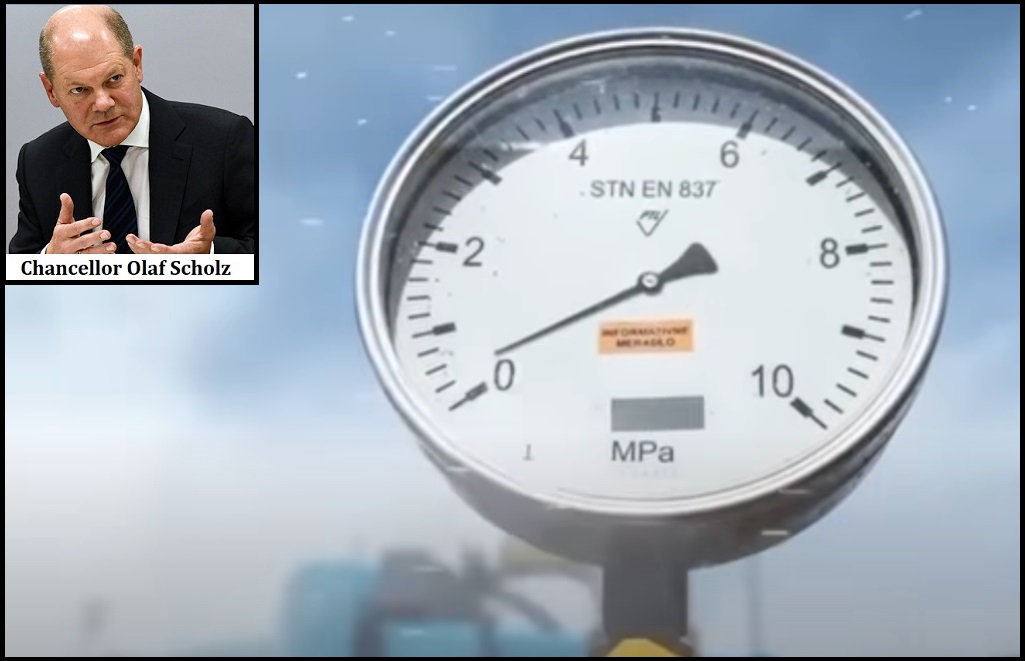
Russia Shuts Down Nord Stream 1 Gas Pipeline, Gasprom Sends out Eerie Video ‘Winter is Coming’


Posted originally on the conservative tree house on September 6, 2022 | Sundance 

Well, it looks like it’s official now. After several days of sporadic reporting on Russia’s decision to shut down the Nord Stream 1 natural gas pipeline into western Europe, it looks like the valves have been shut down until EU sanctions against Russia are removed.

Strategically the Nord Stream 1 pipeline is the major gas supply route into Germany, Europe’s largest economy. As noted by Reuters, “European gas prices, as measured by the benchmark Dutch TTF October gas contract, rose by as much as 30% on Sept. 5, amid growing fears of a total shutdown of Russian pipeline imports ahead of the European winter.”

Europe was already going into a deep economic recession due to inflation created by pre-existing green energy policy.  The Nord Stream shutdown will make things exponentially worse as energy prices skyrocket.  The Russian owned energy company Gasprom sent out a video that can be best described as psychological warfare.  WATCH:

.

New Interview: 2023 Will Be A Year Of Chaos and Big Challenges for the US


Armstrong Economics Blog/Armstrong in the Media Re-Posted Sep 5, 2022 by Martin Armstrong

Watch the latest interview above or click here.

Climate Change Hypocracy


Armstrong Economics Blog/Climate Re-Posted Sep 4, 2022 by Martin Armstrong

US Oil Reserves Nearly Depleted


Armstrong Economics Blog/Energy Re-Posted Sep 2, 2022 by Martin Armstrong

The US Strategic Petroleum Reserve (SPR) has been at its lowest level since, ironically, 1984. The reservoirs are composed of four underground sites constructed from salt domes on the Gulf Coasts of Louisiana and Texas. The White House began extracting oil from the emergency reserves to combat rising gas prices. Politicians simply hope that the problem can be patched up for as long as they can remain in power.

In August, the US extracted 18 million barrels of crude. The stockpile now sits at only 450 million, reaching a nearly 40-year low. Additionally, the White House under Biden has been selling off the remaining reserves to foreign refiners. China received nearly a million barrels of oil to a subsidiary of Sinopec, a company that previously received BILLIONS in investments from an equity firm operated by none other than Hunter Biden. In fact, Biden has sold off nearly a quarter of oil reserves this year alone. Is he deliberately trying to create a crisis to spark the Great Reset?

Russia is not to blame for rising gas prices, as a gallon cost a mere $2.28 in December 2020. A year later, after Biden implemented disastrous green policies, the price rose to $3.40. Biden panicked once gas hit $5 in June and began to pull from the reserves to make it seem as if he had a grip on the problem. The government has no solution for the current energy crisis. The best we can hope for is the Republicans coming to power and demanding that domestic production continue immediately.

Germans Stockpiling Firewood


Armstrong economics Blog/Energy Re-Posted Sep 2, 2022 by Martin Armstrong

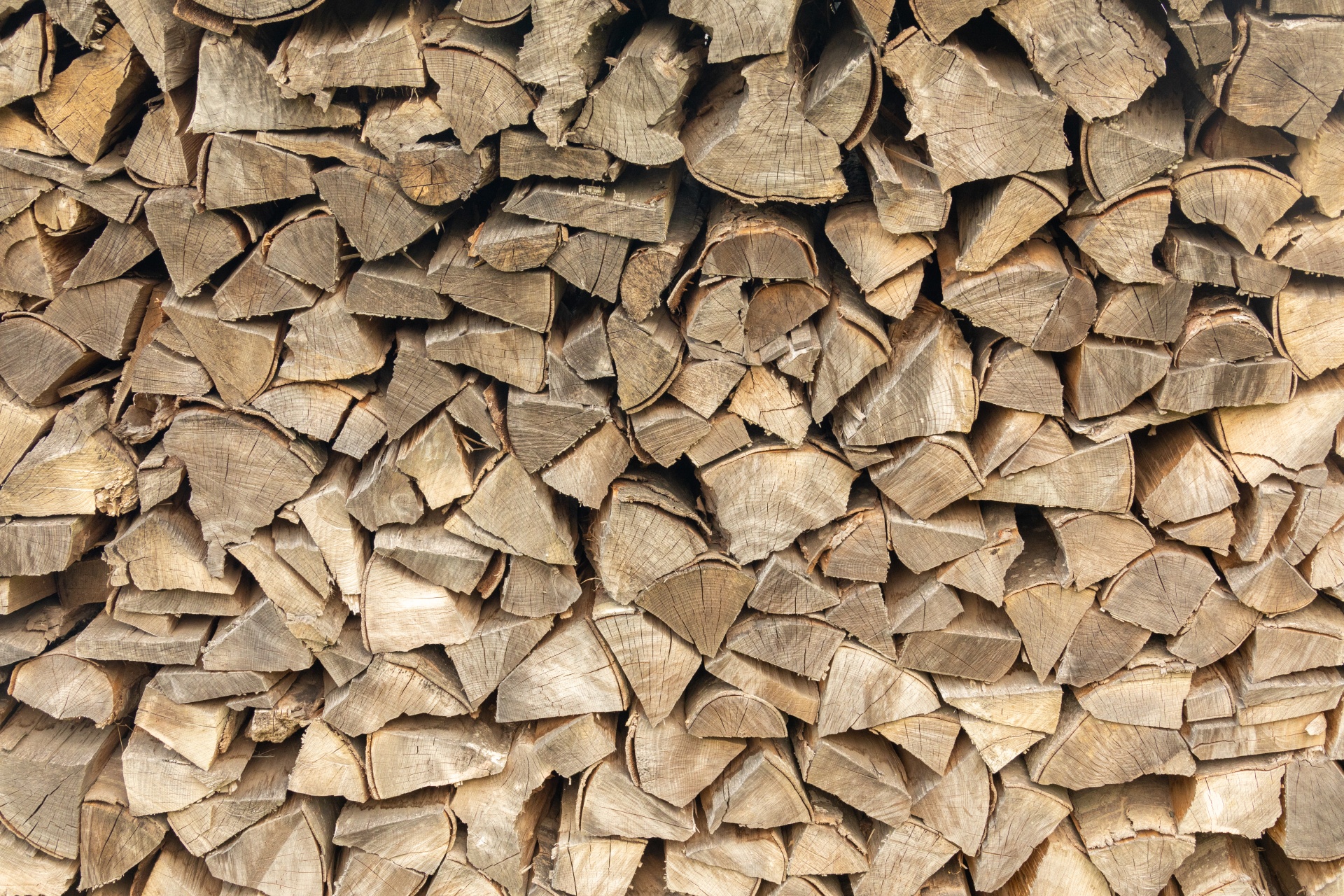
We are quickly reverting back to the Dark Ages. Cooking and keeping warm with fossil fuels may become a luxury as the energy crisis spreads across the West. Reports are growing from Germany that people are stockpiling firewood before the winter season. Google search results for brennholz (firewood) peaked this August in Germany as their government announced they would continue supporting Ukraine indefinitely.

Half of German homes are heated by natural gas, while a quarter uses oil. Less than 6% reported using firewood, but that is set to change as even firewood is now in a shortage. Germany’s Federal Firewood Association announced earlier in the summer that wood was becoming scarce. People are now importing firewood from Poland, but people there are also buying up firewood as no one can afford these rising prices. Governments are offering no solutions, and people have reason to fear the future.

Versorgungssicherheit is a word describing the fear of a shortage. Due to this fear, many companies are rationing the number of firewood bundles people are allowed to buy. The Federal Network Agency expects gas prices to TRIPLE by early 2023. The energy crisis spreading across the West will result in growing civil unrest and could trigger a major geopolitical event across Europe as people will be faced with hardships this winter not seen in a lifetime.

California on Track to Topple Power Grid


Armstrong Economics Blog/Climate Re-Posted Sep 2, 2022 by Martin Armstrong

California plans to ban gas-powered vehicles by 2035. The Advanced Clean Cars II rule would ban ALL gas car sales in 2035, but there are no alternatives in place. The average American cannot afford an electric car or maintenance on an electric vehicle. Beginning in 2026, 35% of new autos sold in California will be required to produce zero emissions. By 2027, 51% of all new cars will need to be electric, and that amount will rise to 68% in 2028, followed by an all-out ban on gas-powered cars in 2035.

Well, California is already struggling to power the electric vehicles on the road in 2022. The California Independent System Operator called for a “voluntary energy conservation” during the upcoming Labor Day weekend due to the failing power grid. They are asking residents to refrain from charging their cars between 4 PM and 9 PM, which is when demand peaks. “If left unmanaged, the power demanded from many electric vehicles charging simultaneously in the evening will amplify existing peak loads, potentially outstripping the grid’s current capacity to meet demand,” Cornell University’s College of Engineering stated.

So electric vehicles have the potential to take down California’s power grid. The state estimates that it will need 1.2 million charging stations by 2030, but they have a mere 80,000 currently. California does not have the ability to implement this zero-emission ban without toppling the entire power grid.