Posted originally on Jun 16, 2024 By Martin Armstrong
COMMENT: Mr. Armstrong, Thank you so much for coming to Germany. Your view is always the best, for it is not based, as you say, on personal opinion. I wish the government would listen and inform the politicians to adopt a new way of managing society.
H
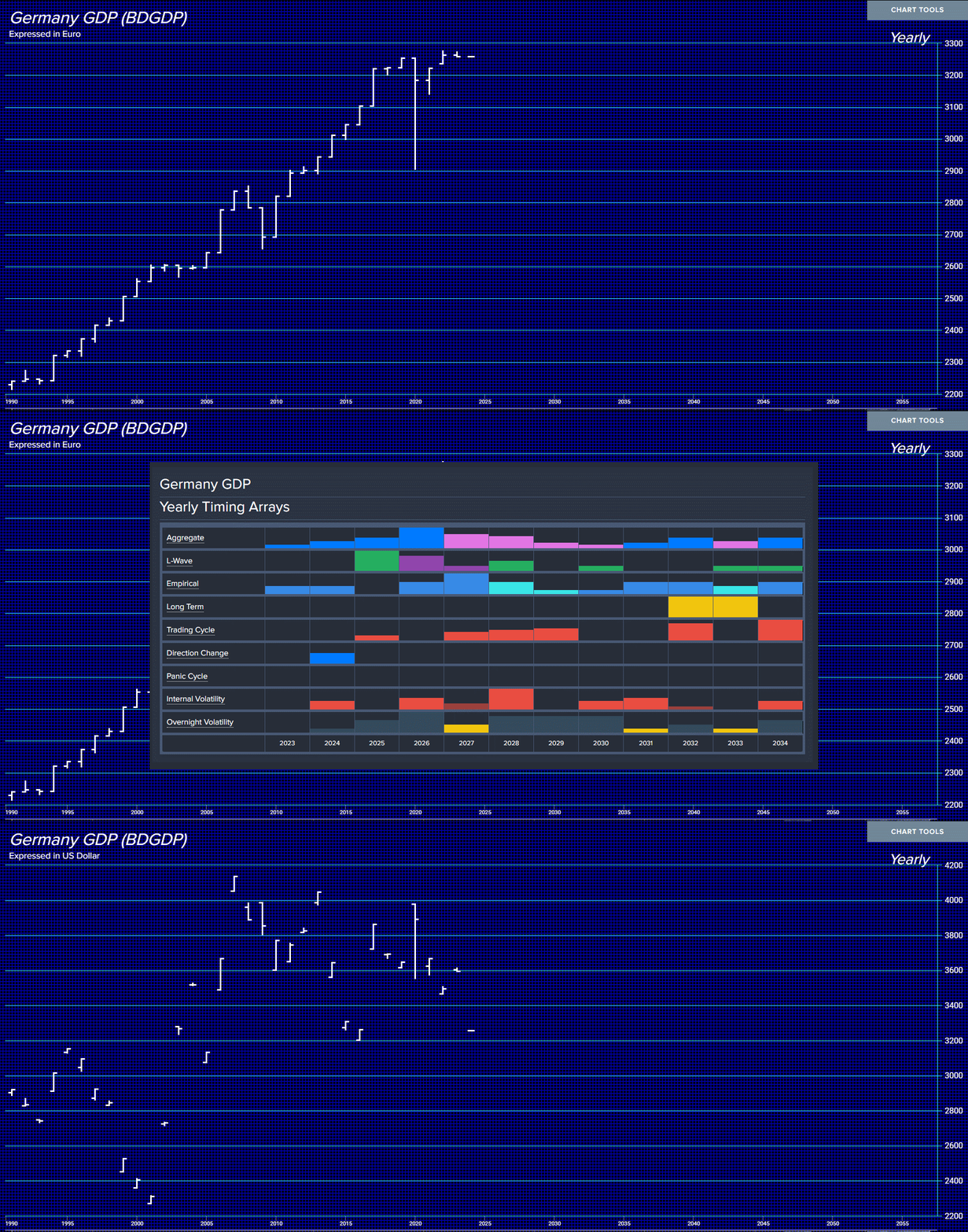
ANSWER: Yes, I know what you mean. But as I have always said, after working and meeting with governments worldwide for over 40 years, they prefer to act in their own self-interest, defined as their personal power – not the benefit of the people. This illustration is of the German GDP in the Euro, followed by the timing array, and then expressed in US dollars.
Currency masks the real trends. I try to explain that, but as you know, most people in these meetings cannot grasp the concept. You are not common in government. There needs to be more like you. More than a simple one-dimensional view seems too complicated for them to understand. When I am gone, hopefully, they will be able to take what I have done without prejudice as to who developed it. That’s just the way it goes. They used to say a prophet is never accepted in his own land. Keynes was criticized in the 1920s. Marx was embraced only after he died.
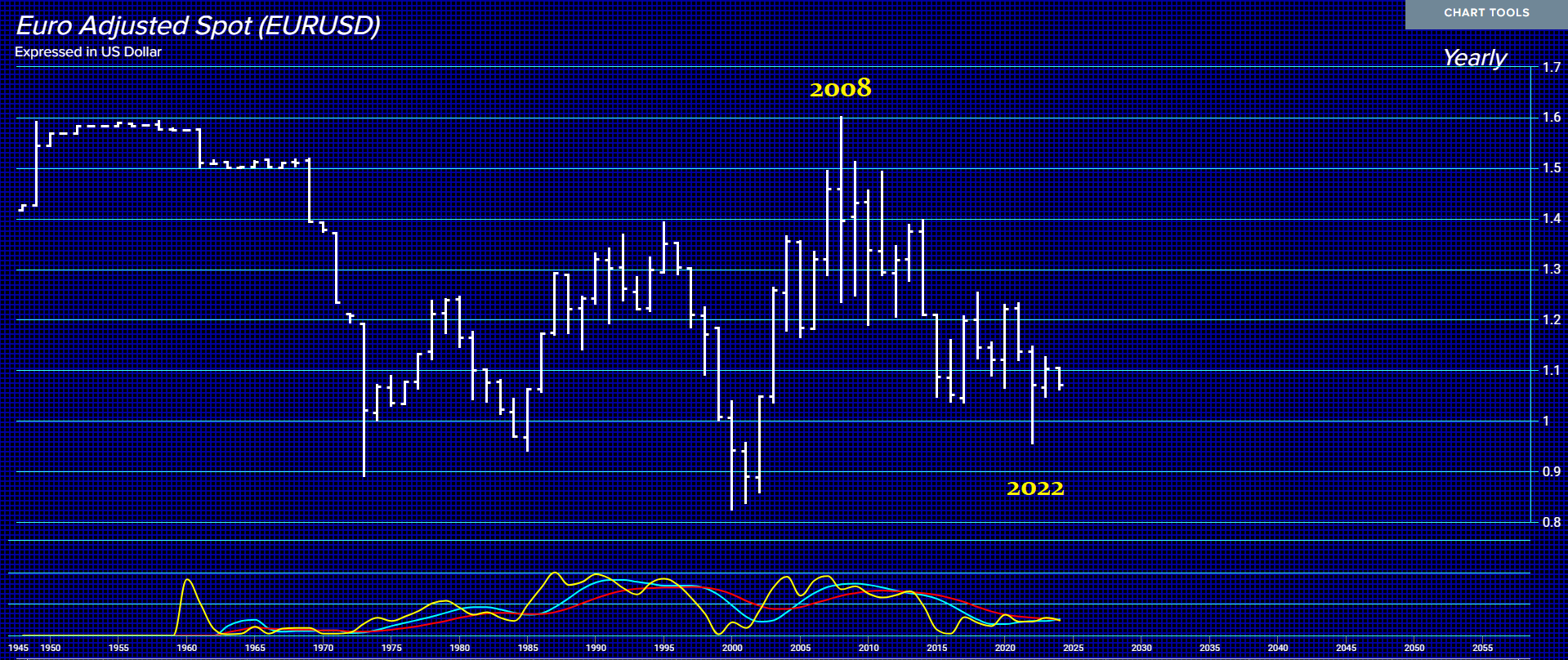
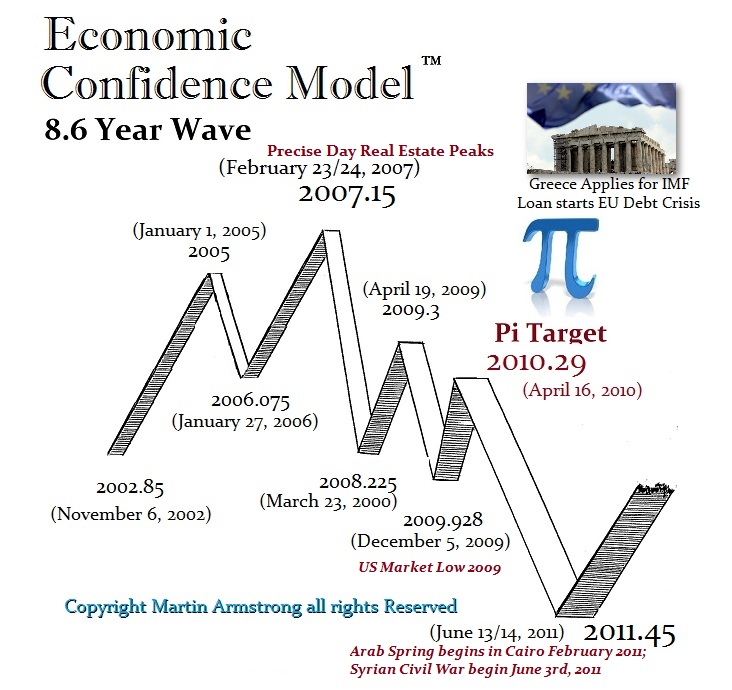
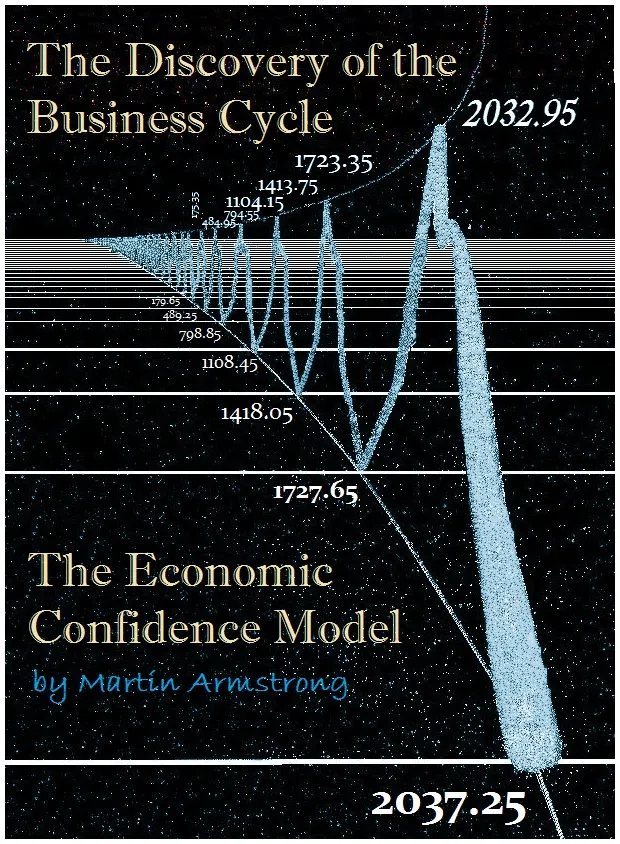
As you can see, German GDP peaked in terms of real international value in 2007 with the Economic Confidence Model, and the Euro peaked in 2008. The high value of the Euro in 2008 reduced exports, and the recession began with that turning point on the ECM. The Pi Target on that wave was the precise day Greece turned to the IMF for a bailout, launching the European Debt Crisis.
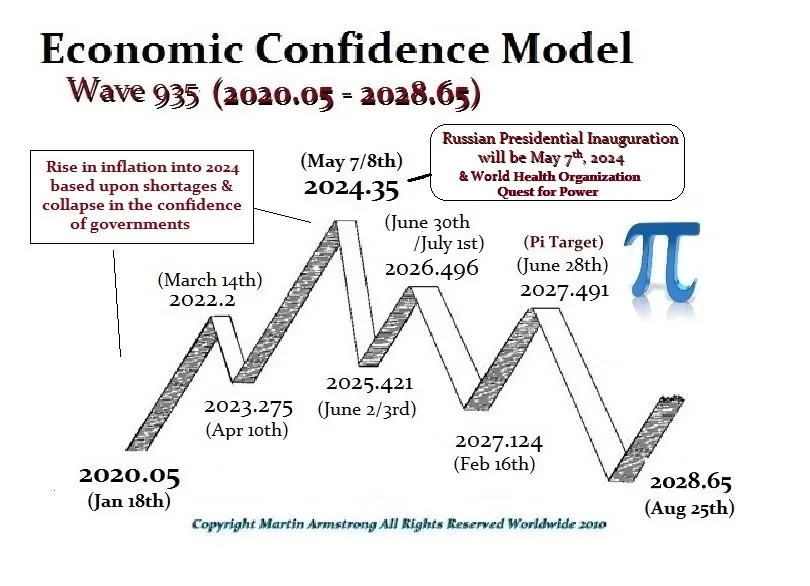
German REAL GDP in international value terms will not bottom until 2030. The ECM turning point suggests that Germany is headed into a recession that overall will appear to bottom in nominal terms in 2028, but in real terms, it will extend into 2030.
Posted originally on Jun 6, 2024 By Martin Armstrong
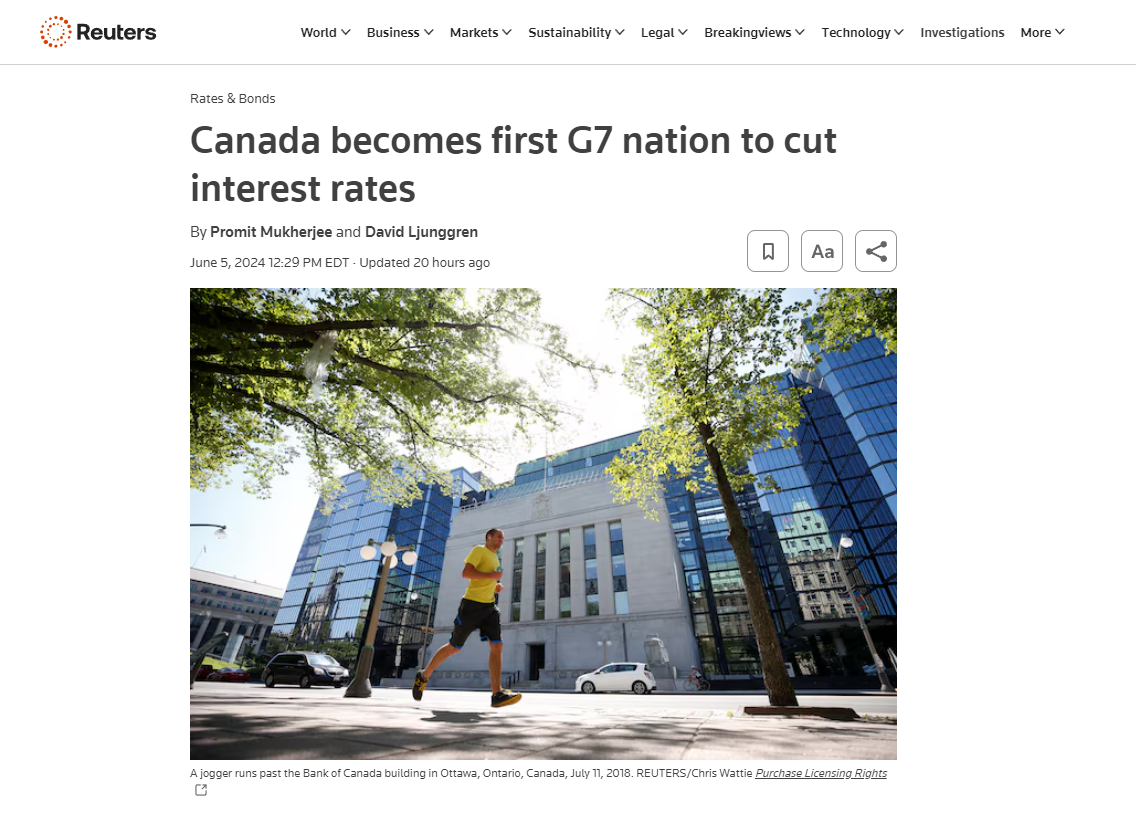
COMMENT: Marty, I attended your Toronto Institutional session when the Bank of Canada had a table of 10 people. People would ask you what the central banks were looking at, and you would respond. Everyone then turned to see if they flinched. They were the best of times, as they say.
For us long-timers, it was no surprise that the Bank of Canada was the first to cut rates in turn with the ECM. I know you do not like to court the mainstream press, but one of these days, somebody has to have the guts to stand up and say that there is a business cycle.
Your legacy has made a difference. I share your goal to purge our governments of political manipulation that causes more harm to the people and the economy than anything else.
It was refreshing to see the Bank of Canada act with the ECM. You even put on the blog that June would be the opportunity for the central banks to cut rates. Well done, as always.
KW
REPLY: Yes, they were simpler days. It’s nice to see you are still active. Most of the major central banks know the Economic Confidence Model. It was good to see that the Bank of Canada acted in advance for the first time until waiting for the crash. It would be better if they could purge the fiscal side of these insane pretend experts like Janet Yellen and the Neocons. Then there will be a future worth leaving our grandchildren.
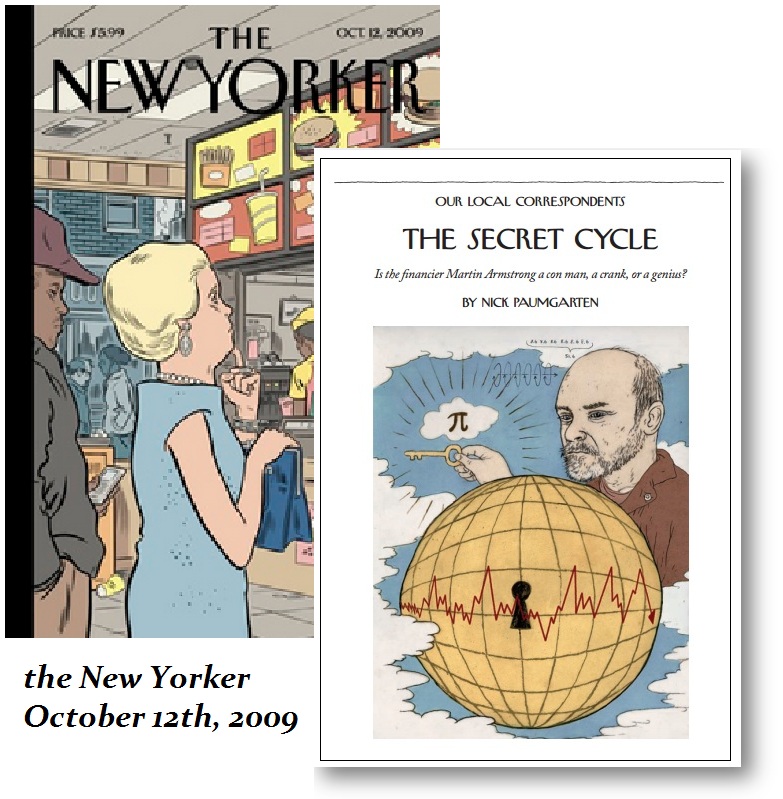
We now have universities inquiring about buying quantities of the books I have been publishing. It is great news that they are starting to introduce students to reality. I am working hard to finish the major book on the Economic Confidence Model, the New Yorker Magazine, called The Secret Cycle.
Posted originally on May 28, 2024 By Martin Armstrong
Economics is well known for rather unrealistic theories based upon fundamentally unsound principles, such as the assumption that all things remain equal. Reality parts with academics whenever such assumptions are drawn to a foregone conclusion. However, greater false assumptions, which go unnoticed, lie at the foundation of so many theories in economics – primarily the assumption of linearity.
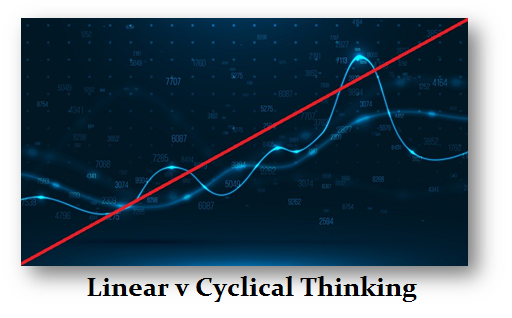
In our thinking process, we all are trapped by the Aristotelian sequence of logic – if X takes place, then Y must follow. Unfortunately, we think linearly and, as such, most theories seek to embellish this very basic assumption. The financial world honestly wants to believe in simplistic notions. Raising interest rates and demand will subside along with inflation is one false linear assumption. Man prefers to believe in linear relationships and systems because anything beyond two variables becomes far too complex for rational thought processes.
Man’s natural tendency toward linear thinking has indeed created many heated battles. The arguments between supply and demand-side economics is one such example. Given the assumption of a linear economy, demand-side economists argue that the economy can be controlled through the manipulation of government spending and interest rates. In effect, demand-side economics seeks to use the consumer (demand) as a club to beat capital over the head. Yet these same demand-side economists claim that supply-side economics benefits the rich at the expense of the poor. Strangely enough, throwing the consumer out of work and causing higher unemployment to affect lower demand is the core of demand-side economics. It is hard to see how the demand side benefits the poor at the expense of the rich. The supply-side economist argues that there should be less government intervention in demand. Instead, the government should stimulate the economy by encouraging greater output through supply stimulation.
Both sides have identified two extremes within a non-linear system, even though their arguments, based upon a linear assumption, assume that the other is totally wrong. If we look at just the last 10 years of economic activity, we can clearly see changes within the infrastructure that provide a period when each form of economic management would indeed be appropriate.
Looking at the period 1976–1980, it would be difficult to label this period as anything other than an inflationary spiral led by demand. Raising interest rates would be appropriate under such conditions when demand flourishes wildly beyond its normal capacity. Hoarding and speculation were in full bloom. Therefore, one should employ “demand-side” economics when demand is, in fact, out of control.
Nevertheless, in the post-1986 era and particularly since the ’87 crash, speculation is hardly the issue. We do not find excessive demand leading to the hoarding of commodities, as was the case leading into 1980. Yet, governments around the world are still employing demand-side economics to curb inflation, which is being caused by real shortages in labor and commodities. Clearly, in this case at least, supply-side economics makes much more sense. If interest rates continue to rise, the world economy will be threatened by a sharp and severe recession. However, the shortages on the supply side in energy, agricultural, and base metals will not be corrected by raising interest rates. Higher interest rates will not cause the weather to return to normal. Higher interest rates will certainly not encourage miners to open new mines. Higher interest rates will also not cause a reversal in trend within the energy sector where exploration has been cut by more than 50% in the last two years.
Supply-side economics is as valid as demand-side economics. Everything within the system has a time and place because the system itself is non-linear. The chart provided illustrates our Theory of Non-Linear Intervention. This theory is very simple and based upon actual observation.
The standard economic assumption under demand-side economics is that raising interest rates will lower demand and inflation. Continually raising interest rates does not prevent inflation. At some point in the system, confidence breaks down, and higher costs in interest rates only add to the costs of production and doing business. Eventually, this spurs inflation instead of reducing it. They attempted to go to negative interest rates, trying to stimulate inflation by punishing people if they failed to spend their money. This attempt failed because they overlooked the simple fact that people will hoard when worried about the future.
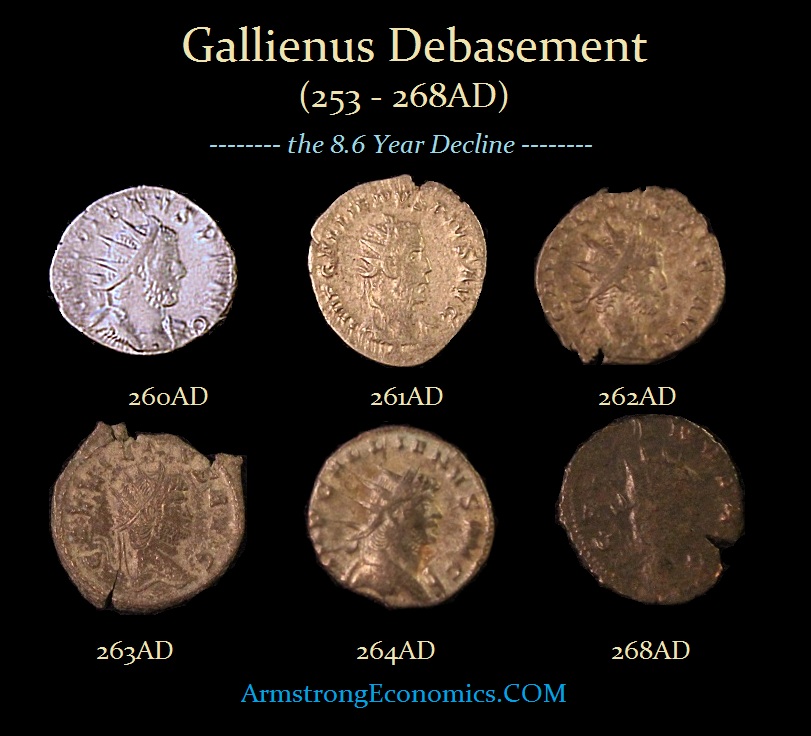
The evidence of this is all the hoards of ancient Roman and Greek coins that reveal in times of uncertainty, people simply buried their money for a rainy day. The very basic assumption that the system is linear is obviously incorrect. The business cycle exists throughout all times and portrays the system as non-linear. If any effect is taken to extremes, the exact opposite effect emerges. This is the result of non-linear intervention. Each economy possesses a different infrastructure. Consequently, the threshold where interest rates will cease being anti-inflationary and transform itself into the catalyst of inflation resides at different levels in each economic system. Differences in the value of labor, taxation, political systems, and market mechanisms must be taken into account.
In conclusion, government intervention, which seeks to manage the economy in an efficient manner, always fails because they are conflicted with self-interest. They are the biggest debtor within society. Attempts to only manage the economy by demand-side economics ignore the free market entirely. Intervention cannot possibly work when government remains in the dark about how the economy even functions. They fail to comprehend the direction and cause of inflation or deflation. The first step is recognizing that there is a business cycle, the second is to accept that a cycle exists, and third, we merely try to prepare for the downturns exactly as David advised the Pharaoh – seven years of plenty v seven years of drought.
“I named my computer model after Socrates because the oracle of Delphi had said that he was the smartest man in Greece. He tried to prove the oracle wrong and the process proved it to be correct. He was put on trial and sentenced to death because he knew too much. My computer has taught me a lot in geopolitics, we had a major bank in Lebanon in the 1980’s and they asked if I could create a model on the Lebanese pound. I put the data in the computer and it came out and said their country would fall apart in 8 days. I thought something was wrong with the data. When I told the client, they asked me what currency would be best, and I said the Swiss Franc. Eight days later the civil war begn. Obviously they saw the movement of money themselves and came to me for the timing. The same thing happened with a client in Saudi Arabia who was a big shipper. He called me asking me what gold would do tomorrow because Iran was going to begin attacking shipping in the gulf. So once again, there was advanced information about war. By 1998, I understood how the computer was forcasting such events. I warned in June at our London conference that Russia was about to collapse. The London financial Times had snuck into the back of the room and reported that forecast on the front of their newspaper on June 27th 1998. Russia collapsed about 6 weeks later.”
Posted originally on May 24, 2024 By Martin Armstrong
In an interview on May 11, 2014, I explained on USAWatchdog that confidence always outweighs reality. “It’s basically what you believe. There have been all sorts of studies on fundamentals that say if interest rates go up, stocks go down. It is simply not true. The stock market has never peaked with interest rates twice in history. If you think you are going to make 25% in the market, you’ll pay 10% interest; but if you really think the market is only going to go up 10%, you won’t pay 10%. So, it’s always the difference between what you believe and reality.”
The people have lost all confidence in government. There were rumors of a “soft landing” from the Fed, but the situation can no longer be controlled by the central bank. Washington maintains that everything is stable as banks continue to fail and inflation rages on. There can be no price stability when war is at play. Government spending has reached a new high, as have taxes which are not counted in any major data report. I explained in 2014 that great empires all come crashing down after piling on massive debt. People believe hyperinflation would cause such a scenario, but debt is the major player. Once the government accumulates enormous debt, it targets its citizens aggressively. That is what we are seeing today.
So where should you put your money? I said in 2014: “One of the number one questions I get all the time is where do I put my money? If the banks can just take whatever they want now, there will be bail-ins rather than bail-outs. People are afraid. What do you do with the cash? So, people are buying things like real estate and stocks, just trying to get money out of the banking system.” Smart money has been trying to escape the banks for years. There was no incentive until very recently to park money in the banks due to artificially low rates. The hunt for taxation is causing people to flee from the banks. The downturn in government trust has caused everyone to run from government debt for fear that it will not be repaid.
I also explained that the Fed would only bail out deposits and had been asking institutions to change their models. “Everybody knows I advise some of the big institutions around, and I can tell you that they have told me directly that the Fed went to them and told them they will not be bailed out for proprietary trading. It will be only on deposits. That’s it,” I stated. “The Fed has been going around telling them, ‘hey, you better change your models.’ They don’t think it will be a flight to quality as it was before. You buy the long-term (Treasuries), and that saves you. They don’t think that’s going to happen. It’s quite interesting. . . . It looks like the long-term (Treasury bonds) is going to end up starting to rise.”
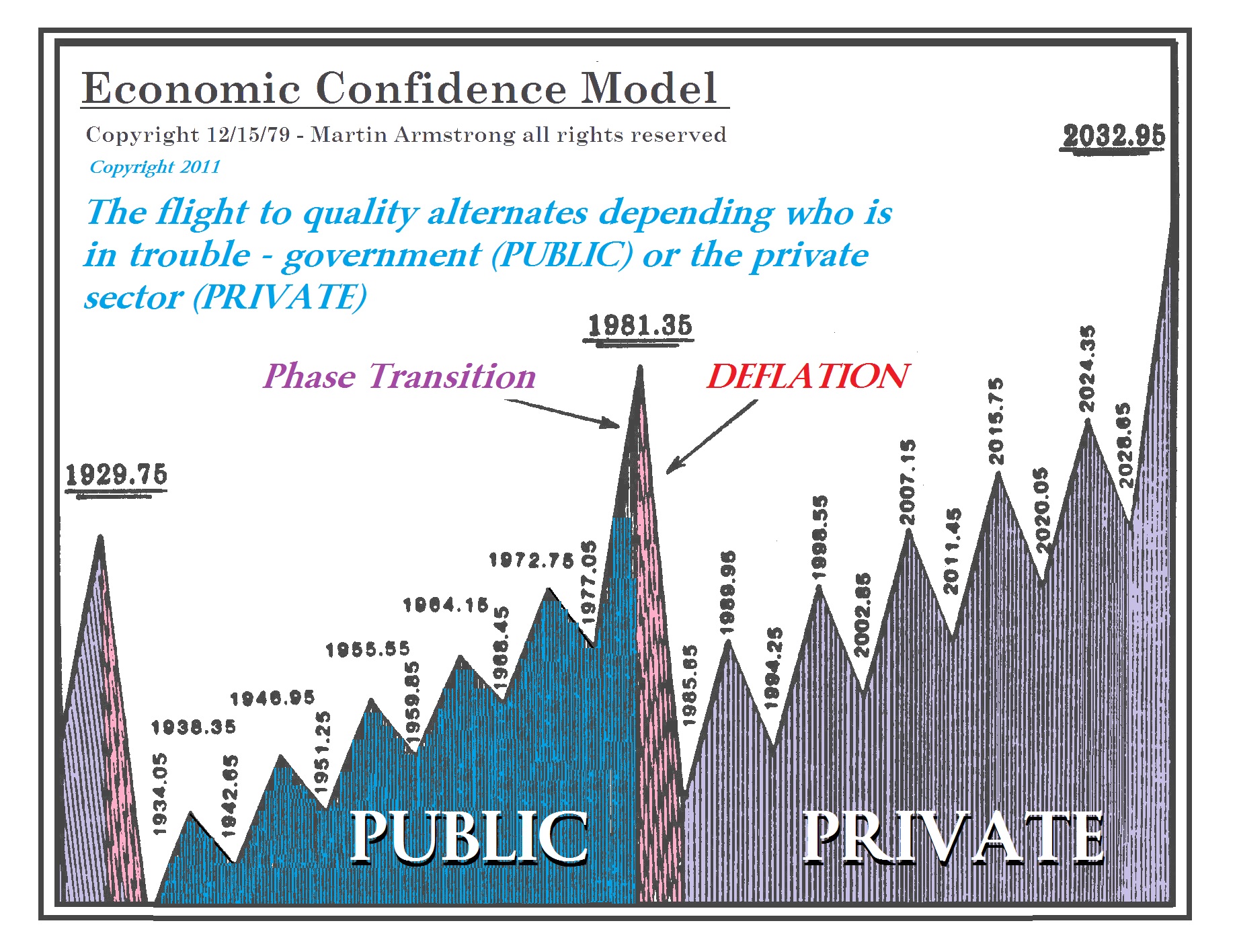
Sound familiar with the current situation? People have moved from the public sector into the private sector. We are well into a private wave, and the public will not go back to the public sector for many years to come. By that time, the government will have transformed into a new model that is far different from what we have today. My warning from 10 years ago was derived from the computer models, who never relies on mere opinion and are unable to factor in bias.
When I say that the computer is honing in on a new target or date, often, we must simply look at what unfolds on that target to understand the full forecast. We are waiting for the CONFIRMATION. The computer will give us that signal and we just have to go with the flow. It may be worse than trying to give a 5-year-old cough medicine. Yes, it tastes horrible, but it is necessary for the cure. The majority will not be able to make that transition thanks to their preconceived ideas and preconditioning. Many pilots who flew prop planes could never fly a jet because they could not make that transition to faster travel requiring quicker reaction times. This is the type of transition we face. We just have to abandon all prejudice and go with the markets. May 7 marked a major shift in the geopolitical landscape that ensures major conflicts with both Russia and China are on the horizon. I trust the trends in motion to forecast the future. As they say, the trend is your friend.
Posted originally on Mar 11, 2024 By Martin Armstrong
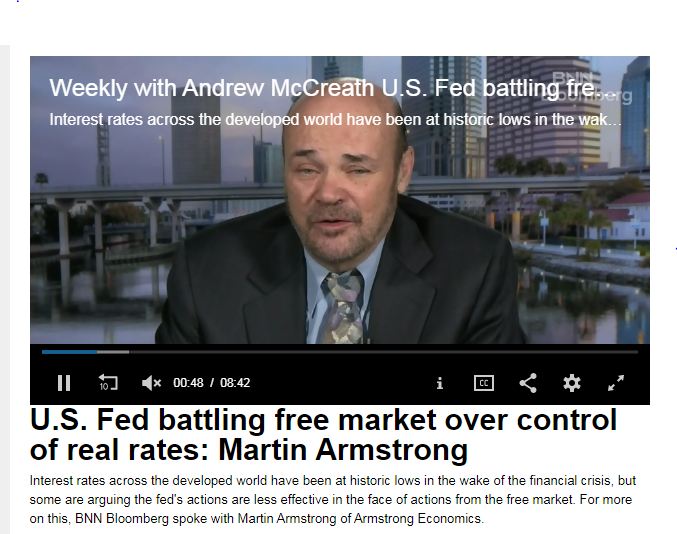
My January 2020 interview with Andrew McCreath from BNN Bloomberg came up in recent conversation, and I was asked how I knew then that we’d be where we were at now. My answer is the same — I just follow the models. Some unfamiliar with my work merely looked at the headline “DOW 40,000” and dismissed my forecast as if it were my personal opinion. The Dow was 29240 on the day of the interview and while many feared a correction was coming I explained any dip was likely short-term in nature that that it would need to drop below 19000 to be truly considered a bear market and – BUT that fell on deaf ears. Even with the notable COVID dip that soon followed this interview, the market bounced right back to new highs thereafter and the models stayed on track over the long term. We experienced one of the most HATED bull markets in history. Despite all of the turmoil over the years, The Dow consistently went up for over a decade but all the talking heads insisted it would go down.
Now, those same analysts are mad that they missed the entire bull market. The short-term forecast called for a dip in 2020 and a chance to get in on the action (and COVID provided that dip in spades), but I explained that there would not be a change in the long-term trend as my computer indicated we would enter a private wave that would peak in 2024 and go off into a half-8.6-year cycle into 2028. This was all indicated by the computer system as no individual could have foreseen the events that have unfolded over the past four years.
All of the models were heating up for 2024. This is why we focus primarily on the long-term, and closely monitor capital concentration – follow the money. There was trouble in Europe and Asia, so the capital needed to flee, and that safe haven happened to be the US. It is America’s final years as the leading financial capital of the world as historically it always changes. America dethroned Britain after World War II and China is on it’s way to dethrone America after 2032.
I also pointed out that inflation would be the focal point for 2024, leading to interest rates changing and becoming a key factor for central banks globally. Volatility paired with the private wave, where capital must escape the public sector, would also lead to an uptick in the commodity cycle.
The business cycle cannot be manipulated, but it can be analyzed. However, that’s not how most market analysts work. Long-term, macro requires looking at every market throughout the globe, studying past behavior through historical patterns in price and time. The models do a tremendous job doing this.
Now, everyone is praising the rising Dow that will touch the 40,000 level. Of course, it is easier to say that now that we are almost there. Again, few believed me back in 2020, but here we are. Governments throughout the world are still in trouble and the money remaining on the grid is fleeing into the US. This is another reason why I watch the Dow a bit more closely than the S&P 500, as it provides a more accurate indicator of the big foreign money piling in from throughout the world.
For those who wrote in asking if I still stand by my claims – yes, the computer is still indicating that we are looking at a Dow that could rise to 65,000 by 2032, when we are likely to see a change in not just the markets but governments worldwide. I wish I could tell you something different.
Posted originally on Mar 7, 2024 By Martin Armstrong
COMMENT: Mr. Armstrong, I know you knew my father. He had always been a big supporter of your work. He would do his part in homeschooling me part-time and show me your work on how the world functions. He passed, and I greatly appreciate your kindness in paying your respects. I’m sure he smiled from above, knowing you took the time to remember him.
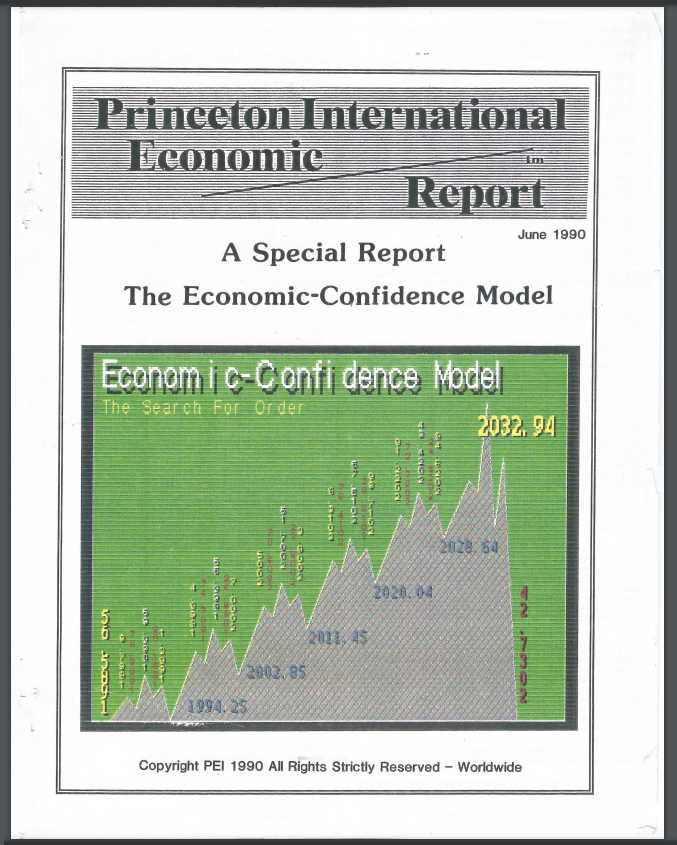
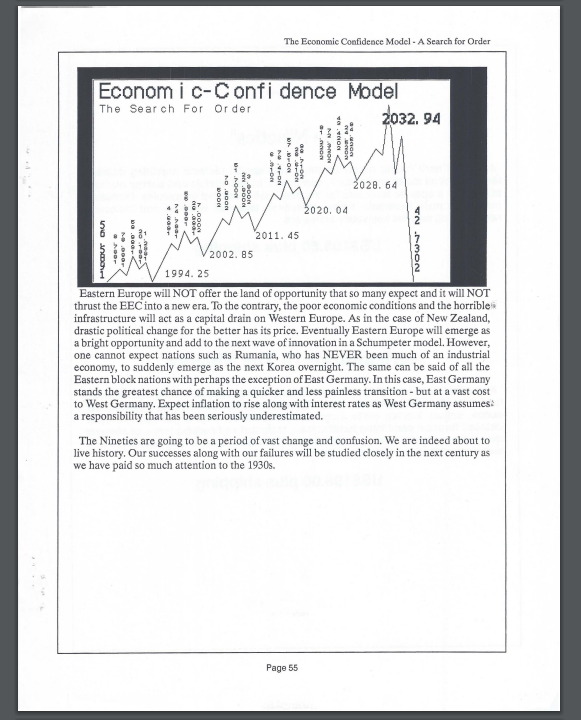
I scanned this report of yours from June 1990, just a few months after you forecast the fall of Communism at the end of 1989. You have been teaching the world for a long time. I think it is time the world recognized you.
Thank you
HL
REPLY: Thank you so much. I have tried to collect all the reports issued over the last 45 years. I will always remember your father and hope he can see I am smiling back at him. Good people are hard to find these days.
Posted originally on Feb 26, 2024 By Martin Armstrong
COMMENT #1: I was there at your 2011 WEC. I was dragged along by a friend. I remember well your forecast for war starting in 2014 and your forecast that the Dow would go to 40,000. I thought you were crazy. I bet my friend $100 you would be wrong. I had to pay up. Here we are at 40,000 and the Ukraine war started in 2014. I have to admit, I now see why institutions line up at your door and the government wanted your model.
You are a gift to mankind when we need clarity more than ever.
Thank you. It was the best bet I ever lost.
EP
COMMENT #2: everyone thought you were crazy years ago when you said dow 40000–here we are. it all came true.
ok see you soon
Brent
COMMENT #3: You are the only analyst who is consistent. I appreciate it is not your personal opinion like everyone else. That forecast the Dow would reach 40,000 is here and so is the war.
Stay safe. My whole family now listens to you.
HW
REPLY: Because my father was a lawyer who always hoped he would put “and son” on the door, I disappointed him in that regard. For whatever reason, I was always fascinated by what made the rise and fall of markets as well as empires, nations, and city-states. He did teach me about law from probably 7 years old. He handed me Aristotle to read for one summer. I handed that to my son in the family tradition when he became a teenager. Yet he also instilled an interest in history. I bought my first Roman coin for $10, probably when I was 10 to 12 years old. I could hold history in the palm of my hand. I saw the US take silver out of the coins in 1965, and I saw the parallel to Rome and how the same pattern emerged.
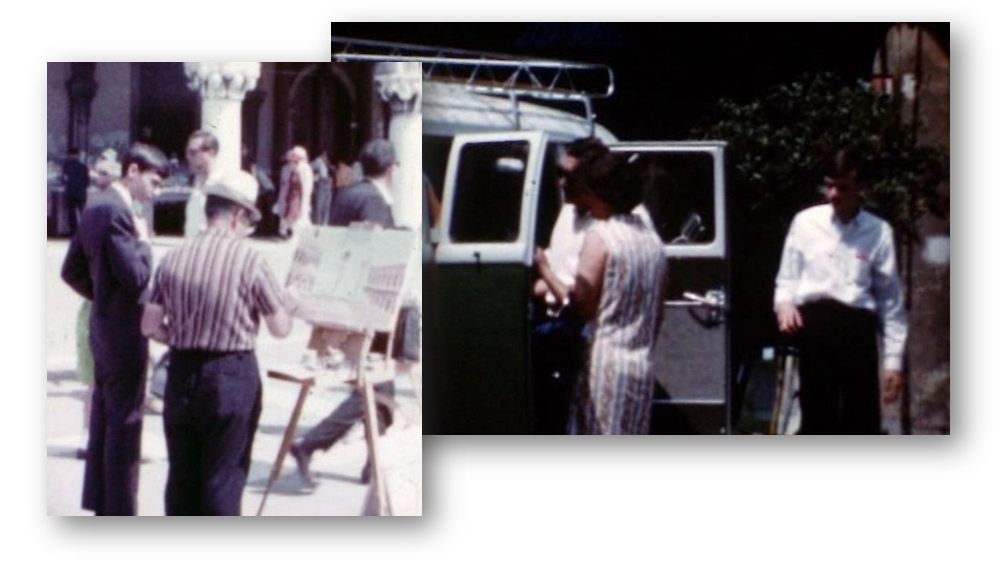
I also have to thank him for seeing the future of computers and pushing me into computer engineering, where in the ’60s, we had to study hardware design as well as software. I learned to code in machine language and connected the dots between programming and trading in the ’70s. Taking the family to Europe for the summer of 1964 opened my eyes to the world of currencies since we traveled all over from Sweden to Italy and everything in between.
That all set the stage for this journey I have been on, which I never set out to accomplish. Nevertheless, because of that worldview instilled in me by my father, I saw the world of finance, and that 1964 trip taught me, moving from one current to the next, that my home currency was really a mental language of value. I would have to listen to the price in whatever currency and then convert that in my head back to dollars. Only then could I rationalize if it was a fair price or not.
Visiting jail cell of Athens
Thus, I designed Socrates to look at the world and determine who will do what, for everyone will make a judgment call based upon their home currency, which is a language of value in their head. Here, you can see how the same market appears differently depending on your currency. I chose the name Socrates because he was really accused of knowing too much. They put him on trial for influencing the youth and executed him for sharing that knowledge.
All of that set me on the path to where I am today, but it also taught me a lesson that opinions are not the way to forecast. I probably have more experience than most. I have been to White House dinners, been on a board of a bank, met with board members of IMF and heads of state, addressed boards of the largest banks internationally, been an international hedge fund manager, and been called in by so many central banks as well as testified before Congress and been called in for just about every financial crisis around the world. That’s just the shortlist.
Because I specialized in currency, that has put me in the middle of almost everything since the 1970s. Currency was the mover and shakers behind the politics of the world. It was far more than simply trading buy here and sell there. It is why the CFTC had even subpoenaed me, demanding a list of all my clients worldwide so they could prove I manipulated the world because I was too influential in their view. I defended in court and won. They were always seeking to shut down the forecasting.
History repeats because humanity never learns. These people who push for war have no end game. Nobody ever seems to ask – what comes next. They took down Saddam Hussein and never once asked: What would happen if you overthrew a government?
They are doing that again with Russia. Victoria Nuland is highly dangerous. She personally hates Russians, and nobody has a view of what would happen if you overthrew the Russian government. Would you then have nukes for sale on the black market?
I have been behind the curtain. I have never witnessed such evil and incompetent people in charge. I suppose this is necessary as we head into 2032. I want to stress that these forecasts are NOT my opinion. They are not based on anything other than the raw economics and capital flows. They are not based on religious philosophy, nor did I introduce astrology. They are the objective view of the computer, the ONLY fully functioning AI system in the world monitoring the global economy with a track record of nearly 50 years.
Yes, people are saying I should float it now. It would be worth hundreds of billions. I don’t have the time or the energy to take that on now, and I have more than enough to support me until Scotty beams me up. Nobody respectful has been beating down my door who would maintain my dream to ensure it helps the world – not a small WEF billionaire click.
I have created this site to help people have fun in the kitchen. I write about enjoying life both in and out of my kitchen. Life is short! Make the most of it and enjoy!
This is a library of News Events not reported by the Main Stream Media documenting & connecting the dots on How the Obama Marxist Liberal agenda is destroying America







 Centinel2012