Worsening Food Price Increases Gain Global Attention – UN Food and Agriculture Organization Tracks Highest Prices Ever Recorded


Posted originally on the conservative tree house on April 8, 2022 | Sundance

The UN Food and Agriculture Organization reported on Friday they are recording the highest Food Price Index since they started recording thirty years ago. With record highs in prices for cereals, vegetable oils, dairy and meats

This issue has been a slow burning fuse toward the biggest powder keg in modern history, and it is about to get very serious.  We have been warning about it since last fall {Go Deep}.  In the most deliberate and painstaking ways possible, we have been urging everyone to take this issue seriously.

The background cause is complex and started with the 2020 government response to the pandemic.  U.S. and international government intervention in the food supply process has been FUBAR from the beginning. Every action taken since early 2020 has been one bad policy after another; building failure upon failure, crisis upon crisis, bad decision upon bad decision, bringing us to a precipice summed up by saying “the absence of food will change things.”
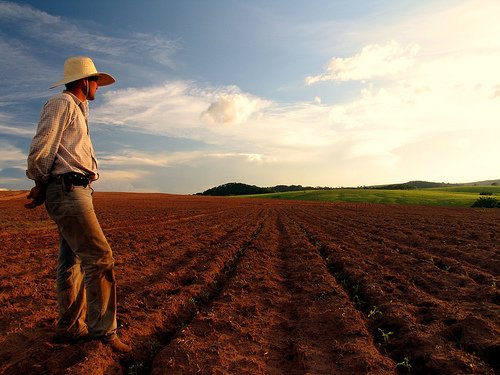
Some will say the food prices we are about to experience –and the crisis it will create– was deliberate.  Others will say this was the cumulative outcome of major failures on the part of the government.  At this point the former makes more sense, and the latter looks like a justification and excuse, because if government entities were really serious about food prices and shortages, they would be taking pragmatic steps to mitigate the problem; they are not.

There are simple things government could do, such as helping farmers offset targeted fertilizer costs, providing relief for diesel fuel and energy costs, and taking other simple steps that would help the agricultural industry.

Instead of responding with the urgency this would demand, the collective government action has been to ignore the problem (talk soundbites), and give speeches about using subsidies to offset the end result (consumers) – without ever addressing the root cause.  All this while fueling conflict in Ukraine and chasing radical energy policies under the guise of global climate change.

The UN Food and Agriculture Organization (UNFAO) keeps track of food prices and projections using a global index [SEE HERE].  What they are calculating, and what they are projecting based on the current calculations, is a major increase in food prices combined with a major increase in food scarcity due to the unaffordability of food products.
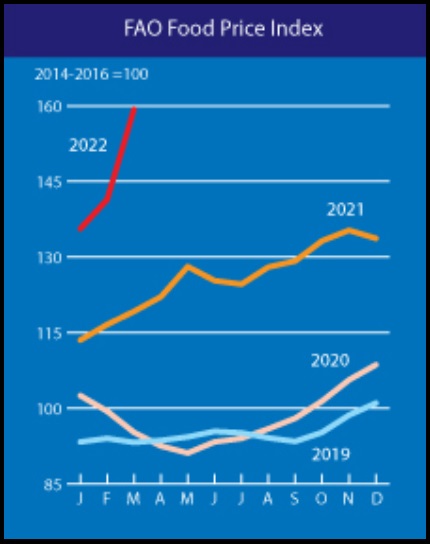
The baseline of 100 is the monthly rate of change for a basket of food products using the period from 2014 to 2016.

The current rate of change is indexing at 159.3, meaning the monthly increases in price are almost 60% higher than the base period.  Trying to chart this rate of index is almost impossible, as it seems literally exponential. (red line in graphic)

In 2020, the monthly rate of change increased to an index of around 110.  In 2021, the monthly rate of increase went from 110 to around 135.  In the first three months of 2022, the index has jumped from 135 to almost 160 (in three months), and there is no end in sight.

The FAO Food Price Index* (FFPI) averaged 159.3 points in March 2022, up 17.9 points (12.6 percent) from February, making a giant leap to a new highest level since its inception in 1990. The latest increase reflects new all-time highs for vegetable oils, cereals and meat sub-indices, while those of sugar and dairy products also rose significantly.

The FAO Cereal Price Index averaged 170.1 points in March, up 24.9 points (17.1 percent) from February, marking its highest level on record since 1990. This month’s increase reflected a surge in world prices of wheat and coarse grains, largely driven by conflict-related export disruptions from Ukraine and, to a lesser extent, the Russian Federation. The expected loss of exports from the Black Sea region exacerbated the already tight global availability of wheat. With concerns over crop conditions in the United States of America (USA) also adding support, world wheat prices rose sharply in March, soaring by 19.7 percent.

The FAO Vegetable Oil Price Index averaged 248.6 points in March, up 46.9 points (23.2 percent) from February and hitting a new record high. The sharp rise of the index was driven by higher sunflower, palm, soy and rapeseed oil prices.

The FAO Dairy Price Index averaged 145.2 points in March, up 3.7 points (2.6 percent) from February, marking the seventh consecutive monthly increase and lifting the index 27.7 points (23.6 percent) above its value a year ago. The upward trend of dairy product prices persisted, mainly supported by the tightening of global markets due to inadequate milk output in Western Europe and Oceania to meet global demand. Quotations for butter and milk powders rose steeply.

The FAO Meat Price Index* averaged 120.0 points in March, up 5.5 points (4.8 percent) from February, also reaching an all-time high. In March, pig meat prices registered the steepest monthly increase on record since 1995.

The FAO Sugar Price Index averaged 117.9 points in March, up 7.4 points (6.7 percent) from February, reversing most of the previous three months’ decline and reaching levels more than 20 percent above those registered in the corresponding month last year. [DETAILS]

In the United States and North America as a whole we are blessed and fortunate.  We have abundant, healthy and fertile land that allows us to grow more food than we consume.  We are a net exporter of food products.  However, while we do not have to worry about shortages at the scale of other nations, there will be scarcity.

Additionally, the price increases will hit the U.S. consumer at a lesser, yet still big time significant, scale.  The issue in the U.S. will be food insecurity due to massive increases in price.   The middle class will spend more of their earnings and wages on food, and people will literally make changes to their food purchases based on these massive increases in price.

In food dependent nations, the scale of the issue will be far greater.  In part, this is the reason the southern border crisis will be much more severe this year.  We will see an influx of migration due to food availability and unaffordability issues, that is certain; however, that issue is also incidental to the massive influx that is going to happen as a result of the Biden open-border policy.

In the strongly food dependent nations, the food price and scarcity issue has already triggered panic.

We are several generations separated from any time in history where people have worried about the United States having abundant affordable food.  Arguably, those under 40 to 45-years of age do not have any reference to the type of food scarcity and food inflation that is coming.

As we have mentioned for quite some time, “the absence of food will change things.”

We are in an abusive relationship with government leaders.
Canada Bans Foreign Home Buyers for Two Years


Posted originally on the conservative tree house on April 8, 2022 | Sundance 

In Chapter 1, sub-section 1.4 of the 2022 Canadian budget, there is a rather remarkable new rule that bans foreign ownership and investment in housing for a period of two years.  [LINK HERE]

To make sure that housing is owned by Canadians instead of foreign investors, Budget 2022 announces the government’s intention to propose restrictions that would prohibit foreign commercial enterprises and people who are not Canadian citizens or permanent residents from acquiring non- recreational, residential property in Canada for a period of two years.”

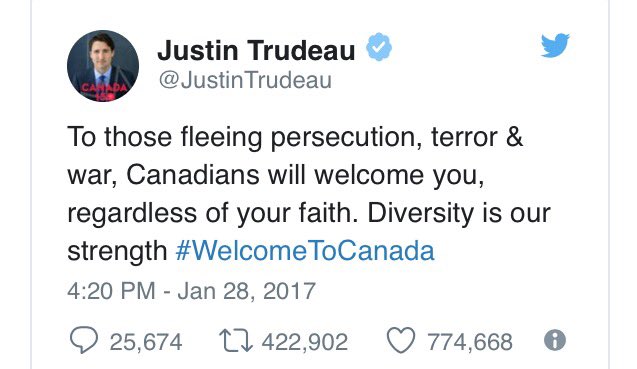
Two points about this issue.  First, can you imagine the media outcry if a conservative prime minister would ever make such a proposal?  Quite a leftist change from the previous mantra “diversity is our strength”?

Second, considering the issue of foreign investment that creates housing, there is a likelihood this could backfire.  The new position of Canada will certainly put more upward pressure on the U.S. housing market.  Every action tends to have an equal and opposite reaction.  It will be interesting to follow this and see where it leads.

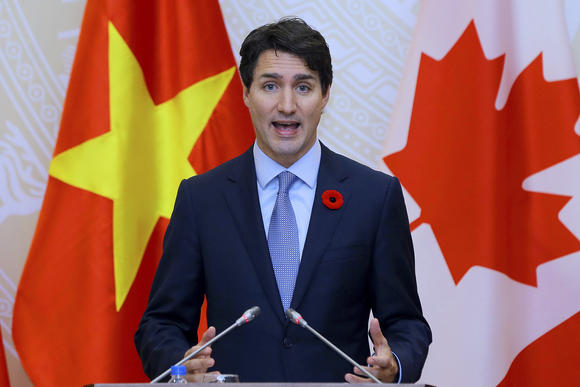
OTTAWA, Ontario (AP) — Prime Minister Justin Trudeau’s government announced Thursday it will ban foreign investors from buying homes in Canada for two years in a bid to cool off a hot housing market.

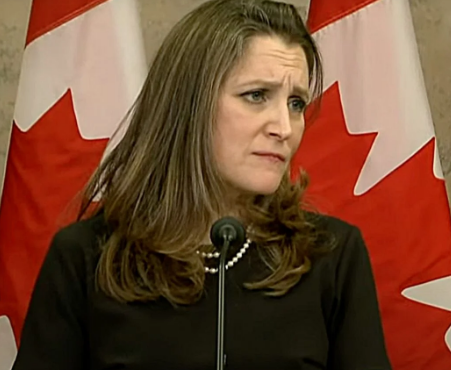
Finance Minister Chrystia Freeland took a number of measures to tamp down speculation and demand amid record home prices in announcing the federal budget for the year.

The government announced a two-year ban on foreign home buying as well as higher taxes for people who sell their home within a year, though both measures include multiple exceptions including for permanent residents and foreign students. (read more)

Imagine the apoplexy if Donald Trump made such a nationalistic move.

As with most things leftist, European, political and currently Canadian, the ideologues are all about advancing globalism until some consequence reaches their doorstep.  Then suddenly changes need to be made and protectionist programs like this new 2022 housing rule are triggered.   Can you think of something more economically nationalist than this rule?

Alas, we beat the dead equine.  In order for entrenched left-wing ideologues to continue advancing their insane ideology, they must pretend not to know things.

Red Hot Rentals


Armstrong Economics Blog/Real Estate Re-Posted Apr 8, 2022 by Martin Armstrong

Rentals are soaring across the US to unsustainable levels. Gone are the days when people stuck to the tradition of spending less than one week of income on housing. According to a Rent.com report, the national average for one-bedroom apartments is up 24.4% over the past year to $1,684, and two-bedroom units are up 21.8% to $1,997. The data was compiled in February and released this March.

Those interested in living in a more desirable area should expect to pay significantly more. The following cities experienced the sharpest annual increases in one-bedroom units:

The increase in two-bedroom units over the past year:

This does not factor in the rising price of utilities due to the energy crisis or the rising cost of simply putting food on the table. Inflation within the rental market became an issue in 2020 and is continually rising. People are paying so much of their income to landlords that the American dream of homeownership is outlandish to many hardworking people.

Canada Bans Foreigners from Real Estate Market but Misses Loopholes


Armstrong Economics Blog/Real Estate Re-Posted Apr 8, 2022 by Martin Armstrong

Finance Minister Chrystia Freeland announced on Thursday that most foreigners would be barred from purchasing real estate in Canada for the next two years in an effort to combat the housing crisis. Home prices in Canada have risen over 50% since 2020 as demand steadily increases and available inventory diminishes.

The Bank of Canada announced a record jump in housing costs this past February, with the benchmark price across the provinces reaching C$869,300. For years foreigners have seen Canada’s rising real estate market as a safe haven to park money. Chinese investors found it particularly lucrative when converting the yuan to CAD. The Trudeau Administration previously placed a 1% tax on vacant foreign-owned land, and as I warned, any tax in place will remain in place and likely rise. Vacancies are an issue, but they are not the lone culprit for this trend.

“I don’t think prices are going to fall as a result, though I do think it takes away at least some of the competition in what is the most competitive market in Canadian housing history,” Simeon Papailias, founder of real estate investment firm REC Canada. “I don’t think a two-year band-aid is going to have an impact on what’s a fundamental lack of supply.” This is the general consensus in Canada as people simply want affordable housing, and believe these measures will have a positive impact on prices. There is a good chance this ban will last beyond the two-year period as lawmakers remain misled on what is driving the real estate markets.

A few convenient loopholes make this law an empty gesture to appease those blaming foreigners for real estate inflation. The ban does not prohibit purchasing through corporations, so Vanguard and BlackRock can continue profiting while individuals face the burden of this new law — but only certain individuals without the money to bypass the system. Permanent residents, foreign workers, and students will be excluded from the law. Foreigners who plan to buy their primary residence in Canada are not prohibited from purchasing property. So Canada is not aiming to eliminate all foreign real estate investments; the government simply wants it to appear that they are working to lower real estate costs when this measure will do no such thing.

Australian MP Outlines Concerning School Lesson, Sexual Assignment for 10-Year-Old, “What the Hell Is Going On Here”


Posted originally on the conservative tree house on April 7, 2022 | Sundance

The issue of inappropriate education topics surrounding the sexualization of children has been in the headlines recently, as Florida and other states initiate laws to stop young students (K-3) from being exposed to sexual material promoted by leftist educators.  However, the issue is not isolated to the United States.

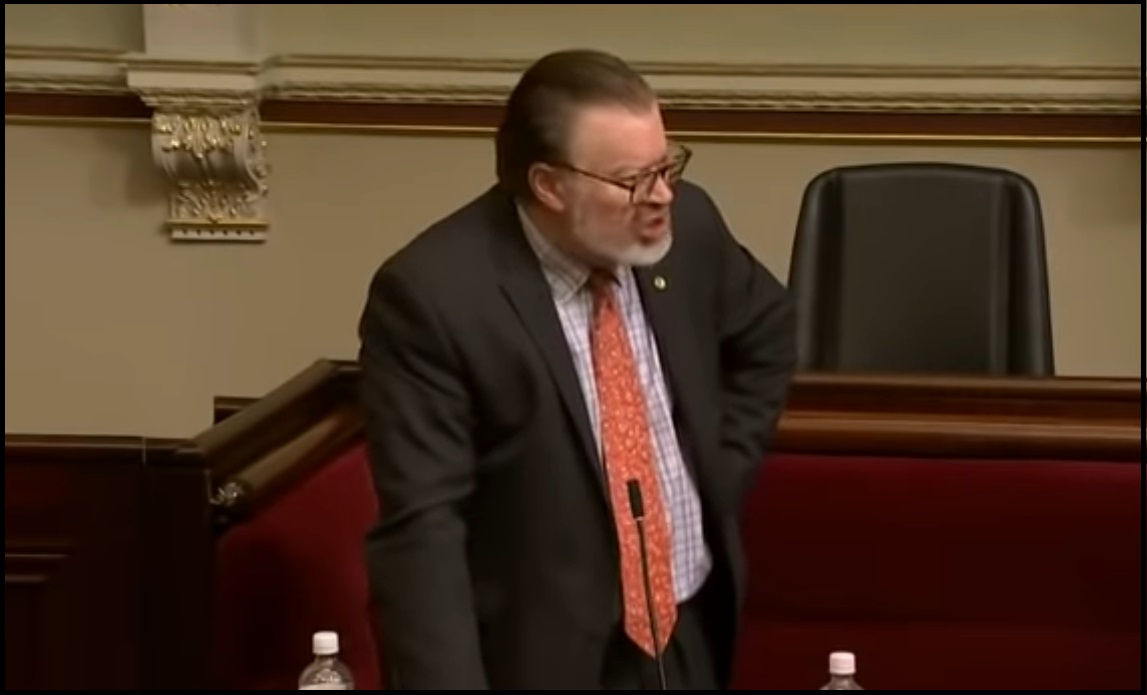
A state legislator in Victoria, Australia, recently outlined an education program where young 10-year-old girls are being told to ask their fathers about “erections and ejaculation” as homework. Bernie Finn, a member of the upper house of the Victorian state parliament in Australia, reads the concerns from a constituent parent in his district, then explodes,”What the hell is going on here?”  WATCH: 

“How the hell are we supposed to protect our kids when this sort of perversion is in our schools? This is what is being dished up to them on a daily basis in a primary school – not even a secondary school – a primary school. This is just unbelievable. It’s staggering.”

There It Is, The Canadian 2022 Budget Authorizes a Central Bank Digital Currency


Posted originally on the conservative tree house on April 7, 2022 | Sundance 

CTH noted earlier, in the aftermath of the COVID-19 control mechanisms, things were being done legislatively to follow a ‘new world order’ for western democracies {Go Deep}.  One of the nations we noted following this new direction, was Canada.  Today, a review of the proposed Canadian 2022 budget finds something to align with the new version of democracy – the establishment of funding to create a central bank digital currency.

That should not necessarily come as a surprise.  After all, despite a massive amount of denial from the Canadian Finance Minister and Canadian Prime Minister toward the context of CTH research {Go DEEP}, the direct evidence we were looking for is now discovered.

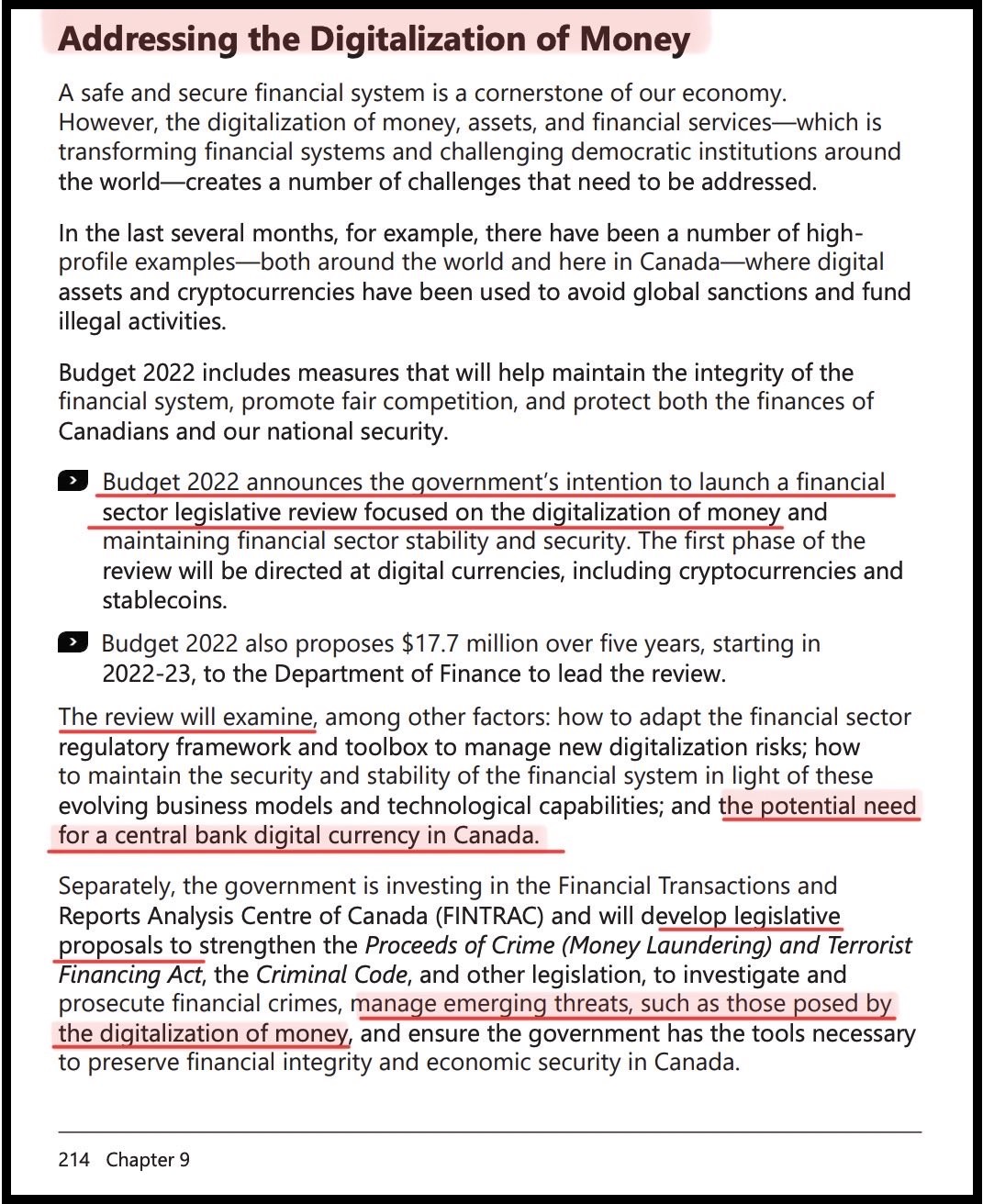
Buried deep, very deep, in Chapter 9.2 of the Canadian Budget you will find this:  …”In the last several months, for example, there have been a number of high-profile examples—both around the world and here in Canada—where digital assets and cryptocurrencies have been used to avoid global sanctions and fund illegal activities.”

(Chapter 9.2) […] Budget 2022 includes measures that will help maintain the integrity of the financial system, promote fair competition, and protect both the finances of Canadians and our national security.

  • Budget 2022 announces the government’s intention to launch a financial sector legislative review focused on the digitalization of money and maintaining financial sector stability and security. The first phase of the review will be directed at digital currencies, including cryptocurrencies and stablecoins.
  • Budget 2022 also proposes $17.7 million over five years, starting in 2022-23, to the Department of Finance to lead the review.

The review will examine, among other factors: how to adapt the financial sector regulatory framework and toolbox to manage new digitalization risks; how to maintain the security and stability of the financial system in light of these evolving business models and technological capabilities; and the potential need for a central bank digital currency in Canada. (LINK)

Huh. Imagine that.  What was called a “conspiracy theory” just a few weeks/days ago, is now the expressed intent of the same government who denied it was ever being considered.

(Source link – Chapter 9, sub section 9.2)

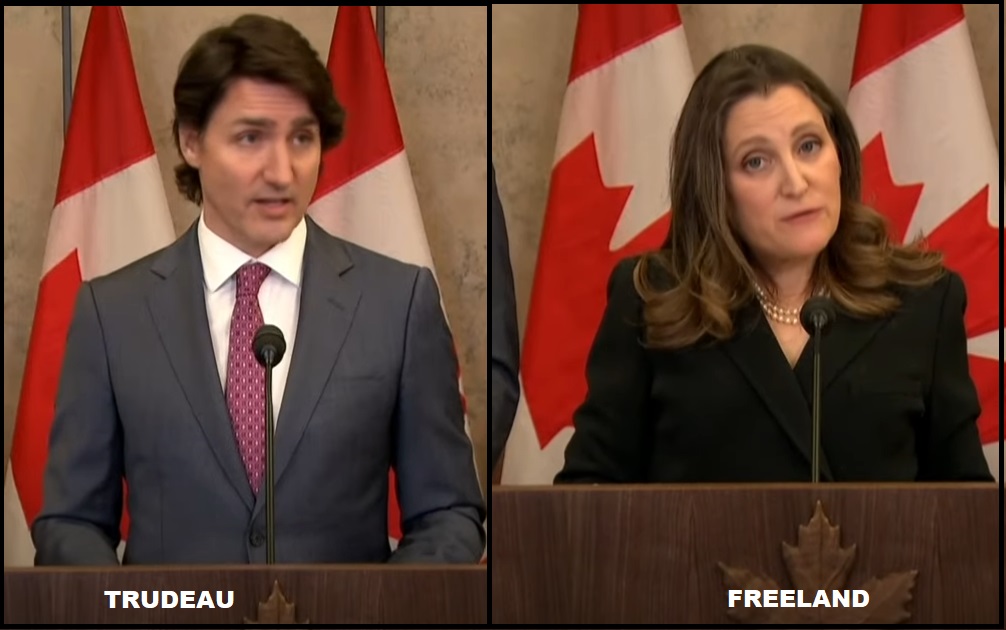
You may remember when Chrystia Freeland and Justin Trudeau triggered their use of the Emergency Act to confiscate the bank accounts and financial assets of protest groups.  Trudeau and Freeland essentially broke the financial code of Omerta, by highlighting how easy it is for government to seize your bank accounts, credit cards, retirement accounts, insurance, mortgages, loan access and cut you off from money (without due process).

However, when Prime Minister Justin Trudeau and Finance Minister Chrystia Freeland announced they would use the Emergency Act declaration to target the financial support systems, banks and accounts of the people who were protesting against COVID mandates, they not only undermined the integrity of the Canadian banking system – they also inadvertently stuck a wrench into the plans of the World Economic Forum and the collaborative use of the Canadian Bankers Association to create a digital id.  WATCH:

If the Canadian government can arbitrarily block citizen access to their banking institution without any due process, what does that say about the system the Canadian Banking Association (CBA) was putting into place as part of their Digital ID network?

If the CBA digital identity were in place during the trucker protest and the deployment of the Emergency Act, the same people targeted by Trudeau’s use of the Act could have their entire identity blocked by the same government measures.  The realization of the issue, reflected by a severe undermining of faith in the banking system, surfaces as a dramatic problem for those working to create and promote the Digital ID.

It is not coincidental the financial targeting mechanism deployed by Trudeau/Freeland, the Canadian banking system, was/is the same mechanism being used to create the digital identity, which is now the same mechanism they are budgeting to begin establishing the Canadian digital currency.

♦ It is all one continuum.

Using the COVID-19 pandemic, they created a specific vaccine mandate.  Using the vaccine mandate, they created a vaccine passport.  The vaccination passport and registration process tracked/monitored human behavior.  In actual substance, the vaccine passport can be looked at as the beta test for a larger mission of a comprehensive digital identity and/or social credit tracking system.  Most Canadian’s complied, willingly.

Now, it is a simple process to shift into a digital identity, as noted above by the Canadian Banking Association, and presto – the government has just created the foundational infrastructure for the digital currency.

The 2022 Canadian budget provides the funding to create the digital currency mechanisms.

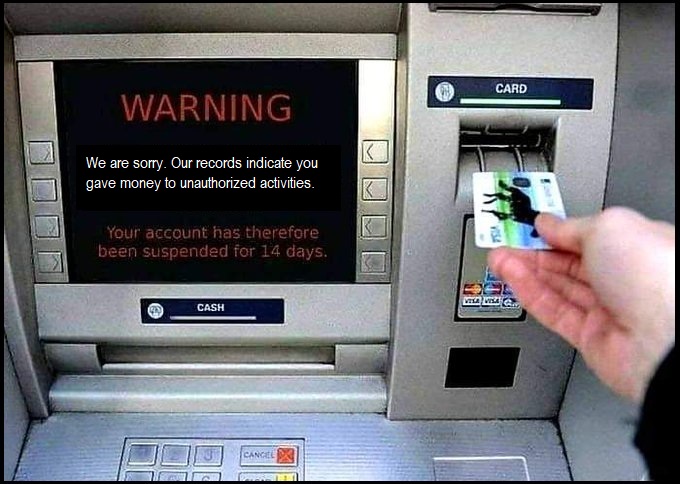
Once the mechanisms are in place, then it becomes a simple process to control how the digital currency is spent.

That car is not environmentally friendly, transaction denied.

You’ve exceeded your allotment of beef this month, transaction denied.

Or perhaps…

{Support CTH Research HERE}

German Parliament Rejects Vaccine Mandate


Posted originally on the conservative tree hose on April 7, 2022 | Sundance 

Despite western media presentations of vaccine outlooks in what they frame as progressive Germany, the country actually has one of the lower vaccination rates in Europe. About 76% of Germans have one dose of vaccine compared to an average of 80% in France, Italy and Spain.

German Chancellor Olaf Scholz stated earlier in the year, the only way forward through the COVID-19 pandemic was a national vaccine mandate.

Anticipating limited support for the measure, Scholz’s tenuous coalition government constructed a law they thought would have widespread support.  Those over 60-years of age would have a mandatory vaccination, and those 18 to 59 would have a mandatory conversation with their doctors about the vaccination.

The members of parliament were told to follow their conscience as Scholz’s law was brought to the floor for a vote.  The vaccine law failed to pass parliament as 378 members voted against it, 296 voted in favor.  The legislative defeat has stunned the ruling German coalition.

BERLIN, April 7 (Reuters) – Germany’s lower house of parliament on Thursday voted against a bill requiring anyone aged 60 and over to get vaccinated against COVID-19 in a defeat for Chancellor Olaf Scholz.

[…] In an attempt to avoid another wave of the virus in the autumn, the cross-party proposal required citizens aged 60 and over to be vaccinated from Oct. 15.  […]  Of the 683 parliamentarians who voted, 378 voted against the bill and 296 in favour, triggering cheers from far-right AfD lawmakers. It was a free vote, with lawmakers not told to follow party lines.

However, the defeat is a setback for Scholz who had even summoned his foreign minister, Annalena Baerbock, to leave a NATO meeting in Brussels to return for the vote.

Scholz had last week been forced to drop plans for mandatory vaccinations for over 18s as he could not muster a parliamentary majority.

Dirk Wiese, a lawmaker involved in initiating the bill, blamed opposition conservatives, saying they blocked the bill to hurt the government.

“The CDU/CSU (conservatives) have unscrupulously answered a question of conscience,” Wiese said in a statement.

The bill’s failure reflects the challenging policy-making dynamics of the ruling coalition, comprising Scholz’s Social Democrats, the Greens and liberal Free Democrats who disagree on many issues. (read more)

Apparently, the viewpoint of medical autonomy, freedom and individual liberty is still alive in Germany.  If the reports of vaccine rates are accurate, 24% of German have rejected the vaccine completely, and now 55% of MP’s have rejected the government demand to make the vaccine mandatory.

Living in the Past – Stalin v Lenin


Armstrong Economics Blog/Russia Re-Posted Apr 7, 2022 by Martin Armstrong

COMMENT: Hi,
I live in Finland/Helsinki. The Soviet Union attacked Finland in 1939, Stalin was one who arranged a false flag in Manila. A lot of Finnish soldiers and civilians died. But we survived. We Finnish people know Russians extremely well. It is a historical fact that Russians always arrange false flags and try to slave other nations and people. And that is happening just now in Ukraine. Putin attacked Ukraine and he is trying to slave Ukraine.
Best Regards from Finland

JT

REPLY: It is important to not judge a country by its leaders. There are always left and right in every country and no country enjoys 100% approval of its people. Just look at the United States. There are ONLY three presidents who won with 60% or more, FDR 1st term, Johnson following Kennedy’s assassination, and Richard Nixon who promised to end Vietnam. All others won with just a few points over 50%. In the 2008 Election of Obama v McCain score his victory with just 52.9%. Even Lenin warned not to put Stalin in charge.

It is wrong to judge Russia by Stalin and today the powers that be just hate the Russian people and attribute everything to Putin. It is essential to also understand that there is a left and a right in Russia that still prevails today and Putin is a moderate that if ignored by the West, will drive Russia into the hands of the extreme right.

We MUST understand history for there has always been a question of where Russia begins and ends and who constitutes the Russian people. These questions have been debated by Russian thinkers themselves for centuries post-Russian Revolution which ended more than 300 years of tsarist rule. Believe it or not, Putin is NOT trying to resurrect the Soviet Union for that was not even the vision of Lenin – but Stalin.


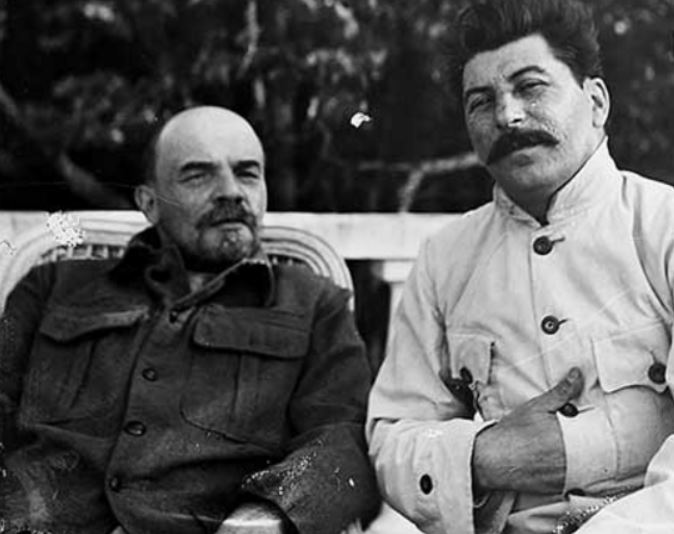
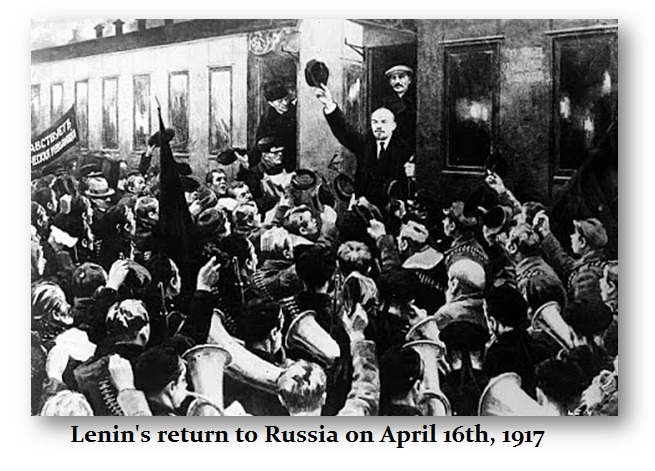
At first, Lenin was revered as the architect of the new Russia. He was the elder statesman of the Bolshevik revolution. Stalin, on the other hand, was what we would call a Neocon. He was the ambitious party leader with visions of absolute authoritarian control. The two clashed not only over their political vision for Russia but also on a very personal level hurling insults steeped in grudges. It was this battle that actually proved to be too much for Lenin resulting in his premature death.

The conflict between these two Russian leaders reached a climax in the last days of December 1922. This is when 2,000 delegates from all over the former Russian empire gathered together in Moscow to create a new state which would become the Union of Soviet Socialist Republics. The vision of this new state was starkly different between the two men. There were republics of Ukraine, Belarus, and Transcaucasia, which were formally independent of Russia. When Georgy Chicherin, the Soviet Russian commissar for foreign relations, signed the treaty with Germany where each surrendered their claims against the other for war reparations in July 1918, there was a problem of unity. Ukraine and Belarus were independent before 1919 but were then overrun by the Bolsheviks in 1919. They had objected to forgiving Germany.

Ukraine and Belarus took the position that the Russian authorities had no right to speak on behalf of Ukrainian and Belarus. In Georgia, there too they objected insisting that their rights as the members of an independent republic were violated. This is was ultimately set in motion the birth of the final version of the Soviet Union.

It was in August of 1922 when Joseph Stalin created a special commission to recommend a new political model of relations between the communist Party’s Central Committee, Russia and the republics. Stalin’s proposal was called the “autonomization of the republics” whereby the formally independent republics would be incorporated into the Russian Soviet Federation with rights of autonomy. However, the Russian Federation would become the central authority subordinating the formally independent republics. This resulted in a rebellion with the Georgians led the revolt against Stalin’s model. They were joined by the Ukrainians and Belarusians.

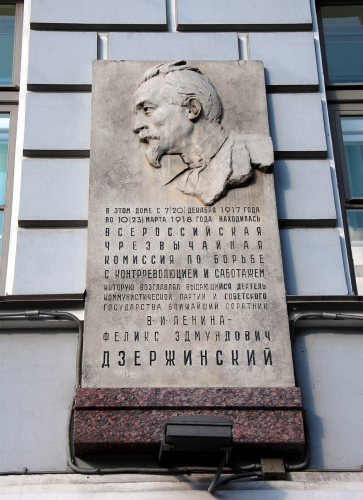
This conflict between Lenin’s vision of a union more akin to the United States model and Lenin’s vision of absolute central power resulted in the heated conversation with Feliks Dzerzhinsky, who was the head of the secret police and a supporter of Stalin. Stalin and many of his supporters, such as Ordzhonikidze and Dzerzhinsky, were actually non-Russians. Stalin was Georgian and Dzerzhinsky was actiually Polish. Interestingly, Felix Dzerzhinsky was remembered in St Petersburg on a Commemorative plaque dedicated him.

But the stroke prevented him from taking any decisive steps against them. Two days later, a commission of party officials, led by Stalin, placed strict limitations on Lenin’s activities, effectively isolating him. They said the restrictions were designed to prevent the worsening of Lenin’s health. But they also served a political purpose.

Lenin could not attend the congress and he certainly did not trust Stalin. Consequently, the paralyzed Lenin dictated his famous thoughts on the nationality question in a document he sent to the party leadership. It was a letter titled “On the Question of Nationalities or ‘Autonomization.’” On December 31st, 1922, he attacked Stalin’s policies criticizing the rights provided to the republics by the Union treaty, deeming them inadequate to stop the rise of Great Russian nationalism. Lenin called this threat as “great-power chauvinism.” To Lenin saw these people as non-Russians who he did not trust and feared for the future of the Russian people.

In Lenin believed that Stalin, who was not Russia, posed a major threat to Russia. He viewed Stalin’s dream of the USSR as a threat to the unity of state which he was correct. Lenin’s idea of a union of independent states would be sustained by local autonomy taking into account their local customes. Lenin was prepared to replace the Union he had originally proposed with a looser association of states with the centralized powers to be confined to matters of defense and international relations exclusively. Lenin also maintained that the republics should retain the right of secession to prevent Stalin’s central dominance of authority.

I highly recommend watching the movie Mr. Jones. While this will NOT show the battle between Lenin and Stalin, it will show the ruthlessness of Stalin that Lenin feared. But Stalin was NOT a Russian, but he has tarnish the reputation of all Russians ever since. It is ironic that Stalin was a Georgian, which is in the Caucuses bordering Turkey where they hate Russians for the very oppression of Stalin.

So, as you can see, this is a very complex subject. Putin is not a follower of Stalin wheras other behind him are. So we should be very care what we wish for when it comes to Regime Change. Just maybe they know this as well and want Regime Change to ensure war. Very interesting indeed. We should NOT judge Putin by Stalin or all Russians for that matter. That is the propaganda of the Neocons who are still fighting against Stalin.

Canada Begins Eugenics Program


Armstrong Economics Blog/Canada Re-Posted Apr 7, 2022 by Martin Armstrong

While people always point to Nazi, Germany, Canada is no stranger to eugenics. The Sexual Sterilization Act in 1928 forced Indigenous women to undergo sterilizations to diminish their population. Canada provided these women with a skewed “mental deficiency” test in an attempt to prove they were unfit to reproduce. The practice was widespread until the 1970s, although numerous women have reported being coerced into the practice in recent times.

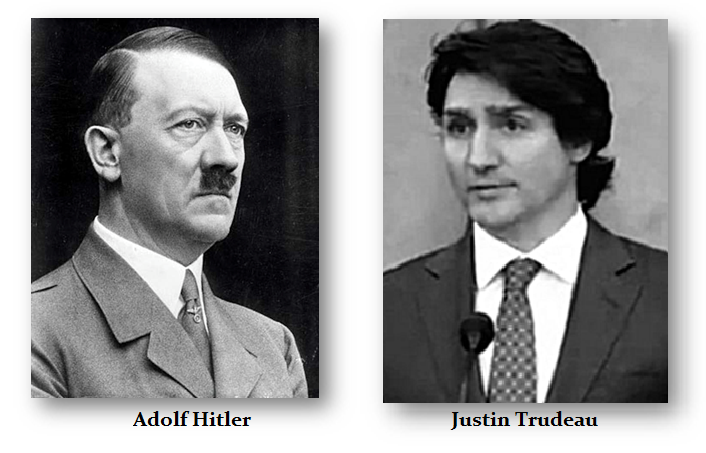
Justin Trudeau’s dad, Pierre Elliot Trudeau, supported eugenics and population “cleansing.” The Pierre Elliott Trudeau Foundation provided the initial foundation for the practice by highlighting the scientific achievement of genome sequencing and combining it with the potential for “reducing the burden of disease on themselves and on society as a whole.”

An excerpt on “Technology and Ethics” that can be found on the Trudeau Foundation website:

"For some analysts, genetic tests, along with the 'genetic understanding of health' that they shape, reflect our society's focus on individual responsibility and productivity. In the words of Roxanne Mykitiuk, 'with genetic tests marketed as a kind of health-risk kit, individuals are being called upon to undertake self-surveillance in the name of reducing the burden of disease on themselves and on society as a whole,' and in doing so to maintain a 'disciplined order of productive citizens.'”

This thinking is identical to other current and past forms of governments who have actively sought to eliminate those who are not considered “productive citizens.” The aforementioned report concluded:

"One of the most significant and pervasive issues is the risk that these new technologies will give rise to new forms of discrimination, inequality, and violations of human dignity, such as discrimination on the basis of genetic characteristics or unequal access to genetic enhancements. Other potential adverse effects include irreparable damage to the environment and to human health and the human genome."

Justin Trudeau is now following in his dad’s footsteps. Beginning in March 2023, Canada will expand its Medical Aid in Dying, or MAID, for people “whose sole underlying condition is depression, bipolar disorder, personality disorders, schizophrenia, PTSD or any other mental affliction.” There is no denying that mental disorders cause suffering – but do they call for government-aided suicide? This means that a vulnerable person suffering from a mental disorder, who may not be able to make a decision on their own, could be persuaded by a doctor to end their life. The measure also notes that “any other mental affliction” could be grounds for death by the government, which is more dystopian than anything George Orwell could have imagined.

Mental health providers stress that suicide is never an option. This bill is about voluntary eugenics, encouraged by healthcare providers, rather than public health.

Conveniently, Canada is implementing this measure after its COVID restrictions sent the nation into a mental health tailspin. Young Global Leader Trudeau is pushing forward the Great Reset and will likely call for universal healthcare. He considers these people a “burden” to his socialistic dreams as psychiatric conditions usually require lifelong care.

This is one of the evilest measures implemented by Justin Trudeau. He is persuading vulnerable Canadians to end their lives to create Schwab’s (Justin Trudeau does not have original ideas) dream Utopia where everyone will “be happy.”

COVID Outbreak on 100% Vaccinated Cruise Ship


Armstrong Economics Blog/Vaccine Re-Posted Apr 7, 2022 by Martin Armstrong

Princess Cruises requires all passengers and crew members to be fully vaccinated for COVID-19. Yet, a ship of only vaccinated individuals recently docked in San Francisco after experiencing a COVID outbreak. “Guests and crew vaccination rates were at 100 percent,” the company confirmed after saying it has been operating under CDC guidelines for the entire pandemic.

Around 70% of cruise liners reported layoffs and furloughs due to the pandemic. The industry lost at least $63 billion between 2020 and 2021 when cruise ships were either prohibited from operating or experienced a decline in travelers due to fear. There are numerous examples of cruise ships experiencing COVID outbreaks despite vaccination mandates to board.

The CDC recently lowered cruise ship risks to “moderate; level 2” after deeming them “highest-risk- level 4” after the initial omicron outbreak. They never prohibited cruises during flu season or nearly dismantled an entire industry for a virus with a negligible death rate. The vaccine does not prevent infection. The vaccine does not prevent transmission. This is yet another unintentional case study proving that this was never “a pandemic of the unvaccinated.”