Krakatoa Eruption in Indonesia – Dawn of a Volcanic Winter?


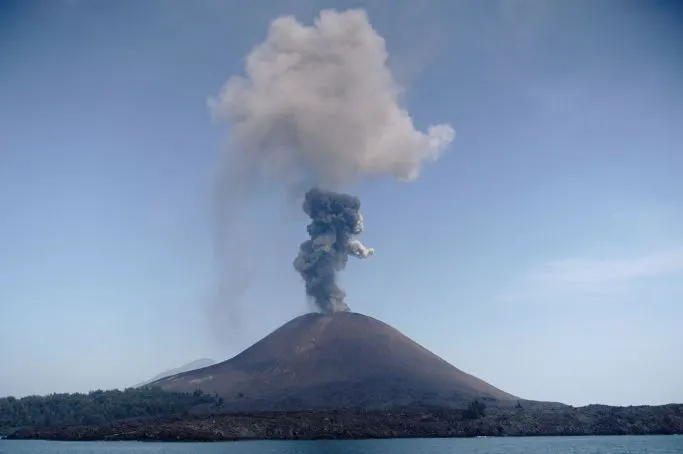
Krakatoa has once again erupted on April 11, 2020. The risk of a more serious eruption extends into August 17th, 2020. Indonesia has over 130 active volcanoes, the most of any nation. Of course, there remains the legendary eruption of Krakatoa which culminated in a series of massive explosions over 26–27 August 1883, which were among the most violent volcanic events in recorded history. The eruption was estimated Volcanic Explosivity Index (VEI) of 6, which was equivalent to 200 megatons of TNT or about 13,000 times the nuclear blast which destroyed Hiroshima, Japan.

The 1883 eruption, according to the official records of the Dutch East Indies colony, wiped out 165 villages and towns with an additional 132 which were seriously damaged. The eruption destroyed two-thirds of the island of Krakatoa. Since then, there was an eruption in the area during 1927 which built a new island at the same location, named Anak Krakatau (which is Indonesian for “Child of Krakatoa”). There have been small periodic eruptions ever since 1927, which included more recent eruptions in 2009, 2010, 2011, and 2012. There was a major collapse in 2018 where the island fell from a height of over 400 m (1,300 ft) above sea level down to only 110 meters (361 ft). The December 22, 2018, eruption caused a deadly tsunami, with waves up to five meters in height making landfall. The last eruption thereafter was May 2019.

Krakatoa was known as “The Fire Mountain” during Java’s Sailendra dynasty. Surviving records have preserved accounts of seven eruptions beginning in 850AD, and followed by 950, 1050, 1150, 1320, and 1530. After that, there is an eyewitness account of an eruption in 1680.

There have been theories that the massive eruption of 535AD which led to the Great Justinian Plague in the Byzantine Empire may have been possibly Krakatoa. There were major global climate changes of 535–536 caused by a volcanic winter. Whatever the source, the eruption of 535AD is believed to have been even more violent than Krakatoa’s 1883 eruption. Other theories suggest that eruption of 535AD took place in El Salvador, in Central America, of the volcano named Ilopango.

Because of the lack of historical accurate data, it is difficult to calculate when the next major eruption should take place. Based solely upon the string of recent activity since 2009, this would point to August 7th, 2020. It has been building in intensity since 2009 and the dramatic event of 2018 with the tsunami stands as a warning that this is building once again to a climax. The 1883 eruption became with steam emerging on the 19th of May 1883. Eruptions at Krakatoa started again around June 16th which was eventually followed by an intensifying activity. On August 25th, the eruptions intensified. Then the following day at 1:00 pm on the 26th, the volcano went into its paroxysmal phase. By 2:00 pm, a black cloud of ash could be seen 27 kilometres high. The eruption was virtually continuous cycling about every 8 to 10 minutes. Between 7:00 pm and 8:00 pm, a small tsunami hit the shores of Java and Sumatra. The following day, on August 27th, four enormous explosions occurred, which marked the climax of the eruption.
From the first sighting of steam of May 19th until the Climatic eruption on August 27th, 1883, 99 days had passed. Based upon this timing, if this continues to build, then any major eruption would take place perhaps in mid-July to early August 2020. This is certainly something that becomes possible since volcanic activity intensified during solar minimum. The results show that the next Solar Cycle will start in 2020 and reach a maximum in 2025. Cycle 25 is expected to be even weaker than the current solar cycle. According to this forecast, upcoming solar activity will be the weakest in the last 200 years. sunspots. This is certainly not good for volcanic activity.

Keep in mind that with 130 active volcanoes, this need not even be the one the erupts. This is indicating that region, as a whole, is becoming active once again.

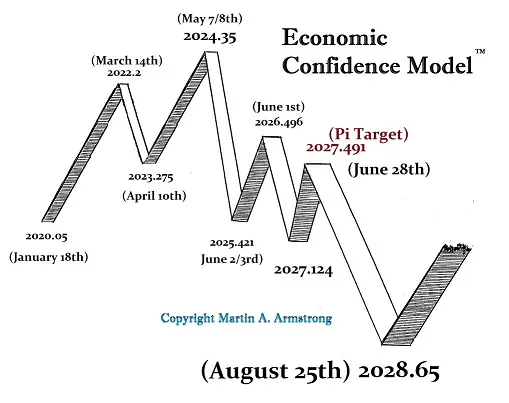
We need to pay attention during the ECM wave into 2024 because Socrates is pointing to a rise in food prices due to shortages. This exaggerated virus scare is already preventing crops from being picked as migrant workers are prevented from travel. If we add a serious volcano eruption that would create even a mild volcanic winter, this would only confirm even more the fundamentals behind the forecast of Socrates.
Value of a Currency


QUESTION: Hi Mr. Armstrong,
You have said that money is not gold, or silver, or oil, or fiat currency, but rather represents the collective elbow grease and ingenuity of a people. From the work of Socrates, which country or countries best typify this concept and therefore will become the better countries to live in, so that we may guide our families and children in that direction?
As always best to you and your vision, and thank you.
MB

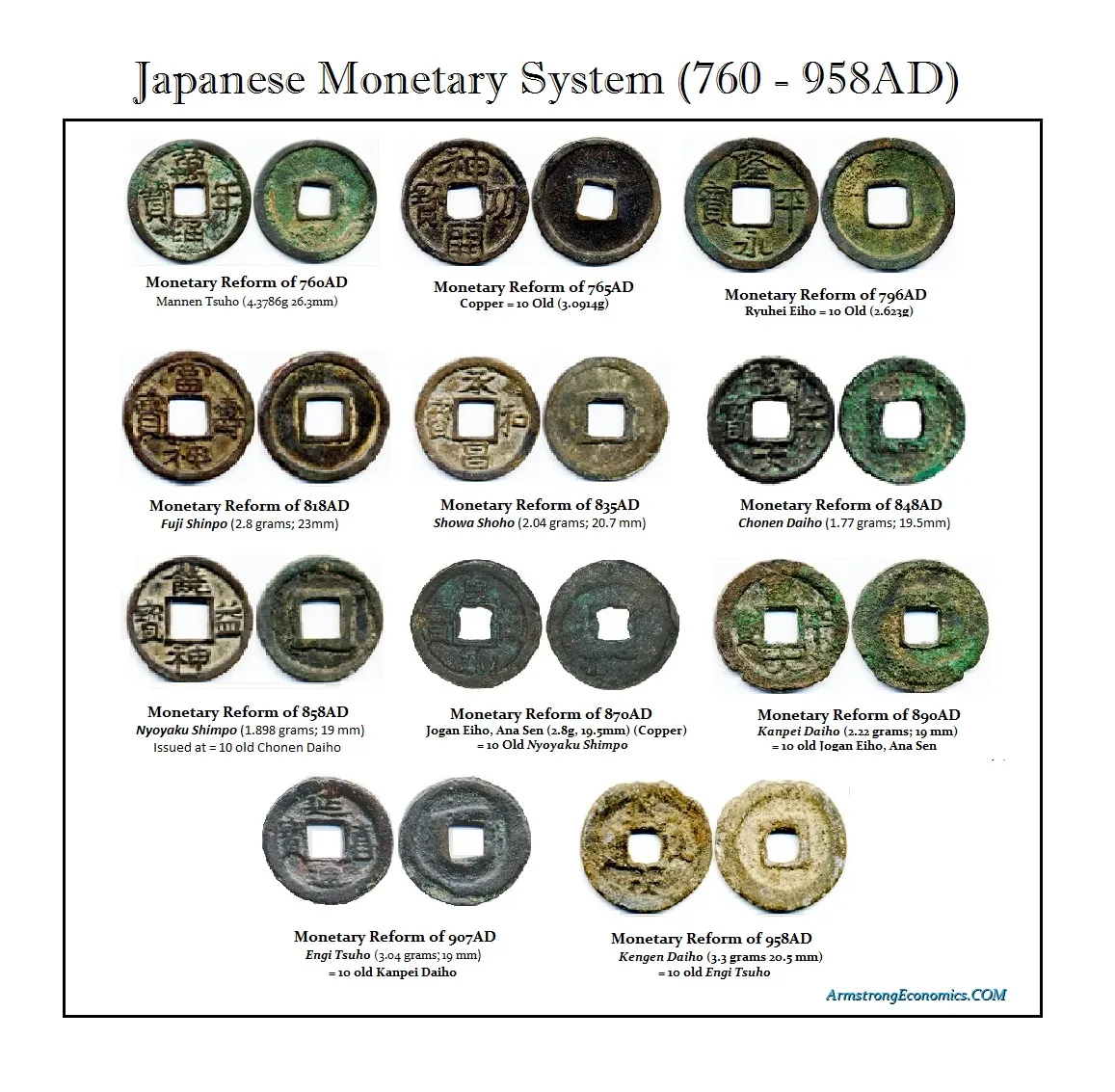
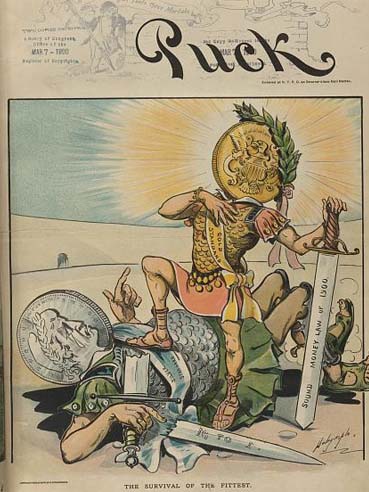
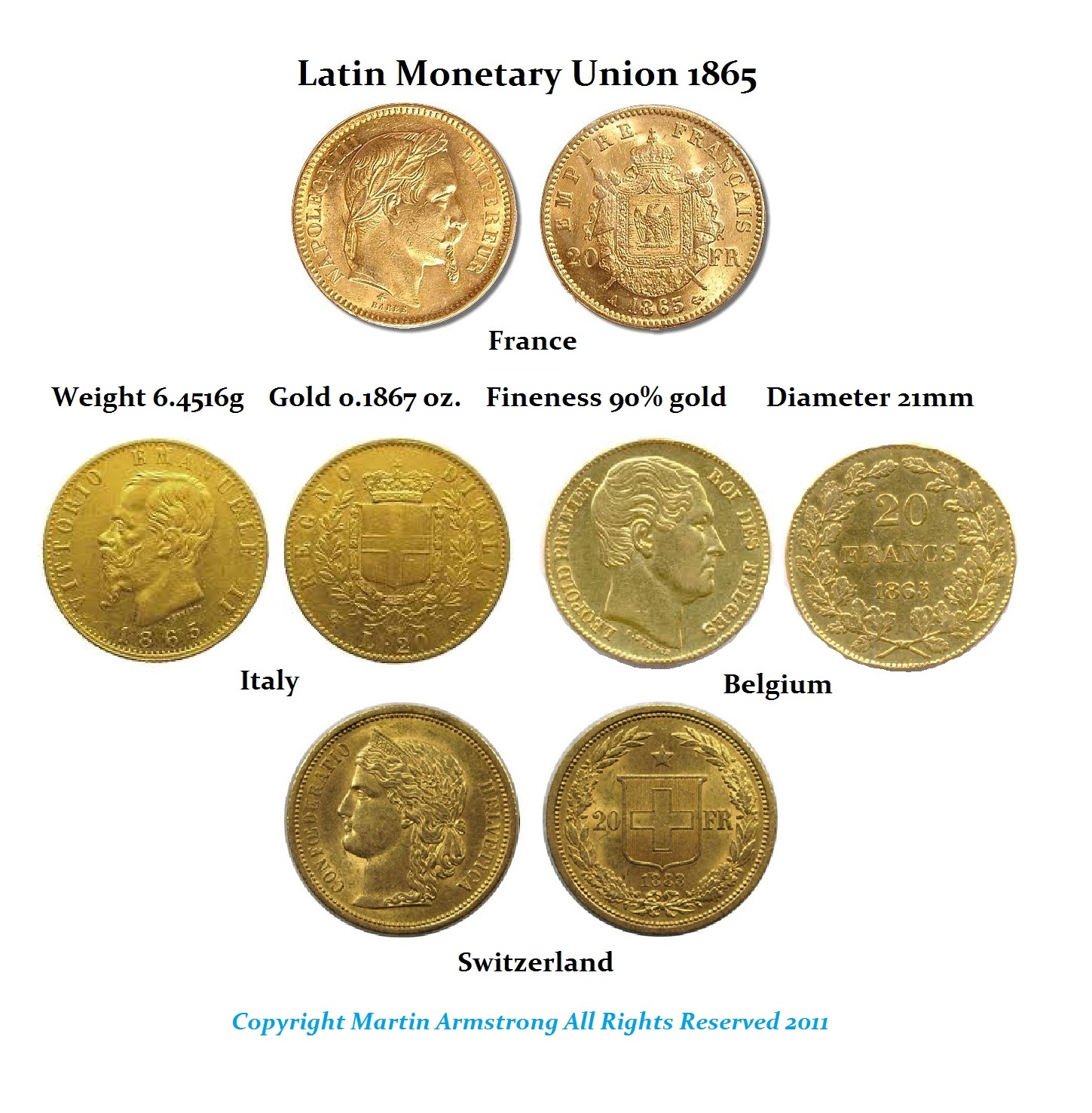
ANSWER: What made America great was not our resources. The Silver Democrats tried to force a higher silver to gold ratio and were bribed by the silver miners. When the world was on the gold standard, that dictated the value of a currency in international FOREX markets because the value of the currency was just the metal content. Napoleon attempted to create that standard and the idea, known as the Latin Monetary Standard, was used after his defeat where the coins were all of the same weight and purity.

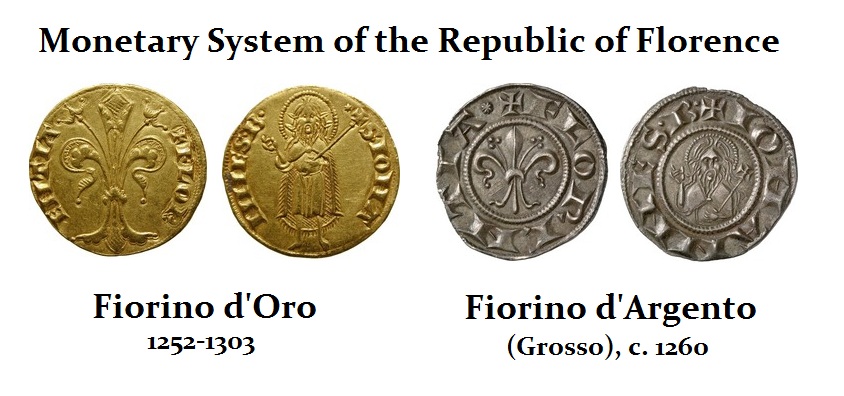
However, great disruptions to this standardized system of metals repeatedly led to major economic upheavals. The economy of Florence suffered from the tremendous economic crisis and people were burning down the houses of bankers because they blamed them without understanding the real cause. Due to the war between France and England, the French debased the coinage. This drove the price of silver up dramatically where there had been a two-tier monetary system — gold for international transactions and silver for domestic. Since wages were paid in silver, as the price rose, employers could no longer afford to operate and the economy crashed with a vast rise in unemployment.

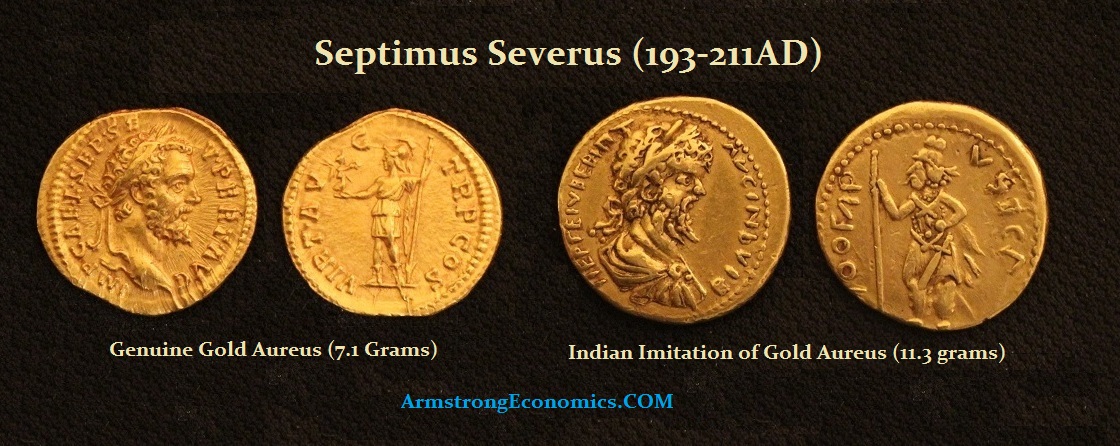
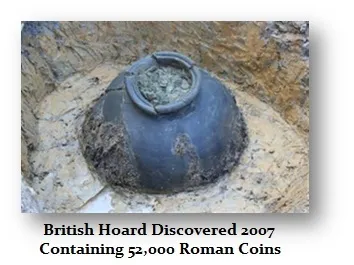
Only after World War I and II did modern society begin to see that the value of a currency was not simply the metal content. There was a premium even over gold’s value attributed to the Romans, as was the case with silver and the Greeks. This is proven by so many surrounding nations imitating their coinage with the same metal content and weight showing that there was a premium over the raw metal.

China, Japan, and Germany all rose from the ashes because their people were productive. Once the unions began and extorted higher sums of wages beyond competitiveness, the USA began to see its labor move offshore for it was overpriced relative to the world because of also taxes on labor — not merely the hourly wage.

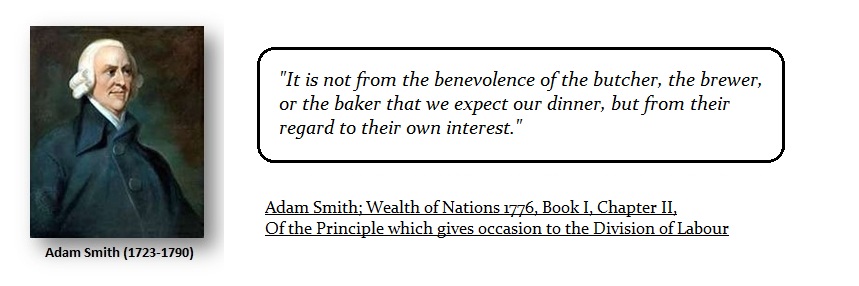
Adam Smith in his “Wealth of Nations” saw that it was not simply metal. If a farmer or candlestick maker sold something from London to Paris, they both returned with gold. It was the value of their labor that mattered.

Unfortunately, the socialists are leading the charge and have conspired together to bring down the economy to force political change. They are also weakening the West and inviting war. Just as Rome saw its economy decline sharply within 8.6 years during the 3rd century, the barbarian invasions began. These socialists have no idea what they have unleashed. The world economy will NEVER be the same all because of a pretend virus that has a death rate of 10% of the annual flu.

Unfortunately, the baton will pass to Asia. The West will be engulfed in civil strife. The Socialists have killed the economy precisely as did the communists during their revolutions in Russia and China. We have a turning point in 2021 even for Russia.

Industrialization in the Soviet Union was a process of accelerating the industrial potential of the Soviet Union to reduce the economy’s lag behind the developed capitalist states, which was carried out from May 1929 to June 1941.

The official task of industrialization was the transformation of the Soviet Union from a predominantly agrarian state into a leading industrial one. The beginning of Socialist industrialization as an integral part of the “triple task of a radical reorganization of society” (industrialization, economic centralization, collectivization of agriculture and a cultural revolution) was laid down by the first five-year plan for the development of the national economy lasting from 1928 until 1932.

In Soviet times, industrialization was considered a great feat. The rapid growth of production capacity and the volume of production of heavy industry (4 times) was of great importance for ensuring economic independence from capitalist countries and strengthening the country’s defense capability

Bill Gates & CO2 Must Be ZERO


Bill Gates was all on board with Greta, Al Gore, and Greenpeace. Using the coronavirus and demanding we be locked down until at least June, this is a covert means to further their climate change and to subject the world to a new authoritarian regime. What these people have done is beyond contemplation. This is a major global coup all based upon this theory of CO2 which he even admits there is no formula to even pretend if CO2 is X then the temperature will be Y.

This has been a plot to destroy society and end the Industrial Revolution. Since Bill Gates resigned from Microsoft and Berkshire Hatheway just before this deliberate destruction of our economy, if he or his foundation sold stock and bond investments ahead of this event he is supporting, that is INSIDER TRADING! He won’t have to worry about the INEQUALITY of wealth, everything he has will be forfeited as a fine to the government. and he will be equal once again and his conscience will be restored.

Wind Turbine Disposal Issues


Jack Dini image

Re-Posted from the Canada Free Press By  —— Bio and ArchivesApril 3, 2020

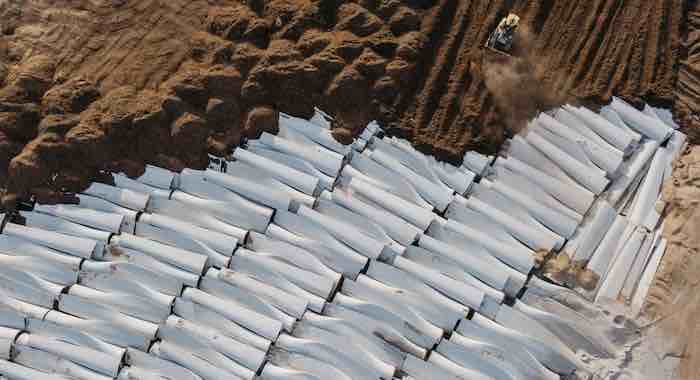
Wind Turbine Disposal IssuesNo one seemed to consider what to do with the massive amount of wind turbine blades once they reached the end of their lifespan. Thus, the irony of the present day Green Energy Movement is the dumping of thousands of tons of non-recyclable supposedly renewable wind turbine blades in the country’s landfills. 1

Wind turbine blades slated for waste disposal is forecast to quadruple over the next fifteen years

What’s even worse is that the amount of wind turbine blades slated for waste disposal is forecast to quadruple over the next fifteen years as a great deal more blades reach their 15-20 year lifespan. Furthermore, the size and length of the newly installed wind turbine blades are now twice as large as they were 20-30 years ago.

The wind turbine blades are a toxic amalgam of unique composites, fiberglass, epoxy, polyvinyl chloride foam, polyethylene terephthlate foam, balsa wood and polyurethane coatings. So, basically, there is just too much plastic-composite-epoxy material that isn’t worth recycling.  1

More than 720,000 tons of blade material will be disposed of over then next 20 years in the United States—a figure that does not include newer, taller higher-capacity turbines. Disposal of these blades—a byproduct of increasing wind generation—is becoming a growing problem.  2

A typical wind turbine has a foundation, a tower, a nacelle and three blades. The foundation is made from concrete, the tower is made from steel or concrete, the nacelle is made mainly from steel and copper, the blades are the most environmentally problematic at end of life since there are currently no established industrial recycling routes for them. Disposal at the end of life cycle must be considered but has been lacking. 3

Germany now has 29,000 wind towers. The nightmare of scrapping and decontamination has already started, with 250MW decommissioned last yer. Close to 10,000 towers must be decommissioned by 2023. One tactic has been to ship the toxic parts and rubble to African states to deal with the problem. 4

Other wind turbines have a six-figure decommissioning costs

There’s some public record material about decommissioning US wind farms, and it’s not reassuring. In Minnesota, the ten year old Nobles Wind farm has 134 turbines of about 1.5MW and is operated by Xeel Energy. Xeel estimates the cost for scrapping each turbine at up to $530,000 or $71 million total. Each turbine has a tip height of 120 metes. Just to scrap one 40m blade, involves crunching composite material weighing more than 6 tons.

As American Experiment points out, even $71 million doesn’t finance a thorough clean-up. The contracts oblige Xeel to restore the land to a depth of only about one meter, whereas the foundations go down 5 meters. Moreover, underneath the 56 square miles of this Minnesota wind farm is 140 km of cabling and pipes. The documents don’t say if the cables would stay or go. (4)

Other wind turbines have a six-figure decommissioning costs as well. According to utility documents for the Palmer’s Creek wind facility in Chippewa County, Minnesota, it would cost $7,385,822 to decommission the 18 wind turbines operating at that site, a cost of $410,000 per turbine. 5

The waste disposal site located near Casper, Wyoming will soon be filled with over 1,000 decommissioned wind turbine blades and motor housing units. The Wyoming House of Representatives recently agreed to the introduction of a bill that would ban the disposal of wind turbine blades in the state. Wyoming House Bill 217 would make it a misdemeanor to dispose of turbine blades and would impose fines of up to $1,000 for convictions. 2

Nationwide, there are nearly 50,000 wind turbines, with 2,700 being decommissioned, since the energy boom of the 1970s. Bloomberg New Energy Finance is expecting up to 2 gigawatts worth of turbines to be refitted this year and next. Each turbine blade will need between 30 and 44.8 cubic years of landfill space, using a total of 448,000 cubic yards of the 2.6 million yards set aside for construction and demolition material. This nearly 20 percent of total landfill space is enormous, given the amount of construction and demolition material disposed of in the United States. To prevent acres of abandoned and decaying wind farms, Wyoming laws require companies to provide bonds to cover the cost of decommission and disposal of turbines once they are taken out of service or abandoned. 2

Recycling turbine blades is more regulated in countries that have had wind power for decades. The European Union, for example, has waste management rules. Some European companies sell older and less efficient parts to customers in Asia, Africa, and Latin America. Veolia, a German global utilities and waste management company, found that decommissioned blades can be crushed and burned along with other components in cement kilns where the blades transform into solid fuel that can be used in the cement industry. One American entrepreneur believes the blades can be recycled by grinding them up to make chocolate chip-sized pellets which can be used for decking materials, pallets, and piping. But, this option does not begin to deal with the massive disposal problem ahead for those countries well into wind generation, which is rapidly including the United States.

With an increasing dependence on wind generated electricity and the ever growing size of the turbines, the issues of waste from wind turbines is significant and evolving. Most state governments did not provide for the disposal of wind turbine blades despite implementing renewable standards that require the generation of electricity from wind or other forms of renewable energy. It appears that many never even thought about the potential side effects of mandating new forms of energy generation such as wind and solar, and are only now learning the consequences of their edicts. Some states have ridiculously high percentage requirements for renewable generation that only exacerbates this problem. 2

In short, disposing of wind turbines is a significant problem, with negative impacts on communities and the environment.

References

  1. “The renewable energy myth: 50,000 tons of non-recyclable wind turbine blades dumped in the landfill,” zonehedge.com, (1/10/20)
  2. “Wind turbine blades will continues to pileup at US landfills,” instituteforenergyresearch.org, (3/6/20)
  3. Pu Liu and Clair Y. Barlow,  “Wind turbine blades in 2050,” Waste Management 62, 229, April 2017
  4. Tony Thomas, “When wind turbines die, the problems are just beginning,” conservativewoman.co.uk, (11/15/19)
  5. Isaac Orr, “It costs $532,000 to decommission a single wind tower,” americanexperiment.org, (12/3/19)