Russia Responds to the Trump Tax Reform


Russian President Vladimir Putin is also responding to the Trump Tax Reform. Putin has also taken a step to promote the repatriation of capital from abroad. He is now proposing that only a 13% tax on funds retrieved should be abolished. Additionally, he is proposing that there should once again be an amnesty for Russian companies that bring their cash home.

Russia introduced such immunity for past tax avoidance and foreign exchange offenses back in 2014 when the country faced massive capital outflows. That amnesty had been used very little proving to be ineffective. It expired in mid-2016.

China Eliminates Taxation For Foreign Companies Investing in China


China has responded to global competition that is exploding in the wake of the Trump Tax Reform. While domestic news in the USA continues to bash the tax reform on class warfare, the rest of the world is trying to come to terms with what Trump has set in motion. China’s response is to allow foreign companies complete tax-free business on any profits they reinvest in China upping the stakes. Their position was stated by the Ministry of Finance and it is designed to “foster the growth of foreign investment, improve the quality of foreign investment, and encourage foreign investors to continuously expand their investment in China.” The tax exemption applies retroactively from January 1st, 2017 beating Trump at his own game once more. Foreign companies who have paid taxes in China for 2017 will be refunded.

Domestically, companies in China are already complaining about rising costs that are caused by raising taxes. They have warned that this could lead to production relocations. The standard corporate tax rate is 25% in China. In order to benefit from the newly announced tax rebates, foreign companies have to meet several requirements. These include direct investment in industries promoted by the government in Beijing. Also, the money must flow directly to the companies.

The tax game is now afoot. The big loser will be Europe because they are far more entangled with the socialist agenda than anyone else with New Zealand and Australia fighting for second place in the uncompetitive tax burden race to the top

Secretary Tillerson Transmits Support for Iranian Protests….


Interesting.  Visible support for a position 180° from prior administration.

transition of government” supported by U.S.

State Dept – We are following reports of multiple peaceful protests by Iranian citizens in cities across the country. Iran’s leaders have turned a wealthy country with a rich history and culture into an economically depleted rogue state whose chief exports are violence, bloodshed, and chaos. As President Trump has said, the longest-suffering victims of Iran’s leaders are Iran’s own people.

The United States strongly condemns the arrest of peaceful protesters. We urge all nations to publicly support the Iranian people and their demands for basic rights and an end to corruption.

On June 14, 2017, Secretary Tillerson testified to Congress that he supports “those elements inside of Iran that would lead to a peaceful transition of government. Those elements are there, certainly as we know.” The Secretary today repeats his deep support for the Iranian people. (link)

Political Protests in Iran Spread Amid Rumors of Regime Change Goals…


News of spreading and morphing political protests in Iran are beginning to surface as social media accounts are now gaining MSM attention.

Openly political protests are not common in Iran ever since the 2009 ‘Green Revolution‘ was harshly put-down by security forces carrying out the instructions of the ruling Mullahs and political class.  Iranian security services are omnipresent and looming.   However, what appears to have begun as protests over prices, inflation and the lack of economic freedom, seems to have morphed into several regional political protests directly challenging the Mullahs and the reigning political class.

Back in 2009, after President Obama gave his famous Cairo speech, the message was interpreted by the Iranian reform movement, the “Greens”, as a spark toward freedom.  However, the Mullahs responded violently, Iranian security forces attacked the protestors, several were killed and hundreds jailed and President Obama stood by, watched the brutality, saying and doing nothing. 2009 was a very dark time for the reform movement.

It is too soon to tell if today’s protests are the beginning of a similar uprising, a resurgence of those previously crushed cries for freedom, but the reform movement appears to be pushing the message: this is indeed their objective.   It is a very interesting development.

(Reuters) – Demonstrators chanted anti-government slogans in several cities across Iran on Friday, Iranian news agencies and social media reports said, as price protests turned into the largest wave of demonstrations since nationwide pro-reform unrest in 2009.

Police dispersed anti-government demonstrators in the western city of Kermanshah as protests spread to Tehran and several other cities a day after rallies in the northeast, the semi-official news agency Fars said.

The outbreak of unrest reflects growing discontent over rising prices and alleged corruption, as well as concern about the Islamic Republic’s costly involvement in regional conflicts such as those in Syria and Iraq.

An official said a few protesters had been arrested in Tehran, and footage posted on social media showed a heavy police presence in the capital and some other cities.

About 300 demonstrators gathered in Kermanshah after what Fars said was a “call by the anti-revolution”. They shouted: “Political prisoners should be freed” and “Freedom or death”, and some public property was destroyed. Fars did not name any opposition groups.

The protests in Kermanshah, the main city in a region where an earthquake killed over 600 people in November, took place a day after hundreds rallied in Iran’s second largest city Mashhad to protest at high prices and shout anti-government slogans.

Videos posted on social media showed demonstrators yelling, “The people are begging, the clerics act like God”.

Fars said there were protests in the cities of Sari and Rasht in the north, Qazvin west of Tehran and Qom south of the capital, and also in Hamadan in western Iran. It said many marchers who wanted to raise economic demands left the rallies after demonstrators shouted political slogans.  (read more)

I would advise caution not to read too much into the events and accept there are tenuously connected seeds within the larger Middle-East struggles.  History is filled with the conflicting polarity between Persians and Arabs.

Iran has been on a growing question to influence the broader middle-east ideology, and Saudi coalition members are pushing back against that influence with open support for the reform agenda within Iran.  Proxies on proxies, and sub-sects on sub-sects.  A considerable challenge for those who would support increased ‘freedom’.

Viewpoint of National Council of Resistance in Iran – SEE HERE

Another Viewpoint of Resistance Supporters – SEE HERE

Reminder, proceed with caution.  There’s a great deal of misinformation.

MIFiD II Delays…


Talk amongst many traders is that they are so unsure how the new rules and regulations surrounding the implementation of MIFiD II (Markets in Financial Instruments Directive) are to be imposed, that some even said they were keen to extend their holidays until this mess is sorted out. In other words, until they hear that regulators will grant firms a six-month delay for part of the changes about to be implemented for both the company and country, many just do not even know how to conduct business anymore.

The most critical problem surrounding this nightmare is the fact that every trade (with a European Counterpart) will require a LEI (Legal Entity Identifier). This is not such a critical issue for Wall Street Banks since they have already won a 30-month grace period after the SEC requested time to negotiate terms with the EU. Goldman Sachs has installed another of its board members as the top negotiator inside the SEC – Alan Cohen. Goldman Sachs has now three strategic people in the Trump Administration to steer the legislation in their favor both in the USA with restoring Glass Steagall to reduce their competition (Gary Cohen & Steven Mnuchin) and they have now added Alan Cohen, who was their Head of Global Compliance

Not all EU countries have come to terms with LEI’s yet so its no surprise a six-month grace period has been awarded just on its eve! The European Securities and Markets Authority on Wednesday proposed the grace period for a requirement that companies wanting to trade with any party based in the European Union will need a code, known as a legal entity identifier, or LEI. The identifying code is important as it lets firms continue to trade from MiFID’s Jan. 3 start date. Industry groups and regulators have been directing firms to register for months, saying: “No LEI, no trade.”

During the six-month grace period of relief, any investment firms may trade with clients under the condition that before providing services, the firm must obtain the necessary documentation to at least apply for an LEI code on its behalf.

The EU Bad Loan Crisis to Get Much Worse – The Solution = Financial Pandemic


The bad loan (“non-performing loan” (NPL)) crisis in Europe is well known and many have been calling for this issue to be addressed. In Italy, the bad loan crisis has reached 21% of GDP. While NPLs dropped to 4.8% of all loans in the EU as a whole during the first quarter of 2017, they remained well above 40% in Greece and Cyprus, at 18.5% in Portugal, and 14.8% in Italy according to the European Banking Authority.

Now comes the bureaucrats with zero experience to save the day – or is that to create a financial pandemic in the EU? The EU Commission (EUC)  along with the European Central Bank (ECB), want to ensure that banks promptly sell real estate, stocks, bonds and other assets that serve to collateralize loans according to their Mid-term Review of the Capital Markets Union Action Plan.  Member States are required to adopt laws that facilitate the central directive. At this time, any bank cannot just sell a property that secures a loan. The problem is, all loans, whether secured or not, are valued the same.

Once again, all we have is the ECU and ECB desperately trying to prevent a banking crisis as loans in default rise. However, this project is totally incomprehensible for now a well-secured loan which does not pose any particular credit risk in traditional banking can find its collateral sold. Any loan cannot liss a payment in difficult periods even when fully collateralized. This puts the European economy in a serious crisis for if banks begin to sell off collateral, then the entire market will move into crash mode forcing asset values to decline undermining the collateral of other loans. This regulatory logic is just totally insane and is concerned only with EU fiscal policy that does not want to support the banking industry and thus the economy.

All loans have been rated the same in Europe for a long time, no matter if the collateral fully secures the loan or is not even present. If a borrower encounters any problem, the loans are to be downgraded in terms of creditworthiness and must be underpinned by more capital that must be added to the bank reserves. This applies even if the borrowers are economically sound and have sufficient assets but encounter cash flow problems because of the overall economic condition, they can find their collateral being sold off in a manic fashion. The new rules mean that a loan quickly becomes an NPL and banks are to liquidate the collateral ASAP.

If an NPL is equipped with collateral, the bank is now directed foreclose and sell the real estate, securities, and any other collateral according to the EUC and ECB. This means people will be thrown out of their homes if they become unemployed and cannot make a mortgage payment. The loss of a source of income will cause the loan to be classified as an NPL and sold even if the home has just 10% of its value outstanding. The bank must act as if the family were bankrupt and the loan uncollectible.

If a small business experiences a decline in sales because of the economic deflation in Europe, the business is classified as a higher risk. The existing securities used to collateralize the business loans are sold and the current account credit is repaid as “NPL”. Many small businesses pledged the owner’s home to back the business. Under these new rules, the small business will be liquidated and the owner will lose their homes as well. The implication of these rules means that a small business will not be able to expand and hire people when the risk is far too great. Economically, the new rules will undermine the economy even more and send Europe into a deeper recession while causing collateral values to decline.

Under these rules, a massive sale of land and real estate would most likely result. Asset values will decline as was the case during the Great Depression as banks would generate lower revenues from the realization of collateral only further causing the banking crisis to spiral downward into a complete debt crisis in Europe.
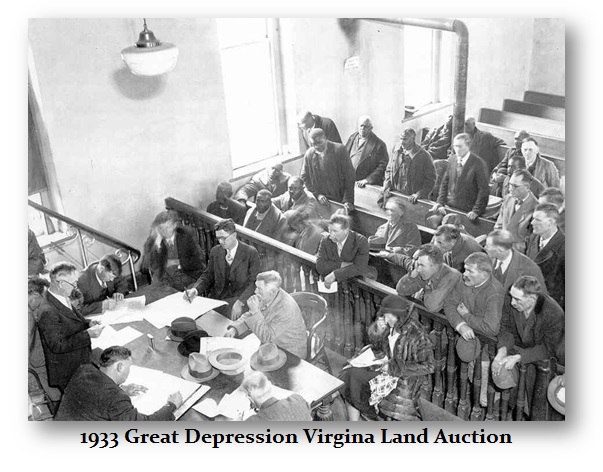
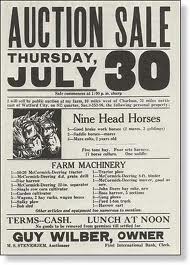
 

The crisis gets even worse where there are family members who co-signed for a mortgage. The friend or family member who co-signed the loan is now required to make all the payments and if they do not, then their assets will be seized and sold as well. What these bureaucrats fail to comprehend is that assets will collapse rapidly because other banks will be unwilling to finance loans for someone else to buy the property being sold off at auction. During the Great Depression, farmland fell to even less than 10% of its value because the only buyers were those who had cash.

The banks are supposed to sell NPL, but under a massive force liquidation, asset values will collapse. They assume that such a sale would be one property at a time that would not impact the overall market. Under these rules, we will see the deleveraging of private debt in Europe on a grand scale.

The EU’s policy of classifying all loans for the slightest problem as a risk explains why bank overseers are talking about €800 billion to €1 trillion euro in NPLs exist among the European banks. There is no distinguishment between fully-collateralized and non-collectible loans. Nor do bureaucrats comprehend the true meaning of a “non-performing loan” that is temporary and one that could never be repaid. Bureaucrats are not capable of understanding the economy nor do they comprehend that the entire economy is leveraged. Most people buy their home on credit, not cash.

Bureaucrats also fail to understand that NPLs since the financial crisis of 2008/2009 are not exactly the crisis they assume. In truth, irrecoverable loans would have to be written off long ago since the bank balance sheets under current auditor rules. Therefore, the current NPLs are generally good loans that can be serviced according to the usual banking practice that are experiencing cash flow problems. The EUC is demanding banks sell all NPLs, secured or unsecured.

Under these rules, there is little interest in the secondary market for the purchase of NPLs from banks, which are typically sold off at a discount. With no viable secondary market, Member States are to set up so-called “Asset Management Companies” (AMCs) to buy and sell NPLs. State subsidies are recommended – “of course only insofar as they do not contradict the EU prohibitions on state subsidies”. How to resolve this contradiction, the commission does not say. It also calls for the creation of service companies to service the loans. This is taking a problem and turning it into a crisis with more bureaucrats making decisions.

Back in 2008, banks sold off loans which were called “asset-backed securities” (ABS). This only accelerated the crisis because the loans were managed by computers that automatically defaulted on the entire loan with the slightest delay. The result was clear. Many families lost their homes without necessity and small businesses had to close. Then the banks were sued in legal proceedings for selling damaged loans. Here too, we have a strict rule that someone behind on a mortgage will be immediately declared an NPL.

The NPL agencies and service agencies for loan management envisioned by the EUC and ECB will effectively take over the portfolios of the banks in a forced ABS. The banks will, therefore, outsource the risks to government-run agencies. This will be the official institutionalized ABS structure. The scheme is that these bureaucratic institutions will somehow be better at managing loans and will magically require no capital since they will sell the assets and then pay the bank. In this way, the allocation of new loans should be made possible in their mind. As always, the government does not understand the marketplace or the economy and assume that asset prices will not decline in the face of incompetent government sale of assets.

This scheme has failed to address the problem that when selling loans, the selling bank will still retain part of the risk of a loss in capital based upon the sale price achieved by the government. This is replacing banks with experience with bureaucrats yet the banks will suffer the losses taken by the bureaucrats.

The NPLs are far greater in the southern region of the EU. This measure will only intensify the call for separatism. The new rules are more-likely-than-not going to set off a new phase of the debt crisis and nurture it into a Financial Pandemic.

Venezuela Oil Industry Collapsing & May Take the Gov’t With It


Venezuela has the largest proven oil reserve in the world. However, they are out of gasoline. The government has attributed this to poor management which has led to the stoppage of 80% of the country’s refineries. So much for socialism. The assumption that government is competent of managing anything is proven by this very example.

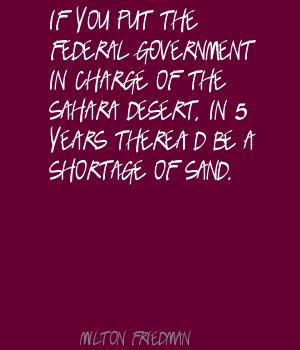
My old friend, Milton Friedman, said it best:

“If you put the Federal Government in charge of the Sahara desert, in 5 years there’d be a shortage of sand.”

A general with no energy experience was put now in charge of the state oil company. The problem has been political arrests has witnessed a mass migration of those with talent leaving the country with incompetent management. This has resulted in the oil industry simply collapsing as production is plummeting. A lack of investment compounded from the private sector and a collapse in cash flow coupled with chronic shortages of spare parts have crippled operations and we are looking at the first stage of how a government itself collapses under socialism.

Why Was Jesus Crucified?


QUESTION: Mr. Armstrong; You are clearly a Roman scholar.  Is it true that the Romans used crucifixion only for political crimes and that the two who were crucified with Jesus were not thieves but rebels? There has been some debate on this subject. I would like to hear your views.

Thank you

WR

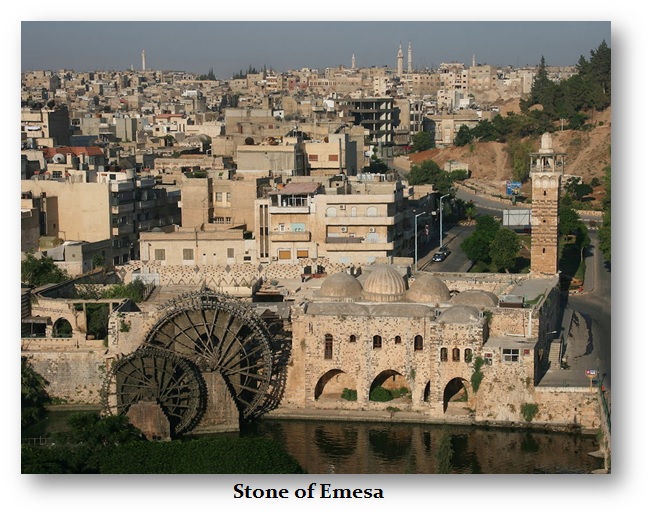
ANSWER: Jesus’ crime was really sedition and not blasphemy. The high priests may have seen this as blasphemy, but Jesus would never have been put to death by the Romans for such a local issue. The Romans practiced freedom or religion. They allowed the provinces that they had conquered to retain their own gods. Even the Roman Emperor Elagabalus (218-222AD) was an heir to the throne being of the Severian House. He had been a priest in Emesa of the sun god, which is the modern city of Homs in Syria today. He worshiped a black meteor that had fallen from the sky and a temple had been built for this stone of god (see above). When Elagabalus became emperor, he carried the Stone of Emesa to Rome and built a temple there. After he was murdered, the Romans respectfully returned the stone to Syria as to not offend any god. As for the Black Stone of Emesa is concerned, it was most likely smashed to pieces when the temple was converted into a Christian church at some point during the 4th Century AD by the Byzantines.
Therefore, the only possible way that Jesus would have been crucified was for a civil crime, not a religious one, and the penalty had to be only for sedition, which is conduct or speech inciting people to rebel against the authority of a state. It is rabble-rousing, incitement to rebel, subversion, troublemaking, but not a religious issue. Therefore, the high Jewish priests took Jesus to the governor and had to make their case that he was inciting a rebellion against Rome by claiming to be King of the Jews. Pilate interrogates Jesus:

“You are a king, then!” said Pilate. Jesus answered, “You say that I am a king. In fact, the reason I was born and came into the world is to testify to the truth. Everyone on the side of truth listens to me.

“What is truth?” retorted Pilate. With this he went out again to the Jews gathered there and said, “I find no basis for a charge against him.”

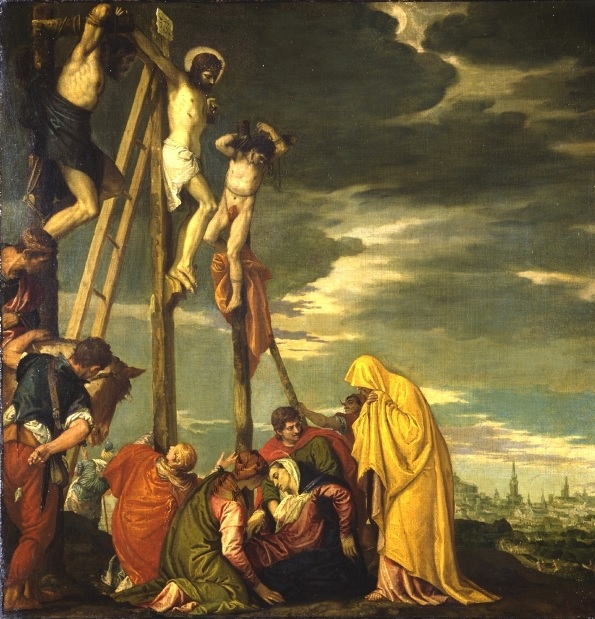
Rome’s punishment only for a political crime was a crucifixion, which was a public display that was painful, and a visible warning to others. There is no possible way that the two men crucified with Jesus were common thieves. The sentence of crucifixion was only something that Rome could order. The two men who were killed along with Jesus are identified in the Gospel of Nicodemus as Dismas and Gestas.

Luke 23:39-41 says, “One of the criminals who hung there hurled insults at him: ‘Aren’t you the Christ? Save yourself and us!’ But the other criminal rebuked him. ‘Don’t you fear God,’ he said, ‘since you are under the same sentence? We are punished justly, for we are getting what our deeds deserve. But this man has done nothing wrong.’”

Matthew refers to Barabbas who is released by Pilate in place of Jesus only as a “notorious prisoner” and that would never imply a common thief. Mark and Luke further refer to Barabbas as one involved in a στάσις (stasis, a riot), probably one of the numerous insurrections against the Roman power who had committed murder. The translation as “thieves,” however, the word can also mean “insurgents,” and it is more-likely-than-not that the two were co-conspirators of Barabbas rather than thieves. This is the only possibility that would support the sentence of crucifixion, which was a political weapon used to send a message to those still living: Do not engage in sedition or this will be your fate.

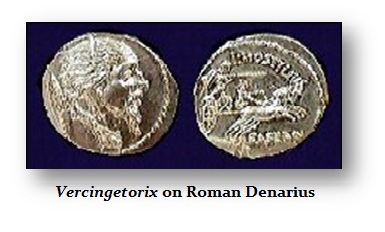
Crucifixion was an execution that was severe and reserved for political crimes, not common thieves. The more common method of execution in the Roman Empire was by strangling. Even the leader of the Gauls, Vercingetorix, who was an adversary was put on display in a triumph of Julius Caesar and then strangled – not crucified. This was simply a captive of a conquered nation or group who had not been under Roman rule and thus did not warrant crucifixion.

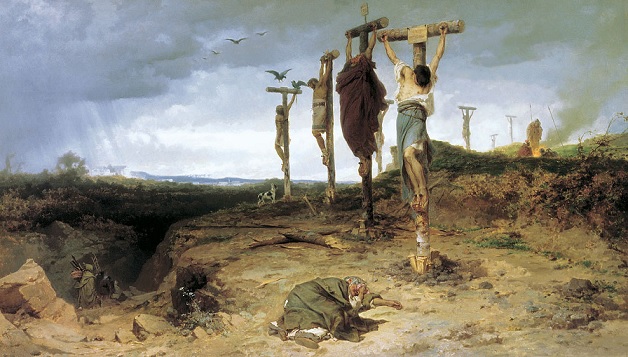
Spartacus (111-71BC) was a Thracian gladiator who escaped and became a slave leader during the Third Servile War, a major slave uprising against the Roman Republic. Crassus crucified 6,000 of Spartacus’ followers on the road between Rome and Capua pictured here in the 1878 painting by Fyodor Bronnikov. Again, the punishment of crucifixion is employed for rebellion. Even Karl Marx listed Spartacus as one of his heroes and described him as “the most splendid fellow in the whole of ancient history” and a “noble character, real representative of the ancient proletariat”.

Therefore, from a historical perspective of Roman law, Jesus would then have been crucified ONLY as a rebel and not for blasphemy. Giving a choice to the crowd between Jesus and Barabbas would not have been plausible unless they both stood for the same type of offense of sedition. This to me is clear evidence of the political nature of Jesus’s execution and was not merely a local religious issue but was a crime of sedition against the Roman Empire.

Erdoğan Wants to Revise the Treaty of Lausanne


The War Cycle is in full swing upward since 2014. We have witnessed the invasion of Ukraine, the invasion of Syria, Rocketman in North Korea, and numerous civil uprisings. However, the war also comes with sharply declining economies as political leaders need to point the finger outside their domestic rule to distract their people.

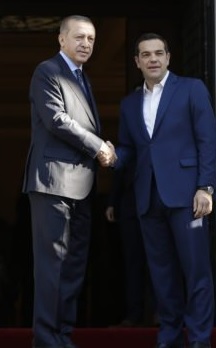
The Turkish President Recep Tayyip Erdoğan is also on a power trip and the sharply collapsing currency only puts more pressure on him to start conflicts. That basic incentive has played out with his visit to Greece in December. This was the first time a Turkish leader visited Greece in 65 years. As the Guardian reports, Erdoğan shocked Greece by calling for a revision of the Lausanne Treaty of 1923. The Turkish president in Turkey has sharply criticized the opposition for this demand and as always there is the justification for protecting people of Turkish origin living in Greece. Hitler used the same excuse to invade neighbors to defend Germans living on foreign lands.

The Treaty of Lausanne marks the conclusion of the four-year Greco-Turkish War, which regulated the demarcation between Greece and Turkey and the rights of the religious minority in the other country. Keep in mind that Turkey was the seat of the Ottoman Empire that conquered Constantinople and renamed it Istanbul. The Church of St Sophia became the Blue Mosque. So the conflicts between Greece and Turkey extend back thousands of years. Turkey was originally Anatolia settled by Greeks. They were conquered by Cyrus the Great of Persia and then by Rome. The Turks invaded from Turkestan and thus the ancient land of Anatolia became Turkey. This was where written language and even money were both born.

Erdoğan, while visiting Athens, accused the Greek government of not allowing the Turkish minority to vote for muftis, as promised in the treaty. Instead, the religious jurists would be appointed by the government. The Turkish President had questioned the Treaty of Lausanne in an interview with the Greek broadcaster Skai TV before leaving for Athens. Airspace and the maritime border could be “improved”, Erdoğan said.

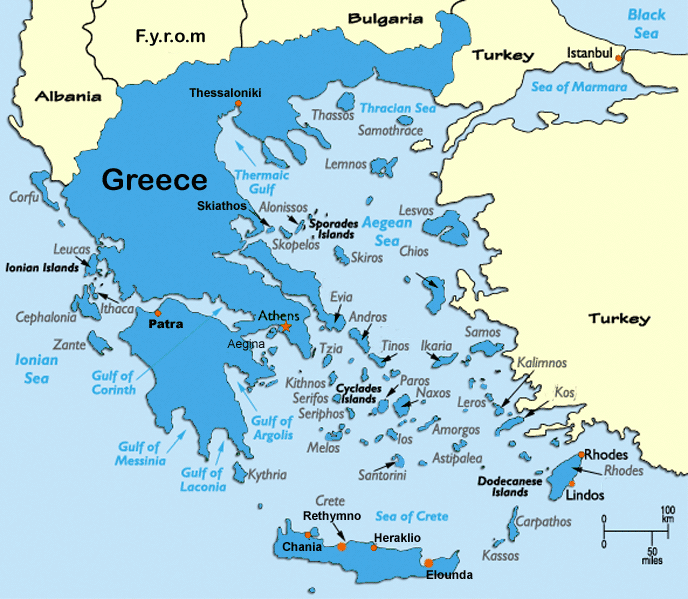
In the Treaty of Lausanne in 1923, Greece had been given almost all the Aegean islands off the Turkish coast. The Greek Islands comprise more than 6,000 islands and islets covering much of the eastern Mediterranean. Only about 230 Greek islands are inhabited and, of these, just 80 or so have more than 100 permanent inhabitants.

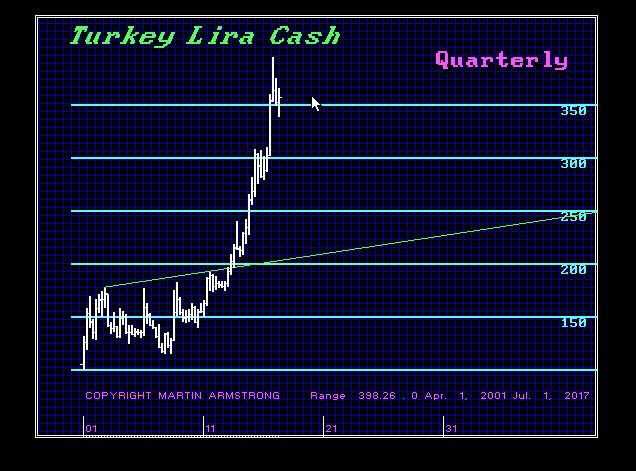
Erdoğan has domestic problems with the currency moving dangerously toward hyperinflation, which only unfolds when confidence in the government collapses. Turkey’s currency is being attacked from all sides. In October 2017, the Turkish lira collapsed when Turkey and the United States suspended bilateral visa processing, which was restored in early November. However, our model is warning that the Turkish lira will collapse into 2021.

Erdoğan is obviously trying to create an external enemy as the domestic economy turns against his policies. For several months, Erdoğan is trying hard to provoke a conflict in the Aegean Sea of Greece. On April 16th, 2017, Greek Minister of Defense Panos Kammenos and Greek Commander-in-Chief Alkiviadis Stefanis flew to Agathonisi Island, just off the Turkish coast. There they carried out an action with several soldiers. Lambs were roasted on a skewer, which was a symbolic action that dates way back to the Greek occupation of Turkey from 1919 to 1922. At that time, the Greek occupiers in the conquered territories of Turkey roasted lamb on skewers to make it clear to the Turks that they would be defeated.

Erdoğan asserts that the protection of the rights of ethnic Turks is his “top priority” and he wants to visit the Turkish minority in the northern Greek region of Thrace. Erdoğan was twice in Athens before back in 2004 and 2010. But it is the first visit of a Turkish head of state in Greece since 1952.

Erdoğan also criticized the implementation of the EU refugee pact with Turkey in Athens. The EU had “not fulfilled any of its economic promises”, while its country has kept all promises, Erdoğan said. He has long accused the EU of failing to fulfill its part of the March 2016 agreement, including the payment of aid.


Erdoğan also criticised the matter of the eight military personnel who had fled to Greece after the coup attempt in a helicopter. Erdoğan stated that Greece promised to extradite those men to Turkey, but that still had not happened.

BRICS the Rise & Fall


The first thing to go when a country is moving into economic crisis is the arts. This is intermixed with various social programs. As the economic crisis broadens, demand for taxing the rich rise. However, all this accomplishes is to cause capital to hide and hoard even more refusing to invest or spend and this then adds to the economic decline.

The BRICS were touted as the new rage in the world economy. The BRICS were even holding their own summits and they were supposed to surpass the G7, were all the forecasts. Brazil, Russia, India, China and South Africa became known as the “BRIC” nations back in 2001 which was a term coined by of course Goldman Sachs.

This curiosity about how the BRICS would displace the G7 as the world leading economic power was up there with the DOT.COM bubble and more recently the BitCoin Bubble. This five-country association of emerging economies has demonstrated that such hype of counting on such fades to alter the future have always ended in disappointment.

Russia ran into an economic headwind and sanctions, China has slowed remarkably and has now shifted its focus to try to build its internal economy as we see in Suadi Arabia and the UAE in the Middle East. India committed suicide trying to force its economy out of a cash-based economy with his leftist Prime Minister who has done far more harm to India than good.

South Africa has seen political change sweeping the nation because of the failure of this BRIC dream. The new ANC government of South Africa wants to nationalize the central bank and expropriate the white minority. They want to now take control of the central bank 100% and you know what that means – total economic disaster. The bank will now become the political tool of government divorcing any economic management whatsoever.

Then there is Brazil, burdened with corruption and everything within the social structure is collapsing. The symbol of this economic failure is the effective closure of its Rio de Janeiro’s splendid Municipal Theatre which has gone dark as months of unpaid wages forced ballerinas and opera singers into poverty.