Police have identified the shooter who attacked a San Bruno YouTube campus wounding three employees and killing herself as Nasim Aghdam. Apparently Ms. Aghdam was a user of the platform and was considerably upset about YouTube ad revenue policies.
Nasim Aghdam has a website [available here] displaying a weird manifesto of sorts where she admonishes YouTube for censorship and demonetization of her video content. Her self-identification is an “Iranian Vegan”, and apparently she is also an animal rights activist. Prior to the rampage she might not have entirely lost all her marbles, but there was definitely a big hole in her bag.
(Via ABC7) […] Aghdam is said to have no relationship with anyone in the YouTube facility. Sources contacted by ABC7 News say that Aghdam did not have an ID badge, but was carrying a purse, and that nobody in the facility knew who she was.
According to her website, a possible motivation for the shooting could have been tied to her many YouTube accounts, which she says have seen a decline in viewership over the past few months. (read more)
Russian has called upon the Hague’s executive council of the Organisation for the Prohibition of Chemical Weapons (OPCW), to challenge the allegations of Britain that it was responsible for the poisoning of the double-agent. British scientists at the Porton Down have admitted now that the nerve agent used to poison cannot be traced to Russia. Nevertheless, they have stated that the poison had been identified was a military-grade novichok nerve agent, which they maintain was most likely deployed by a nation-state. The UK government has quickly responded claiming that prime minister, Theresa May, had always been clear that the assessment from Porton Down was “only one part of the intelligence picture”. There seems to be some back-peddling but clearly, there is a p[re-disposed attitude toward Russia probably because government social programs are failing and they will economically need an external enemy soon.
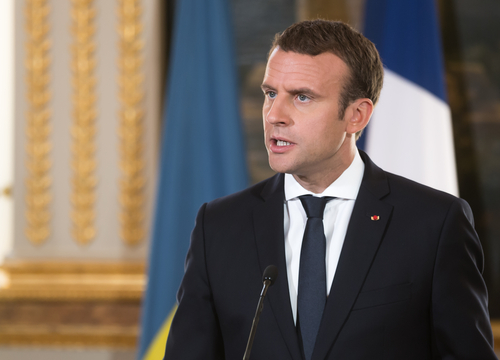
The old-school ideas of economic theory will ensure that Socialism collapses and very hard at that. The Germany influence upon Europe has infected the mindset of most northern Europeans. French President Emmanuel Macron has come out an made public debt one of the key points of his policy. Macron is supporting austerity and thus the EU’s guidelines. The French statistics office, Insee, reported that new borrowing during 2017 for France was 2.6% of GDP. The worker unions, in general, are starting to mobilize. Public debt is still high and employee protection is now severely limited and this is a dangerous cocktail that will inspireFrench civil unrest. Nevertheless, France has been criticized by the EU for its high level of new debt within the Eurozone.Thus, the country had twice been given more time to fix its budget. Under the Maastricht Treaty, the new debt of an EU state may not exceed 3% of GDP.New borrowing last year was 3.4%.
The entire problem here is the theory that an increase in the deficit spending will be inflationary. Yet after nearly 10 years of Quantitative Easing, this entire theory has been proven to be just nonsense. There are so many loaded assumptions hidden at its core that one must wonder how rational people still believe in a theory that cannot be proven by history. France is where the entire theory of Communism began. It was the French Communists who persuaded Karl Marx to abandon pure socialism.
With Macron embracing austerity and the guidelines of the Maastricht Treaty, we are watching the gradual collapse of socialism. All the promises of government to provide the safety-net are crumbling before our eyes. Austerity supports the bondholders against the people. This will also fuel the rise of class warfare as we head into 2022.
If the news from the first round of Mexican election polling was any better we’d have to be twins to enjoy it. Andres Obrado, a well-known Marxist who intends a government take-over of the Mexican energy sector, is holding a commanding 18-point lead.
This is excellent news for border wall enthusiasts and those who want the Trump administration to pull out of NAFTA.
Mr Obrador is the modern Mexican version of Hugo Chávez (or Nicolàs Maduro/Bernie Sanders) with a similar ideological outlook. His resulting territorial economic policies are certain to deliver the Venezuela outcome to the Mexican people.
For American companies doing business in Mexico, an Obrador win would be the worst possible outcome. They will lose hundreds of billions from their current Mexican investments, as President Obrador swoops in to skim (tax) corporate profits for his state-run enterprises and care for ‘his people’. However, the good news is – those U.S. multinationals will likely all return to the U.S. asap. Lucky day, lucky day.
Funnily enough, U.S. Commerce Secretary Wilbur Ross must have held some insider information about this likelihood when he sheepishly hinted toward this possibility a few weeks ago. Oh, the poor multinational critters in Wall Street are gonna have a heart attack when they see this. Wait, wha… they did already?
MONTERREY (Reuters) – Mexican left-wing presidential candidate Andres Manuel Lopez Obrador has an 18-point lead ahead of the July 1 election, according to a poll published on Monday that showed him with a growing advantage at the start of formal campaigning.
Lopez Obrador, who launched his campaign on Sunday, holds 38 percent of the vote, according to the poll by Parametria, published by Reuters on Monday ahead of wider distribution. That compared to 35 percent in its previous poll.
A Lopez Obrador victory could usher in a Mexican government less accommodating toward the United States, where President Donald Trump has stoked trade tensions with Mexico and aggressively moved to curb immigration.
Lopez Obrador has backed the North American Free Trade Agreement, but his plan to review newly issued oil contracts sparked worries he will deter foreign investment. (read more)
Too funny… The “smart set” (pundits) are reading it wrong:
QUESTION: Message: Hi, huge respect for your eye-opening work. You mention that war is more likely to erupt in the middle east than Korea. Since middle east seems to be in a state of perpetual combat in different areas, do you think war could expand as Turkey is more & more openly hostile to Greece? The average Greek is no longer considering if it happens, more like when it will happen. Does Socrates provide a forecast on this?
Regards,
S, Athens.
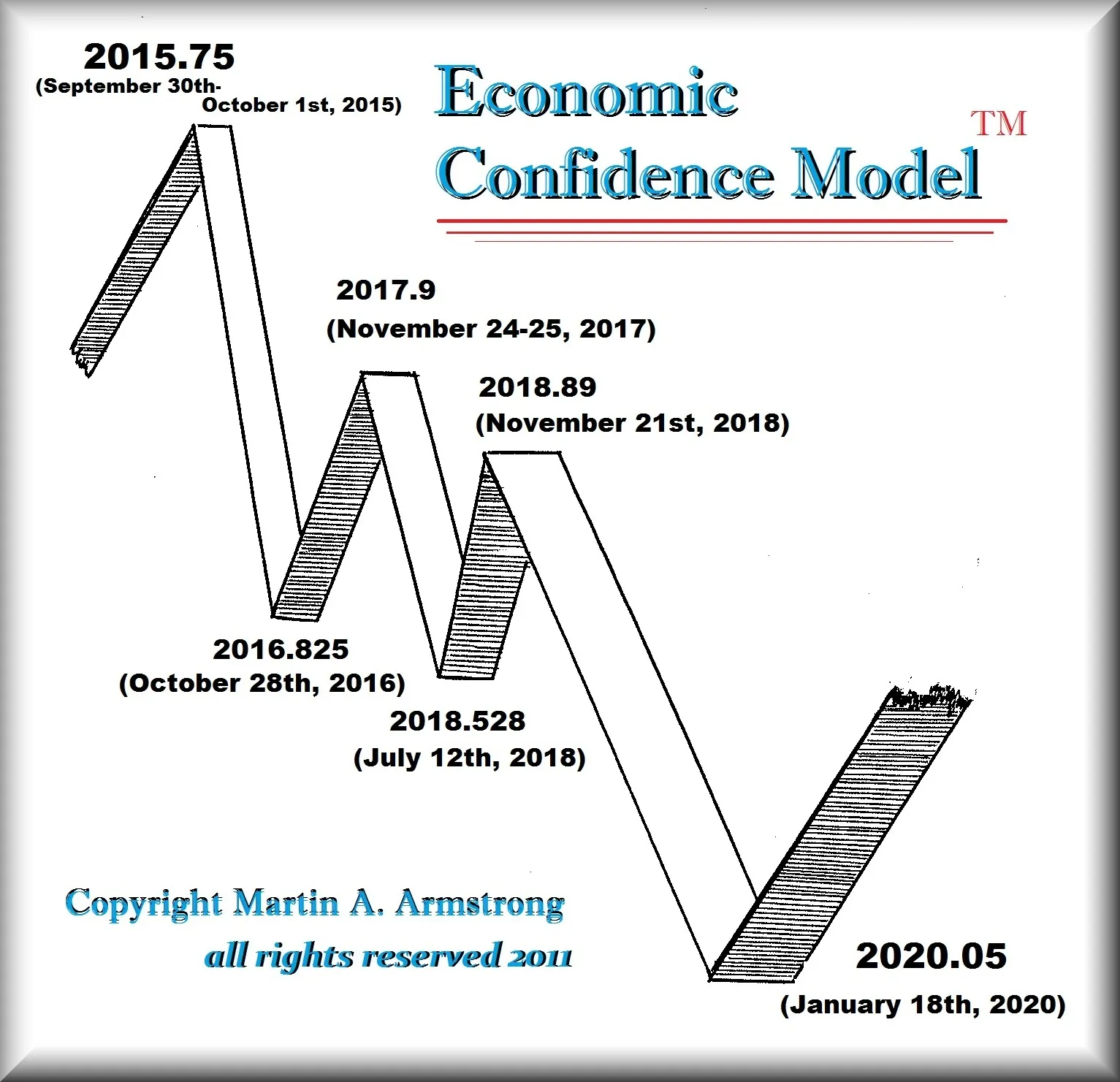
ANSWER: Actually, the primary target for a peak in any Greco-Turkish war will arrive in 2022. What we must understand is we have a major convergence between the Cycle of War and the Economic Confidence Model (ECM). What this means is the increased risk of geopolitical tensions are enhanced by economic downturns. This is what I have been warning about with the collapse of Socialism. As the endless promises of governments crumble to dust, politicians are faced with (1) the overthrow of their governments, or (2) create an external enemy to shift the blame from themselves. Therefore, as the economy turns down, interest rates will invert and rise when people no longer trust a government, and the fabric of the political-economy will be torn apart at the seams. This is historically the most dangerous point for at that moment, the government will turn to create external enemies.
When communism fell in 1989, the military establishment was no longer really needed. They needed to create external enemies to justify maintaining their position, status, and funding. Therefore, Russia continued to be the enemy of the USA simply because they needed one. When I would ask WHY was Russia our enemy if they were no longer Communist, the reply was dumbfounding: “Well they are Russian!” Even Ukraine was a power-play. The Eastern part of the country was ethnically Russian. The country should have simply been split north to south down the language border. Crimea was always a strategic port of Russia. If Japan told America to get out of Okinawa, the US response would be no different than Russia’s – America would occupy Okinawa. So why put sanctions on Russia for doing what the Americans or British have always done throughout history? The answer was just the military establishment needs an enemy – not peace. World peace means they are out of a job. They like those gold stars on their shoulders.
Therefore, as we head down into the economic abyss, the political necessity for war will be on the rise. Ergodan needs an external enemy. He is desperate for war and it will take two fronts – Kurds and the Greeks. He can easily stir the old pot of hate to retain power. This is what any politician does. Even Hillary during the election, as well as all the Democrats, stir the economic pot of class warfare to divide the nation just to get power. They also need that hatred of people who have more to win power. The people cheer and will one day storm the houses of the rich and will set them ablaze or drag them out and hang them. This is traditional and it is one primary reason class warfare is highly dangerous and undermines the foundation of any state. So this is what we face. Look at everything in that context and you will begin to see the conflicts deliberately created by the political class to retain power in ALL societies.
The first modern Greco-Turkish War following the fall of the Ottoman Empire is called the Thirty Days’ War, which took place against a rising Greek concern over conditions in Crete. This centered on the Turkish domination and where relations between the Christians and their Muslim rulers had been deteriorating rapidly. 1896 saw a rebellion on Crete instigated to a large extent by the secret Greek nationalistic society called Ethniki Etairia. They sought to fuel the historic resentment between the Christians and Muslims and they sought to create an opportunity to annex the island for the Greeks. Therefore, by the beginning of 1897, Greece sent arms to Crete to support a rebellion and revolution. On January 21, 1897, the Greek fleet was mobilized and in February Greek troops actually landed on the island proclaiming the annexation of Crete to Greece. The following month, the European powers imposed a blockade upon Greece to stop the arms shipments. The European powers feared that the whole of the Balkans would see vengeance upon the Turks.
The Greeks sent a force to launch an attack on the Turks in Thessaly (April). By the end of April, Greeks were overwhelmed by the Turkish army. The Greeks yielded to pressure from the European powers and withdrew their troops from Crete accepting an armistice on the mainland on May 20th, 1897. On December 4, 1897, a treaty was signed compelling Greece to pay the Turks an indemnity, to accept an international financial commission that would control Greek finances, and to yield some territory in Thessaly back to Turkey. Subsequently, the Turkish troops also left Crete, which had been made an international protectorate in 1898. Crete was finally ceded to Greece by the Treaty of London (1913), which ended the First Balkan War.
The second Greco-Turkish War occurred after World War I, when the Greeks attempted to extend their territory beyond eastern Thrace and the district of Smyrna. These territories had been given to Greece by the Treaty of Sèvres, August 10th, 1920. In January 1921 the Greek army launched an offensive in Anatolia against the nationalist Turks, who had defied the Ottoman government and would not recognize its treaty. In Greece, the war was followed by a successful military coup against the monarchy.
The Treaty of Lausanne concluded on July 24th, 1923, obliged Greece to return eastern Thrace and the islands of Imbros and Tenedos to Turkey, as well as to give up its claim to Smyrna. The two belligerents also agreed to exchange their Greek and Turkish minority populations. To this day, Turkey retains designs on regions it yielded to Greece.
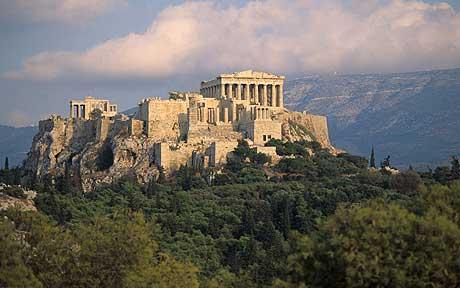
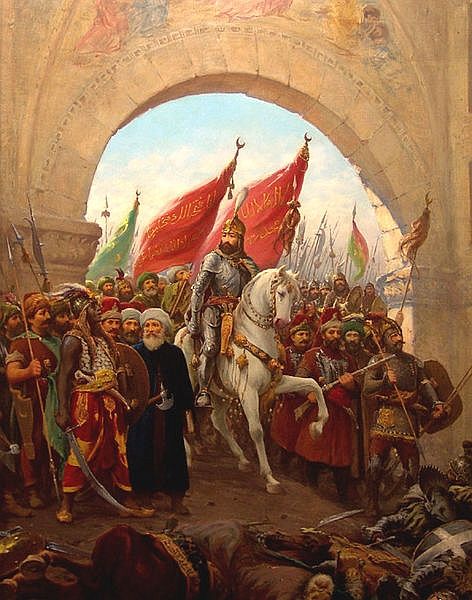
As the economy and hyperinflation continue in Turkey, the government desperately needs an external enemy. So yes. The tensions will continue to rise and this is seen as inevitable in Athens and the resentment goes back to the Persian invasion of Greece in ancient times. Even the culture of the Minoans were the origins of the Greeks. Anatolia was all Greek cities that filled modern Turkey. The fall of Constantinople in 1453 was the invasion of the Turks who were Muslim. So the traditional ethnic origin was Greek and the language of the Eastern Roman Empire ruled from Constantinople was Greek – not Latin.
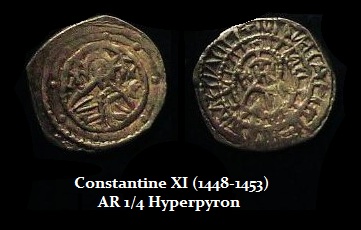
The last Emperor, Constantine XI (1448-1453), died in battle fighting the Turkish invasion. Beware November 2018. Things seem to begin picking up about then.
When the sabbath was over,
Mary Magdalene, Mary, the mother of James, and Salome
bought spices so that they might go and anoint him.
Very early when the sun had risen,
on the first day of the week, they came to the tomb.
They were saying to one another,
“Who will roll back the stone for us
from the entrance to the tomb?”
When they looked up,
they saw that the stone had been rolled back;
it was very large.
On entering the tomb they saw a young man
sitting on the right side, clothed in a white robe,
and they were utterly amazed.
He said to them, “Do not be amazed!
You seek Jesus of Nazareth, the crucified.
He has been raised; he is not here.
Behold the place where they laid him.
But go and tell his disciples and Peter,
‘He is going before you to Galilee;
there you will see him, as he told you.’”
Jesus went out with his disciples across the Kidron valley
to where there was a garden,
into which he and his disciples entered.
Judas his betrayer also knew the place,
because Jesus had often met there with his disciples.
So Judas got a band of soldiers and guards
from the chief priests and the Pharisees
and went there with lanterns, torches, and weapons.
Jesus, knowing everything that was going to happen to him,
went out and said to them, “Whom are you looking for?”
They answered him, “Jesus the Nazorean.”
He said to them, “I AM.”
Judas his betrayer was also with them.
When he said to them, “I AM, “
they turned away and fell to the ground.
So he again asked them,
“Whom are you looking for?”
They said, “Jesus the Nazorean.”
Jesus answered,
“I told you that I AM.
So if you are looking for me, let these men go.”
This was to fulfill what he had said,
“I have not lost any of those you gave me.”
Then Simon Peter, who had a sword, drew it,
struck the high priest’s slave, and cut off his right ear.
The slave’s name was Malchus.
Jesus said to Peter,
“Put your sword into its scabbard.
Shall I not drink the cup that the Father gave me?”
So the band of soldiers, the tribune, and the Jewish guards seized Jesus,
bound him, and brought him to Annas first.
He was the father-in-law of Caiaphas,
who was high priest that year.
It was Caiaphas who had counseled the Jews
that it was better that one man should die rather than the people.
Simon Peter and another disciple followed Jesus.
Now the other disciple was known to the high priest,
and he entered the courtyard of the high priest with Jesus.
But Peter stood at the gate outside.
So the other disciple, the acquaintance of the high priest,
went out and spoke to the gatekeeper and brought Peter in.
Then the maid who was the gatekeeper said to Peter,
“You are not one of this man’s disciples, are you?”
He said, “I am not.”
Now the slaves and the guards were standing around a charcoal fire
that they had made, because it was cold,
and were warming themselves.
Peter was also standing there keeping warm.
The high priest questioned Jesus
about his disciples and about his doctrine.
Jesus answered him,
“I have spoken publicly to the world.
I have always taught in a synagogue
or in the temple area where all the Jews gather,
and in secret I have said nothing. Why ask me?
Ask those who heard me what I said to them.
They know what I said.”
When he had said this,
one of the temple guards standing there struck Jesus and said,
“Is this the way you answer the high priest?”
Jesus answered him,
“If I have spoken wrongly, testify to the wrong;
but if I have spoken rightly, why do you strike me?”
Then Annas sent him bound to Caiaphas the high priest.
Now Simon Peter was standing there keeping warm.
And they said to him,
“You are not one of his disciples, are you?”
He denied it and said,
“I am not.”
One of the slaves of the high priest,
a relative of the one whose ear Peter had cut off, said,
“Didn’t I see you in the garden with him?”
Again Peter denied it.
And immediately the cock crowed.
Then they brought Jesus from Caiaphas to the praetorium.
It was morning.
And they themselves did not enter the praetorium,
in order not to be defiled so that they could eat the Passover.
So Pilate came out to them and said,
“What charge do you bring against this man?”
They answered and said to him,
“If he were not a criminal,
we would not have handed him over to you.”
At this, Pilate said to them,
“Take him yourselves, and judge him according to your law.”
The Jews answered him,
“We do not have the right to execute anyone, “
in order that the word of Jesus might be fulfilled
that he said indicating the kind of death he would die.
So Pilate went back into the praetorium
and summoned Jesus and said to him,
“Are you the King of the Jews?”
Jesus answered,
“Do you say this on your own
or have others told you about me?”
Pilate answered,
“I am not a Jew, am I?
Your own nation and the chief priests handed you over to me.
What have you done?”
Jesus answered,
“My kingdom does not belong to this world.
If my kingdom did belong to this world,
my attendants would be fighting
to keep me from being handed over to the Jews.
But as it is, my kingdom is not here.”
So Pilate said to him,
“Then you are a king?”
Jesus answered,
“You say I am a king.
For this I was born and for this I came into the world,
to testify to the truth.
Everyone who belongs to the truth listens to my voice.”
Pilate said to him, “What is truth?”
When he had said this,
he again went out to the Jews and said to them,
“I find no guilt in him.
But you have a custom that I release one prisoner to you at Passover.
Do you want me to release to you the King of the Jews?”
They cried out again,
“Not this one but Barabbas!”
Now Barabbas was a revolutionary.
Then Pilate took Jesus and had him scourged.
And the soldiers wove a crown out of thorns and placed it on his head,
and clothed him in a purple cloak,
and they came to him and said,
“Hail, King of the Jews!”
And they struck him repeatedly.
Once more Pilate went out and said to them,
“Look, I am bringing him out to you,
so that you may know that I find no guilt in him.”
So Jesus came out,
wearing the crown of thorns and the purple cloak.
And he said to them, “Behold, the man!”
When the chief priests and the guards saw him they cried out,
“Crucify him, crucify him!”
Pilate said to them,
“Take him yourselves and crucify him.
I find no guilt in him.”
The Jews answered,
“We have a law, and according to that law he ought to die,
because he made himself the Son of God.”
Now when Pilate heard this statement,
he became even more afraid,
and went back into the praetorium and said to Jesus,
“Where are you from?”
Jesus did not answer him.
So Pilate said to him,
“Do you not speak to me?
Do you not know that I have power to release you
and I have power to crucify you?”
Jesus answered him,
“You would have no power over me
if it had not been given to you from above.
For this reason the one who handed me over to you
has the greater sin.”
Consequently, Pilate tried to release him; but the Jews cried out,
“If you release him, you are not a Friend of Caesar.
Everyone who makes himself a king opposes Caesar.”
When Pilate heard these words he brought Jesus out
and seated him on the judge’s bench
in the place called Stone Pavement, in Hebrew, Gabbatha.
It was preparation day for Passover, and it was about noon.
And he said to the Jews,
“Behold, your king!”
They cried out,
“Take him away, take him away! Crucify him!”
Pilate said to them,
“Shall I crucify your king?”
The chief priests answered,
“We have no king but Caesar.”
Then he handed him over to them to be crucified.
So they took Jesus, and, carrying the cross himself,
he went out to what is called the Place of the Skull,
in Hebrew, Golgotha.
There they crucified him, and with him two others,
one on either side, with Jesus in the middle.
Pilate also had an inscription written and put on the cross.
It read,
“Jesus the Nazorean, the King of the Jews.”
Now many of the Jews read this inscription,
because the place where Jesus was crucified was near the city;
and it was written in Hebrew, Latin, and Greek.
So the chief priests of the Jews said to Pilate,
“Do not write ‘The King of the Jews,’
but that he said, ‘I am the King of the Jews’.”
Pilate answered,
“What I have written, I have written.”
When the soldiers had crucified Jesus,
they took his clothes and divided them into four shares,
a share for each soldier.
They also took his tunic, but the tunic was seamless,
woven in one piece from the top down.
So they said to one another,
“Let’s not tear it, but cast lots for it to see whose it will be, “
in order that the passage of Scripture might be fulfilled that says: They divided my garments among them,
and for my vesture they cast lots.
This is what the soldiers did.
Standing by the cross of Jesus were his mother
and his mother’s sister, Mary the wife of Clopas,
and Mary of Magdala.
When Jesus saw his mother and the disciple there whom he loved
he said to his mother, “Woman, behold, your son.”
Then he said to the disciple,
“Behold, your mother.”
And from that hour the disciple took her into his home.
After this, aware that everything was now finished,
in order that the Scripture might be fulfilled,
Jesus said, “I thirst.”
There was a vessel filled with common wine.
So they put a sponge soaked in wine on a sprig of hyssop
and put it up to his mouth.
When Jesus had taken the wine, he said,
“It is finished.”
And bowing his head, he handed over the spirit.
Now since it was preparation day,
in order that the bodies might not remain on the cross on the sabbath,
for the sabbath day of that week was a solemn one,
the Jews asked Pilate that their legs be broken
and that they be taken down.
So the soldiers came and broke the legs of the first
and then of the other one who was crucified with Jesus.
But when they came to Jesus and saw that he was already dead,
they did not break his legs,
but one soldier thrust his lance into his side,
and immediately blood and water flowed out.
An eyewitness has testified, and his testimony is true;
he knows that he is speaking the truth,
so that you also may come to believe.
For this happened so that the Scripture passage might be fulfilled: Not a bone of it will be broken.
And again another passage says: They will look upon him whom they have pierced.
After this, Joseph of Arimathea,
secretly a disciple of Jesus for fear of the Jews,
asked Pilate if he could remove the body of Jesus.
And Pilate permitted it.
So he came and took his body.
Nicodemus, the one who had first come to him at night,
also came bringing a mixture of myrrh and aloes
weighing about one hundred pounds.
They took the body of Jesus
and bound it with burial cloths along with the spices,
according to the Jewish burial custom.
Now in the place where he had been crucified there was a garden,
and in the garden a new tomb, in which no one had yet been buried.
So they laid Jesus there because of the Jewish preparation day;
for the tomb was close by.
In my church, on Holy Thursday evening, the Eucharist is removed from the tabernacle, and taken to a place of repose. The altar is stripped. Christ is no longer present in the sanctuary. Good Friday is the one day of the year when mass cannot be said.
These visible signs of the coming Passion point us toward the Friday that changed everything, for the whole world. Don’t deprive yourself of the day of our Lord’s sacrifice. Stop. Pray. Let your heart break a little. Experience Good Friday, that you may truly be renewed on Easter Sunday.
I have created this site to help people have fun in the kitchen. I write about enjoying life both in and out of my kitchen. Life is short! Make the most of it and enjoy!
This is a library of News Events not reported by the Main Stream Media documenting & connecting the dots on How the Obama Marxist Liberal agenda is destroying America