Elon Musk Releases Documents Showing U.S. Government Instructed Twitter Platform to Remove Political Content, a Clear First Amendment Violation


Posted originally on the CTH on December 2, 2022 | Sundance

Twitter CEO Elon Musk selected Matt Taibbi, one of the rare independent voices in media, as the vessel to review and share a litany of internal documents from within the social media platform showing details of how the federal government and DNC officials gave instructions to Twitter personnel to remove content.

Matt Taibbi released a stream of Twitter Communication showing the documents and details – SEE HERE

Elon Musk followed up the current release with a statement saying, “Twitter acting by itself to suppress free speech is not a 1st amendment violation, but acting under orders from the government to suppress free speech, with no judicial review, is.”

[Source]

Journalist Matt Taibbi signs off on this release with the following notation, “There is much more to come, including answers to questions about issues like shadow-banning, boosting, follower counts, the fate of various individual accounts, and more. These issues are not limited to the political right.”

Read Documents Here

Labor Report Shows 263,000 Jobs Added in November, Combined with Significant Wage Growth 0.6% For Month


Posted originally on the CTH on December 2, 2022 | Sundance 

There’s a disconnect in the Main Street data that is perplexing from the standpoint of traditional economic and labor analysis.

There have been significant layoffs in the labor market as the result of diminished consumer spending activity. However, the Bureau of Labor and Statistics (BLS) is reporting a hotter than expected 263,000 new jobs in November [DATA HERE].

There were declines in jobs within the retail sector [-30,000 in Nov, -62,000 since August] and declines in warehousing and transportation [-15, 000 in November, -30,000 since July], which would indicate the outcome of lowered consumer spending on goods, or at least a change in consumer spending priorities.

Simultaneously, there were significant increases in jobs for leisure and hospitality [+88,000 in Nov], with the majority of those gains in food service and drinking.  However, that sector is still lower than the pre-pandemic by -980,000 jobs.  Also note people are not attending events with high ticket costs, the performing arts and spectator sports segment dropped 7,000 jobs [Table B-1]

Overall, if you were to look at the macro level jobs report, anything attached to the traditional spending of durable goods (retail stores) is declining.  However, the jobs related to the service or life experience are growing.  Oddly, and perhaps creepily, this dynamic falls in line with the ‘you will own nothing and be happy‘ cliche’ that has been oft spoken about the new post pandemic ‘Build Back Better‘ economy as espoused by the World Economic Forum.

Job gains in the infrastructure of life such as, building and construction, as well as the labor sector associated with skilled domestic service trades like plumbing, electricians, maintenance, etc are continuing to hold stable.  The major shift in the labor market surrounds the buying of durable goods which has disappeared along with the disappearance of discretionary income.   Which brings us to the wage portion of the BLS report.

Wage growth was a very high 0.6% for November and brings the annual rate of wage growth to 5.1%.   This outcome is almost certainly an outcome of workers demanding higher pay to cope with inflation, and employers needing to raise their wage rates in order to retain employees.

We also see an increase in the number of workers holding multiple jobs, as individuals are taking second jobs to cope with massive price increases in housing, food, fuel and energy. As noted within the BLS data:

In November, the average workweek for all employees on private nonfarm payrolls declined by 0.1 hour to 34.4 hours. In manufacturing, the average workweek for all employees decreased by 0.2 hour to 40.2 hours, and overtime declined by 0.1 hour to 3.1 hours. The average workweek for production and nonsupervisory employees on private nonfarm payrolls decreased by 0.1 hour to 33.9 hours.”

Fewer people are working, but more jobs are being worked – with lowered hours.

Higher wages are good; however, higher wages lead to higher prices for goods and services; which drives inflation higher, which creates the need for higher wages.   It’s an upward pressure spiral.

The supply side pressure on inflation, almost exclusively created by the BBB energy policy, shows absolutely no sign of lessening, despite the drop in demand for domestically produced finished consumer goods which has lowered overall industrial demand for energy.

The Build Back Better energy driven policy changes are creating very weird economic outcomes.

Prices are rising.  Consumers are squeezed.  Jobs attached to spending on goods are declining. Jobs attached to life experience and services expanding.

Ex.1 If you are working two jobs, now you might not have time to mow your grass – so you hire a lawn service.  The lawn service guys are charging more because the gasoline and business costs are higher…. which means you need to work a little longer at the second job to pay for the lawn service you don’t have time to do on your own because you need to work the second job.   That’s the dynamic we are seeing in the quantification of labor and job growth.

Ex.2 If you are working two jobs, you might not be cooking as much at home.  So, you grab dinner/lunch away from home.  The restaurants are charging more because the business costs are higher…. which means you need to work a little longer, ask for higher wages, in order to offset the time you don’t have to eat lunch/dinner at home.

This conflicting duality is what I always called the “serfesque driven economy.”  It is an outcome of erosion of the middle-class.  A status of individuality where your desires for life experience determine the need for your income.

You don’t own a car, you Uber.  You don’t own a house, you rent.  You don’t need a kitchen, you eat out.  Things seem ok, but you eventually become a serf to the people who control transportation costs, housing costs, food costs, etc.  Ultimately you have no control over the time you want to spend in enjoyment, because you don’t own the mechanisms of your life and need to work in order to afford maintaining the costs.  It’s a weird mental exercise.

There is a real outcome in this dynamic where the wealth gap increases.

Project Veritas Exposes HHS Involvement in Human Trafficking of Immigrant Minors


Posted originally on the conservative tree house on November 29, 2022 | Sundance

Project Veritas has released a very disturbing undercover investigation outlining how the U.S. Dept of Health and Human Services (HHS) has facilitated the human trafficking of mostly Central American minors on behalf of elicit cartels.

[WASHINGTON, D.C. – Nov. 29, 2022] Project Veritas released a new video today featuring a whistleblower working within a federal government agency called the Council of the Inspectors General on Integrity & Efficiency [CIGIE].

The whistleblower, Tara Lee Rodas, volunteered to assist the U.S. Department of Health and Human Services [HHS] with the processing of unaccompanied migrant children and was deployed to the Emergency Intake Site in Pomona, California.

Rodas sat down with Project Veritas founder, James O’Keefe, and described how precarious she believes the current child sponsorship program is for these minors.

“The tax dollars of people who are listening are paying to put children in the hands of criminals,” Rodas told O’Keefe. (read more)

CTH has documented the “Unaccompanied Alien Children” (UAC) program and the trafficking for years. Despite most media reports to the contrary, a considerable number of those UAC’s were teen victims and young gang members from Central America, including MS-13 members. The aliens were originally granted entry by the Obama administration, supported by false assertions of refugee status and shipped to various regional locales.  FULL TIMELINE HERE

“IT’S ALL GONE!” – This corruption is worse than we thought | Redacted with Clayton Morris


Redacted News Published originally on Rumble on November 28, 2022

The Biden administration can’t find over 20 billion dollars it sent to Ukraine. And yet Republicans are ready to send more money to Ukraine. What are they thinking? Protests erupt again in Peru. China protests rage across the country over Covid lockdown restrictions which have gotten worse.

Flu Drug Shortage


Armstrong Economics Blog/Disease Re-Posted Nov 29, 2022 by Martin Armstrong

There is a shortage of commonly prescribed flu and viral medications in America. Flu season hasn’t even peaked for the year and there is simply not enough medicine to treat everyone who falls ill. The US Centers for Disease Control and Prevention (CDC) claims that respiratory viruses are increasing across most the nation. In fact, one in five tests for the respiratory syncytial virus (RSV) came back positive last week.

I wonder how many RSV patients will be diagnosed with COVID. People may reconsider not getting the vaccine when they’re sick with any virus, desperate to believe any lie that will make the illness run its course. Perhaps I would not be so sick right now had I took the vaccine despite all the research that it does more harm than good. The pharmaceutical companies have access to data, A LOT of data, and any shortages are suspicious.

This is a supply shortage, even though they’re claiming otherwise. Manufacturers need time for mass production, and pharmaceutical companies place orders well in advance. Remember how everyone seemed to avoid the flu amid COVID? How our immune systems were suppressed with masks, disinfectants, no sunlight, and mRNA vaccines? It makes sense why the general public would assume this flu season would be less eventful since every flu case was deemed the coronavirus. We never achieved herd immunity from the coronavirus, according to the “experts,” but we as a general public certainly lowered our own immune systems these past few years.

Tamiflu is in very short supply, especially for children. Albuterol inhalers are also commonly out of stock. Amoxicillin and other common antibiotics are not available. Most of these medications require a doctor’s prescription, so hoarding is not an issue. The FDA is guiding pharmacists on how to make a child’s dosage of antibiotics from an adult’s pill. Canada is experiencing a children’s Tylenol shortage, and this issue will not be limited to the US.

Joe Biden Asks Congress to Pass Legislation to Avert Railroad Strike


Posted originally on the conservative tree house on November 28, 2022 | Sundance 

All 12 railroad unions vote individually to ratify their contracts, unless congress intervenes and imposes a contract which forces all to abide.  The railroad unions representing a majority of the railroad workers remain in dispute with the currently proposed contract with no resolution in sight and a potential labor union strike looming on December 9th.

If one union within the collective group strikes, all of the unions — which represent more than 115,000 rail workers — would almost certainly join in solidarity, triggering an industry-wide freight rail work stoppage.

With the unions at an impasse over sick pay, Joe Biden has asked congress to intervene and impose a contract based on the terms of an earlier agreement.

(White House) –  I am calling on Congress to pass legislation immediately to adopt the Tentative Agreement between railroad workers and operators – without any modifications or delay – to avert a potentially crippling national rail shutdown.
 
This agreement was approved by labor and management negotiators in September. On the day that it was announced, labor leaders, business leaders, and elected officials all hailed it as a fair resolution of the dispute between the hard-working men and women of the rail freight unions and the companies in that industry.
 
The deal provides a historic 24% pay raise for rail workers. It provides improved health care benefits. And it provides the ability of operating craft workers to take unscheduled leave for medical needs.  Since that time, the majority of the unions in the industry have voted to approve the deal.


During the ratification votes, the Secretaries of Labor, Agriculture, and Transportation have been in regular touch with labor leaders and management. They believe that there is no path to resolve the dispute at the bargaining table and have recommended that we seek Congressional action.
 
Let me be clear: a rail shutdown would devastate our economy. Without freight rail, many U.S. industries would shut down. My economic advisors report that as many as 765,000 Americans – many union workers themselves – could be put out of work in the first two weeks alone. Communities could lose access to chemicals necessary to ensure clean drinking water. Farms and ranches across the country could be unable to feed their livestock.
 
As a proud pro-labor President, I am reluctant to override the ratification procedures and the views of those who voted against the agreement. But in this case – where the economic impact of a shutdown would hurt millions of other working people and families – I believe Congress must use its powers to adopt this deal.
 
Some in Congress want to modify the deal to either improve it for labor or for management. However well-intentioned, any changes would risk delay and a debilitating shutdown. The agreement was reached in good faith by both sides. (read more)

A national freight stoppage would be bad for the entire transportation sector.  Moving oil, coal, ethanol and derivatives needed for diesel transport would be almost impossible with a freight railroad shut down.  Congress has needed to intervene in this contract process several times before.

Nancy Pelosi released the following statement:

[…] “This week, the House will take up a bill adopting the Tentative Agreement – with no poison pills or changes to the negotiated terms – and send it to the Senate.  It is my hope that this necessary, strike-averting legislation will earn a strongly bipartisan vote, giving America’s families confidence in our commitment to protecting their financial futures.”

Republican Thomas Massie Gives Voters Excellent Example of How and Why the Overton Window Moves


Posted originally on the conservative tree house on November 28, 2022 | Sundance

In a series of tweets today, Kentucky Representative Thomas Massie provides an excellent example of why and how government always grows.

The Overton Window is basically a catchphrase to explain a narrow spectrum of acceptable government policies at any given moment. As the nation evolves the window of what would be considered currently “acceptable’ moves.  In the example of the government continue to grow, the Overton Window constantly shifts toward leftist totalitarian objectives, bigger government.

The movement happens slowly – over time – but is never reversed.  Regardless of who controls power, the big government Overton Window always goes one way, one nudge at a time in one direction, toward bigger government.  People often ask, why does this continue to happen even after Republicans are elected?   Today, Thomas Massie accidentally gives us a perfect example of how and why.

When Democrats are in power, they do everything to maximize their power and minimize the influence of their Republican opposition.  However, when Republicans are in power, they do everything to minimize their power and maximize the power of their Democrat opposition, now in the minority.  Democrats in control, they maximize the Overton Window shift.  When Republicans are in power, they do nothing to pull it back – they actually do everything possible to maintain the shift.  LOOK:

Saul Alinsky wrote the rulebook for radical leftists saying, “force the opposition to play by their own rules.”  A seemingly abhorrent concept when the powered wig crowd of honorable constitutional republicans take control.

Sitting atop the high horse Massie explains how it is a matter of principle that Republicans should not use power.

We are in an abusive relationship with government.

Representatives like Thomas Massie likely have the best intention in mind, but the result is a constant loss of freedom in one direction.

The constitution was written as a document to be affirmed, executed and defended by honorable people.  The progressive movement uses the morality within the affirmation as a weapon.

In a similar way a kidnapper tells one of two victims, they will harm the other if they try to flee, radical leftists slowly kill us by manipulating our love of country and constitution.

We should no longer accept the baseline premise; instead, we should change the dynamic by killing the kidnapper.

Get off the high horse and fight Mr Massie.

There comes a time to ‘Fix Bayonets’!

Fight dirty.

Fight ruthlessly.

Fight to survive.

Fight like the third monkey on the ramp to Noah’s ark.

Fight to win.

Give your grandchildren the opportunity to remount the high horse and wax philosophically about the value of the constitution.

Then again, all of that only applies if you really believe the message…

.

Important Discussion – Let’s Talk About 2010 Citizens United Supreme Court Decision with a Decade of Hindsight


Posted originally on the conservative tree house on November 25, 2022 | Sundance

I have given a great deal of thought to this in the past several years and I am welcoming all opinions.  Just to let you know I intend to read every single comment, because ultimately this is important. AND I believe it will become a silent topic in the next two years [As did the recent conversation of Ballots -vs- Votes].

In 2010 the Supreme Court ruled on a campaign finance legal challenge known colloquially as The Citizens United decision.  The essence of the decision was a speech issue. In the court’s opinion, Justice Anthony Kennedy wrote that limiting “independent political spending” from corporations and other groups violates the First Amendment right to free speech.

Prior to CU corporations were limited in financial spending on behalf of political campaigns just like individuals.  However, unions were not.  Organized Labor Unions could spend unlimited amounts in support of candidates.  Corporations were limited like individuals.

At the time of the January 2010 Supreme Court ruling Democrats and Barack Obama were furious.  Corporations could not form SuperPACs and spend unlimited amounts of money ‘independently’ supporting candidates.

Federal Election Commission (FEC) rules on coordination and communication between the political campaigns and the independent SuperPACs was/is supposed to create a firewall.  However, the obscure nature of that effort has failed miserably.

Real World Example. A SuperPAC can organize a pro-Ben rally, spend on the venue, spend on the banners, t-shirts, rally material etc., and then advertise it.  If Ben shows up to deliver a speech, he’s not breaking the rules so long as Ben and the SuperPAC didn’t coordinate the event.  Ben just shows up to share his support for the effort, thank everyone and everything is legal in the eyes of the FEC.  Yeah, it’s goofy.

More commonly as a result of the Citizens United (CU) case, massive corporate advertising (considered speech) is permitted in support of the candidate; or the corporation can organize ballot collection or get out the vote efforts, etc.  Again, as long as they do not coordinate with any “official campaign” ie. Mark Zuckerbucks, yeah, goofy.   As a result, expanded corporate spending has massive influence over U.S. elections.

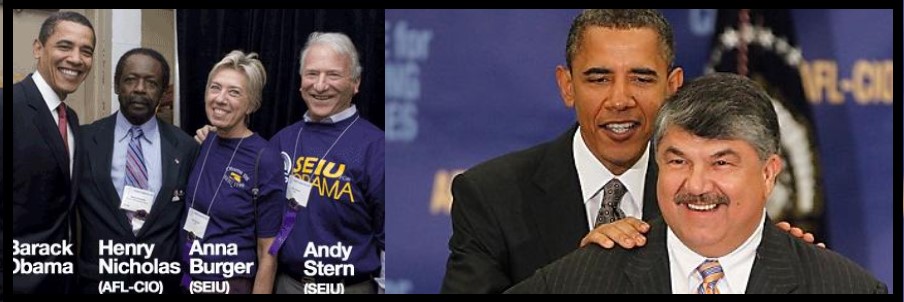
♦ Oppose CU – Democrats opposed the CU decision because they had an advantage with organized labor.  Labor unions were considered a representative body of collective individual membership interests and could spend without limit on campaign support.  Organized labor unions supported democrats.   Factually, Barack Obama won his 2008 election specifically because the SEIU, AFSCME, UFCW, AFL-CIO and other organized labor supported him over Hillary Clinton.

The CU decision watered down this overall Democrat advantage because now corporations funding Republicans could counterbalance the spending support of the labor unions.  Democrats stated the CU decision would inject billions into politics and would increase corruption.

♦ PRO CU – Republicans, in a general sense, supported the CU decision mostly because it did level the field with labor unions and also because the corporate lobbyist connections to the republican party meant a lot of corporate money was available to fuel republican Super Political Action Committees (SuperPACs).  Factually, the CU decision created the ability of SuperPACs to exist.

The business of politics expanded with the CU decision and ultimately both the DNC and RNC clubs evolved to enjoy this unlimited donor spending.

The business sector of politics expanded as the financial aspects to the it grew.  SuperPACs could now fund consultants, polling firms, campaign systems and the money inside politics as a business exploded.

Now we have political campaigns where spending tens-of-millions on a single race is commonplace.  The modern ballot collection (harvesting etc) is now funded by this same flow of unlimited financial resources.

At the time of the 2010 Citizens United decision, I personally was in support of the ruling.  However, in hindsight the benefits of leveling the field with organized labor have become overshadowed by the negatives associated with corporations now in control of which candidates achieve office.

Money was always a corrupting issue and politicians working on behalf of their donors was always problematic, long before the Supreme Court CU decision.  However, CU exploded that problem on a scale that was/is almost unimaginable at the time.

A previous several million-dollar presidential campaign is now a multi-billion-dollar venture, and the corporations are purchasing every outcome.

So, here’s the question….

Knowing what you know now, how do you feel about the Citizens United decision?

House Republicans Demand Audit of Ukraine Funding


Armstrong Economics Blog/Corruption Re-Posted Nov 21, 2022 by Martin Armstrong

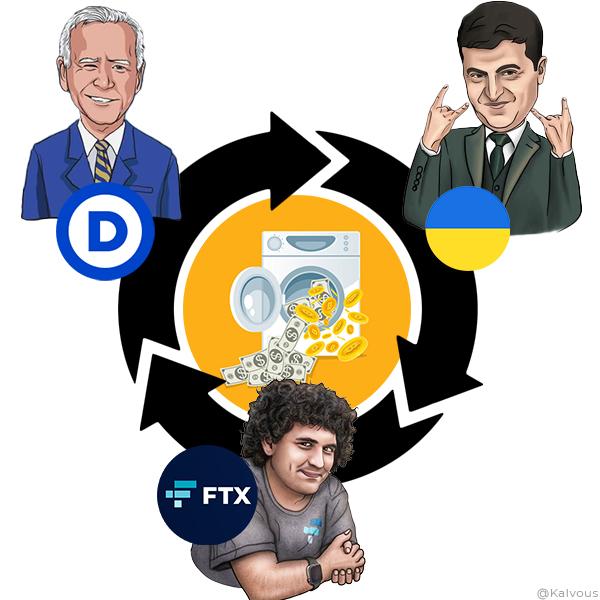
After sending off funds to Ukraine for nine months, people are requesting an itemized bill to find out where billions of taxpayer funds were spent. The newly flipped House called for an audit of Ukrainian funds and a reprioritization to secure America’s own border. Representative Marjorie Taylor Greene (R-GA) accused the Biden Administration of bringing in disabled Ukrainian soldiers as “pawns” when negotiating for additional funds. With the recent FTX blow-up, it is more apparent than ever that these funds to Ukraine have been mishandled.

We have sent billions of funds to Ukraine, but nothing has been done to secure the US-Mexico border despite numerous states declaring an invasion and begging Washington for help. “We are completely protecting another country’s border and also waging a proxy war with Russia,” Greene said. “We had five million people cross our border illegally since Joe Biden took office, let’s compare that to how many Russians have invaded Ukraine, 82 thousand Russians have invaded Ukraine,” Greene stated. As I have stated in prior posts, the cost of building a wall was insignificant compared to the cost of housing illegal immigrants.

A deep-dive audit into the handling of Ukrainian funds would lead to Biden’s impeachment, but this could never happen as too many players would crumble. This situation is larger than Biden conjuring up his own money laundering scheme single-handedly, as people on both sides have their hands in the endless war fund pot.

The Core Battle Within the Republican Party


Posted originally on the conservative tree house on November 21, 2022 | sundance

An inflection point is coming.  In preparation for what we are about to witness, it is critical to understand that both the DNC and RNC are private corporations with no affiliation to government.

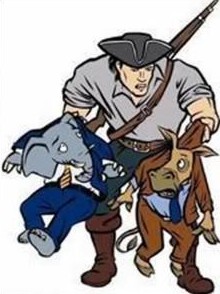
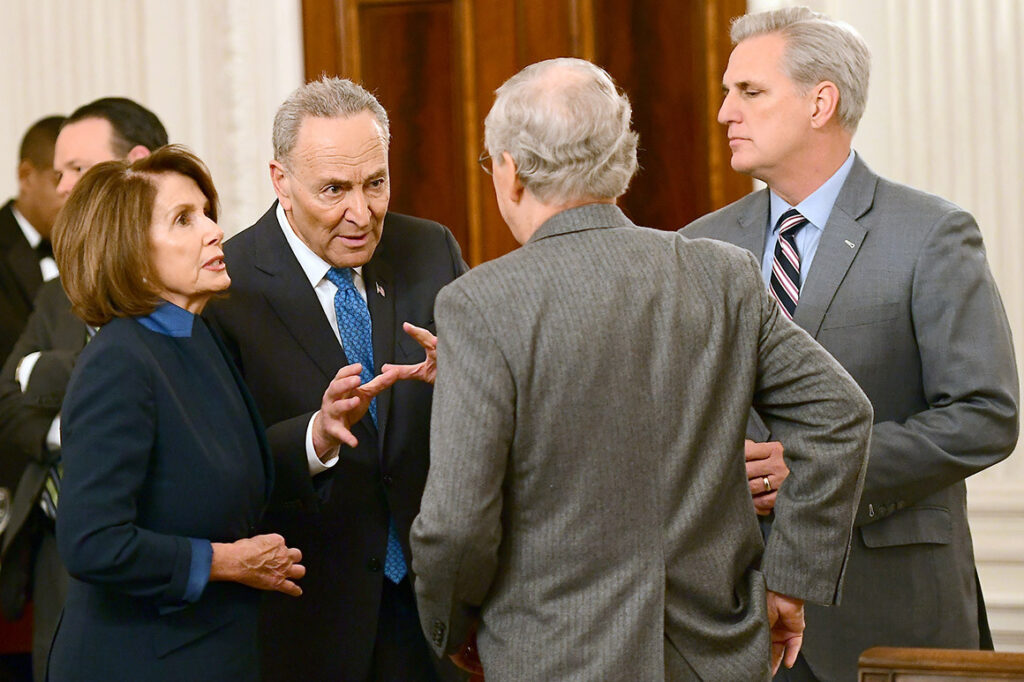
It is a difficult shift in thinking to appropriately understand, but the party system in U.S. politics revolves around two clubs that feed from the same corporate trough and position for influence and affluence within a political dynamic they control.

The priority for both clubs, Republican and Democrat, is NOT primarily ideological.  In the modern era, the corporate priority first begins with a battle over who controls each corporation.

As long as there is no challenge, the clubs operate without issue.  However, when there is a battle for control of the corporation, a battle that will ultimately determine the financial outcome, the internal battle becomes the priority.

2024 is going to be the election season when we see this corporate battle explode inside in the Republican group.  Decades of entrenched power are at stake, and there has been four years of counter positioning and backroom discussion leading up to this moment.

As a consequence, and I know this might sound odd to many people – but winning and/or losing elections becomes a secondary issue.  The RNC is not focused on winning elections. The RNC corporation is focused on retaining control.

The RNC want to give the illusion of support for MAGA conservatism because they need the base voter, and they need to maintain the illusion of choice. However, every move they make on an operational level is exactly in line with their previous outlook toward cocktail class republicanism.  The MAGA base of support cannot trust this corporate group and we must not be blind or unguarded about the Machiavellian schemes they construct.

When you hear the influence group saying the two priorities for control of the Republican Club involve, (1) eliminating populism in the ranks; and (2) realigning with multinational corporate objectives (vis a vis Wall Street), what they are publicly expressing is their RNC corporate need to get rid of the America First economic agenda; to get rid of the MAGA influence.

How has this historically surfaced?

Well, at a national level there is a unique policy priority that almost every politician, on both sides, will avoid discussing.  At a national level a single policy priority determines all other national policy outlooks.  That policy is the national economic policy.

The national economic policy of a presidential candidate determines all other national policies that flow from the presidential candidate.  The national economic policy impacts the obvious policies like energy and trade, and also determines the lesser obvious policies like regulation and even foreign policy.

It is specifically because a candidate’s national economic outlook impacts all other issues, that most national politicians never talk about it.

It would be impossible to support Main Street USA, a popular talking point, and still support the Paris Climate Treaty, the Transpacific Trade Partnership (TPP) or the Transatlantic Trade and Investment Partnership (TTIP).

To avoid the contradictions, most Democrat and Republican politicians avoid discussing their national economic policy. It is an unspoken rule within the billionaire club and donor game, an economic code of omerta amid most political candidates.

President Trump broke the rule and even went so far as to campaign on an America First economic policy agenda.  That core outlook forms the Make America Great Again foundation.  MAGA is based on a national economic policy outlook that determines every other national policy as carried by President Trump.

While most Americans may not be able to articulate how the national economic policy impacts them, almost every American feels the consequences through gasoline prices, energy prices, employment, wage rates and the expenses within their everyday lives.  To try and hide this reality, often media and economic analysts will say the U.S. President has no control over gasoline prices; however, this is unequivocally false.

Yes, it is true that oil prices are determined by the global market for the product, the supply and the demand.  However, the energy policy of the president determines the domestic investment in natural resource development and extraction by oil companies.  The energy policy determines domestic supply.  The regulatory policy determines the expansion, or lack therein, of oil and gasoline refinery capacity.  So yes, it is ultimately the U.S President who determines gasoline prices indirectly through energy and regulatory policy.

If this were not the case, then gasoline would cost nearly the same in almost every nation. It doesn’t.  Right now, gasoline in Mexico is almost $1 less than gasoline in the United States, specifically because Mexican President Andres Manuel Lopez-Obrador is not trying to reduce oil resource investment, development and/or gasoline refinery capacity.

President Trump was the first presidential candidate who campaigned on a domestic national economic policy.  He even went one step further and stated the T-word, tariffs.  Yes, the commerce department holds tools to support a national economic policy.

The tariff tool is another aspect to national economics that most politicians avoid discussing because the toolbox is counter to the interests of Wall Street, multinational corporations and hedge fund managers.

For a reference point you might remember the apoplectic fits from financial and economic punditry to President Trump’s 2017 and 2018 steel and aluminum tariffs.

Economic security is determined by national economic policy.  National security is also an outcome of national economic policy.  Again, President Trump was also the first modern president to put that outlook to work when he said, “economic security is national security,” and then began constructing a foreign policy agenda using the cornerstone of national economic policy.  The result was quite remarkable and led to what eventually became the Trump Doctrine.

It was inherently the US national economic policy that underpinned President Trump challenging NATO to meet their financial obligations.  It was national economic policy that drove trade policy and created the north American USMCA trade agreement.  It was national economic policy that led to countervailing duties on Chinese and European imports.  Which had the remarkable effect of actually lowering prices inside the United States.

We began importing deflation through lower priced goods as the value of the dollar increased and China/EU central banks devalued their currency to avoid the impact of tariffs.  Asia and the EU also subsidized their export manufacturing with incentives in order to lower costs as an offset to the tariffs, while simultaneously Asian and European companies began investing in production facilities inside the U.S. as a long-term approach to retaining access to the U.S. market. To put it succinctly, this was MAGAnomics at work.

U.S. wages increased, U.S. job growth increased, U.S. energy prices dropped with increased energy development and a massive cut in regulations, and that in turn lowered the cost of domestic goods.  Suddenly we were importing goods at lower prices and generating goods internally at lower prices.  More MAGAnomic outcomes, which, not coincidentally, was the exact opposite of all Wall Street claims and predictions.

Making America Great Again, was an outcome of national economic policy.  At its core, MAGA is a national economic dynamic within a political movement that is represented by President Donald J Trump.

It is critical to understand, the MAGA economic policy is essentially a national policy completely, and uniquely, under the control of the office of the President.  The impact to the lives of Americans is a direct outcome from national economic policy.  If a president wants to lead an independently wealthy country, he/she applies a very specific economic outlook to all other policy areas including energy, regulation and foreign policy.

It is also true that opposition to President Donald Trump is uniquely connected to the America-First economic agenda.

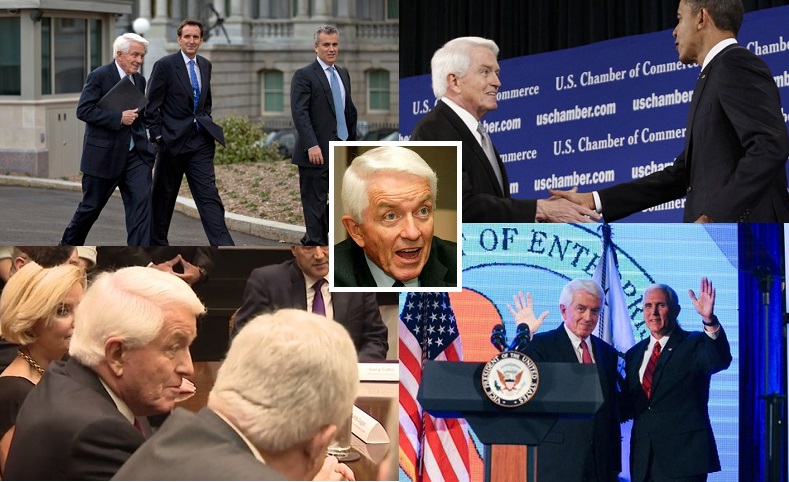
Multimillion-dollar lobbyist firms like the U.S. Chamber of Commerce and the Business Roundtable, along with dozens of economically established SuperPAC’s funded by Wall Street and multinational corporations, are vehemently opposed to the America-First economic agenda.

All of the national politicians and political candidates taking money from these aforementioned groups necessarily bind themselves to a position that stands against the America-First economic agenda.

In essence, if you take money from the multinationals you cannot deliver on MAGA economic outcomes for banking, trade, finance etc.  And that’s exactly where we run into the problem.

Because MAGA national economic priorities conflict with the multinational corporations, hedge funds and the Wall Street donor class, all of the politicians who accept the influence checks from these self-interested groups cannot run on, or deliver, a MAGA national economic agenda.

At a local, county and state level you have direct impact on the political policy agenda in your community.  Who you elect to the city council, school board, state house and senate as well as governor’s office has an impact on those local and state priorities.  However, national economic policy, national energy and trade policy and national foreign policy are not under your control.

As a result, the same skillset, or policy outlook, that makes a governor a successful state politician doesn’t carry into a federal office, [see the example of Wisconsin Governor Scott Walker].  Yes, there are some executive and administration skills that carry over; however, on the bigger issue of steering the national policy agenda, almost every candidate for office comes with the baggage of having accepted donor contributions from a class of people who are paying for economic policy influence.

MAGA cannot be purchased.  It is a political outlook that seeks only to enhance the best interests of the American people, regardless of consequence for the multinationals or foreign beneficiaries of globalist U.S. economic policy.  Unfortunately, as a result, all of the beneficiaries are aligned to make sure the MAGA economic policy outlook is extinguished.  There are literally trillions at stake.  This reality underpins the opposition to Donald Trump.

When you understand why the national economic outlook of the President is so important, you can also understand why every political candidate is told not to discuss it by the handlers and campaign managers who are essentially selling their candidate to a millionaire and billionaire donor class who do not want an America-First economic policy agenda.

There is no easy solution for this problem, and ironically this core economic issue is where you find supporters of both Bernie Sanders and Donald Trump in alignment.

Where the Sanders and Trump camps split is on the solution.  Team Sanders wants the government to play the role of economic referee (regulation), while Team Trump wants the government to change the rules of the economic game (countervailing duties, tariffs etc).

Before Donald Trump entered politics there was no home for people voting on the issue of a national economic agenda. Both Democrat and Republican candidates had essentially the same worldview on national economic policy because they are all getting money from the same multinational corporate trough.  However, President Trump changed that dynamic by presenting an alternative national economic policy called America-First.

For decades middle America was begging the McConnell’s, Ryans, Boehners, Romney’s, McCain’s, Bushes, et al, to make America First economic policies their priority.  All of our shouts for help fell upon deaf political ears plugged by corporate donations and influence.  Our communities were literally collapsing around us (see rust belt), and yet no national politician would do anything of consequence.

By the time Donald Trump arrived decades of frustration exploded in an eruption of massive applause because he was articulating the central economic issue that was being ignored by the professional political class.  The America First agenda is the restoration agenda.  From Trump’s national economic policy, the middle-class erosion stopped. Economic security, specifically U.S. employment stability and wage rates, goes hand in glove with border security and immigration controls.

MAGAnomics is the core of the great MAGA republican coalition, a working-class coalition that cuts through all other distinctions and divisions.  It is not republican because of political affiliation, it is “MAGA republican” only because the republican party was the political vehicle selected by Donald Trump to install the policy.

This reality creates a problem for the DC professional political class and the corporate media. Because MAGAnomics is the fundamentally binding principle there is no way to fracture the Trump supporter coalition.

I am a “MAGA Republican” by default of my wanting a national economic agenda that looks out for the economic interests of American’s first.

Donald Trump is the irreplaceable Great MAGA King because Donald Trump is the only one who holds that same outlook.  Unfortunately, the Republican corporation does not carry that priority. Thus, the Big Ugly battle for control of the Republican Party is being previewed right now, and will grow in scale and consequence very soon.

Let me emphasize the key point.  The Republican Party is not positioning to win the 2024 election.

The people in control of Republican Club do not care who is in the White House, that is a secondary objective.  What they care about right now is controlling the Republican corporation and stopping the hostile takeover.

Every single Republican presidential candidate for 2024, sans Trump, will be inserted into the race to help the Republican corporation in this battle.  When you see them enter, instead of asking, ‘how can they win‘, ask yourself what is their mission on behalf of the Club priority?