The President Overtaking the Federal Reserve – BAD IDEA


Posted originally on May 1, 2024 By Martin Armstrong 
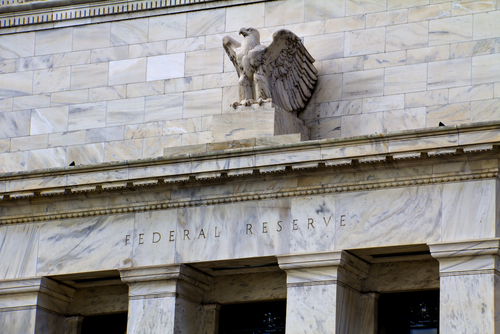
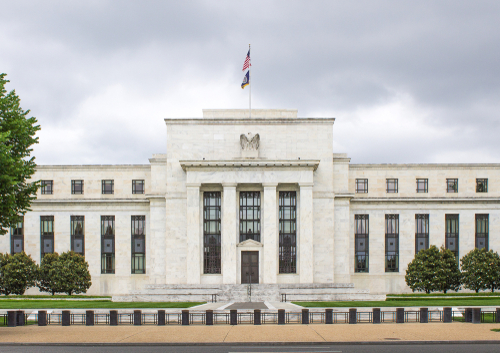
Federal Reserve Eagle

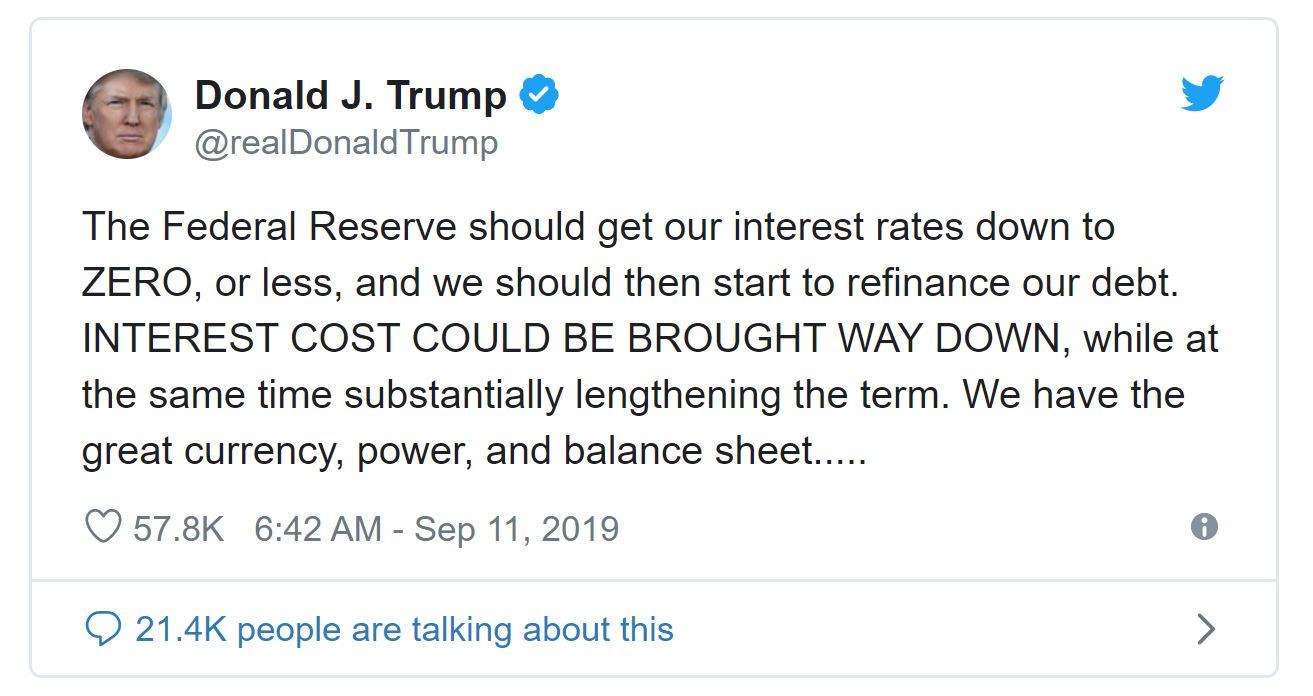
I do not agree with Donald Trump’s view of the Federal Reserve. I speak on behalf of sound economic policies that benefit the people. I do not blindly support a political candidate for the sake of being on the right side. Now, I criticized Trump during his presidency for constantly pressuring the central bank to lower interest rates. There are rumors swirling that Trump, if elected, would set the price of interest rates himself without the advice of the Federal Reserve. While this may be an extreme side of the rumor, Trump and every other president would like more power over the Federal Reserve — BAD IDEA!

What we must keep in mind is that the Federal Reserve’s original design, which lasted for about one year, was brilliant. The classic banking model involved borrowing from depositors on a demand basis and lending long-term, making a profit on the spread in interest rates, such as for business loans and mortgages. This was relationship banking, not today’s transactional banking model.

This was fractional banking insofar as about 8% of the money needed to remain free to service demand requirements. The crisis comes during an economic contraction when people run to the bank for a loss of confidence and demand to withdraw their funds. This results in the value of cash rising in purchasing power compared to assets, so asset values collapse.
Federal Reserve 12 Branches

The idea of “elastic money” was to increase the supply of cash during such a crisis to meet the demand for withdrawals and that would offset the need to sell assets by calling in long-term debts. By increasing the money supply on a temporary basis, the Fed could offset the contraction in theory smoothing out the business cycle.

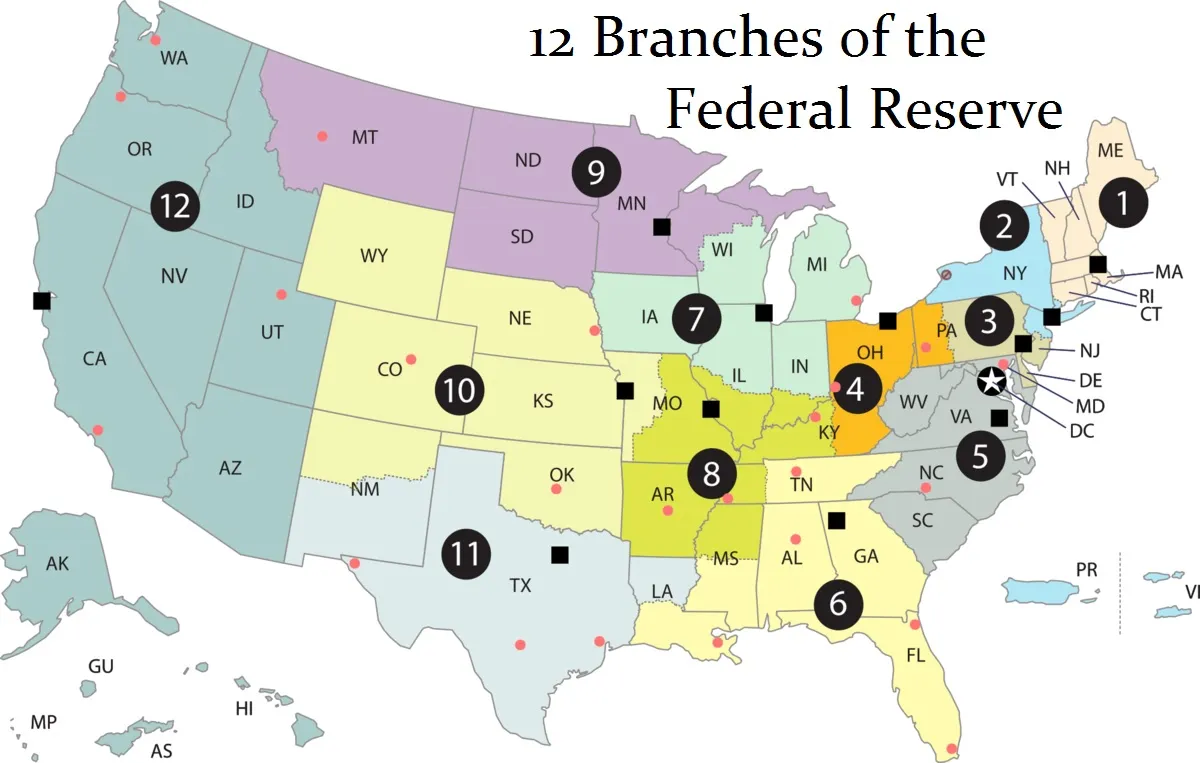
This was a brilliant scheme. However, it has been Congress, and not the Fed, that corrupted that mechanism. The banks technically owned the Fed as this was supposed to save the taxpayer money. The banks should contribute to their own bailout fund. Furthermore, the Fed’s design was also about buying in corporate paper when banks would not lend money. This was a mechanism used to offset rising unemployment if corporations could not fund their operations. They supplemented this by the management of regional interest rates to balance the domestic economy. Each branch of the Fed could raise or lower their local interest rate autonomously to attract capital when there was a local shortage or deflect capital when there was too much.

Congress began to manipulate the Federal Reserve for their own self-interest when World War I broke out on April 6, 1917. The alteration to the design of the Fed was to direct it to buy government bonds, not corporate. In this first step, they never reverse this decree after the war. They removed the brilliant design to stimulate the economy directly by purchasing corporate paper during a recession. In the last 2007-2009 crisis, the government wrote a check to TARP and hoped that the banks would lend money, but they did not. Removing this first pillar of the independent Fed distorted the entire system. It then made little sense for bankers to own shares in an entity that was no longer privately controlled.
DowIntRates 1929

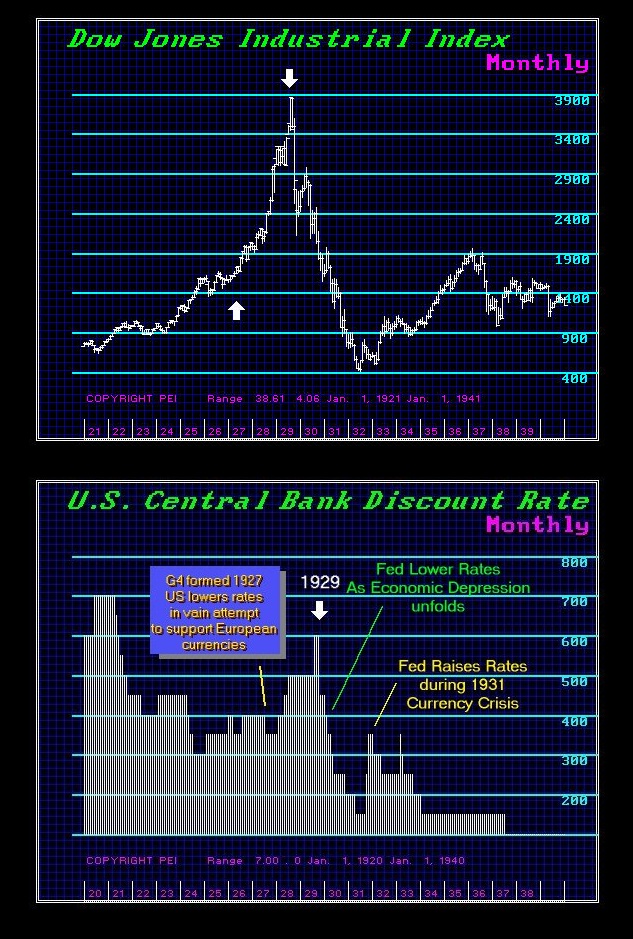
Banks became traders during the 1929 Boom-Bust Cycle. Goldman Sachs became deeply involved in the bull market, establishing numerous trusts and mergers. Goldman Sachs expanded the leverage going right into the eye of the storm that was about to hit starting on September 3, 1929. The crash wipes our 70% of Goldman’s entire market.

The Glass-Steagall Act, also known as the Banking Act of 1933 (48 Stat. 162), was passed by Congress in 1933 and prohibited commercial banks from engaging in the investment business. Around 5,000 banks failed during the Great Depression largely because banks sold trusts and foreign sovereign government bonds to the public in small denominations. Bill Clinton later repealed Glass-Steagall and handed the power back over to the bankers. Disaster strikes every time the government tries to manipulate the free market.

People believe the Fed has the power to create money out of thin air, yet never explain why the Fed was given that power. You cannot have a fixed money supply as the population increases, then you end up with DEFLATION, which is the rise in the value of money. You can double the money supply, but if the people hoard it, as they tend to do during private waves when the public loses all trust in government, you will never create inflation. There was a huge contraction in the velocity of money during the Great Depression for this very reason.

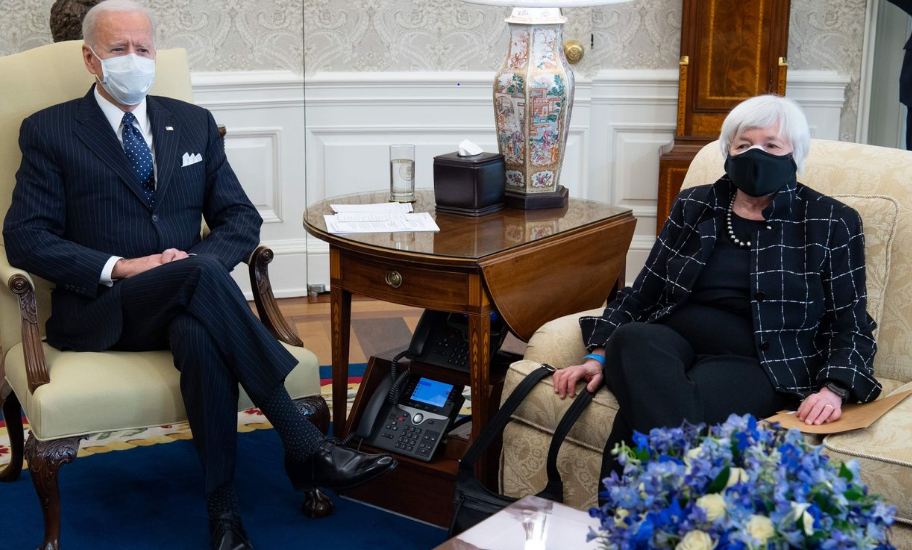
The Biden Administration, as has the Trump Administration, has come after the Fed. Politicians merely want the economy to appear strong under their reign and fail to see the long-term impact of policies. Politicians have no knowledge of economics or the insight to run the Fed. Not to mention that law does not permit Washington to bark orders at the Fed, although Washington does oversee the Fed and can force the central bank to change its policies to align with government spending or repel debt buyers.
Trump on Interest Rates

Trump is a borrower, not a lender. His bankruptcies were the result of the business cycle and he leverages himself to the hilt so when the recession comes, he gets in trouble and when it is booming he claims to be a fantastic investor. But he is no trader. He could have hedged the business cycle but did not.

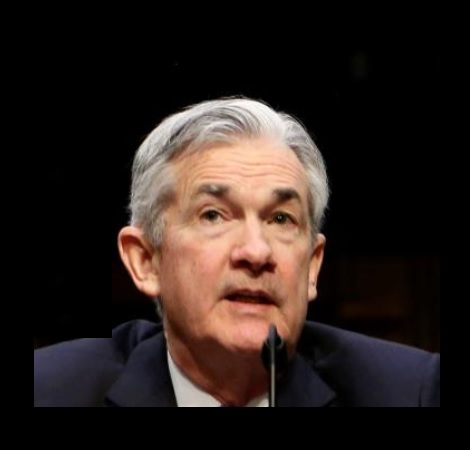
Chairman Jerome Powell and Trump clashed repeatedly. Not so coincidentally, Powell and numerous Fed bank presidents have their terms expiring in 2028 – a key year, as indicated by our models. The Biden Administration has already driven the economy off a cliff. The central bank is merely trying to heal an already injured economy with a limited medical kit.

The Fed is INDEPENDENT and will not be bullied by Biden or Trump. The Fed understands that it has become the world’s central bank and its actions in raising rates have had a far greater impact externally particularly in emerging markets because so many other nations issue their debt in US dollars.
Powell: March Rate Cut Unlikely


Posted originally on Mar 7, 2024 By Martin Armstrong

Powell Jerome

Those who follow this blog already knew that the Federal Reserve would not drop rates in the future due to unsustainable fiscal policies paired with America’s increasing involvement in foreign wars. All of the talking heads were preaching that rates would significantly decline to pandemic levels, as if that were the historical norm. Every fiscal policy in recent years has exacerbated inflation and the Fed cannot keep up with government spending. QE FAILED. The artificially low interest rates of the recent past were completely unsustainable and relied on outdated theories.

The outdated understanding based on Keynesian Economics remains to increase the supply of money and it MUST be inflationary. The Fed raises rates to reduce consumption and lower rates to stimulate consumption. It’s a very nice theory, but when actually tested, it utterly fails. Lower rates will NEVER cause people to invest UNTIL they believe that there is an opportunity to invest. We are watching the big players withdraw from equities, let alone government debt. We are in a private wave where money is running off the grid at a rapid pace.

DowIntRates 1929

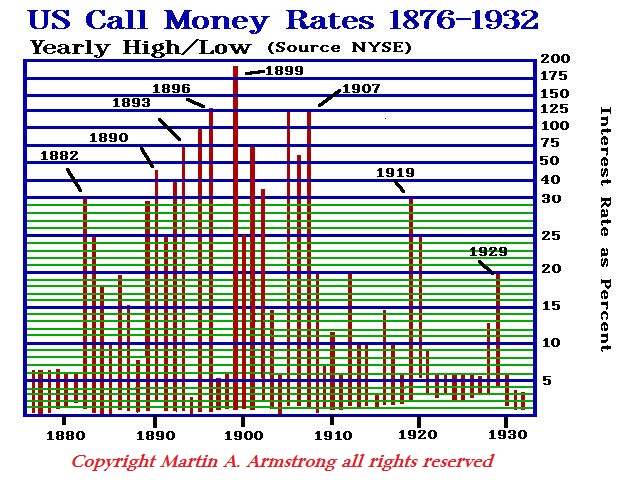
The peak in interest rates took place in 1899 at virtually 200%. Yet, 1929 was the real bubble top and it peaked with 20% interest rates in call money on the NYSE. In theory, the biggest boom should have been met with the highest interest rate. In truth, the “real interest rate” as I have defined it is when the interest rates exceed expectations. If you think the stock market will double, you will pay 25% interest.

As you can see, while interest rates hit nearly 200% in 1899, the share market did NOT crash percentage-wise anything as it did following 1929. Look, there is a lot more to this than meets the eye. Everything must be addressed on a global scale for it all depends also on the direction of capital flows. There is just a lot more to this than simply the money supply and interest rates.

CALLMONY MA

Now, Powell continues to explain to the public that VOLATILITY and economic conditions are beyond the control of the Fed. “We believe that our policy rate is likely at its peak for this tightening cycle,” Powell said. “If the economy evolves broadly as expected, it will likely be appropriate to begin dialing back policy restraint at some point this year. But the economic outlook is uncertain, and ongoing progress toward our 2% inflation objective is not assured.”

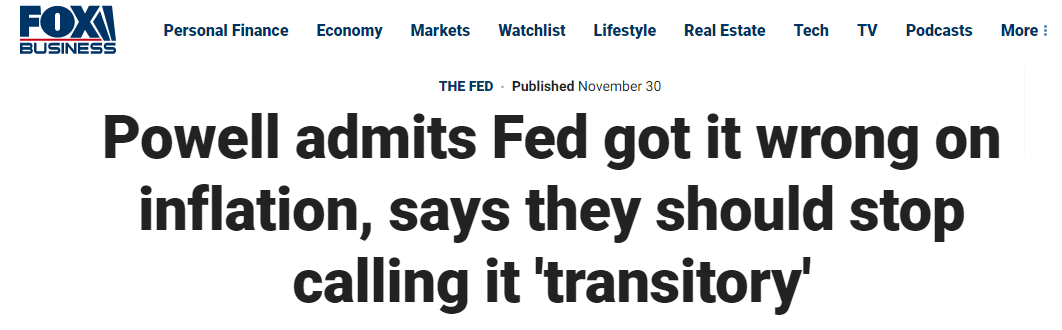
Powell Fed Got Inflation Wrong Nov 2021

All the news of inflation waning, including recent data, is inaccurate propaganda intended to calm recessionary fears. Even by the government’s data, inflation is up 3.1% compared to last year. It was an unprecedented moment when Powell broke with Washington and criticized the government for their unsustainable spending. The Fed NEVER criticizes the government, despite the two being separate.

Hence, I say to stop blaming the Fed. They are not the ones creating all the money but are working to match monetary policy with unsustainable fiscal policies. We are looking at trillions in deficits per year. There is no restraint when creating new massive spending packages. Then people blame the central bank with no concept that it’s only a fraction of “money;” the real issue is CONGRESS.

Listen, interest rates cannot decline in the face of war. The 2020 yearly array showed a turning point for a high in 2022 and a possible correction into 2024. I explain this in more detail on the Socrates private blog but buckle up for the year ahead.

Ep 3279a – The World Is Moving Away From The Federal Reserve Note, People’s Economy Coming


Posted originally on Rumble By X22 Report on: Feb 9, 2024 at 5:30 pm EST

Why We Should Not Blame the Federal Reserve


Posted originally on Jan 10, 2024 By Martin Armstrong 

Fed Ship in STorm

One piece of analysis commonly misconstrued is the Federal Reserve’s role in the nation’s economic health. Even those who have the ability to piece together other variables that often go unnoticed commonly point their finger at the Federal Reserve. No one is factoring in the largest driver of inflation – WAR – nor are they factoring in the three main pillars of government debauchery (war, taxation, government spending) that the Fed cannot control.

Federal Reserve 12 Branches

They never look at the history of central banks and how Congress has been manipulating the law to alter the Fed’s purpose. If there was a single interest rate and one policy set in Washington, why do we even have branches of the Fed if they no longer act independently? When the Fed was created, the branches managed internal domestic capital flows. Each branch was independent, and they would lower or raise the interest rate in their jurisdiction depending on the flow of money. Too much cash? They lowered the rate. Not enough cash? They raised it. This was all before Keynesian Economics when the interest rate became the tool to manipulate our demand.

The San Francisco earthquake of 1906 created the Panic of 1907, which caused capital to rush from East to West. This created a shortage of cash in New York and led to bank failures. Hence, the Federal Reserve was created with branches to manipulate the internal capital flows – not the Quantity of Money Theory or the demand of the people.

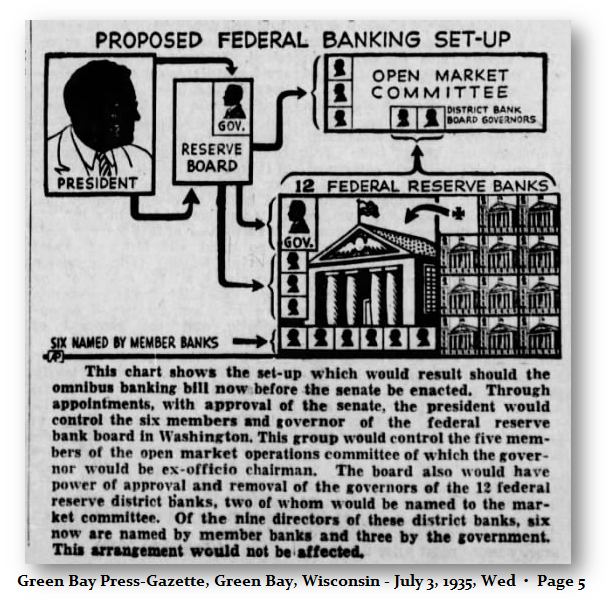
Federal Reserve Restructure 1935
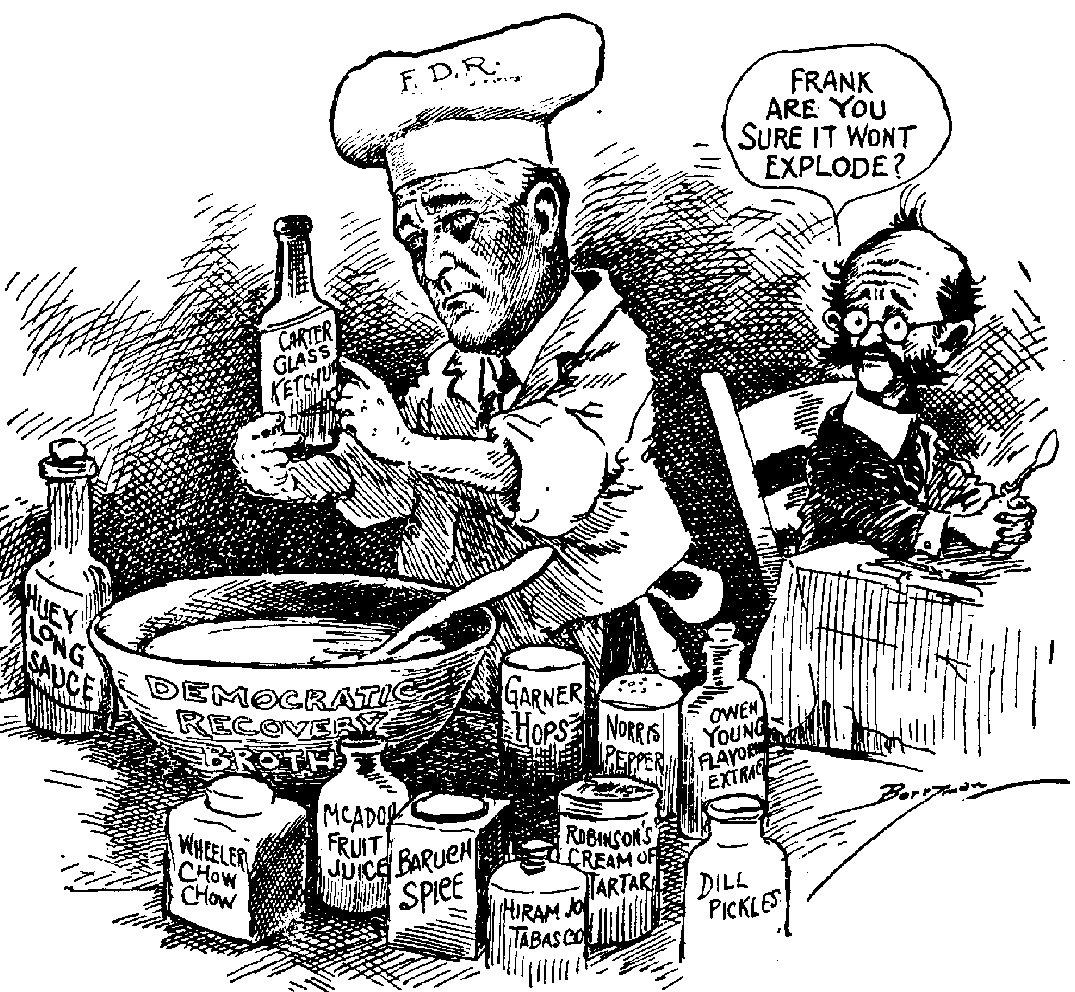
Roosevelt Baking Cartoon

Roosevelt usurped all the independence of the Fed and created a Washington monopoly to push his socialist agenda into place. We are hearing the same pitch of equality once again from Biden. The government is supposed to be separate from the Federal Reserve, but the president appoints the chair. The formerly independent central bank that was owned by the bankers to prevent the misuse of taxpayer funds is now under control by the banks only in theory; the reins of power are political.

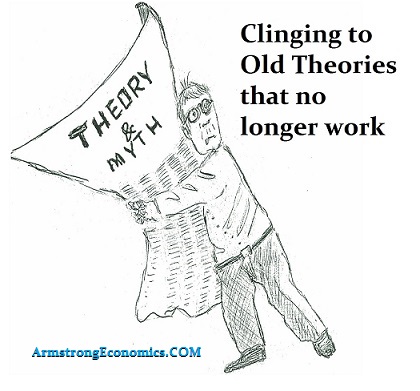
The Federal Reserve failed to produce inflation while engaging in QE between 2008 and 2019. Most analysts ignore that entirely. If the Fed issued $1 trillion and buys in US Treasuries, I hate to tell you, but it would have ZERO impact. Why? Because debt today is simply cash that pays interest. Once upon a time, you could not borrow against government debt. Thus, it was deemed non-inflationary as long as it could not be used as money. Today, you post bills as collateral to trade futures. The old theories no longer exist in this new, strange world we live in. Hence, all the QE was merely swapping the debt for cash.

Also, consider where the Fed purchases its debt and who purchases US debt. China, for example, is no longer buying US debt due to US-China government relations that the Fed has absolutely no control over. Then, say China sold its debt for cash. The dollar would go offshore, and the domestic money supply would NOT increase. There is a lot more to this game than the simplistic analysis that leads to brainwashing the financial community and investors.

OldTheories Theory Myth r

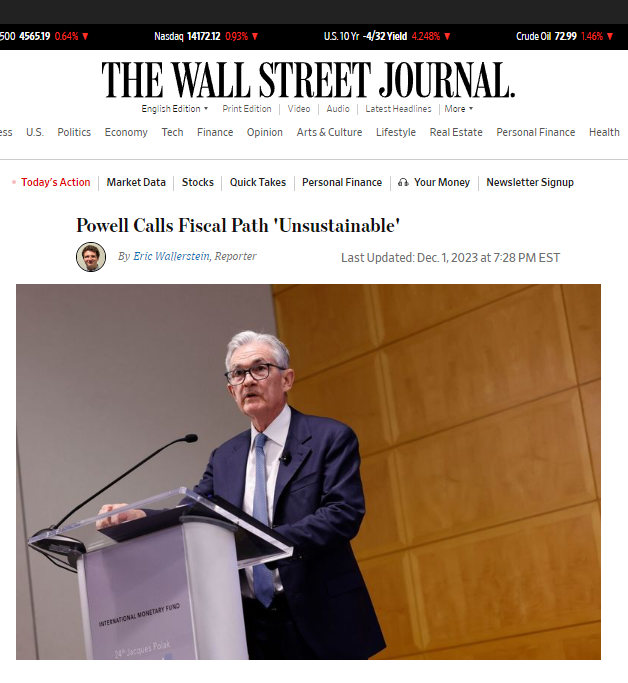
Jerome Powell has no power over fiscal spending or the deficit. Central banks everywhere are trapped. The central banks in Europe are in FAR worse shape right now. When Powell stood before Congress and subtly criticized the Biden Administration by calling their constant spending “unsustainable,” he was attempting to explain that the central bank could not overpower the government here. The central bank can create elastic money, and it will return to doing so. Private capital is fleeing government debt on a global level.

In the end, the globalist agenda is to default on all national debts, and they will no longer need to bail out the bankers. Welcome to the Decline & Fall of Western Civilization.

What Will the Fed do in 2024?


Posted originally on Jan 3, 2024 By Martin Armstrong 

Powell_Unsustainable_12 1 23

Everyone wants to know what the Federal Reserve will do in 2024. Of course, people want to believe that the Fed will slash interest rates in the New Year. The pundits cling to every word except when, at the start of the month of December, Powell boldly criticized the Biden Administration, saying that his outrageous spending is “unsustainable” and central banks do not criticize their governments. They certainly do not criticize each other. I have met with the boards of central banks worldwide because I understand their predicament. Unless you have been behind those closed doors, you will never comprehend the intricacies that are taking place.

Federal Reserve Bank

The Federal Open Market Committee (FOMC) held rates at the 5.25% to 5.5% range at their last meeting in December 2023. Additionally, the committee indicated the possibility of at least three rate cuts in 2024, as their favored gauges for inflation appear to be easing. The “dot plot,” which reflects individual members’ expectations, suggests the potential for four rate cuts in 2025 and three more in 2026, bringing the rate down to between 2% and 2.25%. Now, that is simply what the public has been led to believe.

The Fed’s last decision reflects a cautious approach to policy tightening, considering multiple factors unknown to the public before any further adjustments. The committee’s PUBLIC decision and future outlook are based on the evolving economic conditions in relation to inflation and the labor market.

The Federal Open Market Committee will meet in 2024 as follows:

  • Jan. 30-31
  • Mar. 19-20
  • Apr. 30 – May 1
  • Jun. 11-12
  • Jul. 30-31
  • Sept. 17-18
  • Nov. 6-7
  •  Dec.  17-18
2023 Year End Report

There are simply things I cannot publish on the public blog. I have posted articles on the Socrates private blog that explain the Fed’s direction for 2024 in further detail. Now, consider the dates above and consider what events align with them. Further details will be provided in the Year-End Report, which should be out by the end of this week.

Federal Reserve 1951 Accord

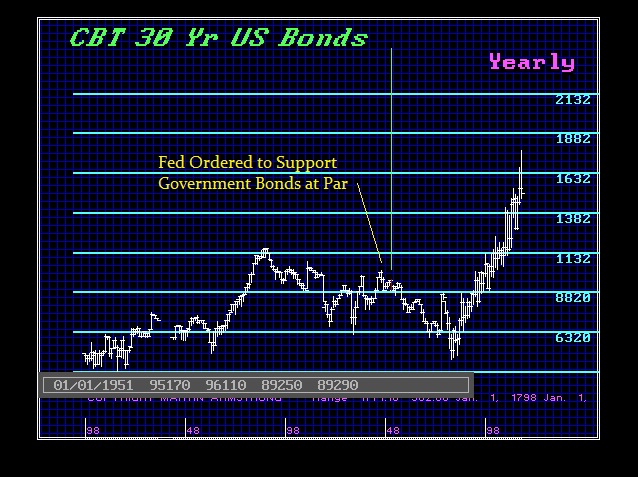
The Federal Reserve cannot criticize the federal government. The most significant issues facing our economy are simply out of the Fed’s hands: war, taxation, and government spending. Chairman Jerome Powell surprised everyone when he called current government spending “unsustainable.” While not a direct criticism, Powell issued a stark warning that aligns with our Revolution Cycle of 72 years. In 1951, the central bank defied the US government by refusing to purchase debt to prevent rate hikes amid the Korean War.

So, there is bad news for the perpetual bulls who insist rates must decline. There is a HUGE divergence unfolding between short and long-term rates. Institutions are buying up government debt without considering the potential that rates may not fall. Absolutely no one is factoring in the largest driver of inflation – WAR – nor are they factoring in the three main pillars of government debauchery (war, taxation, government spending) that the Fed cannot control.

Central Banks & Complexity


Posted originally on Dec 21, 2023 By Martin Armstrong 

Federal Reserve Text

QUESTION: Why do you seem to be the only analyst who understands central banking? My son got an internship at one of the major banks in New York during the summer. I won’t say which bank, but he asked a senior-level guy there about you and the interest rates, explaining I had been following you for years. He said you were the only one with international experience and who has ever advised multiple central banks. Is that the answer?

PK

ANSWER: Perhaps in part. But there is a massive gap between the experience of those of us who have dealt at high levels internationally and domestic analysts who always seem wrong calling the shots based on the headlines they read.

Understanding Currency capital flows

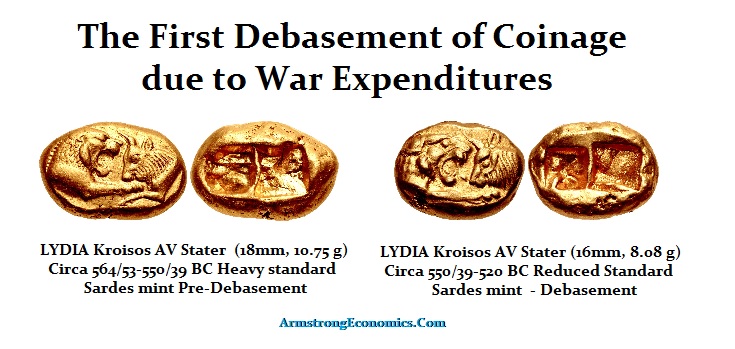
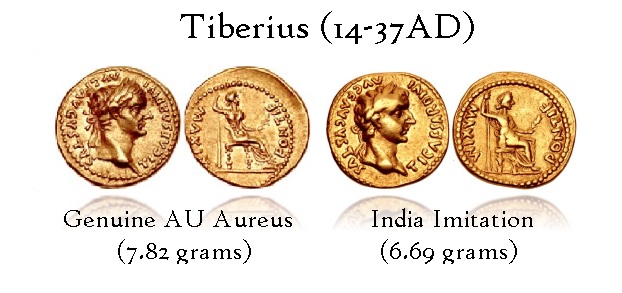
The number one problem is this fiction that the dollar is a fiat currency when, in fact, currency from the beginning of time has ALWAYS been valued NOT by its pure metal content but by who issued it. There has historically always been a premium to the currency of the dominant economy.

Lydia Debasement
Tiberius Aureus Genuine India Imitation

When Cyrus the Great conquered Lydia, he continued to strike coins of their design because they were highly regarded in international trade. We see the same with Roman coinage imitated in India when they, too, could have issued their own designs, but the Roman coinage carried a premium.

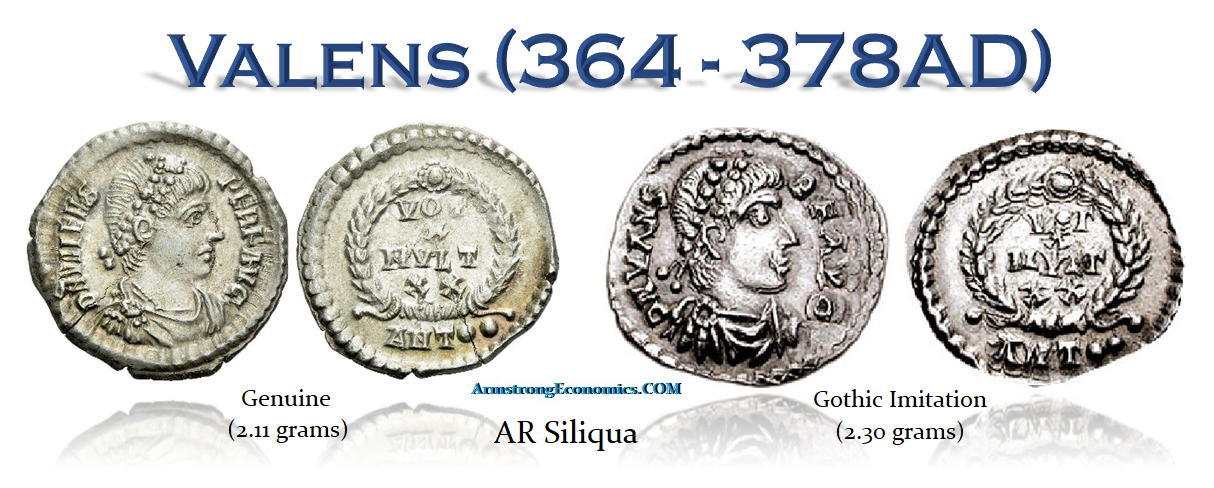
Valens AR Siliqua Genuine Gothic Imitation

Even when the Barbarians were on the Northern frontier of Rome, they too took silver and struck imitations of Roman coins because they were worth more than the metal content. In 260AD, when emperor Valerian the Persians captured me,  there was a Financial Panic of 260AD where bankers suddenly did not know if Roman coins would still be worth anything when there was no emperor.

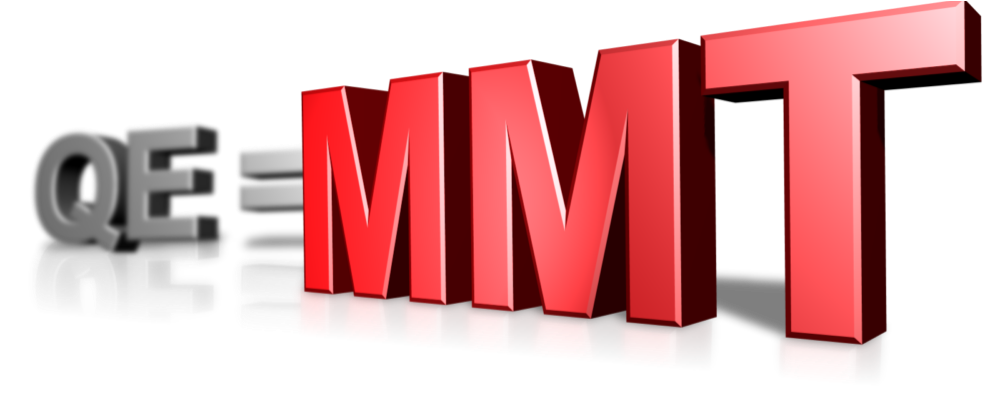
QE MMT
Rain Money QE

While everyone claimed hyperinflation would engulf the world because of Quantitative Easing (QE), I warned there would be no such inflation. Indeed, with QE, there was no inflation, and people then developed the Modern Monetary Theory, claiming that they could increase the money supply and it would not result in inflation.

The entire problem rests with the fact that these people not only did not understand the role of money but also failed to grasp international capital flows and how they play into the world economy. Because you can now buy US TBills and place them as collateral to trade with at a brokerage house, the debt is simply money that pays interest. BEFORE 1971, it was illegal to borrow against government bonds. For you see, if you could borrow against the bonds, that meant the bonds were part of the REAL money supply.

Once debt became cash that paid interest, that changed economics forever. I have said over and over again the Fed is NOT the problem, and it can not stop inflation with interest rates. The REAL money supply if the national debt, so if the Fed buys-in 30-year bonds and creates cash to do so, it is NOT increasing the money supply; it is increasing the liquidity – that is all. Swapping cash for bonds does not change the balance sheet. If you buy a house for $100,000 and pay cash, then you have merely converted your cash into an asset.

Now, it all depends upon the buyer. If I have a building and sell it to a fellow American for $10 million, it does NOT alter the domestic money supply. However, if I sell it to Brit, he brings in cash to buy the property, and that DOES INCREASE the money supply BECAUSE he has imported $10 million that did not previously exist within the domestic system.

This is a very complex topic that only those of us in international finance ever encountered. I helped the Japanese reduce their trade surplus for political reasons. I had them buy gold in New York, export it to London, and sell it there. The trade statistics only count dollars in and dollars out – not the product. Buying gold and exporting it reduced the trade deficit, and nobody understood anything.

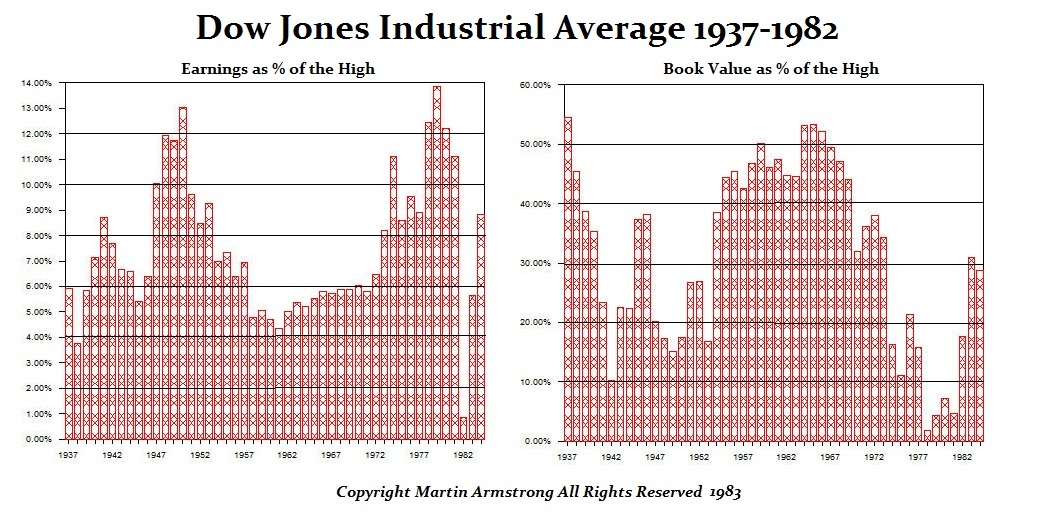
Dow Jones Earnings Book Value 1937 1982
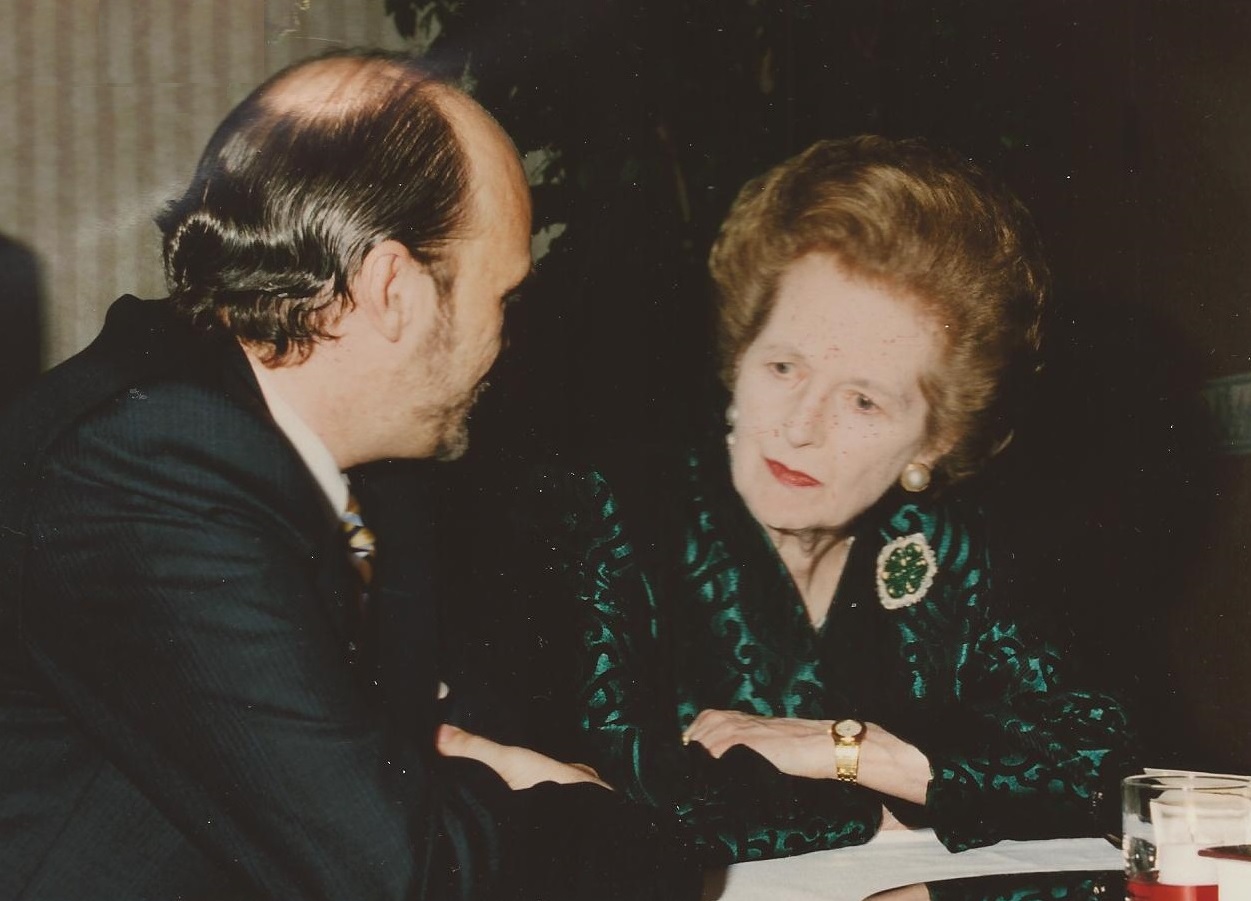
Martin Armstrong Margaret Thatcher

I handled a lot of the takeover boys during the 1980s when they made the move about Wall Street. They never understood what I was doing. The stocker was way undervalued when you could buy a company, sell its assets, and double your money. I took it to another level. I ran the model on currencies, and we would then buy like all the Courage Pubs in England but borrow in Swiss in a currency that would decline against the asset. We were making 20% on the currency moves besides the asset values. I was restructuring companies selling assets in one currency to buy assets in another to create balance hedge portfolios. That’s how I became friends with Maggie Thatcher. She wanted to know who this guy was sending companies into Britain.

Maggie was one of the few world leaders who grasped what I was doing. She kept Britain out of the EU because she understood what and how I was restructuring multinational companies. They staged a coup against here to take the pound into the Euro, then Soros attacked the overvalued pound in the ERM, and John Major had to reverse the entire mess, making Soros very rich in the process.

I will get around to doing my memoirs. I understand what I was doing set the stage for the world economy post-1971 Bretton Woods. That’s why Milton Friedman bothered to listen to my lecture about currencies in Chicago.

Yellen: Most Americans Feel Good About Their Own Economic Situation


Armstrong Economic Blog/Inflation Re-Posted Aug 17, 2023 by Martin Armstrong

How does Janet Yellen still have a job? She is completely out of touch and merely a mouthpiece for the political elite. Treasury Secretary Janet Yellen had the audacity to claim that most Americans are happy with their financial situation despite every bit of data indicating otherwise. “So, they seem to perceive the economy as a whole as doing less well than they are personally. But most Americans feel good about their own economic situation.”

The CNN reporter questioning Yellen mentioned a poll in question showing that 75% of Americans realize that the economy is in poor condition. Another 63% said they disapprove of how President Biden is addressing the economic crisis. The reporter asked Yellen if she could assure the people that prices would go down, and she said no. Inflation allegedly is declining based on government data but people are still paying significantly more for absolutely everything.

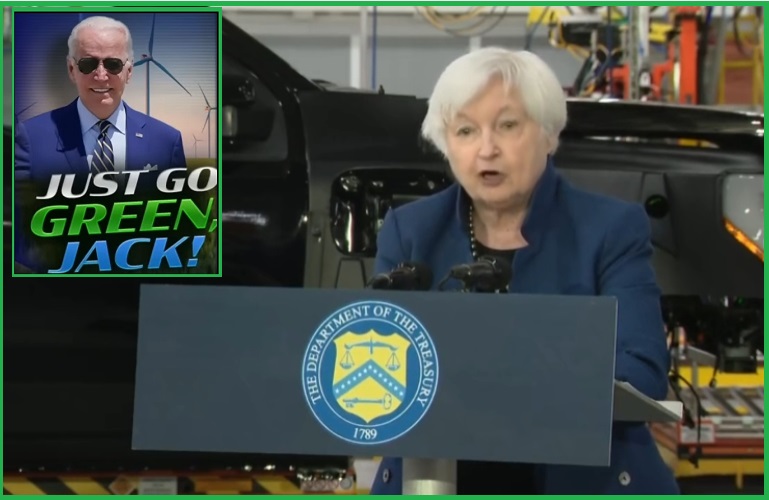
Yellen is completely in bed with the WEF and the BUILD BACK BETTER global elite. She admitted that the true reason behind the Inflation Reduction Act was to propel the climate change agenda. “The Inflation Reduction Act is, at its core, about turning the climate crisis into an economic opportunity,” Yellen admitted. She is either mentally impaired or dismissive of the true struggles Americans face. Since Biden is incapable of campaigning, Yellen is traveling around the states and touting the imaginary success of Bidenomics.

The most inflationary driver is war. When questioned, Yellen said it was simply Russia’s fault that the US was involved in this proxy war, and only the Russian economy is suffering. There are now questions on whether the white powdery substance found in the White House belongs to Yellen. She recently called the US debt downgrade “arbitrary” and disagrees with the data. She does not speak as an authority on economics, but rather, she speaks as if she were a puppet of the WEF implanted in government to spread economic-related propaganda.

They See It Coming – Fitch Joins S&P to Downgrade USA Credit Rating


Posted originally on the CTH on August 2, 2023 | Sundance 

Collapse is never a sudden occurrence; it is an outcome of gradual erosion over time. A weakening that takes place almost invisible to those who pass through the construct, until eventually, at an uneventful time in the mechanics of history, the process gives way.

Fitch has joined with the prior position of Standard & Poors to downgrade the USA credit rating. The weight of debt, in combination with reverberations from the continued hammering deep inside the political fundamental change operation, has triggered another flare.

In the bigger picture, this is a self-fulfilling prophecy driven by the latest focus on unsustainable economic policy, aka The Green New Deal. The efforts of the fiscal, monetary and economic policy are all aligned to shrink the U.S. economy, thereby creating the era of “sustainable energy” a possibility. Unfortunately, this is akin to a household intentionally shrinking their income while at the same time taking on credit card debt. The process itself is not sustainable.

(Reuters) – Rating agency Fitch on Tuesday downgraded the U.S. government’s top credit rating, a move that drew an angry response from the White House and surprised investors, coming despite the resolution of the debt ceiling crisis two months ago.

Traders’ immediate response was to embark on a safe-haven push out of stocks and into government bonds and the dollar.

Fitch downgraded the United States to AA+ from AAA, citing fiscal deterioration over the next three years and repeated down-the-wire debt ceiling negotiations that threaten the government’s ability to pay its bills.

[…] “In Fitch’s view, there has been a steady deterioration in standards of governance over the last 20 years, including on fiscal and debt matters, notwithstanding the June bipartisan agreement to suspend the debt limit until January 2025,” the rating agency said in a statement.

U.S. Treasury Secretary Janet Yellen disagreed with Fitch’s downgrade, in a statement that called it “arbitrary and based on outdated data.”

[…] In a previous debt ceiling crisis in 2011, Standard & Poor’s cut the top “AAA” rating by one notch a few days after a debt ceiling deal, citing political polarization and insufficient steps to right the nation’s fiscal outlook. Its rating is still “AA-plus” – its second highest.

After that downgrade, U.S. stocks tumbled and the impact of the rating cut was felt across global stock markets, which were in the throes of the euro zone financial meltdown.

In May, Fitch had placed its “AAA” rating of U.S. sovereign debt on watch for a possible downgrade, citing downside risks, including political brinkmanship and a growing debt burden. (read More)

What do Barack Obama and Joe Biden have in common?  They were both in office, executing an identical economic, fiscal and monetary policy, when the USA credit was downgraded.

Replay – President Trump MAGA Speech, Farmers for Trump – Council Bluffs, Iowa (Full Video)


Posted originally on the CTH on July 7, 2023 | Sundance

Earlier today President Trump kicked off a new coalition of Farmers for Trump in Council Bluffs, Iowa

While much of the first segment of the speech covers topics of significant importance to farming and agriculture, President Trump also expanded his remarks to cover current political events. WATCH:

FULL SPEECH: President Donald J. Trump Holds MAGA Rally in Council Bluffs, IA – 7/7/23

US Housing Prices Push Higher


Armstrong Economics Blog/Real Estate Re-Posted Jul 7, 2023 by Martin Armstrong

Fannie Mae admitted their forecast of declining home prices was incorrect. They initially projected that housing would fall by 1.2% in 2023, followed by 2.2% in 2024. Housing prices remain strong because this in an inventory crisis. There are 47% less available single-family houses on the market compared to the start of the COVID crisis. Homebuilders cannot keep up with demand, and the demand for investment-bought rentals is outpacing single-family sales.

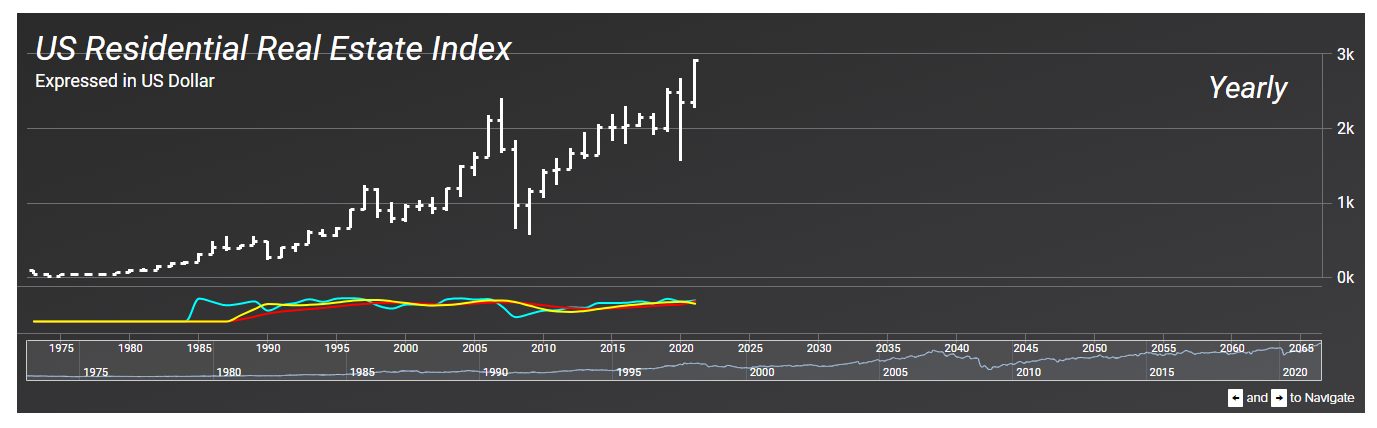
Our Residential Index elected a Yearly Bullish Reversal at the end of 2012. That confirmed the long-term trend had changed. However, urban condos and commercial properties were forming a divergence. I assumed that was being caused by the debt and rising taxes in cities. In that regard, I suppose I was only partially correct, for the rest had been the braindead response to COVID and failed QE policies. The failure of QE caused a collapse in confidence in the future. When people fear the future, they save. Increasing the money supply does nothing until the people decide to spend it.

Socrates also selected the precise target for the January 2021 directional change in US real estate. Our index began declining in January 2022, anticipating the first rate hike on March 17, 2022, by a quarter point. The claim that interest rate hikes imply that real estate will decline is very old school, and once more, it presumes everyone is buying on leverage. In 2021, cash sales represented 25% of existing home sales in the key markets, which were a level unmatched since 2016. Nationally, buyers paid cash for almost 15% of the homes in 2021 in markets that were booming from migration from other states.

Real estate is undergoing three separate trends. First, there has been mass evacuation from cities and high-taxed states thanks also to draconian COVID laws. Secondly, we have the flight of capital to flee banks, etc, which is part of just getting capital off the grid. Then thirdly, there has been a flight of international capital fleeing to the United States because of geopolitical instability in Europe.

This market has been LESS impacted by interest rate hikes than any previous booming market, all because of the migration from interstate within the US and the flood of European buyers looking for assets outside of Europe as the prospect of a global war increases. I have warned that real estate will decline in those states where people are fleeing. It has boomed in places they have been migrating to, such as Texas and Florida. Obviously, you can no longer make a blanket forecast in real estate.