Speech by Brad Jones, Assistant Governor (Financial System), at the Intersekt Conference in Melbourne – 'Financial Innovation and the Future of CBDC in Australia’: https://t.co/zuYTeslJhZpic.twitter.com/3ndAbgjepq
The Reserve Bank of Australia (RBA) is rapidly developing a wholesale central bank digital currency (CBDC)as developed nations move toward a cashless society. RBA Assistant Governor Brad Jones announced that the bank is launching Project Acacia next month, with the goal of developing a wholesale CBDC within the next three years.
The first form of this digital currency is not yet intended for retail, but extensive research has gone into determining how Australia can transition away from hard currency. Last year, the central bank partnered with the Digital Finance Cooperative Research Center (DFCRC) to determine the best methods to begin transitioning away from the Australian dollar, with reports last stating “a CBDC could be viewed more as an enabling complement to, rather than substitute for, private sector innovation.”The program studied corporate bond settlements by the Australian Bonds Exchange, tokenized FX settlements, as well as offline payments from ANZ bank. The pilot program was met with some difficulties, but the central bank is now committed to uncovering the proper method prior to deployment. “Some uncertainties related to the bespoke nature of the pilot CBDC itself. For instance, the pilot CBDC was issued as a contractual liability of the RBA rather than under a legislative framework, as would likely be the case if a decision was ever made to issue a CBDC in the future,” the report added.
Jones indicated that industry forums will begin in 2025 to discover methods for deploying both wholesale and retail methods. “We have benefited significantly from engagement with industry and the academic community on various CBDC issues over recent years, and we now seek to put more structure around this dialogue,” he said. “These forums would play a similar role to those the RBA has convened in recent years with economists from industry and academia, to hear different views on monetary policy issues.”
For now, wholesale CBDC and tokenized commercial bank deposits are the priority. Jones called recent developments “revolutionary,” as they very well will change our monetary system. About 98% of the global economy, or 134 countries, are exploring methods to launch CBDCs successfully. The Australian Government will be the final decision-maker on the matter, and rest assured all governments are eager to implement an effective digital currency as soon as possible as they believe they will see a large uptick in taxation as no “money” can find its way off the grid under this system. Some of my sources say that governments believe they can increase taxation by up to 35% under a cashless society. “If cash usage continues to decline, it has been suggested in some jurisdictions that a retail CBDC may be needed to preserve monetary sovereignty,” Jones further stated.
Posted originally on Sep 19, 2024 By Martin Armstrong
The latest Supplemental Poverty Measure (SPM) found that at 12.9% of American households currently rely on government assistance, up from 12.4% one year prior. The figure was at 11.8% in 2019 and has risen every year under Biden-Harris. The data only factors in US households and not the tens of millions of illegal aliens who also rely on US government handouts.
Around 42.8 million Americans were in poverty in 2023, up from pre-pandemic levels of 38.3 million. We saw poverty levels decreased during 2020 and 2021 when the US government was providing nearly everyone with some sort of assistance to combat wages lost from COVID lockdowns. Those measures simply contributed to inflation and made it harder for those in poverty to move on without government aid.
The SPM factors in tax credits, noncash benefits, social insurance, and market income minus nontax expenses. If only factoring in market income net of necessary expenses, the number of Americans in poverty swiftly rises to 77.8 million. Social insurance programs are now factored into these resources so the data has declined by 28 million, and the addition of SNAP and noncash benefits reduced the figure by another 6.6 million. This certainly does not mean there are less impoverished people living in the wealthiest nation in the world.
Data can be manipulated easily to portray a strong economy. Simply put, more Americans have fallen into economic decline in recent years under Bidenomics. The data would be unbelievable if they actually took into account the migrants who are also living on government aid, and receiving more in aid than Americans citizens who paid into the system.
Posted originally on Sep 18, 2024 By Martin Armstrong |
COMMENT: Mr. Armstrong, I’m blown away by your computer. How did it know about July and September of this year, which you told us about long ago!? We got assassination attempt and cyber attack in July. We got an assassination attempt in September. AND you said Trump Media was in danger week of Sept 16 specifically, giving you heart burn. Amazing!!!
-Scott
REPLY: Many people claim to have AI. ChapGPT has created a feverish bubble around AI without people understanding what it truly is or how to create it. Over 20,000 applications to the SEC claim they have AI models. I suppose they wrote them in three days, the time Kinzinger claims we can beat Russia.
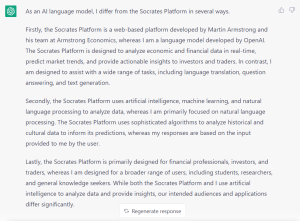
But honestly, most of what is out there is NOT AI—it is clever expert systems with no original analysis. When a reader asked ChatGPT what the difference was between it and Socrates, it was correctly explained.
"Socrates Platform uses artificial intelligence, machine learning, and natural language processing to analyze data,
whereas I am primarily focused on natural language processing."
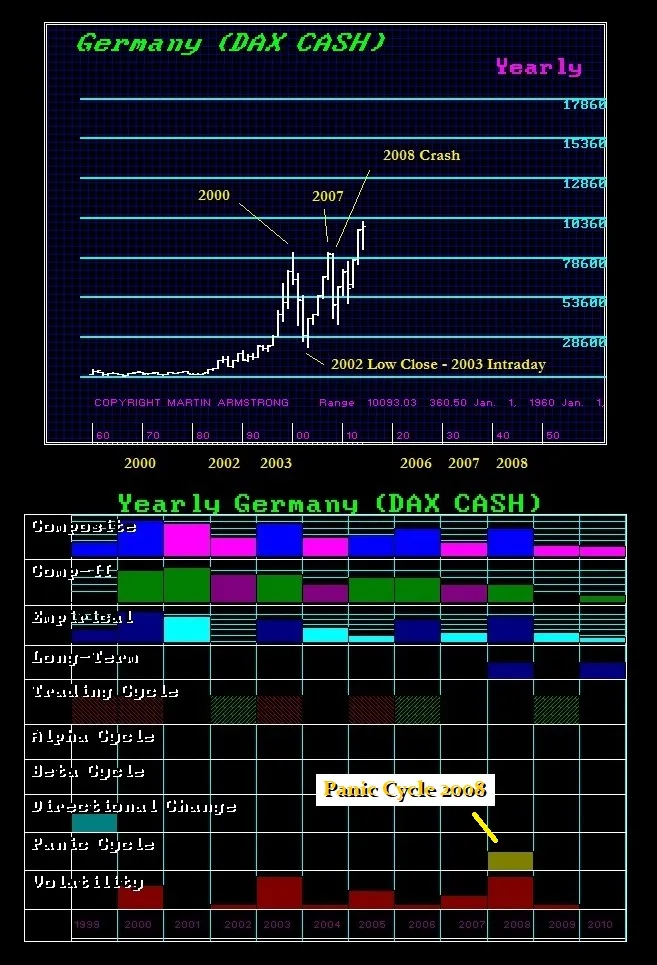
This is a forecast I pulled off of our old site from 1999 on the Wayback Machine, plotted with the chart showing the outcome. In 1999, Socrates forecast that there would be a panic in 2008 about 10 years in advance. When I wrote the code for Socrates, I put myself into the code. I did not use a neural net and hoped that something would come out all on its own by throwing in all the data. This idea of creating just Machine Learning and throwing in all the data, hoping it will suddenly become the most brilliant thing on the planet, is total nonsense. IBM’s Watson proved that fallacy.
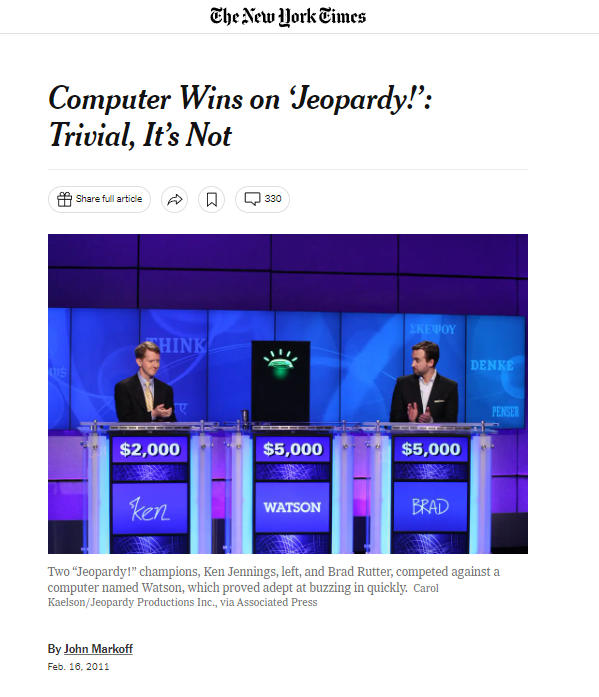
There is a lot of misguided hope surrounding Artificial Intelligence and Machine Learning. All we need to do is look objectively at IBM project WATSON. Just over a decade ago, artificial intelligence (AI) made one of its showier forays into the public’s consciousness when IBM’s Watson computer appeared on the American quiz show Jeopardy. Watson’s debut performance against two of the show’s most successful contestants was televised to a national viewership across three evenings. In the end, the machine triumphed comfortably.
This was NOT actually AI. It is what I call a look-up program. Even ChatGPT is not capable of actually achieving independent thought. They can understand and go fetch the answer faster than a human. The people I knew back then thought Watson would one day cure cancer. None of that was possible because they fooled themselves about AI.
IBM’s Watson could search the entire internet and gather every piece of information possible. That was the easy part. What IBM lacked was the expertise in research. How do you know that one piece of info is the key or more important than another? They lacked the ability to create an actual analysis capability. They hoped it would somehow acquire the skill to do original research all by itself.
Neural Nets were a great hope that somehow you throw in all this information, shake well, and out will magically appear the answer. The presumption was that our minds are just supercomputers, and they ignored perhaps the critical understanding of what makes one person brilliant at math and another a brilliant artist who can’t count beyond 1,000. They can go fetch and look up things and return with the answer faster than any human. But they are no capable of original thought.
Most of AI’s dangers are caused by its failure to comprehend what it is capable of doing—especially in trading. This all stems from the distorted idea that our brains are supercomputers and there is no God, for our consciousness is simply created by throwing in a bunch of data, shaking well, and out comes a person. Thus, the thrust to mimic the brain led to the creation of neural nets. But that effort also failed in actually creating original thought.
The San Francisco-based tech giant OpenAI has announced that a new AI model is capable of “reasoning” at the level of doctorate students. OpenAI has said its next model update “performs similarly to Ph.D. students on challenging benchmark tasks in physics, chemistry and biology.”The company continues to grapple with questions in Washington about the safety of AI. Meanwhile, some OpenAI competitors have appeared upset by their marketing hype ascribing human characteristics to technology. Look, this OpenAI Model does not help when they describe it as “thinking” when it is doing nothing of that sort. It is merely an AI system process that predicts in ways that are basic to classical computers and search engines. OpenAI is exploiting a false impression that technology systems are human, which appears to have come from movie plots like Terminator and Matrix. This is just a cheap trick that threatens the development of AI by raising this nonsense that it will come alive somehow. This is merely a marketing trick to fool people into believing that its ability is humanistic in solving issues.
When I wrote the code that made Socrates, I had international experience as a trader and programmer – that is a very rare combination. The number one problem is the person with experience has to relay that info to a coder who lacks that same know-how. This level of communication never works. It takes a coder with experience to figure out how to reach that end result, whereas the non-coder does not understand all the ways to reach a result. Coding is an art form. Two people can write a program to accomplish the same task, but they arrive at that differently in style.
Back in Stock Now – Sorry Has Been Sold Out for Months
I was named Economist of the Decade during the 1980s, Fund Manager of the Year in the Nineties, and FX Analyst of the Year in the 21st Century. A man cannot write a book to explain how it feels to give birth to a child. It takes experience!
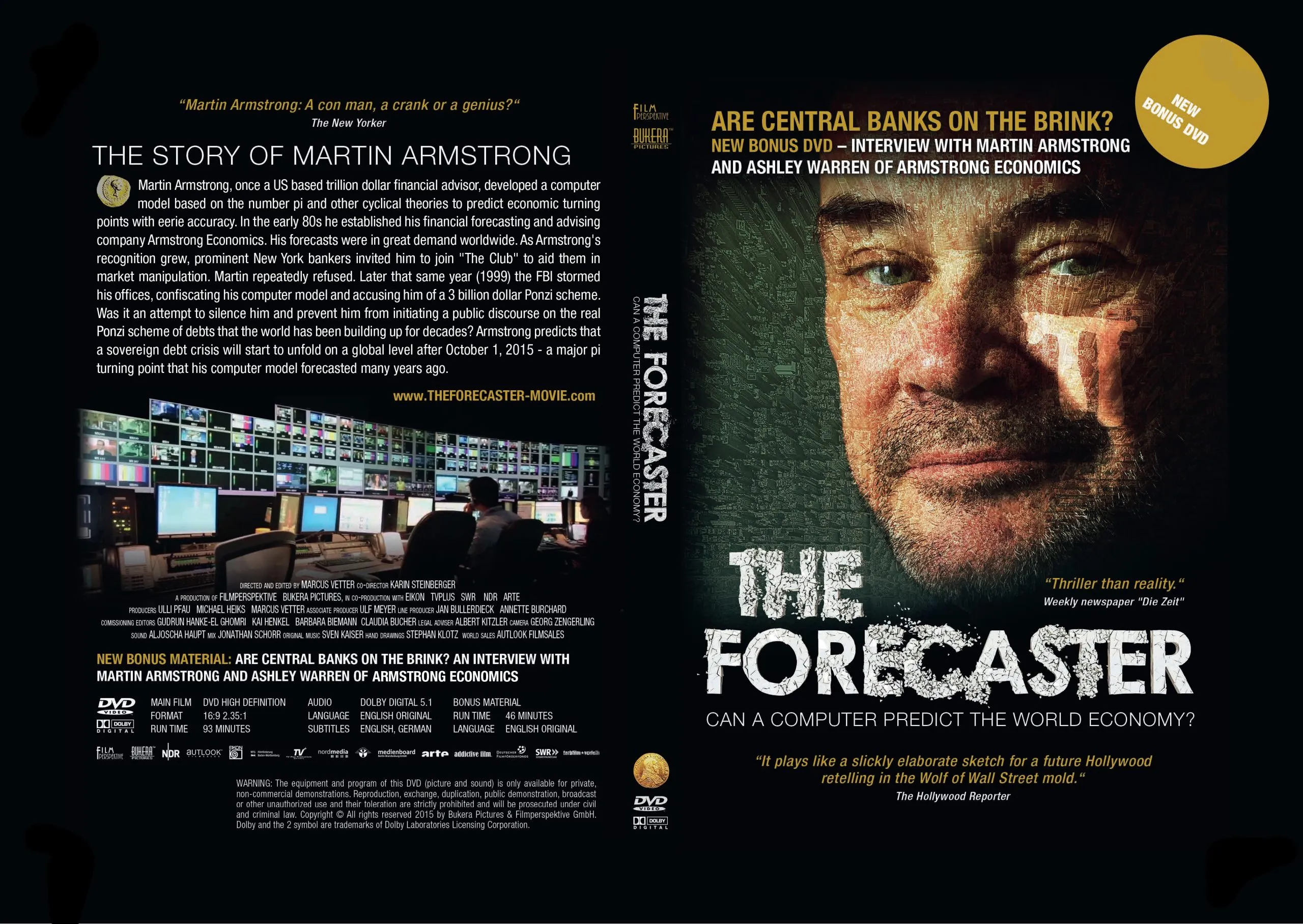
As the movie The Forecaster pointed out, I have traded against Soros and Goldman Sachs.
You have to be in the trading pit to understand even how to trade internationally. John Law traded on the Amsterdam Exchange and came up with the concept of supply vs. Demand. Thomas Greshamcame up with Bad money drive out Good due to hoarding. Both were on the exchange and witnessed how markets moved. You have to see things live to grasp how they work.
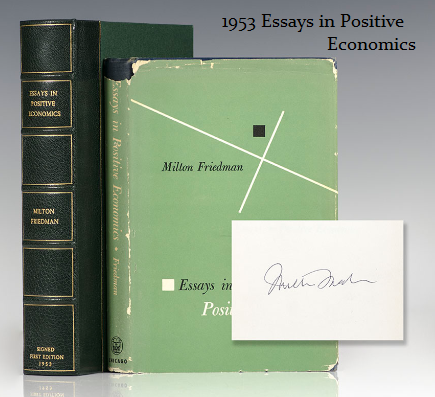
When Milton Friedman (1912–2006) came to listen to one of my lectures on who the world really functioned in the new world of floating exchange rates in Chicago, I was stunned. To me I was just a trader. Milton said it was best speech he ever heard, and said what I was doing was what he had just dreamed about.
Milton in 1953 in his Essays in Positive Economics, first proposed a floating exchange rate system that would put pressure on governments. Indeed, I ended up being dragged into governments around the world all because we forecasted currencies.
Only by entering the international arena of geopolitical economics and becoming one of the first international hedge fund managers could I see how the real world worked. This is the experience I had to code into Socrates. The first consideration one must make is country risk. You have to understand the politics of every country for that determines if you should even consider any possible investment. You then go down the list to approve or eliminate countries to consider. That is just the first step.
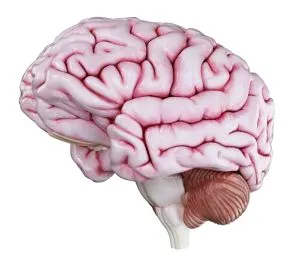
Most AI follows the idea that, somehow, the computer will figure everything out. They do not understand how the brain functions, nor do they consider what consciousness is. For centuries, many have tried to define it, yet have failed. Neural Nets are based on the idea that neurons interact. Yet, there is something much more. We have a pattern recognition-based system that is far more complex than simply neurons.
For example, looking at this drawing some see the old woman and other the young girl with the nose of the old woman forming her chin and the mouth of the old woman is the necklace of the your girl. We all do not see the same image at first glance. Our mind is a pattern recognition system that then will also fill in the gaps.
Here is a photo of a girl with a Trump T-Shirt. Your mind will fill in the gaps. Is she beautiful or homely? We will imagine what we want to see. The same will happen if we look at the clouds in the sky. Some will see a face, others will question your sanity. Our minds will see patterns and fill in the gaps.
We will also act in ANTICIPATION of the future. When Europe lowered rates to negative in 2014 to try to punish people for savings, they took their money out of the banks. The central bankers failed to comprehend that people will ONLY invest when they have confidence in the future and see a potential for profit. If they do not see the economy will even produce a 1% profit, they will not borrow even at 0.5%. This is why the stock market has NEVER peaked with the same level of interest rates twice in history.
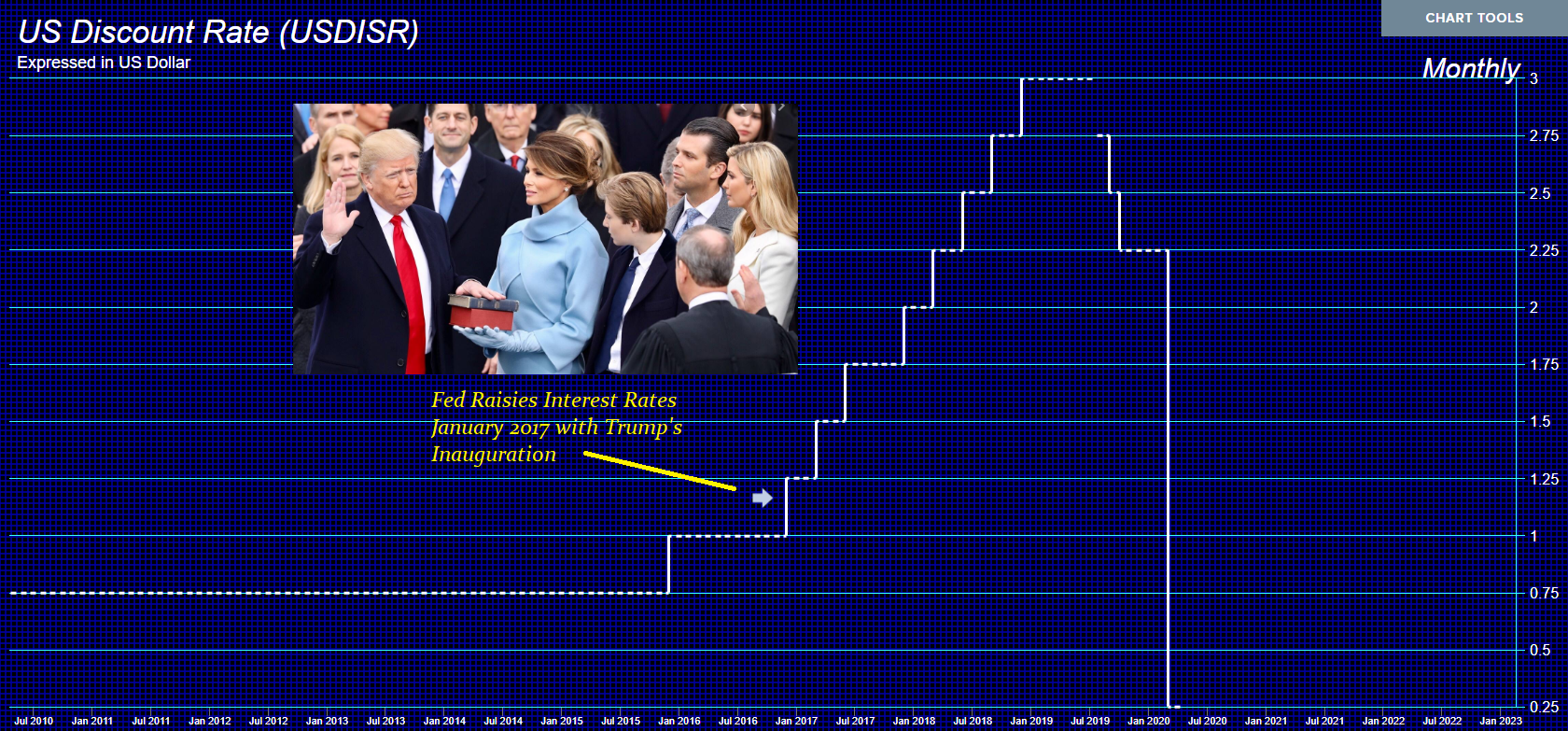
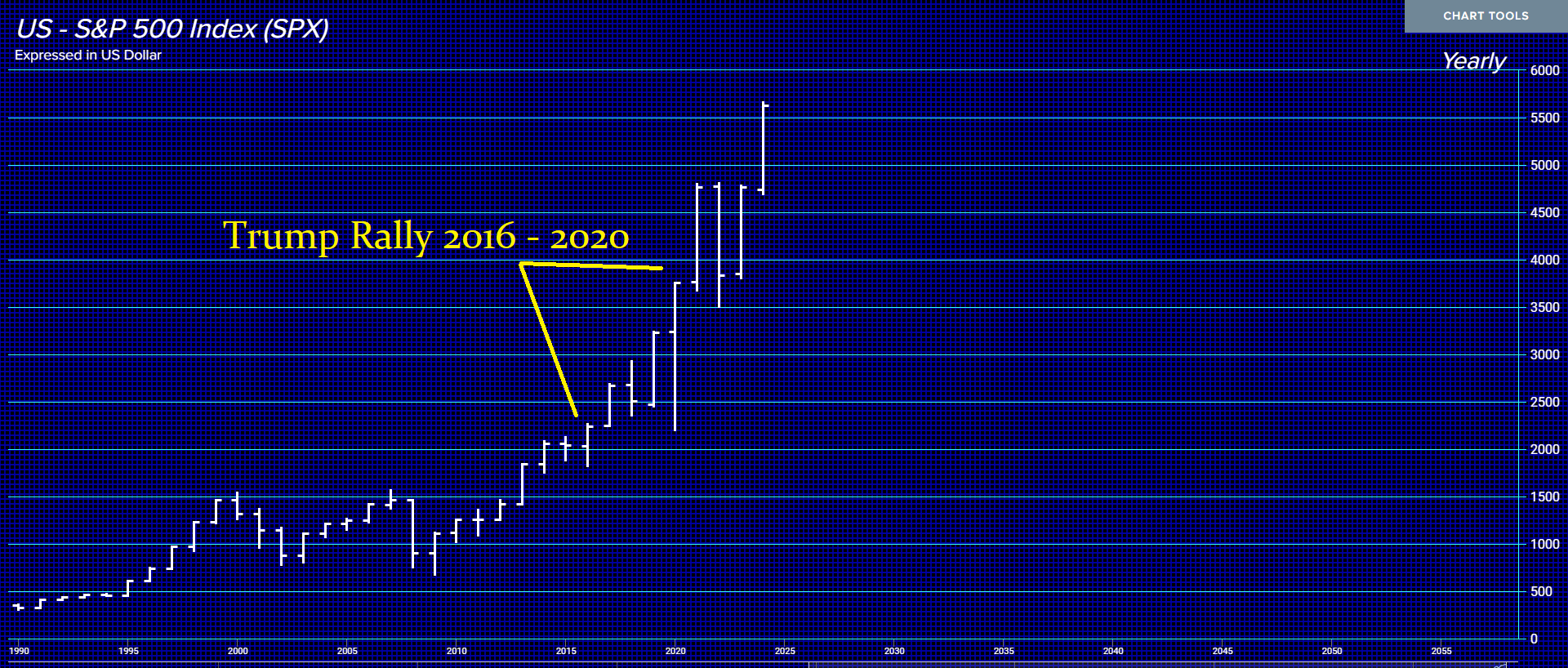
Interest rates rose throughout Trump’s presidency, yet the stock market took off, and they called it the Trump Rally. Yet, these analysts call for lower interest rates and when rates decline, that is the market of a bear market and recession – not a bull market.
I have two French bulldogs. Yet, their personalities are different. What makes that unfold? We can see that the same indescribable character emerges in humans and animals. They have dissected Albert Einstein’s brain to no avail. Something else exists, which nobody has been able to replicate nor even define its origins.
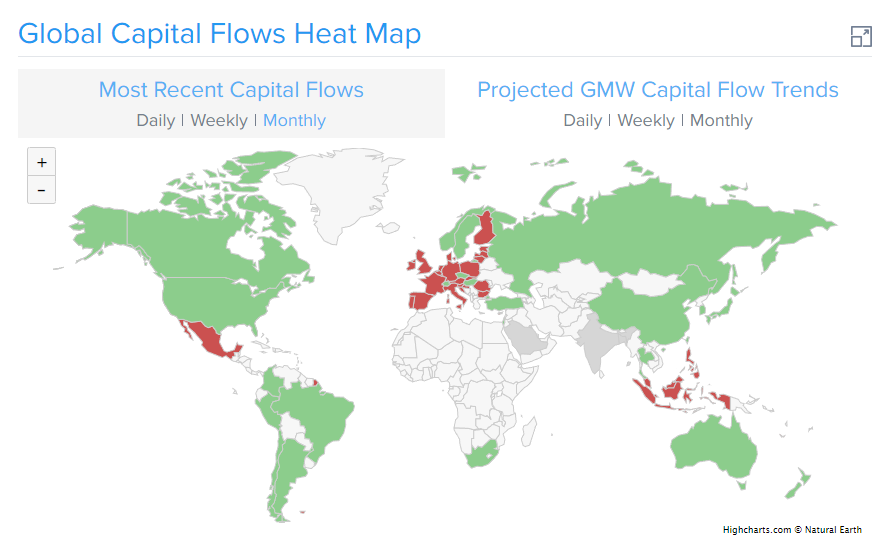
Socrates is far more advanced than anything out there because I coded my experience and taught it how to analyze. Machine learning is fine for determining who may or may not default on a mortgage. That is rudimentary one-dimensional. But when you step into the global economy, this is not some simply one-dimensional relationship you have to deal with. It is far more complex than that, with millions of patterns and correlations on a worldwide scale. You must track everything from taxes and laws to climate, disease, and economic trends on top of capital flow analysis.
To do that film, the Forecaster had to be insured by Llyod of London. Everything in that film had to be documented right down to the non-public command that I had to turn over the code to Socrates, which I refused. It was not my word against theirs; they put it in writing to a lawyer.
Socrates would no more be able to discover the cure for cancer than I would. You cannot code into a system experience you do not have. But the AI being marketed is not really making analytical decisions, nor are they “thinking” and dreaming like a human or anticipating the future. However, Socrates is focused on the world economy, not medicine. If we had another $1 billion and 50 top programmers, perhaps we could expand it into other frontiers. Socrates is gathering a knowledge base constructed upon its experience extending beyond just the programming. There are much deeper layers to this whole thing that will die with me.
Posted originally on Sep 17, 2024 by Martin Armstrong
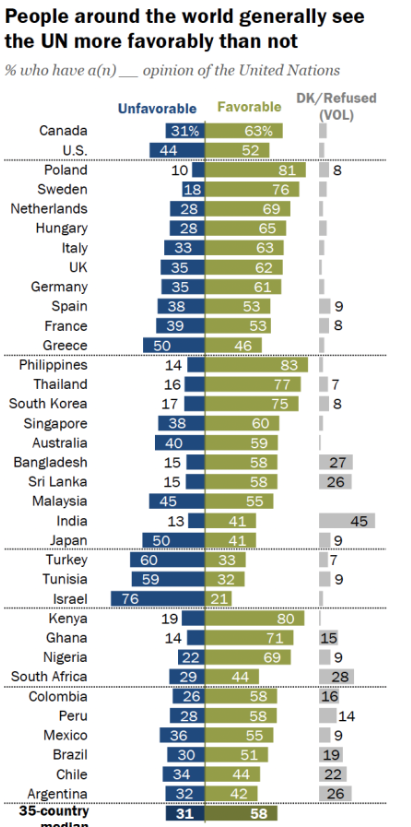
The majority has always accepted the United Nations as a world governing force. Sentiment may be changing according to a new Pew Research Center survey that found support for this global conglomerate waning across the globe.
Of the 35 countries surveyed, 58% still have positive sentiments about the organization, but 31% see it as a negative power. Unsurprisingly, nations in the Middle East, like Israel, no longer support the alliance, but we are seeing declining confidence everywhere. Israel has long held unfavorable views, with 72% holding unfavorable views of the UN; 82% of Jewish Israelis now harbor resentment for the UN compared to 53% of Arab Israelis. Support among Israelis has fallen by 21% in the past year, and of course, the reason goes without saying.
Yet, this phenomenon has expanded everywhere, with over half the people in Japan, Greece, Tunisia, and Turkey falling out of favor with the organization. Support for the United Nations fell by 10 points in the United Kingdom, with 62% of Brits seeing the organization favorably compared to 72% one year ago. Mexico, South Africa, and France all experienced a 9% drop in confidence, with Germany down by 8% and South Korea, America, and Australia all reporting a 5% drop. Only Hungary (15%) and Argentina (6%) expressed increasingly positive views.
Perhaps the people no longer see the United Nations as a neutral entity meant to play peacekeeper among nations. The world is waking up and realizing that this organization is rapidly growing in power and attempting to form a one-world government. The majority of those in the West have seen their leaders heed domestic policy in favor of international at the insistence of the United Nations, which partners with other global conglomerates like NATO to impose laws on citizens in nations where they simply have no jurisdiction.
The United Nations displayed the extent of their power during the COVID pandemic, and now are championing climate change initiatives and continually calling for governments to submit to their direction. This organization is pushing for the Great Reset with its Agenda 2030.
The International Monetary Foundation (IMF) has been spearheading the push to replace the sovereignty of individual states with a UN-backed global authority that will control everything from our digital identities to the direction nations take in war and trade. Then, they argue that nation-states should begin paying taxes to this entity over individual governments. According to our models, the United Nations, as we know it, will come to an end by 2031 following the old League of Nations.
Posted originally on Sep 13, 2024 by Martin Armstrong |
Those in Essex, England, may have recently seen facial recognition trucks driving through the streets discreetly compiling data. England has long employed CCT cameras to capture criminal activity, but police in Essex are now using advanced biometric data to track each and every citizen.
Essex is using Corsight AI biometric software for its civilian monitoring program. The company has expanded its services across the world. “Our mission is to radically enhance the world of facial recognition technologies while holding ourselves to the highest ethical standards in personal privacy protection,” the Israel-based company states on its website. They can embed their software within existing cameras and track down individuals based on their biometric data.
The ethics behind such measures present a challenge. Who has access to this wealth of data? Individual organizations in the UK must obtain permission and be transparent about their policies, but no such restrictions exist for the government. We have seen countless data breaches in recent years, with independent hacker groups infiltrating every supposedly secure data center. Civil liberties groups believe the government is infringing upon human rights by spying on their every move, but governments no longer permit individual freedoms.
The last significant law that was passed surrounding these measures was in 2018 when the UK put forth the Data Protection Act that details how personal data may be collected, processed, and protected by law. Naturally, the government claims that they are only collecting data for public safety and will not misuse the technology. The law remains vague and technology has certainly advanced since 2018.
Yet, the UK is calling Corsight AI a victory and citing clean-cut arrests made using the technology. “In Southend, there were also five positive alerts, which resulted in two arrests—one for harassment and one for sexual assault,” police stated. Police claim that Corsight AI is primarily monitoring known offenders, people on watchlists, and “protected vulnerable individuals at risk of harm.” The program claims it “almost instantly” deletes user data if they do not meet the aforementioned criteria.
“Our live facial recognition technology is used to locate people we want to speak to in connection with ongoing investigations and to manage people with court orders or conditions. Criminals cannot think they can walk around our communities without being caught,” claimed Assistant Chief Constable Andy Pritchard calls Essex Police.
All of this is based on the premise that the government is there to protect citizens rather than treating everyone like a potential criminal.
Other nations will soon adopt this technology that was once reserved for warzones. Israel is using the program in its hospitals to identify deceased victims from the war with Hamas. The Mall of America has employed the service to deter shoplifting but public surveillance measures in the US have been met with a pushback. Paris used the AI service to monitor the crowds at the Olympic games.
The government must tighten its grip on the public as we move into 2032. We have seen the government take tyrannical measures to restrict freedom of speech both in person and online. Now, governments want to track their citizens’ movements, and the public has no say in the matter.
, governments want to track their citizens’ movements, and the public has no say in the matter.
Posted originally on the CTH on September 10, 2024 | Sundance
For those who have followed my travels, research and granular reviews into the background motives of the multinationals, an article within Politico catches my attention and I hope it may be of value for an enlarged conversation.
At the beginning of my post-COVID economic research, I noted all of the proactive investments by the big multinationals would benefit from a diminishment “western” economic dominance.
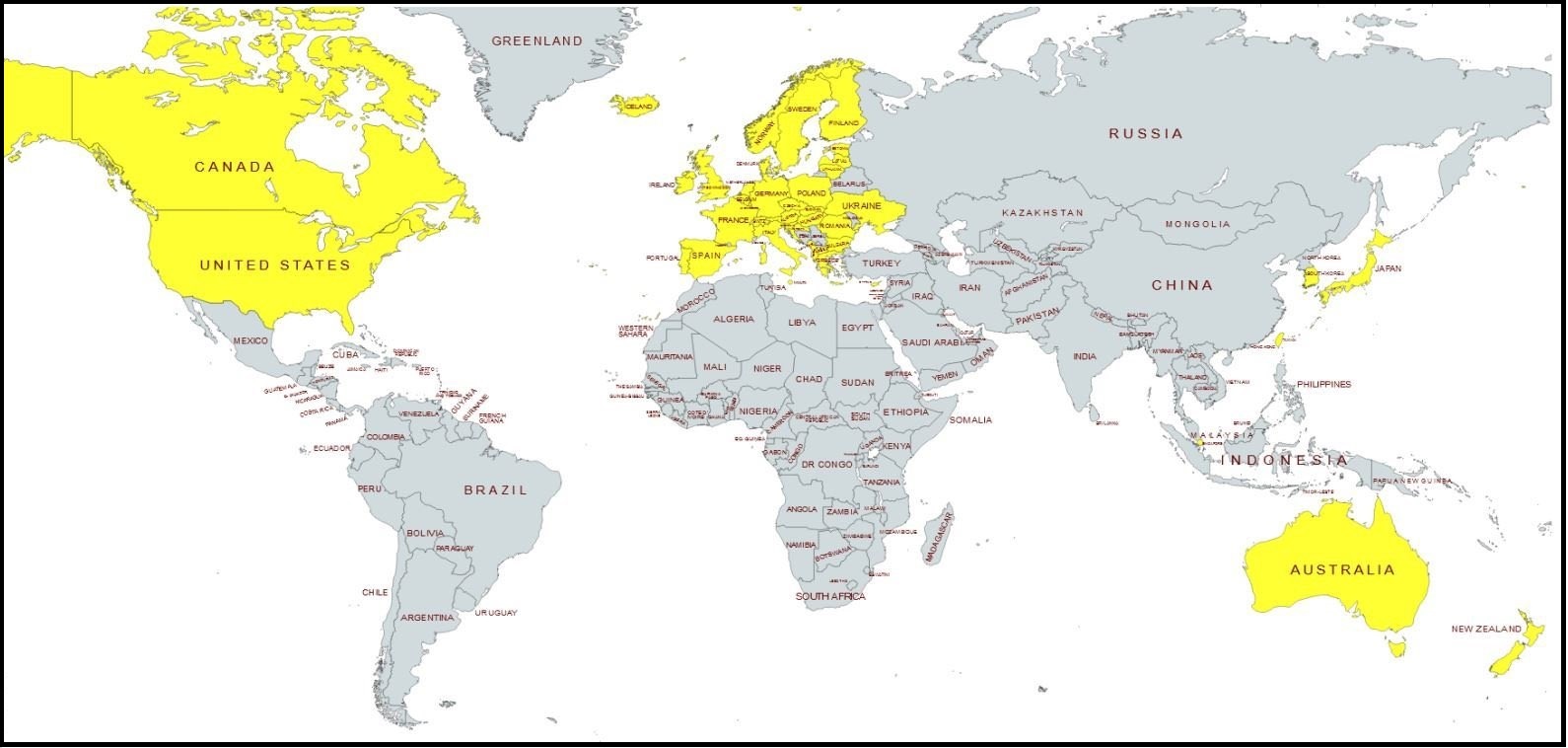
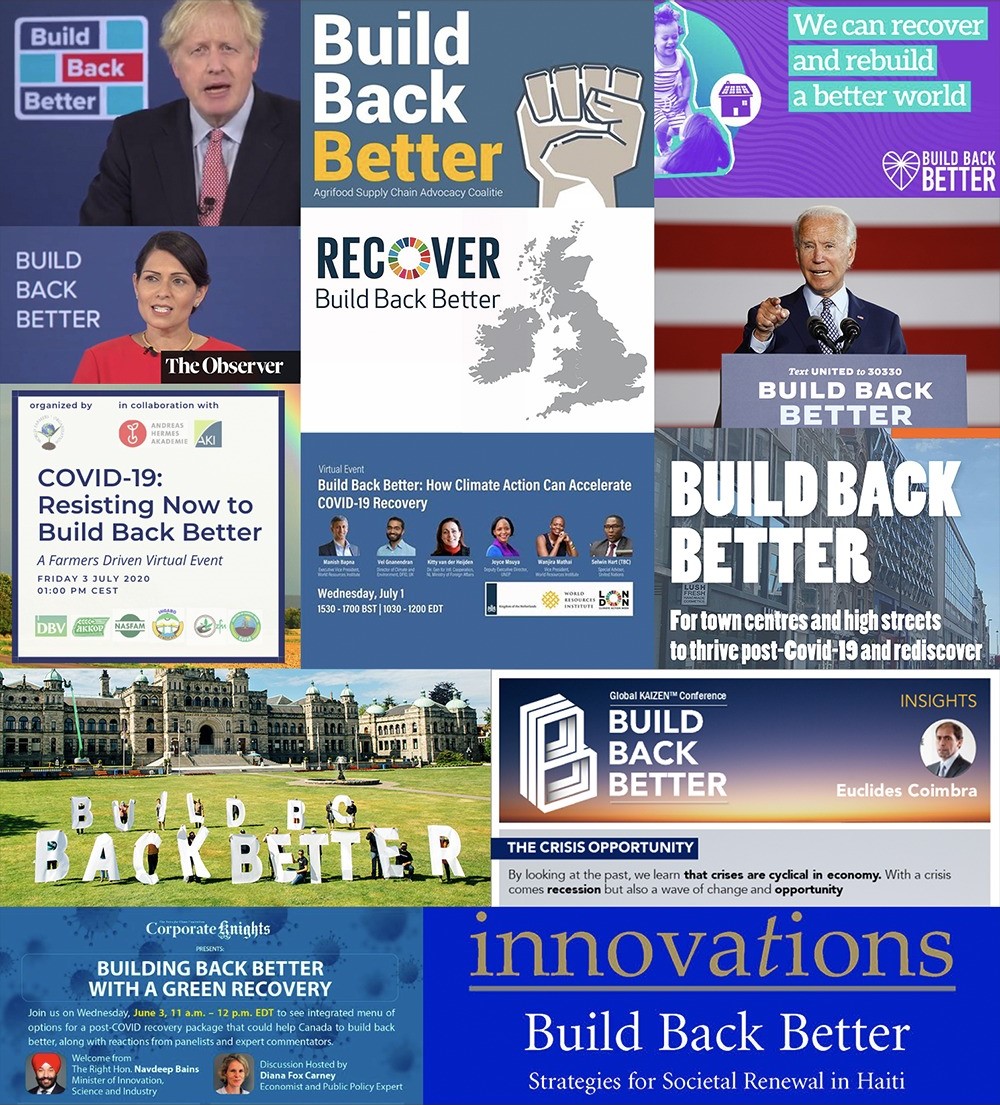
Specifically, I noted that if you look at the investment footprint -where the multinational corporations actually put all of that money they have been extracting from the Western consumers, you will see they have spent the past generation investing heavily in the “GREY Zone” within the map below. With that reality as the backdrop, would the multinationals lose or benefit from the “Build Back Better” agenda that pushed the YELLOW zone into a system of forced drops in the standards of living?
What you will note from the post-COVID “build back better” pushers, also not coincidentally the same interests who pushed the Russian sanction regime, is their investments in the grey zone act as offsets for the current collateral damage.
In essence the multinationals created a win/win. Their BBB policy within the yellow zone intentionally drives prices higher, while their investments were hedged creating low ‘total cost of goods’ (TCG) manufacturing systems outside the West. I previously said we should watch this supply chain carefully because from an economic standpoint we (nationalists) would suffer, the multinationals (globalists) would not.
Now, I want us to look at the first indicators of this dynamic – shared through the prism of the Politico article [excerpt below]:
POLITICO – […] Before the [Russia v Ukraine] war, the annual electricity bill was about €80,000. It’s nearly doubled since then, said managing director Christoph Keim, son of the company’s founder, a chemist who got his start after World War II with a company making disinfectants. Prices for customers rose, while profit margins shrank.
Eventually, costs receded. Relief came. But things didn’t return to their pre-war level. Instead, Keim entered a troubling new normal, where energy prices are double those of overseas rivals.
That reality is slowly eroding thousands of similar companies across Europe’s industrial heartland. Germany, Europe’s manufacturing powerhouse, has fallen into a recession expected to extend through the year’s end. Even global German stalwarts like Volkswagen, a name almost synonymous with the mighty Das Auto itself, are staring at unprecedented plant closures.
More broadly across the EU, output from key energy-intensive sectors like chemicals and steel is declining. Plants are shutting down. Industrial champions are announcing layoffs. (read more)
I hope everyone takes the time to read the full article. While the context is specifically focused on Europe, the BBB consequences apply to the USA also via Joe Biden and Kamama Harris energy policy.
In essence, it is a self-fulfilling prophecy; one you might note is exactly the preferred outcome of the Barack Obama worldview. The West spreads the wealth to the Grey zone, then the 3rd world (non west) starts to replace the economic strength of the West because they are not restrained by the insufferable policies of the climate control/energy policy group.
The West ends up in a position where we cannot compete not only on the issue of ‘cheap labor’, the historic problem, but also on the issue of cheap reliable and abundant energy production.
On the financial side, the citizens within the Western Build Back Better zone suffer through inflation and massive losses in stand of living, while the alternative areas gain the benefit of better competitive manufacturing prices. The multinationals simply shift the area from which they make money.
The “exfiltration of wealth” we have previously discussed, ends up as investment into manufacturing systems we cannot compete with.
The attendees of the World Economic Forum benefit because the multinationals who make up the WEF assembly have prepositioned their assets and investments. This is being done by design. None of the downsides to this energy policy affect the WEF bank accounts, the only people who suffer are the citizens forced to pay higher prices and fewer jobs.
This dynamic is not going to stop unless the West immediately reverses course on energy production.
In the biggest of big pictures, as the collective governments of the world are increasingly under the influence of the WEF corporatism model, now you can better understand why so many people are watching the 2024 election and hoping for President Trump to achieve victory.
This reality also underlines our catchphrase, “there are trillions at stake,” while simultaneously emphasizing why this globalist cabal wants to see him eliminated.
Please keep this geopolitical and economic shift in your psyche as you look at all of the machinations taking place within the world of USA politics. What would the WEF assembly do to retain their intention. Nothing should be considered “off the table” if you can draw a line from the visible action you can see toward the benefit they would assume.
Posted originally on Sep 11, 2024 by Martin Armstrong
I have been asked how the United States will divide. Will there be a civil war, like in the latest Alex Garland movie, Civil War, or will it be peaceful, like the fall of Russia? The country is so polarized it is hard to see it not separating. Dunkin Donuts decided they don’t want to advertise on Rumble because they say “the right-wing culture of the site is too polarizing.” If you are not LEFT, then I guess, you are not welcome to get a coffee and a donut at their stores. Comments like that are polarizing.
History repeats because human nature has never changed throughout the centuries. Garland’s movie did not seek to provide WHY the Civil War took place, just that states sought to secede as they did during the 1860s. Then, it was really over religious beliefs that were opposed to slavery and hung on the words of Jefferson that all men are created equal.
Throughout history, whenever governments seek to concentrate power into a federal-type state, this will inevitably lead to civil war. Every government with centralized control, like the USA and now the EU and Britain, will always attempt to impose a single doctrine on the entire community. The English Civil War was over religion – protestant vs. Catholic- a revolution against centralized control from the Vatican. The Roman Republic was formed in 509 BC against centralized control by a monarch, and within about 6 months, Athens overthrew its tyrants, giving birth to Democracy.
Even if we look at the ancient world as it developed, agriculture was wealth. The expansion of agriculture as villas produced more than they needed personally meant grain became money, and this influx of wealth meant that a class distinction emerged with the original leaders were often called Gamoroi, “land owners” – who found themselves competing as a new class of nouveaux riches which could afford the private armies of soldiers (hoplite) with armor (panoply). Throughout the Greek world, the economics of agriculture led to the same consequences that stoked political tensions. From around 800 BC, we find that the way to gain wealth was land, and this no doubt inspired Greeks to seek land and resources, much like the expansion of settlers in America and the constant push westward.
The Athenian historian Thucydides informs us that the first Greeks to settle on Sicily were from Chalcis on Euboea. In 734 BC, they founded Naxos on a peninsula near the Etna. In the following year, the famous city of Syracuse was founded by the Corinthian Archias. The political changes in Greece eventually led to the rise of colonization, especially during the 8th to 7th century BC. The move toward Greek colonies was essentially this same splitting of societies and the political tensions over centralized control. The Greek colonies were aristocratic in nature and developed based on the desire of the wealthy Greek agricultural nobility to maintain their way of life in an age of political change. Sicily was colonized by the Greeks, and cities like Syracuse and Naxos fit this pattern, which was spawned by political change.
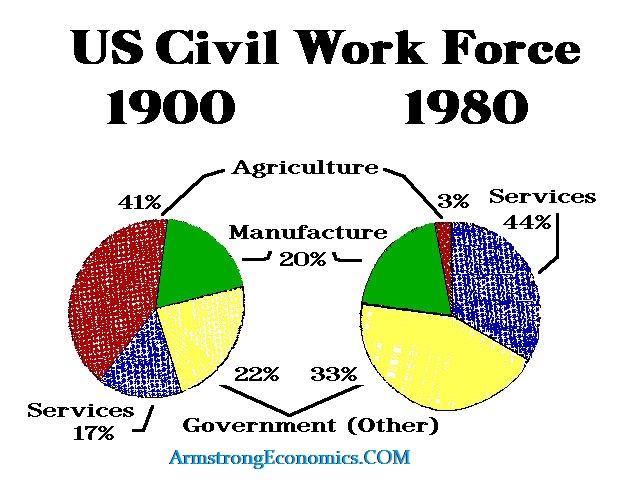
The real issue with the American Civil War was that the slaves were the workforce for the South. Slavery was different from serfdom. In the former, you were property that could be sold separately, whereas, under serfdom, you were attached to the land and transferred with the land to a new owner. Abolishing slavery may have sounded ethical, but there was a huge problem. About 70% of the civil workforce was in agriculture. Freeing the slaves was not what it would be today, where they could just go get a job at Starbucks. This was the pre-Industrial Revolution. Even by 1900, agriculture still represented 41% of the workforce. This is why many blacks remained where they were and were paid wages. There was no panorama of job opportunities pre-Industrial Revolution.
The South feared it would lose its workforce by freeing the slaves, thereby destroying its economy. The solution was obvious. Instead of demanding freedom that was perceived as all their labor would have fled, had someone with an understanding of economics merely looked at this with a dispassionate eye, it was clear that the slaves could have been granted their freedom and transitioned to a wage-based employment system. The slave owners who were cruel would have lost their employees. The lack of employment outside of agriculture would have ensured their labor force did not simply all migrate.
Today, we face this same problem of a dictatorial decree from a central federal government that risks creating a civil war over different issues. Those who attain power always seek to hold on to that power at all costs. Thus, the Concentration of political power into a federalized government historically leads to tyranny as those in power seek to expand their power and enact endless legislation that only accelerates the cycle of Revolution. Federalized governments should be confined to relations between national states. Local governments should retain exclusive jurisdiction over domestic policies that impact culture. This was the success of Rome.
Historically, centralized authority will always attempt to impose one rule upon the whole, irrespective of religion or custom. Zelensky has sought to impose dictatorial rule over the Donbas, outlawing the Russian language, outlawing Orthodox religion, and even dictating that Russians in Ukraine are not allowed to celebrate Orthodox Christmas and must adopt the Western tradition of December 25th. On August 25th, 2024, Pope Francis criticized Zelensk’sdecision to banthe Ukrainian Orthodox Church. Zelensky is an outright evil man who is deliberately trying to create World War III. Orthodox Christianity dates back to the time of Constantine during the 4th century AD. The Great Schism of 1054 is the break of communion between the Roman Catholic and Eastern Orthodox churches. Zelensky’s hatred of Russians is leading the world into World War III intentionally. He hopes to destroy Russia with American mercenary troops.
Zelensky is a modern-day example of why there should be no federalized power over any state’s domestic economy and culture. What Zelensky has done is so outrageous he should be dragged from power screaming as the Romans would often do. When Elagabalus (218-222AD) became emperor, he departed for Rome, taking with him the famous black stone (meteorite) that was claimed to have come from the heavens, so they built a temple to it in Emes, Syria. Elagabalus attempted to force the Romans to worship this stone.
His reign was notorious for religious fanaticism, cruelty, bloodshed, and excesses of every description, and there was general satisfaction when, on March 6th, 222, Elagabalus and his mother, Julia Soaemias, were murdered in the praetorian camp. Their bodies were dragged through the streets of Rome and thrown into the Tiber. There are many lessons from history that there are some things you should not do. The only way for Ukrainians to save their country is to get rid of Zelensky by revolution since he has suspended all elections during the war. He has made himself the ruthless dictator he claims Putin is all along.
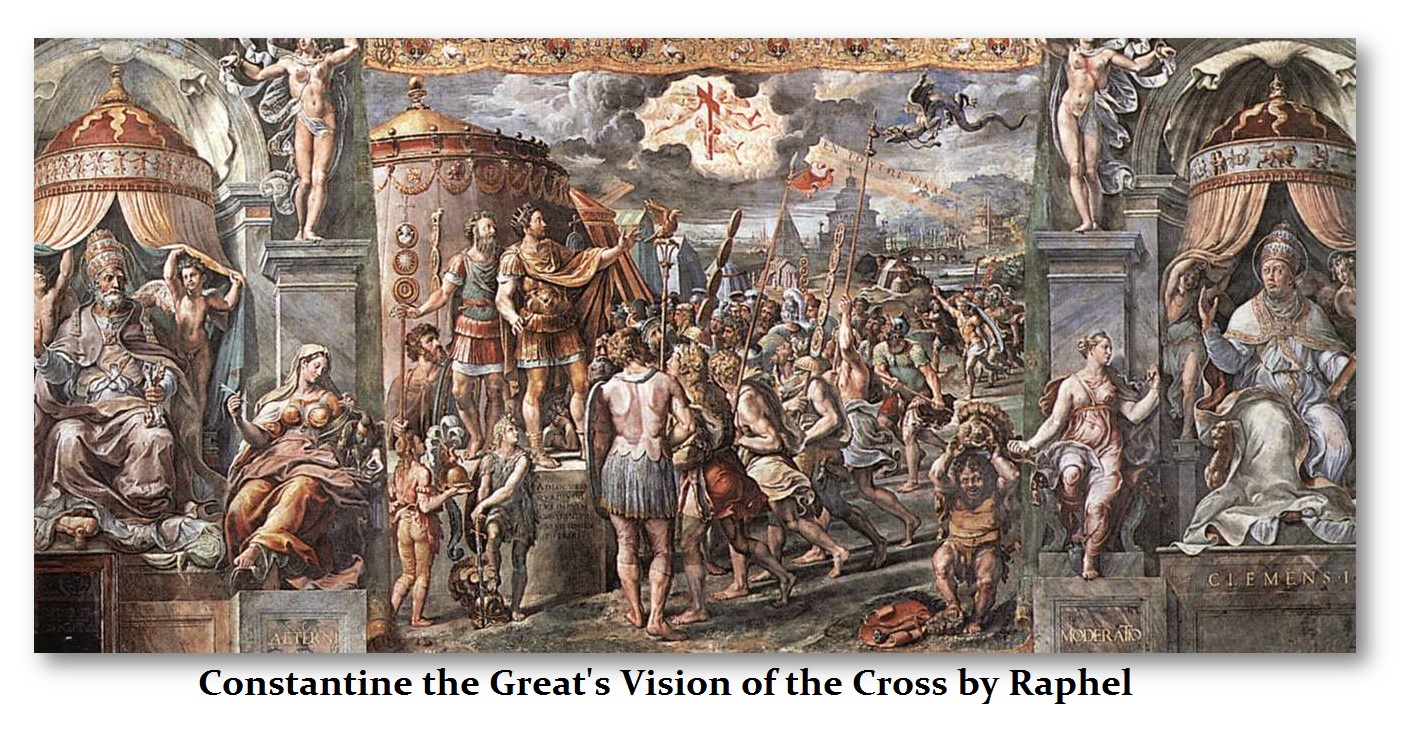
In 312 AD, two rival Roman generals fought for power in Rome. Constantine, whom Christians gave the title the Great, emerged victorious and built a new imperial metropolis in the economically more profitable East. This became Constantinople, which today is Istanbul. There has always been a question of authenticity regarding Constantine’s Christianity. This gold medallion portrays Constantine with the sun god Sol.
Constantine defeated Maxentius in the Battle of Milvian Bridge. Despite the biased historical accounts, the Battle of Milvian Bridge was less of a battle between Christianity and paganism as it was a battle for power and control. While Maxentius may have been a pagan, he did not persecute the Christians and, in fact, built the first Christian church in Rome. As for Constantine I himself, he would prove to be a man who rarely kept his word and often displayed ruthless tactics to gain sole domination of the Roman Empire.
The claimed vision of a cross in the sky was only a tactic because the majority of Maxentius’ troops were Christians. Because Constantine declared Christianity the state religion, he was exalted in history. However, he did not bother to get Baptized until he was on his deathbed. Constantine’s new capital of the Roman Empire by Constantine the Great, after whom it was named, and dedicated on May 11th, 330AD. His mother, Helena, was a devout Christian – but not her son.
His son, Constantine II, then became a main instigator in what has become known as the “palace massacre,” during which most family members born of his step-grandmother Theodora were murdered. Few were spared, and those were only due to their extremely young age, particularly the future Emperor Julian II. It was Julian II who rejected Christianity, for he saw it did not prevent Constantine II from slaughtering his family all for power.
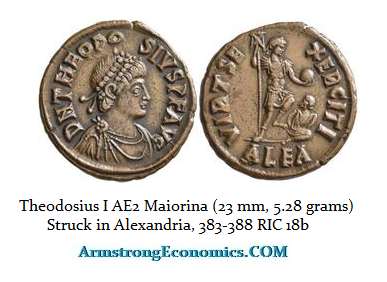
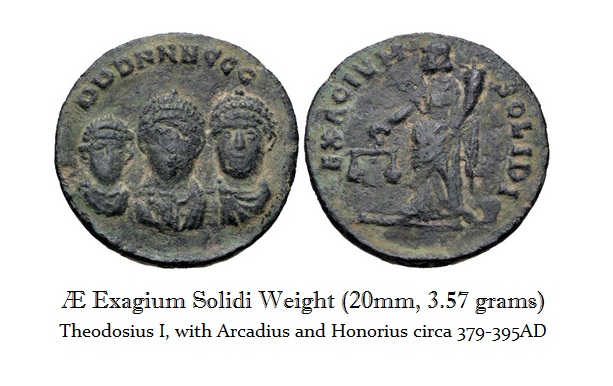
The Roman Empire split in two. Theodosius I (379-395AD) was the last emperor to rule the entire Empire. In 390 AD, Theodosius was excommunicated from the church for massacring 7,000 citizens in Thessalonica for civil disorder. He was ordered to do public penance, which he completed. In 391 AD, Theodosius forced Christianity, and all pagan temples were closed throughout the Empire.
Upon the death of Theodosius I, the empire was split between his two sons, with Arcadius taking the East and Honorius taking the West. On November 18th, 401AD, Honorius moved the capital from Rome to the Milan area in the city of Ravenna.
From the founding of Constantinople in 330AD, the rule of one emperor established by Constantine ended in just about two Pi Cycles with the death of Theodosius, and the Empire divided once again. Rome itself ceased to be the capital of the West in 401AD, and that conformed to a 72-year Revolutionary Cycle.
Posted originally on Sep 10, 2024 By Martin Armstrong
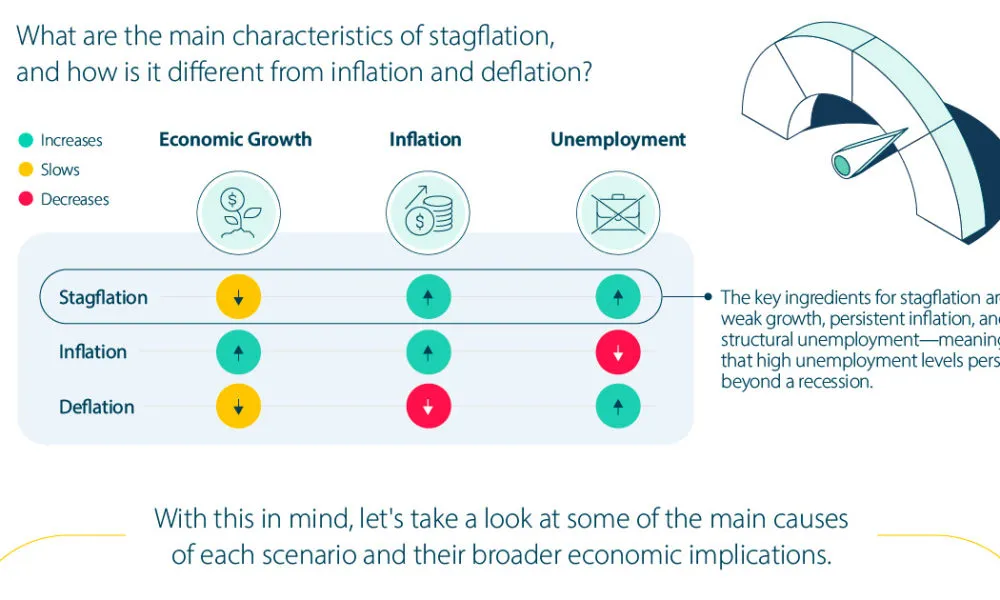
Nine of the 12 Federal Reserve districts reported a decline in economic activity in August, up five districts from the July Beige Book report. Our system has warned that we are entering a period of stagflation, where inflation remains high but GDP declines. Now, the Fed is reporting that two-thirds of the US economy is experiencing “flat or declining activity.”
The US economy advanced 3% during the last quarter, leading many to believe that the economy is recovering since Q2 posted a measly 1.4% advancement. Consumer spending, amounting to 70% of GDP, rose 2.9% last quarter as well, but people are spending on essentials. They fail to calculate TAXES into the equation when producing these reports and then dismiss essentials such as food and shelter as “volatile” aspects that somehow are not factored in the core figures.
Some people have a very hard time understanding that we are in a massive deflationary spiral; they think that rising prices simply means it is inflation and not deflation. Then, they mistake stagflation for deflation and wonder why people are spending more on less. They only see prices, not disposable income, and certainly not economic growth and unemployment.
The latest jobs report revealed that manufacturing is continuing to decline – shedding 24,000 jobs in July alone. On the other hand, the public sector grew by an additional 24,000, but those are 24,000 positions that will not contribute to GDP. Instead, growing government is simply growing the national debt but that figure no longer matters since it has long been unsustainable.
If you really look at it, objectively, interest rates always rise during boom periods, and they decline during recessions and depressions. We are looking at increased inflation into 2028 caused by shortages and war. But you’re looking at declining economic growth, so that ends up being more like the 1970s. The inflation rate will be higher than economic growth and we often see stagflation during times of war. We are beginning to see this come into play on the district level, but soon, it will be undeniable that the US has entered a period of contraction.
French authorities arrested Telegram CEO Pavel Durov last month for permitting encrypted messaging on his app that could not be accessed by governments. France claimed that Durov was permitting illegal activities to occur on Telegram. Public safety is always the ruse they employ to remove our freedoms. Unfortunately, Telegram has been forced to surrender and permit the European Union and other governments to access private chats.
The blockchain industry was built on the promise of decentralization, but ended up being concentrated in the hands of a few who began to abuse their power.
Telegram has removed language from its FAQ page that once stated “we do not process any requests” related to accessing private messages. The security and encryption is one of the primary reasons that people sought out Telegram. Are we to believe all 950 million users were criminals? No. People have been prohibited from speaking out against government everywhere and this was one of the final frontiers that permitted free speech.
❤️ Thanks everyone for your support and love!
Last month I got interviewed by police for 4 days after arriving in Paris. I was told I may be personally responsible for other people’s illegal use of Telegram, because the French authorities didn’t receive responses from Telegram.…
“Yes, we stand by our principles: our experience is shaped by our mission to protect our users in authoritarian regimes. But we’ve always been open to dialogue,” Durov posted on X. His arrest came suddenly and without notice. He noted that his organization has an official representative within the EU who is responsible for responding to all requests, but that did not matter as the authorities wanted to send a strong message. “Using laws from the pre-smartphone era to charge a CEO with crimes committed by third parties on the platform he manages is a simplistic approach. Building technology is hard enough as it is. No innovator will ever build new tools if they know they can be personally held responsible for potential abuse of those tools,” the CEO continued.
The government will not permit big tech to operate freely. Everyone is assumed guilty until proven innocent. They fear the people openly communicating and sharing ideas, especially revolutionary ones that question the status quo and current regimes. We should expect to see more restrictions as we move toward 2032 when governments will ultimately lose this battle against the people.
Posted originally on Sep 5, 2024 By Martin Armstrong
The Bank of Canada voted to cut rates by 25 bps to 4.25%, marking the third consecutive rate cut. Inflation has allegedly slowed to 2.5% as of July, and Governor Tiff Macklem said that was reason enough to drop rates to attract investment.
“If inflation continues to ease broadly in line with our July forecast, it is reasonable to expect further cuts in our policy rate,” Governor Tiff Macklem said in a prepared opening statement. Canada’s GDP grew at a faster rate than anticipated during Q2 after growing 2.1% vs the 1.8% forecast. Unemployment remains high at around 6.4%.
The bank acknowledges that these cuts will not impact the housing market. “With the share of CPI components growing above 3% now around its historical norm, there is little evidence of broad-based price pressures. But shelter price inflation is still too high. It remains the biggest contributor to overall inflation, despite some early signs of easing.”
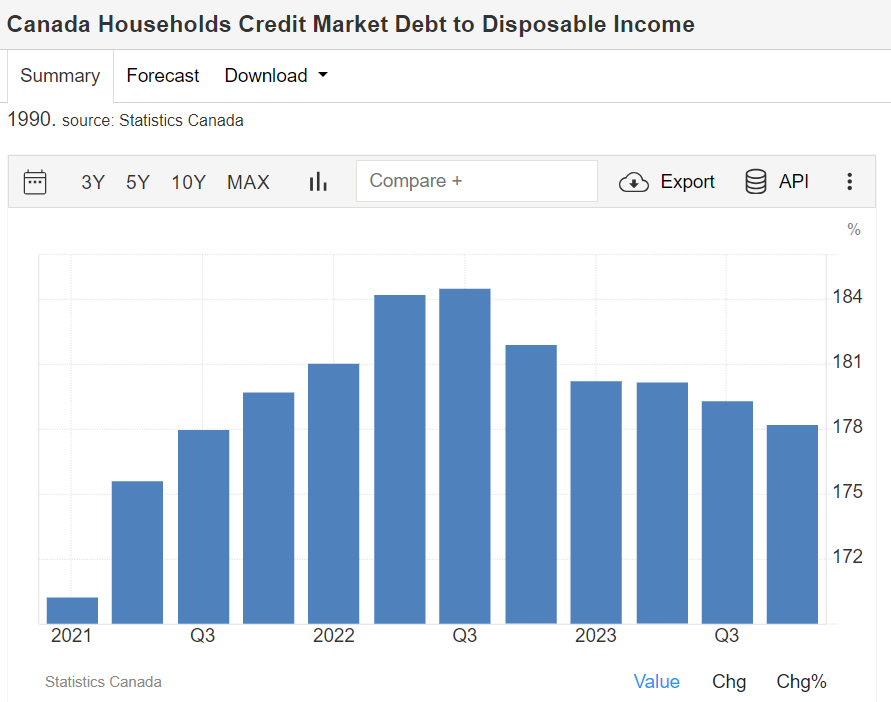
Will these rate cuts cause any major changes in Canada’s economy? Absolutely not. In 2016 under the Liberal government, the total private debt of the Canadian public exceeded the total national GDP for the first time in history after reaching 100.7%. Canada’s national debt spiked to $1.501 billion USD in March of 2024, a $1.423.3 billion USD increase from March 2023. Gross debt was 117.2% of GDP in 2021, above pre-pandemic levels at 105.6^ in 2019. Half of Canada’s debt comes from the federal government while the other half is from provinces and local governments who have been given the green light to continue spending.
Canada is deeply indebted and now ranks the third-highest nation in terms of household debt in the world. I reported in July how household debt exceeded 100% of GDP with no signs of slowing under the Trudeau Administration that recklessly spends with no end in sight. Switzerland and Australia are the only nations exceeding Canada’s debt levels. Government debt has SOARED in recent years, now exceeding C$1,139.98. This figure was only C$721.36 billion in 2020 before Trudeau used the pandemic as an excuse to bulk up social programs.
The population of Canada has exploded to the highest level in history thanks to open border policies. Canada, like all the other Build Back Better nations, has the funds to support every foreign interest and war while placing their citizens last. Rate cuts can do absolutely nothing when the government is borrowing against future generations.
I have created this site to help people have fun in the kitchen. I write about enjoying life both in and out of my kitchen. Life is short! Make the most of it and enjoy!
This is a library of News Events not reported by the Main Stream Media documenting & connecting the dots on How the Obama Marxist Liberal agenda is destroying America























 Centinel2012