Posted originally on Apr 15, 2025 by Martin Armstrong
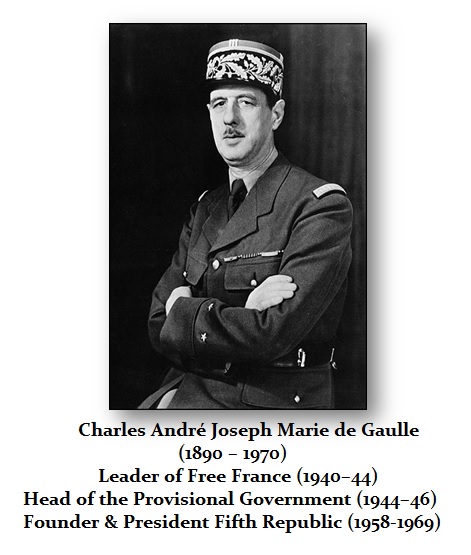
There is much speculation about Germany withdrawing its gold holdings from the United States. We have seen this occur in recent history. In the 1960s, French President Charles de Gaulle began challenging the U.S. dominance in the global monetary system. Gold typically flows where capital feels safe, but in this case, France repatriated its gold from the US due to political tensions.
In 1965, French President Charles de Gaulle withdrew his ministers from the Council of the EU, thereby constituting a de facto veto over all decisions, which became known as the “Empty Chair Crisis.” Several issues regarding European political integration led to the Empty Chair Crisis. There was a push at that time to create the quasi-federalization of Europe. De Gaulle believed that national governments should move towards integration. Still, he did not agree with the Commission’s attempt to create some new super-central state or a federalized Europe, extending powers of the EU beyond national borders as we have today, which Margaret Thatcher also opposed.
President Charles de Gaulle has proposed the Fouchet Plan was a plan back in 1961 to create a new grand design for Europe. Charles de Gaulle wanted to develop a three-power directorate, consisting of France, Britain and the United States. The idea was to form a new ‘Union of States’, as an alternative to the European Communities (EC). De Gaulle feared a loss of French national influence in the EC as there was a drive to federalize Europe back then.
After the failure of the Fouchet Plan and De Gaulle’s veto of the United Kingdom’s application for EC membership, the Commission attempted to move towards integration by proposing an idea that would combine the Common Agricultural Policy (CAP), the European Parliament, and Commission. De Gaulle supported the creation of the CAP and favored its enactment. However, he disagreed with the Parliament’s new role, the Commission’s strength, the shift towards federalization and a central state, and the budget proposals for financing the CAP. De Gaulle made it a condition that majority voting with a right to veto must exist if France was to participate in the EC. When de Gaulle was denied a more intergovernmental Commission or voting and veto rights, the French representative left the Council of Ministers thereby creating the Empty Chair Crisis.
The Luxembourg Accord was an agreement reached in January 1966 to resolve the “Empty Chair Crisis,” which had caused a stalemate within the European Economic Community. Then on June 21, 1966, de Gaulle withdrew France in a shocking move, taking its troops from the North Atlantic Treaty Organization (NATO). This decision, led by French president Charles de Gaulle, complicated relations between the U.S. and Europe amidst clashing American and Communist spheres of influence. Though France remained politically in NATO, its actions cast doubt on the organization’s future as a counter to Soviet military power and control back then.
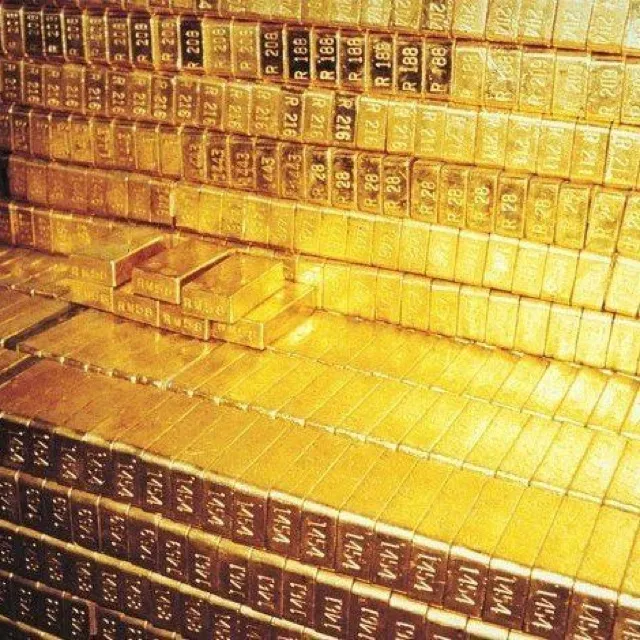
From 1963 to 1966, France secretly implemented Operation Vide-Gousset to repatriate 3,313 tons of gold reserves from the Bank of England and the New York Federal Reserve. It took over 44 boat trips and 129 flights to export the gold back to the Banque de France. Since France converted its dollar holdings into gold, the French made out well when the dollar fell during the Bretton Woods period and lost 96% of its value against gold. France then withdrew from the London Gold Pool in 1966 after recovering its gold holdings to force the US to endure heavier losses.
France’s actions caused a gold run with nations eagerly reducing their holdings at the New York Fed. West Germany reclaimed 1,200 tons of gold. Switzerland increased gold purchases from both the US and UK, but did so more discreetly than France to avoid political upheaval. By 1971, before the gold window closed, the United Kingdom requested $3 billion in gold conversions from the US. This may have been the final move that pushed Nixon to act. The Netherlands and Belgium also began exporting gold holdings from the US at this time.
US gold stock fell from $22.7 billion in 1950 to $12 billion by 1971. On August 15, 1971, President Nixon closed the gold window, ending the convertibility of the dollar into gold. The 1971 closing of the gold window by Nixon cut the link to gold, ending Bretton Woods.
“The speculators have been waging an all-out war on the American dollar,” Nixon declared, and to “protect the dollar from the attacks of the international money speculators” would take “bold action.”
“I have directed [Treasury] Secretary Connolly to suspend temporarily the convertibility of the dollar into gold.”
France’s actions were a catalyst to the inevitable decision to close the gold window, but not the sole cause. Yet, as we are seeing today, the primary reason that nations would like to withdraw their holdings comes down to politics. Charles de Gaulle said that the dollar was “monumentally over-privileged” and moved to hurt the USD. The incoming German government is now looking to withdraw their holdings from the US solely due to their distaste for America.
Posted originally on Apr 14, 2025 by Martin Armstrong
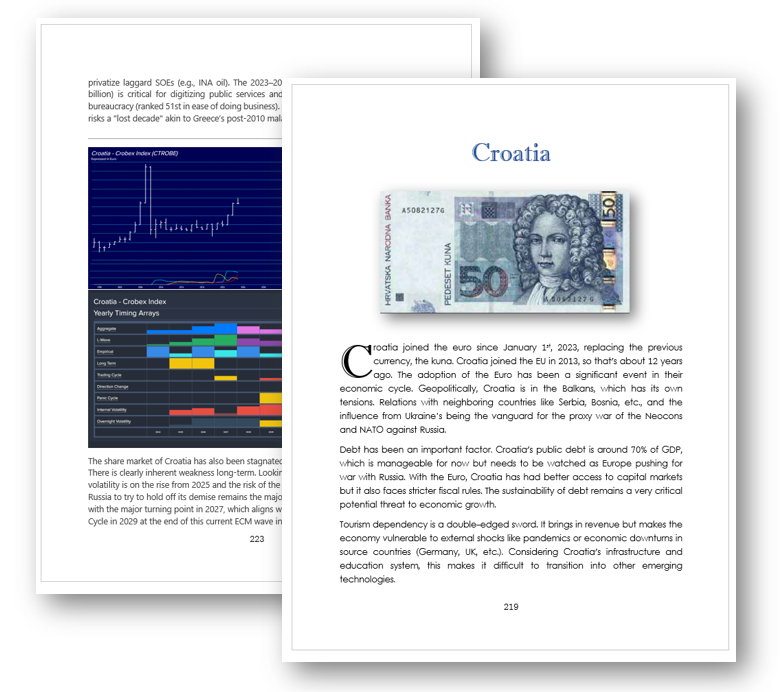
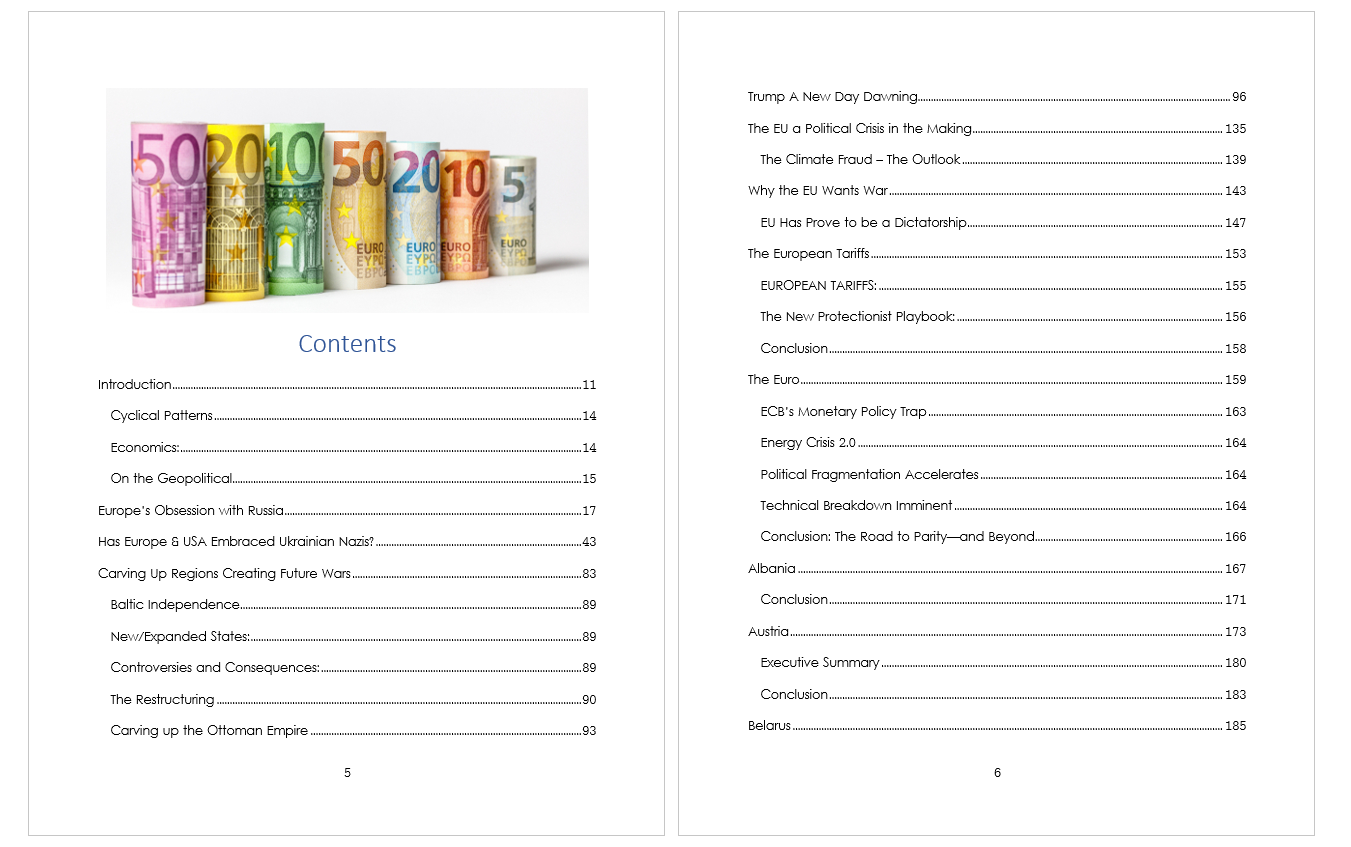
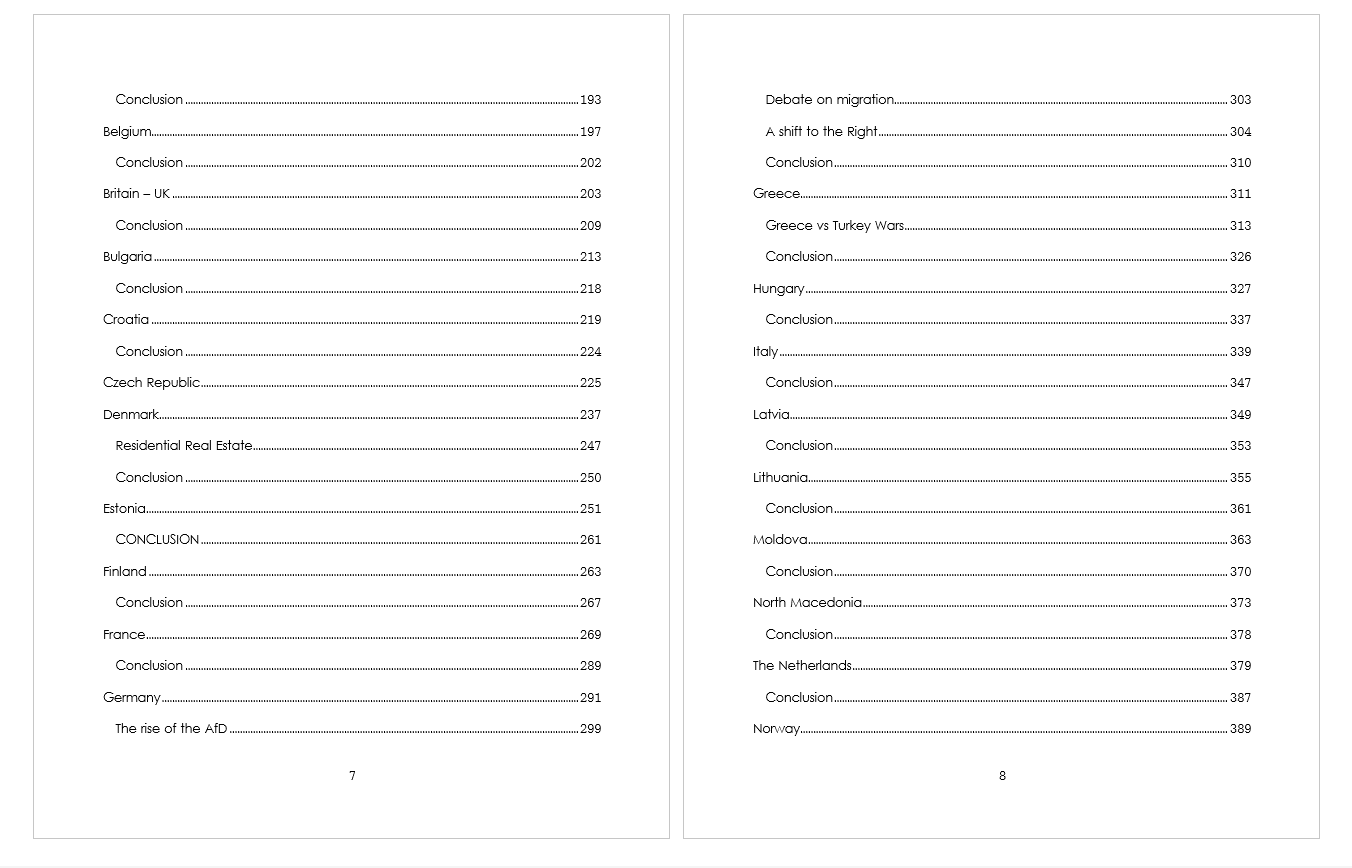
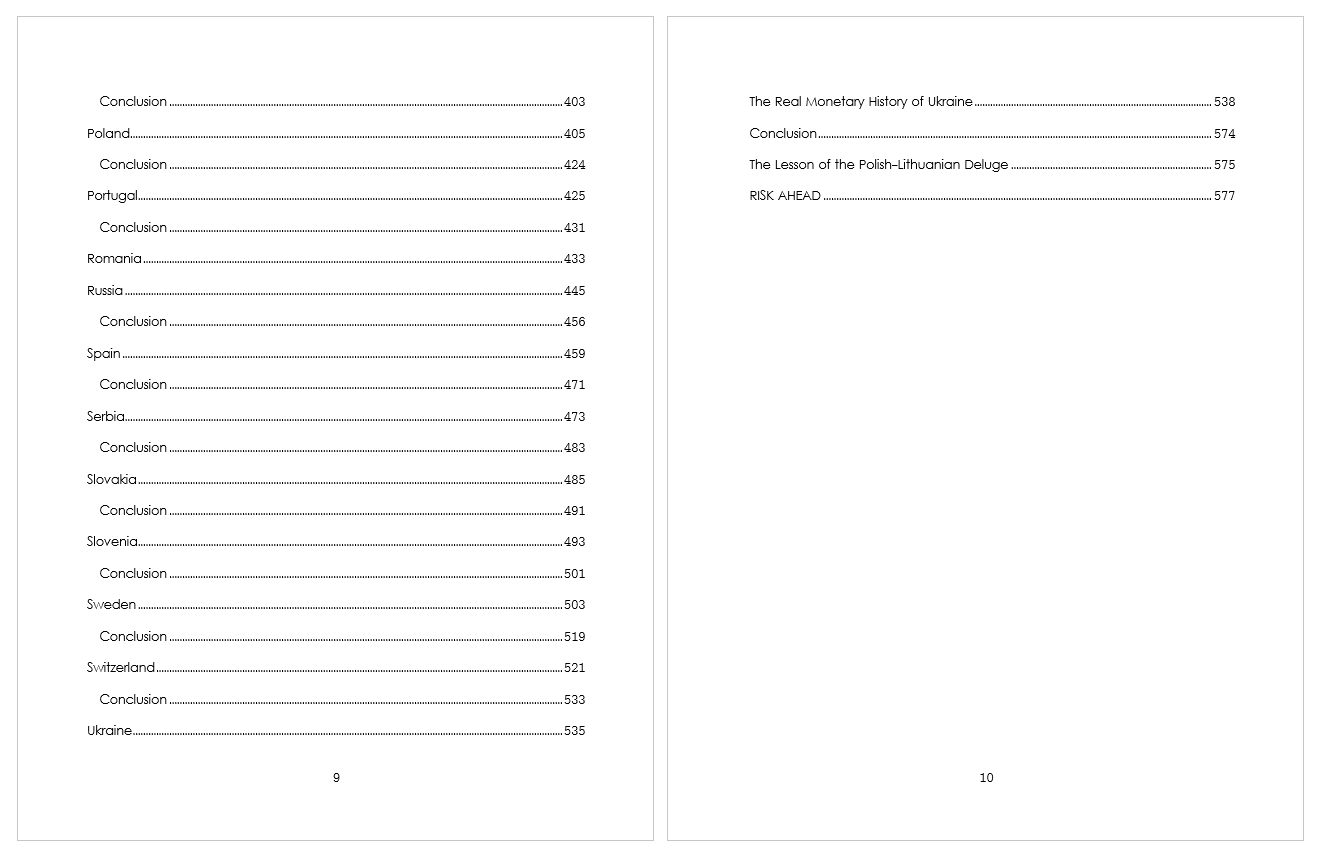
Our Institutional Report covering Europe’s countries with their forecasts generally out to 2032 has been a monumental effort. We greatly appreciate your patience, but this is vital for the decision-making for future investment in Europe. Things are certainly different from the past. Countries like Sweden and Switzerland, which had been neutral during previous world wars, have surrendered their neutrality and will not prove a safe harbor for capital during this conflict. Sweden has joined NATO and even sent jets to Poland. Switzerland gave up all foreigners with accounts and seized over $8 billion of accounts belonging to Russians, abandoning its historic traditions.
This report covers countries that nobody else even covers.
This also addresses the War with Russia & The eventual breakup of the EU itself
577 Pages fully illustrated with Charts and Arrays Per County, covering Currency and share markets
This Report is massive, and the price is $10,000 per institution.
(Please email to let us know how many reports you may need)
I have created this site to help people have fun in the kitchen. I write about enjoying life both in and out of my kitchen. Life is short! Make the most of it and enjoy!
This is a library of News Events not reported by the Main Stream Media documenting & connecting the dots on How the Obama Marxist Liberal agenda is destroying America






 Centinel2012