Justin From Canada is in Very Serious Legal Trouble – Former AG Testifies Against Prime Minister…


Justin from Canada is in very serious legal jeopardy after recent revelations that he interfered the Canadian Attorney General’s office regarding the prosecution of a Quebec engineering firm SNC-Lavalin surrounding bribes to Libyan government officials.

Canadian political pundit from Rebel MediaEzra Levant, tweeted out an excellent summary, and then provided a very well organized video to highlight stunning testimony from the former Canadian AG.  Here is Mr. Levant’s explanation:

For my American and British friends: Canada’s Justin Trudeau is done. He might try to fight on; I personally think he’s too damaged. He’s irreparably damaged. Here’s what happened in a few short tweets.

Trudeau was detonated today by his former Attorney General, Jody Wilson-Raybould, Canada’s first Aboriginal A-G. She just testified in Parliament, in meticulous detail, how Trudeau and his staff tried to get her to drop criminal charges against a corrupt company that he liked.

She refused to bend the law for Trudeau’s cronies. But they didn’t stop. Trudeau; his chief of staff; his principal secretary; even the finance minister. They met her ten times, phoned her ten more. trying to get the charges dropped. She wouldn’t. So Trudeau fired her as A-G.

The story leaked out earlier this month, but it was all anonymous sources. The former A-G herself didn’t say a word, saying she was bound by attorney-client privilege and cabinet confidences. She was effectively gagged; so Trudeau was the only one talking.

Trudeau took advantage of her enforced silence to claim she supported him and everything was fine. After all, when he fired her as A-G, he appointed her to the minor post of veterans minister.

When she heard him make that boast, she quit as veterans minister. He was shocked.

Then suddenly Gerald Butts, Trudeau’s right hand man — his best friend since college — resigned, claiming he had done nothing wrong. Which is odd. It looked like a compromise — Butts left, so Wilson-Raybould met with the cabinet and the caucus again.

Wilson-Raybould still didn’t say anything publicly. She hired a retired Supreme Court judge as her lawyer, to advise her on what she could say. Under pressure, the Liberal dominated Parliamentary committee invited her to testify, and Trudeau grudgingly waived some privilege.

So today she testified. In great detail. Exactly who pressured her. Exactly how. Exactly when. She named names. Including the prime minister himself. Here’s her statement: (LINK)

It’s against the law to pressure the Attorney General to obstruct a criminal prosecution. Here’s Canada’s Criminal Code. Section 139(2) is obstruction — it carries a 10-year prison term. (LINK)

Last detail. Jody Wilson-Raybould’s father was an Aboriginal activist who butted heads with Justin Trudeau’s father. Here they are bantering. Bill Wilson tells Pierre Trudeau that his daughter Jody wants to be PM one day. Maybe she will be?

Here’s a great video breakdown:

GDP Release: 4th Quarter Growth 2.6%, 2018 Annualized 2.9%, 2018 Yearly Real GDP 3.1%…


The Bureau of Economic Analysis, BEA, finally released the fourth quarter growth rate estimate for 2018.  The 4th quarter growth result at 2.6% exceeded expectations, and shows the U.S. economy is growing stronger than almost all economic forecasts.

WASHINGTON DC – In the fourth-quarter, U.S. gross domestic product grew at an annualized rate of 2.6%, according to the latest data from the Bureau of Economic Analysis.

Thursday’s report beat expectations, with consensus economists polled by Bloomberg looking for growth to slow to 2.2% during the final three months of the year. The domestic economy grew at a pace of 3.4% in the third quarter and 4.2% in the second quarter.

Despite the softening in GDP in the fourth quarter, overall growth in 2018 was solid. Real GDP grew at a pace of 3.1% in 2018, measured from the fourth quarter of 2017 to the final quarter of 2018. This represented a stronger pace of annual growth than the 3% targeted by the Trump administration. (read more)

The professional political class and corporate financial media are once again trying to talk down the strength of the U.S. economy.  However, the Main Street economy is powering through despite their efforts.

There is a visible connection between the Wall Street multinationals and the financial media; both are riddled with anxiety over Trump’s economic policies that favor Main Street over Wall Street and it shows in the media coverage.  I digress.

“Consumer spending continued to grow solidly and, most encouragingly, business investment growth recovered sharply after a dip in the third quarter. Despite big external headwinds and financial market volatility in the fourth quarter, U.S. firms are not retrenching sharply on capex. Labor market strength and ongoing fiscal stimulus should see domestic demand expanding by enough to keep GDP growth above potential in 2019, despite a rising drag from net trade.”

— Brian Coulton, Fitch Ratings.

“Business investment was a big positive surprise, with nonresidential spending soaring 6.2% on the back of a 6.7% jump in equipment spending and a honking 13.1% increase in intellectual property products.”

— Sal Guatieri, BMO Capital Markets.

The rate of import goods, a deduction from GDP, slowed down between the third and fourth quarter and consumer spending was higher than anticipated.  That’s good news, but that’s not the whole story….. for Main Street it gets even better.

The current inflation rate (PCE index) was once again measured at 1.6%.  However incomes are rising faster than inflation.  This leads to more “disposable income”:

Disposable personal income increased $218.7 billion, or 5.7 percent, in the fourth quarter, compared with an increase of $160.9 billion, or 4.2 percent, in the third quarter. (TABLE 8)

(pdf – BEA source)

BEA: During 2018 (measured from the fourth quarter of 2017 to the fourth quarter of 2018), real GDP increased 3.1 percent, compared with an increase of 2.5 percent during 2017.

The Full Picture: Business investment into Main Street USA continues to increase.  Manufacturing jobs and durable good employment in Main Street continues to increase.  Wages continue to rise.  Inflation on most consumer goods remains low.  Disposable income is growing, which means more consumer spending.  More consumer spending means higher rates of economic growth and an expanding economy.

MAGAnomics is working.

TheLastRefuge@TheLastRefuge2

U.S. economy grew faster than expected in Q4 https://news.yahoo.com/4q18-gdp-first-and-second-estimate-130025490.html?soc_src=hl-viewer&soc_trk=tw  via @YahooNews

U.S. economy grew faster than expected in Q4

In the fourth-quarter, U.S. gross domestic product grew at an annualized rate of 2.6%, according to the latest data from the Bureau of Economic Analysis.

news.yahoo.com

67 people are talking about this

TheLastRefuge@TheLastRefuge2

GDP surprise chalked up to unexpected consumer spending during shutdown, R&D growth https://on.mktw.net/2TgXj0M 

Consumer spending during shutdown, R&D growth led to GDP surprise, economists say

Here’s what economists are saying about the 2.6% growth in gross domestic product during the fourth quarter, which was faster than consensus expectations.

marketwatch.com

49 people are talking about this

The Decline in Quality is Part of the Cycle


QUESTION: Hi Marty,

Wanted to ask you if you are noticing the same thing as me regarding the ‘quality’ of goods and services these days and if this is history repeating itself again, such as the fall of the Roman empire?

To explain, I am noticing that the quality of the goods and services I buy whether durables or consumables is terrible and only getting worse. Nothing is built to last (such as tools, electronics, even vehicles), and the quality of consumables such as food and services is b-grade at best and it is hard to find alternatives.

I live in Australia and just about everything is made overseas, such as China. I bought a simple axe from a hardware store and it lasted 3 weeks. Had it replaced and it lasted 3 more weeks. Went back to see if I could find one made in Australia and could not find any.

Rents are expensive but landlords treat you like your scum, not to mention insurance companies.

Car registration is expensive and yet the quality of our roads is terrible.

Economists often say competition is good but they don’t seem to recognize how the quality of our produced goods and services is suffering a result.

I delivered some building materials to a client one day and he proceeded to tell me how he had a fancy door made and shipped from China for less than $1700, but that to have the same door made locally, he was quoted $6400. I proceeded to then tell him, that is ok for you as you have saved money, but are you aware that every time we buy stuff from China, China’s mountain of Australian dollars gets bigger and bigger, and the only place they can spend those Australian dollars is back here in Australia, and so is it any wonder that Chinese investors are buying up our real estate? The mans’ face went WHITE!!!

Are you noticing the same thing and are you able to draw a parallel between now and other historical times?

DW

ANSWER: Both the quality of goods and services declined during the 2nd century (post-180 AD), and society began to decline overall even morally. An interesting view is that of an outsider looking in. The author of this interesting quote is the famous 10th-century Arab geographer and historian Abu al-Hasan al-Mas’udi (c. 896–956AD) of Baghdad. He reflected upon what unfolded in Europe, expressing the grim reality in the early Middle Ages through a foreigner’s eyes. In outlining the peoples of the world for his contemporaries, an Arab geographer of the day described Europeans as having “large bodies, gross natures, harsh manners, and dull intellects . . . those who live farthest north are particularly stupid, gross and brutish.” He described the fall of Rome, and in describing western civilization, he effectively used similar concepts that the classical historians like Herodotus and Tacitus had once used to describe the barbarian world outside of European civilization.
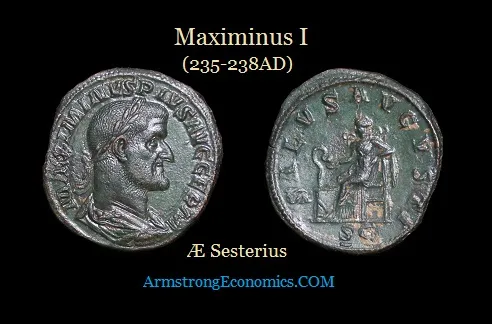
The sequence of events leading up to such drastic changes begins with high taxes and hunting the rich as we are witnessing today. Maximinus I declared all private wealth belonged to the States which was just one more step to the left from Bernie Sanders, Elizabeth Warren, and AOC. Once you do that, the result is the hoarding of wealth and that ends up contracting investment creating an economic death spiral. Education declines and regulation rises as the government seeks more power. The overall trend creates a precipitous drop in quality of life, and all the very reasons for the rise of civilization are then reversed and the trend moves from concentration to separation. This is the overall general scheme as to the reasons why Rome fell.

Keep in mind that the Dark Ages were about 600 years. So we need not worry about this complete collapse in our lifetime. Nevertheless, we are experiencing the early stages of the decline and fall of Western Civilization. The government pensions will create the same trend of fragmentation and turning government employees against the people. We will see the split of the European Union and the same in Canada as well as Australia. The United States will also split as some regions will reject the socialist regions and their attempts to subjugate their beliefs to their own.

If Rome’s sheer size made it difficult to govern because centralized government always fails. This contributed to the ineffective and inconsistent leadership which only served to magnify the problem as we are witnessing today as politics also has become highly polarized. Being the Roman emperor became a highly risky position during the 2nd and 3rd centuries. Civil war became commonplace as people made attempts to take power or to separate. This would thrust the empire into chaos, which we will begin to experience after 2020. The Praetorian Guard—the emperor’s personal bodyguards—assassinated and installed new sovereigns at will, and once even auctioned the spot off to the highest bidder who was Didius Julianus (193AD). There were two rival bidders but Julianus won paying 25,000 sestertii per man, which was the high bid and he was duly declared Emperor. However, the Praetorians were not loyal to him and he was beheaded on June 2nd after a reign of only 66 days.
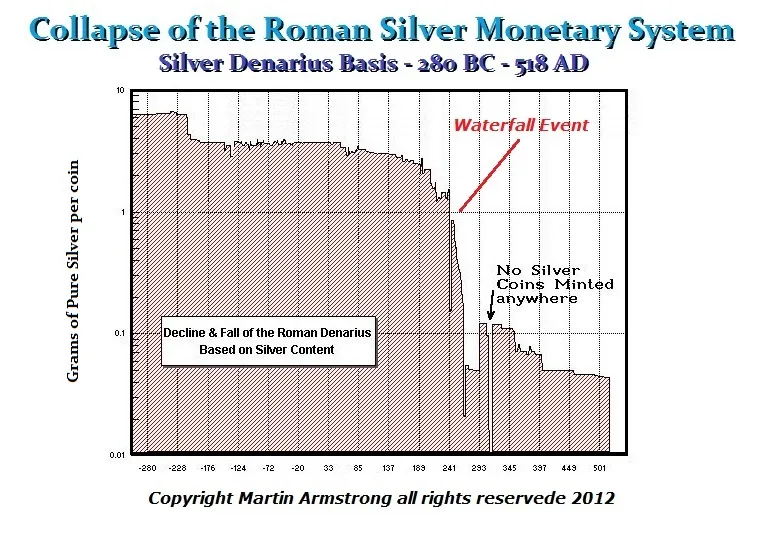
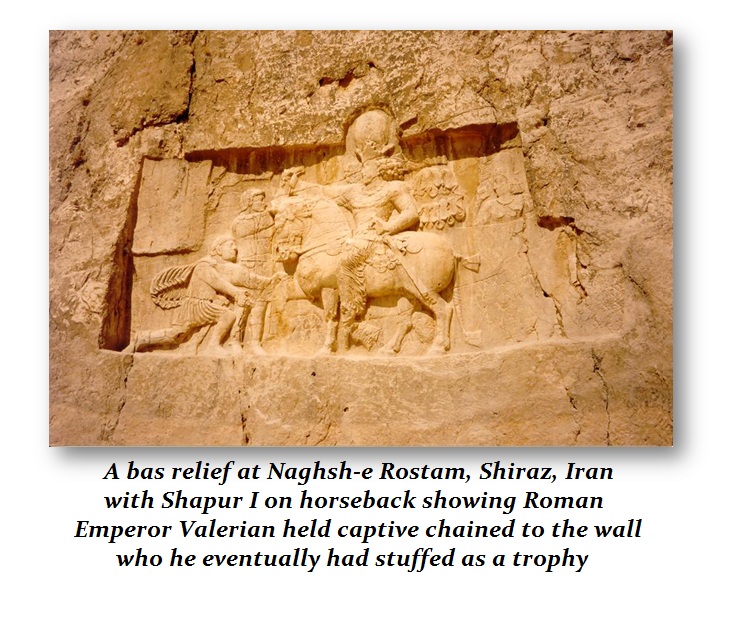
The Praetorian Guard became the same as we have today with the Deep State, illustrated in the FBI, CIA, and NSA all conspiring to overthrow Trump. This political chaos also extended to the Roman Senate as it has currently in modern times. The Senate became a cesspool of corruption that failed to temper the excesses of the emperors due to its own widespread corruption and incompetence (i.e. gridlock). As the situation worsened, civic pride waned and many Roman citizens lost trust in their leadership. Trajan Decius (249-251AD) was the first Roman Emperor to be killed in battle with the Barbarians. That had a great impact on the confidence of the people in government. They suddenly saw themselves as vulnerable. Then, in 260 AD, the Roman Emperor Valerian I (253-260AD) was captured and kept as a slave to the Persian king. That was the final straw, and we see the collapse of the Roman Monetary System within 8.6 years.
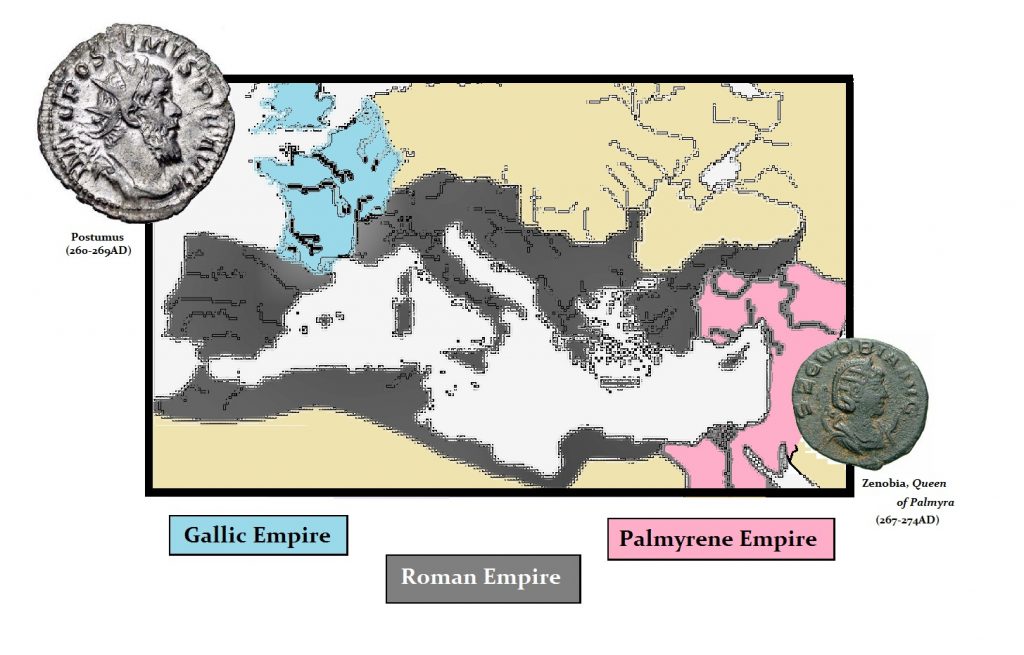
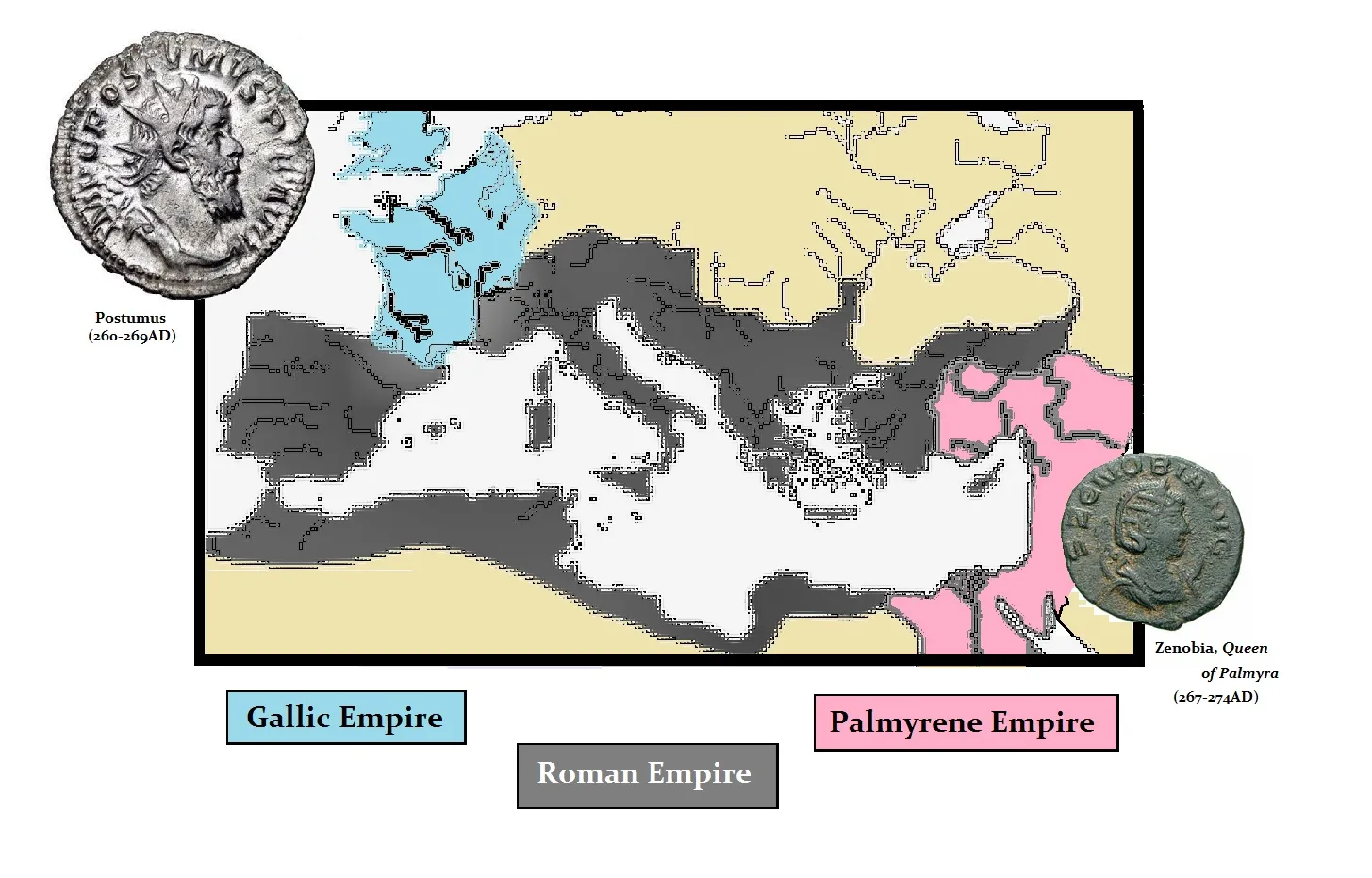
The Barbarian attacks on Rome partially stemmed from a mass migration caused by the Huns’ invasion of Europe in the late fourth century. As the Huns moved West, the barbarians were compelled to invade. Once they saw that Rome was vulnerable following the capture of Valerian, the invasions began in mass. This led to the Roman Empire dividing into three regions. Postumus (260-268 AD) led the rebellion creating the Gaulic Empire (Britain-France-Spain) and in the East Zenobia carved out her Empire based in Syria.

We are simply following the very same pattern in the same order. History repeats simply because human nature never changes. We would always like to think we are smarter and different. That has never proven to be anything more than a preferred delusion.

Warren Buffett Loses Billions


QUESTION: It is no secret that you went head to head against Warren Buffett in his silver manipulation. He is having a very bad year with his buy and hold value strategy. It looks like without making billions on the side manipulation of commodities, he is no better a fund manager than anyone else. Care to comment on his strategy?

WD

ANSWER: The Warren Buffett strategy of value investing and buy & hold is entirely dependent upon the direction of the market. The Warren Buffett strategy is a long-term value investing approach passed down from Benjamin Graham’s school of value. “Buffett is considered to be one of the greatest investors of all time. His investing strategy, value, and principles can be used to help investors make good investment decisions.” This is all the propaganda. It applies to an economy that is in a long-term inflationary trend that is really left over from the Great Depression days.


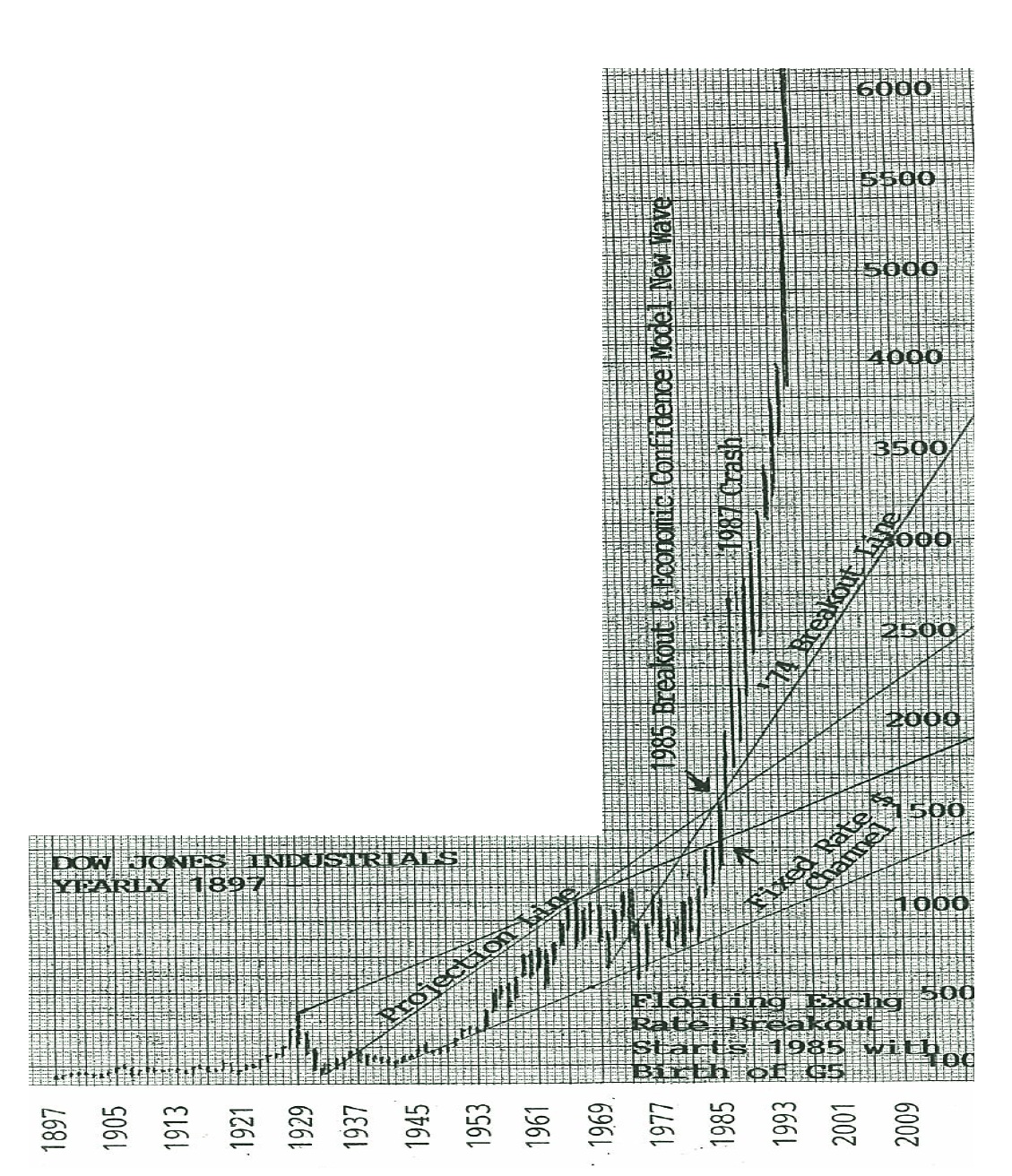
I was blamed for the takeover boom because I was advising a lot of the takeover players around the world. I simply showed clients the chart on the Dow in terms of book value and that the historic low that took place in 1977. I merely illustrated that you could buy a company, sell its assets, and double or triple your money because the market was so underpriced going into the end of a Public Wave. This Private Wave began in 1985 and that was the breakout of the market.

Anyone who simply bought stocks in 1985 made a fortune. Warren Buffett famously avoided investing in technology stocks. Nevertheless, he had bought Big Blue, then sold Apple and Oracle. He was so old school brick & mortar that he really missed the technology shift.

His buy & hold strategy fails because it ignores cycles. Anyone who bought stocks in 1985 and just held as the Dow rose from 1,000 to 21,000 beat even Warren Buffett. He takes positions in companies and cannot flip when the business cycle turns. He lost $4.3 billion in a single day. That is not a fund manager in my book.

Buffett did not believe the rally as most others going into 2018. For years, Buffett was building up its cash rather than investing. He began to invest during the third quarter, actually buying the high since the NASDAQ peaked in August, the S&P 500 in September, and then the Dow on October 3. He bought some banks like JPMorgan Chase and Oracle for the first time.

Obviously, his timing was not very good and his strategy of buy and hold does not fare very well in a decline.

World Financial Outlook for 2019


The 2019 Outlook Report covers the world. The Report will be priced at $1200 and will address the major markets. We will let everyone know as soon as it is available.

Armstrong Economics, Three PRIVATE BLOGS Explained


We have created three separate membership options for the Socrates Platform(www.Ask-Socrates.com) which are intended for three separate audiences. First, we have the BASIC Membership service at $15 per month which is intended for the average person who is interested in the broader term with respect to trends and not interested in short-term trading back and forth. Then we have the Plus Membership which provides short-term forecasting for the investor. The third level is the Pro Membership where reversals and arrays are available to access on over 1,000 markets worldwide (requires Premium Market Subscription or Snapshot Report). This is intended for active traders rather than investors who tend to be more position oriented (see comparison).


Then on top of all of this, we have our Institutional Level of service which includes hedging models among other information. While we try to target a version for everyone, it is difficult. The main goal has been to bring the ONLY FULLY FUNCTIONING Artificial Intelligence computer in the world focused on financial markets and global economy, proven over time, to the general public. This is free of personal bias. All of the market analysis (with exception of private blog post commentary) is written by the computer – not analysts. This inspires confidence for everyone knows there is no hidden agenda and there is no conflict of interest. The computer does not own property, mines, manufacture, and beside the fact that it cannot be bribed, it has not national patronage either.

I personally apologize for doing just one blog on Friday for the Pro Version. It is just that there are specific Reversals given so it is not designed to a general investor – we will create a broader view version over the weekend after closings. This is the difference between the three versions of the Socrates Platform, and corresponding private blog posts that are tailored to the three different groups of people we are servicing.

WE HAVE NOT YET COMPLETED THE NEW RELEASE OF SOCRATES

We are still working to finalize various aspects, including adding some additional features and forecasting modules over time. When we are finished with this initial rollout, we will make the formal announcement. Thank you.


Why 50 Million Chinese Homes are Empty


Published on Dec 14, 2018

SUBSCRIBE 688K
First 500 people get 2 months free of Skillshare: https://skl.sh/polymatter11 Patreon: https://patreon.com/polymatter Twitter: https://twitter.com/polymatters Pins & T-Shirts: https://standard.tv/collections/polym… Reddit: https://reddit.com/r/PolyMatter Discord: https://discord.gg/polymatter China’s housing bubble has left 50 million homes empty and put its government between a rock and a hard place. This includes a paid sponsored promotion which had no part in the writing, editing, or production of the rest of the video. Music by Epidemic Sound: http://epidemicsound.com California Flag image from: Vecteezy.com Provinces map: China with Provinces – Single Color by FreeVectorMaps.com Full list of sources: https://pastebin.com/FPVU9SaG

How 10% of the People Can Make a Difference & Real Estate’s Role


QUESTION: Dear Marty,
First I would like to thank you for all the help you provide especially for us little guys.
I’m from Barcelona, and happily attended the release of “The forecaster” when you were there a few years ago.
I’m under 30 and working my butt off trying to save what I can while paying rent with my partner on a smallish 50m flat (which has become prohibitevely expensive for young local people as rents are at all time highs).

Following your recomendations I’ve put my small savings into movable assets (US and European equities).
With regards to the chart you posted on Spanish Real Estate I was surprised to see the price still so near the bottom of the Housing Crisis. I live in Barcelona and prices are in most cases near or at all time highs for most of the city neighborhoods (of course in € nominal prices wich have dropped quite a bit in $ terms) but as you move away from the city the recovery has been more modest to say the least.

In Barcelona price increses are mostly due to foregneirs moving in and maybe also because people here don’t ussually invest in the stock market but instead put savings into RE (despite the housing bubble people have a big chunk of retirement savings into real estate).
RE is not cheap to say the least but I’m wondering wether I should contract a 30y fixed mortgage and buy a house. My biggest fears are two:
– If long term mortgages dry up I may find out in mkt to mkt loss positions on the house as prices might collapse.
– If the economy declines I have the risk of maybe being fired but still chained to a mortgage.
I fear the later specially since my father has been recently notified that he is going to get fired. The company he works for has decided to fire all employees who are up to 13y!!! close to retirement age (and will probably replace 1/4 of the workforce with cheaper labor).
Given the above do you think it’s still a good time to buy in the big Spanish cities like Barcelona using a fixed mortgage or that you might be better off renting and waiting for the collapse.
Thank you
A.

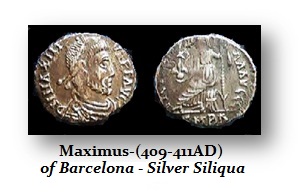
ANSWER: Barcelona is one of the most beautiful cities in Europe. It is even one of the best places to live. In terms of local earning power, yes, rent in Barcelona is high. In terms of international value, they are cheap, which is why you have so many foreign investors who have poured into your city. Even economically, Barcelona is extremely productive and this was in part behind the reason for the separatist movement. It also had its own history of separatist movements from the Roman Empire (see Maximus 409 AD).

You have noticed the foreign buyers. As the euro drops, the value of property will look cheaper to a foreign investor than domestic. If you stay in the city proper region, this will have an international bid based on currency. In real terms, of course, the property will decline in value. However, this is more of a short-term trend. We all need a place to live. If you can buy with a FIXED rate mortgage, then you will be better off and certainly do not do floating rates. The risk with banks remains that they will stop lending on property as loans turn bad and political turmoil unfolds. Soon it will be an issue of whether Spain will stay in the euro, or whether the euro even exists. The property in the rural area will always be cheaper. So it depends upon what your personal goals might be. Rural property where you have a bit of land and can grow some food is not a bad hedge. But it has been getting cold even in Spain, a country that normally supplies Europe with food during the winter.

We will be heading into a currency crisis. Tangible assets are the way to survive. The biggest problem with real estate is that you cannot take it with you. So keep that in mind. We need a place to live so that is the bottom line. You do not want all your wealth in one asset. You are young enough to survive the major government reset. That will happen. I remain hopeful that if enough people understand the causes behind this crash, then we can make a difference and push back against tyranny.

Make no mistake about it. Government will ALWAYS act in its own self-interest to survive. There has NEVER been a single government that has EVER admitted it is wrong. They must always suppress the people to survive. Remember one thing: even in the USA, there were only three presidents who ever won slightly more than 60% of the popular vote. So, about 10% of the people really decide the fate of nations. We do not have to convince 100% or even 50%. We just need that 10% to make a difference.

Australia: One Foot in Asia v the West


QUESTION: Hello Martin Armstrong,
Australia seems to have one foot in the West and one in the East. With the fall of the Western economies and then the rise of Asian economies, how does that affect the Australian economy? Does the real estate bubble collapse the Aussie economies and then the rise of China creates the opportunity to rebuild the economy after 2032?
Thanks for all the work you do.
J

ANSWER: The computer is projecting that Australia will first have to collapse with Western culture because it has become exceptionally left-wing. This is the collapse of socialism in general. We are collapsing just as communism did. It will be one Pi Cycle (31.4 years) from 1989, which brings us into this target of 2020/2021. We should expect serious political change on the horizon that will result in civil unrest.

Longer-term, however, with one foot in Asia, Australia will turn from the USA and Europe. As I have said, China is MUCH WISER than what we see in the West. While Europe is fighting over old economic models and clinging to theories that no longer work, China is investigating HOW the USA displaced Europe. It did so with LOW TAXES and regulation that built the American consumer market that the entire world has been dependent upon.

Germany’s economic model is still the old Mercantilist theory that national wealth is obtained by selling more stuff than you buy from others. The USA model has been internal rather than the Mercantilist external model. This is what China has realized and it is turning inward. Western society has not figured this out yet. Just look at BREXIT. The entire argument against it in Britain is that they will not be able to sell to Europe. That is really stupid and absurd.

Therefore, when the socialist model collapses in Australia, there will be a natural risk of a separatist movement. Western Australia will certainly find that, economically, they are more aligned with Asia than the East coast.

Farmers going Bankrupt – A Prelude to a Boom?


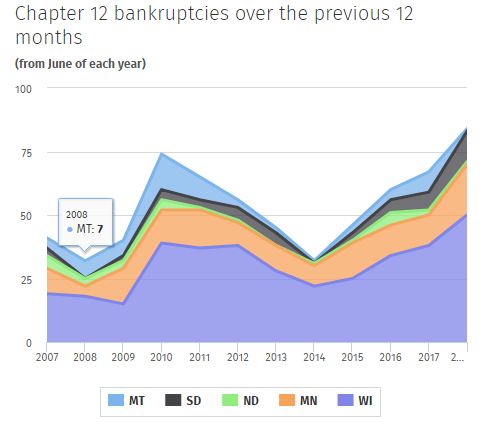
Part of the cycle for a commodity boom is typically preceded by a commodity depression in which the productive capacity is reduced. We are witnessing that in the agricultural sector. Additionally, extremely cold weather continues. Bankruptcies in the farming sector have been on the rise since 2014. These are the pre-staged events that are required to create a commodity boom for the next cycle — the reduction in supply.