The Legal Challenge to Quantitative Easing


General view of the buildings of the Court of Justice of the European Communities

It has taken almost 10 years for the ECB’s controversial government bond purchases to finally reach the European Court of Justice (ECJ) to be reviewed as to their constitutionality. There have always been serious questions whether the PSPP (Public Sector Purchase Program) was compatible with the ban on monetary budgetary funding that has been imposed upon member states. Italy, for example, asked for an exemption from the budgetary constraints to take care of the refugees, The EU Commission said absolutely no!

The German high court has been hearing a case that proposes it rule that financing government budgets would not be covered by the mandate of the European Central Bank (ECB). That has long been a thorn in the side of Draghi that he was acting unconstitutional at the end of the day. The ECJ has been requested to expedite the procedure, because “the case requires a quick settlement” after almost 10 years?

The background of the case is three constitutional arguments are fairly straight forward against the PSPP. The ECJ has not answered these issues which has been preventing the German court from finally decide the constitutional complaints.

The argument claims that the European System of Central Banks, with the program for the purchase of securities of the public sector which it has set up, is contrary to the prohibition of monetary government financing (Article 123 TFEU) and the principle of limited individual authorization (Article 5 1 TEU in conjunction with Art. 119, 127 et seq. TFEU).Therefore, the Deutsche Bundesbank should not participate in this program and the German Bundestag and the Federal Government are obliged to take appropriate measures against the program.

The plaintiffs in Germany wanted the Bundesverfassungsgericht to stop the Bundesbank’s participation in the ECB program. Germany, they argued, would suffer a complete loss if the bonds failed. The risk to the German national budget is disproportionate was their main point.

The ECJ has a political mandate which is strangely different from the Supreme Court of Germany or the United States for that matter.The ECJ has a mandate to promote integration within the EU, which is clearly a political element. If we add this political element, that one can see that the ECJ can view the purchase of government bonds as a permissible means of integration.

The ECB has clearly altered the bond market destroying liquidity. Banks are rushing to sell their bonds to the ECB in anticipation of rising rates which will cause their bond holdings to decline. Hence, the ECB has actually functioned as a place to dump financial toxic-waste.
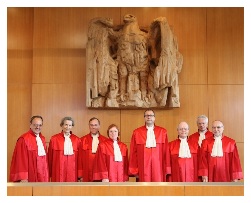
The Germany Federal Constitutional Court has thus suspended further litigation pending the ECJ ruling.


The Federal Constitutional Court announced in a Press Release No. 70/2017 of 15 August 2017

Decision of 18 July 2017
2 BvR 859/15, 2 BvR 980/16, 2 BvR 2006/15, 2 BvR 1651/15
With the decision published today, the Second Senate of the Federal Constitutional Court has suspended the procedure concerning the question whether the Public Sector Purchase Program (PSPP) of the European Central Bank is compatible with the Basic Law for the purchase of public sector securities and asks the Court of Justice of the European Union several questions For a preliminary ruling. According to the Senate, there are important reasons for the fact that the decisions underlying the bond purchase program are in breach of the ban on monetary budgetary financing and go beyond the mandate of the European Central Bank for monetary policy and thus fall within the competence of the Member States. The Senate seeks the implementation of the accelerated procedure in accordance with Article 105 of the Rules of Procedure of the Court of Justice of the European Union, since the nature of the case requires its speedy completion.

Facts:

The PSPP is part of the Expanded Asset Purchase Program (EAPP), a framework program of the European Central Bank (ECB) for the purchase of assets. The PSPP accounts for the largest share of the total volume of the EAPP. On 12 May 2017, the EAPP achieved a total volume of EUR 1 862.1 billion; Of this total, EUR 1,534.8 billion accounted for the PSPP.

The complainants, by their constitutional complaints, claim that the European System of Central Banks, with the program for the purchase of securities of the public sector which it has set up, is contrary to the prohibition of monetary government financing (Article 123 TFEU) and the principle of limited individual authorization (Article 5 1 TEU in conjunction with Art. 119, 127 et seq. TFEU). Therefore, the Deutsche Bundesbank should not participate in this program and the German Bundestag and the Federal Government are obliged to take appropriate measures against the program.

Important considerations of the Senate:

1. Article 38 (1), first sentence, of the Basic Law guarantees to German nationals the right to democratic self-determination, which is enforceable with the constitutional complaint, in the scope protected by Article 79 (3) of the Basic Law. On the basis of the responsibility of integration, the German constitutional authorities have the duty, within the limits of their competences, to work towards compliance with the integration program. It is the task of the Federal Constitutional Court to examine whether measures taken by bodies, bodies and other bodies of the European Union are based on apparent excesses of competence or affect the non-transferable area of ​​the constitutional identity, with the result that German state institutions are not allowed to participate in their condition or implementation ,

2. There are doubts as to whether the PSPP decision is compatible with the ban on monetary budgetary financing.

(A) Article 123 (1) TFEU prohibits the ECB and the central banks of the Member States from purchasing debt securities directly from the institutions of the European Union and the Member States. Purchases on the secondary market may not be used to circumvent the objective pursued by Article 123 TFEU. A program dealing with the purchase of government bonds on the secondary market must therefore be provided with sufficient guarantees to ensure effective compliance with the prohibition of monetary government financing. The Senate is of the opinion that the Court of Justice of the European Union considers the terms which it sets out to limit the scope of the OMT program of 6 September 2012 within its scope as a legally binding criterion The purchase of government bonds.

(B) The PSPP covers bonds issued by States, state enterprises and other government bodies, as well as by European institutions. These bonds are purchased exclusively on the secondary market. However, for an infringement of the PSPP decision against Article 123 TFEU, it is argued that details of purchases are announced in a manner which could give rise to factual certainty on the markets that the Eurosystem will also purchase issued government bonds, The time limits between issuance of a debt instrument on the primary market and its acquisition on the secondary market is not verifiable, that acquired bonds are held to maturity until now, and that bonds with a negative return are obtained from the outset.

3. The PSPP decision could not be covered by the mandate of the ECB.

(A) monetary policy should be distinguished, in particular, from the economic policy which is primarily the responsibility of the Member States, in accordance with the wording, system and objective of the Treaties; The objective of a measure to be determined objectively, the means chosen to achieve this objective, and its link with other arrangements.

(B) From the Senate’s point of view, the PSPP decision could not be seen as a monetary policy measure, but rather as a predominantly economic policy measure, on the basis of an overall view of the relevant delineation criteria. While the PSPP has a stated monetary policy objective and is committed to the pursuit of this objective of monetary policy, But the economic policy implications arising from the volume of the PSPP and the associated predictability of the purchase of government bonds are already directly reflected in the program itself. This would render the PSPP disproportionate in relation to the underlying monetary policy objective. Moreover, the decisions constituting the basis of the program do not provide a comprehensible explanation which would allow the continuous continuity of the program to be reviewed on an ongoing basis during the several years of implementation of the decisions.

4. On the basis of the risk allocation between the ECB and the Bundesbank, the budgetary right of the German Bundestag, protected by Article 20 (1) and (2) in conjunction with Article 79 (3) of the Basic Law, and its overall budgetary responsibility by the PSPP decision Or its implementation in view of possible losses of the Bundesbank, can not be foreseen at present.

(A) An unlimited risk allocation within the Eurosystem and the resulting risks to the national central banks’ profit and loss account would constitute a violation of constitutional identity within the meaning of Article 79 (3) of the Basic Law if it were to recapitalize the national central banks with budgetary resources Which the Senate has committed to the approval of the German Bundestag in its jurisprudence to the EFSF and the ESM. For the success of the constitutional complaints, it is therefore important whether such a risk allocation can be excluded under the primary law.

(B) the decision-making by the Governing Council on the nature and extent of the risk-sharing between members of the European System of Central Banks is hardly determined by primary law. This could allow the ECB Council to amend the rules on risk-sharing within the Eurosystem, which could lead to risks to the national central banks’ profit and loss account and, moreover, to the overall budgetary responsibility of the national parliaments. Against this background, the question arises whether an unlimited risk allocation in the event of default of bonds of central governments and equivalent issuers between the national central banks of the Eurosystem against Article 123 and Article 125 TFEU and Article 4 (2) TEU With Article 79 (3) of the Basic Law).

Wall Street Banks Stunned At Trump’s Proposed Reform


Trump’s economic consultant adviser, Gary Cohn, has declared a return to the separation system in the US banking system in effect restoring Glass-Steagall Act which dates from the 1930s and was adopted as a result of the Great Depression yet abolished in 1999 by the Clintons. Trump had already spoken during the election campaign for a new version of the Glass-Steagall Act. So Cohn is simply repeating this position. Yet we have to look deeper here. Why is a former Goldman Sachs guy now against the Glass-Steagall Act?

In the banking sector, restoring the Glass-Steagall Act will reduce competition for Goldman Sachs. JPMorgan Chase, Bank of America and Citigroup would all be cut-off from investment banking services. Goldman Sachs and Morgan Stanley would be benefactors. Expect now that Congress will drag its feet to protect the banks making sure this will not take place in the short-term. Much of the argument focuses on reducing the size of banks and separating the powers between investment and commercial banking will prevent the too-big to fail problems.

The Currency & Banking Crisis for Europe


QUESTION: Thanks for this free advice. But, in this comment: “/our-european-tour-part-ii-seizing-all-bank-accounts-throughout-eu/” You write: “Clearly, people should be fully aware of the thinking process in government. Brussels will become authoritarian when the free markets rain on their parade. I strongly recommend that everyone should keep 30 days worth of cash to cover your basic needs.”

But, it is better in dollars that in euros, no?

Thanks for all,

J, Portugal

ANSWER: Yes, the dollar will rise after this year from Political Hell. Keep in mind that a rising dollar will break the world monetary system – not a weak dollar. Keep in mind that the entire system is headed to a reset probably no later than 2021. So we are not talking about long-term decisions here. You have to stay fluid about this.

Government & Revolution – Is it Inevitable?


I have been warning that as governments move closer to this major event of a Sovereign Debt Crisis which begins next year with the start of the Monetary Crisis Cycle, they historically will ALWAYS, and without exception, bite the hand that has fed them. The object for government is survival of the fittest and that is them. This is never really about helping people as they raise retirement ages, punish the youth with school loans they cannot discharge, and exempt themselves from most laws that apply to us. This is also never about how to properly run the economy for the benefit of all. It always boils down to it being them against us. Throughout history, there has never been even one benevolent government that has ever surrendered power willingly for the good of the country or the people. That has NEVER happened even once. Power has always had to be ripped from their grasp either by the people, an internal coup, or some foreign invader.

Yes, not every revolution has to be blood flowing down the streets. It will depend upon the military. In the case of Russia, the military did the honorable thing and stood-down. That is indeed an extremely rare event. From Byzantium and the NIKA Revolt to Tiananmen Square Massacre, the military has often first just slaughtered the people following orders. The German soldiers killing the Jews said the same exact thing – they were just following orders. That has certainly not been the case even recently as in Venezuela where this soldier is killing his own people while standing behind a barricade that reads: “If the order is against the people your honour is to disobey.”

More-often-Than-Not, the revolutions throughout history come about when the taxes of government simply break the back of the economy. We are reaching one of those moments as we cross the threshold into 2018.

Gordon Chang Rightly Explains The Key-holder to North Korea is China…


Asian policy specialist Gordon Chang interviewed by Maria Bartiromo on her Sunday talk show and accurately outlines the key to a denuclearized North Korea is an economically defeated China.  It appears Mr. Chang fully understands the Trump policy of using economics to achieve national security.

As we have continued to outline, China, specifically the old guard communist control agents within Beijing, use Kim Jong-un as a foil against the west, specifically against the United States.  The long-term objective in using the DPRK is retention of China’s economic strategy, and blockage of President Trump from upending their goals.  Watch:

.

As we have outlined extensively, President Trump holds all of the cards in this economic and trade standoff.  The U.S. is China’s customer and there’s a $500 billion trade deficit.

However, President Trump cannot be completely open with the strategy because part of the long-term plan is to allow China to save face by giving up North Korea’s nuclear ambitions. It would be against Trump’s interests if the entire global and geopolitical community understood what was happening.

So they question becomes, how will we know when President Trump has won in the economic and national security challenge?

Well, first let’s look at the geopolitical landscape and the known and identified calendar to view the goal timeline:

♦We know President Trump is planning to attend an ASEAN meeting in November.

♦We also know that President Trump is planning to visit China later this year.  Most likely that trip will be part of the ASEAN engagement.

So it makes sense that President Trump would like to conclude the outline of the economic diplomacy by the time of the ASEAN and China visit – such that: A.) President Trump can outline the agreement and stroke the panda’s ego on his turf; and B.) President Xi Jinping can announce his magnanimous victory on behalf of great Panda’s incredible achievement in providing great security to the world.

::::smiling:::::

Yup.

Meanwhile, just prior to the ASEAN/China meetup, President Trump’s secret weapon, Ivanka, who happens to be the most beloved American in China, is deployed to India to capture the world’s attention with Narendra Modi hugs.

President Modi is the “Trump Card” in the geopolitical economic gamesmanship.  China is currently at odds with India’s rise to economic power; Ballywood is very hot in the U.S. right now; and a warm Modi – Trump economic relationship is a foil against China’s heavy-handed extortion of their economic partners.

Whoopsie sounds like the makings of a fork in China’s One Road/One Belt plan.

Strategery.

::::still smiling::::

Again, President Trump holds all the economic cards.  Just look at what he did to neuter Russia’s economy when everyone was paying attention to the bouncing laser dot on the wall.  The American and Western media missed it, but President Trump moved the entire geopolitical world via a strategic energy platform.

Sip this next paragraph slowly to enjoy:

From OPEC (Saudi Summit) to the EU and Baltic States (Poland Pre-G20); to North African energy development via President Macron (Libya and Mali); to walking away from the Paris Climate agreement; to discussions with Theresa May on a bilateral trade deal; to massive shipments of coal to U.K. and France; to closing a deal to deliver Ireland massive amounts of Texas LNG; to our own internal U.S. energy production policy with pipelines, Oil, Coal and Liquified Natural Gas (LNG) etc.

President Trump used all of those “allied” relationships to lower global energy prices.

The bigger part of the ‘big-missed-picture‘ was how that energy strategy impacted adversaries like Russia and simultaneously supported the larger America-First economic and geopolitical space.

President Trump thinks seriously long-term, and really BIG picture.

President Trump thinks so far out in front of his detractors they genuinely cannot fathom the sequential logic behind the day-to-day granular activity.

Yes, in large part this is what makes President Trump so enjoyable to watch politically. Just like the American media, our international adversaries and competitors have no reference point for a U.S. President that is entirely independent from influence.

::::Yup, smiling::::

So we can safely predict that sometime in late fall, most likely before the ASEAN visit timeline in November, President Trump and Rex Tillerson will be engaged in a new round of Six Party Talks, initiated by request of the increasingly desperate China.

China will structure the DPRK talking points to set up the meetings.  This is a part of how China is allowed to save face and sets up the magnanimous Panda narrative.

The six party talks will be essentially a Marshal Plan of sorts for North Korea.  Japan, South Korea, The United States, China, Russia and North Korea will enter into a set of negotiations publicly sold as engaging in diplomacy and reducing tension.

President Trump (or T-Rex) will sit on the patio complimenting Xi Jinping (or deputy), and Russian, Japanese and South Korean emissaries.

Meanwhile, in the conference room, Secretary Wilbur Ross, USTR Robert Lighthizer and U.S. Treasury Secretary Steven Mnuchin will play the role of Willy Wonka handing out the golden economic tickets to the representatives who all line up with their requests.

President Trump’s golf partner Shinzo Abe will already have his ticket, but he’ll play along.  The only real negotiations will be between the U.S. Russia and China.  Russia will be negotiating for higher regional energy prices to get their GDP growing again, and China negotiating to retain as much of the $500 billion trade surplus as possible.

The end result will be Kim Jong-un giving up his nuclear ambitions for good; the U.N. enters under carefully negotiated terms, and Big Panda promises to the world to be the magnanimous insurance policy therein.  Everything between now and that outcome is optically chaff and countermeasures.

That’s essentially the way the bright economic and national security future looks today.

Then again, it might get brighter – gilded even.

After all, this is President Donald Trump we’re talking about.

The Civil Unrest in Charlottesville is Part of the Cycle into 2020


The violence that erupted ahead of a planned rally where thousands of white nationalists were expected to gather for an alt-right protest in Charlottesville, Virginia, on Saturday, led to numerous injuries of which at least two people were seriously injured. A video appears all over YouTube showing the confrontation as a man is being dragged away by officials. The Unite the Right rally was being held at Emancipation Park with hundreds moving through the city, wearing militia uniforms, waving flags and chanting ‘Blood and Soil’ as they made their way towards the event.

Charlottesville Mayor Mike Signer had denounced the ‘cowardly parade of hatred, bigotry, racism, and intolerance march down the lawns of the architect of our Bill of Rights’ and warned for residents to stay away from the rally. Clearly, this rally is anti-immigration with many pointing the finger at Europe.

We must realize that such riots against immigrants is by no means new. Turn the economy down and unemployment rises, the first thing people blame is the immigrant. For the major to label this event simply caused by “hatred, bigotry, racism, and intolerance” demonstrates he does not comprehend the cause nor does he even think this is something that has occurred in the past. The people who oppose this alt-right also are typically the people who are students and have lost nothing yet.

We will most likely see these type events explode peaking out in real bloodshed by September 21/22nd, 2019 (2019.725). So expect to see this civil unrest continue to rise especially after 2017.

The Revolution Cycle can be just 13 to 26 Weeks


QUESTION: Mr. Armstrong; What you are saying is there is no diplomacy that would work and that the only real player here is regime change and that is in the hands of the North Korean people. So what is your advice to Trump?

KE

ANSWER: Forget the trying to talk reason or my arsenal is bigger than yours. Yes. Diplomacy is dead in the water. The only way is for Trump to get on his knee and beg forgiveness. This seems to be what the Democrats want and then they will bash the Republicans in 2018 with it in the elections. So lets get realistic here.

Trump’s last statement was : “We will see what happens. We think that lots of good things can happen and we can also have a bad solution. ” There is nothing else he really can do. So why all this blaming Trump? We are dealing with a dictator who is playing straight out of the old Marxist Play Book of the Cold War.

Stasi East GermanyKim Jung-un’s power lies in his secret police force exactly as the Stasi in East Germany. There is one way you dominate a state. That is you follow the Julius Caesar strategy but instead of using it against state enemies, you turn it against your own people. You divide and conquer making people spies on their own neighbors so everyone is watching everyone else and reporting

venetian-mouthoftruth-copyThe Venetian Empire eventually crumbled by the same strategy of divide and conquer turning neighbors against neighbors. It was called the Mouth of Truth. Anyone could drop a slip upon anyone else and accuse them of whatever. They were immediately seized and assumed to be guilty.
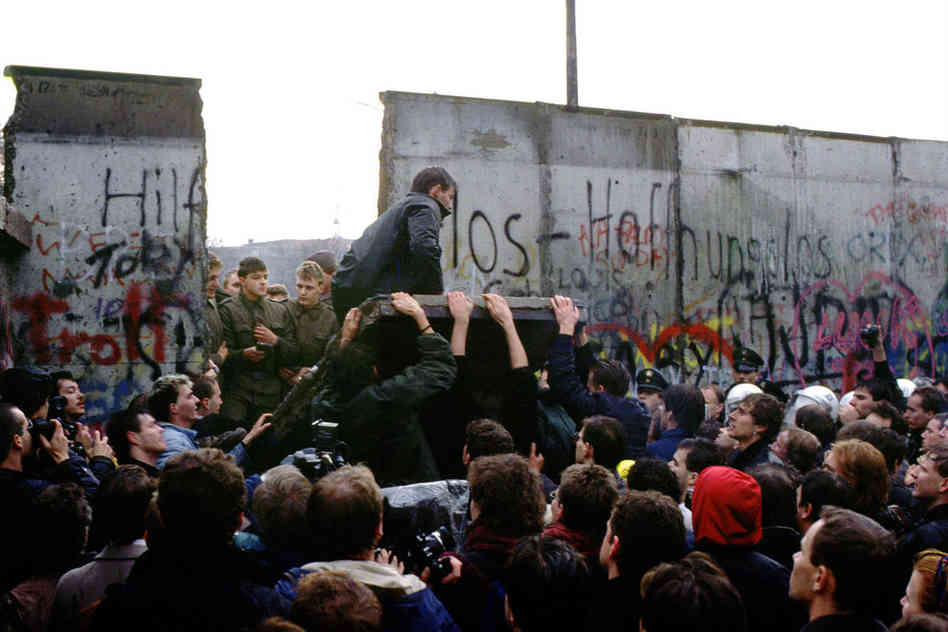
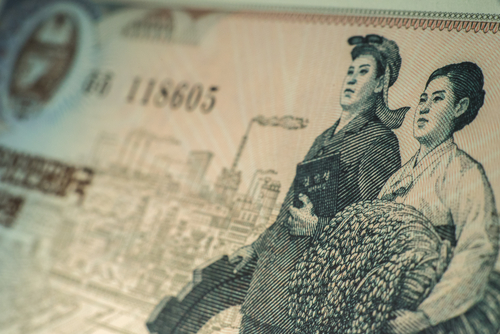
Kim Jung-un maintains power in this classic manner. He has turned North Koreans against each other. Everyone is afraid to speak freely for being turned in.

I have written before that I went behind the Berlin Wall before it fell with a friend to visit his family trapped there. We took a walk and his cousin would always be looking around. She would speak truthfully only when nobody was in listening distance. As soon as anyone came near, she would immediate go into a skit of how great it was to live there and how wonderful the state was to take care of them.

smelling-jars


Ministry for State Security (Stasi) smelling jars _ From the Vault

Those in the West have no concept of how evil a state can become. I have warned that revolutions come from the left because that is where dictators are born with the desire to rule people. The right fosters the drive to freedom and the desire to be left alone. The notorious Stasi secret police of East Germany is notorious for surveillance and dividing the people turning man against his brother until there is no single opposition against the state. When the wall came down, the extent of the secret police operations targeted against their own people was mind-blowing. What surfaced was their “smelling jars” collection. Yes, the Stasi used odor recognition to keep tabs on anyone they suspected. The Stasi often collected the samples covertly by breaking into homes to stealing a suspects’ used underwear. They then kept them in jars in case they turned up missing to hunt them down.

It is quite possible that Kim Jung-un has employed the same tactics that have existed throughout his dynasty. Quite frankly, diplomacy NEVER worked with the Soviet Union until the state could not economically function. Sanction can perhaps help that process is 100% enforced, but it is something that is inevitable and therein lies the danger.

The people of North Korea have to rise up against the Secret Police. The frustration of the people will explode at that moment and we will see a period of wholesale lawlessness. As familiar social and political institutions fell along with the Berlin Wall in East Germany, crime erupted almost overnight and the policing system in East Germany could not cope with the dramatic change causing the police to collapse.

A close look at the fall of East Germany is a guide to how North Korea will fall. History repeats BECAUSE human nature is the same throughout centuries regardless of culture or language. People will respond the same way no matter what.

There were local East German elections on May 7th, 1989 which were rigged but perhaps more obvious this time. Small demonstrations followed were quickly dispersed with Brut force by police and the Stasi, but this time the dissatisfaction did not simply subside as usual. It continued to foster for 186 days (26.5 weeks) until the Berlin Wall fell on November 9th, 1989.

During 1988, reformers inside the Hungarian government opened their border to the west and allowed Hungarians to leave for Austria. Then in 1989, Hungary began allowing East Germans on Hungarian soil to leave for Austria as well. Czechoslovakia blocked East Germans from fleeing to Hungary. The government in Prague was holding firm to communism. During August of 1989, East Germans began seeking refuge in the West German embassy in Prague. In August, there were thousands of them, camped out in the cramped confines of the embassy grounds. Czechoslovakian authorities tried to stop any more from coming into the city, but that effort failed.

Therefore, during August of 1989, as East Germans began storming West German embassies in Prague and Budapest in hopes of receiving asylum in West Germany, this made the West German television, which was watched by almost all East Germans. When the people saw the stampede, only then did the atmosphere within East Germany start to explode. Now large demonstrations began to take place in Leipzig during an international trade fair in September 1989. Again they were broken up with sheer force by the police and Stasi.

It was then in September 1989, that the Hungarian government simply opened its borders and East Germans began to pour out of the country by the tens of thousands. It was against this backdrop that the East German government prepared to celebrate the country’s fortieth anniversary on October 7th – a day that would truly be remembered in the Communist world.

It was  October 7th and 8th that became East Germany’s “revolution.” On these two days, the East German state collapsed. The Soviet Premier Mikhail Gorbachev, became a symbol of hope to many East Germans, and the events in Hungary with the storming of the West German Embassies in Prague and Budapest were now the catalyst for large-scale protests throughout the country. On the 7th, a huge spontaneous demonstration erupted with several thousand East Germans pouring into the center of Berlin that nobody had seen since the 1950’s.

The East German police had been prepared for weeks to expect “counter-revolutionary” actions by “enemies of the state” to protest on October 7th.  However, the police officers never saw such a crowd. They had no idea how to deal with any sort of mass protest where they were confronted with the hostility of thousands of very angry citizens. Both police and Stasi were involved in the operation where they did beat and arrested more than 1,000 people. The police stations and prisons were overwhelmed. The protesters were denied everything including foo and the use of toilets.

It was October 9th, 1989 that became the crucial turning point in this fostering revolution. In Leipzig, a traditional prayer service turned into a demonstration by 70,000 as reported in Spiegel on October 16th, 1989. The East German army and all security forces had been mobilized, but the crowd was massive. For the first time in East German history, the Stasi backed down and did not break up the protest probably due to its size. This marked the beginning of change in East Germany and the victory over the state succeeded in 155 days (22.1 weeks) 0.424 (about 43% of a year 1/2 of 8,6 cycle). Meanwhile, on November 4th, 1989, the Czechoslovakia border was opened for East Germans, even while it still stood as a barrier to the citizens of Czechoslovakia themselves. Just five days later, on November 9th, 1989, the Berlin Wall fell.

The lesson that we have to draw here is not diplomacy, but the North Korean people need to know they can rise up and win. Such revolutions take place very rapidly. Here we saw East Germany fall in just 26 weeks. The strongest weapon is information. The news has to focus on the people and what they stand to gain. Show how China is now the second largest economy and Chinese tourists have replaced Russians and Japanese everywhere around the world. Give the people hope, Kim gives them oppression. His Marxist handbook is outdated. The tilling the soil and slave of the state has come to an end globally.

If we look at Ukraine, we see that on January 4th, 2013,  the daily Komsomolskaya Pravda Ukraine, reported that Yanukovich mentioned three priorities in his country’s foreign relations: the country’s presidency of the Organisation for Security and Cooperation in Europe; the signing of an Association Agreement with the EU; and the development of “close partnership” with the Customs Union between Russia, Belarus and Kazakhstan, as well as with other organisations that he did not name. This raised the hopes of the people. I reported in December 2013 how corruption of the police in Ukraine was staring to come to a head. It was being exposed how they even killing people with no accountability.

The week of August 19th, 2013 in Ukraine, appears to be the turning point. Based upon sources, this was not merely when American National Security Agency whistleblower Edward Snowden was granted a one-year temporary political asylum in Russia and leaving Moscow’s Sheremetyevo Airport on August 1st, 2013, but this was the catalyst for a change in mind of Yanukovych to back away from the Association Agreement with the EU, which was being hotly negotiated in January 2012 and was initialed on March 30th, 2012 in Brussels.

Anti-government protest in Ukraine

Mass protests erupted in November 2013 when Yanukovych announced that he would not proceed with long-anticipated association and trade agreements with the European Union (EU) on November 21st.  On the 24th, a protest with about 100,000 people erupted on Sunday in Kiev in support of joining Europe rather than Russia. I reported back then:

“Ukraine has a lot of political pressure coming from Russia and Europe. Russia is said to have threatened to turn off the natural gas to the Ukraine if it joined the EU and Europe is promising to supply it gas even though it would be getting that energy from Russia. To say the least, the events in Ukraine are politically very important as we move beyond 2014.”

The day after I reported that our sources were reporting that Russia objected to the signing of the Association Agreement  was officially admitted on November 26th, 2013. The Ukrainian Government admitted that Russia had asked it to delay signing the EU association agreement and that it “wanted better terms for the EU deal.”

Now, by November 30th, general public support grew for pro-EU anti-government protesters as images of them bloodied by police crackdown spread online and in the media. Then on December 1st, about 300,000 people protested in Kiev’s Independence Square known as Maidan. One December 17th, Putin announced plans to buy $15bn in Ukrainian government bonds and a cut in cost of Russia’s natural gas for Ukraine to try to help the government.

Yanakovich outlawed the formation of any crowds. Again, on the 16th anti-protest laws are passed and quickly condemned as “draconian” and the on the 22nd, two protesters died after being hit with live ammunition. A third died following a fall during confrontation with police. Then as the pressure kept building from the people, on January 28th, Mykola Azarov resigned as Ukraine’s prime minister and the parliament repealed the anti-protest laws that caused the demonstrations to escalate in the first place.

On January 29th, a bill was passed, promising amnesty for arrested protesters if seized government buildings are relinquished. Then on January 21st the opposition activist Dmytro Bulatov was found outside Kiev after being imprisoned and tortured for eight days, apparently at the hands of a pro-Russian group. This merely intensified the protests and on February 16th, the opposition activists ended their occupation of Kiev City Hall in exchange of 234 jailed protesters.

Yet more street clashes continued leaving at least 18 dead and around a hundred injured and then on February 18th, major violence began when protesters attacking police lines after the parliament stalls in passing constitutional reform to limit presidential powers. Protesters took back the government buildings. Then on the 20th, Kiev saw its worst day of violence for almost 70 years. At least 88 people were killed within 48 hours. Footage showed government snipers shooting at protesters from rooftops, yet nobody would ever be prosecuted.

Ukraine-Livi

Protest leaders, the political opposition and Yanukovich agreed to form a new government and hold early elections by May 25th on February 21st. Yanukovich’s powers were reduced sharply and the parliament voted to free Yulia Tymoshenko, the former prime minister, from prison, which it had refused to do as a demad by the EU in signing the Agreement. Yanukovich flees Kiev after protesters take control of the capital. Finally, on February 22nd, the Ukraine politicians vote to remove Yanukovich and Tymoshenko was freed from prison speaking to those gathered in Kiev.

On February  23rd, pro-Russian protesters begin to rally in Crimea against the new Kiev administration. The next day, the Ukrainian interim government drew up a warrant for Yanukovich’s arrest.

While Ukraine left the Soviet Union on Sat., Aug. 24, 1991 (1991.6465753), here we find from start to finish was 26 months from the first step to open up with the EU. Here the pretend analysts all claimed that Ukraine was a CIA plot demeaning the people of Ukraine for their uprising. Yes, the US was in there as was the EU trying to hand pick their own leaders. But the uprising was that of the people. That is the only thing that changes the real balance of power.

In this case, from the first protest on November 24th to the removal of Yanukovich, it was 91 days or 13 weeks. Once again, the Revolution Cycle can take place in as little as 13 weeks or twice as long to 26 weeks. The point is – things can happen fast if the people become inspired.

My advice – talk to the people not Kim

Germany & France to Tax Online People Renting Their Houses


Germany France have conspired to tax citizens who rent their houses after the German election. Germany and France are scheming to submit a joint proposal on the taxation of online platforms such as Airbnb. They are hunting citizen for every possible thing they can imagine. This time they are targeting Airbnb They cannot see that this is an endless quest to find constantly new things to tax because they have totally mismanaged government. They will continue in the direction literally until there is a major rebellion for they are constantly lowering the standard of living by reducing disposable income.

Black Death Resurfaces in Multiple Northern Arizona Counties…


The plague, also known as “the Black Death” killed somewhere between 75 and 200 million people as a result of international trade, commerce and transnational shipping. The disease was thought to be spread by fleas and parasites carried by rats.  The global population took over 400 years to recover.

Deadly Arizona Parasites

ARIZONA – Officials in two Arizona counties are warning the public after fleas in the region tested positive for the plague, the infamous infectious disease that killed millions during the Middle Ages.

Navajo County Public Health officials confirmed on Friday that fleas in the area have tested positive for the rare disease. The public health warning follows a similar notice from Coconino County Public Health Services District in Arizona warning of the presence of plague in fleas found there too.

Both counties are situated in the northern part of Arizona.

“Navajo County Health Department is urging the public to take precautions to reduce their risk of exposure to this serious disease, which can be present in fleas, rodents, rabbits and predators that feed upon these animals,” the public health warning states. “The disease can be transmitted to humans and other animals by the bite of an infected flea or by direct contact with an infected animal.”

Officials also urged persons living, working, camping or visiting in these areas to take precautions to reduce their risk of exposure, including avoiding sick or dead animals, keeping pets from roaming loose, and avoiding rodent burrows and fleas. (read more)

War Against the Rich – Age Old Battle


Basil-II Image

The battle of class warfare has been raging for thousands of years. This is nothing new and it has tended to end is sheer disaster without exception. Basil II (b 958; 976–1025) really set the decline and fall of the Byzantine Empire in motion by engaging in such class-warfare to win popularity. Just as government desperately needs money today and are going after anyone they suspect has money, the same trend has happened countless times before.

basil-2 Histamenon nomisma

As a result of the failures of his immediate predecessors, Basil II found himself with a serious problem at the outset of his reign.  Basil’s laws protected small agrarian property owners and lowered their taxes while imposing what was known as the Allelengyou system whereby he made the rich pay taxes that anyone else could not afford. He only accomplished impoverishing the rich and the poor felt they no longer really needed to produce and the whole thing spiraled downward.  By imposing such taxation he discouraged investment and as such the economy continued to shrink. He caused capital to simply hoard and not investment because of the high taxation rates.

The Byzantine Empire under Basil II probably had a population of about 18 million people. By 1025, Basil II (with an annual revenue of 7,000,000 nomismata) was able to amass 14,400,000 nomismata (or 200,000 pounds of gold) for the Imperial treasury due to his abusive tax management.

Moscow-2

To gain military support, Basil made the decision to offer the hand of his sister Anna to Vladimir I of Kiev in exchange. This led to the Christianization of the Ukrainian Rus (Russians). The Kievan Rus thus became within the Byzantine cultural and religious tradition that still prevails to this day – Greek orthodox.

Therefore, raising taxes to the point that government discourages investment has ALWAYS been the kiss of death. This is the greatest problem in Europe right now and Obama is looking for any excuse to raise taxes sharply. These people have NEVER done any analysis of the consequences of such policies and there is unlikely to ever emerge such reason to prevent the crash and burn