Stephen Hicks: From the Falsification of Marxism to Post-Modernism


Published on Jul 9, 2017

Stephen Ronald Craig Hicks is a Canadian-American philosopher who teaches at Rockford University, where he also directs the Center for Ethics and Entrepreneurship. In 2004 he wrote a book named “Explaining Postmodernism: Skepticism and Socialism from Rousseau to Foucault” which was e.g. recommended by Jordan Peterson for understanding postmodernism (cf. https://www.youtube.com/watch?v=MPojl…) Full clip, quoted under fair use: https://www.youtube.com/watch?v=1zhOo…

The Money Supply Always Increases in Time of War


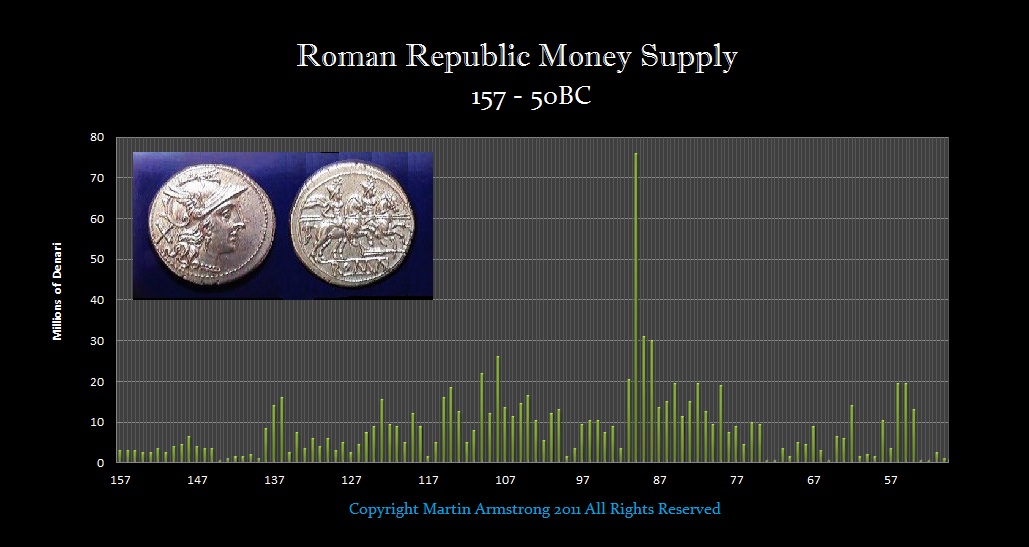
QUESTION: You chart on the Roman money supply shows a huge spike going into 87BC.  Was that just because of the Social War?

GS

ANSWER: No. During the autumn of 88 BC, there was a massacre of more than 80,000 unsuspecting Roman civilians which took place in Anatolia (western Turkey). The victims were Roman and Italian merchants, slave-traders, and tax collectors. The Romans had conquered that region and many went there to colonize the new province. They were deeply hated by the local population. There was a revolution so to speak that unfolded in 88 BC. The Roman migrants were all massacred right down to the women and children. It was carried out by the local Anatolians, who were composed of both Greeks and Jews. It was well organized for it took place in more than a dozen cities all simultaneously. They exterminated the Roman presence in the region.

The massacre sent a shock wave into the Roman financial system. An economic crisis unfolded in the Roman Republic, which came at the worst time for this is when there was a slave uprising and escalating violence. This was NOT the more famous slave uprising led by Spartacus. That comes into play about 10 years later. They took advantage of the fact that the Roman legions were occupied with the war in Asia.

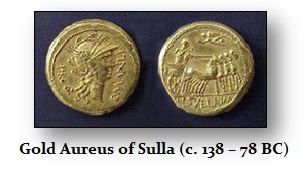
With this massacre, the Roman Senate declared the perpetrators as Rome’s ‘most wanted enemy’ and dispatched the famous Consul Lucius Cornelius Sulla having received the mandate by lot. He was given several legions fresh from the Social War to implement the mandate — a search and destroy mission. The ensuing wars would drag on for decades, spanning two continents and became known as the First Mithridatic War (88–84 BC) began with a declaration of war by the Senate.

As we can see, when war breaks out, the need for governments to spend more has always unfolded since the dawn of recorded time.

Day Trading & the Rogue Wave


COMMENT: Hello.

I know that although the current level of Socrates is not designed for day trading, but as a professional daytrader even this level is still amazing for that. I simply plot out the numbers that Socrates gives (made an important high at X, resistance forming at Z, etc.) for all three of the major U.S indices. Even when there are not enough points for a certain index, all three tend to generally move at the same times, thus giving most stocks the same pattern for that day. I have been longing and shorting on those numbers and it’s amazing how accurate its been, even with such limited functionality. It’s done far better than any other daytrading system I know.

It has only been a week since I’ve been using it this way. So my question is, how long is a level valid when Socrates says something that may just be a daily level? For example, for the NASDAQ: “The Daily level of this market is currently in a full bullish immediate tone with support at 729174”. I have noticed that the support or resistance levels still bounce from those points even after a day.

It was amazing as there were some people who had been accusing me for quite some time of drawing the lines in advance and that it was impossible to predict beforehand, (I am a member of an online trading forum or reddit.) so I made sure to post them as it happened later.

REPLY: The numbers are the numbers. They are generated by a mathematical formula based upon physics and cyclical movements. No, it is not intended for day trading. However, it provides a road map to any market so you can easily see where it is going. Keep in mind that the most money to be made is in position trading. It may appear that day trading is less risky, but far too often your focus is just the intraday action. You lose sight of the big movements coming in like a wave that is bigger than the rest crashing into the shore.
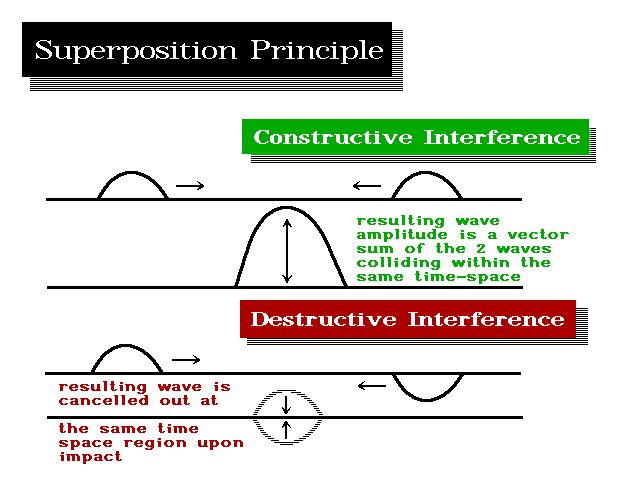
If you stand at the beach and look at the waves closely, you will notice that one wave is larger than the rest. This is constructive inference. When several waves align in sync, suddenly the wave that is produced is larger than the rest.

This is a fundamental basis of cyclical activity that applies to everything in the universe. It is why the sun beats like your heart. There is a cycle of absolutely everything, which is why we are born, mature, and then die. There are some people who are so afraid of dying, that the sacrifice their life living in fear only to die in the end anyhow.

So never take your eye off the Weekly level at the very least. If you do, the day trading will wipe you out for you will never see that big wave about to hit the market and devastate everyone in its path.


Jordan Peterson: Why Globalism Fails and Nationalism is Relatable


Published on Jul 27, 2017

Jordan B Peterson (born June 12, 1962) is a Canadian clinical psychologist and professor of psychology at the University of Toronto. This is part of his Biblical Series VIII: The Phenomenology of the Divine and he is talking about globalism and why large systems fail. Full video quoted under fair use: https://www.youtube.com/watch?v=UoQdp…


Jordan Peterson: A history lesson for political radicals


Published on Nov 21, 2016

Professor Peterson discusses ideological possession, communism, concentrations camps, Alexander Solzhenitsyn’s The Gulag Archipelago and existentialism. View the full lecture here https://www.youtube.com/watch?v=8u3aT… Support Jordan Peterson on Patreon https://www.patreon.com/user?u=3019121 Follow Jordan Peterson on YouTube https://www.youtube.com/channel/UCL_f… Follow Jordan Peterson on Twitter https://twitter.com/jordanbpeterson

The Rise of Populism and the Backlash Against the Elites, with Nick Clegg and Jonathan Haidt


Published on Dec 5, 2016

Filmed at the Emmanuel Centre in London on 21st November 2016. What is going on in the Western democracies? From Britain’s vote for Brexit, to Donald Trump’s election victory in America and the growth of populist movements across Europe, voters are expressing their dissatisfaction with the status quo. Economic anxieties go some way to explain the phenomenon, but as with the Brexit decision, people are voting in ways that seem – at least to their critics – likely to harm their own material interests just to give the establishment a bloody nose. In this special Intelligence Squared event, renowned American social psychologist Jonathan Haidt and politician Nick Clegg will examine the complex web of social, moral and political concerns that are driving the unrest. How can we explain the new illiberalism that is growing on both left and right, as authoritarian trends spread across campuses throughout the Anglosphere (the no-platforming of speakers being a typical example)? How should we understand the new ‘culture war’ emerging in Britain, America and elsewhere between the ‘globalists’ and ‘nationalists’? As deputy prime minister during the Coalition government, Clegg witnessed the upheaval in British politics from the inside. Haidt, author of the acclaimed bestseller The Righteous Mind, has long been studying the moral and cultural drives that divide people into different political camps.


Jonathan Haidt: The Globalist Blind-Spot


Published on Oct 15, 2017

Jonathan David Haidt (born October 19, 1963) is an American social psychologist and Professor of Ethical Leadership at New York University’s Stern School of Business. His academic specialization is the psychology of morality and the moral emotions. Haidt is the author of two books: The Happiness Hypothesis: Finding Modern Truth in Ancient Wisdom (2006) and The Righteous Mind: Why Good People are Divided by Politics and Religion (2012). He is also founder of the Heterodox Academy to support viewpoint diversity in academia: https://heterodoxacademy.org/ On Nov 21, 2016 Jonathan Haidt was interviewed at the Emmanuel Centre in London about “The Rise of Populism and the Backlash Against the Elites”. I edited the following highlight video with a focus on the topic of the globalist blind-spot of the left. Full clip quoted under fair use: https://www.youtube.com/watch?v=6gZ5U…

The Dollar High – Real or Adjusted?


QUESTION:  Hi Marty,

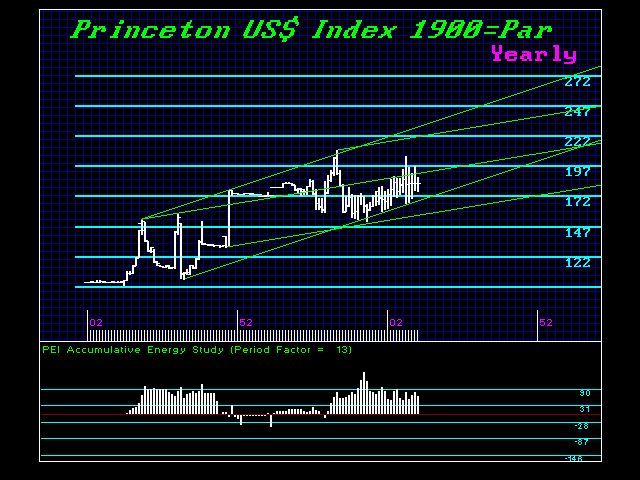
you said that the Dollar will make a major high going into 2020/21 and that will bring on the break in the monetary system. will the Dollar make new all-time high in nominal (165) terms or will it take an inflation-adjusted high to break the system?

thanks for the education.

JP

ANSWER: Here is a chart on our Dollar Index back to 1900. We can see how the dollar rallied for World War I and the Great Depression as everyone defaulted in 1931. Then there was the Plaza Accord high in 1985, which was followed by a 10-year decline. This projects out to a 26-year rally into 2020/2021 and should be a nominal new high. That will break the back of emerging market debt, and probably the European banking system.

Keep in mind that the USA took the bad loans out of the banks and stuffed them in Freddie and Fannie. In Europe, the bad loans are still on the books of the banks because everyone fears that a bailout would result in money flowing from the north to the south. This is why Draghi is keeping QE in place and buying debt that matures. The banking crisis just never ends. That combined with Draghi leaving next year means that and any halt to QE by the ECB will leave marginal governments unable to sell their new debt. The whole thing gets very dicey very fast.

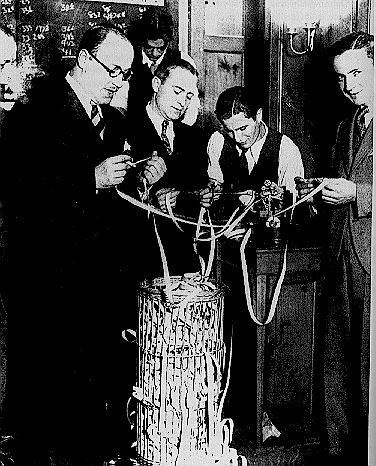
I am continually called throughout Europe because they know this is just a waiting game. I do not think the solution will be one that anyone is willing to talk about without blood pouring from the ticker-tape. We may be doing another documentary on this very subject in advance to hopefully educate people as to what, why, and how we move beyond this. That is in the preliminary stages. If I know for sure, I will let everyone know. It will probably be filmed at a university in Europe.

What If We Just Wiped Out All Debt?


QUESTION: Hello Marty

I am hoping you will print this in your blog.

Everyone knows that Govt’s/Banks print money out of thin air and then “owe interest” to this invented money. To avoid an interest payment death spiral why can’t all the Govt’s in the world just tell the banks to pound sand? Why can’t we tell them “Sorry….we are no longer going to make interest payments on money you invented out of nothing”.

Regards,

Julie

ANSWER: I actually get this question often. I understand that the sophistry out there makes it sound so easy. Unfortunately, this is nowhere near the mark. The bulk of the lending that leverages the money supply is involved in consumer loans. So this really would create a very unfair arrangement that reminds me of the incident with Mark Antony. Everyone talked about the bankers and assumed that Julius Caesar would rule that all debt was to be forgiven. Mark Anthony believed Caesar would do that so he ran out and bought Pompey estate assuming he would never have to pay for it (see Anatomy of a Debt Crisis it appears, only Julius Caesar ever understood).

To do what you suggest may sound simple but it would produce riots and blood in the streets. Your pension would be gone because most funds invest in debt. What if you were retiring and bought muni bonds to live on because you were told they were tax-free? Perhaps you could not sell your house to retire because the buyer could not get a mortgage so you took the mortgage. That would mean he now gets the house for free.

Trust me – it would be a bloodbath in the streets.

Can We Just Use Cryptocurrencies, stop Bank Lending & end Central Banks & Survive?


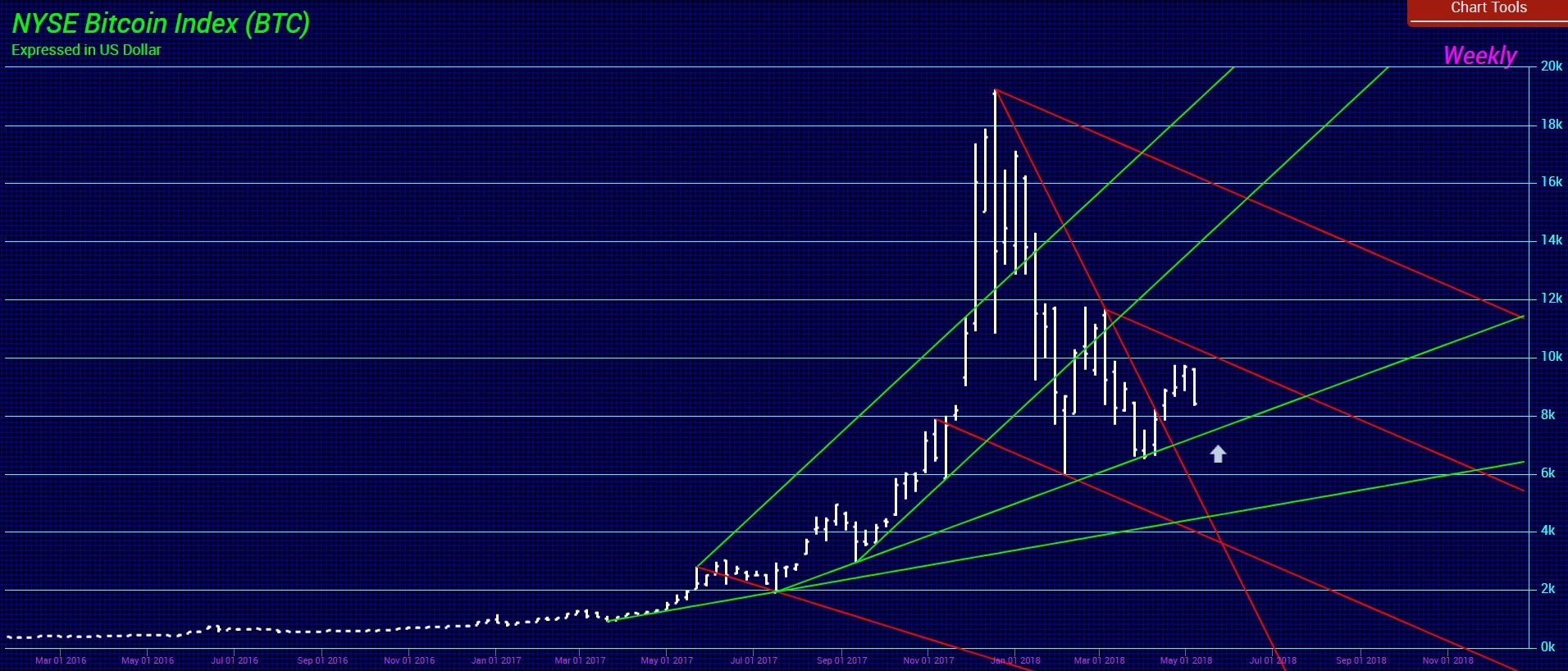
QUESTION: Socrates did an amazing job. It called the high in BitCoin right to the day. That makes me wonder. After thinking quietly about the claim that cryptocurrencies will replace everything as a new world monetary system because it will not be centralized and created by a central bank, this seems to be complete BS if the majority of money is created by lending banks. I asked a diehard proponent and he said we have to stop banks from doing that and suddenly the world will be a better place. I think that means no credit and everything would collapse. Am I far off here or are these people at least partially correct? Am I missing something?

DT

ANSWER:  No, you are correct. These people do not understand the monetary system and they take one simple fact and they blame everything on that and the solution is a cryptocurrency to eliminate central banks and the creation of money by lending. That is so impractical it just shows the lunacy of it all. If you stop the creation of money by lending, do you realize property values would crash? We would be back to the Dark Ages where if you wanted to sell your house, the price would be ONLY what cash someone has. That is why FDR created the 30-year mortgages. Real estate fell to virtually zero. It was being auctioned off at 10 cents on the dollar or less.

All pension funds would be wiped out. The savings accounts would not be there for probably 80%+ of banks would close if not 100%. To suggest that the solution is the end of central banks and bank lending, you are talking about blood in the streets. The riots would be incredible if not revolution. The Dark Age was a period where there was no banking and no trade. The Dark Ages was originally classified as the 10th and 11th centuries. There was no lending. People worked for food. They were given land to cultivate and the “landlord” took 80% of the production. They received no wages prior to the Black Death.

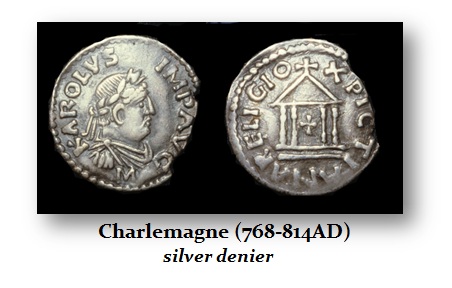
The coinage of this period reflects how the economy functioned. The coins are rarely found more than 30 miles away from where they were struck. This confirms that there was no trade. These castles were isolated economic systems with an economy that was 90% agrarian. Banking emerged only with merchants who began to travel selling spices that began to import from the east all over again. In Germany, the merchants who became the banker because they made so much money (merchant banking), were called “Peppermen” because pepper was worth more than gold by weight.

This is what we would return to with no bank lending and no central banking. It’s just not a practical solution. It does not matter what the money actually is. The banks that emerged took deposits and gyro banking was invented. Why? There were far too many clipped coins and counterfeits in circulation. You had to inspect each and every coin for every transaction. It was far more efficient to deposit the coins and the bank certified the coins. Thus, you wrote a check and transferred the funds from your account to another and nobody had to inspect every coin.

If we are going to look at solutions, you just throw these wild ideas out there. They are usually put out there by people who have absolutely no experience in the world economy and assume they know everything.