The Monetary Reform of 1857 Ends Legal Tender Foreign Coins


QUESTION: Mr. Armstrong, I found in my grandmother’s belongings a penny from 1855 and one from 1857 which was much smaller and silver in appearance. Was there also a monetary reform that changed the coinage during the 1850s?

PK

ANSWER: Oh yes. But it is far more interesting than meets the eye. Foreign coins were actually legal tender in the United States until 1857. You could pay taxes with Spanish or English coins. Everything was legal tender under the Coinage Act of 1857.

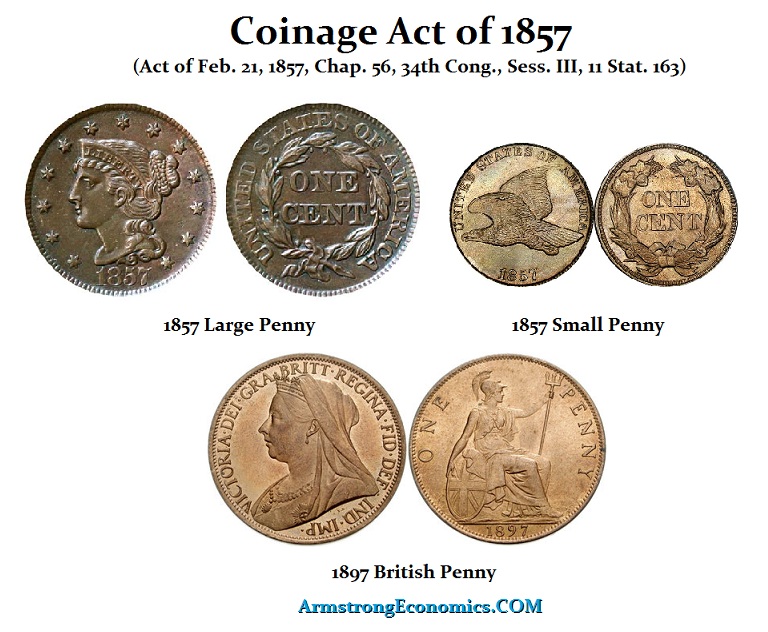
The government first proposed the penny in the Coinage Act of 1792. Pennies and half-pennies went into production for the first time in 1793 with a composition of 100% copper which weighed 13.48 grams (0.475 ounces). From 1795 to 1857, the government reduced the copper penny in size with a new weight of 10.89 grams (0.384 ounces). It was the Coinage Act of 1857 (Act of Feb. 21, 1857, Chap. 56, 34th Cong., Sess. III, 11 Stat. 163) that the coinage was radically reduced with the composition of the penny being  88% copper and included 12% nickel, which produced a silver-like appearance. The weight was reduced to 4.67 grams (0.164 ounces). By changing the metal content, they justified that this was intrinsically worth more by adding nickel to pure copper.

In 1864, there was another Monetary Reform following the war as inflation set in and drove the value of metals higher. The silver was really removed from the 3 cent coins were now being produced in nickel starting in 1865 and most silver coins were being melted down given the silver was worth more than the face value. It was 1864 that they introduced the two-cent coinage as well reflecting inflation. The design of the penny was the Indian Head until 1909 when they change to the portrait of Abraham Lincoln. From 1864 to 1942, the penny was redesigned penny and it now weighed 3.11 grams (0.109 ounces) and nickel was removed leaving the composition primarily of bronze (95% copper, 5% zinc and tin). In 1943, due to the war, copper rose in value so then struck pennies composed of steel zinc-coated for just one year. The steel penny weighed 2.72 grams (0.095 ounces). From 1944 to 1981, the penny was composed primarily of copper (95%) and zinc (5%), with a weight of 3.11 grams (0.109 ounces). After 1982, copper was eliminated from the penny. The composition was changed because the value of the copper in the coin was greater than one cent. From 1982, the penny became 97.5% zinc composition, which was copper plated. With the commodity boom into 2011, the cost to mint a penny became 2.41 cents. The crash in commodities reduced the cost to 1.83 cents by 2013.
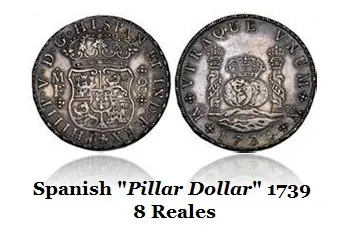
The Coinage Act of 1857 was an act of the United States Congress which ended the status of foreign coins as legal tender, repealing all acts “authorizing the currency of foreign gold or silver coins”. Specific coins would be exchanged at the Treasury and re-coined. Up until 1857, foreign coins circulated as legal tender. The Spanish 8 reals were known as a Pillar Dollar. This was the primary money supply during the Colonial period rather than British coins. In fact, the Spanish dollar was officially declared legal tender (accepted for taxes) by the Act of April 10, 1806.
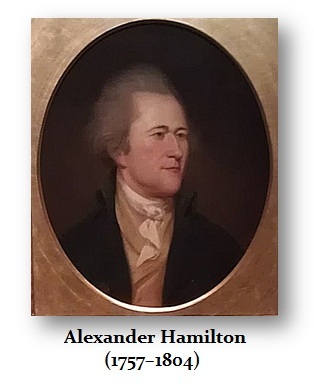
The United States following the Revolutionary War had no gold reserves. Therefore, in 1792 when the establishment of the US mint came into play, the sole medium of exchange in terms of specie was the foreign coin. Alexander Hamilton proposed that foreign coin should be allowed to circulate freely for a period of three years until the new mint in Philadelphia was running at full capacity. This clause allowing the foreign coin to circulate was renewed several times before it was formally authorized by the Act of April 10, 1806. By 1830, about 25% of all circulating coins were of Spanish origin.

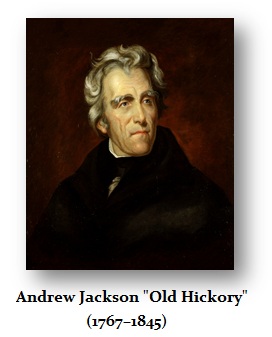
President Andrew Jackson supported foreign coin as legal tender in his famous war with the Bank of the United States in the Gold Bill. Jackson set in motion a major financial crisis as every bank began to issue their own currency. Jackson’s support of foreign coin ended up making it difficult for the US to retain its overvalued worn Spanish silver in the 1840s as they vanished from circulation and private issues appeared known as Hard Times Tokens. It was not until the early 1850s that the US mint had finally been able to match demand for the foreign coin with the production of American issues.
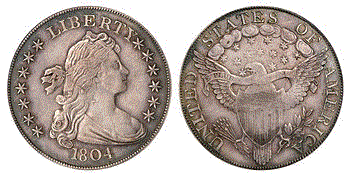
The Act of April 10, 1806, was passed because of the fact that there were no silver dollars minted by the United States at all between 1805 and 1840. In 1792, Congress adopted a bimetallic standard and the 15 to 1 ratio of silver to gold. The precious metal content of a US dollar was fixed at 371¼ grains of silver or 24¾ grains of gold. By 1795, the 15:1 ratio was under pressure because of the revolution in Paris as Gold rose against silver pushing the ratio to 15½ ounces of silver to one ounce of gold. By 1799, the ratio continued to expand reaching 15¾ ounces. This presented a huge arbitrage opportunity, so bullion dealers bought United States gold coins using Spanish silver coins and they shipped them to Europe to be melted and re-sold profiting almost 1oz of silver. The net gold capital outflow was huge and American coin was vanishing rapidly. Finally, in 1804, when Napoléon Bonaparte became emperor,  President Thomas Jefferson was forced to order the suspension of minting gold $10 eagles and silver coins. All we see are copper coins being produced at this point in time. This was the backdrop to the Act of 1806 which made all foreign coins legal tender.
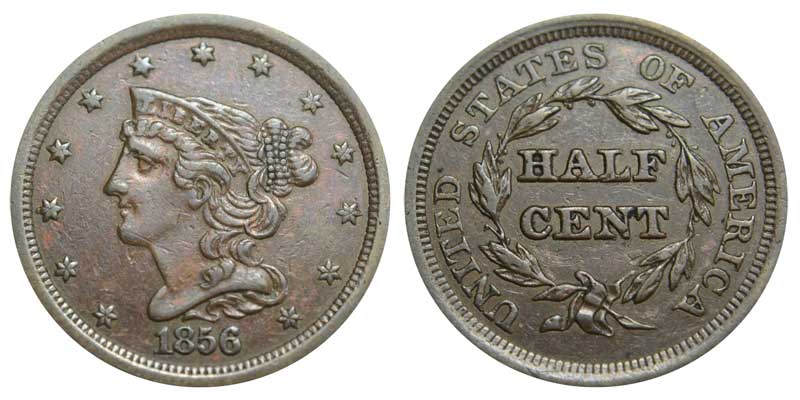
In addition to demonetizing foreign coins, the Coinage Act of 1857 also discontinued the half cent. Furthermore, the penny was reduced in size. The large cent was discontinued and regular coinage of the Flying Eagle cent began. The Act fixed the weight and measure of US one-cent pieces at 4.655 grams, which was composed of 88% copper and 12% nickel. It also mandated that this new copper/nickel alloy be received as payment for the worn gold and silver coins turned in at the mint. The effective aim was to limit the domestic money supply by crushing European competition. This was the first major step towards the government essentially having a monopoly over the money supply.

The Coinage Act of 1857 significantly altered the way American business was conducted. Since the beginning of the Colonies, businesses accepted any form of payment as long as it was made of specie. Following this Act of 1857, American business no longer accepted foreign coins and only US coins were accepted. Throughout this period, there was fierce competition among foreign exchange dealers in the United States. The ability of the US Mint to finally produce enough coinage made much of the foreign silver coinage obsolete.

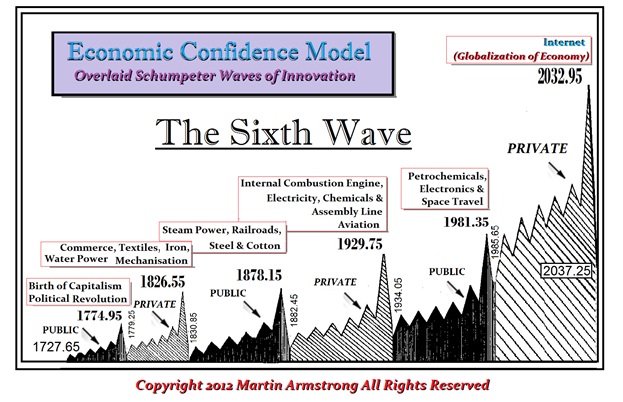
The Economic Confidence Model & Why there are 6 waves


QUESTION: Dear Mr. Armstrong,

Firstly – sorry to hear about the passing of your mother.
Secondly – thank you very much for reading and answering questions.
My question – what is the significance of the six repetitions in the ECM? Six 8.6 years make a cycle and six of these make a larger cycle and then six of these make a super-cycle. Why six? Why not five or seven? Can you explain the significance?
Thank you
g
ANSWER: The Economic Confidence Model is actually a three-dimensional wave structure. The volatility is a different frequency and that is what determines the number of 8.6-year waves for this is building in intensity. What you get at the end of these 51.6-year waves is very profound. After the 1774.95 peak, we end up with a revolution against the monarchy. The next wave peak in 1826.55 Russo-Persian War, 1826-1828, Greek War of Independence, Battle of Monte Santiago between Brazil and Argentina, Mexican Constitution is formed, the Maryland Democratic Party begins creating the confrontation between the Democrats and Republicans (South v North), and even Thomas Jefferson and John Adams both died on the 4th of July 1826 (1826.50) whereas the peak of the wave was July 19th. The next wave 1878 saw the Long Depression which was called the “Great Depression” until 1929-1932. Then the next wave was 1981.35 which marked the peak in interest rates even to the day. The next one will be 2032 and this will be followed by the shift from the West to the East in economic power.

The Creature from Jekyll Island – Unprofessional Propaganda Book


The_Creature_from_Jekyll_Island-2

QUESTION: Martin. Have you read the book Creature of Jekyll Island by Edward Griffin it is about the Feds and how they control? Many years ago I thought it was fiction but after reading it again it is true. My Question what can we do money will be what they want it to be the control?

ST

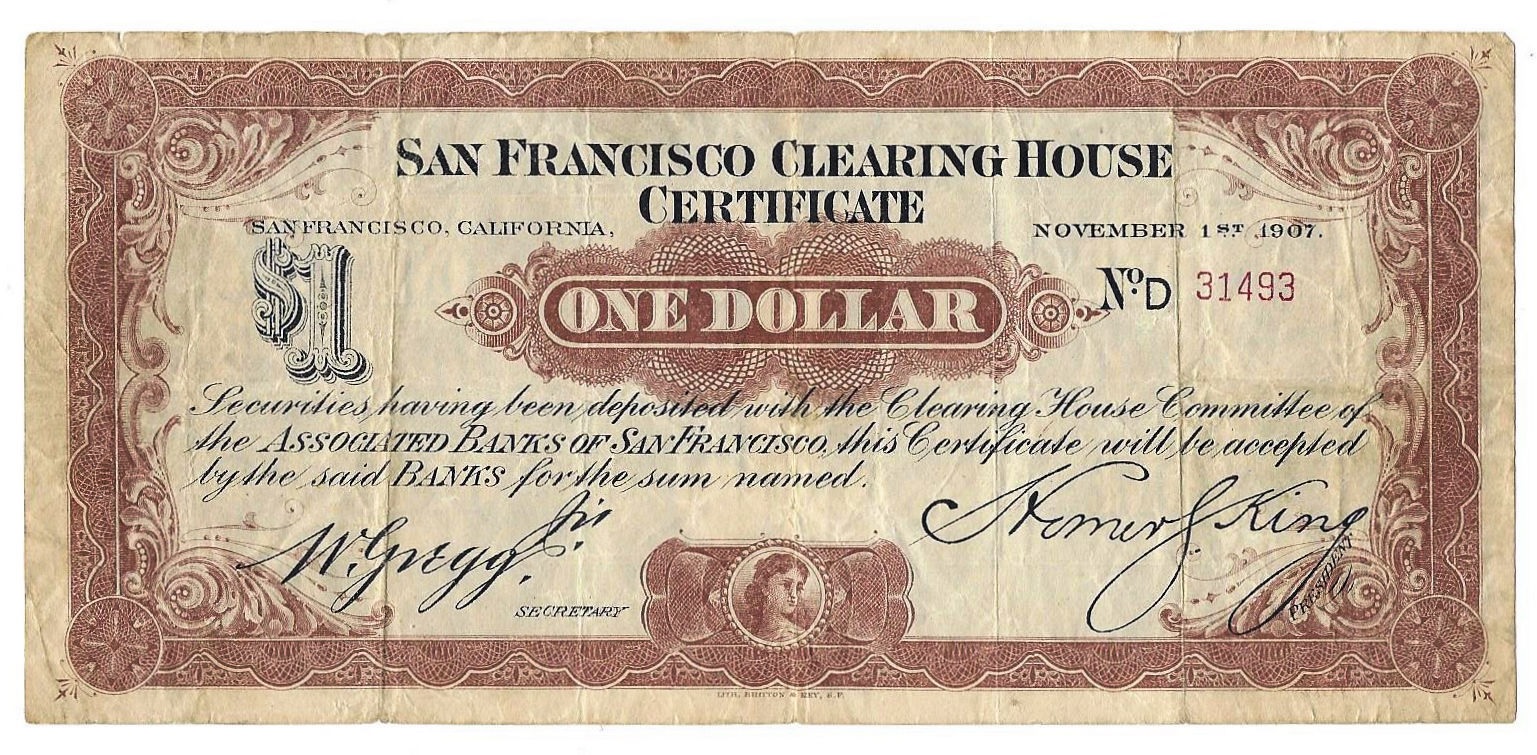
ANSWER: The book you refer to is propaganda. There are quotes in there that he simply made up about the Rothschilds. Go ahead and try and find the source. I have written about this before. That book is highly dangerous for it completely misrepresents and fails to understand that elastic money began in the 1850s and was created privately by clearing houses. It worked perfectly fine and it was not economically disastrous but BENEFICIAL!

The ability to create money by the Federal Reserve is essential. However, that design was directly beneficial for it would buy ONLY short-term corporate paper in a crisis when banks could not lend. Buying in corporate paper saved jobs. The key was a simple fact it was corporate and NOT the government. Corporates have to pay back – the government does not.

It was not that the Fed was evil, it was that the Fed was usurped by Congress during World War I and directed to buy only the paper of the government. It was that aspect that has altered the role of the central bank and is demonstrated who the ECB in Europe now own 40% of all government debt and they cannot stop without creating a crisis.

The Creature of Jekyll Island advocates what Jackson did, and that will lead to a massive Sovereign Debt Crisis among the States and undermined the entire economy both domestically as well as internationally. That is by no means the answer. The answer lies in the curtailment of politicians. The banks owned the Fed BECAUSE it was a bailout system that they paid into. It was never intended that taxpayer money would be used to bail out banks. Once the banks became the seller of government debt, they then had a grip on government and with the Fed only buying government debt, the entire system is nothing like the intended design.

Interbank Market Collapsing


QUESTION: Mr. Armstrong; Has interbank lending collapse due to a lack of confidence concerning counter-party risk?

Thank you for being a rare source with experience

ER

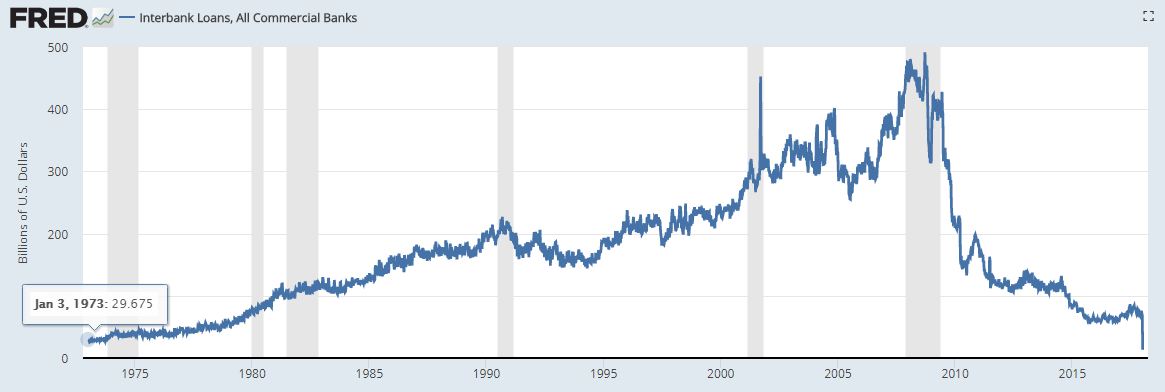
ANSWER: Yes that is a correct statement. The failure of Lehman and Bear Sterns was the result of interbank lending when they could not make good on the collateral they posted the day before in the REPO market. Then we had the collapse of MF Global, which was also a loss linked to the overnight markets. Now mix in the LIBOR scandal and banks were scrutinized for manipulating LIBOR rates in the interbank market.

The interbank lending market is a market in which banks extend loans to one another for a specified term, typically 24 hrs. Most interbank loans are for maturities of one week or less, the majority being overnight. Such loans are made at the interbank rate (also called the overnight rate if the term of the loan is overnight).

The collapse of this market is a clear warning that liquidity is extremely vulnerable. When crisis strikes, liquidity will simply vanish entirely. This warns that volatility will rise sharply and it appears to be predominantly focused in on the debt market.

The Analysts Are Turning Back to Bearish Again


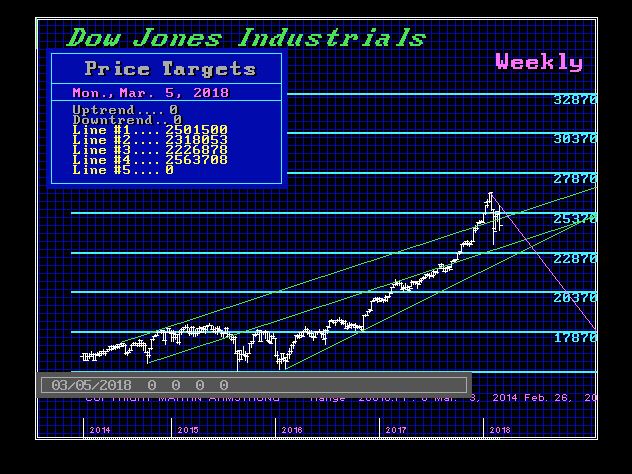
CNN Money is reporting the headline “A top JPMorgan Chase executive is warning that stocks could fall as much as 40% in the next few years.” CNN reports that Daniel Pinto, JPMorgan’s co-president, said on Bloomberg Television he believed that market gains should continue for the next year or two. However, he added that investors were nervous could result in a “deep correction” of between 20% and 40%, “depending upon the market values at the time the downturn starts.”

Indeed, this was the pause we were looking for from January. We did not see a collapse as in terms of 1987. Instead, this is simply the transition period where the marketplace must come to grips with a Sovereign Debt Crisis and that means rising interest rates will devastate the bond bubble. So exactly how does that equate to a 40% decline in equities?

What is clear is that the initial stages of this consolidation period involved the marketplace coming to grips with the shift from PUBLIC to the PRIVATE rationale. In other words, inflation, rising interest rates, the rapid rise in interest rates, explosion in public debt, and the inability of governments to fund their never-ending deficit spending at the federal, state, and local levels. Then as the economy begins to worsen, this will also historically lead to trade wars.

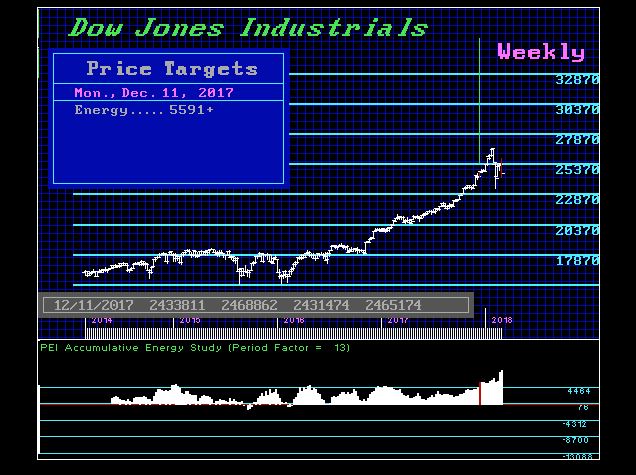
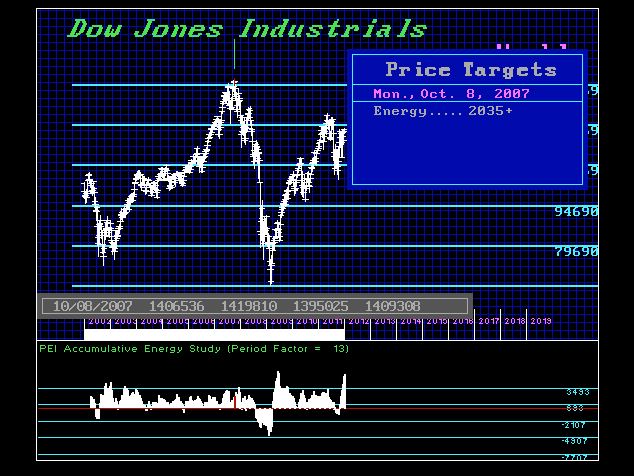
This is good news. We need the majority of analysts to turn bearish in order to restore the upward bias we have enjoyed for the past 8 years. We can see that our Energy Models are not in a position for a major high. They have been rising, not declining as new highs were made. This strongly suggests we will still see higher highs in the years ahead. The more analysts we get back to bearish, the strong the breakout to the upside later on.

Paradoxes of the Sexual Revolution


As part of CCA III: The Sixties, Mary Eberstadt, author of An Anxious Age: The Post-Protestant Ethic And The Spirit of America, gives a lecture at Hillsdale College on the Sexual Revolution.

Putin’s Address to the Nation & the World


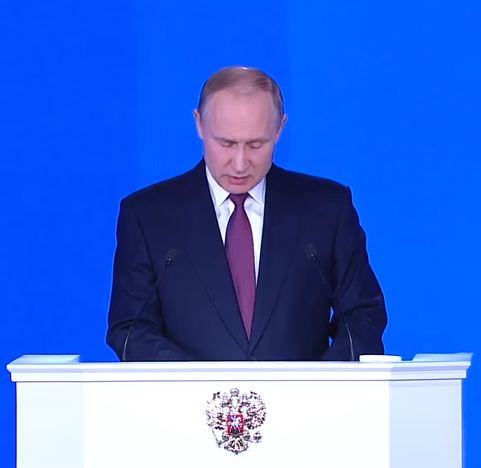
Putin’s address on March 1st to the Federal Assembly seems to have sparked a lot of crazy emails with people talking nonsense about things they do not even come close to understanding. Yes, the headline grabber was Putin’s statement about a new invincible cruise missile. I will address that in a moment. Overlooked, however, was Putin addressing the real issues of economic concerns that seem to have gone over everyone’s head. The problem with the Oligarchs where he is implying that things need to change for the good of Russia. China moved to Capitalism directly from Communism and we see the difference with China poised to surpass the US economy by 2032 and is already the second largest economy in the world. Russia, on the other hand, simply moved from state-controlled economic system to one where political friends became Oligarchs and prevented a free market economy. Russia economically ranks 12th in the world behind the USA, China, Japan, Germany, France, United Kingdom, India, Brazil, Italy, Canada, and South Korea. This is what Putin was addressing, the need to truly open up the economy to competition. If you try to compete against an Oligarch by opening a restaurant in Moscow, you will be lucky to survive beyond 24 hours. Russia is economically a third world country with a lot of weapons. Putin realizes that for all its military power, it collapsed BECAUSE it did not have the economy to support its military ambitions.

Putin also addressed trying to keep people from leaving Russia. Despite the Global Warming movement that is really trying to reduce the population, in fact, the population is declining among the industrialized nations and Russia is no exception. The population of Russia peaked at 148,689,000 back in 1991, just before the breakup of the Soviet Union. Ever since the collapse of Communism, people realize that the State will not simply take care of them. As a direct result, the birth rates have been steadily dropping and there have been abnormally high death rates in Russia as well among the elderly. Russia’s population has been declining at an annual rate of 0.5%, or about 750,000 to 800,000 people per year since 1991. Add to this figure, the migration of Russian women looking for Western men, and you have a crisis brewing in the decline of population in Russia that threatens its long-term viability.

Nevertheless, the area of Putin’s speech that has sparked the wildest claims were those comments which mentioned the invincible strategic nuclear systems in various stages of development. The boast of a missile that can penetrate the US defense system has been known behind the curtain as the RS-28 “Sarmat” system which is a new land-based heavy intercontinental ballistic missile (ICBM). This is what is being fitted with advanced technology to assure penetration of any missile defense.

Putin definitely made global headlines with these comments. However, I really did not think it warranted comment since Russia’s ability to defeat U.S. missile defenses is nothing new. I suppose I have known that fact but it seems many did not. Let me explain something that may not be common knowledge. U.S. policy has been not to deploy a defensive system that could neutralize a Russian retaliatory response to a U.S. nuclear attack. The reason this is the basic policy is the concern that such a system which was called Star Wars, would destabilize the world and result in a new arms race where Russia would be driven to re-establish a retaliatory capability. Putin’s response was directed at Trump and his administration’s idea of reversing that policy creating a new Ballistic Missile Defense Review. This was part of the February 2018 U.S. Nuclear Posture Review which states that any improvements in U.S. defensive capabilities will be deployed in such a way as to “preclude an arms race” with China or Russia. Therefore, Putin was addressing this very issue and to make it clear that there MUST remain a balance between powers for all the nukes keep everyone in check.

Putin also addressed a maneuverable hypersonic glide the “Avangard” which is a new missile system with a vehicle of this type. Putin also mentioned a long-range nuclear-powered unmanned underwater vehicle that can be fitted with a nuclear warhead, known commonly as “Status-6.” Both of these systems are designed to evade any U.S. defensive measures — Avangard by presenting an unpredictable flight trajectory, while Status-6 is an entirely new sea-based way to deliver a nuclear weapon. Both are designed to maintain the power balance.

The invincible new cruise missile was really a statement to Trump not to start a new arms race. You simply have to understand what is going on behind the curtain right now.

GDPR – Are You Ready?


The new so-called “General Data Protection Regulation” (GDPR) of the EU goes into full force on May 25, 2018. GDPR is a serious measure which is really designed to stem any criticism of the EU Commission. The claimed purpose is to stop propaganda pretending this will boost consumer confidence, revive the economy and generate billions of dollars in savings. What this is all about is the plain fact that this regulation will lay the foundation establishing a new layer of bureaucracy pretending to protect citizens but will burden the private sector since there are no specific injuries that are defined in advance leaving the enforcement arbitrary in the hands of bureaucrats at their discretion.

Across all of Europe, nobody understands exactly what is allowed and what is forbidden, who has to take what action, but the penalties of up to €20 million or 4% of your annual turnover are shocking. If you violate these uncertain rules when using personal data who can find yourself charged for simply doing normal business. This new EU regulation provides for a major threat to all companies in every field without exception. It appears to be clandestinely intended to be a revenue-raising tool that is just undefined. This regulation could be the straw that breaks the back of public patience and economic development in Europe. So far, such actions were always directed against individual industries such as the banks, which everyone else ignored since it was not their pocket being hit. This submissiveness unfolded more like the famous saying of Martin Niemoller (1892-1984) how the Nazi came for each group one at a time and nobody said anything until it was their turn and there was nobody left to ask for help.

Nobody knows if it is even okay to congratulate a customer on a birthday. If you can only send one e-mail to people who have expressly agreed in advance, can you send any sort of greeting even for Christmas? You are not allowed to send these persons any suitable e-mail or ask them for authorization by phone. A letter with a request for permission to send an e-mail is permitted. Lawyers cannot interpret exceptions in the vague formulations for even that will be just opinions that vary from one lawyer to the next. Everyone wants, everyone needs clarity but it does not exist!

This legislation is akin to the Writs of Assistance entered by King George III, which sparked the American Revolution. The defending lawyer against the King’s Writs of Assistance was James Otis (1725-1783) who pronounced these writs were “the worst instrument of arbitrary power, the most destructive of English liberty, and the fundamental principles of law, that ever was found in an English law book.” Otis warned that the king placed discretion in the hands of every agent to act as he desired. Nothing has changed for the government can do whatever it desires today and it is always the burden of the citizen to prove he has any rights whatsoever.
The EU has created the very same type of act. Allowing penalties to be imposed at the discretion of government agents without any clearly defined law is extremely arbitrary. The only thing truly defined are the penalties which can be up to €20 million Euros or 4% of the gross turnover of any business. Government agencies such as the judiciary, the police, the financial and intelligence services enjoy a special status, naturally.

Lawyers cannot even agree on whether the sending of an email by a company to a person is allowed or not for a birthday or holiday. Does there have to be prior consent to receiving an email? Some lawyers have warned that you may not be able to even send an email to ask for permission to send one. A company who sends unwanted emails commits a punishable violation of the regulation. Simply requiring to have an “unsubscribe” feature fails to comply with the law.

There are the countless emails we all get from Nigeria promising you are now a multi-millionaire just send your personal details so they can clean out your account. Just how is an EU regulation going to be applied overseas? Can a company that bombards people with emails constantly every day just because they look at their site but did not buy anything could be charged in Europe even if they are sending them from the USA. There is such a thing as territorial jurisdiction, but then again there is also extradition agreements. It appears that legitimate businesses will be hunted and fined for just doing commerce. The pretend emails that are criminally intended to grab your money or hold your computer for ransom will never be caught in the process.

The entire basis of Microsoft Windows is to push advertising and to take your surfing the net without any warning they are doing it. The latest Windows version was interesting. We turned off auto-update and two separate computers crashed at the same time and forced a reboot and then took 30 minutes to install updates. This seems that you cannot even opt-out even if you pay for the Pro Version. The vagueness of this law could actually call into question Windows when it is up to the discretion of an agent.

BTW – we do not sell anyone’s names, we do not send endless solicitations every day, anything we send as to notices of posts you must subscribe to for free.

Germany Gets a Grand Coalition


The SPD members voted by a two-thirds majority for their party’s entry into a renewed grand coalition. The acting Social Democrats (SPD) party leader Olaf Scholz came out and said: “We now have clarity: The SPD will enter the next federal government.” The SPD had no choice. The polls showed if they returned and put it to an election, they would lose to the rising right-wing. Germany will move into a grand coalition but it truly lacks the majority support of the German people. This means that political unrest in Germany will continue to rise.

Chancellor Angela Merkel finally reached a deal this past Wednesday to form a new German grand coalition government by handing the powerful finance ministry to the country’s main center-left party SPD in an agreement aimed at ending months of political gridlock. Both the CDU and SPD realized that if they failed, both would lose seats to the rising AfD. Merkel’s conservative Christian Democratic Union (CDU), its Bavaria-only sister, the Christian Social Union, and the center-left SPD agreed to a 177-page deal that leads off with the promise of “a new awakening for Europe.”

Germany has already broken its post-World War II record for the longest time in its latest election on Sept. 24 to the swearing-in of a new government. That is still at least several weeks away. Merkel has been leading a caretaker government, which has not been in any position to play any significant role in the debate on the fate of the EU going forward. That spotlight has been taken by France’s President Emmanuel Macron who seems to enjoy his newfound power.

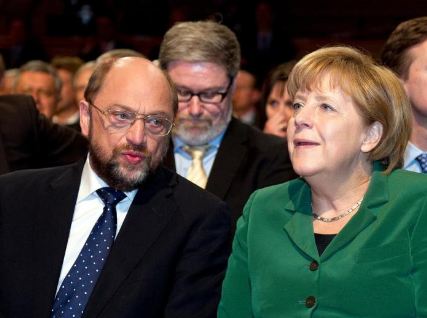
Schulz’s has taken a course in recent months that simply undermined his authority. On election night, Schulz vowed to take the party into opposition against the CDU. He reversed course in November after Merkel’s efforts to build a coalition with two smaller parties collapsed. Merkel needed only the approval of a party congress of her CDU which seems to do whatever she tells them to do. The Social Democrats are set to get the foreign, labor and finance ministries to run. The finance ministry is the major prize, for it was held by Merkel’s CDU for the past eight years. This has been a major influential position given Germany’s status as the eurozone’s biggest economy. The interior ministry, also held by the CDU, would go to Bavaria’s CSU, which has pushed hard to curb the number of migrants entering Germany.

Canada Will be the Most Impact by a Steel Tariff


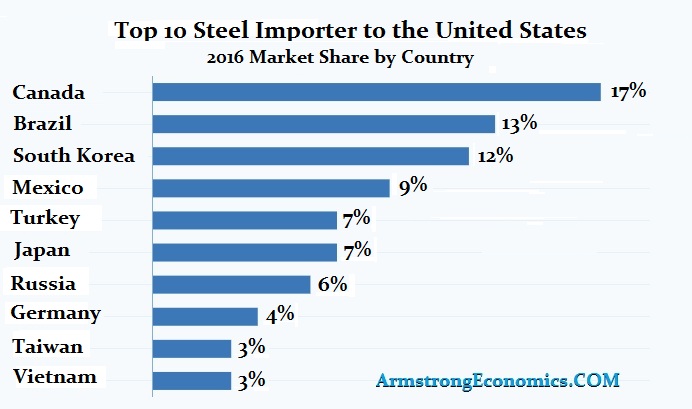
Canada is the largest exporter of steel to the United States. The decline in the Canadian dollar has helped this trend in particular. Trump is clueless when it comes to the impact of currency on foreign trade. If he wants to do tariffs, they MUST be indexed to the currency. Failure to do that will cause serious consequences as the dollar rises on the world financial markets in the years ahead. He will create a trade war globally and politicians on both sides remain ignorant of foreign exchange and its impact upon trade numbers.

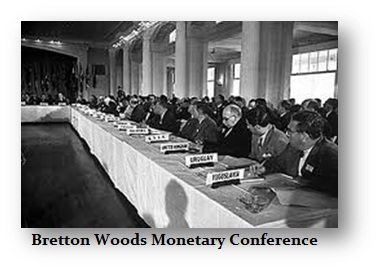
I have stated many times that the entire system of trade is in a state of confusion. Following Bretton Woods, currencies were fixed to the dollar which in turn was fixed to $35 per troy ounce of gold. Therefore, the accounting system ONLY measured the amount of currencies moving back and forth. It was assumed that you imported more goods if the amount of outflow of dollars increased. Consequently, the way we measure trade today has NOTHING to do with the actual amount of product moving internationally. If you spent more dollars but the dollar decline in value by 20%, then even an increase in imports measured in dollars at 20% was no change in the actual product