Posted originally on Sep 8, 2025 by Martin Armstrong |
QUESTION: Hi Martin,
Considering the potential influence of AI, also taking into account the behaviour of the 80 percent that went with the COVID narrative, I was wondering. The AI is being fed by human interaction on the internet, probably somewhere else as well, but very much directed. Now that does not seem to direct to a real advancement, does it? What if the human spirit will be directed to a more animal like behaviour? Like a programmed nature thing that birds show. Go south in winter and go north in spring to get your food. Would not that be a degradation of the general human? Cheers, L.
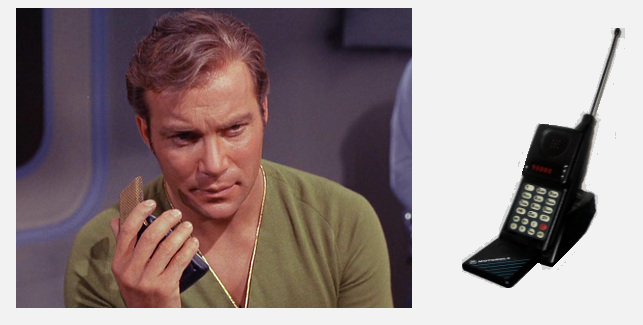
ANSWER: I have been involved in AI, actually, since the late 1960s. I have explained how the TV show Star Trek not only secured funding from Congress for NASA’s Moon mission and named the first Space Shuttle, Enterprise, but also inspired us in the computer industry to dream big. We all knew each other back then. Even the clamshell flip communicators used by the crew of the USS Enterprise are a clear visual and conceptual precursor to the flip phones that dominated the market before the iPhone, and by extension, the iPhone itself.
While Steve never said, “I copied the Communicator,” he did explicitly reference Star Trek when introducing the iPhone. At the 2007 Macworld keynote, while demonstrating the iPhone’s multi-touch interface for the first time, he said, “Boy, have we patented it!” This was a direct and knowing wink to the “pinch-to-zoom” and swipe gestures that looked exactly like the magic interfaces everyone had seen in science fiction for decades, with Star Trek being the prime example. The idea of a sleek, portable, handheld device used for instant communication, information access, and computation is pure Star Trek. The iPhone made that science fiction a reality.
Long before tablets were a practical reality, Star Trek: The Next Generation featured characters using flat, touch-screen devices called PADDs (Personal Access Display Devices). The crew members would carry these thin, slate-like devices to read reports, access data, and input commands. They were used exactly as we use tablets today: for reading, browsing, and as a portable terminal. When Steve introduced the iPad, he framed it as a new category of device between a laptop and a smartphone. For any fan of Star Trek, it was immediately recognizable as the realization of the PADD. The form factor, the touch interface, and its purpose as an information consumption device were all directly inspired by that vision of the future.
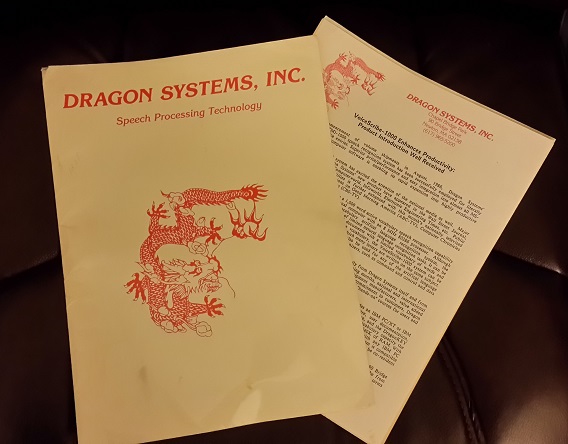
The idea of talking to your computer and it talking back to you in a natural, conversational way was a staple of Star Trek. The crew could walk onto the bridge and ask the computer any question and get a verbal answer. In the early 1980s, I was working with Dragon System when this was all hardware. Today it is software. My kids grew up talking to the computer. They were my guinea pigs to teach Socrates how even to have a conversation with them. My daughter thought it was completely normal and would ask her friends, You don’t talk to your father’s computer? She would bring her girlfriends over, and they would be stunned.
This vision of a voice-activated, intelligent assistant is the entire concept behind Siri (which Apple acquired and integrated into the iPhone) and other voice assistants like Alexa and Google Assistant. The goal was to create the Star Trek computer: an intuitive, omnipresent interface that required no keyboard.
The inspiration wasn’t just about specific gadgets. It was also about a philosophy. In Star Trek, technology isn’t clunky. It’s intuitive, elegant, and seamlessly integrated into daily life. It just works. This was a step back, a second, and take a look at Steve’s core design principle for Apple products. The glowing, glass-like, multi-touch displays of the LCARS system in Star Trek: The Next Generation were a radical departure from the blinking command prompts of 1980s computers. They presented a vision of computing that was visual, graphical, and friendly—a vision Apple brought to life first with the Macintosh and later with iOS.
There’s a wonderful, direct link between Steve’s company, NeXT, and Star Trek. In the mid-1990s, the development team for the video game Star Trek: The Next Generation – A Final Unity used NeXT computers as their development platform. They even sent a letter to Steve (on a NeXT computer, of course) asking for permission to use the NeXTstep operating system’s alert sound as the beep for Geordi La Forge’s communicator badge. Steve, of course, instantly agreed.
Steve Jobs’ brilliance lay in his compelling vision of the future, inspired by science fiction, and in applying Apple’s design and engineering prowess to make it a reality. He didn’t invent the concepts of the smartphone, tablet, or voice assistant, but their most popular and idealized depictions directly inspired him in Star Trek. He was far more inspired by Star Trek than most would ever imagine. We all were!
Then Came the Intelligence
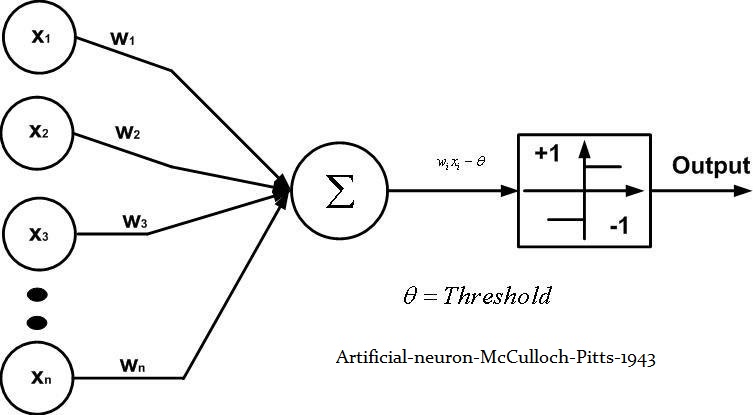
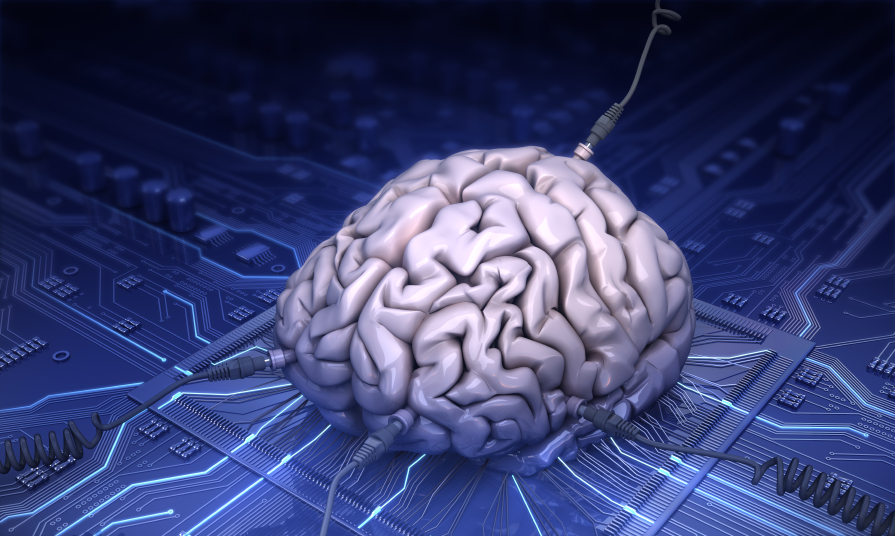
Beyond the gadgets, how can we create a computer that truly understands you and conducts legitimate, original research? There were two theories running around. The original path that 99% of those in AI followed, except me, was the core idea that a neural web (or network) could mimic the brain and that complexity, which could lead to consciousness. This theory is primarily credited to Warren McCulloch and Walter Pitts, known as the Foundational Theory: McCulloch and Pitts (1943).
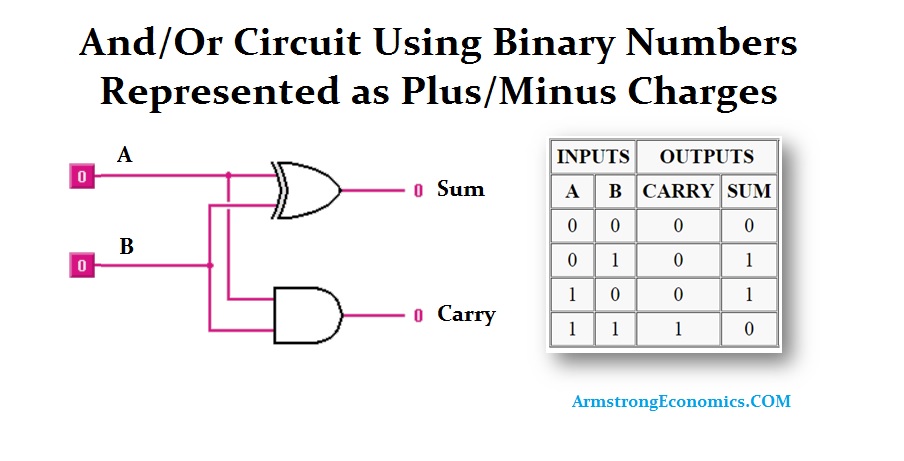
Because I had to do the electrical engineering learning how to create a computer from the ground up, I saw the obvious connection between the McCulloch-Pitts (MCP) neuron, proposed in their seminal 1943 paper, “A Logical Calculus of Ideas Immanent in Nervous Activity,” which was explicitly and directly based on the principles of electrical circuits and Boolean logic.
To be a good trader, you also require visual skills, which enable you to see patterns within patterns. So while the software guys were all enamored with the McCulloch and Pitts theory, I rejected that idea after doing my own testing. IBM is spending over $1 billion and employing over 3000 people to create its Watson, which they believe will be able to cure cancer.
The documentary film Man vs. The Machine was about the famous chess match between Deep Blue and Garry Kasparov. He beat the computer at first. When the final match took place and Deep Blue beat Kasparov, IBM’s shares rose 15% and they would not grant him a rematch.
Real Artificial Intelligence is something that learns and analyzes on its own to create its own conclusion. In all honesty, 99.999% of what people present as AI are simply expert systems that can be distinguished relatively easily because all they are doing is looking up some subject from rule-based systems. The neural nets were supposed to be the great hope.
IBM’s Watson could search the entire internet and gather every piece of information possible. That was the easy part. What IBM lacked was the expertise in conducting research. How do you determine which piece of information is more important than another? They were unable to develop a genuine analysis capability. All of these AI programs are interesting. However, I have tested them to see the results, and if the sources they base their comment on are FAKE NEWS, they cannot analyze whether the information is fake or real.
The presumption was that our minds are just supercomputers, all stems from the 1943 theory of McCulloch and Pitts. They ignored perhaps the critical understanding of what makes one person brilliant at math and another a brilliant artist who can’t count beyond 1,000.
This theory that our minds are simply supercomputers ignores some critical traits and how to distinguish one person from another. There was this idea that if you create a neural net and stuff in all this knowledge, it will learn all by itself. This was just a giant fiction to me, which was up there with the theory that somehow the machine will come to life and decide it wants to rule the world and take over humankind.
My approach was to teach them HOW to analyze, not WHAT to analyze. I incorporated as much of myself as possible into the code, without the human flaws that make life interesting. I taught Socrates how to analyze, rather than relying on the chance of a neural net that cannot be tested. I’ve chosen a completely different path, rejecting the black-box approach of throwing in a heap of information, shaking well, and hoping for the best, like James Bond. WATSON failed because they followed McCulloch and Pitts, when I did not.
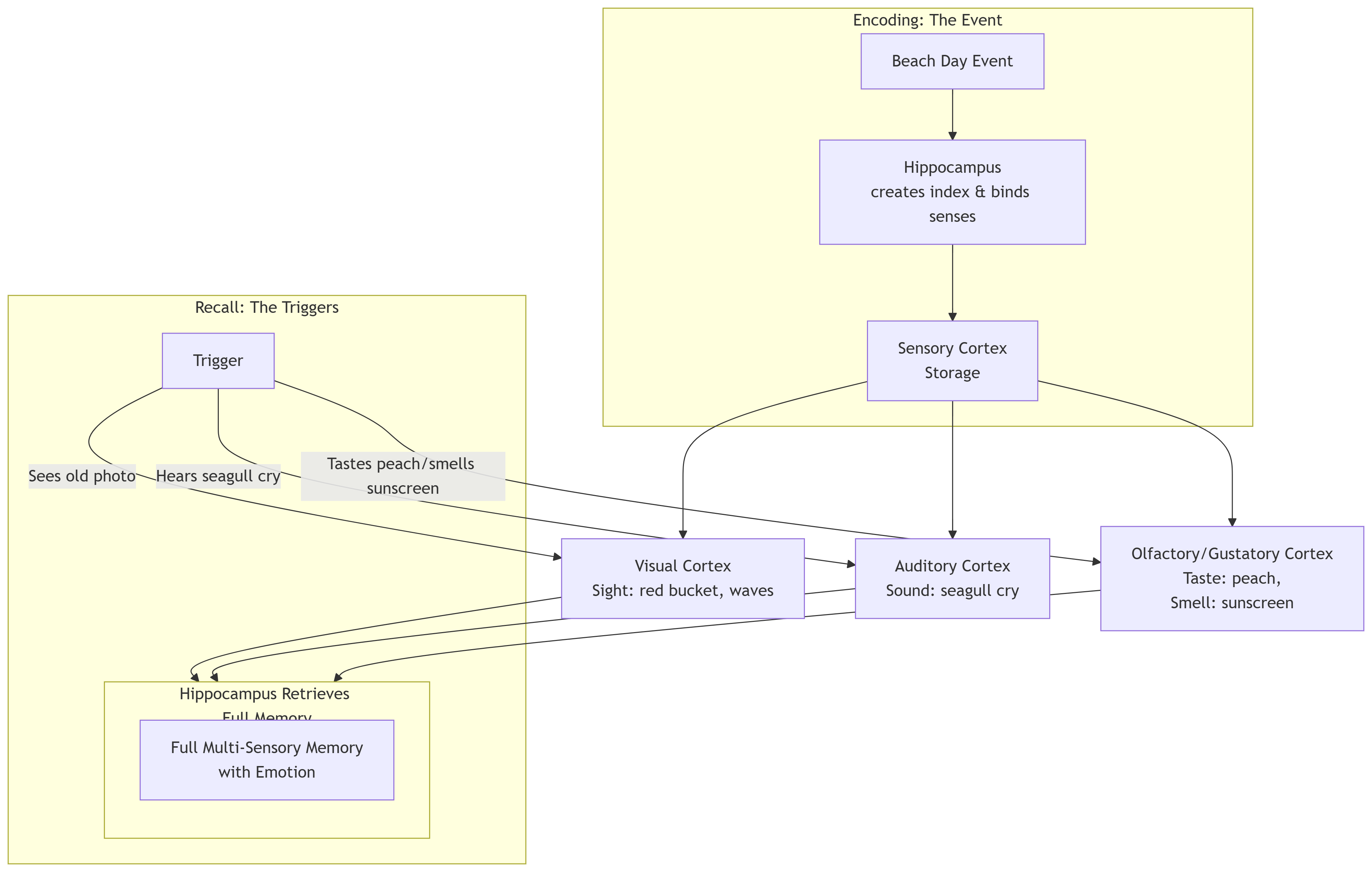
What McCulloch and Pitts overlooked is that the brain is far more complex than a simple AND OR CIRCUIT. You may have met your first love in a restaurant, and returning to that place suddenly and involuntarily brought back that memory. Or you hear that song that was playing, and again you involuntarily retrieve that memory, or perhaps it may have been the food.
Our brain does not function as an electrical circuit using Boolean logic. Going down that path creates impressive retrievers, but by no means will they EVER produce actual original analysis. That is simply impossible.
Most know I have two French Bulldogs. They each have their own unique personality, just like humans. As I delved deeper into how we actually think, I discovered that my dogs think in the same functional manner, looking at patterns and remembering from past experiences. I get up with my coffee cup, and they know where I am going. They anticipate my actions.
The general consensus among dog experts and trainers is that the average dog can learn around 165 words, with the most intelligent breeds (like Border Collies and Poodles) capable of learning 250 or more. They understand what I say, but some words I have to spell, so they don’t always know what I am saying. I feel sometimes I have to do that in Washington, DC, as well. As I have pointed out, even a lion can love a human.
I’m sorry, but neither our minds nor those of animals function in this simplistic electrical circuit manner using Boolean logic. This is why Socrates has been able to do actual research and teach me a thing or two. However, it lacks the expertise in the medical field to cure cancer. These AI language-based programs can be impressive if you do not understand the coding and capabilities behind the design. They are remarkable retrieval aids, but do not expect them to forecast World War III and IV.
Deputy Minister Agila Barzdienė believes that joining the European Union was the economic “reset” the nation needed. On the surface, Lithuania’s GDP has risen since joining the EU in 2004, but this is not the product of some magical European design.
“Economically, it’s an obvious leap. Lithuania’s GDP has almost doubled, foreign direct investment has increased eightfold, exports have increased sixfold. Wages have increased sixfold, and inflation has been kept at 2%,” Barzdienė stated. “For example, in 2004 the average Lithuanian could not afford a good cup of coffee in Milan, but today he does not feel the difference between Vilnius, London or Lisbon, and this is an important indicator. Now the average pre-tax salary is about 2000 euros, after that it is 1300-1400 euros. By 2030 we hope to reach 90% of the EU average salary.”
The growth was largely the result of capital inflows, cheap credit, and foreign investment chasing “new” markets after the fall of the Soviet Union. The EU absorbed these nations, promising prosperity if they would only surrender their sovereignty. Lithuania has benefited in the short run, but it is now just as handcuffed to Brussels’ mandates. Net Zero policies, sanctions, and globalist directives all come with hidden costs. The Baltic states are exposed to energy insecurity after Brussels cut off Russian supplies, and yet their leaders cheer for policies that undermine their own industries. They are also on the frontlines for NATO expansion as the bloc attempts to corner Russia.
Lithuania has drastically increased defense spending in recent years as the nation braces for an alleged Russian invasion. “The government is striving to keep at least 1.3 billion euros from the defense budget (in 2026 it will be 5-6% of GDP) in the national economy. Investments are being made in startups in the defense sector, and the DEVITUS program has been created with a budget of 300 million euros,” the deputy minister commented.
Today, Lithuania set up a blockade on and near the bridge in 🇱🇹Panemunė, linking Lithuania & Russia. Demonstrating our new military counter-mobility measures, the setup includes mines, hedgehogs, dragon's teeth, etc. This is a precautionary step to ensure more effective defence. pic.twitter.com/S82UaU6rEf
Yet, the nation believes it is closer to war than ever before as a result of its alliance with the EU. Lithuania has implemented a new defense mechanism to prevent a land invasion—dragon teeth. These “dragon teeth” are large triangular concrete blocks that are intended to block the path of war tanks. “We are starting from the tactical level — specific obstacles on the border — and later we will combine the entire engineering plan into one conceptual system,” said Raimundas Vaiksnoras, commander of the Lithuanian army.
Lithuania will hold the rotating presidency of the EU Council in 2027. By 2027, according to the computer models, the world will begin to feel the full impact of war, and discontent will rise into 2028. Moldova was sold the globalist dream of Brussels. The short-term pay off is not expected to last.
I have created this site to help people have fun in the kitchen. I write about enjoying life both in and out of my kitchen. Life is short! Make the most of it and enjoy!
This is a library of News Events not reported by the Main Stream Media documenting & connecting the dots on How the Obama Marxist Liberal agenda is destroying America









 Centinel2012