Basel III – IMF – Liquidity Crisis


QUESTION: As of today, Basel III comes in effect. Rumour goes that in a couple of months, there will be a lot of turmoil on the market and it would be the start of the implementation of an SDR like thing where people would lose 20-30% of their value and get stuck with this new currency. You have mentioned before this was in the pipeline but no timing was given. Is it really this close or is it for 2020-2022?

PT’S

ANSWER: The IMF has been pitching Washington to let their SDR become the new reserve currency. They claim this would eliminate the problem of the Fed having to worry about external influence v domestic. Let me say that this will NEVER eliminate the issues of international capital flows. The fixed exchange rate of Bretton Woods never prevented that problem and it was that very issue that brought it crashing down. Until we are ready to begin teaching the meaning of a floating exchange rate system and abandon Keynesian economics, I do not see this problem ever being eliminated.

Basel III is separate from the IMF and its purpose is capitalization of banks — not the reserve currency of a dollar v SDR. Basel III was agreed upon by the members of the Basel Committee on Banking Supervision in November 2010, and was scheduled to be introduced from 2013 until 2015. However, implementation was extended repeatedly to March 31, 2019, and then again until January 1, 2022. The Committee replaced the existing Basel II floor with a floor based on the revised Basel III standardized approaches. This revised output floor is to be phased in between January 1, 2022, and year-end 2026, thereby becoming fully effective on January 1, 2027, if the banking system can survive that long to begin with.

The Basel III leverage ratio framework and disclosure requirements (“the Basel III leverage ratio framework”) was supposed to be raised to protect banks from failures. Many were required to raise more capital. The Net Stable Funding Ratio (“Basel III NSFR standards”) was to be applied to participating banks. Moreover, the committee is monitoring the overall impact of Total Loss Absorbing Capacity (TLAC) and banks’ holdings of TLAC instruments. Capital requirements for market risk as well as the committee’s finalization of post-crisis reforms were all supposed to be back-tested. Additionally, profit and loss (P&L) accounts related to the revised internal models-based approach (IMA) for calculating minimum capital requirements for market risk more specifically.
All of that said, the crisis we have is a LIQUIDITY Crisis. This time it has been created especially by the European Central Bank (ECB). By keeping interest rates negative and punishing banks for having cash, they have (1) lent into real estate to get higher yields but this type of asset cannot be sold easily, (2) buying emerging market debt to get a high-yield like Turkey. Turkey was the favorite of Spanish Banks and the capital controls that Turkey did before the election sent shivers down the spine of institutional investors. The ECB has driven banks into these markets that are notoriously illiquid. This means that under Basel III, banks will not have the liquid assets to support their capitalization requirements. It becomes more likely that the Basel III requirements will be suspended or else there will be a wholesale collapse of the banking system.
PM May to Join Left Against Her Own Party?


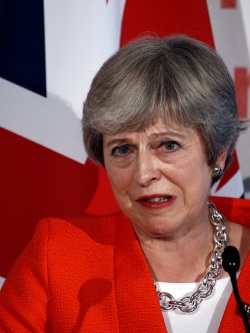
Anyone who wants to understand why the dollar is the only game in town, all they need do is look at the politics in Europe. It is just absurd. In Britain, Prime Minister Theresa May simply REFUSES to abandon her BREXIT plan no matter how many times Parliament votes against it. She survived a no-confidence vote last year so nobody can oust here until December and she refuses to resign. She has made a real disgrace of how Parliamentary politics operates.

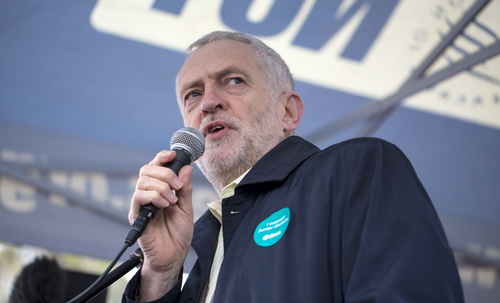
PM May will now ask the EU for another extension to the BREXIT deadline of April 12th to “break the logjam” in Parliament. She is now turning to meet with Labour leader Jeremy Corbyn, who is the closest thing to a communist in the West, to join with the extreme left in hopes of saving her plan.  May has insisted that her withdrawal agreement would remain part of the deal.

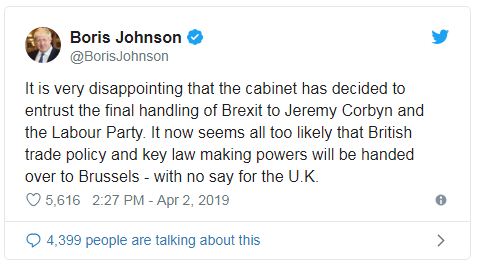
In all my years of politics, I have never seen such absolute stubbornness on the part of any world leader to the point that she will alienate her own party. There is no question that this will outrage Tory Brexiteers. Boris Johnson has come out beside himself saying that now Labour will decide the fate of Britain.

Under the terms of hard borders and remaining in the customs union, Britain under May has rejected the democratic process entirely. She is tieing the fate of Britain to that of the EU, which in an of itself is in dire straights. If we needed any explanation as to why the British pound will collapse in the future, all we need do is look at this dynamic-duo May-Corbyn for the answer.

If you need any explanation as to why the dollar continues to be the currency to which everyone is fleeing, you have it in spades. Putting the fate of Britain into the hand of Corbyn is like putting Alexandria Ocasio-Cortez (AOC) in the office of President

Liquidity Crisis


QUESTION: I have attended the last 2 conferences and you have said the “liquidity” in the stock market will become tighter coming into 2020 and that there will be less stocks available to buy. Does that have something to do with this inflow of capital from Europe as people become more aware? I read your article about the Emerging Market crisis with great interest and remembered what you said. Is there more information you can share with us on this topic?

CDH

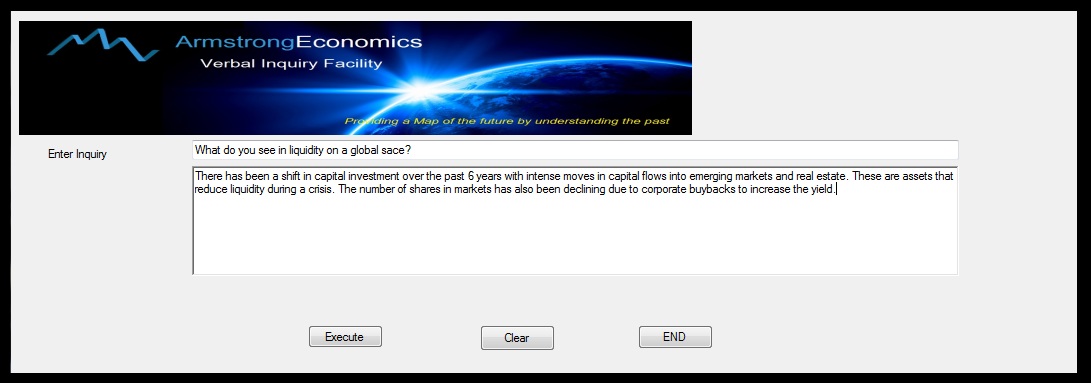
ANSWER: Since Quantitative Easing has failed, capital was driven into non-traditional investments to simply try to earn income. There were institutions buying farmland just to lease it out to get 5% annual income. Others ran off into Emerging Markets. Spanish banks are heavily invested in Turkey. The problem is that this trend has caused a liquidity crisis insofar as capital has been invested in assets that are not liquid. Add to this corporate buybacks that are reducing the supply of stocks available.

All I can say is thank God for Socrates. There are so many global trends emerging that by themselves are confusing and would be impossible for a standard domestic analysts to forecast from a personal interpretation perspective. The combination of investment shifts into real estate, Emerging Markets, and corporate buybacks have created an interesting risk factor for liquidity during a financial panic.


Turkey Elections


Turkish President Recep Tayyip Erdogan and his Justice and Development Party (AKP) have won every vote since the party first came to power in 2002, but this time, the party had risked losing Ankara and faced a tough fight in Istanbul. Erdogan’s AKP appeared destined for defeat in the capital Ankara and faced a dead heat in Istanbul after Sunday’s local election delivered a blow to a party in power for a decade and a half. With 99% of the ballot boxes counted, the joint opposition candidate for Ankara mayor was winning with 50.89% of votes and the AKP on 47.06% at last count. Meanwhile, in Istanbul, Turkey’s largest city and economic capital, the race for mayor was deadlocked with the AKP candidate claiming victory with 48.70% of votes, but his opponent on 48.65% also claimed that he had won.

This is what we are showing in so many elections globally on the docket. We seem to be living in a world that is fed up with governments as is in general, and the disillusionment is growing. The global population appears to be almost evenly divided and this is posing a major problem. Erdogan suffered a severe setback on the weekend as his ruling AK Party was set to lose control of the capital Ankara for the first time in a local election and he appeared to concede defeat in the country’s largest city, Istanbul.

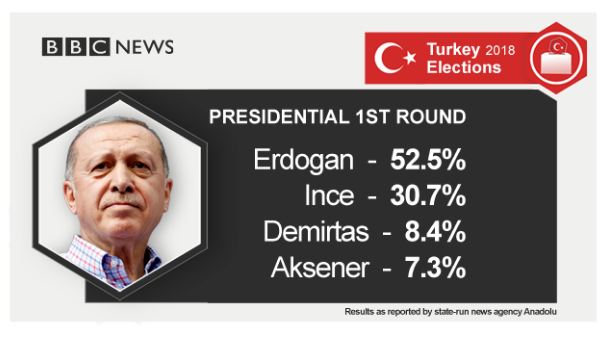
This trend is also associated with civil unrest and it appears that this disenchantment will manifest insofar as neither side will be willing to accept defeat. Indeed, we do live in interesting times. Even when Erdogan won the presidential election in 2018, he did so only by 52.5%. This is indicative of the problem we face. The public is nearly evenly divided no matter what country we look at.

D’oh Canada – Jody Wilson-Raybould Has Tapes of Being Pressured to Take Legal Action Based on Politics….


Oh boy, if you’ve been following the Justin Trudeau scandal surrounding the SNC-Lavalin bribery and corruption case, well, things just got more interesting.  Former Justice Minister, Canadian Attorney General Jody Wilson-Raybould, has stated, repeatedly, she felt pressured by Justin Trudeau to interfere in a criminal prosecution to help a business based on politics.  [Backstory Here – and Here – and Here]

Obviously Ms. Wilson-Raybould knew Trudeau was putting her in a legally precarious position because she took the unprecedented step of recording a conversation with Trudeau’s aide, Michael Wernick, while he was applying the pressure.  LISTEN:

CANADA – […] The recording shows Trudeau aide Michael Wernick telling the Justice Minister Jody Wilson-Raybould that Trudeau “is determined, quite firm,” in finding a way to avoid a prosecution that could put 9,000 jobs at risk.

It also shows Wilson-Raybould, who was also attorney general, saying she regards the pressure as “inappropriate.”

[…] Wilson-Raybould was demoted from her role as attorney general and justice minister in January as part of a Cabinet shuffle by Trudeau. She has testified that she believes she lost the justice job because she did not give in to “sustained” pressure to instruct the director of public prosecutions to negotiate a remediation agreement with SNC-Lavalin.

Wilson-Raybould said in a written submission that she took the “extraordinary and otherwise inappropriate step” of secretly recording a phone call with the country’s top public servant in December because she feared the conversation would cross ethical lines and she wanted an exact account.

“This is something that I have never done before this phone call and have not done since,” she wrote. (read more)

Are 95% of Bitcoin Trades Fake?


QUESTION: Mr. Armstrong; I love the fact you always stand in the middle. Do you believe that 95% of Bitcoin Trading is fake?

Thank you

KL

ANSWER: I did not conduct that study. It does sound a bit high. However, manipulation has been a historical problem in the commodity world. As I stated before, the manipulations were common practice in commodities during the 1970s. It was brought to Wall Street when Phibro took over Solomon Brothers in the early 80s. By 1991, they were charged with manipulating the US government bond market. How did they do that? The very same way these allegations of fake Bitcoin trades are taking place. You put in bids to pretend the market is deep and so you buy ever increasing the price.

Do I personally believe there is fake trading in Bitcoin taking place off-exchange? Absolutely. Would I assume that 95% is fake? I would question that high of a number. I would have to review their criteria for classifying a trade as fake. I would probably place it at the 50%+ level but not 95%. That is just my opinion based upon historical levels of manipulations in commodities.

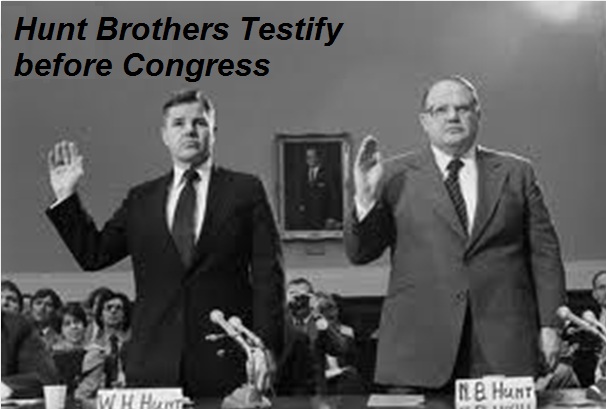
For example, I knew the Hunt brothers as clients in the early 1970s. Only a few months before the high, the world suddenly knew what they were up to. That info was spread by the dealers to get everyone in the retail market to rush in and buy silver with claims it was heading to $100. But the dealers, I believe, bribed the CFTC and the exchange into raising margins to be long on silver and making shorts required to put up a fraction of that margin requirement. The dealers shorted silver, the public lost, and they bankrupted the Hunts. They made so much money that they then began to buy Wall Street.

Inverted Yield Curve Points to Recession?


Last week, the yield on the 10-year U.S. Treasury bill fell below that of the 3-month note for the first time since 2007. This is what everyone calls an Inverted Yield Curve, and is seen as an early indicator of a recession. In that regard, it is conforming to the Economic Confidence Model (ECM) which has been warning that this last leg should be a hard landing economically for most of the world. Nonetheless, while the yield curve has inverted, it has done so in a rather unusual manner. This is NOT suggesting a major recession in the United States. Instead, it is a reflection of global uncertainty outside the USA.

This Inverted Yield Curve is confirming that as the political chaos emerging around the world, and that more and more foreign capital is parking in the dollar. With the May elections on the horizon in Europe, and the October elections in even Canada, April elections in Israel … etc. etc., the capital flows are still pointing ever stronger into the dollar right now. The foreign capital has been buying the 10-year notes driving the spread lower.


We can see that the 10-year premium to the 2-years has been in a major decline ever since our War Cycle turned in 2014. The Yield Curve (10-2yr) has not inverted. This is clearly showing the capital flight to the dollar that has been going on post-2014. This is not reflecting a major recession in the USA, but it is inferring that the ECM will be turning soon

Facebook to Launch a Cryptocurrency & Compete Against Banks?


QUESTION: Why is Facebook going to issue a cryptocurrency? Doesn’t that confirm the evolutionary path of technology?

ND

ANSWER: The term “cryptocurrency” is being thrown around very loosely. It is true that there is increasing hype and speculation regarding a theoretical Facebook Coin. However, this is not a “cryptocurrency” it is simply a digital entry and nothing more. The proposed Facebook Coin is the polar opposite of Bitcoin. AFacebook is creating a pretend cryptocurrency for WhatsApp. This is not a real cryptocurrency. The cryptocurrency enthusiasts are only looking at the label. The Facebook Coin is nothing like Bitcoin (BTC).

Thet Facebook Coin will be pegged to a fiat currency similar to that of Tether (USDT) and USD Coin (USDC) and it will use blockchain technology. The only real unique aspect about Facebook Coin versus a regular stablecoin is that it could be backed by a basket of fiat currencies, all held in Facebook bank accounts. This is more along the lines of the ultimate evolution of what I would expect to become the next reserve currency – a basket of currencies rather than a single currency.

If our sources are correct, this means that a Facebook Coin would easily compete with the rest of the $2-3 billion stablecoin markets where the biggest stablecoin remains Tether (USDT). Tether (USDT) has had some problems with its backing which resulted in its decline by as much as 10% below the value of a U.S. dollar.

That said, since Facebook Coin would be a stablecoin, it will not be possible to invest in it so it would not be a trading vehicle like Bitcoin. That means it would be more of a store of value which is quite different from Bitcoin (BTC) and most other cryptocurrencies where fluctuating prices really prevent them from becoming a true currency digital or otherwise. Clearly, Facebook has no intention of launching a trading cryptocurrency. If they did, it would probably blow Bitcoin out of the water. Facebook is not going this route for it is looking to get into really the digital currency world, not cryptocurrency. However, Facebook’s total stock has a market cap of $463 billion is closer to 4 times that of the entire crypto market cap of $130 billion.

If we pull back the curtain, Facebook is much more interested in a real-world market by creating its own payment network independent of Visa and PayPal. Effectively, venturing into a digital currency world backed by a basket of currencies or allowing clients to select their currency means they would compete for deposits like banks but globally. With Facebook’s immense user base, such as a payment network would be extremely competitive in the banking world. Obviously, Facebook sees that a digital payment network will be unique out of all the other big name fiat payment networks since it will use blockchain technology and its client base to launch it into the future..


Our Flawed Monetary System & Why it is Doomed


QUESTION: You mentioned that Rome had no national debt and no central bank. Exactly how did it function for 1,000 years?

JY

ANSWER: In addition to not having a national debt or a central bank, Rome had no police force or agency charged with enforcing the law. There were specific crimes against the state that would be prosecuted such as arson and treason. But the prosecution of a murder would be carried out by the family. The responsibility for enforcing the law thereby fell on the kin, tribe, gens and patron of the offended individual.

It was the King of England after Magna Carta who began to prosecute people for what was private crimes all so he could make money. By the time of the American Revolution, there were 240 felonies all of which carried the death penalty. So the king got to confiscate all your property and throw your family out on the street all based on what had historically been a private dispute.

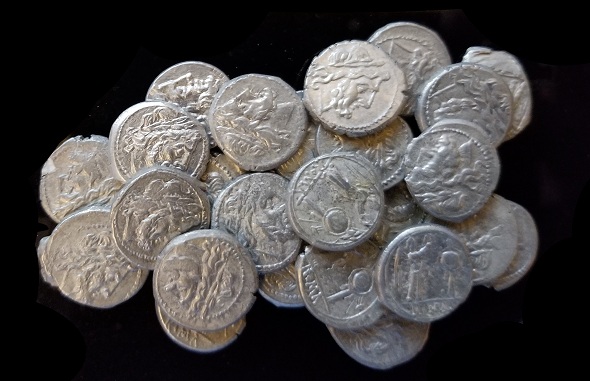
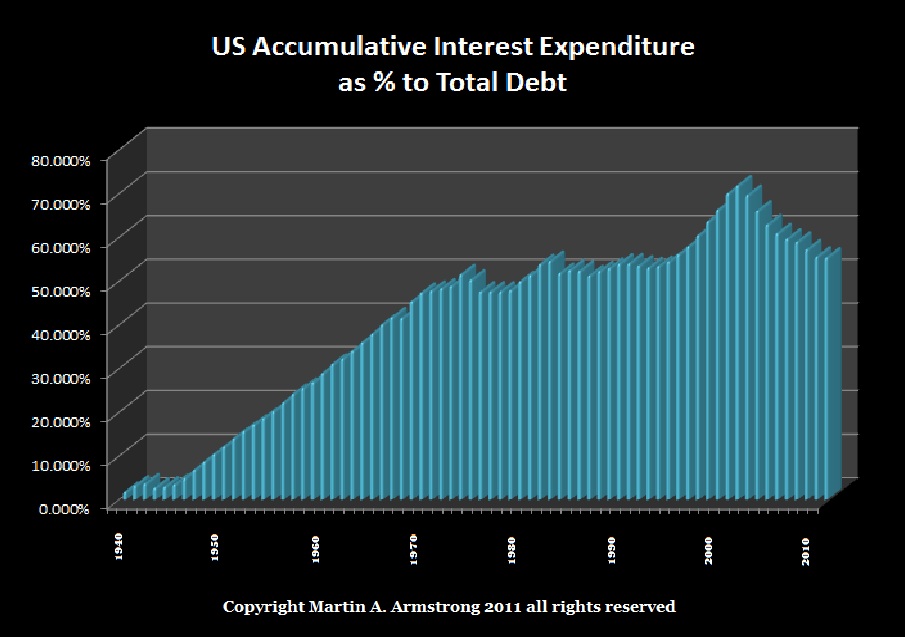
As far as finances, the government simply minted coins to pay its expenses. As I have said, if we just created the money to fund the government rather than borrow, it would be far less inflationary. Because we borrow, with no intention of paying anything off, we must keep paying interest to roll the debt. That suppresses the economy, for it is competing with the private sector. It is a contributing factor as to why 70% of small business get turned down for loans that would expand the economy.

As shown here, the accumulative interest expenditures eventually exceed 70% of the total debt so the money never went to anything such as schools, roads, or social programs. If the government simply created the money, as did Rome, then the economy is segregated between public and private.

Today, the Fed raises interest rates to slow our spending yet it increases the spending of government. It is impossible for the economic theories of Keynes and Marx to ever function when the government is the single greatest borrower. Our current economic system is doomed. No rational person would EVER create such a completely flawed monetary system as this.

Spiral Panic


Armstrong Economics Models

Pujo Committee 1912

One of the often perplexing notions about markets is that there is some huge short-player who overpowers the market and forces it down. Every investigation since the notorious Pujo Hearingsduring the after math of the Panic of 1907 has begun looking for the mythical short player. Never has any investigation every found anyone. It was after a resolution introduced by congressman Charles Lindbergh Sr. to probe Wall Street assuming the crasg was abnormal and must have been caused by someone. Arsène Pujo (1861-1939) of Louisiana was given a congressional authorization to form a subcommittee of the House Committee on Banking and Currency. The lead prosecutor was Samuel Untermyer (1858-1940) who turned it into a ruthless mockery of justice and democracy. There was his famous interrogation of J.P. Morgan (1837-1913) that revealed how much this prosecutor did not know about finance.

  • Untermyer: Is not commercial credit based primarily upon money or property?
  • Morgan:    No, sir. The first thing is character.
  • Untermyer: Before money or property?
  • Morgan:    Before money or anything else. Money cannot buy it … a man I do not trust could not get money from me on all the bonds in Christendom.

Predominately, the problem that confronts the majority is the complete failure to comprehend what actually causes a panic. The assumption that there is some BUYER who buys the high and carries that to a loss all the way down providing the mythical short-player vast profits is another myth. The buyers on the way down are typically short sellers taking a profit providing vital support. There are some courageous attempts at bottom picking. However, these tend to die out the longer the decline prevails.

Pecora Commission Hearings


To find that mythical huge short-player has always been the goal. Herbert Hoover in his memoirs admitted that he had received a telephone call saying there was some plat against him and a huge short position created the 1929 Crash to ruin the Republican Party. Hoover thus began an investigation in search of this mythical short-player. Nobody was found after hauling in everyone from Rockefeller on down. The was the Pecora Investigation which began on March 4, 1932 by the United States Senate Committee on Banking and Currency, While the object was to investigate the causes of the Wall Street Crash of 1929, nothing could be determined so Roosevelt later created the SEC, which has never been able to find the mythical short-player or prevent a single crash.. The name refers to the fourth and final chief counsel for the investigation, Ferdinand Pecora (1882-1971). What was actually revealed was the opposite – the investors were all long and suffered losses right from the biggest names on down. Hoover apologized saying that sometimes when a government becomes enraged, it burns down the barn to get the mouse. Pecora was only in it to become famous. He was appoint to the SEC, but quickly resigned because he was not chairman.

Every investigation wants to hang someone. It is not interested in actually trying to understand how the markets function. The cause of the panic is NOT the short-player, but the concentration of long-players. When everyone who has thought about buying has already bought and is now counting their future profits, the end is near. Lacking a new source of buyers, the market becomes tired. As that unfolds, we end up with a dangerous position. The slightest scare creates a stampede no different than a heard of zebra. One may hear a lion and it starts the run. The others run because of the crowd and may have no idea why. When the majority are long and start to sell, lacking new buyers, they begin a spiral downward. There can be the FLASH CRASH where there is simply no bid. It becomes a Spiral Panic with some buying coming mostly from shorts taking profits. If is is a slow spiral decline rather than an instant flash crash, then there may be some attempts at bottom picking. This type of spiral decline becomes like a relay race with one handing off the torch to the next.

Spiral Panic

Share this: