Tag Archives: GREXIT
Angela Merkel Down for the Count?
Armstrong Economics Blog/Germany
Re-Posted Jun 18, 2018 by Martin Armstrong
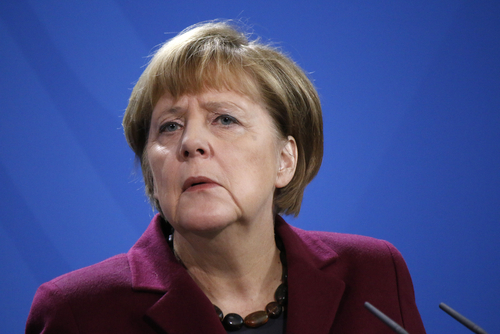
There are some saying that Angela Merkel will be overthrown in a matter of weeks and others saying that there is no plot to remove her. Nevertheless, scandal rising in Germany over the refugee crisis keeps brewing behind the curtain. Cyclically, 2018 may be a peak in Merkel’s career despite what people are trying to deny.
Angela Merkel was born in Hamburg, West Germany, on July 17, 1954, and was actually trained as a physicist. She entered politics after the 1989 fall of the Berlin Wall. She eventually rose to the position of chairwoman of the Christian Democratic Union party becoming Germany’s first female chancellor. Moreover, Merkel has actually become the best-known politician in Europe whose face is more recognized than anyone else in Europe no less Brussels.
Merkel grew up in a rural area of the German Democratic Republic or East Germany. She studied physics at the University of Leipzig, earning a doctorate in 1978, and later worked as a chemist at the Central Institute for Physical Chemistry, Academy of Sciences from 1978 to 1990. She has obviously not made the connection between physics and the economy for if she just looked at the laws of thermodynamics she would have an epiphany and realize that there MUST be a business cycle.
Nevertheless, with the fall of the Berlin Wall in 1989, Germany was caught up in a euphoric moment and many expected East Germans to have the same work-ethics as those in the West as well as an understanding of the way things really worked. Merkel joined the Christian Democratic Union (CDU) political party and was quickly appointed to Helmut Kohl’s cabinet as minister for women and youth. She rose simply because she was a woman and from the East. It made good political propaganda. Merkel would later serve as minister for the environment and nuclear safety.
The political tide began to change and with Kohl’s defeat in the 1998 general election, she was named secretary-general of the CDU. Then in 2000, Angela Merkel was chosen party leader, but she lost the CDU candidacy for the chancellor to Edmund Stoiber in 2002.
Finally, on October 10th, 2005 Germany was on the brink of a new and volatile political era until a deal was cut that made the conservative leader Angela Merkel the country’s first ever woman chancellor. It came only after three weeks of a long, complicated dispute over the previous month’s indecisive election, Gerhard Schröder announced he was resigning. Angela Merkel became chancellor leading a “grand coalition” between her Christian Democrat party and its Bavarian ally the Christian Social Union, and Schröder’s Social Democrats.
Many questioned just how long such a coalition would last. Nonetheless, Schröder’s resignation came with a huge price tag. The Social Democrats emerged from days of secret negotiations with eight seats in Germany’s new cabinet and virtually all the big portfolios – including foreign, finance, health, environment, and transport. Merkel gave up tremendous economic power to become chancellor with the CDU taking only six cabinet posts. Merkel denied that the Social Democrats had got all the best jobs, and instead called it a “new beginning for Germany”.
Therefore, Merkel became Germany’s first female chancellor since it became a nation in 1871 who was also from East Germany fulfilling a dual role as the first female chancellor and the first East German chancellor to take control of Germany. Merkel was then elected to a second term in 2009.
Angela Merkel was reelected for a fourth term as chancellor in September 2017 with a vote that was well below 35%. However, although her CDU party held its majority in the Bundestag, because of her policy on allowing all the refugees into Germany, the far-right Alternative for Germany (AfD) won 13% emerging as the new third-largest group in parliament for the first time a right-wing political party regained any power since 1961.
Following the 2017 election, political problems surfaced by mid-November 2017 in the attempt to form a new government coalition collapsed. The Free Democratic Party (FDP) pulled out of talks with the CDU/CSU and the Greens, over differences regarding the refugee crisis.
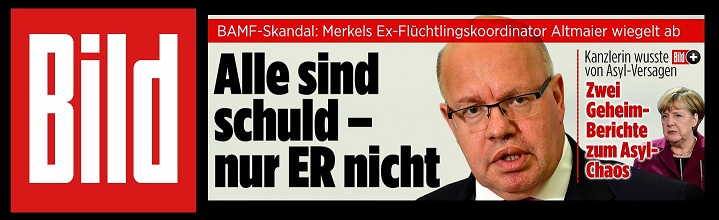
The entire refugee crisis is clearly going to be Merkel’s downfall. Then in March 2018, the SPD voted to renew its coalition with the CDU after its leader Martin Schulz resigned. This step finally cleared a path for Merkel to retain the position as chancellor, but she would have to give up financial control to the socialists to maintain her political power for a fourth term.
Nevertheless, the refugee crisis and the mismanagement of the entire issue has resulted in clashes between Angela Merkel and German interior minister Horst Seehofer. There is a serious political crisis brewing where Merkel could be forced out of her chancellor position.
Is Draghi Really Ending QE?
Armstrong Economics Blog/Central Banks
Re-Posted Jun 18, 2018 by Martin Armstrong
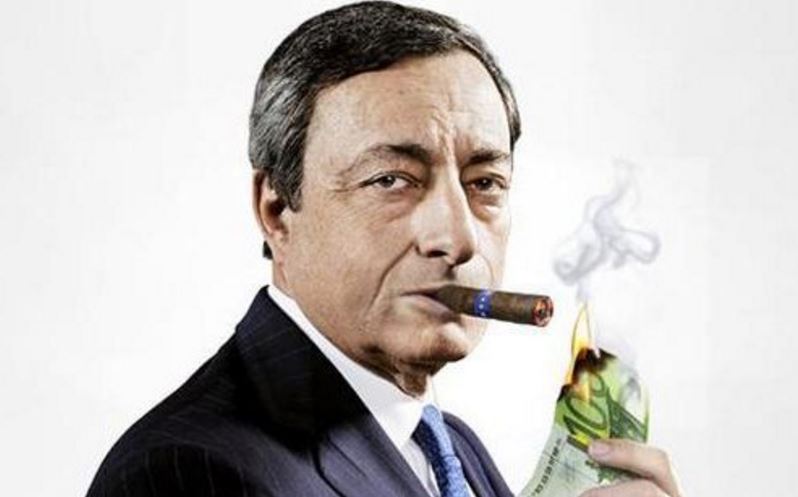
Mario Draghi said the euro-area economy is strong enough to overcome increased risk, and therefore this justifies the European Central Bank’s decision to end bond purchases bringing to an end a decade-long failed experiment. The truth behind this statement is starkly different than being portrayed in the press. Draghi also pledged to keep interest rates unchanged at current record lows until his personal term is finished next year. There is the contradiction for if the ECB stops buying debt, who will do so at artificially low rates of interest?
Draghi knows full well that he has utterly destroyed the bond markets in Europe. The ECB has also made it clear that they will REINVEST when the bonds previously purchased mature. The Federal Reserves has taken the opposite position and will NOT reinvest allowing their balance sheet to shrink.
If the economy is that strong, then why not end the QE right now? The fallacy here is that this has nothing to do with the economy. The ECB has simply had the member states on life-support. Interest rates will soar in Europe on long-term debt or there will be no buyers. Pension funds cannot buy 10-year bonds at even 3% when they need 8% to cover liabilities.
The statement by Draghi is creating a total paradox. You cannot keep short-term interest rates where they are and charge negative rates for deposits and simultaneously end QE and expect to sell bonds to the public at insanely low levels.
The press interprets this as the ECB with ending QE because they are “betting that the euro-area economy is robust enough to ride out an apparent slowdown amid risks including U.S. trade tariffs and nervousness that Italy’s populist government will spark another financial crisis” reported Bloomberg. What is seriously omitted here is that the member states will be UNABLE to sell long-term debt at these low levels to the private sector and the free market will send rates higher. This means that the states will have to then raise taxes to stay within the EU criteria and that will further suppress the European economy.
We are simply at the end of the road of this complete insanity. So buckle up. Get ready for the ride of a lifetime and make sure you keep your hands and feet safely inside the vehicle. Is the ECB risking a total collapse in public confidence when they discover you cannot keep rates artificially low and end QE simultaneously
Malaysia Looking to file Lawsuit Against Goldman Sachs?
Armstrong Economics Blog/Southeast Asia
Re-Posted Jun 18, 2018 by Martin Armstrong
May was an important turning point in Southeast Asia. The corruption that has engulfed the previous Malaysian government centered around a sovereign wealth fund involving Goldman Sachs has rocked the entire Malaysian peninsula. The national debt, which was believed to have been $170 billion, appears to be more like $250 billion of 80% if the national GDP.
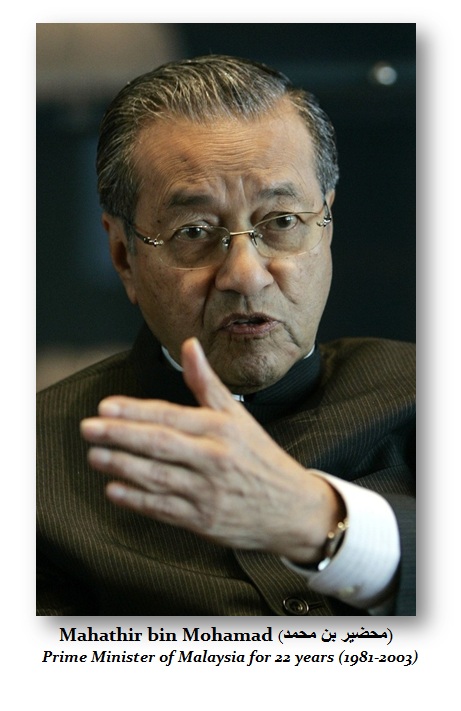
Prime Minister Mahathir Mohamad was sworn in on May 10th. When his aides first entered the government offices, they were confronted with a shocking sight. There were garbage bags filled with shredded documents intermixed with left-over food half eaten thrown everywhere. It was clear, the previous government sought to destroy all the evidence of their corruption.
The new finance minister discovered computers that even the highest-ranking bureaucrats could not access. Computers were set up to prevent access by anyone other than one or two people. Evidence of massive corruption was what turned the election on May 9th, 2018.
Goldman Sachs’ role, I wrote back in 2015, has been highly criticized in the Malaysian media and political circles after it emerged that 1MDB sovereign wealth fund paid hundreds of millions of dollars to the bank for helping it raise $6.5 billion in three bond deals in 2012 and 2013. Goldman Sachs earned around $590 million in fees plus commissions and expenses from underwriting the bonds, according to Reuters. The reported fees are highly excessive, nearing 10% when such fees are typically only 1% in bond underwriting.
There is now talk about filing suit against Goldman Sachs for its role in this scandal. The likelihood of filing a lawsuit against them in New York City being successful is probably zero. They will have to deal with the most corrupt court perhaps in the world that is notorious for protecting its local banks – Southern District of New York and the Second Circuit. My recommendation is to petition the Supreme Court to bring the suit in Washington DC that they will NEVER receiver a fair trial in New York City and they should get on the phone to Donald Trump to start applying political pressure
Do We Really Borrow From Only Ourselves? Does the Debt/GDP Ratio Means Anything?
Armstrong Economics Blog/Economics
Re-Posted Jun 15, 2018 by Martin Armstrong
QUESTION: Mr. Armstrong, the famous economist Paul Krugman says that debt is ok when we owe it to ourselves. He calls it “deficit scolding” as he wrote in the New York Times. Would you like to comment on this statement?
GH
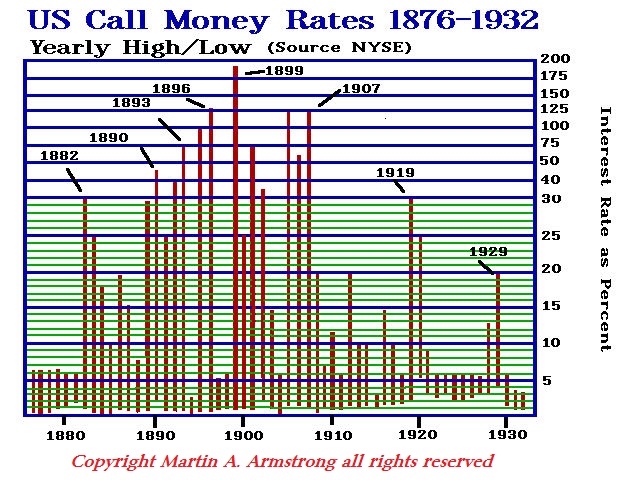
ANSWER: Paul Krugman seems to lack any historical understanding of how nations rise and fall. Anyone who claims debt is OK and can be infinite because “we” owe it to ourselves is clueless. He wrote in the article you referred to that “we have a more or less stable ratio of debt to GDP, and no hint of a financing problem.” The debt to GDP ratio is interesting but totally irrelevant. China’s debt to GDP stands at 250%, the USA at 103%, and Greece buckled at 186%. Obviously, this ratio is rather meaningless as a forecasting tool. I have published this chart on call money rates previously. In my studies, I quickly discovered that you cannot reduce the cause of any effect to a single issue. We can see that the peak in call money rates took place during 1899 and it was the lowest in 1929 when the Great Depression hit. You can’t even claim that if interest rates hit some magical level the stock market would crash. The world is far more complicated than just this one-dimensional approach to everything.
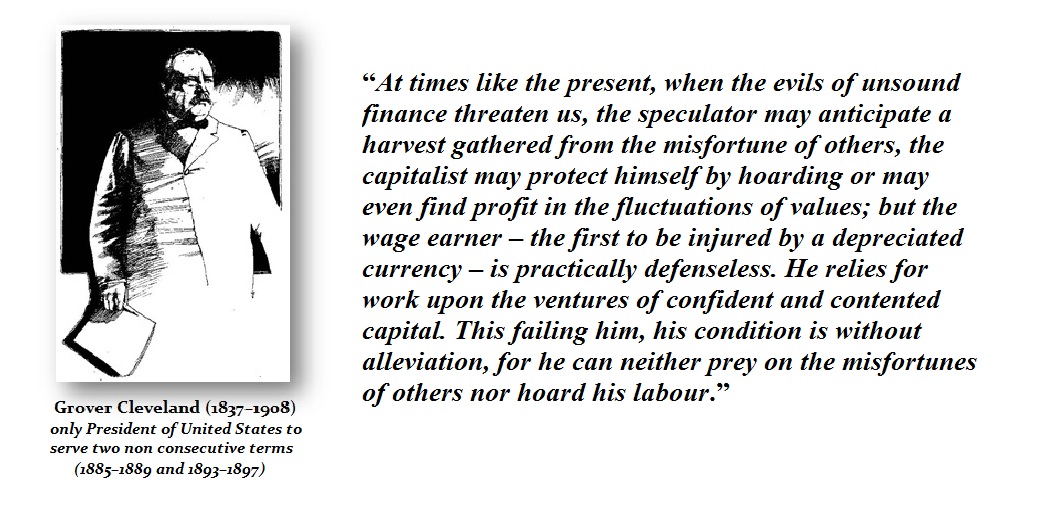
Capital flows were fleeing the USA in 1899 so interest rates went higher with a shortage of money. In 1929, the capital was in the USA for it rushed here because of World War I. The inflow of capital created an excess so the peak in call money rates was lower than 1899 when capital was fleeing. We even have the world of President Grover Cleveland from the Panic of 1893 commenting on the net capital outflow because of the “unsound” financial policy of the Silver Democrats.
The greatest mistake in the analysis is always trying to reduce any effect to a single cause. The world is a complex mechanism. It is indeed like a rainforest. There are countless species and each is interconnected. Exterminate one and you will find that it was the food source for another which dies. That species, in turn, was the food source for yet another and so on. The world economy is equally complex. This is why I say we are ALL CONNECTED. Create a war in one region, we may not be involved with troops, but the capital flows shift.
Everything is interconnected. There is no single cause and effect. Looking at GDP debt ratios is pointless. This is also why fundamental analysis is notoriously wrong. The majority tries to reason the future based upon this one-dimensional analysis and they NEVER got it right. I have posted this video clip of Larry Summers before. He is asked why can’t you guys ever get it right just once. His excuse is blunt. The economy is extraordinarily complex like the weather. He argues nobody can forecast the direction.
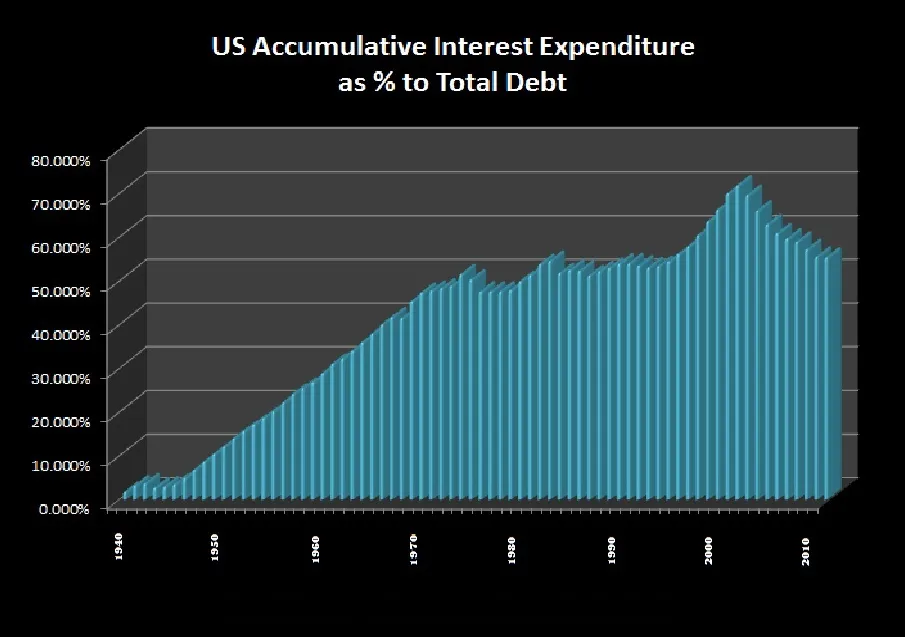
For anyone to say that debt can be infinite when we owe it just to ourselves is a fool. At times, 70% of the national debt has been accumulating interest payments. A national debt is the single greatest way we transfer wealth among citizens as well as nations. I kept yelling on Capitol Hill that Quantitative Easing would fail, it would not “stimulate” the economy for a very simple reason. The assumption that the Fed would buy 30-year bonds and then the banks would lend into real estate with lower interest rates was crazy. The debt is NOT owned by exclusively Americans. China was smart and it sold the 30-year bonds and swapped to 5-year or less paper. The money was transferred out of the country. To pretend this is a debt we “owe” ourselves is just fantasy.
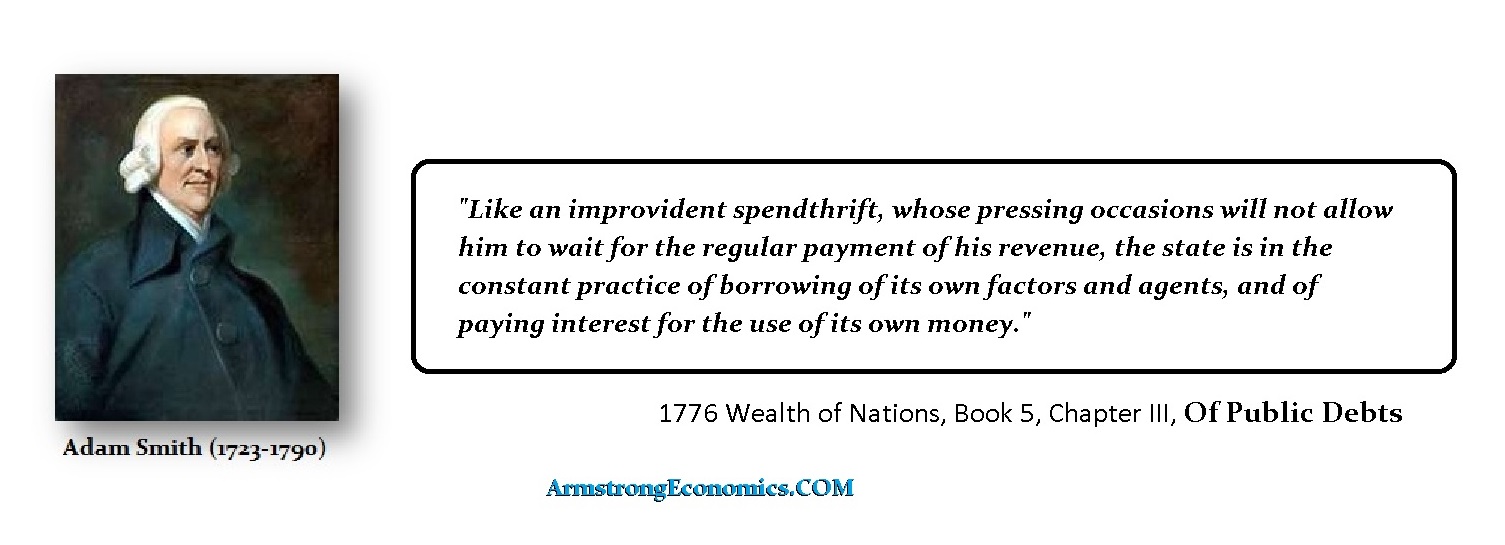
Even domestically, if I am the lender and you are the borrower, then you are paying me because you borrowed the money. Your wealth is transferred to me because you could not wait to buy something for cash. Sorry, I believe Adam Smith was someone who tried to observe HOW things actually work instead of trying to support a predetermined conclusion.
Economic Migration v Welfare Migration
Armstrong Economics Blog/Economics
Re-Posted Jun 15, 2018 by Martin Armstrong
COMMENT:
Sir,
After reading your blog post about the 300% increase in the cost of healthcare for refugees, I wondered the cost in this country for illegal aliens. Healthcare. Education. Food stamps. Etc. I googled anywhere from 3.4 to 11 billion dollars from health care alone.
I laughed out loud after reading the above. You wrote about the turn on the last group of people off the boat.
Keep up the good work and see you in Nov
DK
ANSWER: The cost of socialism is not merely over the top, it has altered the migration patterns within human society tremendously. The waves of migration from Europe to America were each inspired by the economic conditions at home. Therefore, we find the Irish, Germans, Italians, and English all coming during varied waves or periods overall when looking at the majority (naturally there were people from each group who moved for personal reasons). Nonetheless, the one thing that they all had in common was that they paid for their passage and they did not expect social benefits for free.
Today, the migration patterns are purely economic, but they are inspired by socialism whereby they need only show up and receive automatic income and benefits. When the European migration took place, predominantly during the 19th century and then waves after World War I and World War II, the people received no handouts from the taxpayer. There were no social programs to receive free living expenses. Churches provided food when people gave to charity BEFORE there were taxes. Europeans migrated to the United States to start new lives and to earn a living — not because they would be subsidized.
There are waves of migration that are caused by political unrest and no doubt some of that was at the reason for people fleeing Syria. Less know is the wave of refugees fleeing to Colombia and Venezuela who are also seeking security and economic stability since the army continues to support the Venezuelan socialist government that is collapsing. There were Americans in the south who fled to Brazil during the Civil War. They were called Confederados (Portuguese pronunciation: [kõfedeˈɾadus]) and were some 10,000 to 20,000 Confederate American refugees. They settled primarily in the state of São Paulo.
Providing welfare checks to show up on your soil alters the reasons for migration that have existed for thousands of years.
Joseph T. Salerno: This is Why Socialism is a Negative Sum Game
Jordan Peterson – Poverty causes crime? Wrong! – The Gini coefficient
Mandatory Sick Leave for Temps, Part-Time & Just Commission Employees
Armstrong Economics Blog/Regulation
Re-Posted Jun 14, 2018 by Martin Armstrong
The State of New Jersey just keeps making it more expensive to operate a business in the state. New Jersey has now become the 10th state to adopt mandatory paid sick leave. It goes into effect on October 29, 2018. Giving sick leave to employees has been generally a standard in America. What these new regulations do is go much further. All employees, whether temporary, part-time, full-time, salaried, hourly or paid on commission, must now accrue one hour of sick leave for every 30 hours worked. Employers may cap an employee’s sick leave accrual and use at 40 hours per benefit year.
The crazy thing is hiring a temp worker because someone else is out sick or on maternity leave now involves given such a person also gets sick leave benefits. Then the employer and employee may mutually agree to a payout in the final month of the benefit year of 50% or 100% of the employee’s unused sick time. If unused time is paid out in full, carryover is not required. If 50% is paid out, the remaining 50% will carry over. If the employee does not want to be paid out, or the employer chooses not to offer this option, all unused time will carry over up to 40 hours.
Employers may grant sick leave up front in a lump sum. When using the lump sum method, employers may either pay employees for unused sick leave at the end of the calendar year or allow carryover. With lump sum plans, whether to pay out or allow carryover is the employer’s choice – the agreement of the employee is not required. In no case will time be forfeit, unless it is in excess of the carryover limit of 40 hours.
This is now extending benefits to people who are not regular employees. Retail stores hire workers just for the Christmas season. That means they will need to account for sick leave and carry this over if the person returns for a temporary job in the future year? The accounting this imposes on small business is just insane. Of course, politicians want to pretend to be caring for the people when in fact they may be reducing job opportunities for them in the end. Automated registers are showing up everywhere. A grocery store to Home Depot have registers you scan in your own purchases, pay, and leave. The more regulations, the more we will see auto-registers expand into many retail operations to solve the rising regulation and costs.
And they wonder Why New Jersey is #2 State behind NYC with net-migration leaving and business as well?
Ancient Bankers Testing Methods for Counterfeits
Armstrong Economics Blog/Central Banks
Re-Posted Jun 14, 2018 by Martin Armstrong
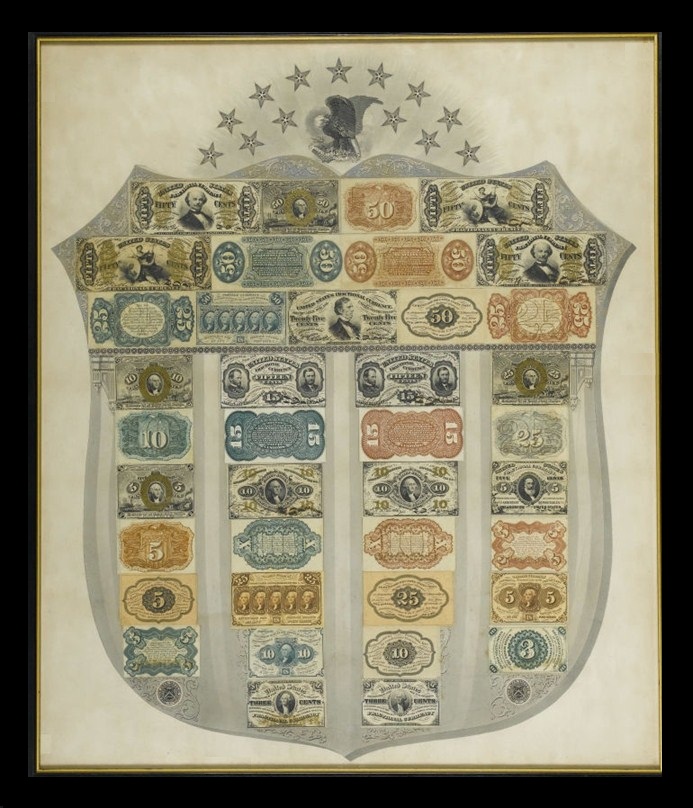
QUESTION: Mr. Armstrong; You have mentioned that when money was gold and silver in ancient times, there was the problem of shaving the genuine coins as well as counterfeiting them. I have seen counterfeit shield for US fractional money during the 19th century, where there examples such as that to distinguish genuine from counterfeit coins?
PS Your site is fascinating. The wide range of subjects covered is real food for the mind.
Cheers
PY
ANSWER: No, there were no examples as was the case with the counterfeit shields that were produced and sent to the banks in the United States.
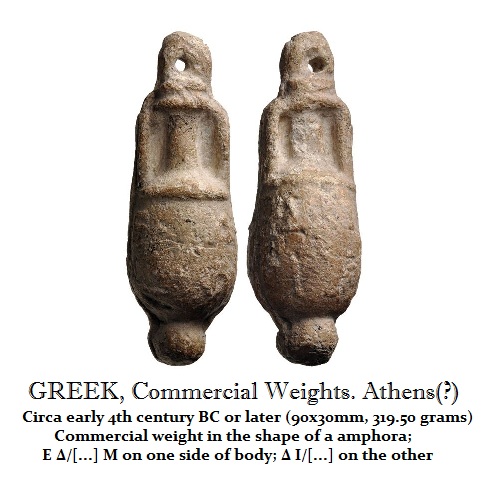
What has survived are commercial weights such as this one from our collection in the shape of an amphora from ancient Athens. This is rather heavy weighing 319.50 grams so it was not used for coins, but a standard weight in commercial transactions.
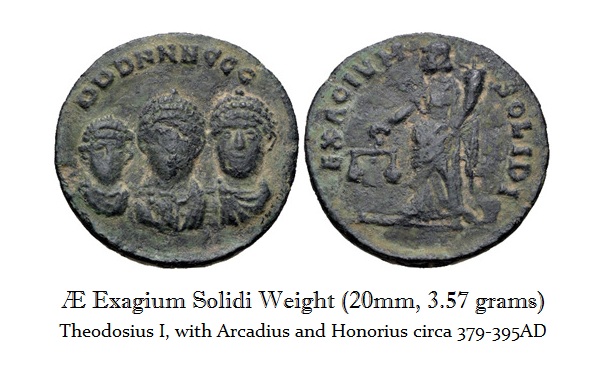
Above is an Exagium, which is to weight and verify coins. The was the weight of a gold solidus so one would test the coin against this weight.
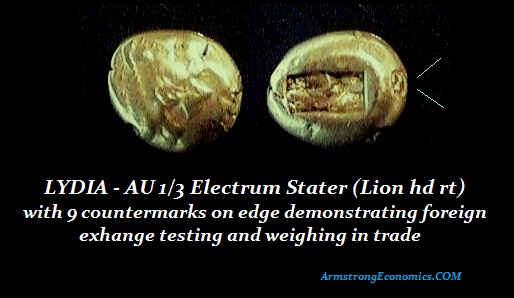
The Greek banks tended to put test cuts directly into the coin to ensure it was real. It is common to see this type of test cut deep into the Athenian silver Tetradrachms. In Contrast, the even ancient bankers relative to the Athenians more than 200 years before would place a stamp on the edge of the coin of that banker. Here is a coin from Lydia who nine banking marks showing the coin saw a lot of circulation.
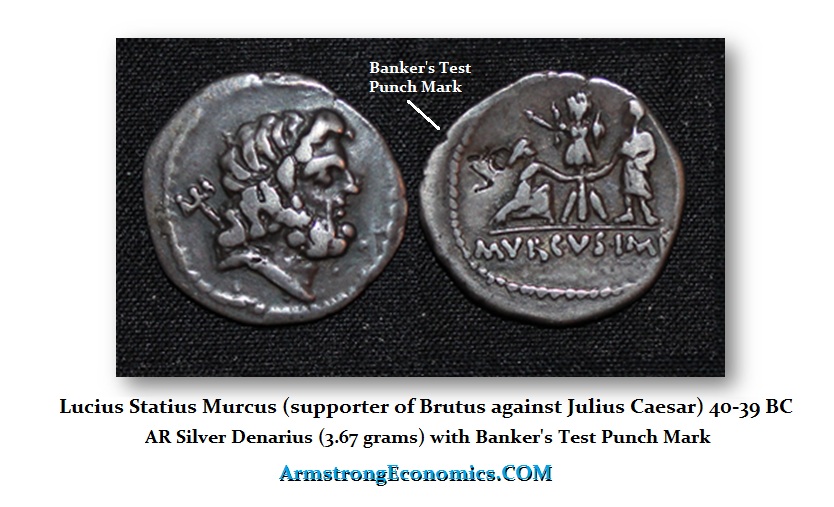
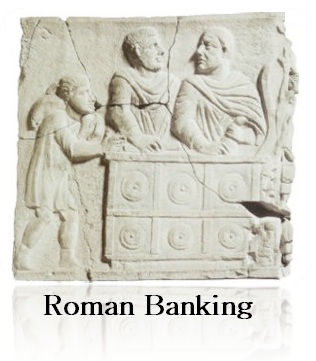
The Roman bankers used a different method. Instead of cutting the coins the bankers would us a test punch mark. Some appear to have been more elaborate and the punch mark was probably their initials so they knew they tested the coin previously.
By the Middle Ages, this problem of dealing with counterfeit gold and silver coins is what began banking. You would deposit your coins in the bank and then this began gyro banking. You would effectively write a check transferring money from your account to another. There was no testing of every single coin to complete the transaction.
This was the real impetus behind banking to reemerge after the Dark Ages