Conservative v Trader


QUESTION: Mr. Armstrong; I know my friend sent an email to you and is finally listening only after racking up losses. I explained how I followed you since 2015 and bought the Dow back at the end of 2015. I made almost 10,000 points and paid off my house. My family toasts you every Thanksgiving around the table. I know you warned that April could make a new low in the Dow and the first half of this year would be a period of consolidation. The rally into March made new highs in the Nasdaq but the Dow failed. You have taught me to just follow the numbers and I appreciate your comments trying to explain events as they unfold. The Global Market Watch was fantastic. On the yearly level it said potential major high in January and then it flipped back and now says new highs remain possible. To watch how that sifts on the yearly level has been a tremendous indicator in itself. That gave me the confidence to sell the close of January. My question is simple. Do you see this as a major buying opportunity? How long should I keep the powder dry?

Thank you

SJ

ANSWER: This is a consolidation period and it will be difficult to guess where the market will go from one day to the next. Yes, the Global Market Watch has been fluctuating on the yearly level on the Dow and that is a reflection each day what the future would look like assuming that was the end of the year. It did by itself state potential major high and that confirmed the correction into February. Now it is saying new highs are possible which is reflecting that we are indeed in a consolidation mode.

This will provide a major buying opportunity. We needed this pause in trend to shift the majority back to bears. When the market rallies and breaks out again, they will fight it as they have all the way up. The biggest losers have been the asset allocation followers. They assume they cannot forecast the future so they spread their assets hoping that the traditional 60% equities will make up for the losses on the 40% bonds. That will bankrupt most people on this next move. It has failed to save pension funds.

Just remember. You MUST be disciplined. The hardest part of successful investing is to remove your emotions as much as possible from the decision process. This is why the decision must be on the NUMBERS and not even what I have to say. Nobody can forecast a market from a gut perspective. If they are looking for someone to be a guru, then kiss your portfolio goodbye right now.

I will be doing video updates for those who purchased the 2018 Share Market Report. We will be holding a WEC in Singapore in June. We will be opening up both Singapore and Orlando for general ticket sales shortly. Prior attendees get first dibs. We will be covering all of Asia in Singapore and the world in general. Orlando will be focused on Europe and North America with also a general overview of the world. That will be held after the 2018 US elections.

So follow the Reversals and the Timing. They will tell us when to ac

White House Trade Director Peter Navarro Discusses China, NAFTA and Wall Street…


CTH takes a little flak for pointing out the obvious; that’s ok, it doesn’t change the reality: When you confront the manipulated multinational trade system – the multinational Wall Street entities who have historically benefited from that system will lose.

It is impossible for Wall Street corporations invested overseas not to lose some financial position. This is reality, and this is also necessary.  Meanwhile U.S-centered  corporations will gain valuation in direct proportion to the amount of investment they hold inside the U.S…

White House Trade Director Peter Navarro discusses the ongoing trade initiatives, China, Wall Street and NAFTA.  President Trump has indicated a strong preference for U.S.T.R. Lighthizer to make a determination about NAFTA as soon as possible. WATCH:

Lucky Day, Lucky Day – Mexico’s Version of Hugo Chavez is Holding 18 Point Lead In Election Polling…


If the news from the first round of Mexican election polling was any better we’d have to be twins to enjoy it.   Andres Obrado, a well-known Marxist who intends a government take-over of the Mexican energy sector, is holding a commanding 18-point lead.

This is excellent news for border wall enthusiasts and those who want the Trump administration to pull out of NAFTA.

Mr Obrador is the modern Mexican version of Hugo Chávez (or Nicolàs Maduro/Bernie Sanders) with a similar ideological outlook.  His resulting territorial economic policies are certain to deliver the Venezuela outcome to the Mexican people.

For American companies doing business in Mexico, an Obrador win would be the worst possible outcome.  They will lose hundreds of billions from their current Mexican investments, as President Obrador swoops in to skim (tax) corporate profits for his state-run enterprises and care for ‘his people’. However, the good news is – those U.S. multinationals will likely all return to the U.S. asap.  Lucky day, lucky day.

Funnily enough, U.S. Commerce Secretary Wilbur Ross must have held some insider information about this likelihood when he sheepishly hinted toward this possibility a few weeks ago.  Oh, the poor multinational critters in Wall Street are gonna have a heart attack when they see this.  Wait, wha… they did already?

MONTERREY (Reuters) – Mexican left-wing presidential candidate Andres Manuel Lopez Obrador has an 18-point lead ahead of the July 1 election, according to a poll published on Monday that showed him with a growing advantage at the start of formal campaigning.

Lopez Obrador, who launched his campaign on Sunday, holds 38 percent of the vote, according to the poll by Parametria, published by Reuters on Monday ahead of wider distribution. That compared to 35 percent in its previous poll.

A Lopez Obrador victory could usher in a Mexican government less accommodating toward the United States, where President Donald Trump has stoked trade tensions with Mexico and aggressively moved to curb immigration.

Lopez Obrador has backed the North American Free Trade Agreement, but his plan to review newly issued oil contracts sparked worries he will deter foreign investment. (read more)

Too funny…  The “smart set” (pundits) are reading it wrong:

                                                                                                      Oh dear…

.

.

                                                                                        Oh, noes …

.

.

                                                                                                   Oh, my.

China Announces $3b Tariffs on U.S. Imports – Pork, Scrap Aluminum, Wine and Fruits…


In retaliation for $50 billion in U.S. trade tariffs against Chinese imports, China laughably hits back with $3 their own billion tariffs against the U.S.  According to most reporting Beijing has selected U.S. pork and scrap aluminum as targets for a 25% tariff, along with wine and fruit tariffs around 15%.

It should be emphasized the approach by China is rather ridiculous considering the Chinese government purchased the largest U.S. pork manufacturer Smithfield in 2013 for $5 billion; at the time the purchase price was 30% more than the company was worth.  Smithfield, now a Chinese company, represents 25% of all U.S. pork products.

Do you really think China is going to not import it’s own pork products… or subject them to a domestic tax?  Think about it.  It’s ridiculous.  China knows they have ZERO leverage in a trade-dispute with the U.S., they cannot afford to lose access to the U.S. market.

The example of Smithfield foods is exactly what we have outlined in how China cannot sustain itself and needs to control the assets of foreign countries.  Hence, their one-road/one-belt program for securing products and raw materials.  China is a dependent economy, they need to exploit global trade to survive.  China cannot feed itself. This is the inherent flaw within their short-sighted authoritarian government-controlled economic model.

Again, for emphasis, the Chinese government underwrote the purchase of Smithfield foods in 2013.  They paid 30% more than the company was worth because they were securing access to food just like they would any other raw material (uranium, minerals, etc).  China also purchases U.S. politicians to retain their ability in this regard.

Now look at the cartoon from the unofficial Chinese state-run media today:

Remember THIS is the position of the Chinese Government:

[…]  China’s latest countermeasures target fruit, pork and other US goods totaling some $3 billion, the equivalent of China’s losses caused by US tariffs. The list indicates China will never compromise and will always retaliate against unreasonable tariffs.

For every single move against Chinese interests, the US can expect retaliation. It is time for Washington to bid farewell to the delusional, make-believe world whereby it imagines China an unresponsive, over-tolerant nation.

China does not want a trade war, but it will not retreat should one emerge. Monday’s announcement is hardly a subtle hint. China will show its strength through action.

Recent White House statements have revealed a tough stance on Sino-US trade disparities while some have even shown a level of optimism at resolving trade conflicts through negotiation. But it is not hard to realize that such self-contradictory behavior reveals that the US knows its actions are unjustifiable. China’s attitude toward a trade conflict has been consistent and Beijing will carefully handle all challenges from the US.

There are always a few Western politicians who think China might step back and concede. But they are wrong. The Chinese government only cares about what is in the best interest of its people rather than elections.

Washington must be reasonable dealing with China. Threats will fail as China is not afraid of the US, plus the Chinese have zero tolerance for political weakness.  (read more)

Nuance and subtlety is everything in China. Culturally harsh tones are seen as a sign of weakness and considered intensely impolite in public displays between officials; especially within approved and released statements by officials representing the government.

There is no doubt in my mind that President Trump has a very well thought out long-term strategy regarding China. President Trump takes strategic messaging toward the people of china very importantly. President Trump has, very publicly, complimented the friendship he feels toward President Xi Jinping; and praises Chairman Xi for his character, strength and purposeful leadership.

To build upon that projected and strategic message – President Trump seeded the background by appointing Ambassador Terry Branstad, a 30-year personal friend of President Xi Jinping.

To enhance and amplify the message – and broadcast cultural respect – U.S. President Trump used Mar-a-Lago as the venue for their visit, not the White House. And President Trump’s beautiful granddaughter, Arabella, sweetly serenaded the Chinese First Family twice in Mandarin Chinese song showing the utmost respect for the guests and later for the hosts.

Why the constant warm messaging?

What is the purpose?

What does all this have to do with a trade confrontation?

Historic Chinese geopolitical policy, vis-a-vis their totalitarian control over political sentiment (action) and diplomacy through silence, is evident in the strategic use of the space between carefully chosen words, not just the words themselves.

Each time China takes aggressive action (red dragon) China projects a panda face through silence and non-response to opinion of that action;…. and the action continues. The red dragon has a tendency to say one necessary thing publicly, while manipulating another necessary thing privately. The Art of War.

President Trump is the first U.S. President to understand how the red dragon hides behind the panda mask.

It is specifically because he understands that Panda is a mask that President Trump messages warmth toward the Chinese people, and pours vociferous praise upon Xi Jinping, while simultaneously confronting the geopolitical doctrine of the Xi regime.

In essence Trump is mirroring the behavior of China while confronting their economic duplicity.

China has no cultural or political space between peace and war; they are a historic nation based on two points of polarity. They see peace and war as coexisting with each other.

China accepts and believes opposite or contrary forces may actually be complementary, interconnected, and interdependent in the natural world, and they may give rise to each other as they interrelate to one another. Flowing between these polar states is a natural dynamic to be used -with serious contemplation- in advancing objectives as needed.

Peace or war. Win or lose. Yin and Yang. Culturally there is no middle position in dealings with China; they are not constitutionally capable of understanding or valuing the western philosophy of mutual benefit where concession of terms gains a larger outcome. If it does not benefit China, it is not done. The outlook is simply, a polarity of peace or war. In politics or economics the same perspective is true. It is a zero-sum outlook.

Therefore, when you see China publicly use strong language – it indicates a level of internal disposition beyond the defined western angst. Big Panda becomes Red Dragon; there is no mid-status or evolutionary phase. Every American associated with investment, economics and China would be well advised to put their business affairs in order accordingly.

President Trump will not back down from his position; the U.S. holds all of the leverage and the issue must be addressed. President Trump has waiting three decades for this moment. This President and his team are entirely prepared for this.

We are finally confronting the geopolitical Red Dragon, China!

The Olive branch and arrows denote the power of peace and war. The symbol in any figure’s right hand has more significance than one in its left hand. Also important is the direction faced by the symbols central figure. The emphasis on the eagles stare signifies the preferred disposition. An eagle holding an arrow also symbolizes the war for freedom, and its use is commonly referred to the liberation fight of righteous people from abusive influence. The eagle on the original seal created for the Office of the President showed the gaze upon the arrows.

The Eagle and the Arrow – An Aesop’s Fable

An Eagle was soaring through the air. Suddenly it heard the whizz of an Arrow, and felt the dart pierce its breast. Slowly it fluttered down to earth. Its lifeblood pouring out. Looking at the Arrow with which it had been shot, the Eagle realized that the deadly shaft had been feathered with one of its own plumes.

Moral: We often give our enemies the means for our own destruction.

RELATED:

Leverage… We have it, China doesn’t.

China is no longer hiding their alignment with their proxy province of North Korea.  Meanwhile President Trump has cultivated a very close relationship with Shinzo Abe of Japan, and to a lesser extent Prime Minister Modi of India.

Two teams preparing for the economic conflict:

China/North-Korea/Russia and Pakistan.

-VS-

U.S./South-Korea/Japan and India.

.

That’s the big picture.  The rest is chaff and countermeasures.

Greco-Turkish War – Is it Inevitable?


QUESTION: Message: Hi, huge respect for your eye-opening work. You mention that war is more likely to erupt in the middle east than Korea. Since middle east seems to be in a state of perpetual combat in different areas, do you think war could expand as Turkey is more & more openly hostile to Greece? The average Greek is no longer considering if it happens, more like when it will happen. Does Socrates provide a forecast on this?

Regards,

S, Athens.

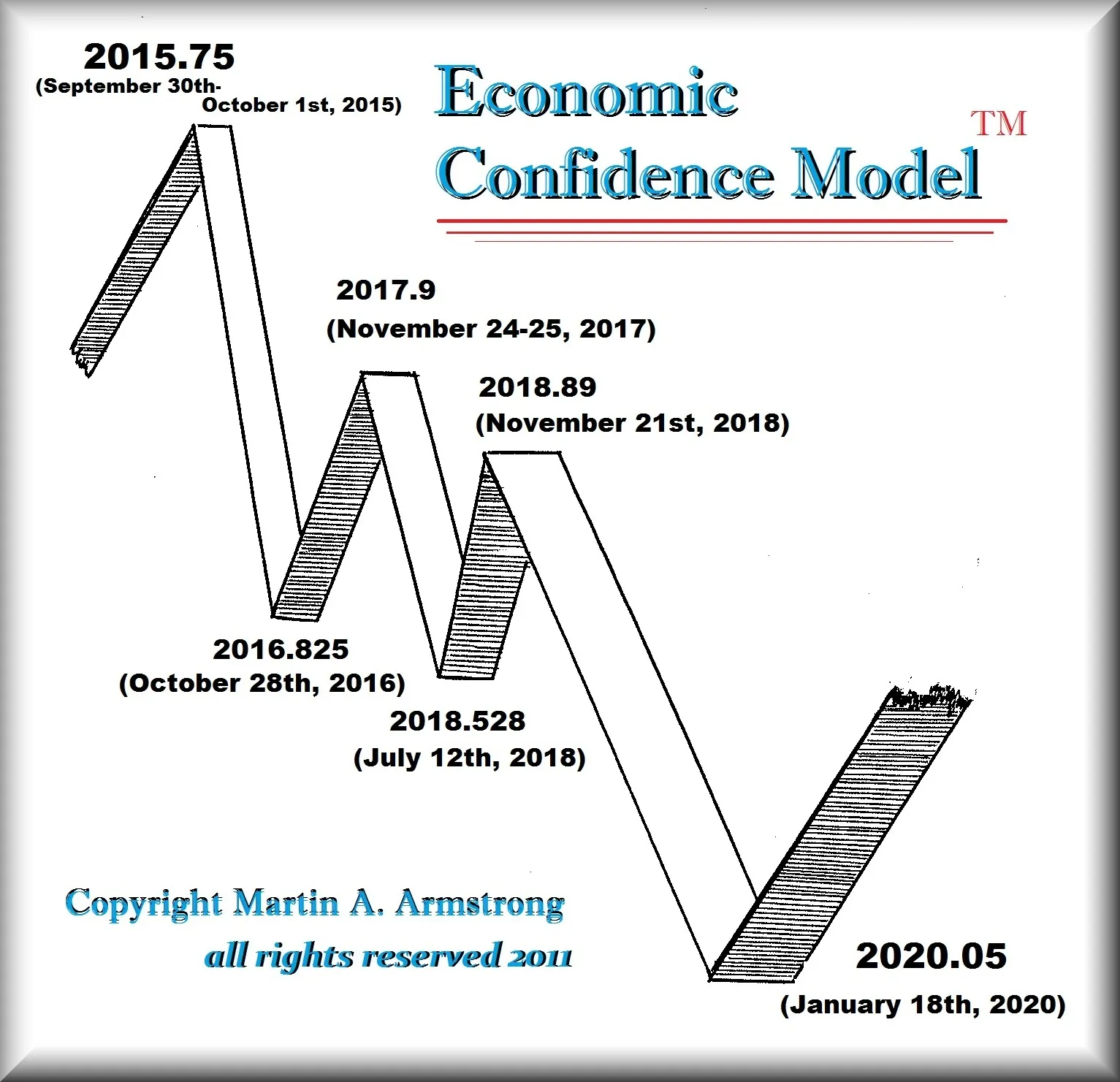
ANSWER: Actually, the primary target for a peak in any Greco-Turkish war will arrive in 2022. What we must understand is we have a major convergence between the Cycle of War and the Economic Confidence Model (ECM). What this means is the increased risk of geopolitical tensions are enhanced by economic downturns. This is what I have been warning about with the collapse of Socialism. As the endless promises of governments crumble to dust, politicians are faced with (1) the overthrow of their governments, or (2) create an external enemy to shift the blame from themselves. Therefore, as the economy turns down, interest rates will invert and rise when people no longer trust a government, and the fabric of the political-economy will be torn apart at the seams. This is historically the most dangerous point for at that moment, the government will turn to create external enemies.

When communism fell in 1989, the military establishment was no longer really needed. They needed to create external enemies to justify maintaining their position, status, and funding. Therefore, Russia continued to be the enemy of the USA simply because they needed one. When I would ask WHY was Russia our enemy if they were no longer Communist, the reply was dumbfounding: “Well they are Russian!” Even Ukraine was a power-play. The Eastern part of the country was ethnically Russian. The country should have simply been split north to south down the language border. Crimea was always a strategic port of Russia. If Japan told America to get out of Okinawa, the US response would be no different than Russia’s – America would occupy Okinawa. So why put sanctions on Russia for doing what the Americans or British have always done throughout history? The answer was just the military establishment needs an enemy – not peace. World peace means they are out of a job. They like those gold stars on their shoulders.

Therefore, as we head down into the economic abyss, the political necessity for war will be on the rise. Ergodan needs an external enemy. He is desperate for war and it will take two fronts – Kurds and the Greeks. He can easily stir the old pot of hate to retain power. This is what any politician does. Even Hillary during the election, as well as all the Democrats, stir the economic pot of class warfare to divide the nation just to get power. They also need that hatred of people who have more to win power. The people cheer and will one day storm the houses of the rich and will set them ablaze or drag them out and hang them. This is traditional and it is one primary reason class warfare is highly dangerous and undermines the foundation of any state. So this is what we face. Look at everything in that context and you will begin to see the conflicts deliberately created by the political class to retain power in ALL societies.

The first modern Greco-Turkish War following the fall of the Ottoman Empire is called the Thirty Days’ War, which took place against a rising Greek concern over conditions in Crete. This centered on the Turkish domination and where relations between the Christians and their Muslim rulers had been deteriorating rapidly. 1896 saw a rebellion on Crete instigated to a large extent by the secret Greek nationalistic society called Ethniki Etairia. They sought to fuel the historic resentment between the Christians and Muslims and they sought to create an opportunity to annex the island for the Greeks. Therefore, by the beginning of 1897, Greece sent arms to Crete to support a rebellion and revolution. On January 21, 1897, the Greek fleet was mobilized and in February Greek troops actually landed on the island proclaiming the annexation of Crete to Greece. The following month, the European powers imposed a blockade upon Greece to stop the arms shipments. The European powers feared that the whole of the Balkans would see vengeance upon the Turks.

The Greeks sent a force to launch an attack on the Turks in Thessaly (April). By the end of April, Greeks were overwhelmed by the Turkish army. The Greeks yielded to pressure from the European powers and withdrew their troops from Crete accepting an armistice on the mainland on May 20th, 1897. On December 4, 1897, a treaty was signed compelling Greece to pay the Turks an indemnity, to accept an international financial commission that would control Greek finances, and to yield some territory in Thessaly back to Turkey. Subsequently, the Turkish troops also left Crete, which had been made an international protectorate in 1898. Crete was finally ceded to Greece by the Treaty of London (1913), which ended the First Balkan War.

The second Greco-Turkish War occurred after World War I, when the Greeks attempted to extend their territory beyond eastern Thrace and the district of Smyrna. These territories had been given to Greece by the Treaty of Sèvres, August 10th, 1920. In January 1921 the Greek army launched an offensive in Anatolia against the nationalist Turks, who had defied the Ottoman government and would not recognize its treaty. In Greece, the war was followed by a successful military coup against the monarchy.

The Treaty of Lausanne concluded on July 24th, 1923, obliged Greece to return eastern Thrace and the islands of Imbros and Tenedos to Turkey, as well as to give up its claim to Smyrna. The two belligerents also agreed to exchange their Greek and Turkish minority populations. To this day, Turkey retains designs on regions it yielded to Greece.

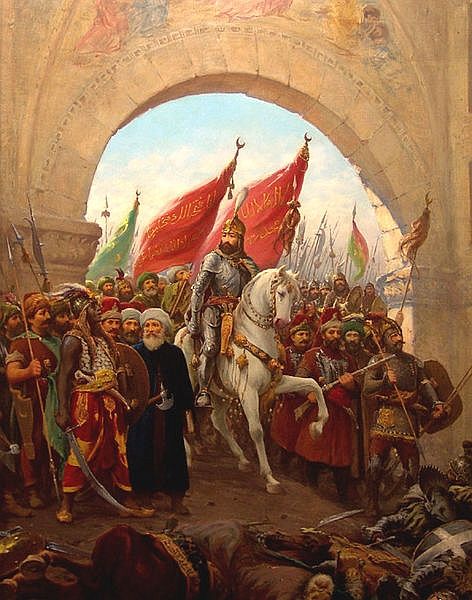
As the economy and hyperinflation continue in Turkey, the government desperately needs an external enemy. So yes. The tensions will continue to rise and this is seen as inevitable in Athens and the resentment goes back to the Persian invasion of Greece in ancient times. Even the culture of the Minoans were the origins of the Greeks. Anatolia was all Greek cities that filled modern Turkey. The fall of Constantinople in 1453 was the invasion of the Turks who were Muslim. So the traditional ethnic origin was Greek and the language of the Eastern Roman Empire ruled from Constantinople was Greek – not Latin.

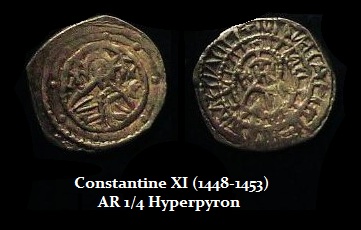
The last Emperor, Constantine XI (1448-1453), died in battle fighting the Turkish invasion. Beware November 2018. Things seem to begin picking up about then.

Wheat & the Drought Cycle


QUESTION: Interesting that $1.3T US spending bill was enacted on March 23, 2018, exactly 31.459 years after passage of US Tax Reform Act of 1986:

Also, the 86 year cycle in drought conditions in the midwest US seems to approach – is this why Marty thinks wheat will bottom this year?

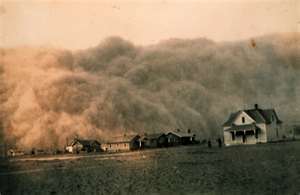
The below Wikipedia link mentions a “short drought” in 1890 in the US Great Plains, and then a dust storm on November 11, 1933, in South Dakota (43 years later). Wikipedia also mentions that the US Great Plains entered an unusually dry era in the summer of 1930 (a little more than 86 years ago), with droughts coming in 1934, 1936 and 1939-1940.

Kansas is having drought conditions currently:

Poor winter wheat condition worrying Kansas farmers

I wonder if this is the year to go long wheat, especially since Marty forecast a bottom for this year?

Best,
J

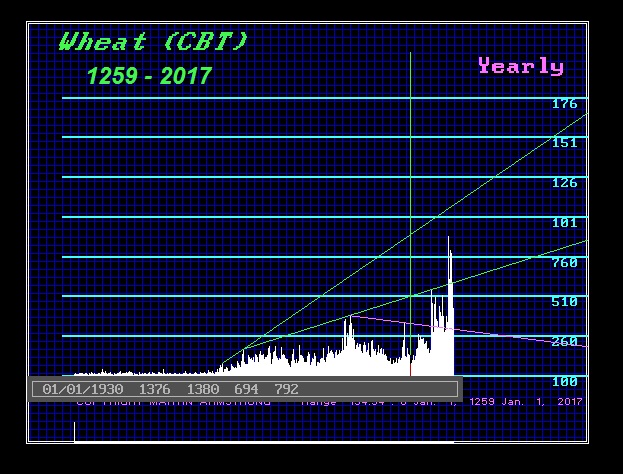
ANSWER: Here is a chart of Wheat from 1259 to 2017 with the currency converted to dollars from British pounds using the conversion rate at the beginning of the US dollar extending it back in time. Here we can see the overall trend. Yes, there is an influence with respect to weather. However, the Dust Bowl was a local event.

What our computer is warning about begins next year with a Directional Change in Wheat. This cycle appears to be impacted by (1) significant climate change, and (2) the War Cycle. The combination of both is pointing to a bull market in nominal dollar terms.

Monetary Policy is a Complete Failure? Will Shutting Down the Fed Solve All the Problems?


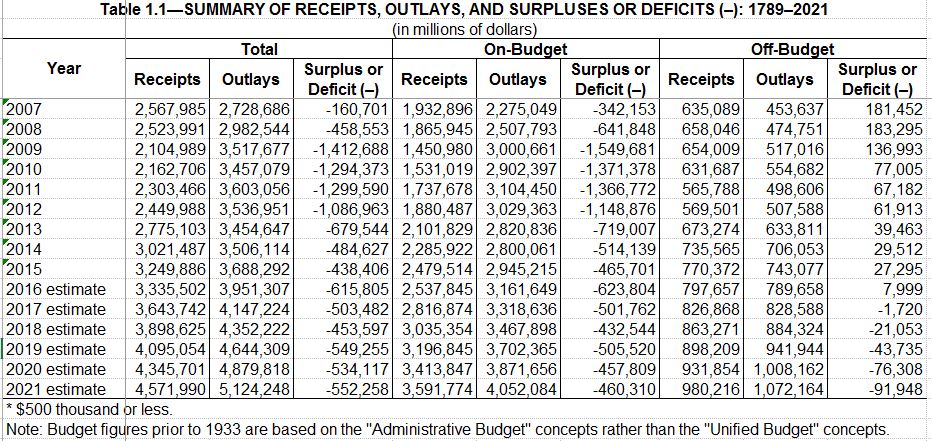
I recently did an interview and was asked about the Federal Reserve. There is so much absolute nonsense sophistry that circulates where people think that ending the central bank will somehow cure everything. I really just laid it out plain and simple. The Fed’s balance sheet is a tiny fraction of the economy or the real money supply. Everyone blames the Fed for everything and they NEVER bother to look at (1) the fiscal policy of Congress, and (2) the banking system as a whole.

Even if you want to scream from the top of every hill that $4 trillion worth of Fed’s Quantitative Easing was pure evil and should have created hyperinflation (which it did not), the deficits created by Obama topped $1 trillion per year and those never die whereas the Fed’s QE evaporates as they do let the debt they bought mature and expire without rebuying it again, whereas Draghi and the ECB have conceded they will reinvest their holdings. Look at 2009-2012. Obama created $5.4 trillion that will never expire but will be rolled until there are no more buyers.

So let’s do the math. The entire Federal Reserve QE program was equal to 1/5th of the national debt. The ECB bought 40% of all public debt and the Bank of Japan bought 75% of new debt coming to the market. Yet all we get is dollar bashing and people actually have called the yen the safe-haven play. I really do not know if I am arguing is drunks, people with dementia, or just con-artists. All these people pushing the end of central banks because they are clueless about how the real world functions.

I have been trying to explain to the world that monetary policy using interest rates to impact the balance of payments is really voodo economics. The Australian even wrote an article back in 1989 about the advice I was given to governments. No matter how long I have been at this, trying to overcoming manipulating interest rates to try to control the economy is just totally insane. It reminds me of the skit in Blazing Saddles where the Black guy puts a gun to his own head and say if anybody moves, the black guy gets it. How can a central bank raise interest rates to fight inflation when the government is the biggest borrower in the system? The government deficits will rise because their interest expenditure will rise perpetually because they continuously roll their national debts and never pay anything off. The central banks have lost all control and the press is just too stupid to even understand the problem.

The Australian wrote about our recommendation: “He firmly believes the worldwide obsession with monetary policy, namely the use of interest rates to regulate inflation and demand, is misguided, and in a recent circular to clients described it as “voodoo” economics.”


We are hopelessly lost and the idiots who bash the Fed are doing so much harm to society it is not even funny. The bulk of the real world money supply is created by lending on a leveraged basis. It is not money created by the Fed and it goes well beyond that even created by the Congress.

AT the end of 2017, total household debt exceeded $13 trillion. Total non-financial business debt stood at $6.1 trillion at the end of 2017. The Fed’s balance sheet was $4.4 trillion of which $2.4 is US Treasuries. The national debt stood at $20.5 trillion at the end of 2017. If we look at this perspective, that means the money supply is $41.6 trillion just using the debt. If we then add M2 (all accounts _ money market accounts) which stood at $13.8 trillion at the end of 2017, this brings us to a liquid money supply of $55.4 trillion. The Fed’s balance sheet does not even reach 10% of that figure. Now let us add the stock market, which is liquid. That reached $30 trillion by the end of 2017. Therefore, the liquid assets/cash position stood at $85.4 trillion at the end of 2017. Now let us add total personal real estate (homes) in the United States which stood at $31.8 trillion. If we include illiquid real estate, now we are up to  $117.2 trillion. So how will shutting down the Fed and theoretically eliminate $4.4 trillion solve all the problems?

President Trump Makes Brief Remarks Prior to Attending Easter Service…


Earlier today President Trump tweeted concern about the politicization of border security and the unwillingness of Mexico to confront their side of the equation.  [the three tweets from POTUS Trump follow the video snippet]

Before attending Easter Mass today, President Donald Trump briefly paused and responded to a question about his calling out Mexico for not helping the U.S. secure the border. WATCH:

It is against Mexico’s interests to stop the outflow of illegal aliens into the United States.  Much of the Mexican economy is dependent on the exfiltration of U.S. wealth through Mexican nationals sending money back to Mexico from the U.S.

The amount of money services (Western Union) used by Mexican Nationals to transfer dollars to their friends and family in Mexico exceeds the entire energy sector of the Mexican economy.  Hopefully President Trump will follow through on plans to exit NAFTA.

Will Coins Survive The Monetary Crisis?


QUESTION:  Hi Armstrong,
I continue to read your blog for 2 years I say and find it educational.
I wanted to know what will happen to U.S. coins like pennies and nickels when the base metals are worth more than the coin value.
Will the U.S. allow hoarders/collectors to exchange them for spot metal value or melt value? either one would be of course more than 0.01 for the penny and more than 0.05 for the nickel.
I hope to hear my answer on the blog

A

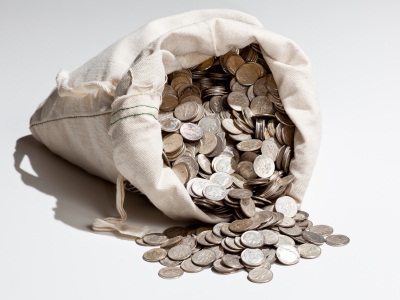
ANSWER: When silver was removed from the coins after 1964, at first it was illegal to melt the coins down. The FBI were prosecuting people for melting the coins they called defacing. However, that quickly faded out as the law did not support their theory of defacement. $1,000 bags of US silver coin traded even on the futures market in New York.

This time around, it is not likely that we would see confiscation. We could once again see bags of coins trading as was the case even into the later 1970s.

The Noah Coinage of Phrygia


QUESTION: Dear Mr. Armstrong,
I have a question please, taking the lead from your recent article in your blog “Noah’s Ark Commemorated on Roman Coins”
Question: Do you happen to have found a copy of the Apion Treatise (answers to Josephus) in your historical searches? (Apion — Historian from Alexandria)
Background: Titus Flavius Josephus, born in 37 AD in Jerulasem, 160 years before Septimus reign introduced to the Roman elite to the Jewish mythology of the Bible thru his writings. The historian Apion from Alexandria wrote a treatise answering to the historical claims of Josephus. Josephus also responded with his treatise – Against Apion, which has survived. Apion’s Treatise is not published or found (lost??), according to the results of my searches.
Can you please enlighten me.
Thank you Kindly,

DGP

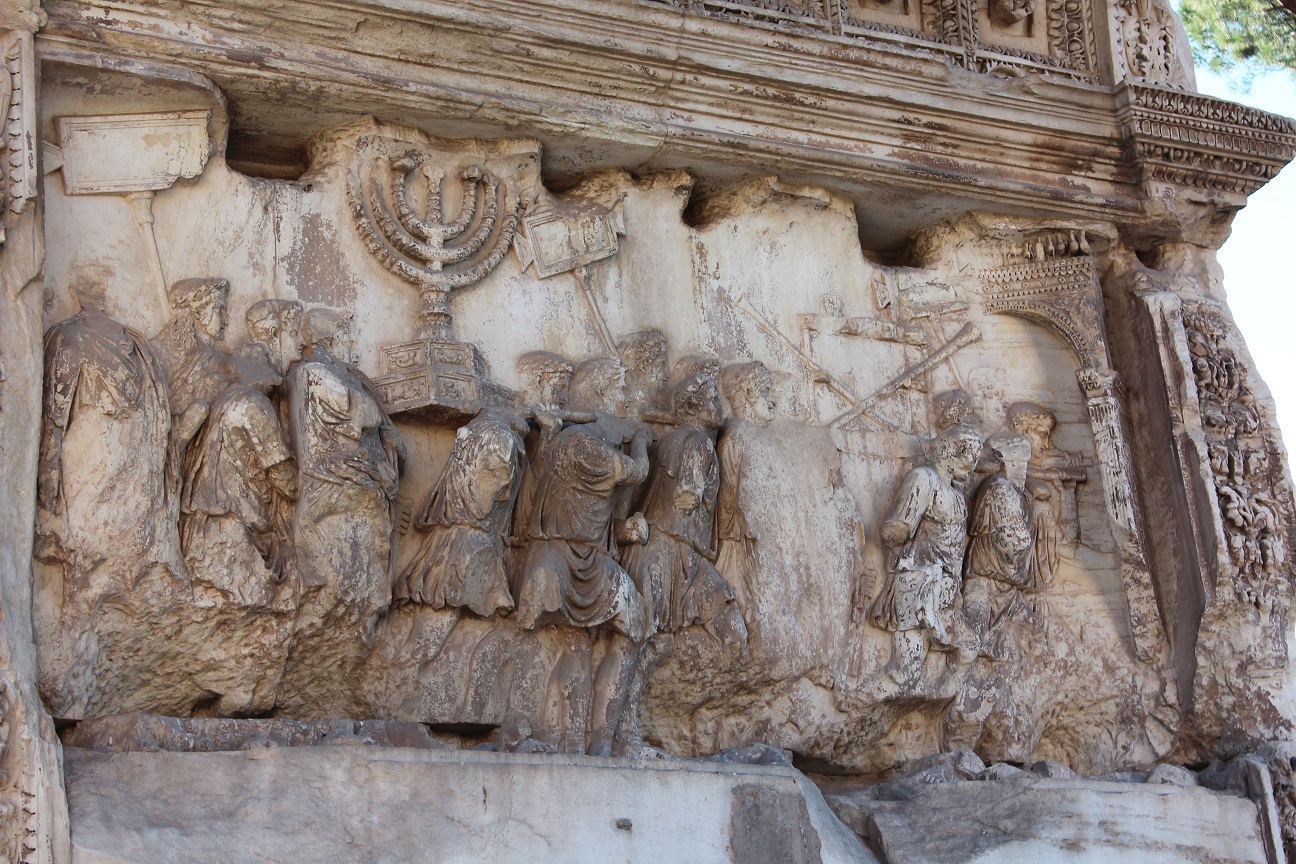
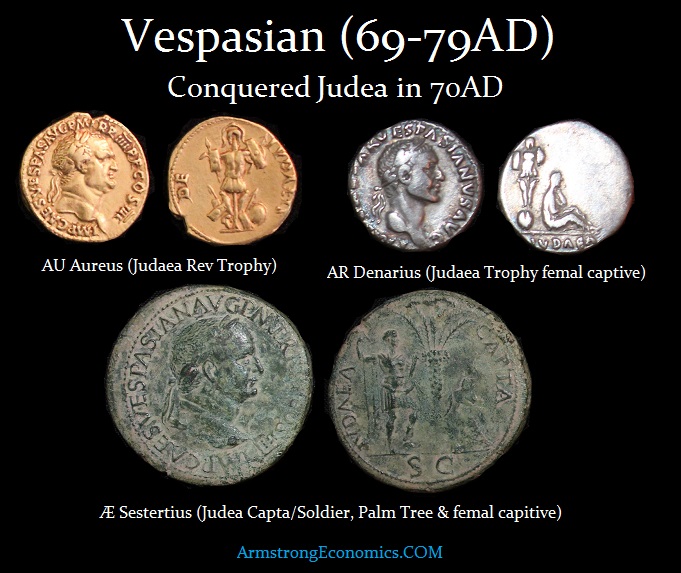
ANSWER: Josephus has been a contemporary historical source with respect to the conquest of Judaea by the Romans under the command of Vespasian (69-79AD). It is also true that he became an adviser to Vespasian’s son Titus (79-81AD). However, most of his writings appear to be really trying to redeem himself among his fellow Jews. In the Preface to Jewish Wars, Josephus actually criticizes historians that misrepresented the events of Roman-Jewish War. He wrote: “they have a mind to demonstrate the greatness of the Romans, while they still diminish and lessen the actions of the Jews.”

The Jewish War was a very big and profound event. It came after the death of Nero (54-68AD) and the empire was plunged into civil war. Vespasian (69-79AD) was vying to be emperor and the Jews looked at this opportunity to seek independence from Rome. However, like Catalonia in Spain, if they are allowed to just leave, this threatens not just Spain but would encourage others to leave the EU. This is precisely the same set of facts that existed following the death of Nero in 68AD.

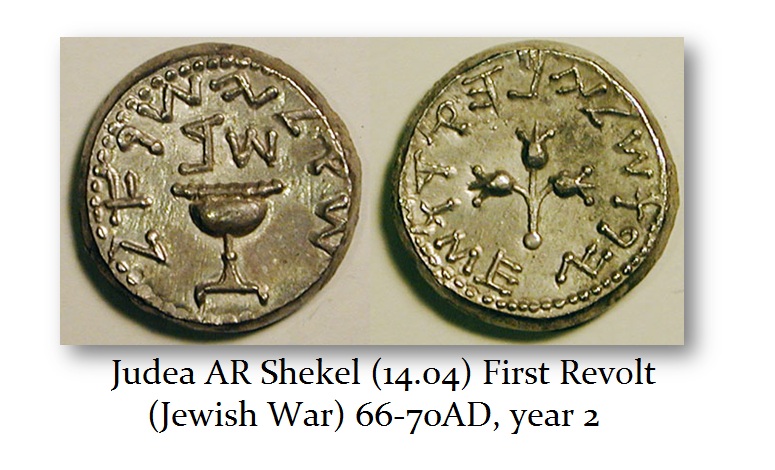
If Judaea was allowed to just leave, other provinces would have done the same. They even issued their own coinage. Thus, the punitive actions of Vespasian against the Jews must be understood within this context. We have the victory over the Jews appears on coins of Vespasian of every denomination.

It is highly unlikely that the other works of Josephus were widely read by Romans. Josephus’s Against Apion is a two-volume defense of Judaism as classical religion and philosophy. Josephus stressed its antiquity and suggested that the Greek religions lacked that ancient tradition and were more modern. Josephus attacks the Greek writer Apion and his anti-Judaic allegations. So once again, this appears to be a work that may be also out of guilt that he supported the Romans to pick the winning side.

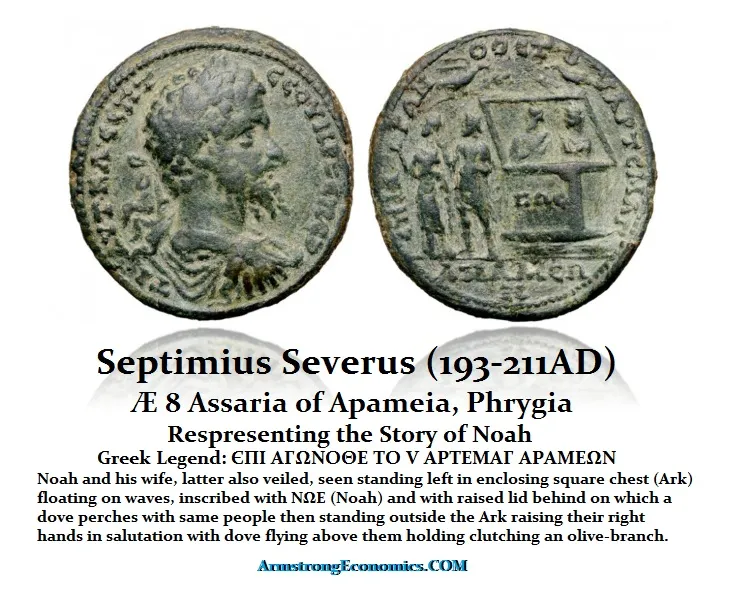
The bronze coin pictured above of Apameia was struck for Septimius Severus (192-211AD). The reverse legend mentions the city’s AGONOTHETES (chief organizer of the games) or chief magistrate, ARTEMAS, who probably was Jewish. Noah’s name, given in Greek as NOE, which appears on the ark. The subject matter does appear to be very popular and it may be entirely attributed to Jewish magistrates. Apameia was a city in Phrygia, which during the 3rd century AD, was under Roman rule. The Noah coin design must have been very popular since it was struck for the emperors even after Septimius Severus such as Severus Alexander (222-235AD), Gordian III (238-244AD), Philip I (244-249AD), and Trebonianus Gallus (251-253AD), over the course of 61 years.

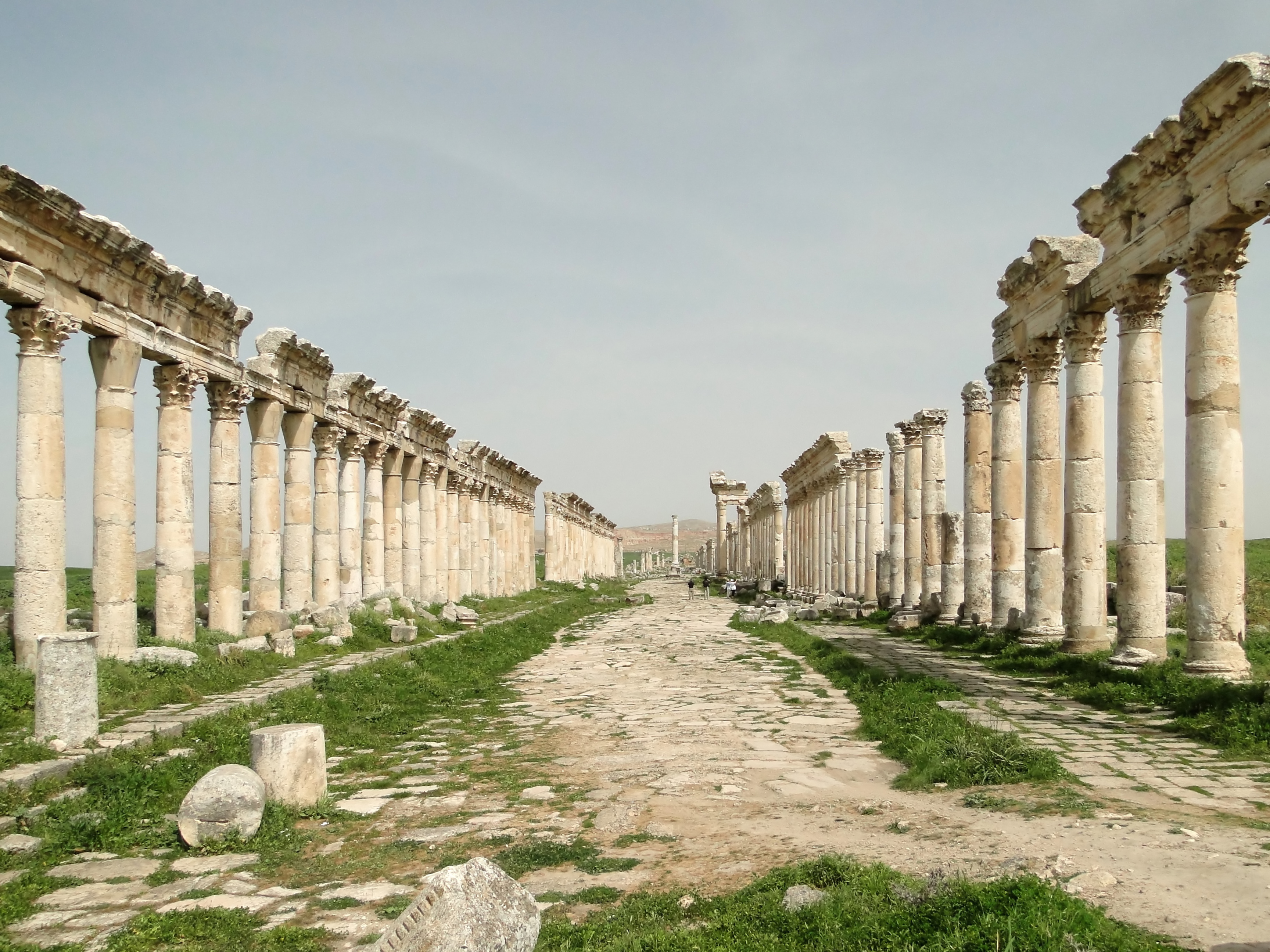
Apameia was a merchant city (today Dinar in western Turkey) whose ruins remain to this day. It was a very prosperous city during Roman times. It was a trade/commercial center that was connected to Asia by caravans carrying silks, spices, incense, perfumes, and medicines. The population of the city was very much like London and New York; very cosmopolitan with a mixture of Phrygians, Lydians, Cappadocians, Pisidians, Greeks, Romans and Jews. The common bond was mercantilism. They were a society composed of traders.

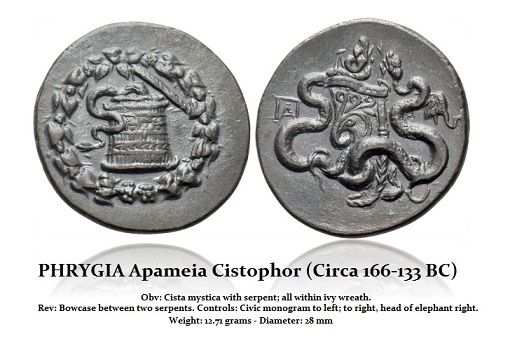
The origin of the city was founded by Phrygians prior to 1,000 BC and it was named Celaenae. It was located in a well-watered oasis at the source of the Meander River. Its coinage from the 2nd century BC shows an elephant head which is a clear symbol of its connection with Asia through trade. This city sat on the ancient old ‘Royal Road’ from the Middle East to the Aegean Sea that was originally constructed by the Persians some 500 years before this coin was struck. The location afforded Apameia control over all the caravan routes from Asia. Even when Alexander the Great invaded this region, he made the city one of his military bases.

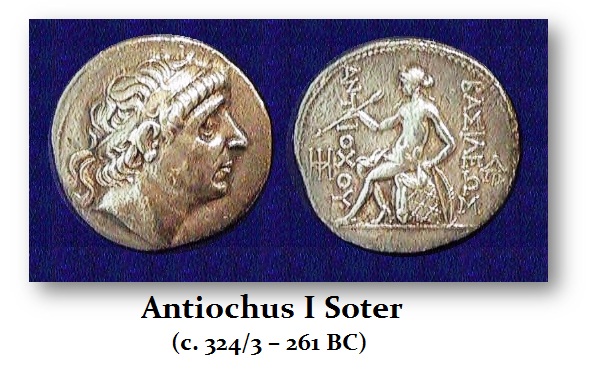
Following the death of Alexander, it fell to the control of Antiochus I Soter (280-261BC)(meaning Savior) of the Syrian/Seleukid Empire. Antiochus I built a new city in 270BC below the citadel of Ceaenae and named it Apameia after his mother. Then Antiochus brought Babylonian Jews to serve as garrison soldiers, civil servants and royal administrators in his new city. This is most likely the connection why we ultimately find Noah coins being struck in this city. Some argue this was a punishment because the Jews had resisted Alexander’s conquest of Babylon where they lived at that point in history.

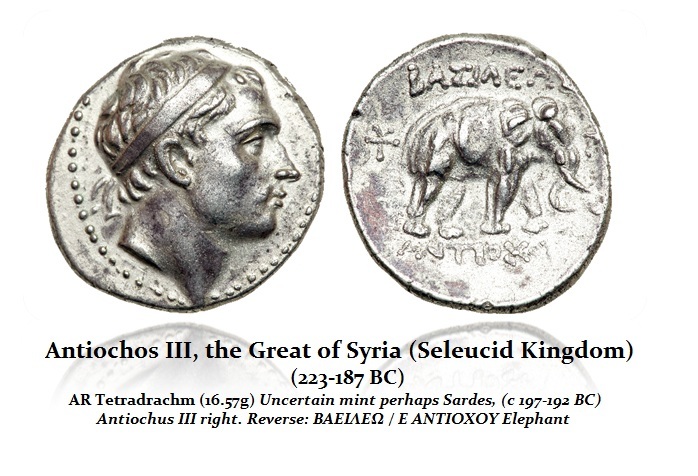
The Antiochus III (223-187BC), the Great, brought another large group of Persian Jews to Apameia in 188BC. Josephus in his work, ‘Antiquities of the Jews’ said that Antiochus III settled 2,000 Jewish families from Babylon in Lydia and Phrygia. Josephus goes on to say that these Jews were given special privileges including tax exemptions for ten years and were permitted to adhere to their own customs, laws, and religion. (Antiquities, Book XII, iii.4). These settlers may account for the large communities of Jews that suddenly emerged in the ancient Asian cities of Antioch, Apameia, Delos, Ephesus, and Sardes.

It is clear that by the time we reach Septimus Severus at the end of the 2nd century AD, the Jews had risen to high political positions in the city. Therefore, the Noah coins are unique to this city and are a reflection of the cosmopolitan culture that existed thanks to commerce. The ark is portrayed as a kibotos, which was an Apameian packing case used in trade with a lid. This is, therefore, blending the trade of the city with the Jewish parable.