Posted originally on Dec 6, 2024 by Martin Armstrong
Tens of thousands of Volkswagen employees have halted production to protest proposed pay cuts. The German automaker has stated it will need to close three manufacturing plants due to rising labor expenses, material shortages, and, most importantly – the climate change agenda that has demonized fossil fuels.
Over 120,000 workers now face a 10% pay cut if they can manage to keep their jobs. The IG Metall union has warned that protests will be fierce. Volkswagen remains Germany’s top-selling car brand, composing 19% of the market share. Yet profit margins have dropped from a forecast of 7% to 5.6% for 2024 after the company’s cash flow turned negative in the first half of the year. The company states it needs to save 10 billion euros by 2026 in addition to finding a way to cut another 4 billion euros. Operating profits have fallen by 11.4% and they simply cannot continue producing these EVs at the same pace they were producing dreaded fuel-powered cars because the demand is not there.
Now many blame China for providing state subsidies for EVs that are far cheaper than the vehicles produced in Germany. This is why places like the US have placed a 100% tariff on those vehicles so that there is no demand. However, there is simply low demand for electric vehicles everywhere. You cannot force people to buy EVs even if you destroy the energy sector and make prices skyrocket 300% as they did by killing Nordstream. Pushing manufacturers to switch to meet these arbitrary emission targets is killing the entire auto sector which is about 17% of Germany’s entire GDP.
Germany believes it can reduce carbon emissions by 65% by 2030, followed by an 88% reduction into 2040 before meeting gas net neutrality in 2045. They claim that Germany is five years behind on its adoption of electric vehicles as it is far from meeting its goal of 15 million EVs by 2030. The average EV price in euro shot up 7.5% in the past year to €56,669. Infrastructure and charging stations remain inadequate to meet these goals.
Germany relies heavily on automotives, and Europe relies heavily on Germany as its top economy. Now, due to climate initiatives, Volkswagen is closing plants for the first time in its 87-year history. Pay close attention to Germany’s automotive sector, as it could easily cause a ripple effect throughout the entire European economy.
Posted originally on Dec 6, 2024 by Martin Armstrong
QUESTION: Mr. Armstrong, I just had to write in to say thank you for explaining that Bitcoin was just a trading asset, not some new currency that would replace the dollar. I understand that money must be elastic to grow with society in economic booms and population. I just read a quote reported by Bloomberg: “After four years of political purgatory, Bitcoin and the entire digital-asset ecosystem are on the brink of entering the financial mainstream.” I know a programmer who said you were correct that the Deep State created blockchain. Has this recent rise been orchestrated to get us to surrender paper money and rejoice so they can track us all?
KS
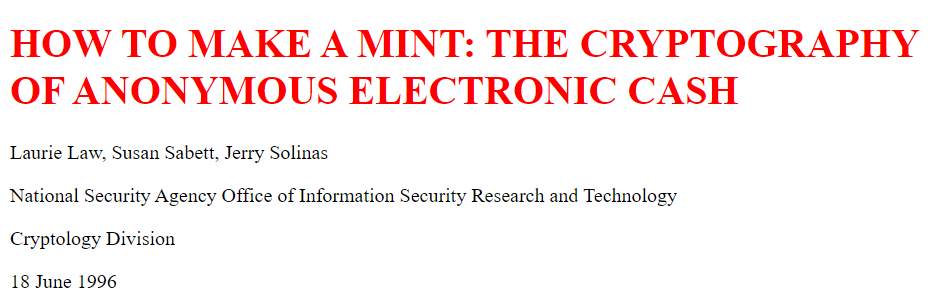
ANSWER: There is no question that the blockchain code was developed in the intelligence community. We all know that in the programming world. In 1996, the US government released a white paper entitled “How to make a mint: the cryptography of anonymous electronic cash.” Released by the National Security Agency Office of Information Security Research and Technology, this document basically explains how a government agency could create something like Bitcoin or another cryptocurrency. (SEE BELOW).
Has Bitcoin been manipulated more to make people think digital currencies are better than paper? There is a strong probability of that. This is clearly a dream of tyrants. If I give you $100 bill they do not know where I got it from. If I pay you in Bitcoin, they can trace it to everyone who has ever handled it. This is a control system. This is the END OF MONEY! A new documentary film will be coming out soon on this topic.
Here is Lagarde on digital currency. She states this object is “control” everything you do. Europe is a Marxist Paradise. Everyone is an economic slave and whatever they earn belongs to the state – not them. The state will decide how much you are allowed to keep. I really do not understand these Bitcoin people if they deliberately try to convince us to surrender all liberty. With digital currency, they can block even a donation to a political opponent like Trump.
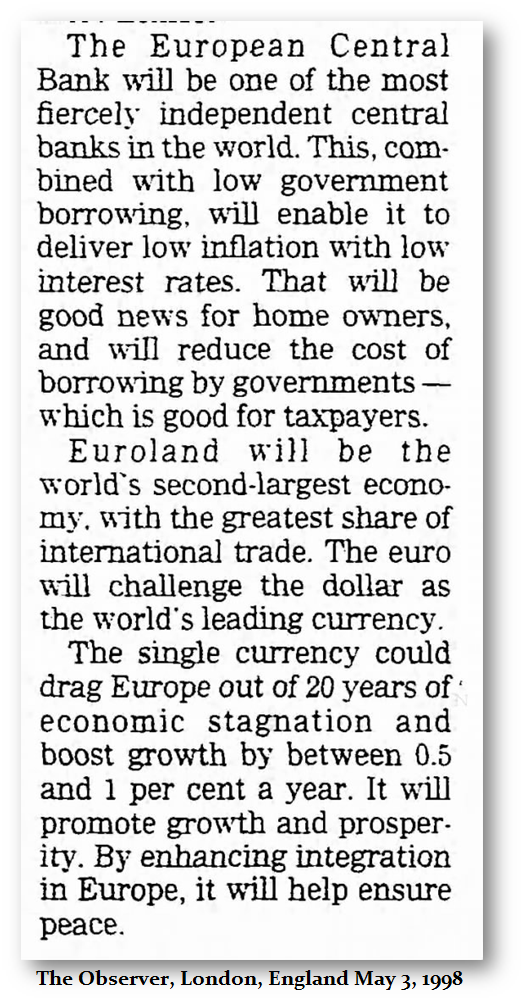
Even when creating the Euro, the commission took the entire back row of our conference held in London in 1997. I do not understand why it is so hard to understand what a currency is. They were selling the Euro, which would defeat the dollar. That, too, never took place. They were preaching that everyone would pay the same interest rate as in the USA. I warned them that would only take place if they consolidated all the debts as Hamilton did following the American Revolution.
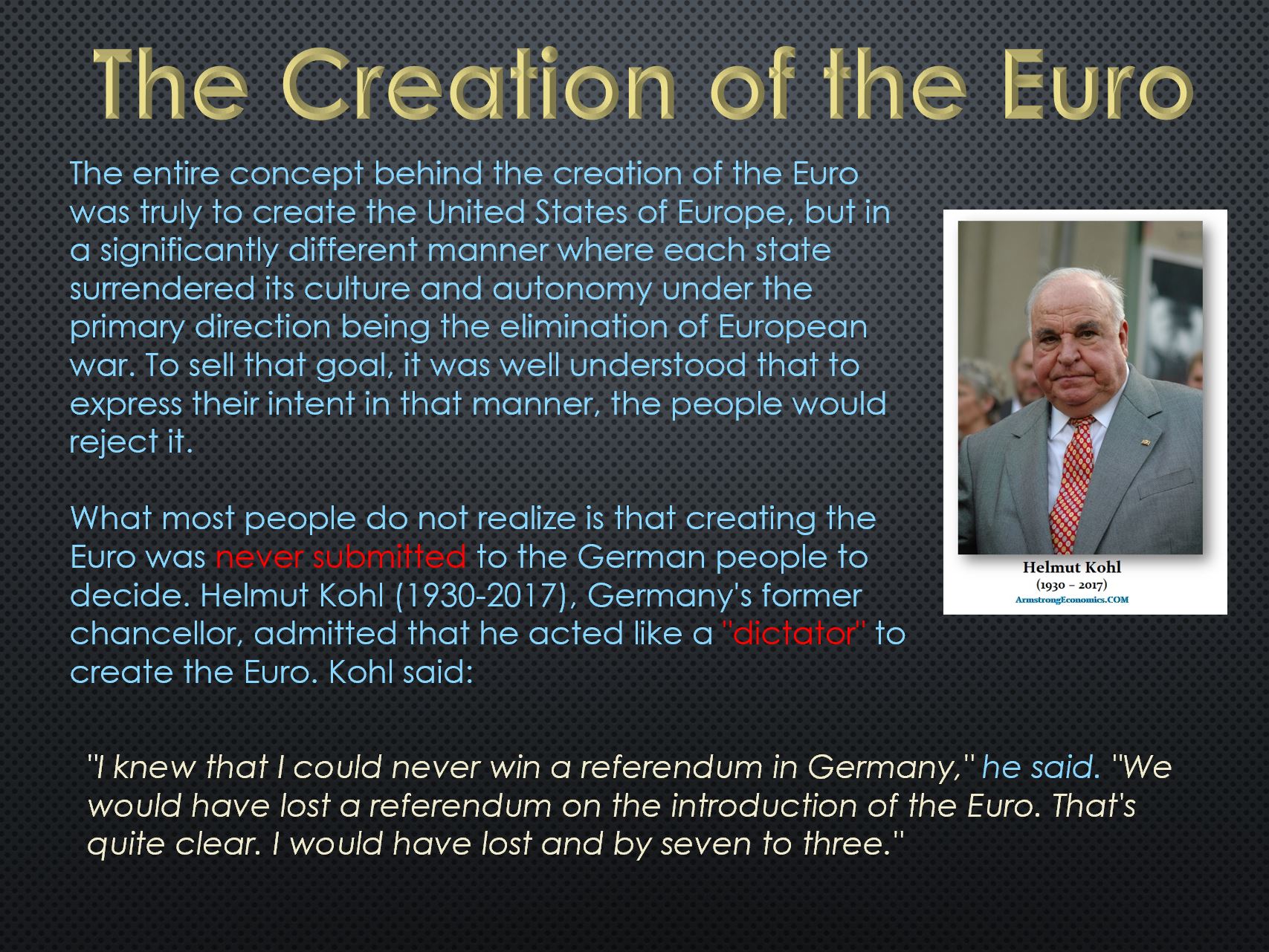
Kohl took Germany into the Euro as a dictator because if the German people were allowed to vote, he admitted he would have lost 7 to 3. We do not live in a democracy. That is sheer propaganda. They make the decisions, and when they know the people will not accept that, even like war, they do it anyway. We mean nothing at the end of the day.
They sold Bitcoin as it would be free of central banks, a store of wealth, and eliminate inflation, all absolute total BS that was impossible in the real world. I have warned that this has been a fantastic sales job, and pushing the price up creates the image that it is somehow worth more than paper money, so surrender everything and go digital.
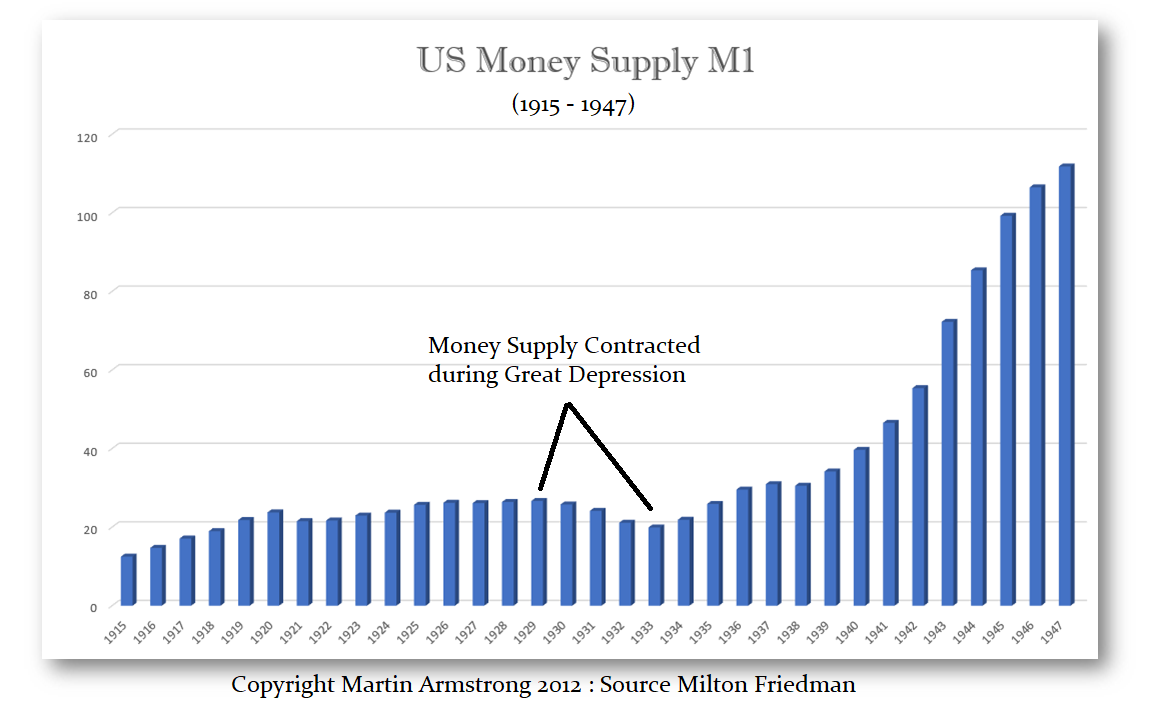
People have been braindead when it comes to comprehending what money is and love to cling to stupid theories that will only lead to a major depression. They do not even understand that because the Fed was fearful of inflation during the Great Depression, to support the dollar, they failed to expand the money supply, fearing that the dollar would crash. Over 200 cities issued their own money because there was such a shortage of cash that businesses could not function. It was impossible to pay employees, and people had no cash to spend. This was called depression script.
Whenever there is a recession or depression, people reduce their spending and hoard their wealth, contracting both spending and investment. This is a fact proven by the hoards of ancient Roman coins during the turmoil of the 3rd century. The money supply peaked in 1929 and contracted into 1933. This is why there was such a shortage of money that it led to over 200 cities issuing their own depression script just so they could function.
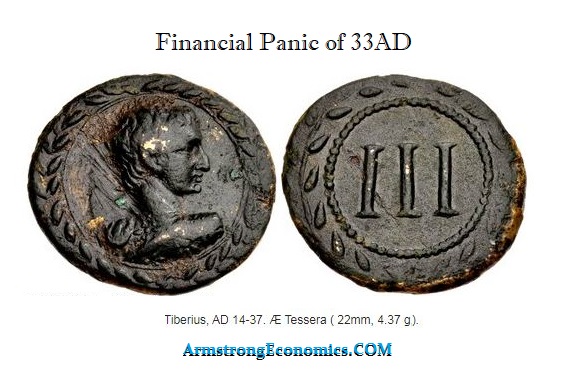
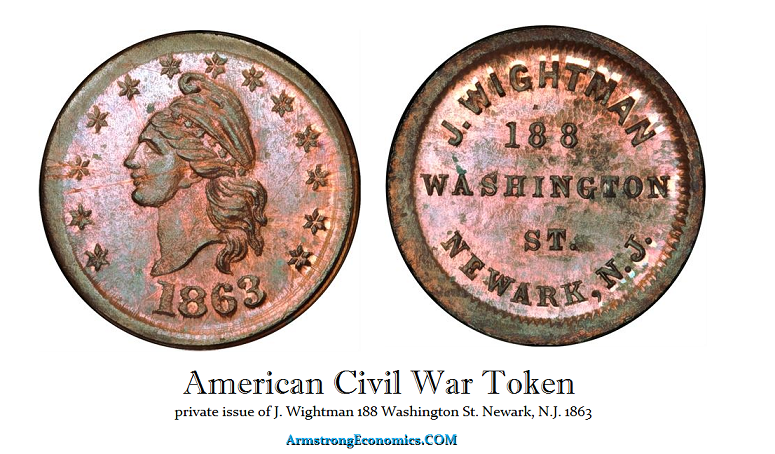
We find the very same human response during the financial Panic of 33AD. There was such a shortage of money that private tokens appeared, similar to what took place during the American Civil War and the Great Depression of the 1930s.
The firm Seuthes and Son, of Alexandria, was a firm facing difficulties because of the loss of three richly laden ships in a Red Sea storm, followed by a fall in the value of ostrich feathers and ivory. Nearly at the same time, there was the house of Malchus and Co. of Tyre with branches at Antioch and Ephesus. They suddenly became bankrupt as a result of a strike among their Phoenician workmen and the embezzlement of a freedman manager. These two failures also affected the Roman banking house, Quintus Maximus and Lucious Vibo, operating in the Roman forum. We saw the same reaction: people hoarding their wealth, and the severe shortage of money led to the appearance of private coinage.
You see the shortage of coinage during the American Civil War prompted a host of civil war tokens that circulated also as money. The same took place in Germany after World War I, and during the 1840s with the Sovereign Defaults of several US states that are known as the Hard Times Tokens.
Bitcoin can NEVER become the reserve currency for the entire political system. It would be impossible. All social programs would come to an end, and there would be massive deflation and civil unrest. The money supply always contracts during a recession and depression. We blame the central banks and the dollar when that is like blaming the gun for a murder rather than the guy who pulled the trigger.
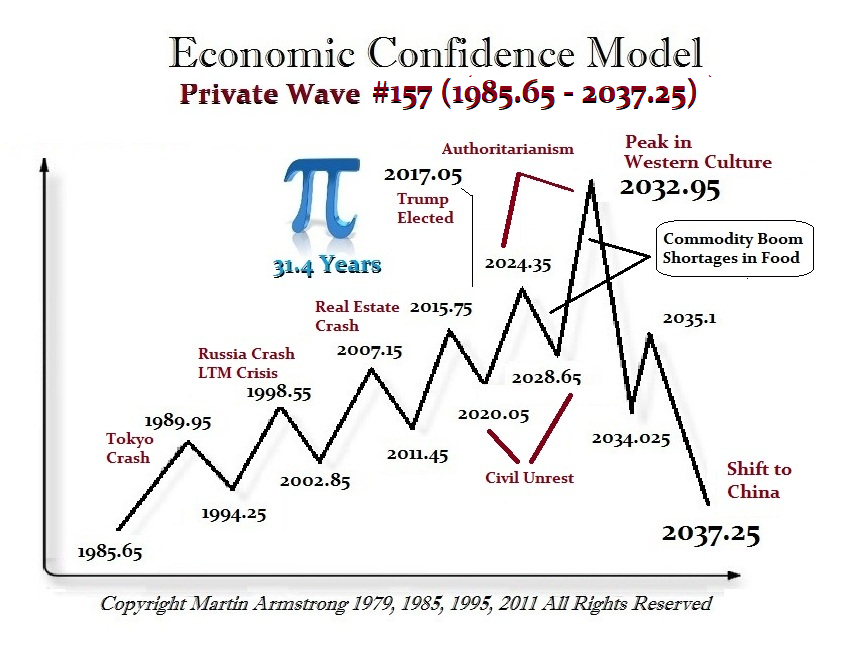
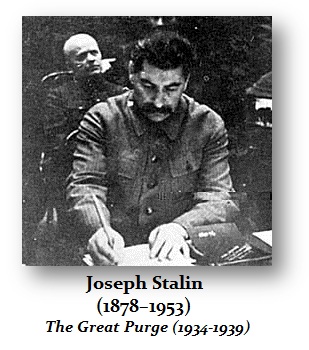
This is all about CONTROL. The computer has warned that between 2020 and 2032, we will witness the rise of authoritarianism. Governments are on the cusp of an international sovereign default. They are pushing for war as a distraction. The Digital ID and Digital Currency are no different from the paranoia of Joseph Stalin and his great purge to eliminate people he feared by revolting against him.
Bitcoin is a trading vehicle as people buy into the propaganda. In the end, the truth always prevails.
In 1996, the US government released a white paper entitled, “How to make a mint: the cryptography of anonymous electronic cash.” Released by the National Security Agency Office of Information Security Research and Technology, this document basically explains how a government agency could create something like Bitcoin or another cryptocurrency.
I encourage those interested to read the contents of the link above. This document was released during the dawn of the dot.com bubble before the technology existed to create such a currency. The NSA quickly realized that it could weaponize this technology to create a cashless society.
As explained in the introduction:
“Among the most important uses of this technology is electronic commerce: performing financial transactions via electronic information exchanged over telecommunications lines. A key requirement for electronic commerce is the development of secure and efficient electronic payment systems. The need for security is highlighted by the rise of the Internet, which promises to be a leading medium for future electronic commerce.

Electronic payment systems come in many forms including digital checks, debit cards, credit cards, and stored value cards. The usual security features for such systems are privacy (protection from eavesdropping), authenticity (provides user identification and message integrity), and nonrepudiation (prevention of later denying having performed a transaction) .

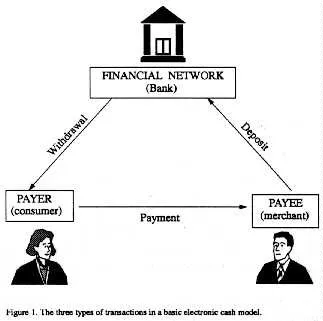
The type of electronic payment system focused on in this paper is electronic cash. As the name implies, electronic cash is an attempt to construct an electronic payment system modelled after our paper cash system. Paper cash has such features as being: portable (easily carried), recognizable (as legal tender) hence readily acceptable, transferable (without involvement of the financial network), untraceable (no record of where money is spent), anonymous (no record of who spent the money) and has the ability to make "change." The designers of electronic cash focused on preserving the features of untraceability and anonymity. Thus, electronic cash is defined to be an electronic payment system that provides, in addition to the above security features, the properties of user anonymity and payment untraceability..

In general, electronic cash schemes achieve these security goals via digital signatures. They can be considered the digital analog to a handwritten signature. Digital signatures are based on public key cryptography. In such a cryptosystem, each user has a secret key and a public key. The secret key is used to create a digital signature and the public key is needed to verify the digital signature. To tell who has signed the information (also called the message), one must be certain one knows who owns a given public key. This is the problem of key management, and its solution requires some kind of authentication infrastructure. In addition, the system must have adequate network and physical security to safeguard the secrecy of the secret keys.”
The introduction goes on to discuss the reasons they could present to the public to switch to a cashless society, including money laundering, convenience, and security. “The term electronic commerce refers to any financial transaction involving the electronic transmission of information. The packets of information being transmitted are commonly called electronic tokens,” the paper continues.
The NSA states that it would like to use “user identification” and “message integrity” to protect privacy in “nonrepudiation” transactions. “Eavesdropping” concerns appear numerous times throughout the document, which could be prevented by “not just privacy but anonymity” in the form of “payer anonymity” and “payment untraceability.” The government clearly states that hard currency, cash, provided these luxuries but could not be traced by the banks and, therefore, the government.
Again, this was released in 1996 before basic online banking. The document outlines basic online banking but takes it a step further by explaining how they could seemingly make payments seem “untraceable” to the public using “blind signatures” that allegedly cannot be seen by the bank. “This step is called “blinding” the coin, and the random quantity is called the blinding factor. The Bank signs this random-looking text, and the user removes the blinding factor.”
Alice sends the blinded coin to the Bank with a withdrawal request.
Bank digitally signs the blinded coin.
Bank sends the signed blinded coin to Alice and debits her account.
Alice unblinds the signed coin.
Payment/Deposit:
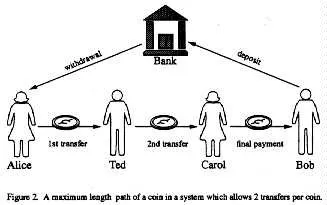
Alice gives Bob the coin.
Bob contacts Bank and sends coin.
Bank verifies the Bank’s digital signature.
Bank verifies that coin has not already been spent.
Bank enters coin in spent-coin database.
Bank credits Bob’s account and informs Bob.
Bob gives Alice the merchandise.
“This makes remote transactions using electronic cash totally anonymous: no one knows where Alice spends her money and who pays her.” Full “payment anonymity” would be “too much to ask”, thus, “we are forced to settle for payer anonymity.” In other words, the illusion that no one knows who is making the transaction.
PROTOCOL 5:Off-line cash.
Withdrawal:
Alice creates an electronic coin, including identifying information.
Alice blinds the coin.
Alice sends the blinded coin to the Bank with a withdrawal request.
Bank verifies that the identifying information is present.
Bank digitally signs the blinded coin.
Bank sends the signed blinded coin to Alice and debits her account.
Alice unblinds the signed coin.
Payment:
Alice gives Bob the coin.
Bob verifies the Bank’s digital signature.
Bob sends Alice a challenge.
Alice sends Bob a response (revealing one piece of identifying info).
Bob verifies the response.
Bob gives Alice the merchandise.
Deposit:
Bob sends coin, challenge, and response to the Bank.
Bank verifies the Bank’s digital signature.
Bank verifies that coin has not already been spent.
Bank enters coin, challenge, and response in spent-coin database.
Bank credits Bob’s account.
Note that, in this protocol, Bob must verify the Bank’s signature before giving Alice the merchandise. In this way, Bob can be sure that either he will be paid or he will learn Alice’s identity as a multiple spender.
The government begins to explain basic blockchain concepts, or at least how they’d like them to occur.
“When Alice spends her coins with Bob, his challenge to her is a string of K random bits. For each bit, Alice sends the appropriate piece of the corresponding pair. For example, if the bit string starts 0110. . ., then Alice sends the first piece of the first pair, the second piece of the second pair, the second piece of the third pair, the first piece of the fourth pair, etc. When Bob deposits the coin at the Bank, he sends on these K pieces.

If Alice re-spends her coin, she is challenged a second time. Since each challenge is a random bit string, the new challenge is bound to disagree with the old one in at least one bit. Thus Alice will have to reveal the other piece of the corresponding pair. When the Bank receives the coin a second time, it takes the two pieces and combines them to reveal Alice's identity…

Zero-Knowledge Proofs. The term zero-knowledge proof refers to any protocol in public-key cryptography that proves knowledge of some quantity without revealing it (or making it any easier to find it). In this case, Alice creates a key pair such that the secret key points to her identity. (This is done in such a way the Bank can check via the public key that the secret key in fact reveals her identity, despite the blinding.) In the payment protocol, she gives Bob the public key as part of the electronic coin. She then proves to Bob via a zero-knowledge proof that she possesses the corresponding secret key. If she responds to two distinct challenges, the identifying information can be put together to reveal the secret key and so her identity.”

The document then discusses ways to blind the signature, so that the payee may remain anonymous. Now, why would the government allow that to occur? “Even in anonymous, untraceable payment schemes, the identity of the multiple-spender can be revealed when the abuse is detected. Detection after the fact may be enough to discourage multiple spending in most cases, but it will not solve the problem. If someone were able to obtain an account under a false identity, or were willing to disappear after re-spending a large sum of money, they could successfully cheat the system.”
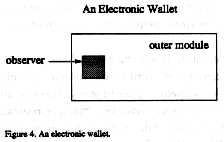
The document even discusses what we now would refer to as a crypto wallet. A seemingly safe offline method to store these electronic coins. They explain that at least one party must always reveal their hand. “When a coin is spent, the spender uses his secret to create a valid response to a challenge from the payee. The payee will verify the response before accepting the payment. In Brands’ scheme with wallet observers, this user secret is shared between the user and his observer. The combined secret is a modular sum of the two shares, so one share of the secret reveals no information about the combined secret.”
Who is the “observer” in this scenario? “An observer could also be used to trace the user’s transactions at a later time, since it can keep a record of all transactions in which it participates. However, this requires that the Bank (or whoever is doing the tracing) must be able to obtain the observer and analyze it. Also, not all types of observers can be used to trace transactions.”
In the event that a transaction was compromised, the bank would have to change its secret key and “INVALIDATE ALL COINS.”
The authors explain that tax evasion, per usual, is the key concern. They mention money laundering and “old crimes such as kidnapping and blackmail” as reasons to allow backdoor entry. Restoring traceability was a proposed solution, and if they could restore traceability in the first place, one must question if the payments were ever truly anonymous. Using Alice as their example, they explain that they could simply issue a warrant and track all her payment history. “Back~ard traceability is the ability to identify a withdrawal record (and hence the payer), given a deposit record (and hence the identity of the payee). Backward tracing will reveal who Alice has been receiving payments from.”
So, while the bank only sees the deposit in encrypted form, the public key must be used for withdrawal. “The ability to trace transactions in either direction can help law enforcement officials catch tax evaders and money launderers by revealing who has paid or has been paid by the suspected criminal. Electronic blackmailers can be caught because the deposit numbers of the victim’s ill-gotten coins could be decrypted, identifying the blackmailer when the money is deposited.”
“In conclusion, the potential risks in electronic commerce are magnified when anonymity is present. Anonymity creates the potential for large sums of counterfeit money to go undetected by preventing the identification of forged coins. Anonymity also provides an avenue for laundering money and evading taxes that is difficult to combat without resorting to escrow mechanisms. Anonymity can be provided at varying levels, but increasing the level of anonymity also increases the potential damages. It is necessary to weigh the need for anonymity with these concerns. It may well be concluded that these problems are best avoided by using a secure electronic payment system that provides privacy, but not anonymity.”
The US government released this document in 1996, 27 years ago. Bitcoin was allegedly anonymously created in 2009, and numerous other blockchain-based payment coins have followed. This, paired with the push for CBDC, where the government simply does not need to pretend payments are anonymous, should make one question the security and longevity of cryptocurrencies.
Posted originally on Dec 5, 2024 by Martin Armstrong
This is the type of AI that all leading experts have warned us about. German defense firm Helsing has announced it will provide Ukraine with 4,000 HX-2 “Karma” kamikaze drones this month. Germany’s Defense Minister Boris Pistorius said he had been “very pleased that the delivery of these drones equipped with artificial intelligence (AI) technology is already underway.”
With a top speed of 137 mph, these drones are capable of traveling up to 62 miles and can be loaded with various warheads for maximum destruction against armored vehicles, buildings, or platoons. The company states that these drones do not need a human operator, rather, they will be programmed to “search for, re-identify, and engage targets, even without a signal or a continuous data connection.” A human operator may “stay in the loop,” per the company’s messaging, but these weapons are designed to act autonomously.
“With HX-2, we have created a new smart effector that combines mass, autonomy and precision. Individual HX-2s can reliably engage armored targets in highly contested environments. When deployed along borders at scale, HX-2 can serve as a powerful counter invasion shield against enemy land forces,” Helsing’s co-founder Niklas Köhler stated. The other co-founder, Gundbert Scherf, said that NATO in particular has been eager for this technology. On one hand, the company says that these drones will retain human oversight, but on the other hand, the entire purpose of their design is to be autonomous.
Earlier prototypes have been used against Russian troops earlier this year. I believe there was a “Black Mirror” episode about this scenario. What happens when we have mass killing machines from both sides acting independently or without the need for human operators? Will nations take responsibility when these drones attack innocent civilians? Ironically, the company states that their vision is to “ethically protect common democratic values.”
Posted originally on Dec 5, 2024 by Martin Armstrong |
The nursing home for retired neocons, also known as NATO, continually disregards any offers for peace. Russia has been adamant that NATO must not back it into a corner or the situation could go nuclear. Yet, NATO has revealed plans to build another factory close to Russia’s border.
German-based Rheinmetall has partnered with NATO to build anartillery ammunition plant in Baisogala, Lithuania. The facility will be able to produce “tens of thousands of 155mm” artillery shells annually, according to Rheinmetall. The 180 million euro facility will open by the middle of 2026. These shells weigh around 100 pounds each and are two feet in length and NATO members have already provided Ukraine with hundreds of thousands of rounds. The United States alone has plans to generate 100,000 shells monthly and over 1 million annually, but only produced a few thousand annually prior to the war. This new facility will allow NATO to replenish stockpiles as the war wages on for years to come.
NATO claims that the strategic location would deter Russia from invading the Baltic States or attempting to cut them off from Poland through the Suwa ki Gap, a 60-mile stretch of land on the Poland-Lithuania border, located amid Belarus and Russia’s Kaliningrad. Kaliningrad has been completely encircled by NATO since Sweden and Finland joined the bloc.
“The establishment of the German defense industry company Rheinmetall’s ammunition factory in Lithuania is not only significant in the context of the defense industry’s development but will also address the needs of our armed forces,” said Lithuanian Minister of Defense Laurynas Kas i nas.
Belarus and Russia held joint exercises near the Suwalki Gap in 2022. Russia has been increasing its military presence in Kaliningrad over the years and believes it is on the defensive against NATO. The necons do not want peace with Russia. They are actively building facilities to instigate tensions and relay the message that their war will not end until they seize Russia – a goal that will fail.
I have created this site to help people have fun in the kitchen. I write about enjoying life both in and out of my kitchen. Life is short! Make the most of it and enjoy!
This is a library of News Events not reported by the Main Stream Media documenting & connecting the dots on How the Obama Marxist Liberal agenda is destroying America











 Centinel2012