Trump & Bitcoin a Disaster in the Making


Posted originally on May 27, 2025 by Martin Armstrong 

2025_05_27_11_42_15_Trump_family_to_seek_3bn_for_bet_on_cryptocurrency

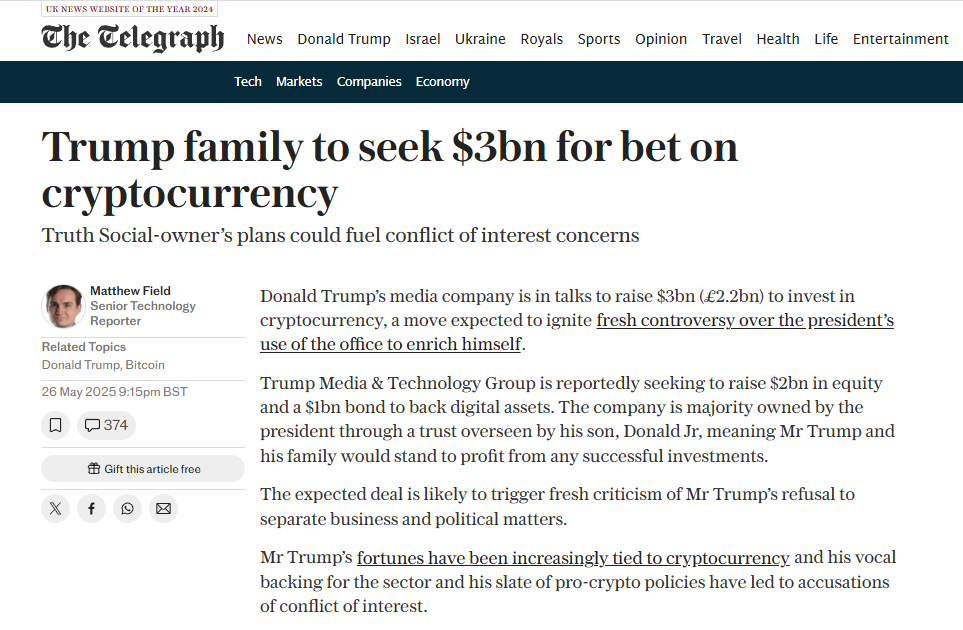
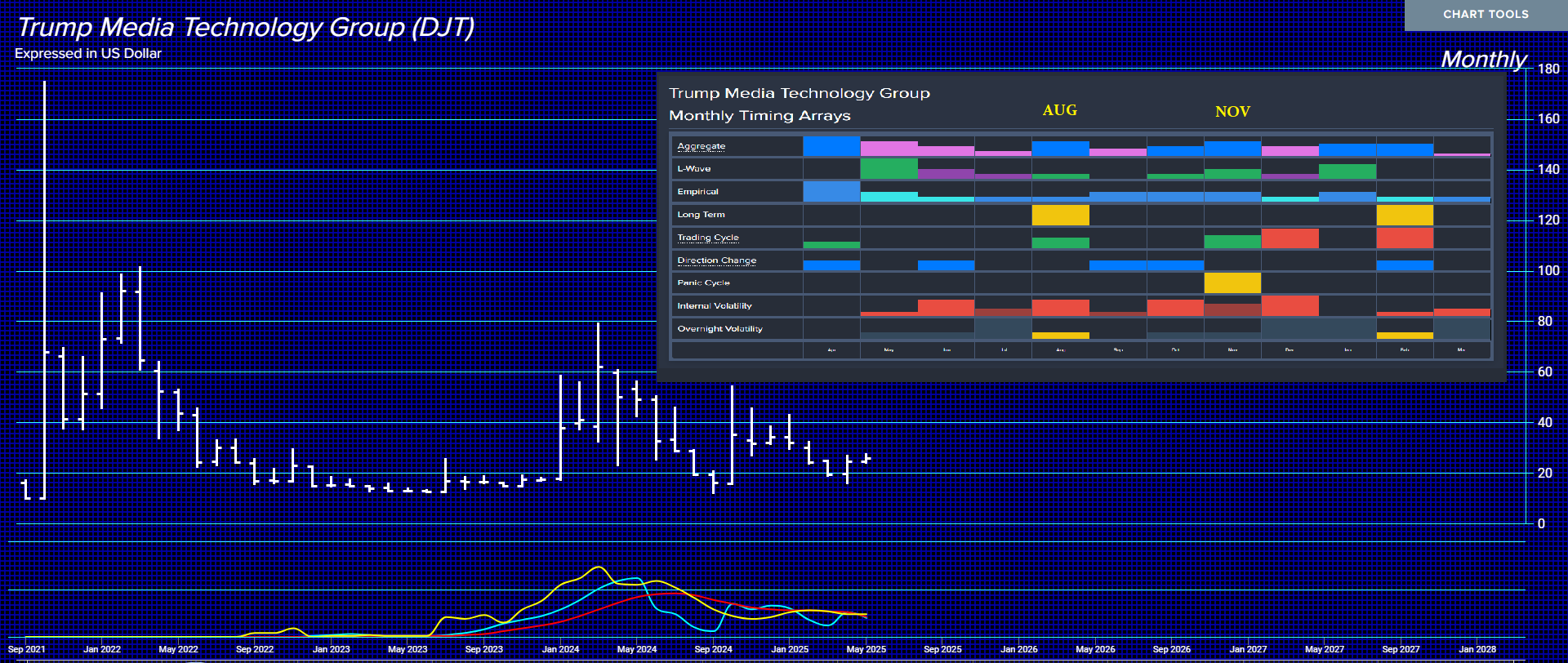
We know we are approaching a major high in Bitcoin when Trump Media and Technology Group (TMTG), a publicly traded media company controlled by the U.S. president’s family, announced a plan to purchase $2.5 billion worth of Bitcoin on Tuesday. This is a warning that we are in the throes of a typical bubble that will not end nicely.

NO BID

As a trader, you come to understand that every market, no matter what, acts the same because it is NOT the instrument, be it tulips, stocks, commodities, or bonds – it is human nature and the madness of crowds.  A crash becomes inevitable when 97% of the people are all long and they run out of fresh buyers. Like the Russian collapse, because all the bankers were long and the hedge funds, then they tried to sell and discovered that they were the market. When they try to sell, the broker says there is NO BID! Bitcoin is a trading vehicle like everything else. It is no exception to the rules of markets. It is just the next Tulip or Dot.COM or AI craze.

Trump Media M Combined 5 27 25

I would NOT invest in Trump Media and Technology Group. It appears to be a brief rally, but this decision is misguided and emotional. They are risking the company on a speculation and are all caught up in the typical bubble, assuming the majority is correct. Why not convert your cash to yuan or euros when your expenses and revenue are in dollars? I can’t even recall the number of companies that came crawling to me for help after making the same risky FX trades.

The problem remains, the majority is ALWAYS wrong, and that is why no market is ever exempt from the inevitable boom and bust cycle. This is also when it only takes a minority to bring down a government or a market.

Why Majority Must be Wrong

Intangible Art


Posted originally on May 27, 2025 by Martin Armstrong 

Artist

Art can be a tangible commodity, but what happens when that art exists only as a concept? Italian artist Salvatore Garau created a statue entitled, Io Sono (“I Am”) that sold for $18,300. The sculpture itself is invisible.

“You don’t see it, but it exists,” Garau stated. The artist focuses on “immaterial sculptures” that exist by thought alone. Still, he believes that Io Sono must be displayed in a private home with climate control and provided with 5 x 5 ft of space. This piece of art could rise in value if consumers believe it to be worth more and are willing to pay more. The coverage this concept has received in the news has certainly caused it to become a conversation piece, and therefore, someone out there may be willing to spend more to have an invisible statue that exists as a concept.

The fine art market has become one of the most effective, sophisticated tools for laundering money. Unlike real estate, stocks, or precious metals, the art market is unregulated, unstandardized, and cloaked in confidentiality. It is considered upscale and a tool utilized by those who already have wealth and need a place to park it. Unlike financial instruments, which must pass through reporting requirements, art often changes hands privately, across borders, and without disclosure of the buyer or seller. In this case, the art does not even need to exist, and yet it still was sold through an official fine art auction house.

Art is not valued like stocks. There are no earnings, dividends, or tangible utility. There is only perception. A Picasso, a Basquiat, or a Warhol are not just artworks; they are safe havens for capital, especially for oligarchs, cartel bosses, and political elites looking to move funds discreetly. A $15 million painting hung in a Zurich vault is more secure and less traceable than a Swiss bank account, which is no longer secure.

Mar-A-Lago was once valued beneath Hunter Biden’s “art.” Hunter Biden’s artwork is estimated to be worth up to $500,000. His personal friend, Kevin Morris, purchased a few pieces and also gave him a loan of $2 million to cover Hunter’s late tax payments. Most of his buyers remain anonymous, but the known art collectors are all associated with the DNC. Hirsh Naftali, for example, was appointed by Joe Biden to be the Commission for the Preservation of America’s Heritage Abroad after he expressed interest in his son’s artwork.

Art as an asset is entirely subjective and based on confidence. It holds no inherent value but the public perceives its value and prices it accordingly. Art does not generate income nor does it create economic output. Art is purely speculative and becomes a bubble when confidence peaks.

We saw this in the late 1980s Japanese bubble when Japanese investors were buying Van Goghs and Monets at astronomical prices. That bubble burst along with their real estate and the Nikkei index. We saw it again leading up to 2007–2008, and now, as the sovereign debt crisis looms globally, we’re beginning to see the same flight again. Art can act as a temporary store of value unless you have some extremely rare piece from a renowned artist.

Governments are keen to tax everything, and one day, that could include art. The secrecy and mystery that once caused art to be a store of wealth could collapse if governments act. Since art is primarily used as a temporary asset by those who are already at the top, governments are not yet looking in that direction. Once capital gains taxes are implemented, it will be game over for much of the art world.

The Consumer Economy


Posted originally on May 27, 2025 by Martin Armstrong 

American Consumer

The US represents only 5% of the global population, and yet, Americans are responsible for 25% of all global consumption. Americans consume around 25% of the world’s oil, 27% of global aluminum, 23% of all coal, and 19% of copper. Nations are still standing in line to offload their goods to Americans.

There are more people on the continent of Europe than in America, but they spend significantly less per capita. Total consumer spending for the entire 27-bloc European Union reached $9.589 trillion in 2023, and with a population of around 450 million, this came out to around $21,300 per person. This figure went down to €18,768 in 2024. Per capita consumer spending in the US hit $51,500 last year, as the average American spends twice as much as the average European.

Hoarding Euros

China’s middle class is growing and will one day surpass America. At the moment, the average Chinese person spends 28,227 yuan or $4,800. Their population size rivals Europe and America, but the money is simply not there. Spending rose 5.3% in China from 2023 to 2024, when you account for inflation, it rose around 5.1%. Even if one adjusts for purchasing power parity (PPP), the US spending per capita is 7X greater than China’s.

Private consumption averaged 55.2% of Europe’s GDP from 1995 to 2024. Spending remains the single largest factor in the European economy. Economic uncertainty and inflation are causing consumers to spend less and this will severely harm Europe’s economy. Even small changes in consumer spending can offset the European economy.

Nations always go to war when they need funding. Russia is the wealthiest nation in terms of natural resources. This conquest is the same as when Japan went into Manchuria; it is why Europe wants to go into Russia.

MAID for Children and Teens – Canada Expands Eugenics Program


Posted originally on May 27, 2025 by Martin Armstrong 

MAIDteenskids

Canada has expanded its Medical Assistance in Dying (MAID) program to include children and teenagers. A Special Joint Committee on Medical Assistance in Dying submitted a report to the House of Commons in February 2023 that recommended the government begin extending MAID services to “mature minors” WITHOUT parental authorization. Carney’s government is allegedly considering this blatant eugenics program that would allow the government to euthanize children.

Common law dictates that a “mature minor” is a person under 18 years of age who is deemed competent to make informed decisions about their own healthcare. There is no set age for which a minor is “mature.” Instead, healthcare providers assess each patient on a case-by-case basis and decide who is “mature” enough to make decisions regarding their treatment plan. Parents must accept their child’s autonomy to accept or deny treatment if their child’s health care provider gives them the authority.

The Canadian government has already created a coloring book for children entitled “Me and My Illness.” First, they created a coloring book for children to process the potential death of their loved ones through medically assisted suicide, and then they created a suicide coloring book for CHILDREN. The book encourages children to focus on their pain, highlighting how their illness isolates them from society and makes them different. Later in the book, children are provided a “decision-making toolkit” explaining “small” and “big” medical decisions.

What does dying feel like?

“You might worry that dying is painful. The way a person’s body stops working depends on their illness and where it is in the body. Many illnesses cause the body to slow down gradually until it stops. Other illnesses make the body stop more quickly. Usually, the stopping does not seem to be painful, but some people feel pain from their illness even when they are dying. Doctors and nurses do their best to help people feel as comfortable as they can. Every illness and every person is a little bit different.”

The book is absolutely atrocious and heartbreaking with journal prompts asking: “If you were to die, how would you like people to remember or celebrate you? Write or draw your ideas in your sketchbook.”

A flyer has been circulating Canada that promotes MAID for children and teens without parental consent. “One in 10 people will wait more than 4 months for counselling. The waiting period for MAID is only 3 months,” the flyer notes.

The Canadian government continues to expand what ailments fall under MAID. Beginning in March 2027, the government will begin eliminating people with mental illnesses that are treatable. The government will also begin euthanizing those “too poor to live with dignity,” as well, but the conservatives are considered the Nazis.

Mark Carney is following the World Economic Forum handbook to a tee, picking up where Justin Trudeau left off and working to reduce the population. Children and teens have undeveloped brains and cannot possibly comprehend the recourse of suicide. The government has already been sending MAID advocates to hospitals across the country to encourage sick patients with often treatable ailments to end their lives. Parents will have absolutely no say if their child lives or dies as the Canadian government stoops to a new deplorable level of pure evil.

Interview: World War III is Inevitable


Posted May 26, 2025 by Martin Armstrong 

The Theory of UNCERTAINTY


Posted originally on May 26, 2025 by Martin Armstrong 

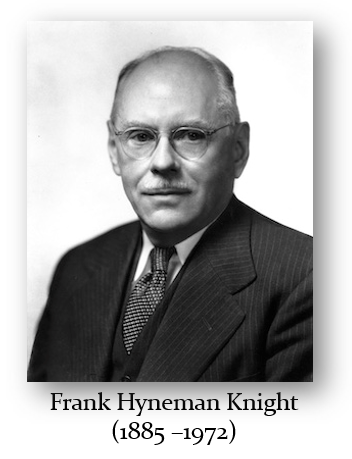
Knight Frank

QUESTION: What is your view of Frank Knight’s view of risk versus uncertainty?

HL

ANSWER: Frank Knight, an influential economist and founder of the Chicago School from which Milton Friedman emerged. He is known for his work on risk and uncertainty, and he articulated a key distinction between the two concepts in his 1921 book “Risk, Uncertainty, and Profit”. The widely cited quote is:

“Uncertainty must be taken in a sense radically distinct from the familiar notion of Risk, from which it has never been properly separated. The term ‘risk,’ as loosely used in everyday speech and in economic discussion, really covers two things which, functionally at least, in their causal relations to the phenomena of economic organization, are categorically different.”

Knight argued that risk refers to situations where outcomes are unknown but probabilities can be calculated (e.g., gambling or insurance), making it measurable and manageable. On the other hand, uncertainty describes scenarios where probabilities cannot be determined due to a lack of historical data or predictable patterns (e.g., unprecedented market shifts). This distinction underpins his theory of profit, where entrepreneurs bear uncertainty (not mere risk) as a source of potential economic reward.

Uncertainty

This framework remains foundational in economics and decision-making theory, emphasizing the role of unquantifiable unknowns in shaping entrepreneurial behavior and market dynamics. I, being a trader rather than an academic, however, disagree insofar as nothing is truly UNCERTAIN. The problem with classical economists is that they have not explored ancient history, assuming the data is inconsistent or nonexistent. Then this view is compounded by the idea that the economy is random, and we can manage it, which was first presented by Karl Marx.

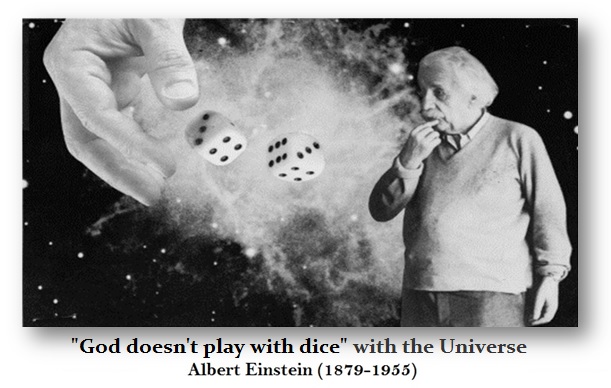
Einsteing dice

I have said many times that when I was in school, in economics class, they said it was random, and this government can smooth out the booms and busts under Keynesian Economics to prevent another Great Depression. Then I went to Physics class and was told that NOTHING is random. I concluded that someone was lying, and it was the economists. They refused to investigate the business cycle and presumed they could manage it.

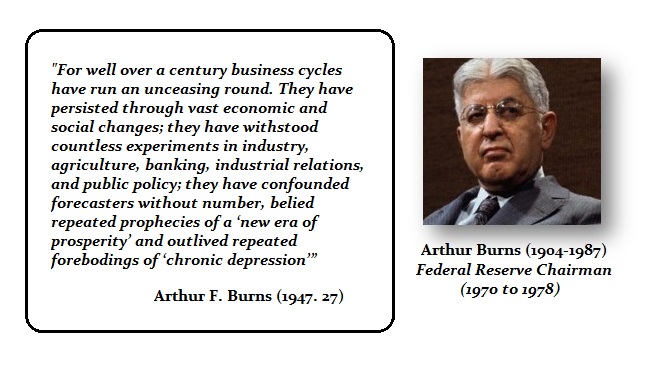
Burns Arthur

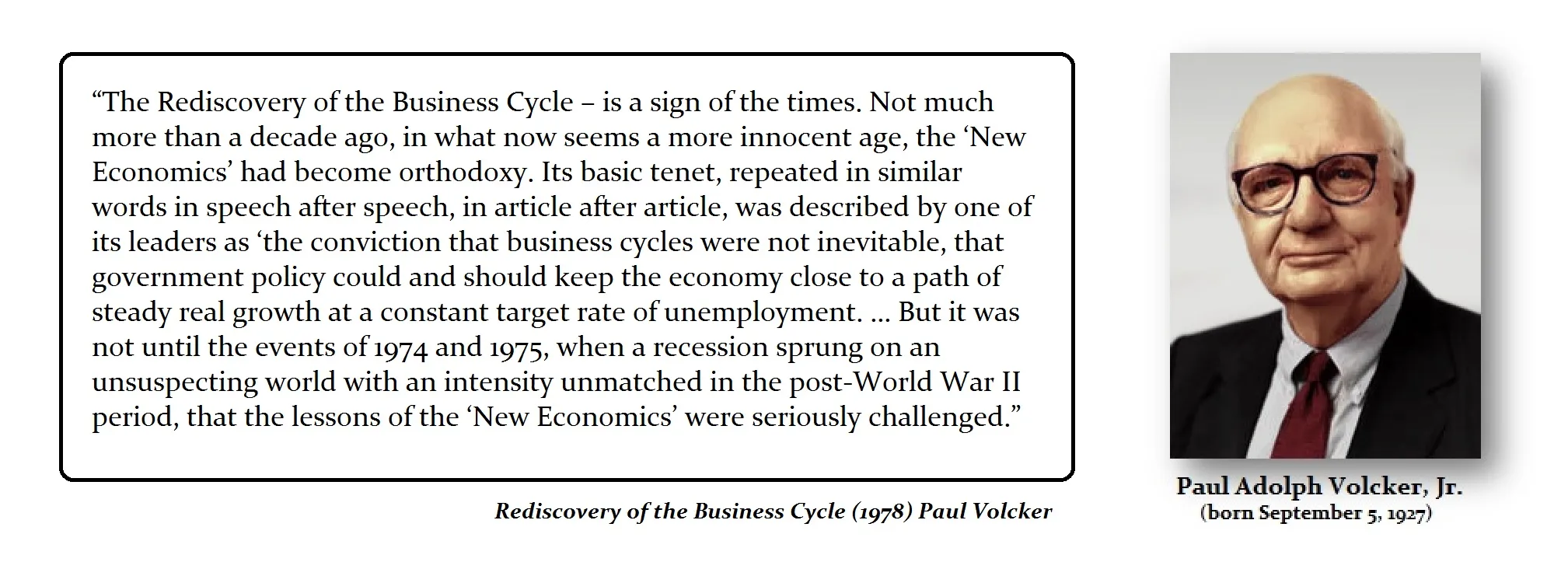
Anyone who had actual experience disagreed with the classic economists. Arthur Burns was the Fed Chairman when Bretton Woods broke. He concluded that the business cycle existed and always won. Then there was Paul Volcker, the next Fed Chairman. Paul also came to the same conclusion that the business cycle existed despite the classic economic theories.

Volcker Rediscovery

I had a conversation with Paul Vocker, who told me my Economic Confidence Model was correct and agreed that the business cycle was about 8 years. This flies in the face of classical economists.

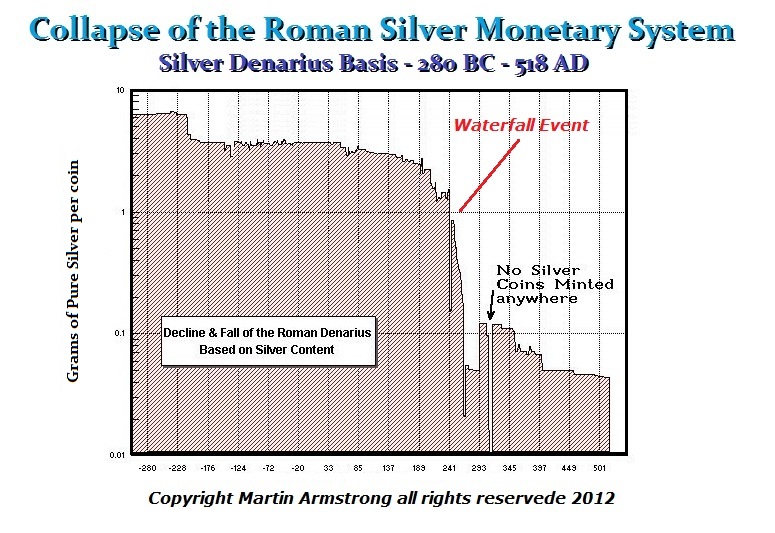
Roman decline silver content monetary system Armstrong Waterfall effect
1964 1965 Quarters

I knew that Roman coins were attainable. I bought my first one for $10 in the 1960s. When they removed the silver from the coinage in 1865, I saw the connection to the very same event that marked the start of the Third Century Crisis.

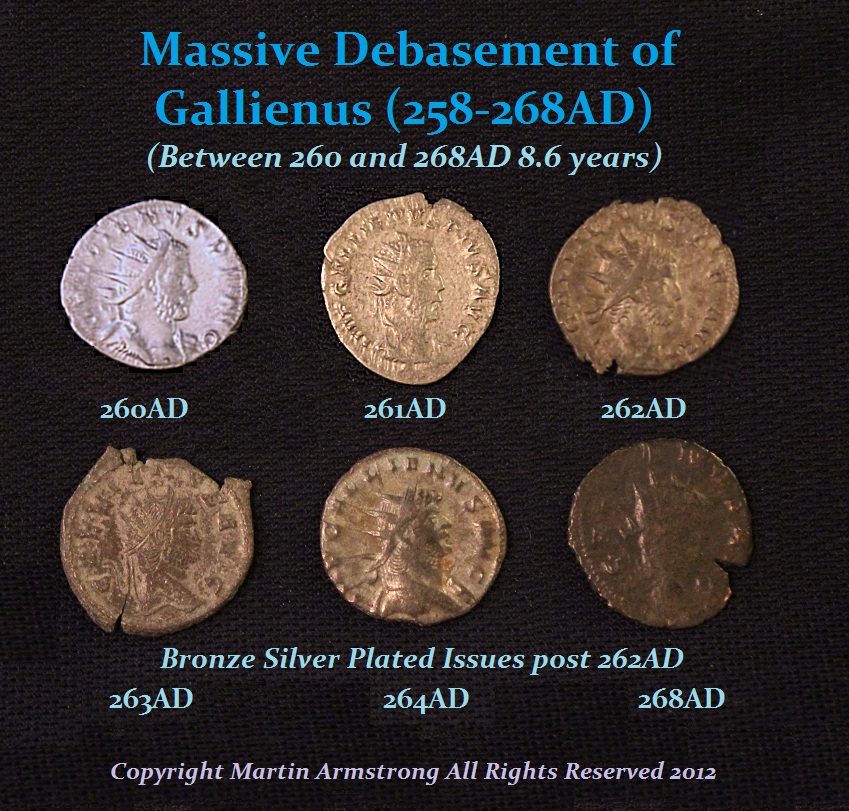
Debasement Gallienus

When I assembled the coinage to answer a gnawing question: How did Rome fall? Was it like a 747 coming in for a landing gradually, or was it abrupt? I discovered it fell from 50 %+ silver to 0.2% in just 8 years.

ECM GIF Turning Points

I discovered no such thing as random walks down the street. That is put out by people who cannot see the cycles before their eyes. Turn the economy down, and politics will always flip, no matter who is in power. The EU is fighting to stay alive, so they are interfering in elections to defeat anyone who is anti-EU. This will only blow up in their faces. The economy will always force a response, and human nature has never changed in 6,000 years. Whoever is in power will always respond similarly to the same old economic pressure.

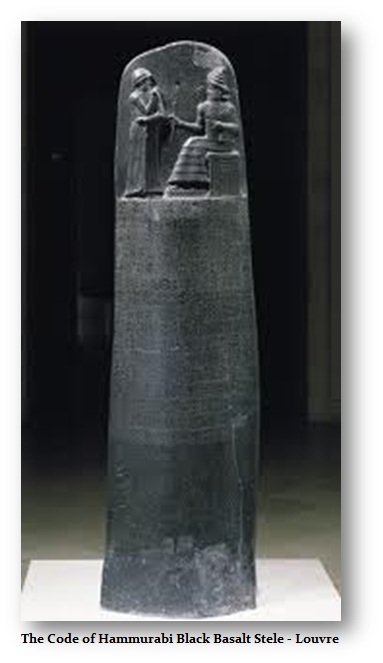
Hammurabi Stella2

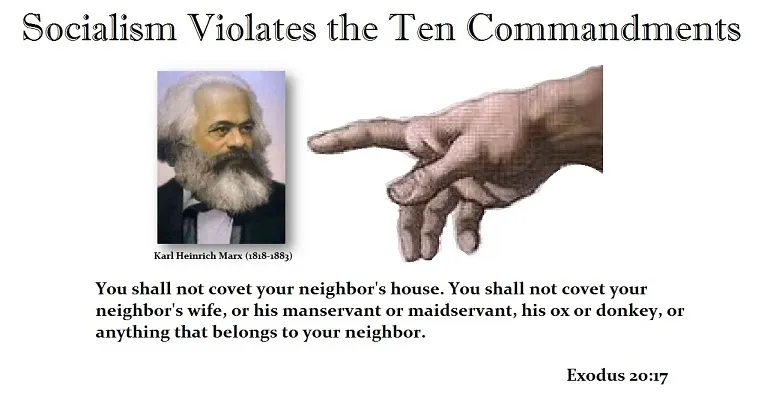
Read Hammurabi’s Legal Code. It is wage and price controls in response to an economic crisis. Even the Bible outlawed socialism. Attacking the rich and class warfare has been a problem since ancient times and it has always resulted in the collapse of such economies. Nothing has changed – ever. So, where is the UNCERTAINTY?

Marx ten commandments socialism

Interview: Central Banks Trapped, Confiscation in EU, China New Financial Capital


Posted originally on May 25, 2025 by Martin Armstrong 

Armstrong Interview in Alberta About Separation


Posted originally on May 24, 2025 by Martin Armstrong 

Cornerstone Interview May 2025

How Alberta Can Actually Separate from Canada


Posted May 24, 2025 by Martin Armstrong 

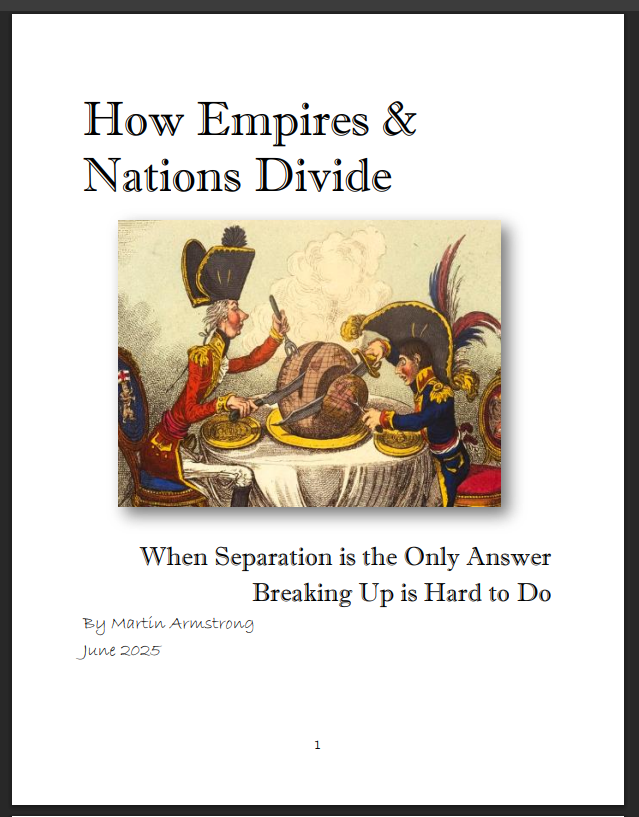
How_Countries_Separtate F

This is perhaps one of the most fascinating reports I have ever written. This was inspired by my invitation to speak in Alberta concerning their movement to separate from Canada. A few propose being the 51st State, but the more practical move would be to become a sovereign state on their own, which I lay out in the proposal that would rock the entire world and propel Alberta to a leader among nations.

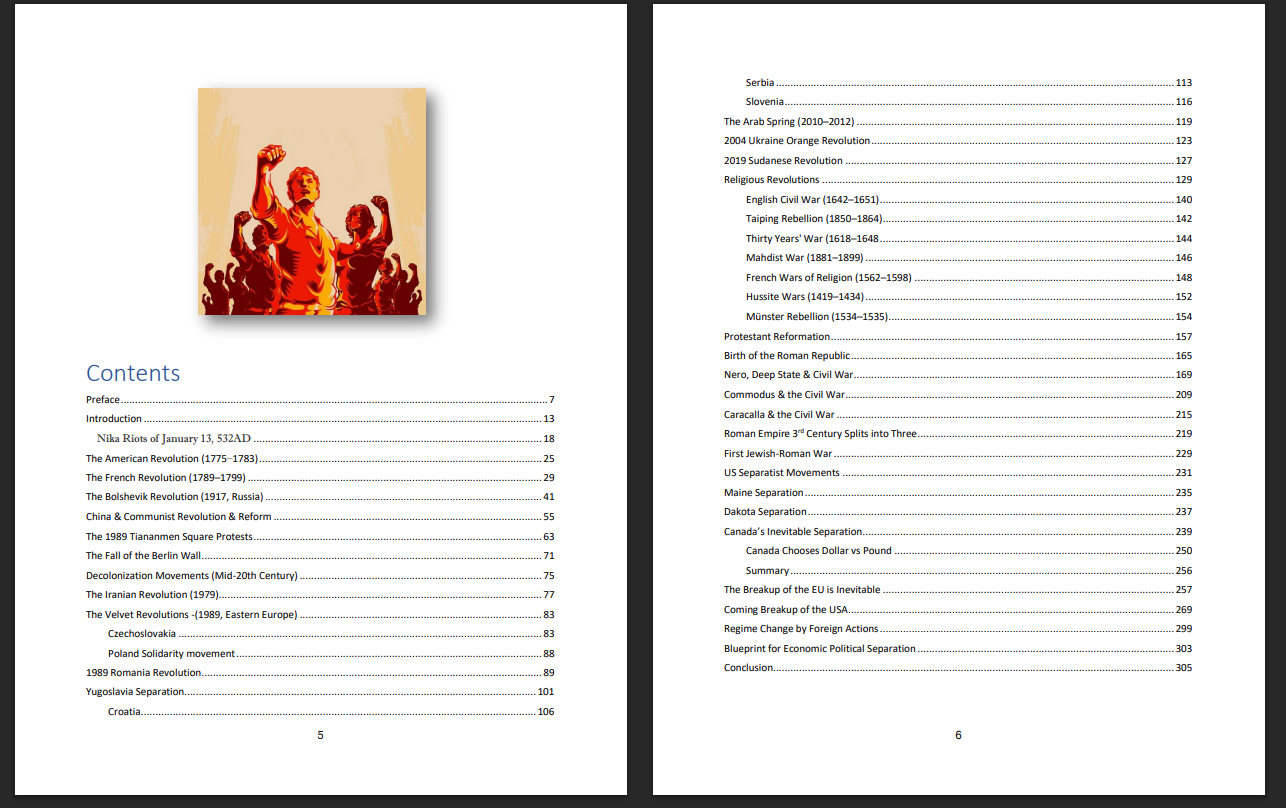
But what is far more critical is that I have gathered historical separation events to take the best from that and what to avoid. However, in the process, such separations and revolutions have ALWAYS taken place with the minority and not the majority. The average number of what percent of the population is required to pull off a separation or revolution is LESS THAN 15%!!!!!

Pulling together this research blew my mind. This goes against what most would expect. It also shows how this process has unfolded; not all are violent. As you can see, the significant events like the American Revolution, the French Revolution, and the 1917 Russian Revolution are included. In these events, I have focused on the percentage of the population it took to achieve the result. I have included the ancient revolution, including the Roman-Judaea War, and the shocking realization that the Zealots were a tiny fraction of the Jewish population.

This Report will shock you as it did me.

It is Reasonably Priced at $19.95 and comes out to 314 pages, fully illustrated.

How_Countries_Separtate INDEX