Posted originally on the conservative tree on August 2, 2022 | sundance
I was unaware that monkeypox was an issue for the White House. However, today the Biden administration is proud to present a team of government officials tasked for the purpose of handling the whole of government response to the U.S. outbreak of monkeypox.
Additionally, I’m not exactly sure what a “stakeholder in monkeypox” is, but this team is in charge of making sure they have “health equity.”
WHITE HOUSE – “Today, President Biden named FEMA’s Robert Fenton as the White House National Monkeypox Response Coordinator and Dr. Demetre Daskalakis as the White House National Monkeypox Response Deputy Coordinator. Fenton and Daskalakis will lead the Administration’s strategy and operations to combat the current monkeypox outbreak, including equitably increasing the availability of tests, vaccinations and treatments.
[…] “Bob Fenton and Dr. Daskalakis are proven, effective leaders that will lead a whole of government effort to implement President Biden’s comprehensive monkeypox response strategy with the urgency that this outbreak warrants,” said Anthony Fauci, Chief Medical Advisor to the President. “From Bob’s work at FEMA leading COVID-19 mass vaccination efforts and getting vaccines to underserved communities to Demetre’s extensive experience and leadership on health equity and STD and HIV prevention, this team will allow the Biden Administration to further accelerate and strengthen its monkeypox response.”
Fenton and Daskalakis will coordinate and manage response efforts across the White House and all Federal departments and agencies. They will work with local, state, national, and international stakeholders on tracking and fighting the spread of monkeypox, with state and local partners to ensure they have adequate supplies to test, treat and vaccinate at-risk individuals, with clinicians and providers on available testing, treatment and vaccination options, and with stakeholder communities on building public understanding of the virus and how to address it most effectively.
[…] Over the coming weeks, under the leadership of Fenton and Daskalakis, the Administration will advance and accelerate the United States’ monkeypox response to mitigate the spread of the virus, protect individuals most at risk of contracting the virus, and care for those who have been afflicted with it.” (read more)
Posted originally on the conservative tree house on August 2, 2022
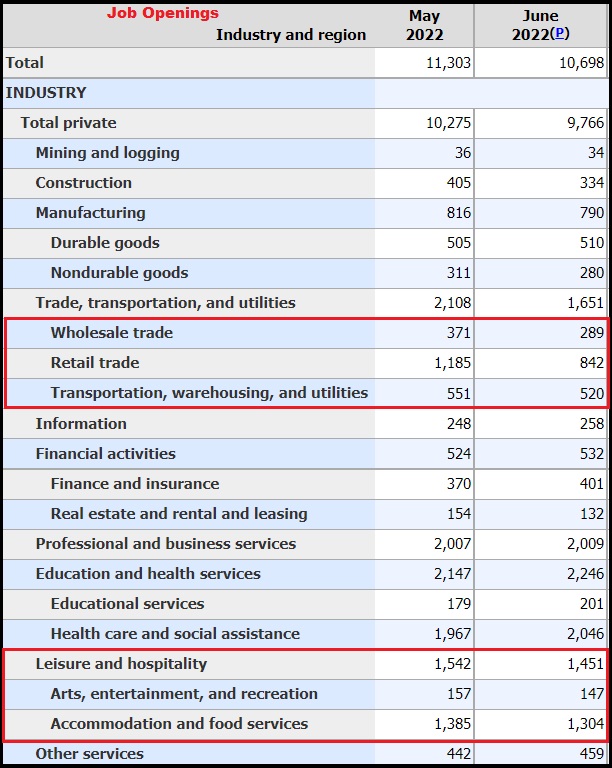
The Bureau of Labor Statistics (BLS) produces a monthly report of available job openings. The Job Openings and Labor Turnover Summary (JOLTS report) shows the number of available jobs at a captured moment in time. This JOLTS report [DATA HERE] is a summary of the last day in June.
As you can see within modified Table-1, the number of available jobs dropped by 605,000 in this report.
Hires and separations were little changed, so too was the number of people who quit their jobs. The big change in this JOLTS survey was the removal of available jobs. Employers cancelling job openings.
BLS – “On the last business day of June, the number and rate of job openings decreased to 10.7 million (-605,000) and 6.6 percent, respectively. The largest decreases in job openings were in retail trade (-343,000), wholesale trade (-82,000), and in state and local government education (-62,000).”
If we monitor the JOLTS report as an indicator of employment strength reflecting the general pattern of consumers, we can see a pullback in both the goods and service sector.
Retail job openings dropping 343,000 as consumer spending tightens even more due to inflation, and now we see the service side with leisure and hospitality dropping 91,000 openings.
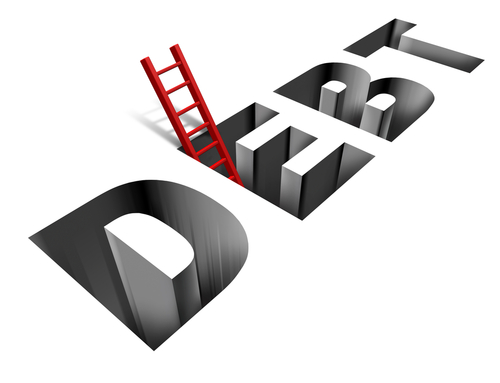
The Congressional Budget Office warned that US federal debt is expected to rise 185% within the next 30 years. Total debt holdings could double the size of US GDP by 2051. No politician or spender of this debt cares as they have no intention of paying it off. The Congressional Budget Office is calling this an optimistic forecast, given the previous estimate of debt soaring to 202% of GDP by 2051. The fact of the matter is that no one can foresee how much money politicians will continue to spend. Servicing the debt will become more expensive over time, expected to reach 10% of GDP by 2051, 7.4% in 2042, and 5.1% in 2032.
Most do not realize that the national debt is already at monumental levels. US gross federal debt to GDP reached 100% by 2012. The ratio remained somewhat stagnant until capitalism became sick with COVID in 2020, and the GDP to debt ratio rose to 128.1%. The figure stood at 137.2% by December of 2021 and has continued to increase.
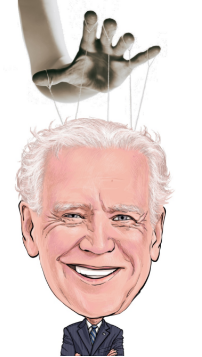
China no longer wants US debt and has begun to sell off its holdings. As other currencies decline relative to the dollar, US debt, and all government debt in general, no longer seems like a smart investment. We have reached a point where Congress can continue to pass bills and bribe voters with socialistic promises from their latest puppets because no one cares about the future of America. The US will be the last to fold but expect the inevitable as countries, city-states, and governments are all temporary in the eyes of father time.
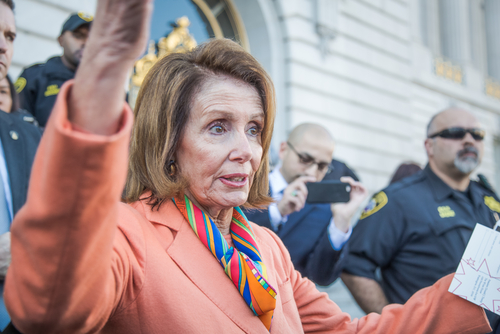
Speaker Nancy Pelosi is expected to visit Taiwan during her tour of Asia, despite China’s harsh warnings that doing so could lead to war. Pelosi will be the first US House speaker to visit Taiwan in a quarter of a century, yet she has not fully explained her reason for visiting. The US military and every intelligence agency have urged Pelosi not to go, but Biden said she may do so if she pleases.
The Department of Defense will be forced to escort Pelosi to Taiwan, and China has blatantly said that this would be considered an aggressive act of war. “If US fighter jets escort Pelosi’s plane into Taiwan, it is invasion,” Hu Xijin of Global Times wrote on Twitter. “The [Chinese military] has the right to forcibly dispel Pelosi’s plane and the US fighter jets, including firing warning shots and making tactical movement of obstruction. If ineffective, then shoot them down.”
China has repeatedly warned the US not to interfere with its relationship with Taiwan over the years. It is the main hot-button topic that China has said is off-limits. Pelosi is putting the entire nation in danger by visiting, and her comments are further provoking China.
“It’s important for us to show support for Taiwan,” Pelosi said. “None of us have ever said we’re for independence when it comes to Taiwan. That’s up to Taiwan to decide.” Chinese Foreign Ministry spokesperson Wang Wenbin said that a visit would lead to “forceful measures” by the Chinese. Absolutely nothing positive could come out of this trip.
Posted originally on the conservative tree house on August 2, 2022 | Sundance
As he outlines the controversial trip by Nancy Pelosi to Tiawan, Tucker Carlson asks many questions that people are thinking. {Direct Rumble Link} WATCH:
Posted originally on the conservative tree house on August 1, 2022 | Sundance
In addition to the contraction in South Korean manufacturing announced last night, European manufacturing and factory activity is also contracting with less output, higher buildup of inventory and fewer orders for finished goods. The global recession is being measured fast and furious.
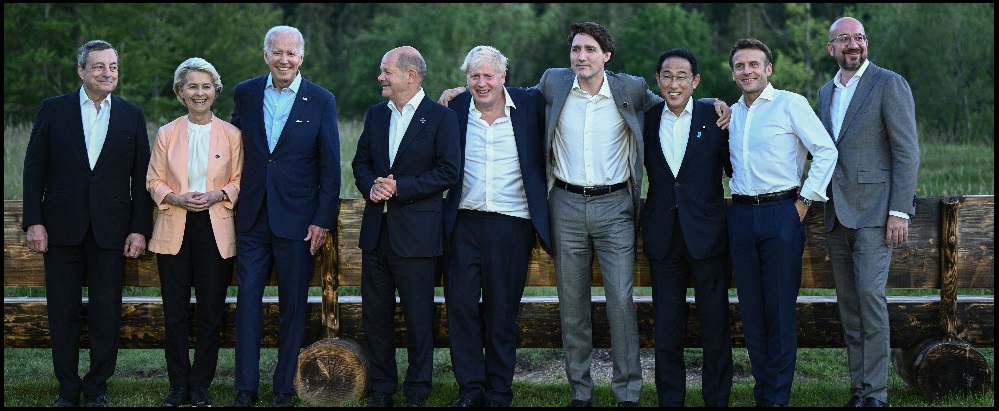
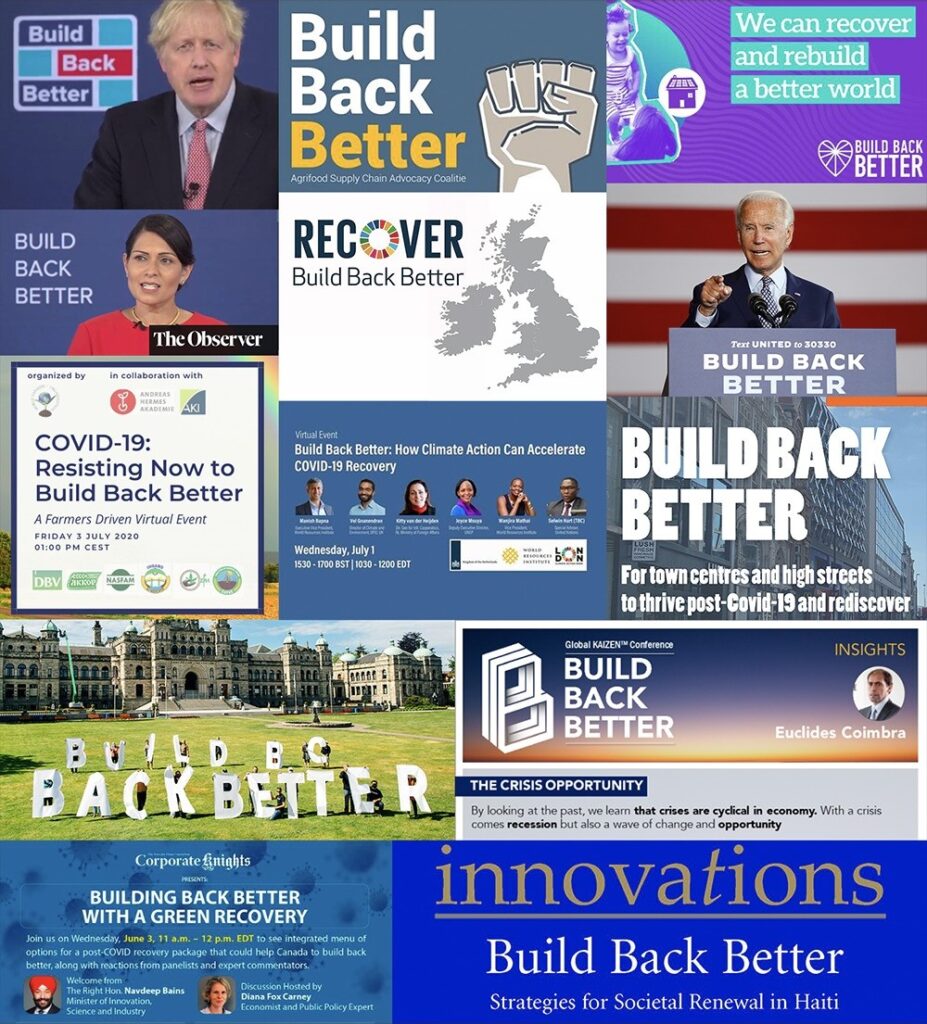
Every economic outcome is connected to a purposeful decision by the leaders of western industrialized nations to follow the Build Back Better climate change agenda. Higher energy costs, an outcome of the collective policy to stop new production of coal, oil and gas, which has transferred into higher food prices, farm prices, gasoline prices, heating and cooling prices as well as electricity rates, is forcing consumers to stop purchasing non-essential products.
The sale of durable goods collapsed in the first half of this year; however, no policymakers or bankers wanted to admit it and they kept saying there was an excess of demand. Now, with fewer customers for durable goods in the market, global manufacturing and factory outputs are dropping fast. Eventually the central planners are going to have to admit their pretended demand does not exist.
While there is a natural lag in the activity, the rate of factory contraction will be proportionate to rate of the drop in demand. Meaning we have only just begun to see the manufacturing decline that lags a few months behind consumer activity.
LONDON, Aug 1 (Reuters) – Manufacturing activity across the euro zone contracted last month with factories forced to stockpile unsold goods due to weak demand, a survey showed on Monday, adding to concerns the bloc could fall into a recession.
S&P Global’s final manufacturing Purchasing Managers’ Index (PMI) fell to 49.8 in July from June’s 52.1, just ahead of a preliminary reading of 49.6 but its first time below the 50 mark separating growth from contraction since June 2020.
An index measuring output, which feeds into a composite PMI due on Wednesday and seen as a good gauge of economic health, sank to a more than two-year low of 46.3. In June it was 49.3.
“Euro zone manufacturing is sinking into an increasingly steep downturn, adding to the region’s recession risks. New orders are already falling at a pace which, excluding pandemic lockdown months, is the sharpest since the debt crisis in 2012, with worse likely to come,” said Chris Williamson, chief business economist at S&P Global. (read more)
The WEF directed politicians are trying to bring energy demand down to match the energy shortage they have created. The various western government leaders, Biden included, want/need a recession to drop energy demand. The central banks and federal reserve are supporting the policymakers by driving up interest rates into the recession.
The combined effort leads to a shrinking of the global economy.
By lowering the economic activity and forcing their western nations into a joint collaborative and intentional recession, the central planners hope to offset the inflation they created by blocking coal, oil and gas production. By intentionally collapsing demand, the prices of excess non-essential goods will drop; however, there will be no one to purchase those goods at any price because global employment in a global recession is tenuous at best. This is the spiral they are trying to manage.
TOKYO (Reuters) – Japan’s manufacturing activity expanded at the weakest rate in 10 months in July, as pressure from rising prices and supply disruptions hurt output and new orders, suggesting a solid post-pandemic economic recovery is still some way off.
The final au Jibun Bank Japan Manufacturing Purchasing Managers’ Index (PMI) dipped to a seasonally adjusted 52.1 in July from the previous month’s 52.7 final.
That marked the slowest pace of growth since September last year, and was slightly lower than a 52.2 flash reading.
[…] Manufacturing activity suffered from contractions in output and overall new orders as well as a slower expansion in the backlog of work, the PMI survey showed.
[…] But a government official also warned downside risks for output remained as parts supply delays lingered. That is one of many reasons why the Bank of Japan remains resolutely committed to its ultra-low policies despite a global trend of rising interest rates to fight rampant inflation. (more)
It’s incredible how they various western leaders and bankers can still say there is too much demand, when every single economic indicator clearly shows that all consumer purchasing of non-essential goods and services has stopped.
We are seriously looking at a future employment scenario that might be as bad as it was during the economic lockdowns in the pandemic. This time all of the unemployment will have been created by intentional climate change policy.
These ideologues are seriously disconnected from the pain they are inflicting.
There are slips of the tongue, but President Biden cannot speak freely without a teleprompter. Every time he goes off script, he embarrasses his country. The president of the free world has no idea what is going on, and his mental health continues to decline publicly. The American Rescue Plan sent a trivial amount of money to Americans making under $75,000 annually at the expense of taxpayers. The government had no way to pay for this $1.9 trillion plan but implemented $1,400 checks on two separate occasions to pacify the people. Joe Biden thinks he provided Americans with $8,000.
Biden believes the public should ignore inflation and feel grateful for the imaginary money. “There’s reason to be down but I started thinking about it … the first year, we were able with the rescue plan, we were able to send them a check for eight grand,” the president said. “I mean a check. Beyond that by the way, there was more than that.” Biden then chimed in about his middle-class experience, which occurred decades ago when the US economy was unrecognizable compared to today. “That’s a lot of money, and so it helped save a lot of people in terms of getting thrown out of their home and rental housing and a whole range of things,” he said. He used the example of someone earning $120,000 receiving the imaginary $8,000 check, despite anyone in that income bracket being ineligible for a stimulus check.
The president cannot remember basic facts about his own policies. Biden belongs in a home for the elderly and senile, not the White House.
The primary race in Wyoming is August 16th, just about two weeks away. CNN traveled to Wyoming to review the possibility that Republican House Member might lose her primary race. All signs point to “yes”, she’s going to lose her seat. However, CNN was able to find two republicans who said they supported Cheney. WATCH:
Posted originally on the conservative tree house July 31, 2022 | Sundance
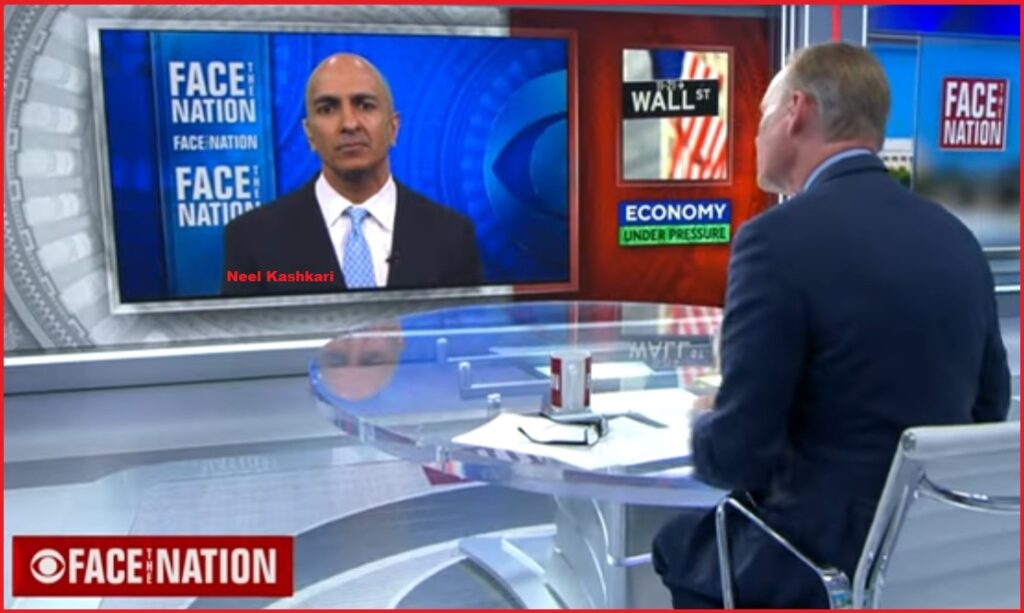
The pretending from the federal reserve chairs continues. In this interview, Neel Kashkari, the head of the Federal Reserve Bank of Minneapolis, says “we keep getting surprised” by data on inflation, which continues to be “higher than we expect, across the broad range of the economy.” Yet, notice that Kashkari refuses to outline the single cause of the broad inflation is the intentional lack of energy production. [Transcript]
Kashkari continues the selling point that demand side inflation is being targeted because demand still exceeds supply. That’s essentially true, however, it is the supply of energy that is fundamentally disrupted by Joe Biden energy policy. It is not consumer demand for goods and services, it is the structural need for consumers to have consistent, affordable energy resources.
The collapse of energy production from domestic coal, oil and gas development is the problem. Everything else is ancillary to the origination problem. However, in order to support the climate agenda, the Federal Reserve must pretend not to know this. WATCH:
Kashkari notes a serious problem can arise when wage inflation starts to catch up with inflation overall. THAT just happened last month. The combination of wage inflation to match the high consumer inflation then drives an even higher cost for goods and services. This is the inflation storm that leads to hyper-inflation, structurally high inflation that cannot be controlled by any monetary measure, and unfortunately, we just entered the first outer bands of this inflation hurricane last month.
A personal sidenote: when we were going through the pandemic crisis and response in 2020/2021, CTH took heat for saying the real objective at the end of the pandemic path was the global climate change agenda. Well, here we are. At the end of this climate change path is full control over human activity using digital currency. Hunger games.
[Transcript] – JOHN DICKERSON: We turn now to the president of the Minneapolis Federal Reserve, Neel Kashkari. Good morning, Neel. Inflation–
PRESIDENT OF THE FEDERAL RESERVE BANK OF MINNEAPOLIS NEEL KASHKARI: –John, thanks for having me.
JOHN DICKERSON: Thank you for being here. Okay. Everybody wants to know inflation, still hot? What is it? What does it look like to you?
KASHKARI: It’s very concerning, you know, we keep getting inflation readings, new data that comes in, and as recently as this past week, and we keep getting surprised. It’s higher than we expect. And it’s not just a few categories. It’s spreading out more broadly, across the economy. And that’s why the Federal Reserve is acting with such urgency to get it under control and bring it back down.
JOHN DICKERSON: Wages within that, what does the wage picture look like in two different ways, we measure it, both just on its own, and then relative to inflation?
KASHKARI: For most Americans, their wages are going up, but they’re not going up as fast as inflation. So most Americans, real wages, real incomes are going down. That’s why families are finding it increasingly hard to make ends meet. When they go to the grocery store, when they buy necessities, they’re not able to buy as much because they’re getting a real wage cut, because inflation is growing so quickly. I mean, typically we think about wage driven inflation, where wages grow quickly. And then that leads to higher prices in a self fulfilling spiral. That is not yet happening. High prices and wages are now trying to catch up to those high prices. Those high prices are being driven by supply chains and the war in Ukraine, among other factors. And so we need to get the economy back into balance before this really does become a wage driven inflation story.
JOHN DICKERSON: Let me ask you about a figure that people may not know as much about, everybody knows about the consumer price index and inflation, the economic cost index came out this week. And some economists look at that as a signal for inflation. Tell me what you saw in the economic cost index this week.
KASHKARI: Well, we have a lot of different measures, for example of wages, of what’s happening to wages. And ECI, as I call it, is one measure that it’s a- it’s a robust measure of what’s happening to wages and what’s happening to benefits, and wages continue to climb. And on one level, that’s a good thing. We want Americans to be making more money. But if wages are climbing, such that the economy shows that it’s overheating, that tells me that the Federal Reserve has more work to do to bring inflation down to bring the economy into balance just at its basic level. Inflation is when demand is outstripping supply. We know supply is low because of supply chains, because of the war in Ukraine, because of COVID. We hoped that supply would come online more quickly, that hasn’t happened. So we have to get demand down into balance. Now, I hope we get some help on the supply side. But that doesn’t change the fact that the Federal Reserve has its job to do, and we are committed to doing it.
JOHN DICKERSON: We have 30 seconds left. Help on the supply side, what does that mean?
KASHKARI: Well, I talked to a lot of global businesses who are trying to get their supply chain sorted out so that they can meet their customers’ needs and make sure that there are products on the shelves. They’re making some progress. There’s some signs, it’s getting better, but it’s taking a lot longer than they thought and that I thought and so that means we cannot wait till supply fully heals. We have to do our part with monetary policy.
JOHN DICKERSON: We’re gonna take a commercial, we’ll be back to continue this conversation with Neel Kashkari. Stick with us.
JOHN DICKERSON: Welcome back to Face The Nation. We continue our conversation with Minneapolis Federal Reserve’s Neel Kashkari. Neel, let’s pick up where you left off on this question of supply. When I was talking with two senators earlier there was this debate about whether taxation on companies that don’t pay a minimum level of taxation will have their supply hurt. So in other words, you tax- tax them supply goes down, that hurts with inflation. What’s your assessment of that?
KASHKARI: You know, long over the long term, that’s probably true. On the margin, people say that about raising interest rates, why raise interest rates, that’s going to make it more expensive for firms to invest. And that’s going to not help with the supply side. That’s true over the long-term. But over the short-term, the demand side effects totally swamped the supply side effects. And so when I look at a bill that’s being considered that your two senators talked about, my guess is over the next couple of years, it’s not going to have much of an impact on inflation. It’s not going to affect how I analyze inflation. Over the next few years, I think long term, it may have some effect. But over the near term, we have an acute mismatch between demand and supply. And it’s really up to the Federal Reserve to be able to bring that demand down, and we’re committed to doing what we need to do.
JOHN DICKERSON: Neel, help me understand recessions. There is a debate in Washington that’s full of political gamesmanship. So take us inside why it matters if America is in a recession, and what the component parts are, that are a part of that and how that helps us understand the health of the economy.
KASHKARI: Well, it really matters when Americans feel it, when Americans are, especially in the job market. That’s the most important part of the economy, so to speak, for Americans is their job. Do they have a decent place to work and earning decent wages? And typically, recessions are, they demonstrate why job loss is high unemployment, those are terrible for American families. And we’re not seeing anything like that. The labor market so far, is very strong, we are seeing some sectors like the tech sector start to shed workers or start to cool down in hiring. But fundamentally, the labor market appears to be very strong. While GDP, that the amount the economy is producing, appears to be shrinking. So we’re getting mixed signals out of the economy. From my perspective, in terms of getting inflation in check, whether we are technically in a recession or not, doesn’t change my analysis. I’m focused on the inflation data. I’m focused on the wage data. And so far, inflation continues to surprise us to the upside, wages continue to grow. So far, the labor market is very, very strong. And that means whether we are technically in a recession or not, doesn’t change the fact that the Federal Reserve has its own work to do. And we are committed to doing it.
JOHN DICKERSON: Last 20 seconds, Neel, on GDP when it goes down, isn’t that kind of what the Feds trying to do? Slow down growth? So is that a good number?
KASHKARI: Well, we definitely want to see some slowing. We don’t want to see the economy overheating. We would love it if we can transition to a sustainable economy without tipping the economy into recession. There’s not a great record of doing that. Typically when the economy slows down, it slows down by quite a bit, especially if it’s the central bank that is inducing the slowdown. So we’re going to do everything we can to try to avoid a recession. But we are committed to bringing inflation down and we’re going to do what we need to do. And we’re a long way away from achieving an economy that is back at 2% inflation and that’s where we need to get to.
JOHN DICKERSON: All right, Neel Kashkari. Thanks so much for being with us. And we’ll be back in a moment. (read more)
I have created this site to help people have fun in the kitchen. I write about enjoying life both in and out of my kitchen. Life is short! Make the most of it and enjoy!
This is a library of News Events not reported by the Main Stream Media documenting & connecting the dots on How the Obama Marxist Liberal agenda is destroying America





 Centinel2012