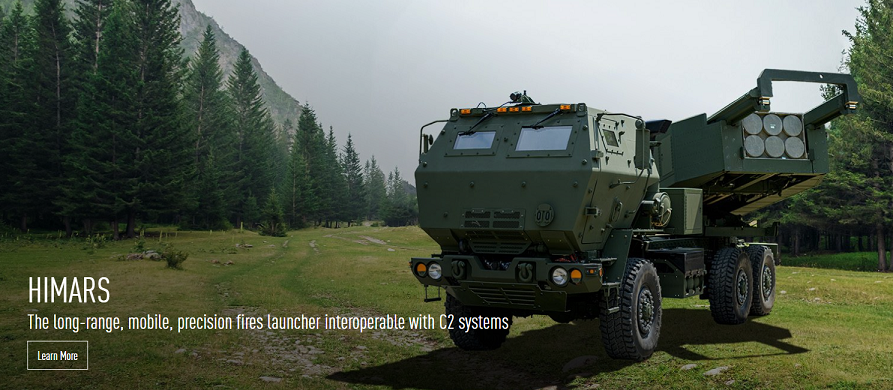
Zelensky’s forces of the Ukrainian military had fired four long-range missiles that had been provided by the US (HIMARS) with US training to kill Russian soldiers in the barracks on New Year’s Eve. Russia says that they shot down two of the four. Just after midnight on New Year’s Day, Ukrainian missiles were fired and struck a vocational school in Makiivka that housed soldiers. Some 300 are injured and 63 are dead. While that is not supposed to be fair in war just killing soldiers in the barracks rather than on a battlefield, this war is anything but normal.
The Ukrainians used New Year’s Eve. We should be on guard now for attacks over Orthodox Christmas. Both sides will most likely attack fiercely.
Posted originally on the CTH on January 2, 2023 | Sundance
It’s almost painful to go to the grocery store today, not just because the prices for everything are so high, but also because seeing the stress amid the working-class shopping is palpable. Unfortunately, while we may have a momentary plateau on current pricing, there’s a strong possibility another wave of higher prices is yet to come.
At the core of the issue are energy prices which continue to rise. The immediate cycle of energy price hikes, a direct consequence of political policy, has lessened somewhat and we are now in that slow tick upward as the pressure on oil, gas, heating and electricity prices continues.
Michael Burry, famous for his predictions in/around the U.S. housing market, is noticing the same thing as CTH. “Inflation peaked. But it is not the last peak of this cycle,”he said. “We are likely to see CPI lower, possibly negative in 2H 2023, and the US in recession by any definition. Fed will cut and government will stimulate. And we will have another inflation spike. It’s not hard.”
Peak demand side inflation is long in the rearview mirror, but the peak of supply side inflation is questionable at best – I would say it’s a plateau, not a peak.
The price of goods, including industrialized and processed raw materials from China are going to increase again – and simultaneously become less consistent in availability. This is going to make prices extremely volatile in 2023.
Essentially, everything around price is tenuous as the western economies absorb the full impact of this Build Back Better energy policy, and into this foray comes China with production and processing challenges as a result of COVID bubbles being removed. We are seeing this problem right now in the pharmaceutical industry and with ordinary medicines becoming scarcer on store shelves.
With the macro economy showing a consumer collapse in spending on goods, the economy will contract again. However, the prices of essential products continue to sustain upward pressure. What does this look like in real terms? Less income amid the workforce and consistently higher prices. We need to be as prepared for this scenario as humanly possible.
Many people have written with sincere appreciation for the CTH forecasts delivered in the fall of 2021. I am thankful to have been of benefit to those who could take proactive measures to avoid the economic issues we faced in 2022. However, I am worried now.
I am worried because the downside to this economic contraction is going to hit the already tenuous and barely surviving middle class the worst. There’s only so much a person/family can do to offset rising energy costs. I listen to this woman’s voice, and it crushes me because I know and feel that pain (Twitter video):
I know just about every reader on these pages can relate to how financial fear can eat you from the inside. The life game of trying to figure out how to get from one week to the next, keep a roof over your head and keep the kids/grandkids safe and fed is fraught with trepidation. I get it. Believe me, I get it…. But you just gotta keep going; whatever it takes.
2023 is going to be rough for many working families and people on fixed incomes.
Then look to help/assist the neighbors, then the community, etc. But start by being proactive at home and do not isolate. Fear, worry, trepidation, foreboding etc, is worse when internalized. Do not swallow it – reach out to a loving God, pray, release it, and then embrace the central purpose in life, fellowship.
Posted originally on the CTH on January 1, 2023 | Sundance
This is an interesting interview in that International Monetary Fund Globalist Director Kristalina Georgieva seems to be laying the landscape for some truthful economic news to surface on the geopolitical level; albeit keeping up the globalist pretenses around western collective energy policy.
One of the more important points Mrs. Georgieva hits on is the reopening of China, from district level COVID bubbles as a containment feature, and the likely impact it will have on global supply chains. Mrs. Georgieva is correct on this issue.
China continued operating their industrial manufacturing base (despite COVID) because they built strict covid isolation bubbles around their industrial sectors geographically. However, with China lifting those isolation bubbles, there is a great potential for the manufacturing sectors to be hit hard by short to medium term virus outbreaks. This could/will have the potential ripple effect of global supply disruptions.
In an ironic twist, ‘deglobalization’ is now a 2023 catchphrase as various nations realize having their supply chains both dependent and interconnected is not good when there are interruptions. A new discussion centering around being dependent on China is the specific issue now being raised. However, the globalists are isolating their viewpoints only to raw material resourcing and development. WATCH:
[Transcript] -MARGARET BRENNAN: I want you to take us around the world and kind of us give us that global view. Let’s start in China. China has been this hub of cheap manufacturing for the world, we are all so dependent on it but right now it looks like COVID cases are exploding as they start pulling back those zero COVID restrictions. What will that mean for the global economy Longterm and short-term?
GEORGIEVA: In the short term, bad news. China has slowed down dramatically in 2022 because of this tight zero COVID policy. For the first time in 40 years China’s growth in 2022 is likely to be at or below global growth. That has never happened before. And looking into next year for three, four, five, six months the relaxation of COVID restrictions will mean bush fire COVID cases throughout China. I was in China last week, in a bubble in the city where there is zero COVID. But that is not going to last once the Chinese people start traveling.
MARGARET BRENNAN: Because they also- they don’t have an effective vaccine right now.
GEORGIEVA: The- the vaccinations fall behind. They have not worked on anti-viral treatments and how that can be offered to people, and so they will go through this tough time. If they stay the course, and this is our advice, stay the course, over time they would be able to catch up with the rest of the world, both in terms of focusing their vaccinations, bringing mRNA vaccines into China, expanding antiviral treatment, and the economy would function. But for the next couple of months, it would be tough for China, and the impact on Chinese growth would be negative. The impact on the region would- would be negative. The impact on global growth would be negative.
MARGARET BRENNAN: Because this is the second-largest economy in the world, and we’ve learned how dependent the world is on the Chinese supply chain. So do you expect then, a domino effect? Will inflation get worse, because all of a sudden there aren’t workers healthy enough to go to factories in China?
GEORGIEVA: We expect that there would be counterweight from the sheer opening of the economy, because up to now, the biggest impact on global value chains came from restrictions due to COVID. When you close down a big city or a big port, the repercussions for the economy is- are significant. Now, we would have the impact of people getting sick, not going to work, but the economy would be open. So the expectations we have for China is to gradually move to a higher level of economic performance, and finish the year better off than it is going to start the year. But you’re absolutely right, the world has relied on China’s growth for a long, long, long time. Before COVID, China would deliver 34, 35, 40% of global growth. It is not doing it anymore. It is actually quite a stressful for the- for the Asian economies. When I talk to Asian leaders, all of them start with this question, what is going to happen with China? Is China going to return to a higher level of growth?
MARGARET BRENNAN: You’ve said that you fear that we are sleepwalking into a world that is poorer and less secure because of a split in the global economy between the US and China. What do you mean by that? Do you see efforts here in Washington to stop it?
GEORGIEVA: It is very easy to reflect on the benefits of the world being more integrated. When we look back over the last three decades, the world economy tripled because of this reliance on an integrated world economy. Who benefited the most? Emerging markets and developing economies, they quadrupled. But rich countries also benefited, they doubled in size of the economy. So we have to be careful not to throw the baby out with the bath water. Yes, the way we have operated created excessive dependency in global chains. We were too focused on costs, how can we make products cheaper. And COVID and then the senseless war Russia started against Ukraine has shown that this is not enough. We cannot just concentrate on what is cheaper. We have to think of the security of supplies and that means diversify the sources of products that make the economy function well, lifting up the level of cost. That economic logic is not only appropriate, it is a must to follow. But we shouldn’t go beyond. We shouldn’t say, okay, we break the world into blocks, one works here, the other one works there because the costs are very, very high. We calculated that just trade, limiting trade into two blocks, would chop $1.5 trillion from the global GDP year after year after year.
MARGARET BRENNAN: If you tried to separate the US and China?
GEORGIEVA: You separate- you separate them, there is an excessive cost. So the logic should be where for security reasons there has to be careful recalibration of supply chains, do it, but don’t go beyond- don’t go into benign areas of products that have no strategic significance but they benefit the US consumer, they benefit the world economy. And this is what we are arguing for, don’t go in a direction in which this separation would make everybody poorer and the world less secure.
MARGARET BRENNAN: So you’re telling Beijing and Washington, figure it out. You can’t be in conflict.
GEORGIEVA: What we have seen in Bali is an indication that this rationale–
MARGARET BRENNAN: You’re talking about the G20 meeting–
GEORGIEVA: The G20 meeting in Bali, when the two presidents, President Biden and President Xi Jinping, met, they spent three and a half hours discussing exactly that. Where is the point of contact that makes both countries better off? And where is that- that there are differences that cannot be bridged and therefore we have to keep them–
MARGARET BRENNAN: The US is trying to block some Chinese technology companies from doing business here. They’re taking measures that are drawing some pretty bright lines between the US and China. Is that tolerable?
GEORGIEVA: We always prefer countries to seek their common interest in economic integration. And when you start breaking the interactions that are based on fair trade, you harm your own people, you not only harm the- the Chinese and therefore it has to be thought through very carefully. Again, I want to be very clear, some diversification of supplies for the security of supply chains is necessary. COVID taught us this lesson, the war taught us this lesson. So the U.S. is right to look into some areas where strategically they need to guarantee the functioning of the U.S. economy without interruptions. But do that keeping in mind the interests of the American people that would like to still have prices moderating, and actually, when we think about prices, one good news we have for 2023 is that towards the end of the year, we do expect inflation to trim down. So don’t take actions that may be contrary to that trend.
MARGARET BRENNAN: But you are predicting inflation to slow to six and a half percent from about 7%. Is that right?
GEORGIEVA: Well, towards the end of the year, we- we project it would go even further down towards the end of 2023, provided central banks stayed the course. Our big worry is that with the economy slowing down globally, we are projecting global growth to go down to 2.7%, maybe even lower next year. Remember, 2021, it was 6%. It dropped to 3.2 this year, 2022. And it will continue to drop down if central banks get the cold foot and say, ‘oh, my god, growth is slowing down, let’s slow down the fight against inflation.’ We risk then inflation to be more persistent. So our message is to central banks, you have to see credible decline in inflation and only then you can think about re-calibrating rate policy.
MARGARET BRENNAN: One of your IMF researchers gave a pretty dire prediction. Overall this year, shocks will reopen economic wounds that were only partially healed post-pandemic. In short, the worst is yet to come and for many people, 2023 will feel like a recession. What do you need to brace for?
GEORGIEVA: The- this is- this is what we see in 2023. For most of the world economy, this is going to be a tough year, tougher than the year we leave behind. Why? Because the three big economies, U.S., E.U., China, are all slowing down simultaneously. The US is most resilient. The U.S. may avoid recession. We see the labor market remaining quite strong. This is, however, mixed blessing because if the labor market is very strong, the Fed may have to keep interest rates tighter for- for longer to bring inflation down. The E.U. very severely hit by the war in Ukraine. Half of the European Union will be in recession next year. China is going to slow down this year further. Next year will be a tough year for China. And that translates into negative trends globally. When we look at the emerging markets in developing economies, there, the picture is even direr. Why? Because on top of everything else, they get hit by high interest rates and by the appreciation of the dollar. For those economies that have high level of that, this is a devastation.
MARGARET BRENNAN: And I want to- I want to come back to you on that. And just to explain that for some of our listeners, a stronger dollar, it’s good for Americans when they go shopping abroad. It’s not good for poor countries who have taken out loans, for example, and borrowed money in dollars. And according to the IMF, 60% of low income countries are in distress because of this- this debt. So what does that look like? Do you- do you see governments collapsing with defaults? Does that bleed into the global financial system? I mean, how much of a contagion does this become?
GEORGIEVA: So far the countries that are in that distress are not systemically significant to trigger a debt crisis. Let’s just look at the map, which are these countries? Chad, Ethiopia, Zambia, Ghana, Lebanon, Surinam, Sri Lanka, very important for their people that we find the resolution to the debt problem, but the risk of contagion is not as high. However, if that list continues to grow, and let’s remember, 25% of emerging markets are trading in distressed territory, then the world economy may be for a bad surprise. And this is why at the IMF, we are working very hard to press for debt resolution for these countries and we have engaged the traditional creditors, the Paris Club, the non-traditional creditors, China, India, Saudi Arabia. I would call this very simple: urgency, we have to act. When I look at the- the debt of the world. Yes, we have to be concerned. During COVID, what did we do? Everywhere governments borrowed, rightly so, to help their people.
MARGARET BRENNAN: Money was cheap.
GEORGIEVA: Money was cheap, and we prevented a collapse of the world economy. That was the right thing to do. But once Russia invaded Ukraine and that added impetus to inflation, money is not- not cheap anymore. So what is the advice we give to governments? Focus on your budgets, make sure that you have sufficient revenues to collect and that you spend very wisely.
MARGARET BRENNAN: That’s good advice, but it’s not always easy politics to follow that advice, as you know–
GEORGIEVA: Of course it is not.
MARGARET BRENNAN: And so that’s why I want to- if- if you can explain for our viewers. You know, we spoke to the CEO of JPMorgan Chase, Jamie Dimon, recently, and he said he sees the global risk as explosive right now. He was saying things like migration, energy, national security, liquidity in the banking system, war, these are all the knock on effects of a government not being able to pay its bills and not being able to deliver for its people. Is that what you are seeing too?
GEORGIEVA: Well, what we’re seeing is the world has changed dramatically. It is a more shock prone world. The lessons we learned from the last couple of years are that no more we operate with relative predictability of what the future would bring. And these shocks COVID, the war, costs of living crisis, they compound their impact. What does that mean for governments? First and foremost, it means that we need to change our mindset towards more resilience, more precautionary actions. And at the IMF, this is what we tell our members. Act early, don’t wait until the problems deepen. And for those who need help, this is why we exist for the developing countries. The fund is a source of resilience and I am- I am very pleased that many of our members are coming to us. Just since the war started we got 16 countries coming for programs to the IMF, $90 billion in support for these countries. And right now we have 36 requests. So that acting early, when you see trouble, look for ways to strengthen your fundamentals, to have buffers to protect you and your people. This is the advice we give to governments. For those who don’t know the IMF, we were created from the ashes of the Second World War to stabilize the world economy. And at a moment like this, we come strong to help our members. My message, don’t think that we are going to go back to pre-COVID predictability. More uncertainty, more overlap of crises wait for us. Rather than crying for the time we had, we have to buckle up and act in that more agile, precautionary manner I described.
MARGARET BRENNAN: I want to make sure I get to Ukraine because I know we’re running out of time. You’ve said- excuse me- you’ve said the single most negative factor in the global economy is the war in Ukraine. And Vladimir Putin says this is going to go on for some time. President Zelensky said they need $55 billion in foreign support next year. He expects $20 billion from the IMF, is he going to get it?
GEORGIEVA: We are working on providing support for Ukraine. So far, out to the international financial institutions, we have provided the largest amount of financing for Ukraine, $2.7 billion in emergency financing, and we are working for 2023 to be a significant part of the support for Ukraine. I expect that sometime early in the year we will go to our board with the request. We have assessed the needs of Ukraine to range somewhere between three and five billion dollars a month. What Putin did with destroying critical infrastructure in Ukraine, this is horrific, and it means that in the next months the country would be more on the high end of this range because it is put in an awful position to have to restore access to electricity, to heat, to water. I have relatives in Ukraine. What I- what I know from them is it is cold, it is dark, and it is scary. Bombardments of civilian areas continue. What I also want to say is that Ukraine has proven to be remarkably resilient. Ukrainian economy is functioning. Pensions are being paid. When there is bombardment, restoration of energy, water, heat is done very quickly and we see revenues collected in Ukraine in a very disciplined manner to support the functioning of the country.
MARGARET BRENNAN: So the government’s not going to collapse?
GEORGIEVA: The government is very well functioning under incredibly difficult circumstances. No, they’re not going to collapse. And then the other thing that is so remarkable is actually the world has proven to be more resilient than we feared, a year in the beginning of the year. We look at the response to the energy shock in Europe, and Europe is moving towards independence from Russia decisively. Yes, there will be a tough winter, maybe the next one would be even tougher, but freedom from dependence on Russia is coming. It is going to be there.
MARGARET BRENNAN: I want to ask you two questions before we go. How do you describe the state of U.S. economics and politics?
GEORGIEVA: The US economy is remarkably resilient. Decision making in the US because of the way the political set is at the moment, it is more difficult. But nonetheless the US has taken some very important steps that are helping to the US economy. Like the child tax-
MARGARET BRENNAN: The tax credit. It expired.
GEORGIEVA: The credit that is it. It is contributing so significantly to reducing poverty in the US, like the infrastructure bill, like the Inflation Reduction Act. These are things that are bringing more dynamism in the US. Good for the US, good for the world. And of course staying on that course is going to be more challenging. But I do hope that the US is not going to slip into recession despite all these risks. We expect one third of the world economy to be in recession. And yes, as you said, even countries that are not in recession, it would feel like recession for hundreds of millions of people. But if that resilience of the labor market in the US holds, the US would help the world to get through a very difficult year.
MARGARET BRENNAN: And as I let you go, my final question is what leaves you hopeful in 2023?
GEORGIEVA: What leaves me hopeful is that I know when we work together, we can overcome the most dramatic challenges. In 2020, the world came together in the face of tremendous threat and was able to overcome this threat. In 2023 we have to do the same. And in this world of ours, of more frequent and devastating shocks, we have to hold hands, we have to work together. And my institution is there to bring together economic policymakers so we can be wise and persistent in the face of truly dramatic challenges we face.
MARGARET BRENNAN: Madam managing Director, thank you for your time this morning.
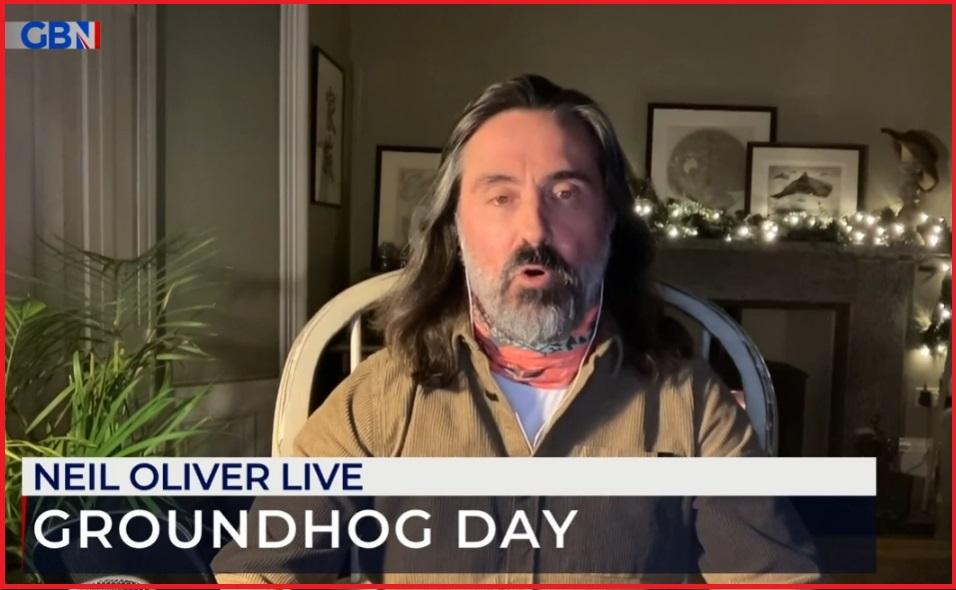
Neil Oliver looks at the current media headlines as the New Year approaches, noticing it’s Groundhog Day all over again. The video is available on the GB News Website Here and the transcript is below:
[Transcript] – New Year incoming – and still we are being beaten around the head with the same old stories.
In a few hours, we welcome 2023, but as far as our leaders and their lackeys are concerned it might as well be Groundhog Day.
I look at the headlines on this last day of 2022 and what do I see? Covid, Ukraine and Climate Change. Folk nuttier than anything found in a selection box are talking about bringing back face masks. God help us. Let’s remind everyone for the umpteenth time that Covid is now no more dangerous to most than the common cold. But still, the talk is of the pandemic, same old, same old.
I speak to people every day and hear real stories about real struggles. At first, when asked, “How’re things?” most smile and say they’re fine. Spend a few minutes in conversation though and the stories come.
Real fears about making ends meet, keeping jobs, keeping homes, and businesses. The dreadful emotional toll on children, and so much of the suffering on account of our leaders prioritising everyone other than the people born and bred and living here today.
Uncounted numbers of the people of Great Britain are cold and hungry in their homes, without access to GP and hospital appointments, while billions of pounds are sent out of the country.
Workers of all sorts are striking for better pay and being pilloried by the same media that just as enthusiastically held them up as saints.
The very people we were encouraged to regard as heroes five minutes ago – nurses, delivery drivers, postal workers, supermarket workers and others who remained at the coal face of working life while millions were told to stay at home in their pyjamas – are now being maligned as virtual enemies of the state for having the temerity to ask for better pay and conditions.
All of it in the midst of a cost of lockdown crisis created and inflicted by politicians more interested in the bankers, the markets and the corporations than the plight of the very people they are elected to serve.
A blatant exercise in dividing the population yet further, keeping us at each other’s throats and too distracted to raise our heads and see the travesty of leadership all around.
If they can’t split us up on the grounds of race, or sex, then they seek to sow division among the working people.
Divide and rule, another story so old the pages are falling out of the book, while the real stories are largely ignored.
Uncounted numbers of the put-upon people of Great Britain – young and old, fit and infirm – are dying of causes unrelated to Covid. When deaths could be attributed to Covid, the death toll was counted daily. Those numbers were the foundation of the fear-porn concocted by government nudge units. It was a tolling bell of death to keep us apart from one another while the economy was ruthlessly trashed, the wealth shovelled upwards into the pockets of the already rich.
More recently the inconvenient public have been dying of something else, in greater numbers than during the pandemic. This is undeniable, based on ONS figures of excess deaths.
But hardly anyone in authority or in the media seems willing to mention this, far less to openly discuss what might be causing blood clots in veins and arteries, hearts abruptly stopping beating, strokes, all manner of fit young people face-planting on the field of play or dying in their beds.
Scores of us have said all of this over and over again, asked the same questions until we are blue in the face, and still no meaningful answers come, far less acknowledgement of wrongdoing.
The elephant has been in the room so long now, if it’s not careful it might die soon too – presumably of blood clots, or a swollen heart, or just the cold and the hunger.
A paper in the Journal of Medical Ethics has found that booster vaccine mandates are causing more harm than good for younger people and has called for the halting of the roll-out, and for payment of compensation to those who have suffered serious consequences. The authors describe,
“… a profound lack of transparency in scientific and regulatory policy making”.
The suspension of the roll-out and compensation for those injured or dead is needed, according to the authors,
To begin what will be a long process of rebuilding trust in public health.”
“… to begin what will be a long process of rebuilding trust in public health.”
Trust in public health? Too many are looking at that notion as it shrinks to a dot in the rear-view mirror.
And yet what do we see? Only the continued push for more jabs – for Covid, for flu and for God knows what next. Imminently anyone arriving from China must be tested for Covid – presumably using those same PCR tests that don’t actually find Covid – or else be fully vaccinated, whatever that even means these days. Have we learned nothing? Apparently not.
As I say, Groundhog Day.
And then there’s the so-called climate crisis, as 2022 draws to a close they’re calling it the hottest year on record. These claims are made by the government’s own researchers. The challenges from esteemed scientists disputing that orthodoxy fall on deaf ears, are silenced and ridiculed along with all the other voices the powers that be would prefer did not exist.
Studies estimate that 5 five million people die every year on account of climate – 500,000 from the heat and 4.5 million from the cold. Are we to assume the so-called experts would prefer 2022 to have been the coldest year on record?
I am sick and tired of the whole damned thing. On Hogmanay of all days, I only wish I could put the old news behind me and look ahead. And yet how can I? How can any of us that are wide awake to the evil madness around us – and I use the word “evil” deliberately.
I have said before that we are in an abusive relationship with our government, and so it goes on as far as I’m concerned.
I honestly feel the relentless push to keep us down, with fear of pestilence, fear of war, fear of the ending of the world, is the equivalent of a sustained beating designed, once and for all, to knock the last of the spirit out of us so that finally we shut up and do as we’re told.
But here’s the thing: that spirit is not vanquished. Instead, and on the contrary, in the hearts and minds of enough of us, that spirit has been ignited into flame.
I often mention the letters I receive from all over the world – but only because every one of them reminds me of all those whose lives have been turned upside down, and yet still remember what it means to be free people, and to have faith.
Yesterday alone I received 35 cards and letters from all over the world. From the state of Victoria, in Australia, Alannah wrote:
“It is difficult to express my frustration that there is no political leader who has the fortitude or will to stand up for what is right and to free us from the shackles I fear are getting tighter on our lives. My dear Mum passed away 4 months ago, and I am glad she is no longer here to bear witness to what is happening in this once-great country. I lost two years of Mum’s life before she passed away because she was locked up in a nursing home. She bore 7 children was married 52 years to our late dear Dad.
I will never, ever erase from my memory hearing her cry on the phone, wondering why we weren’t visiting her. Her mental capacity declined rapidly due to her isolation. However, my Mum was an astute lady and could see Marxism creeping into our schools 30 years ago. She saw this coming long ago. She instilled in us a deep faith in God, so I pray that things will be put right in this world. To the world, she was but one, but to us, she WAS the world. I wish you and your family a wonderful Christmas that brings light and hope for the New Year …”
Light and hope – that’s what the New Year, every new year, should be about.
The more each of us speaks to out in the world, the better. The more we share, the more reassurance we provide one another, and the stronger we are. That’s where the hope lies, and the promise of brighter days sooner or later.
Amanda from London wrote,
“Here I am, another one writing to someone I’ve never met but hope to one day … We will win, of that I feel quite sure. Good always triumphs over evil in the end. It’s funny … I’ve never used the word “evil” in my 64 years but find myself using it lately …”
Over and over the letters echo one another – talk of sensing evil, of light and dark and good and bad. One after another declares defiance over the years too.
Joan from Birmingham writes,
“I really hope you get this letter, Neil. We, as a family took no notice of lockdown rules and remained close. Nothing and nobody was going to keep us from our children and grandchildren. It was so heartbreaking to watch other families follow the so-called science … We are winning, Neil. The light is flooding the Earth each day. The truth will out …”
So many of us on this journey of waking up have described drifting apart from old acquaintances but making contact with a whole new tribe.
The Sims Family, from Canada, upped sticks all together in search of freedom – finding a new home in the state of Alberta.
“It’s great living in a freedom-loving province,” they wrote.
This is what gives me hope for the year ahead – because this whole bizarre experience has brought me into contact with people I would otherwise never have met. I am invited to share all manner of family news and so reminded that while we might be separated by thousands of miles, we are close in the ways that matter.
“We can go to restaurants and swimming pools and life is almost normal,” say the Sims family.
Imagine. That people in Canada have had to leave one home in search of another so that they might feel free, I can honestly say I never thought I’d live to see such times.
The Sims also sent me a postcard with a quote from Tolkien’s The Lord of the Rings. The books and movies have been dear to MY family for years. We visited New Zealand together several times – back in the days when NZ was a free country – and saw locations used for the filming. Our kids talk about them all the time. The quote is from The Fellowship of the Ring.
The Hobbit Frodo Baggins feels all but overwhelmed by the enormity of the task ahead of him and tells the wizard Gandalf,
“I wish it need not have happened in my time.”
“So do I,” replies Gandalf. “And so do all who live to see such times. But it is not for them to decide. All we have to decide is what to do with the time that is given us.”
Happy New Year, to all dear friends and fellow travelers.
Posted originally on the CTH on December 31, 2022 | sundance
The ideology of these elitist minded control officers is really remarkable. The president of the European Central Bank, Christine Lagarde, has given several statements to media saying policy measures must be put into place in order to stop wage growth from fueling inflation.
Think about this in the most practical of terms. Western politicians have created massive inflation through their collective ‘Build Back Better’ energy policy. The central banks have raised interest rates, an effort to shrink the economy by lowering energy demand, to offset the skyrocketing costs of the energy problem the politicians created.
With workers demanding pay raises to help afford the skyrocketing costs of energy, the central EU bank is now worried that wage increases will fuel inflation.
There’s a truckload of pretending needed to avoid seeing the insufferable dynamic of reality.
Political policy drives up energy costs. Central banks try to drive down energy demand. Workers unable to afford the energy prices created by politicians, are then blamed for the inflation the political policy creates.
Sooner or later ordinary people are going to figure out this abusive cycle.
(Via Reuters) – Euro zone wages are growing quicker than earlier thought and the European Central Bank must prevent this from adding to already high inflation, ECB President Christine Lagarde told a Croatian newspaper.
The ECB has raised interest rates by a total of 2.5 percentage points since July in a bid to arrest a historic surge in inflation and has promised even more policy tightening over its next several meetings as longer-term price growth expectations have started moving above its 2% target.
“We know wages are increasing, probably at a faster pace than expected,” Croatian newspaper Jutarnji list quoted Lagarde as saying on Saturday. “We must not allow inflationary expectations to become de-anchored or wages to have an inflationary effect.”
[…] Lagarde added that the bloc’s expected winter recession, induced by soaring energy costs, is likely to be short and shallow, provided there are no additional shocks. (read more)
That last line is just beyond infuriating.
This era of economic pretending, and the disconnect in the mindset of the self-proclaimed elitist rulers, is just jaw dropping in scale and scope.
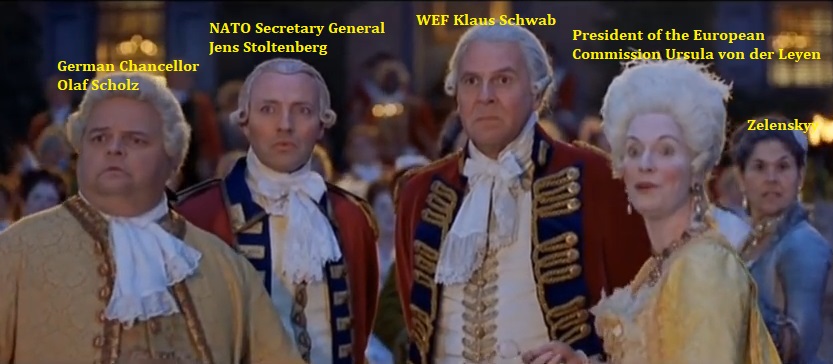
A very interesting discussion around the one hour point by a Ukrainian Woman Tetyana Monntyyan that gave a speech to the UN Security Counsel (I think) explaining how the 2014 Minsk agreement was never meant to allow the Donbas region to vote and determine their future. It’s “only” purpose was to give Klaus Schwab time to build up the Ukrainian army to take out Russia under US support and direction.
Putin may not be an angle but it is a lot better then the currant occupant of the White House who his destroying the American Republic by following the dictates of the insane politics of Klaus Schwab who runs the World Economic Form (WEF) and developed The Great Reset and Build Back Better program to change all the countries in western civilization into a socialist paradise run by the United Nations. His current goal to to invade Russia and stop the fossil fuel production to save the planet.
Douglas Macgregor is a retired U.S. Army colonel and government official, and an author, consultant, and television commentator. He played a significant role on the battlefield in the 1990-91 Gulf War and the 1999 NATO bombing of Yugoslavia.
Gamazda Piano Published originally on Rumble on December 4, 2022
The Sound of Silence is what we will have at the end of World War III as we will all be gone if we can’t find a way to stop the Great Reset and the Build Back Better insanity of Klaus Schwab
I have created this site to help people have fun in the kitchen. I write about enjoying life both in and out of my kitchen. Life is short! Make the most of it and enjoy!
This is a library of News Events not reported by the Main Stream Media documenting & connecting the dots on How the Obama Marxist Liberal agenda is destroying America








 Centinel2012