German Auto Industry Expected to Lose 100,000 Jobs in Next Four Years


Posted originally on CTH on October 3, 2025 | Sundance

The heart of the European industrial economy is Germany, and there’s major trouble afoot within the largest industrial sector within Germany.

Following the “Build Back Better” agenda, the EU went all in for green energy proposals.  EU banking and finance followed suit, funding investment capital for electric vehicles (EVs) to replace combustion engines.  Unfortunately, this put the EU, specifically Germany, in the position of competing against the largest EV industrial base in the world, China.

The second major flaw was capital only flowing to the EV sector, and Europeans -along with the majority of the industrial west- are just not buying EVs at a production capacity to match prior investment.

Put it all together and Germany is trying to compete with China to produce a product their consumer base doesn’t want.

GERMANY – ZF Friedrichshafen’s announcement that it is cutting 7,600 positions adds to the German supplier industry’s troubles as parts makers struggle to manage the shift to EVs, along with falling demand for combustion engine components and increased competition from Chinese suppliers.

Including job losses at Volkswagen, Audi, and Porsche, the German auto industry is expected to eliminate nearly 100,000 jobs by 2030, according to an analysis by Bloomberg.

Bankruptcies among German suppliers are climbing sharply, with 30 percent more expected in 2025 compared with last year, according to a report from consultancy Falkensteg.

Between January and August, Falkensteg recorded 36 supplier bankruptcies, up from 33 the previous year. The report tracked suppliers with revenue of at least €20 million ($23.5 million) until 2024.

In the second quarter, the automotive supply and electrical engineering industries each recorded 11 corporate insolvencies, the highest number across all sectors, according to the survey, which was reported in Automotive News Europe’s sibling publication Automobilwoche. In the first quarter, 18 supplier bankruptcies were registered. (read more)

Against the simultaneous backdrop of major European countries banging Ukraine/Russia war drums, and against historic reference points, it is a little unnerving to hear about severe contraction within the German economy.

HARNWELL: the neo-pagan ice-blessing is “Pope Leo” sticking a giant middle finger right in our face


Posted originally on Rumble on By Bannon’s War Room on: October, 02, 2025

HARNWELL: “let’s put it this way — the UK is heading towards revolution, the US towards civil war”


Posted originally on Rumble on By Bannon’s War Room on: October, 02, 2025

REP. JOHN MOOLENAAR (R): The CCP Sold Itself As A “Benign Developing Nation.” America Bought It. Corporations Saw Cheap Labor And A Massive Market. But Under Xi, The Mask Is Off


Posted originally on Rumble on By Bannon’s War Room on: October, 02, 2025

New Hires Fell to 16-Year Low in September


originally on Posted Oct 3, 2025 by Martin Armstrong |

Resume.Jobs_.Unemployment

The condition of America’s workforce remains undetermined, as the Bureau of Labor Statistics is currently not operational. The non-farm payrolls report will be delayed even if the unlikely event that the government reconciles today. The Chicago Federal Reserve compiled a separate report that indicates a contraction in the workforce.

Unemployment remains stagnant at 4.34%, up a mere 0.01% from August. Layoffs also remained relatively unchanged at 2.1%. We have not reached the point of mass layoffs where companies can no longer afford to pay their employees. Challenger, Gray & Christmas reported in a separate analysis that layoffs declined 37% in September and fell 26% YoY. The company reported that planned furloughs are at their highest level since 2020, with 946,426 cuts between Q1 and Q3.

Companies are fighting to retain employees, and there are no signs of expansion. New hires for the year totaled 204,939, marking a massive 58% annual decline. The US economy has not seen such a slow pace of hiring since 2009 in the aftermath of the Great Recession. Yet, the jobs data under the Biden Administration hid the real problem as the PUBLIC sector multiplied while the private sector stagnated.

The ADP report that is used as a confirmation of the BLS has been closely monitored in the wake of the government shutdown. The private sector eliminated 32,000 positions in September–a glaring warning sign as the markets were predicting an expansion of over 50,000. Private payrolls for August were revised to show a loss of 3,000 jobs, after data initially indicated a gain of 54,000. The ISM manufacturing survey index slightly rose to 49.1 in September from 48.7 but remains in depleted territory.

Small-and medium-sized businesses have been hit the hardest. Large corporations with over 500 employees did, in fact, add 33,000 jobs, offset by the number of layoffs smaller companies were forced to endure. Wage increases for workers who changed jobs in September fell to 6.6% from 7.1% MoM. Annual wage growth for job-stayers fell flat.

“Despite the strong economic growth we saw in the second quarter, this month’s release further validates what we’ve been seeing in the labor market, that US employers have been cautious with hiring,” ADP chief economist Nela Richardson said in a statement.

The Federal Reserve will likely state that it needs the official BLS data to make an informed decision. Powell is careful with his words. Rate cuts will not entice companies to expand, despite Washington’s insistence that they would, as employers lack confidence in the future.

Taiwan Declines US Demand to Offshore Chip Production


originally on Posted Oct 3, 2025 by Martin Armstrong | 

Semiconductor.Chip_

The threat of losing military protection did not persuade Taiwan to move half its chip manufacturing to the United States. Top trade negotiator and vice Premier Cheng Li-chiun stated that the 50-50 proposal would not be considered or even discussed. Instead, Taiwan plans to focus on lowering US-imposed tariffs that now stand at 20%.

Commerce Secretary Howard Lutnick believes that Taiwan’s chip production would be safer on US soil. The US relies on Taiwan for an astounding 95% of chip production and cannot lose this strategic trade. “My objective, and this administration’s objective, is to get chip manufacturing significantly onshored — we need to make our own chips,” Lutnick said. “The idea that I pitched [Taiwan] was, let’s get to 50-50. We’re producing half, and you’re producing half.”

There is a belief that the “Silicon Shield” deters Chinese military aggression as the island has global dominance over semiconductor manufacturing. It is true that semiconductor production is the best, if not only, leverage the nation holds.

China accused Taiwan of “selling out” to US influence, repeatedly reminding the nation that they are a province and not a sovereign country. Separatist ambitions are impossible without US military backing. Yet, now there is a concern that the nation would be surrendering its key economic component to the US. Both China and the US want to corner Taiwan and one will win.

China v Taiwan 3

Eric Chu, leader of Kuomintang opposition party, is less keen to cave to US demands than President Tsai Ing-wen. “No one can sell out Taiwan or TSMC, and no one can undermine Taiwan’s silicon shield,” Chu said, in reference to Taiwan Semiconductor Manufacturing Company (TSMC).

Manufacturing on US soil is far more costly and there is a concern that this could slow innovation and create new logistical issues. Yet, China has been ramping up One China policy rhetoric. President Xi Jinping called on the nation to “firmly oppose Taiwan independence separatist activities and external interference,” reaffirming China’s commitment to defend its “sovereignty and territorial integrity.”

UN General Assembly Resolution 2758 established the “one-China principle” that states Taiwan is a Chinese province under international law. The majority of UN member states agree and Taiwan has been blocked from participating in international organizations. The resolution, however, is vague and does not explicitly mention Taiwan. Rather, it “expels forthwith the representatives of Chiang Kai-shek from the place which they unlawfully occupy in the United Nations and in all the organizations related to it.” Chiang Kai-shek was the leader of the communist Republic of China (ROC) who was forced to retreat to Taiwan in 1949 after losing the Chinese civil war. Chiang Kai-shek ran Taiwan as an independent nation to the dismay of the international community. The UN officially recognized the People’s Republic of China over the ROC in 1971 and has not changed its stance.

Governments are increasingly undermining globalist organizations like the UN and ignoring past treaties. This matter cannot be solved with pen and paper.


Exxon Announces Mass Layoffs


originally on Posted Oct 3, 2025 by Martin Armstrong |  

Exxon

Recent data from the Chicago Fed and ADP indicate new hires at a 16-year low. The ADP offered a bit of promising news for large corporations as they managed to expand by 33,000 positions last month. Yet, no corporation is immune to the increased cost of goods, excessive regulation, and taxation. Socrates has warned that unemployment will top 6% by 2026, and we are beginning to see the warning signs in Q4.

Exxon Mobil plans to slash 2,000 positions, representing 3% to 4% of the global workforce. “Our global office network was established decades ago under very different circumstances,” Exxon said in a statement to Barron’s. “To support the collaboration so critical to our success, we are aligning our global footprint with our operating model and bringing our teams together.”

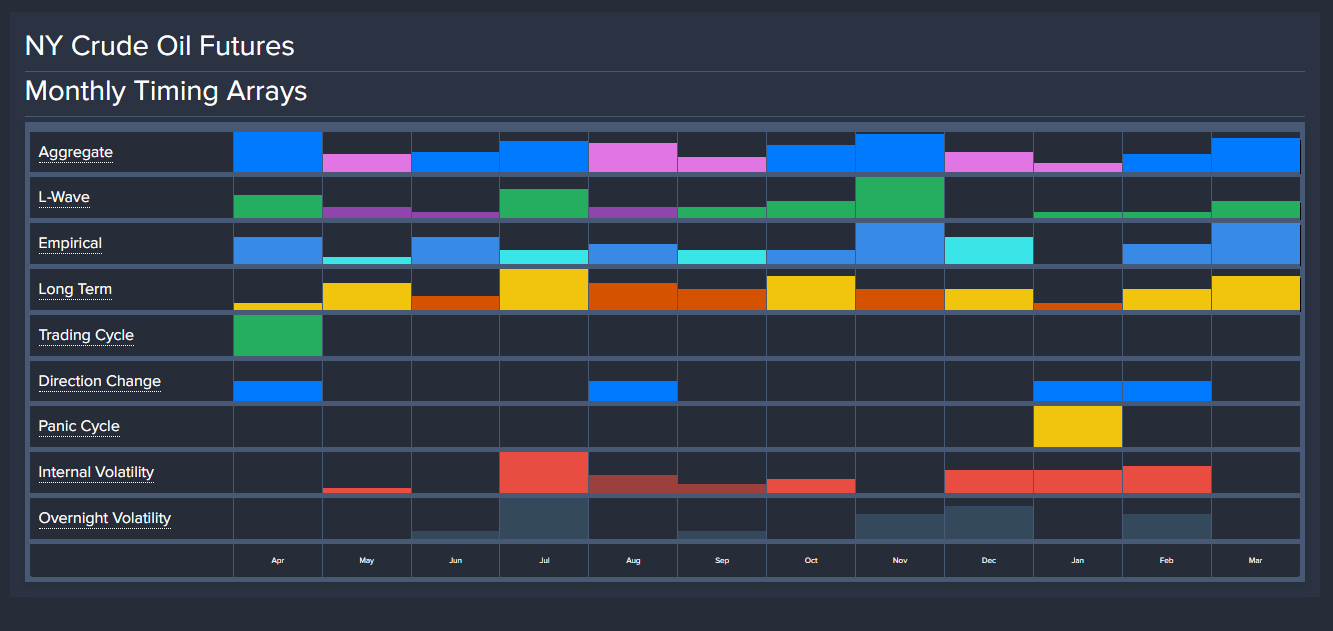
Exxon Chairman and CEO Darren Woods stated that the company is aiming to “redesign work processes and improve cost competitiveness.” “We are making tough decisions, some of which will result in friends and colleagues leaving the company,” Woods said back in 2020. The global economy never truly recovered from the pandemic. I discussed the ongoing issue with crude and the broader implications on the private blog.

CRUDE M Array 5 2 25

Numerous oil giants announced mass layoffs. Chevron drastically reduced its payroll by cutting over 15% of its workforce. Imperial Oil is slashing its staff by 20% over the next two years. Total Energies is looking for a way to save $7.5 billion over the next five years.

Oil shocks are typically geopolitical in nature. It is not inflationary or demand-driven. Oil is a global reserve commodity that responds to shifts in capital flows and confidence. Energy is leverage and power, which is why is closely aligns with the war cycle. Companies overall are hedging against expected volatility by cutting costs, but oil companies are especially prone to stress due to the current geopolitical atmosphere.

WATCH: Leftist NGOs Aiding And Abetting Illegal Aliens Outside Courthouse in Portland, Oregon


Posted originally on Rumble on By Bannon’s War Room on: October, 01, 2025

WADE MILLER: Russ Vought Is Uniquely Capable Of Taking A Scalpel To Thousands Of Bloated, Woke, Weaponized Government Programs While Minimizing The Impact On The American People


Posted originally on Rumble on By Bannon’s War Room on: October, 01, 2025

The Cost of the US Govt Shutdown


Posted originally on Oct 2, 2025 by Martin Armstrong |  

Swamp

The US government shut down once again as our public servants refused to work in a partisan fashion. Over 2.1 million civilian federal employees will be affected, with 750,000 furloughed without pay. Naturally, Congress will still receive a paycheck and their lobbying checks. The duration of the shutdown is unknown, but estimates state the bickering could cost the US economy up to $2 billion per week.

Non-essential offices, websites, and services are unavailable. National parks and museums are closed to visitors. Passport processing will be delayed. The daily cost of compensating the furloughed workers is $400 million. Military members may face delayed pay, while contractors face layoffs.

Most concerning is the data blackout—the Bureau of Labor Statistics will be unable to release its September non-farm payroll report slated for October 4. Data regarding the consumer price index and producer price index will be delayed. Retail sales, housing starts, every piece of data compiled by the federal government will be delayed and amplify uncertainty. The key information the Federal Reserve and investors rely on will be unavailable, and if the shutdown carries on for more than two weeks, there will be a massive spike in volatility and a potential delay in rate cuts. The Fed will be forced to rely on private estimates like the ADP jobs report that are less reliable.

The Democrats insist on expanding COVID-era funding for Obamacare, and insist the GOP reverse the decision to cut the Medicaid budget. Neither side is willing to compromise. Leaders are begging Congress to simply stay in Washington until a decision is reached.

“There isn’t any substantive reason why there ought to be a government shutdown. This is something that has been done routinely, as I said, 13 different times when the Democrats had the majority. But we are not going to be held hostage for over $1 trillion in new spending on a continuing resolution,” Senate Majority Leader John Thune, R-S.D., said ahead of the vote.

The Medicaid cuts alone are expected to save the government $840 billion over the next decade. Cutting the premium tax credit extension could save $350 billion over the same period, and work and eligibility restrictions could save another $344 billion. Additional recessions and funding cuts to government agencies are expected to save up to $9 billion in 2025 alone.

Non-citizens without access to other coverage DO benefit from these extensions. US taxpayers have spent billions on providing health coverage to migrants. Those earning between 100% to 400% of the federal poverty level will also benefit, as will anyone earning 400% above the threshold if their premiums exceed 8.5%.

“It is unclear how long Democrats will maintain their untenable posture, making the duration of the shutdown difficult to predict,” Office of Management and Budget (OMB) Director Russ Vought penned in a memo. “Regardless, employees should report to work for their next regularly scheduled tour of duty to undertake orderly shutdown activities.”

“We can do things during the shutdown that are irreversible, that are bad for them and irreversible by them, like cutting vast numbers of people out, cutting things that they like, cutting programs that they like,” President Trump warned.

Trump could possibly lay off more federal employees in non-essential roles, and a hiring freeze is already in place. The president has the authority to cut funding to programs favored by the Democrats such as social services and environmental programs. Sanctuary cities or jurisdictions could see funding withheld. The federal government will not spend on non-essentials during this shutdown, but that will only anger Democrats who refuse to budge.

Congress serves no purpose. They represent private lobbying interest groups and serve the invisible hand rather than the people of the United States. A private company would never shutter its office over a fiscal budget disagreement. Our public servants must reach a resolution immediately, and I see no reason why they deserve pay during a deadlock. These individuals are on taxpayer-funded vacation for the majority of the year and refuse to perform the minimal work they are expected to do. It seems they are unfit for the job. Fire everyone and start fresh.