President Trump Hosts Law Enforcement Roundtable To Discuss Lawless Sanctuary Cities…


Earlier today President Trump hosted leadership from the Department of Homeland Security, Immigration and Customs Enforcement and national law enforcement officials to discuss the ongoing issues with Sanctuary Cities and immigration.

.

WHITE HOUSE – SANCTUARY CITIES ARE UNDERMINING LAW ENFORCEMENT: Sanctuary jurisdictions obstruct Federal immigration enforcement efforts and put law enforcement at greater risk.

A “sanctuary city” generally refers to a State or local jurisdiction that refuses to cooperate with Federal immigration enforcement, often by rejecting “detainer” requests from U.S. Immigration and Customs Enforcement (ICE) and refusing to share information relating to potentially removable aliens.

  • Detainers are used to request that a State or local law enforcement agency hold a criminal alien in local custody for up to 48 hours after their release on state charges to allow ICE to take custody of the alien and initiate removal proceedings.
  • State and local law enforcement agencies routinely detain suspects for violating Federal laws at the request of federal authorities.
  • The Constitution and Federal statues allow for ICE to detain illegal aliens, and for local police to do so at ICE’s request, relying on ICE’s determination of probable cause.

Detainers themselves establish probable cause of an alien’s removability and it would be absurd to require ICE to obtain a judicial warrant every time it detained an illegal alien.

Indeed, Congress authorized immigration officers, rather than Federal judges, to issue administrative warrants to arrest aliens based on probable cause to believe they are in violation of the immigration laws.

♦If this was necessary under the Fourth Amendment, immigration enforcement would grind to a halt.

  • When sanctuary cities refuse to comply with detainer requests, law enforcement officers must carry out their immigration enforcement duties in workplaces, residences, and in the streets.

This can lead to ICE having to enter dangerous environments to arrest criminal aliens.
Some sanctuary city officials have gone as far as warning illegal aliens about upcoming immigration enforcement actions, allowing criminal aliens to prepare themselves and putting law enforcement, the public, and the aliens at even greater risk.

♦ENDANGERING COMMUNITIES: Reckless sanctuary policies endanger the safety of our communities and obstruct immigration enforcement actions which can prevent further crime.

Too many criminal illegal aliens have been released into American communities and gone on to commit crimes which could have been prevented had ICE been able to take the individuals into custody.

  • In 2016, the San Francisco Police Department (SFPD) arrested a criminal illegal alien for possession of cocaine for sale and other charges.
  • The individual had been deported three times previously and had prior convictions for similar offenses but was still released.
  • SFPD arrested the individual again in 2017 on charges involving the sale of narcotics, yet the city again refused to comply with an ICE detainer request and the individual was released.
  • SFPD arrested an illegal alien and alleged gang member more than ten times between 2013 and 2017 for charges including rape, assault, domestic battery, robbery, and vehicle theft.
  • On each occasion ICE’s request to have the individual transferred to their custody or receive notice before his release was denied.

A criminal illegal alien was arrested in Cook County, Illinois in 2011 for driving on a suspended license from a prior conviction for driving under the influence (DUI).

  • ICE issued a detainer request but the individual was released from jail and arrested less than a year later for aggravated DUI causing death.
  • Activists say sanctuary policies make illegal aliens feel safe enough to report crimes to police.
  • Illegally present crime victims and witnesses are eligible for certain immigration benefits, like the U-visa and T-visa, to encourage their cooperation in reporting crime.

♦IMMIGRATION ENFORCEMENT: President Trump’s Administration has and will continue to pursue strong immigration enforcement based on the rule of law.

President Trump’s Administration has taken action to ensure our Nation’s immigration laws are faithfully enforced.

The Department of Justice has filed a legal action regarding three California laws that intentionally obstruct the enforcement of Federal immigration law, regulate private entities that seek to cooperate with Federal authorities, and impede consultation and communication between Federal and State law enforcement officials.

During fiscal year (FY) 2017, ICE’s Enforcement and Removal Operations (ERO) made more than 140,000 administrative arrests and effected more than 225,000 removals.

  • From President Trump’s inauguration through the end of FY 2017, ERO made more than 110,568 arrests compared to only 77,806 in all of FY 2016.

However, more resources are needed to ensure law enforcement is able to do its job and enforce our immigration laws.

  • There are nearly one millions aliens in the United States with final orders of removal but not enough officers or resources to enforce the orders.
  • Many sheriffs have backed off of holding criminal aliens for fear of lawsuits.

President Trump Meets With Saudi Crown Prince Mohammed Bin Salman…


President Trump meets with Saudi Crown Prince Mohammed Bin Salman (MbS) today at the White House. This is their first meeting since the “Great Realignment” began {Go Deep} and there is much to discuss:

.

[Transcript] 12:07 P.M. EDT – PRESIDENT TRUMP: Thank you very much, everybody. It’s a great honor to have the Crown Prince with us.

Saudi Arabia has been a very great friend and a big purchaser of equipment and lots of other things. And one of the biggest investments in the United States is their — I guess it’s your big investment — is buying stock in companies and various other things in the United States and creating jobs.

We’ve become very good friends over a fairly short period of time. I was in Saudi Arabia in May. And we are bringing back hundreds of billions of dollars into the United States. And we understand that, and they understand that.

Some of the things that — have been approved and are currently under construction and will be delivered to Saudi Arabia very soon, and that’s for their protection. But if you look, in terms of dollars, $3 billion, $533 million, $525 million — that’s peanuts for you. (Laughter.) You should have increased it. $880 million, $645 million, $6 billion — that’s for frigates; $889 million, $63 million — and that’s for various artillery.

Some of the things that we’re now working on and that have been ordered and will shortly be started in construction and delivered: the THAAD system — $13 billion; the C-130 airplanes, the Hercules, great plane — $3.8 billion; the Bradley Vehicles — that’s the tanks — $1.2 billion; and the P-8 Poseidons — $1.4 billion. And what it does is it really means many, many jobs. We’re talking about over 40,000 jobs in the United States.

So we make the best equipment in the world. There’s nobody even close. And Saudi Arabia is buying a lot of this equipment, and a lot of people are at work making the equipment, not only for us — because we, as you know, we’re getting a $700 billion military proposal. And that’s even a lot for you guys. But we’re getting a $700 billion military plan this year, and 716 will be next year — $716 billion.

So we really have a great friendship, a great relationship. I would really have to say the relationship was, to put it mildly, very, very strained during the Obama administration. And the relationship, now, is probably as good as it’s really ever been, and I think will probably only get better. Tremendous investments made in our country. And that means jobs for our workers, jobs for our people.

Also, defense. We’re talking about defense, and we’re working very hard with Saudi Arabia. And they’re also footing a big part of the bill for defense — the whole Middle East. And we know what’s happened in the Middle East. And it has not been a pretty picture for the United States or for anybody.

And a lot of things are changing, and they’re changing very rapidly. As you know, ISIS is now — we’ve recaptured almost 100 percent of the territory, as you probably have heard before anybody. But we’ve captured close to 100 percent of the territory held by ISIS. We’ve moved very rapidly, very quickly. And that’s, really, coming to an end in that part of the world — it’s coming to an end. And we’ll be able to get out of certain areas that we’ve wanted to get out of for a long period of time. And other countries can handle it. At this point, they’ll be able to handle it.

So it’s a great honor to have you and your representatives here. Crown Prince, thank you very much. Thank you for being here.

CROWN PRINCE BIN SALMAN: Thank you, Mr. President. Actually, the relations between Saudi Arabia and United States of America, it’s old relation. We are the oldest ally for the United States of America in the Middle East.

PRESIDENT TRUMP: Right.

CROWN PRINCE BIN SALMAN: More than 80 years of alliance and big interest — politically, economically, and security, in different area — a lot of area. And the foundation for relation, it’s really huge and really deep.

And a different issue — we know that today, the relation, it’s the cause of more than 4 million jobs in the United of States of America, directly and non-directly. Also, it’s a cause for a lot of jobs in Saudi Arabia directly and non-directly.

And, as you know, Mr. President, from day one you’ve reached this office, we’ve planned to tackle 200 billion U.S. dollars for opportunities in the next four years, but it end up with 400 billion U.S. dollar for opportunities.

We’ve talked to you, Mr. President, about the military deals, the implementation, and it is more than 50 percent. And, also, the implementation overall in the 400 billion U.S. dollar of opportunity, more than 55 percent.

PRESIDENT TRUMP: Right.

CROWN PRINCE BIN SALMAN: We planned this for next 10 years, but it happens in one year, we implement 55 percent, though. So this is signal that there is a lot of things could be tackled in the close future, and more opportunities. And that why we are here today, to be sure that we’ve tackled all the opportunities and achieve it, and also get rid of all the threats facing our both countries and the whole world.

So I am very glad to be here today.

PRESIDENT TRUMP: Well that’s right. And you know, one thing that you have been really focused on is the terrorism threat and the funding of terrorism. And whether it’s Saudi Arabia or other countries, as we know, there will be no funding. It is — we have a zero tolerance for the funding of terrorists, and we’re working very hard. And I will say that Saudi Arabia has been working very hard on that, as are certain other countries in the Middle East.

When I was there in May, I think it was one of the most incredible two-day meetings that I’ve ever seen — that anybody has ever seen. It was an amazing two-day period. We had 56 countries. We had — everybody was there at the head of every country. Virtually — I guess, in every case, it was the head of the country. And we talked about terrorism and the funding of terrorism. And it will not be allowed. It will not be allowed. That would be the one thing that would end the relationship with any country. So I think there’s a very big focus on that — the funding of terrorism — meaning, it’s over.

And the other thing that I really am very happy about is that we talked about 400 billion dollars’ worth of investment, of which we’ve already invested and seen invested $200 billion to our companies, to various other places, and people that make things. So a lot of places throughout the United States are benefitting by this massive investment made by Saudi Arabia to buy product from the United States.

And again, we make the best military product in the world, whether it’s missiles or planes or anything else. There’s nobody that even comes close. So I just want to thank you and I want to congratulate you on everything. Thank you very much.

CROWN PRINCE BIN SALMAN: Thank you, Mr. President.

PRESIDENT TRUMP: Thank you very much, everybody.

Q Can you comment on the bombings in Austin, Mr. President?

PRESIDENT TRUMP: The bombings in Austin are terrible. The local, state, and federal are working hand-in-hand to get to the bottom of it. This is obviously a very, very sick individual, or maybe individuals. These are sick people, and we will get to the bottom of it. We will be very strong. We have all sorts of federal agencies over there right now. We’re searching.

What’s going on in Austin — a great place, tremendous place — is absolutely disgraceful. So we have a lot of power over there. We’re looking; it’s not easy to find. But these are sick people and we have to find them as soon as possible. We have to find them, really, immediately.

I will say, working with Texas, working with the local governments has been great. But we have to produce, we have to find this very sick person or people.

Thank you all very much.

Q How was your call with President Putin?

PRESIDENT TRUMP: I had a call with President Putin and congratulated him on the victory — his electoral victory.

The call had to do, also, with the fact that we will probably get together in the not-too-distant future so that we can discuss arms, we can discuss the arms race. As you know, he made a statement that being in an arms race is not a great thing. That was right after the election — one of the first statements he made.

And we are spending $700 billion this year on our military, and a lot of it is that we are going to remain stronger than any other nation in the world by far.

We had a very good call, and I suspect that we’ll probably be meeting in the not-too-distant future to discuss the arms race, which is getting out of control, but we will never allow anybody to have anything even close to what we have. And also to discuss Ukraine and Syria and North Korea and various other things.

So I think, probably, we’ll be seeing President Putin in the not-too-distant future.

Q How are you going to counter Iran? This is a Saudi —

PRESIDENT TRUMP: Well, we’re going to see what happens. The Iran deal is coming up. It’s probably another month or so, and you’re going to see what I do. But Iran has not been treating that part of the world, or the world itself, appropriately. A lot of bad things are happening in Iran. The deal is coming up in one month, and you will see what happens. Okay?

Q Your Royal Highness, should the President pull out of the Iran deal?

CROWN PRINCE BIN SALMAN: Well, we’ll talk about that today.

PRESIDENT TRUMP: (Laughs.) Okay? Thank you very much, everybody.

END – 12:18 P.M. EDT (LINK)

Commerce Secretary Wilbur Ross Discusses Ongoing Trade Initiatives…


Against the backdrop of ‘Phase 2’ trade policy initiatives based on reciprocity, U.S. Commerce Secretary Wilbur Ross talks to CNBC about tariffs, carve-outs and protecting national security ahead of his meeting with the European commissioner for trade.

The hypocritical European Union has expansive protectionist tariffs against U.S. products and has threatened retaliation if the U.S. enforces the Trump administration about trade reciprocity.

Additionally, the Trump administration (Ross, Lighthizer, Navarro and Mnuchin) are focusing on China’s trade theft of intellectual property. According to Reuters reporting there is a possibility of $60 billion in trade tariffs being enforced against China for their IP violations and practices.

WASHINGTON (Reuters) – The Trump administration is expected to unveil up to $60 billion in new tariffs on Chinese imports by Friday, targeting technology, telecommunications and intellectual property, two officials briefed on the matter said Monday. (more)

However, Chinese Premier Li Keqiang puts the panda mask on by saying: “We don’t want to see a trade war” with U.S., and hopes to negotiate disputes. The U.S. market is the customer for the manufactured products by China and Beijing understands the U.S. team holds the leverage.

How Can the Majority Be Wrong if they ALL Expect Interest Rates to Rise?


QUESTION: Today most analysts think higher interest rates are on the way. If the majority is always wrong how does that play into the expectations for higher interest rates?

HP

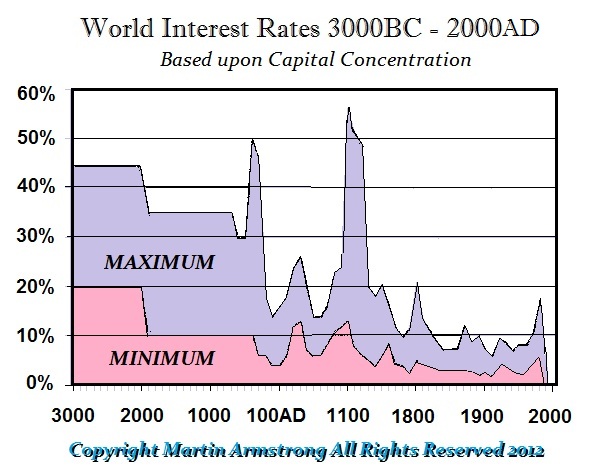
ANSWER: With the Federal Reserve stating they must “normalize” interest rates since 2014, of course, the majority will view that will be the trend. We are at a 5,000 low in rates historically. Naturally, the only direction is now UP, UP, and AWAY! There are two ways that they will be wrong and that has to do with their interpretation.

First, they will not comprehend just HOW fast rates will rise of WHY!

Second, they will interpret higher rates as BEARISH for equities, as they traditionally do.

Therefore, the way the MAJORITY will be wrong is not in the mere fact that rates will rise, they read the statement of the central banks. It is the interpretation of what will follow from the simple trend.

President Trump: “A More Prosperous Future”…


The White House releases the following President Trump video along with a message to submit your own tax relief success story to them.  Smart plan:

The Unsound Theory of Inflation


QUESTION: You defend central banks yet the Rothschilds when clearly Mayer Amschel Bauer Rothschild said: “Give me control of a nation’s money and I care not who makes it’s laws.”  Any comment?

SL

ANSWER: No problem. He never said any such thing it was completely made up. It was attributed to him in 1838 when he was already dead for 26 years. Besides that, what is very clear is that this is based on the assumption that money is fiat. The USA began to issue paper money in 1861. During the period that Mayer lived, the money supply was primarily coined.  The only plausible reference would be implied that he debased them. He was a banker and never produced the coinage.

It would be nice just for once that you bothered to actually understand the role of central banks as originally set forth. What they do today with Quantitative Easing has proven that the entire theory of an increase in money supply will be inflationary is outright BOGUS.

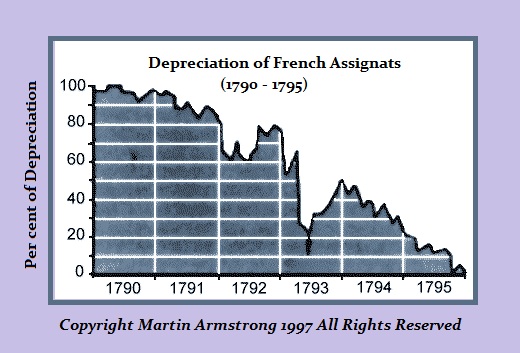
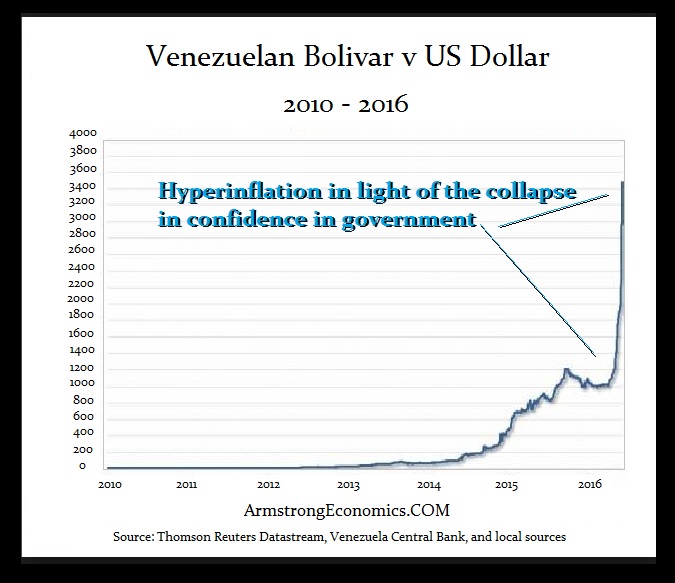
In every case of HYPERINFLATION, not even once did inflation ever begin by increasing the money supply. Inflation begins when PEOPLE lose CONFIDENCE in the government and they spend the currency as fast as they can or outright refuse to accept it. I have explained that the Japanese Emperor used a different approach. He DEVALUED all outstanding money to 10% of his new coinage. That led to the collapse in CONFIDENCE to the point that the people never trusted the government and as a result, the Japanese lost the ability to produce money for 600 years.

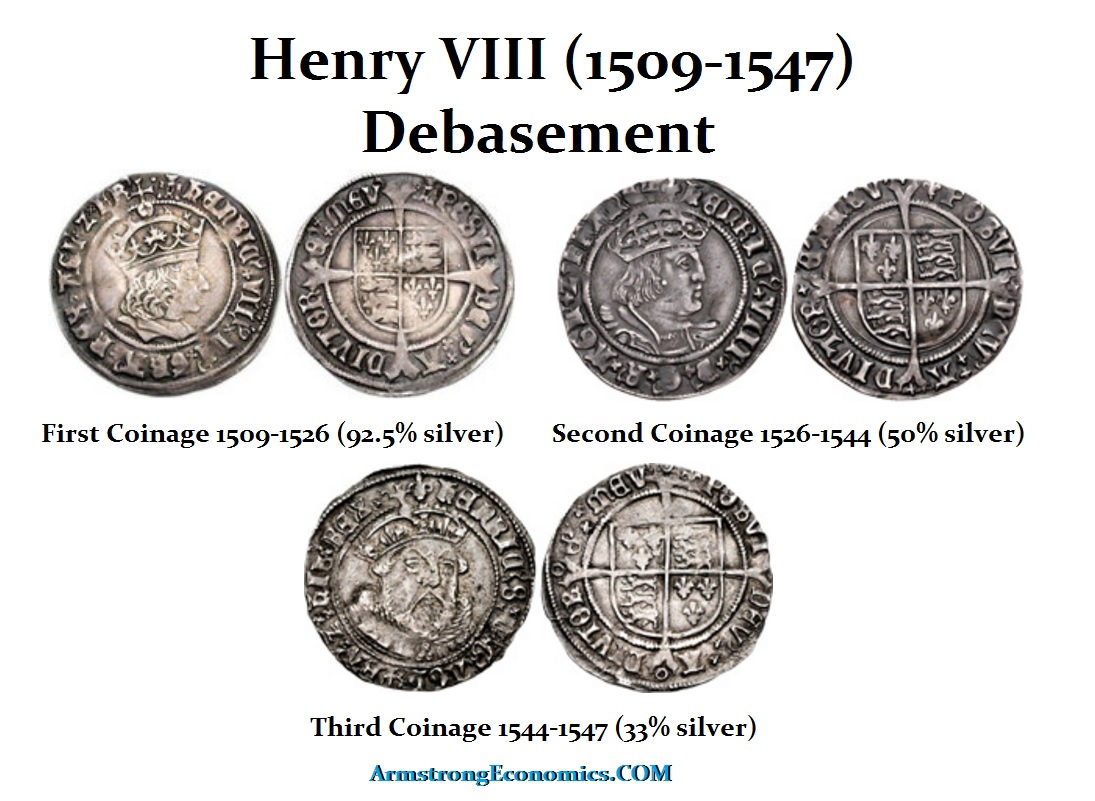
The definition of what creates inflation is entirely wrong. Even Gresham’s Law needs to be placed in context. Gresham worked in the foreign exchange markets in Amsterdam. Henry VIII debased the English coinage. But coinage traded on foreign exchange markets according to its metal content. The inflation Gresham referred to was experienced in the foreign exchange markets so what he truly observed was the decline in the British coinage value on international markets. Don’t forget, this predates the central Bank of England which was established in 1694.

The entire observation of inflation began with Gresham. However, it was extended by David Hume (1711-1776) who made observations BEFORE paper money began. This observation is not respected even today. David Hume showed why net exporting in exchange for gold currency, which then increased the domestic money supply and was hoarded by Britain, could not actually enhance wealth. Hume’s argument was essentially the monetarist quantity theory of money which would influence others over time. Prices in a country would change directly with changes in the money supply. Hume explained that as net exports increased and more gold flowed into a country to pay for them, the prices of goods in that country would rise with the economic boom. The USA saw this through the course of World War I and World War II ending up with 76% of the world’s official gold reserves. Consequently, an increased flow of gold into England would not necessarily increase England’s wealth substantially was Hume’s argument because the increase in domestic prices due to the gold inflow would discourage exports and encourage imports. Hence, this trend then counter-reacts with trade and automatically this will start limiting the amount by which exports would exceed imports. The more money that flowed into a country, like the USA, the higher the prices and this would then reduce exports. Adam Smith’s attack on mercantilism and argument for free trade, strangely ignored Hume’s argument. Hume’s view of capital flows can be verified throughout history and is really the underlying foundation of the balance-of-payments issues that Trump fails to understand. Hume also advanced the idea of “creeping inflation” that takes placed with a gradual increase in the money supply that would lead to economic growth. This is largely correct, but money supply growth must also keep place with population growth or you will produce deflation – more people and less money to go around.

With the introduction of paper money during the mid to late 18th century, the relationship between the over-supply of banknotes and a resulting depreciation in their value was noted by earlier classical economists such as David Ricardo (1772-1823). However, the issue of paper money during the American Colonial period must also take into consideration two factors: (1) England starved America and extracted money assuming they were using Spanish coinage, and (2) the American Revolution which was funded by creating paper money. There was again a lack of CONFIDENCE to the extent that when the American Revolution ended, the Constitution prohibited States from issuing money again and federally no paper money was issued again until the American Civil War in 1861.

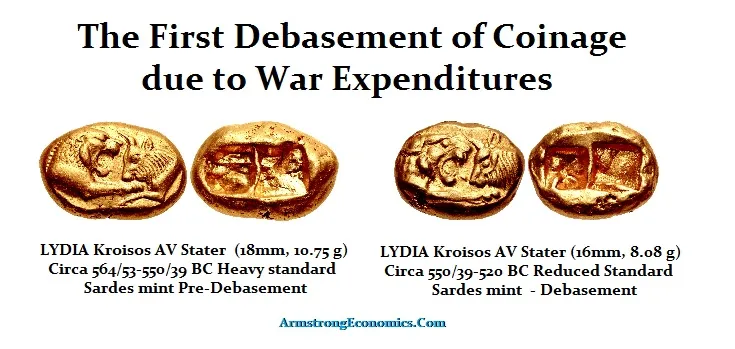
Therefore, most HYPERINFLATION periods are associated with war like the American and French experiences. However, in Lydia, the very first government to issue coins, we see the debasement unfold as a direct result of war. Therefore, there is no evidence of hyperinflation unfolding absent a collapse in the CONFIDENCE of the people in that government.

In the case of Venezuela, obviously there has been a collapse in CONFIDENCE. The same was true in Zimbabwe after it seized all the property of white farmers. Foreign investors refused to ever participate again.

The German HYPERINFLATION came with the Communist Revolution in 1918. That sent capital into hiding and fled overseas, primarily to the United States.

Defining a Cycle Inversion


QUESTION: Can you define cycle inversion and answer the below?

1. What are the specific requirements to confirm a cycle inversion? I have found three elements discussed in the writings, but I am somewhat unclear whether all must be present to confirm a cyclical inversion.

i. The period following the turning point must close higher than the prior period.

ii. The period following the turning point must exceed the high of the prior period.

iii. The period following the turning point must not breach the low of the prior period.

Kindly elaborate.

2. Can a cyclical inversion be confirmed beyond the month immediately following the turning point? Notably, the turning points referenced above have been evenly spaced, each separated by a single month. What if each of the turning points were separated by 5 or 6 months?

Could a high on Month 3 (which is not itself a turning point, but rather mid-way between two turning points) indicate a cycle inversion? Wouldn’t a high on Month 3 (which is not a turning point) suggest an error in the array?

Thanks.

Best,
Dan

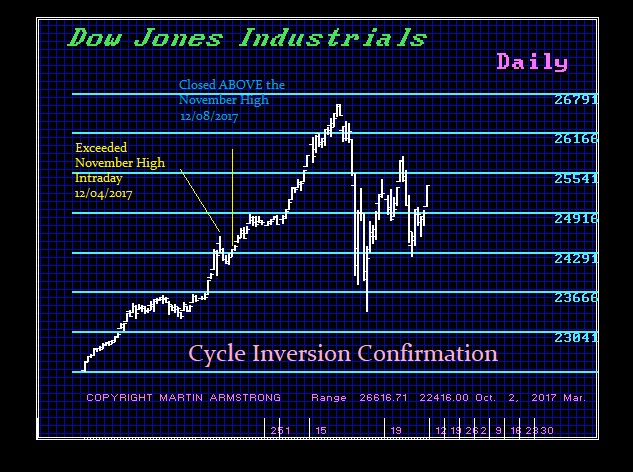
ANSWER: In the immediate instance, simply exceeding the January high would imply the next turning point would invert into a high. Corrections are confined to a maximum of 3 timing intervals, which means April. A failure to make new highs and a penetration of the February low after April would imply a correction moving into probably July. Just exceeding the January high intraday MAY BE good enough to qualify as a cycle inversion, but typically you need to CLOSE ABOVE it or it could be just a double top formation. The same is true in reverse with lows.

You can normally assume a cycle inversion once that event is exceeded or broken on a closing basis. We previously warned that exceeding the November high is December would lead to a January high. That confirmed the Cycle Inversion. The same will be true with respect to the January high.

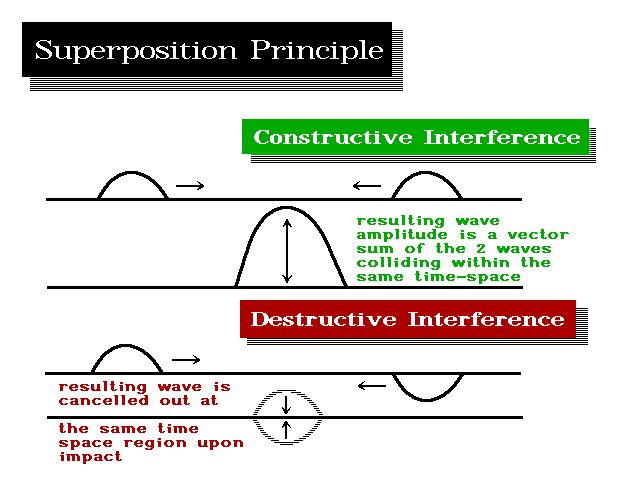
The only time an Array would appear to be wrong where the TOP line fails to produce a definitive turning point tends to be when there is a Directional Change say the month before. A Directional Change can influence and become dominant. However, this is usually when a given market is being influenced by another. A major panic in one important economy can become a SUPERPOSITION influence distorting a local market by a more dominant global trend. This is still rare. The Array typically picks this up in advance. The Array can change shifting the turning point from one month to the next because of such a Superposition Principle.

This will really have to be answered in a more detailed report on cycles.

Visualizing Cycles in Your Mind Helps to Comprehend How to Respond to Events


QUESTION: Is there a way to teach cycles that will enable others to see them more easily?

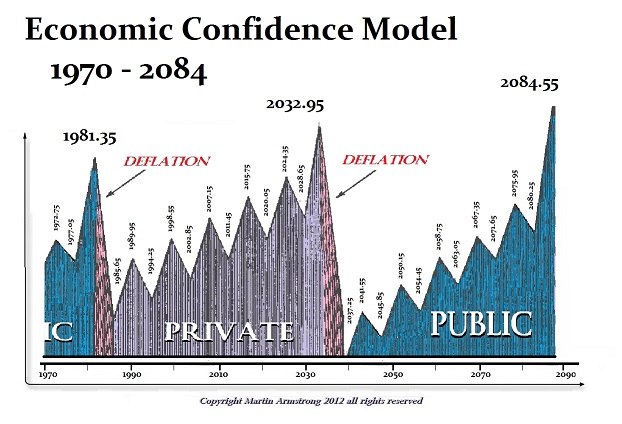
ANSWER: Oh yes. Students who developed visual mental models of cyclical principles flourish, while students who tried to learn cycles by rote invariably struggled. The mental picture is critical. It is a roadmap to the future. Just visualize the Economic Confidence Model and it will help to comprehend the business cycle and where you are at any given moment.

For example, in 2007 when everyone is buying houses, you can keep this in mind and take a pause, encouraging yourself to wait until next year. The same is true for expanding your business. The first time I really used this model in that decision process was 1976. I signed a lease for space and I got them to give me a 10-year lease. I negotiated the elimination of a CPI clause. Everyone was talking about a depression. My accountant thought I was nuts. I told him this model was never wrong and I was going with it. The space I took at $10 a square foot was $45 by 1980.

This model can provide tremendous guidance if you keep it visualized in your mind.

Culture – Law – And Different Ways


Several women have written in and disagree with what I wrote about prostitution. They argue that 75% of prostitutes come from broken homes, which today is over 50% of marriages. They also state that these girls were abused as children in every way possible and many are runaways. Some also argue that these girls turn to prostitution because they are addicted to drugs and became pregnant at very young ages in their teens and have to support a child on their own.
All of that said, I agree that there are girls that fall into each of those categories. However, There are strikingly different cultures and different solutions around the world that warrant looking at both in Asia and Europe. In Thailand, they have a different culture and sex is not looked down upon as it is in the West. The girls are not drugged out or abducted. They are there to make money typically to support their families, which include their parents. Many also do dream of meeting the right guy in the process. In fact. studies show that 15% of the women in the Thailand sex trade marry their customers when they are foreign men (see a study published by Khon Kaen University).
Amsterdam is also strikingly different. The girls are not drugged out and they fall more into the professional category and some may cling to that dream of meeting Mr. right while others have probably given up on the dream of love at first sight and the knight in shining armor will come to carry them away. Both Thailand and Amsterdam show that even prostitutes do find love, which was the story-line of Pretty Woman.
Similarly, in Japan, there are a few private clubs where the girls are virgins and if you wish to select one, and she agrees, you paid $250,000+ and she was yours. You then had to provide her an apartment in Tokyo and support her as a concubine. She would be there for you whenever you were in Tokyo. They did this to be taken care of and a portion of the money always went back to her family. There are different cultures around the world and different morals.
I know in East Europe, men were going there and pretending to want to marry. They entered into the arranged marriage and took the girl and then promptly sold her into sex slavery. That was common when the Wall Fell in 1989, and parents are wise to that scam these days.  There is just a stark difference between what we see in Thailand and Amsterdam compared to where prostitution is illegal. My point is that if there is a legal industry then the girls are protected and this would tend to reduce the abductions.
I have written before when I was in New York standing on the corner in front of the Plaza hotel during the day, this girl came up to me dressed in genes. She asked if there was anything she could do for me. That is using the words spoken by a hooker, but she looked like 13 to me. I was confused and said no, and she asked again. I was not sure and was giving her the benefit of the doubt because she looked so young. I thought perhaps she wanted money for food or something. Then the doorman came over and told her to get out and she turned and cursed him. I then asked was she a hooker? He said yes she bothered the guests routinely. She was probably a runaway working for someone I suppose.
I knew a girl who worked for me once who was raped by her step-father between 7 and 10. She ran away to an aunt in another State. She was strong enough to tell me the story when she was 25. She did not become a prostitute. I respected her strength and she put her life together.
You can pass all the laws you want. It will not stop the abuse. Amsterdam, Japan, and Thailand are a different issue and there are girls who do hope to meet that special someone.
  • Outlaw booze and you created the Mafia.
  • Outlaw prostitution and you create abduction.
There has to be a better way. Girls are abducted and sold into sex slavery only because it is profitable. Remove the profit with legal competition, and you just may end the abductions. Promote safe-houses for runaways and you may save a life.