President Trump Remarks During Oval Office Swearing-In Ceremony – Defense Secretary Mark T. Esper…


This evening President Trump delivered remarks during the swearing-in ceremony for newly appointed Defense Secretary Mark T. Esper.  [Video and Transcript]  The Senate voted 90-to-8 easily confirming Secretary Esper.

.

[Transcript] – THE PRESIDENT: Well, thank you very much everybody. We have a very important moment in our country’s history, actually. And we had a lot of our great Republican senators in the White House, and I invited them over and many of them wanted to be here. And as you probably heard, the vote just took place, and it was 90 to 8. That’s a vote that we’re not accustomed to, Mark, I have to say that. So congratulations, that’s great.

But I’m honored to be here today for the swearing-in of our new Secretary of Defense, Mark T. Esper. I especially want to thank Justice Samuel Alito — highly respected and a great gentleman, a great man — for joining us to administer the Oath of Office. Thank you very much. Thank you, Sam.

We’re also delighted to welcome several of Secretary Esper’s family members and friends to the White House today, including his mother, Polly. Hi, Polly. (Laughter.) Boy, are you proud of him, Polly? You better believe it. Yeah. (Laughter.) His wife, Leah. Thank you, Leah, very much. And his three children — Luke, John, and Kathryn. Thank you very much. Congratulations, too, most importantly. Congratulations. That’s an incredible thing.

There is no one more qualified to lead the Department of Defense than Mark Esper. A West Point graduate — great student, actually — Secretary Esper served our military for 21 years, including in the Gulf War. He also advanced U.S. national security in government and in private sector, most recently as Secretary of the Army, where he played a critical role training and equipping our armed forces. That’s where I got to know Mark. And there was nobody that did a better job than Mark and there’s nobody that loves it more than Mark. And thank you very much.

He is a recipient of the Bronze Star and Combat Infantryman Badge. He holds a doctorate in public policy from George Washington University and a master of public administration degree from the John F. Kennedy School of Government at Harvard University.

I am confident that he will be an outstanding Secretary of Defense. I have absolutely no doubt about it. He is outstanding in every way. And we’re honored to have you aboard. And I would ask Justice Alito, please, to administer the Oath of Office. Thank you. Thank you, Judge.

(The oath is administered.) (Applause.)

THE PRESIDENT: Would you like to say something?

SECRETARY ESPER: Yes, sir, if I may.

THE PRESIDENT: Please.

SECRETARY ESPER: Well, thank you, Mr. President, for your kind words, for your confidence in me, and for this incredible opportunity. And thank you, Justice Alito, for administering the Oath of Office. I really appreciate you being here this afternoon.

I’d also like to Senate — to thank the Senate Armed Services Committee for its quick action on my nomination and for the strong bipartisan support that I received today from the entire United States Senate.

It is an honor of a lifetime to be appointed Secretary of Defense and to lead the greatest military in history. And I will do so with that same energy and commitment to duty, honor, and country that I have for nearly four decades since my early days at West Point.

Mr. President, it is a privilege for me and for my family to be here with you today. Thank you for your leadership and for your commitment to a strong national defense and to all of our service members. Our military has made tremendous gains in recent years thanks to your leadership and we stand ready today to take on any challenge.

And while our soldiers, sailors, airmen, and Marines stand guard each and every day, we will ensure their families are well taken care of.

On a personal note, I would like to thank my wife, Leah, who has been by my side now for 30 years as a military spouse herself; my children, Luke, John, and Kate; my mother, Polly; my in-laws, Tom and Von; and my sisters who join me here today. And everybody else who has been a steadfast supporter of me over the years.

Again, thank you, Mr. President, for allowing me to serve our great country once again, as Secretary of Defense. Thank you, sir. (Applause.)

THE PRESIDENT: Thank you, Mark. Congratulations.

SECRETARY ESPER: Thank you.

THE PRESIDENT: Fantastic. Proud of you. Come on over here.

SECRETARY ESPER: Okay. Leah?

(A certificate is presented.)

THE PRESIDENT: He’s going to be a great one. Thank you very much.

END 5:50 P.M. EDT

The Real Adam Smith: Ideas That Changed The World – Full Video


Published on Mar 28, 2016

The Real Adam Smith: A Personal Exploration by Johan Norberg, takes an intriguing, two-part look at Smith and the evolution and relevance of his ideas today, both economic and ethical. It’s difficult to imagine that a man who lived with horse drawn carriages and sailing ships would foresee our massive 21st century global market exchange, much less the relationship between markets and morality. But Adam Smith was no ordinary 18th century figure. Considered the “father of modern economics,” Smith was first and foremost a moral philosopher. The revolutionary ideas he penned in The Wealth of Nations and The Theory of Moral Sentiments, changed the world. Norberg explores Smith’s insights regarding free trade and the nature of wealth to the present, where they are thriving and driving the world’s economy. In the second hour, Ideas That Changed The World, Norberg traces Smith’s insights regarding the benefits of free trade and the nature of wealth to the present, where they are currently in operation. He talks with some of the most distinguished Adam Smith scholars, as well as leaders of some of the world’s most admired companies to discover how Smith’s ideas continue to be relevant and drive the global economy today.

Milton Friedman Speaks – Myths That Conceal Reality


Published on Jul 31, 2012

Five myths cloud our perception of both the past and the present. (1) The “robber baron” myth, which holds that in late nineteenth-century America there were powerful men who became rich at the expense of the poor. The reality is that they became wealthy by being productive, and that there is no other period in history which saw such a rapid and widespread improvement in the well-being of the average individual; (2) The myth that the Great Depression was caused by a failure of business, when it was, in fact, produced by a failure of government and specifically by the Federal Reserve System; (3) The myth that government in the economy has expanded in response to public demand, when, actually, the public has had to be sold “hard” for politicians to enact every major social program; (4) The “free lunch” myth, which forces the individual to pay more, no matter how the government raises money – by taxing individuals, by taxing businesses, or by printing more money; and (5) The myth that government, like Robin Hood, transfers wealth from the rich to the poor, when the reality is that the government usually transfers wealth and income from both the very rich and the very poor to those in the middle. Check out our Facebook page here: https://www.facebook.com/FreeToChoose…

Boris Johnson Wins Party Vote Becomes Newest British Prime Minister…


Boris Johnson has succeeded in beating his nearest rival Jeremy Hunt for leadership of the conservative party in the U.K. thereby becoming the next Prime Minister. One of the priority challenges for Prime Minister Johnson will be navigating a successful Brexit.

A full three years after the British electorate voted to leave the European Union, the elites in Britain have continued to stymie the referendum in their effort to remain attached to the communal values of the collective society.  Thus gave rapid rise, recently, to the Brexit Party as a national force led by Nigel Farage.  It’s the UK version of ‘deplorables’ vs ‘elites’.

The British Parliament is filled with elected members who stand in opposition to the majority of the British citizenry.  It is amid this professionally political and elitist disconnect that Boris Johnson must now attempt to deliver Brexit, while the purchased politicians of both institutional parties will oppose his effort. [Sound familiar?]

London (AFP) – Boris Johnson won the race to become Britain’s next prime minister on Tuesday, heading straight into a confrontation over Brexit with Brussels and parliament, as well as a tense diplomatic stand-off with Iran.

The former London mayor easily beat his rival, Foreign Secretary Jeremy Hunt, in a vote of grassroots members of the governing Conservative Party.

He is expected to be confirmed as prime minister on Wednesday when Theresa May formally tenders her resignation to Queen Elizabeth II.

US President Donald Trump was the first world leader to offer his congratulations, saying: “He will be great!”

It is a triumph for a man who has always coveted the premiership. But Johnson, known for his jokes and bluster, is taking over at a time of immense political upheaval.

Three years after the referendum vote to leave the European Union, Britain remains a member amid continued wrangling in a divided parliament on how to proceed.

– ‘We’ll get Brexit done’ –

Johnson led the referendum “Leave” campaign and — after May delayed Brexit twice — insists the latest deadline must be met, with or without a divorce agreement with the EU.

“We’re going to get Brexit done on October 31,” he declared in a speech to party members in London, after winning 66 percent of almost 140,000 votes cast.  (read more)

Here is Johnson’s victory speech. [Prompted, just hit play]

Why Hedge Funds Have Missed the Moves


COMMENT: Well, Ray Dalio was short the market, missed the rally, and lost almost 5% for the first half of the year. Obviously, they don’t use Socrates – lol.

LB

REPLY: I do not advise Bridgewater and I have no idea if they even subscribe to Socrates. But what you have to realize is that a lot of these hedge funds form their strategy based upon opinion for the broader view. When you have a portfolio of that size, you cannot simply trade it back and forth for each move. The question becomes critical as to where to draw the line to realize your broadview strategy is wrong.
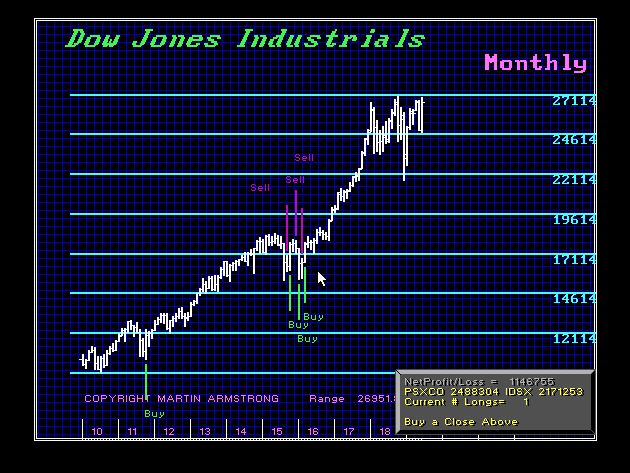
I have stated many times that the trend does NOT begin to shift until you reach the Monthly Level. We saw that in Gold when it finally got through 1362.50 after nearly four years of bouncing off that number. In the case of the Dow Jones Industrials, our hedging models for institutions were long one month from the low and has remained in that position. This is just a hedging model which is either long or short. It at least tends to keep institutions on the right side of the trend for long periods of time.

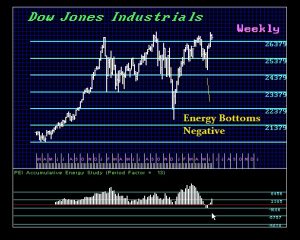
Aside from the Reversal System, the Energy Model is extremely helpful in identifying the position of the market and if there is a risk of a crash or a rally. The Energy Model turned negative, demonstrating that there was no possibility of a crash as most analysts were forecasting from a gut perspective. A crash would have been possible ONLY if the Energy Model was at a peak. When it is testing the lows or a negative, it is warning that the energy in the market has already dissipated.

We are simply headed into a Monetary Crisis Cycle where the majority of people will never be able to forecast what will unfold from a personal gut perspective. This is not a time for lucky calls. We need objective time-tested analysis that is not clouded by human bias. This is when we need the global approach to let Socrates simply correlate the world to enable us to see the real trends that are in motion. The worst thing you can do is ASSUME you have missed something, as that is typically the kiss of death for investors where they inevitably buy the high or sell the low.

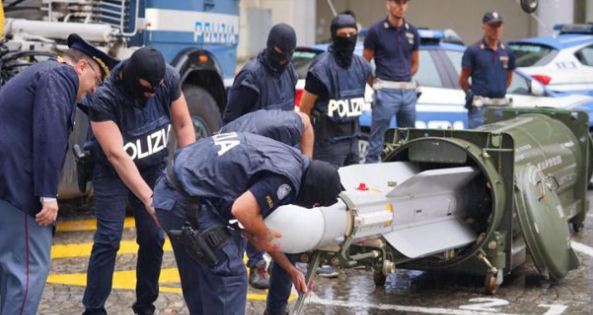
Italy Seizes Missile from Far Right Activists


The tensions in Europe continue to rise as the entire refugee issue has led to a major polarization within Europe. In Italy, the BBC reported that an anti-terrorism police unit in northern Italy seized an air-to-air missile and other sophisticated weapons during raids on far-right extremist groups who were combat ready. The missiles belong to Neo-Nazi propaganda groups and they originated from the Qatari armed forces. The civil unrest that our computer has been forecasting on a global scale is here to stay and is heating up as we head into 2024.

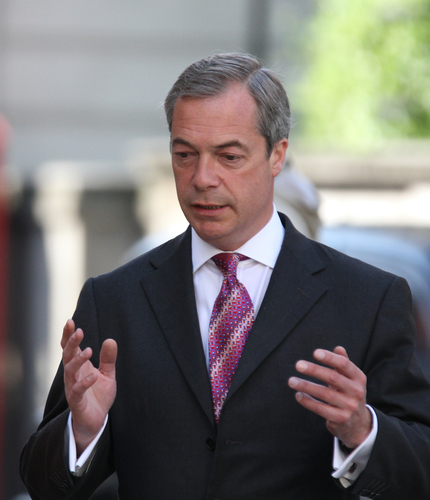
Nigel Farage’s BREXIT Party is Now #2


Nigel Farage’s new Brexit Party is now the second largest in Britain. The Conservatives still topped the YouGov poll with 24% of the vote, but they were boosted by the prospect of Boris Johnson, who is a Brexit believer, as the next Tory leader. The prospects for Europe remain up in the air as Brussels still refuses to reform and is looking to punish Switzerland as an example for Britain. But trying to exclude the London markets as a place Europeans can invest will cause a major economic decline for Europe rather than London.

Agricultural Loans Declining Right on Target


One of the most fascinating observations I have made over my career has been that the banks always lend at the top and contract lending at the bottom in every market. Going into 1980, banks were calling me to ask if I wanted to borrow money. Recently, I got a phone call from my bank asking, once again, if I would be interested in a loan. This to me is merely a confirmation that we are approaching a major turning point.

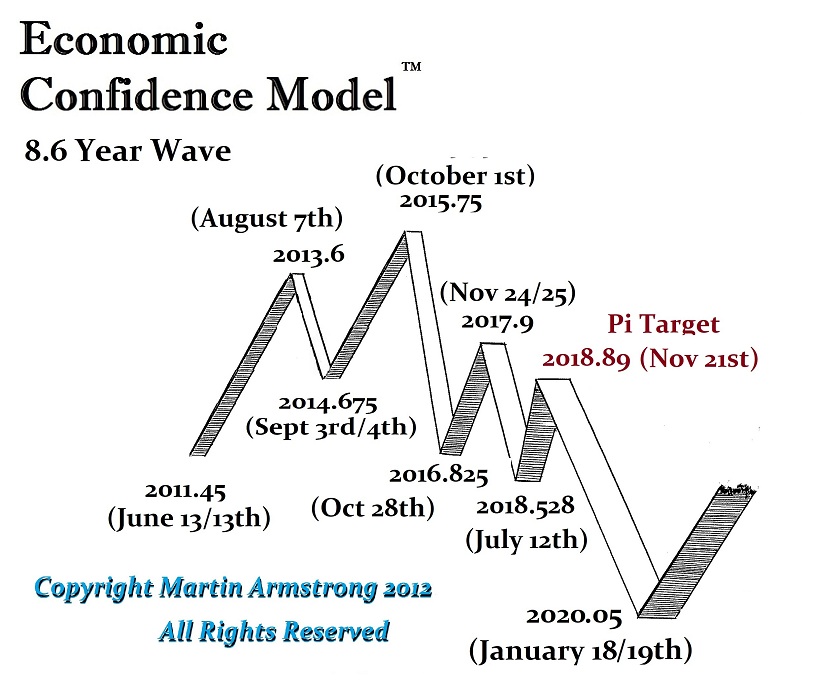
When I look at lending into the agricultural sector, the big Wall Street banks are once again perfectly in line with the cycle. They peaked in loans to farmers back in 2015, and have been declining ever since going into 2020. Bank lending to the agricultural sector peaked with the ECM and we will see it bottom in 2020. Our model will be correct in forecasting the next wave, which will be a cost-push inflationary wave. As the agricultural sectors come back to life, thanks to shortages, then the bankers will be willing to lend once again. The banks are the PERFECT indicator of how not to run a business. They make decisions emotionally and always get the economy dead wrong (i.e mortgage-backed securities peaked in 2007)

The US Treasury Does Have the Constitutional Right to Mint Coins


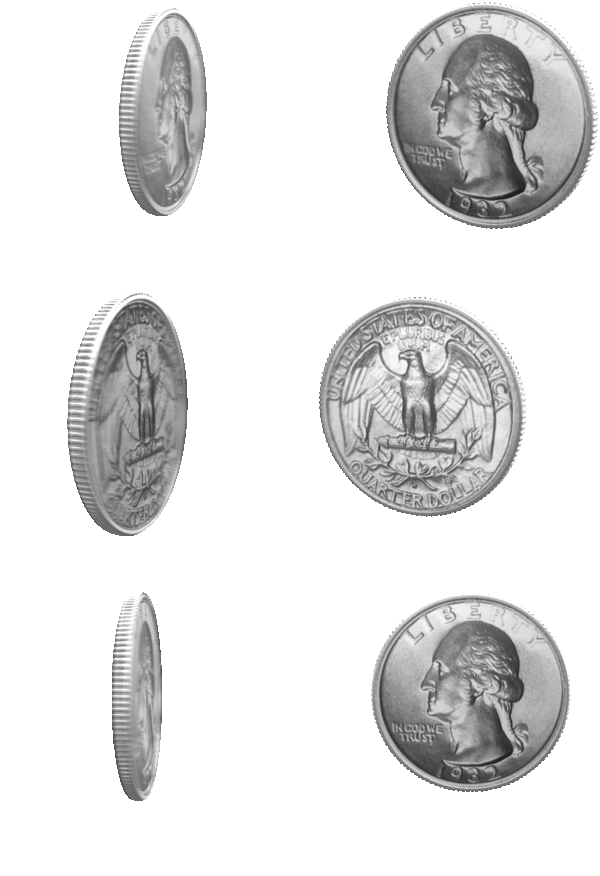
QUESTION: Marty, You are wrong. The US Treasury can create the money as the Constitution says it can. Article I, Section 8, Clause 5. The Congress shall have the Power to coin Money, regulate the Value thereof, and of foreign Coin, and fix the Standard of Weights and Measures.

To coin is used as a verb. At the time the Constitution was written, to coin money meant to create or to make money. Today’s Dictionary defines to coin as a verb meaning to make or to invent.
Why did you fail to mention this in your Blog today?
TD

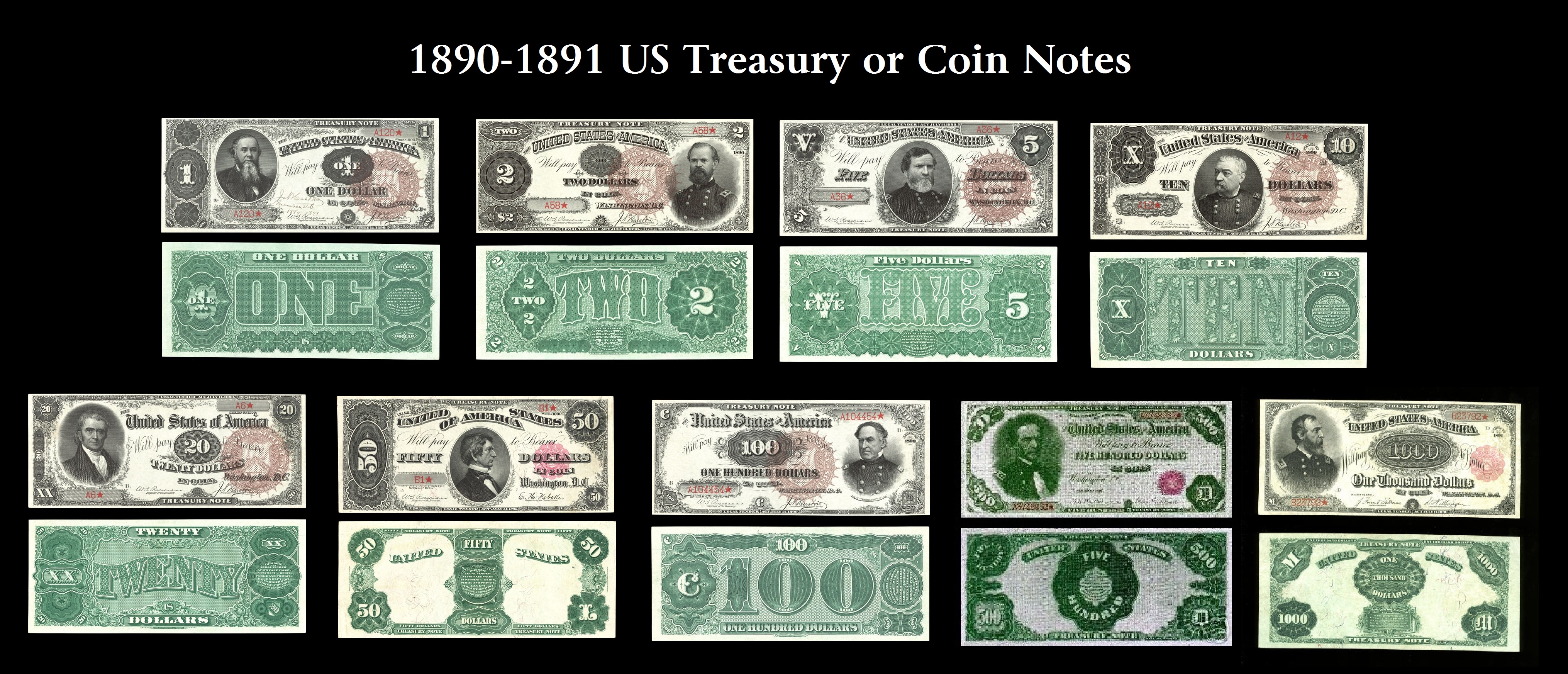
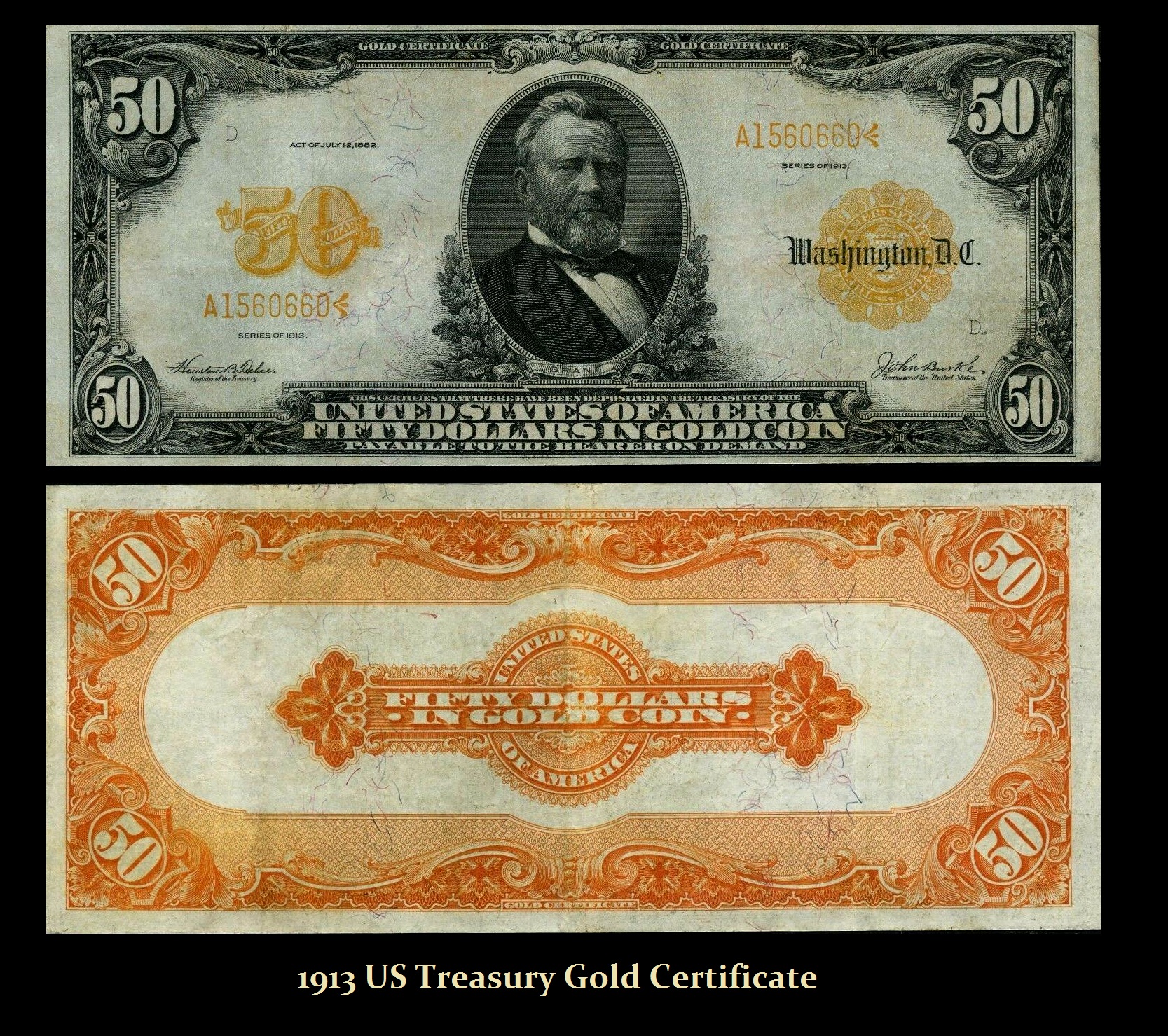
ANSWER: Yes, you are correct. I suppose I was referring to the 99.99% of the money supply rather than the coins put into circulation by the US Treasury. President Nixon only closed the gold window in 1971. He did not demonetize “gold” as money under the Constitution. Yes, technically the US Treasury can coin money, but it coins today’s coins. The Fed does not do that. The coinage it creates is minimal in comparison to the overall scheme of things. Since 1913, the printing of currency has been delegated to the Federal Reserve. Prior to 1913, the Treasury issued the paper currency which was backed by coins.

This was the last issue of paper currency issued by the United States Treasury in 1913, the year that the Federal Reserve Act was passed.

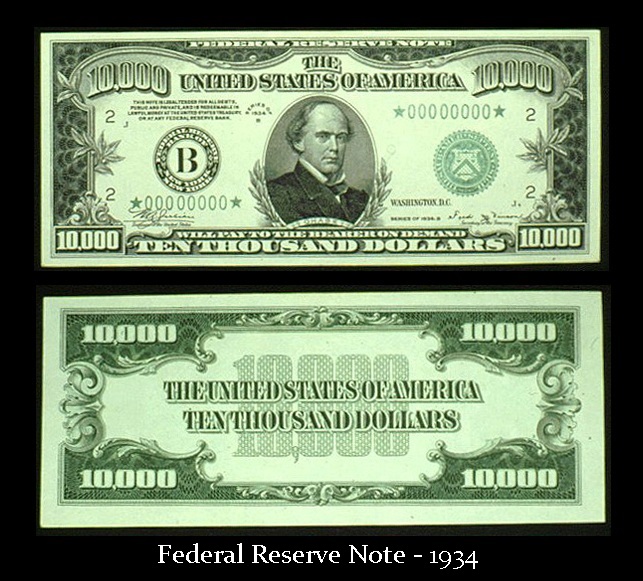
Note that in 1934, the Fed actually issued $10,000 bills

EU Refuses to Negotiate Fairly with Britain – Demands of a Customs Union


QUESTION: Mr. Armstrong; could you explain this whole Customs Union issue in BREXIT? Some see it as a great idea, others say it is surrendering sovereignty to Brussels.

SN

ANSWER: A customs union, some claim, would help businesses that send goods back and forth to the European Union. So it would be of interest to Britain’s manufacturers, particularly the automobile industry. They also claim that it might ease complications of the much-hated Irish backstop plan, which is intended to eliminate the need for hard border checks between Northern Ireland and the south.

However, a customs union would allow goods to flow easier, in theory, but it would not allow for frictionless trade. It would keep the tariffs Britain pays on goods that cross the border equal to those that countries in the European Union pay currently but at a huge cost. The goods being traded will still need to meet the same product standards that apply throughout the EU. That is the key.

Turkey is a member of a customs union with the EU, but it is not a member of the EU bloc itself. Therefore, trucks are held up for hours as guards check for permits and make sure the products being transported are in compliance with regulations set in Brussels. They would do the same with a vengeance with Britain. A customs union would not cover trade in services, finance, trading, like legal counsel and information technology, which are by far the largest sector of the British economy – not trucks going back and forth.

The devil is in the detail of a customs union. The EU demands that to be in a customs union they must surrender their sovereignty to Brussels and will be prohibited from making their own trade deals. That means Britain could not enter trade deals with China or the United States simply because it does trade with the EU. This defeats the entire understanding of BREXIT.