‘AP’s malicious lie’: Russian tycoon denies dealing with Trump’s ex-aide to ‘benefit Putin’


Trumps ties are speculative at best while Hillary’s are well known and documented.

Here’s The Story Behind Trump’s Podesta-Russia Tweet


Tyler Durden's picture

President Trump took to Twitter this morning to remind Americans that the “It was Russia” stone-throwers on the left may have been living in Russia-funded glass-houses after all…

The story behind this Podesta-Russia link is explained in full gore by Mike Krieger via Liberty Blitzkrieg blog; dot connectors, Twitter diagram creators and newly minted Russia-conspiracy sleuths from sea to shining sea take note.

Since anything connected to Russia is now considered treasonous, I’ve got a great story for you to sniff out.

Related Video WH: Wikileaks Hacking CIA Different from Podesta

It relates to John Podesta, but somehow I doubt you’ll be interested in this one…

The Daily Caller reports:

John Podesta, former Secretary of State Hillary Clinton’s 2016 national campaign chairman, may have violated federal law by failing to disclose the receipt of 75,000 shares of stock from a Kremlin-financed company when he joined the Obama White House in 2014, according to the Daily Caller News Foundation’s Investigative Group.

Joule Unlimited Technologies — financed in part by a Russian firm —  originally awarded Podesta 100,000 shares of stock options when in 2010 he joined that board along with its Dutch-based entities: Joule Global Holdings, BV and the Stichting Joule Global Foundation.

When Podesta announced his departure from the Joule board in January 2014 to become President Obama’s special counsellor, the company officially issued him 75,000 common shares of stock.

The Schedule B section of the federal government’s form 278 which — requires financial disclosures for government officials — required Podesta to “report any purchase, sale or exchange by you, your spouse, or dependent children…of any property, stocks, bonds, commodity futures and other securities when the amount of the transaction exceeded $1,000.”

The same year Podesta joined Joule, the company agreed to accept 1-Billion-Rubles — or $35 million — from Rusnano, a state-run and financed Russian company with close ties to President Vladimir Putin.

Anatoly Chubais, the company CEO and two other top Russian banking executives worked together with Podesta on the Joule boards. The board met six times a year.

Ron Hosko, a former FBI assistant director said because of the Kremlin backing, it was essential Podesta disclose the financial benefits he received from the company.

“I think in this case where you’re talking about foreign interests and foreign involvement, the collateral interest with these disclosure forms is put in the forefront of full disclosure of any foreign interest that you may have,” he told TheDCNF in an interview.

The existence of the 75,000 shares of Joule stock was first revealed by the Government Accountability Institute report issued last year.

But Podesta didn’t pocket all the shares. Correspondence from Podesta to Joule instructed the firm to transfer only 33,693 shares to Leonidio Holdings, a brand-new entity he incorporated only on December 20, 2013, about ten days before he entered the White House.

Leonidio is registered in Delaware as a limited liability corporation. Podesta listed the address of his daughter, Megan Rouse, in the incorporation papers. His mother and father also appear to be co-owners of Leonidio.

TheDCNF made multiple inquiries to OGE and received no reply. TheDCNF inquiries to Mr. Podesta were not returned.

That’s not the end of the story though, as John Podesta’s brother, Tony, confirmed Russia’s largest bank had hired the Podesta Group to lobby for an end to sanctions

Russia’s largest bank, Sberbank, has confirmed that it hired the consultancy of Tony Podesta, the elder brother of John Podesta who chaired Hillary Clinton’s presidential campaign, for lobbying its interests in the United States and proactively seeking the removal of various Obama-era sanctions, the press service of the Russian institution told TASS on Thursday.

“The New York office of Sberbank CIB indeed hired Podesta Group. Engagement of external consultants is part of standard business practices for us,” Sberbank said.

Previously, The Daily Caller reported that Tony Podesta was proactively lobbying for cancellation of a range of anti-Russian sanctions against the banking sector. In particular, he represented interests of Sberbank and was paid $170,000 for his efforts over a six-month period last year to seek to end one of the Obama administration’s economic sanctions against that country.  Podesta, founder and chairman of the Podesta Group, is listed as a key lobbyist on behalf of Sberbank, according to Senate lobbying disclosure forms. His firm received more than $24 million in fees in 2016, much of it coming from foreign governments, according to the nonpartisan Center for Responsive Politics.

Regular readers will recall that the Sberbank-Podesta relationship goes back many years. Sberbank was the lead financial institution in the Russian deal to purchase Uranium One, owned by one of Bill Clinton’s closest friends, Frank Giustra. Giustra and Bill Clinton lead the Clinton-Giustra Enterprise Partnership, an integral part of the Clinton Foundation.

Consider if any or all of the above had taken place among any of the Trump administration – what would have occurred? How villified would the offender have been? As Mike Krieger concludes, personally, I doubt any of the above is a huge deal, and I certainly don’t think Podesta is working for Vladimir Putin under the table. However, just imagine the hysteria if the above narrative could’ve been connected to anyone in Trump’s orbit. It would’ve been plastered on the front page of The Washington Post and The New York Times with headlines like, “More Financial Ties Emerge Between Those in Trump’s Orbit and Putin.”

Naturally, you won’t see this story hyped because it doesn’t fit the corporate media narrative, and the narrative is all they care abou

House Intel Committee Cancels All Meetings For The Week: “Playing An Absurd Political Game”


Tyler Durden's picture

Amid the aggregate Left’s demand for House Intelligence Committee Chairman Nunes to recuse himself from the Trump-Russia probe (for discovering facts about Trump being “inadvertently” spied upon by his own intelligence agencies), The Hill reports that the Committee has canceled all its meetings for the week.

The full committee meetings were canceled amid an increasingly tense back-and-forth that intensified over Chairman Devin Nunes’ decision to cancel a public hearing set for Tuesday, two sources on the committee told CNN.

Democrats believe he is too close to the White House to lead a thorough investigation into Russia — including ties between the Trump camp and Russian officials — an assertion firmly rejected by the GOP.

Lawmakers, including House Minority Leader Nancy Pelosi (D-Calif.) and Senate Minority Leader Chuck Schumer (D-N.Y.), called on Nunes to step aside from the investigation after the chairman said he visited White House grounds to view classified intelligence one day before briefing President Trump last week.

“I don’t think he can just recuse himself and still chair the committee,” Rep. Jackie Speier, a Democrat on the panel, told CNN’s Chris Cuomo Tuesday on “New Day.” “I think that the writing is on the wall. It might make a good spy novel. It doesn’t make a good investigation.”

The decision to scrap this week’s meetings shows that the panel is facing serious turmoil and questions about whether it can proceed.

Finally, we note that The Hill reports that Nunes’ communications director said Monday evening that the chairman will not recuse himself, saying lawmakers asking him to do so “are playing an absurd political game.”

No Truth Please, We’re British


The left in the EU, in the UK and the US are insane, 1400 years of jihad — war, terror, rape, murder, slavery oppression women and yet they still they can’t connect the dots. Islam is what life was in the 7th Century do you really what that especially if you are female?

Protests from USA to Russia


California Trump Supporter hit by Obama Supporter March 2017

Civil Unrest is rising around the world. In the USA, demonstrations have been organized to support Donald Trump in a counter-demonstration move against the Obama/Soros uprising. In Los Angeles, Trump supporters were confronted by opponents of Trump and the two groups ended in violence. The Obama/Soros supporters were partially traditionally masked.

The Trump supporters were trying to organize marches in about 40 US cities for Sunday. However, many cities were denying the Trump supporters the right to even assemble. In Philadelphia, the police stopped such an event they alleged for safety, as the news page Philly.com reported.

Russian Protests 3-26-2017

I wanted to see how RT would report the Russian protests. They reported that about 600 people were arrested and some 8,000 people protested. As the rally continued, RT reported that the “police used loudspeakers to call on the protesters to disperse.”

The protest was against corruption, and they accused Minister President Dmitry Medvedev of corruption, demanding his resignation. A few days ago, six officials had been arrested for embezzlement of public funds, which were actually intended for construction work on the estate of President Vladimir Putin. As the Russian investigative committee reported on Wednesday, at least 225 million rubles (around 3.6 million euros) were devoted to the construction of “public buildings”. 

According to Russian media reports, money was spent on building several buildings on Putin’s property in Novo-Ogarevo near Moscow. Kaminow and its partners were supposed to build a reception building, a hotel, and a garage there between 2012 and 2015, as the newspaper Kommersant reported. The contract amounted to a total of 5.7 billion rubles, of which 45 per cent went to Ateks without the works being completed.

Navalny had been arrested in Moscow by security forces and taken to a police station. Hundreds of demonstrators gathered around the bus to stop them from leaving. Navalny is mainly known for his blogs in Russia. A court sentenced him to a suspended sentence of five years in February for embezzlement. Navalny, on the other hand, wants to appeal. He plans to compete in the 2018 presidential election against Vladimir Putin. According to surveys, however, the liberal opposition has few chances. However, the anti-corruption protests are hoping for more popularity among the population.

“I am very glad that so many people from the east of the country go to Moscow,” said Navalny shortly before his arrest. He called for the protests after he had made allegations against Medvedev, after which he had accumulated a wealth far above his income. A spokesman for the Prime Minister called the allegations “propagandistic attacks”.

At a demonstration in Vladivostok on the Japanese Sea Reuters, reporters counted atleast 30 attacks. People unrolled a banner with the words “The Minister President must answer”. A 17-year-old student said that in many other countries, governments would have to step down after such accusations. According to eyewitnesses, there have also been arrests in Yekaterinburg in the Ural industrial region. Media also reported arrests in other cities, including St. Petersburg and Novosibirsk.

KOMMONSENTSJANE – NSA WHISTLEBLOWER – NSA SPIED ON CONGRESS, SUPREME COURT, AND TRUMP


The IC has everything on their data storage in Utah, so its best that you assume that everything you do electronic is public.

kommonsentsjane's avatarkommonsentsjane

NSA Whistleblower: NSA Spied On Congress, Supreme Court & Trump

 March 27, 2017

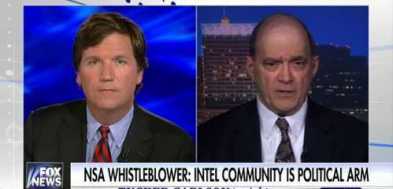
(Information Liberation) NSA whistleblower William Binney told Tucker Carlson on Friday that the NSA is spying on “all the members of the Supreme Court, the Joint Chiefs of Staff, Congress, both House and Senate, as well as the White House.”tucker

NSA Spied On Congress, Supreme Court & Trump 1 informationliberation.com

Binney, who served the NSA for 30 years before blowing the whistle on domestic spying in 2001, told Tucker he firmly believes that Trump was spied on.

“They’re taking in fundamentally the entire fiber network inside the United States and collecting all that data and storing it, in a program they call Stellar Wind,” Binney said.

“That’s the domestic collection of data on US citizens, US citizens to other US citizens,” he said. “Everything we’re doing, phone calls, emails and then financial transactions, credit cards, things like…

View original post 5 more words

KOMMONSENTSJANE – LEADER OF WOMEN’S MARCH STRIPPED OF U.S. CITIZENSHIP, DEPORTED


Well at least we got rid of a few of them.

kommonsentsjane's avatarkommonsentsjane

The Horn News

Leader of Women’s March stripped of U.S. citizenship, deported

These radicals are the kinds of people Democrats and liberals look up to, it seems.

Shameful.

WOMEN5

March 27, 2017

The organizers and speakers in charge of the Women’s March in Washington, D.C. in January was a who’s who of liberal whack-jobs.

For example, one of the key note speakers, Donna Hylton, once kidnapped, tortured and murdered a gay man (no, really).

Another, Linda Sarsour, was exposed for having deep ties to Islamic terror organizations.

Trump supporters cried foul and said these speakers and organizers weren’t patriotic Americans, but instead were looking to cause trouble.

Turns out, they were right. Friday, one of the organizers of these leftist causes was stripped of her U.S. citizenship and, following a plea hearing on Apr. 25th, will be deported from the country for lying to immigration officials about her role in a…

View original post 286 more words

“They ‘Buy The Dip’ Yet Again”: Global Stocks, US Futures Rebound; Dollar Rises Off 4 Month Lows


Tyler Durden's picture

European, Asian stocks have rebounded as investor anxiety over Trump economic policy and US tax reform eased following yesterday’s remarkable comeback in the US market. S&P futures point to a slightly higher open, with oil higher and the dollar rebounding off fout month lows. It is a relatively quiet day in the US with the economic calendar focusing on wholesale inventories, consumer confidence and the Case-Shiller index.

European and Asian equities rose and S&P 500 futures edged higher as investor bullishness returned after the failure of U.S. President Donald Trump’s health-care bill.  Hopes that the Trump administration will now prioritize tax reforms coupled with still-robust economic data and corporate earnings forecasts spurred some investors to look past creeping doubts about Trump’s ability to deliver on campaign promises.

According to Bloomberg, the resumption of demand for risk assets signals investors are still pinning hopes on Trump’s ability to push through tax cuts and regulatory changes, pledges that helped trigger a reflationary upswing in global markets after his election. “Bond and FX market participants’ reaction to the failure of the health-care bill has been to re-price Treasuries and the dollar under the assumption that President Trump has lost a little of his shine,” Kit Juckes, a London-based global strategist at Societe Generale SA, wrote in a note.

Equity market participants have taken a look at the lower yields and weaker dollar and decided that since absurdly low rates are the elixir that the equity bull market lives on, they might as ‘buy the dip’ yet again.”

Europe’s Stoxx 600 rose 0.4% helped by financials and pharmaceutical stocks. Futures on the S&P 500 rose 0.1 percent. The underlying gauge dropped 0.1 percent Monday, paring a loss of as much as 0.9 percent.

In FX, the dollar index against a basket of major currencies edged up 0.1 percent to 99.252, after plumbing a trough of 98.858 overnight, its lowest level since Nov. 11. “Risky asset markets have rebounded from yesterday’s opening low, supporting our view of the current market setback as a risk pause and not a turning point towards generally lower risk valuations,” analysts at Morgan Stanley said in a note to clients. Morgan Stanley said that given some of the savings that were to come from replacing Obamacare would be lost, the upcoming tax reform may turn out to be a smaller package or result in a higher fiscal deficit.

The dollar steadied after its worst week since Trump’s election after talk of more rises in Federal Reserve interest rates this year. “Clearly we shouldn’t forget we are going to see at least two more hikes by the Fed this year and that there is still the potential for the next one to be pulled forward to June,” said CIBC strategist Jeremy Stretch. Sterling edged up a notch, trading within a narrow range as Britain prepared to start formal divorce proceedings with the European Union on Wednesday.

Recent weakness in the dollar underpinned crude oil prices though persistent worries about oversupply kept gains in check. Prices for front-month Brent crude futures were up 0.6 percent. In the United States, WTI crude futures rose 0.7% .

Yields on 10-year TSYs were unchanged at 2.38% after falling three basis points on Monday. European bonds mostly rose, with 10-year German yields falling one basis point to 0.39 percent.

On today’s calenar, Fed Chair Yellen will make a speech on workforce development in low-income communities. Although it does not seem like she will address monetary policy, we will watch her speech for any clues about the Fed’s thinking. Otherwise, Tuesday looks set to be a very quiet day. In the US, the Conference Board Consumer Confidence index for March will probably rise further.

Bulletin Headline Summary from RanSquawk

  • A brighter spark for European equities today with much of the upside attributed to an unwind of yesterday’s flight to quality price action
  • The USD recovery has been a modest one this morning, with limited upside traction seen in USD/JPY as focus falls on EM amid ZAR softness
  • Looking ahead, highlights include potential comments from Fed’s Yellen, George, Kaplan & Powell and ECB’s Coeure

US Markets

  • S&P 500 futures up 0.1% to 2,340.50
  • STOXX Europe 600 up 0.3% to 376.11
  • MXAP up 0.8% to 148.71
  • MXAPJ up 0.6% to 480.79
  • Nikkei up 1.1% to 19,202.87
  • Topix up 1.3% to 1,544.83
  • Hang Seng Index up 0.6% to 24,345.87
  • Shanghai Composite down 0.4% to 3,252.95
  • Sensex up 0.6% to 29,399.95
  • Australia S&P/ASX 200 up 1.3% to 5,821.23
  • Kospi up 0.4% to 2,163.31
  • Brent Futures up 0.7% to $51.11/bbl
  • German 10Y yield fell 1.2 bps to 0.39%
  • Euro down 0.1% to 1.0850 per US$
  • Brent Futures up 0.7% to $51.11/bbl
  • Italian 10Y yield fell 2.7 bps to 2.197%
  • Spanish 10Y yield fell 0.5 bps to 1.683%
  • Gold spot down 0.1% to $1,253.74
  • U.S. Dollar Index up 0.1% to 99.29

Top Overnight News

  • Amazon Wins Battle to Buy Middle East E-Commerce Firm Souq.com
  • Trump to Kill Suite of Obama-era Climate Change Policies
  • Akzo Pledges Plan for Profitable Split to Repel PPG Takeover
  • Credit Suisse Progress Buys Swiss Bank Room on Capital
  • Ericsson Sees Up to $1.7 Billion in Costs as Revamp Begins
  • Engie Aims to Fill U.S. Power and Gas Trading Gap Left by Banks
  • American Air to Invest $200 Million in China Southern Deal
  • Manhattan Landlords Turn to Retailer Giveaways as Stores Go Dark
  • Brookfield Finds Solar ‘Entry Point’ After SunEdison’s Collapse
  • Dakota Access Oil Line Outlasts Protests, Readies for Service
  • Huntsman Sees Venator Spinoff on Time Despite Damaged Ti02 Plant

Asian market sentiment improved as the region’s major indices shrugged-off the subdued Wall Street lead and traded mostly positive. ASX 200 (+1.1%) outperformed with the index led by financial and energy sectors, while Nikkei 225 (+1.1%) was underpinned as exporters found early respite from the recent JPY advances and with participants noted be on the bid ahead of ex-dividend dates. China traded mixed as the Hang Seng (+0.5%) conformed to the upbeat tone seen in its major regional counterparts, while Shanghai Comp. (-0.4%) lagged after the PBoC refrained from open market operations for the 3rd consecutive session, which resulted in a daily net liquidity drain of CNY 70bIn. 10yr JGBs traded slightly lower with demand dampened amid an improvement in risk sentiment and also following the enhanced liquidity JGB auction which saw weaker demand than the prior. PBoC refrained from open markets operations for a 3rd consecutive session, for a daily net drain of CNY 70bIn.

Top Asian News

  • Didi Said to Be Weighing $6 Billion SoftBank-Backed Funding
  • Malaysia Central Bank Sees March Inflation Exceeding 8-Year High
  • Unreachable Huishan Executive Exposes China Debt Woes, Bank Risk
  • Philippine Central Bank Chief Says Successor Must Be Named Soon

Europe likewise has seen a brighter spark for equities with much of the upside attributed to an unwind of yesterday’s flight to quality price action. The reprieve in commodity prices has seen energy and material names among the best performers. However, market moves have been somewhat contained ahead of the invoking of A.50 tomorrow. Of note, Members of the Scottish Parliament are to vote on giving First Minister Sturgeon authority to call a second independent referendum. In credit markets, French opinion polls keep OATs afloat with polls showing Macron would ease to victory ahead of Le Pen. In turn, this has alleviated concerns of the French political risk, subsequently narrowing the GE-FR spread (currently 57.5bps).This has also accounted for 2yr German Schatz yields rising, although the upside will likely be capped given the ongoing collateral squeeze as we approach month-end and financial year-end, the Schatz also saw a particularly soft auction today, which was technically uncovered (1.1) and saw a retention of 27.75%.

Top European News

  • Tesco to Pay $269 Million Over U.K. Accounting Scandal
  • U.K. Businesses Prepare Brexit Wish Lists as EU Talks Commence
  • Le Pen 25%, Macron 24%, Fillon 18% in 1st Round: Ipsos Poll
  • Dufry Rallies After Report China’s HNA May Buy Stake in Retailer

In currencies, the rand slid 1.9 percent to 12.98 against the dollar at 10:38 a.m. in London following Monday’s 2.5 percent decline. Prior to this drop, the currency had gained 9.5 percent year-to-date, making it a top emerging-market performer. The British pound climbed 0.2 percent to 1.2581. The Bloomberg Dollar Spot Index rose 0.1 percent after dropping 0.4 percent Monday. The USD recovery has been a modest one this morning, with limited upside traction seen in USD/JPY. Gains have extended to a little over 110.80, but with the market waiting for the next move from the Trump administration,
Treasuries find some near term support. The key 10yr rate is holding off 2.40%, and is only 3-4 bps higher from EUR/USD has pulled back off the 1.0900 level, and the market may sense the response to the policy shift at the ECB is now adjusted for. This is not to preclude a move on 1.0950 or 1.1000, but with French election fever hotting up from next week, gains may prove tough. Similar price action seen in GBP today as we saw Monday, though Cable gains towards 1.2600 are struggling amid modest USD buying. EUR/GBP continues to press for 0.8600-10 on the downside, the support here is likely to be aided by the familiar month end flow from Europe. Article 50 set to be triggered tomorrow, and even though this looks priced in, we cannot account for the subsequent rhetoric from Europe which may or may note add some colour to the negotiations which lie ahead.

In commodities, gold fell 0.1 percent at $1,253.50 an ounce after rising 0.9 percent Monday. West Texas Intermediate crude rose 0.8 percent at $48.11 per barrel following a 0.5 percent drop the previous day. As the USD recovers on the modest drop off in Treasuries, precious metals have come back off better levels, but not to any notable degree. The tenuous recovery in risk assets is largely behind this, as the market awaits the next move from the Trump administration — on tax reform. Gold still above USD1250.00, silver USD18.00. In contrast, base metals have recovered, though perhaps unconvincingly as yet — for the same reasons as above. Iron ore prices have come under pressure from Chinese stockpiles also, and this naturally impacts across the board. Copper is tentatively back above USD2.60. Oil prices also stabilise, with further comments — from Iran — that an extension to the production cuts agreed to late last year is on the table. Inventory levels and prospective shale production continues to counterbalance any relief rally. Iranian oil minister says that extending the OPEC and non-OPEC deal is likely but time is required in order to evaluate the decision.

Looking at the day ahead, the early data is the advance goods trade balance reading for February and the preliminary wholesale inventories data for February. Following that we’ll get the S&P/Case- Shiller house price index print in January before we then get the March consumer confidence print (expected to nudge down to 114.0 from 114.8) and Richmond Fed manufacturing survey. Away from the data it is a busy day for  Fedspeak. The Fed’s George speaks this afternoon at 12.45pm before Fed Chair Yellen speaks shortly after at 12.50pm. The Chair is however scheduled to speak on workforce development challenges so there is little suggestion that she will touch on monetary policy. Also due up today is Kaplan at 1pm and Powell at 4.30pm. The other potentially interesting event today is the  Scottish Parliament debate on a independence referendum.

US Event Calendar

  • 8:30am: Advance Goods Trade Balance, est. $66.4b deficit, prior $69.2b deficit, revised $68.8b deficit
  • 8:30am: Wholesale Inventories MoM, est. 0.2%, prior -0.2%; Retail Inventories MoM, prior 0.8%
  • 9am: S&P CoreLogic CS 20-City YoY NSA, est. 5.6%, prior 5.58%
  • 10am: Conf. Board Consumer Confidence, est. 114, prior 114.8; Present Situation, prior 133.4; Expectations, prior 102.4
  • 10am: Richmond Fed Manufact. Index, est. 15, prior 17

Central Banks

  • 12:45pm: Fed’s George Speaks in Midwest City, OK
  • 12:50pm: Fed Chair Janet Yellen Speaks
  • 1pm: Fed’s Kaplan Speaks in Dallas
  • 4:30pm: Fed Governor Jerome Powell Speaks

* * *

DB’s Jim Reid concludes the overnight wrap

After a bad start to the US session it felt like the market had its own sugar hit as the day wore on yesterday. Indeed whether you’re shocked at the fact that the S&P 500 only fell -0.10% yesterday (after being as low as -0.94% intra-day) perhaps depends on how much you think Trump’s most radical policies were priced into markets. There is an argument for saying that such trades weren’t actually priced in much anyway. The examples discussed yesterday within DB were that the 1) Fed funds market pricing are well below the FOMC dots; 2) the Dollar index is now back to where it was at the end of October; 3) the S&P 500 has been performing similarly to how it normally does after a close election even if there was a small pop up in February; and 4) that global PMIs are all consistent with where equities should be given the recent strength – a point we’ve made in previous EMRs. What we don’t know though is if some of the strong survey data contains some element of animal spirits only there because of Trump optimism. The fact that global numbers have been strong perhaps indicates that a lot of the optimism is in fact a global story and not a Trump one. So unless the global story turns then the healthcare debacle shouldn’t be too big a hit. Having said that, failure in the tax reform agenda will surely have more impact on animal spirits given its economic importance. So all to play for even if on some measures little obvious indication of success is priced in.

In markets the leader of the big selloff at the US open yesterday were Banks which tumbled over -2.50% within the first 10 minutes or so of trading. In doing so that meant US Banks briefly entered correction territory after plummeting -10.70% from the early month highs. After that, like the broader index, the sector bounced back impressively into the close and although finished a shade in the red by the end of play at -0.37% still recouped over 2% of the early losses. That move also came in the face of another day of tumbling Treasury yields with the 10y finishing the day 3.4bps lower at 2.379%. That is the lowest closing yield now since February 27th although yields did briefly dip below 2.350% at one stage yesterday. It’s worth noting that Chicago Fed President Charles Evans said yesterday that he sees the possibility of the Fed only hiking one more time this year should uncertainty continue to linger around the outlook for inflation and government spending.

The excitement for volatility also peaked fairly early in the day yesterday after the VIX touched an intraday high of 15.11 and the highest since November, before then settling back to finish at 12.50 and down over 3% on the day. Meanwhile Gold (+0.91%) found a bid amongst the risk-off moves and in doing so has now rebounded nearly 5% from the early month lows. Elsewhere metals had a day to forget with Copper (-0.76%), Aluminium (-0.46%) and Iron Ore (-4.10%) all down, while in FX the Greenback retreated -0.46% although as we noted above is back to pretty much where it was in October last year. It’s worth noting that the biggest mover in currencies yesterday was the South African Rand which tumbled -2.57% following the news that President Zuma ordered Finance Minister Gordhan to return home early from investor meetings in the UK and US. While there was no reason provided much of the chatter was that Zuma is preparing for an imminent cabinet reshuffle, raising uncertainty further around what is already a fragile situation.

As we refresh our screens this morning it appears that the positive momentum which saw Wall Street pare early losses has continued into Asia. The Nikkei (+1.07%), Hang Seng (+0.52%), Kospi (+0.28%) and ASX (+1.12%) are amongst the bourses higher while markets in China are largely flat. US equity index futures are also up about +0.20% while Gold has eased back a touch and rates markets are generally holding in around yesterday’s levels.

Moving on. Yesterday we saw the latest ECB CSPP numbers where the average daily rate of purchases of €308mn last week was the lowest outside of the summer and Xmas lull (average since start of €365mn). One week’s numbers do not make a trend but with the ECB tapering as of next week there will be some speculation that they are preparing to lower purchases. We’ll know in two weeks when the first week of April numbers are in. These will be important in working out the direction of spreads as this will give us an idea of whether they are planning tapering credit purchases as well as Governments. At the moment I would say the consensus is that they taper credit less.

The rest of the data yesterday was a little less exciting. In Germany the IFO survey surprised to the upside after the headline business climate reading rose 1.2pts in March to 112.3. Expectations had been for no change. The details also revealed a relatively equal contribution from both the expectations (+1.5pts to 105.7) and current assessment (+0.9pts to 119.3) components. Our economists in Germany made the point that the survey corroborates the strength of the PMI’s heading into Q2 and that both indices point to about 0.7% qoq GDP growth in Q1. The hard data continues to tell a different story though and the February hard data points will be important to gauge when and how this divergence will be resolved. Meanwhile the other data out in Europe yesterday was the ECB’s money and credit aggregates for February. M3 money supply growth was reported as slowing slightly to +4.7% yoy from +4.8% and as a result roughly staying in the range of the last couple of years. The credit side of the numbers also saw some retreat following strong January data. Banks lending to households slowed while lending to corporates saw its slowest pace in 5 months with the annual growth of corporate lending retreating to +2.0% yoy from +2.3%. Markets in Europe largely ignored the data yesterday and instead followed much of the lead from across the pond with the Stoxx 600 closing -0.40% but paring early heavier losses. In the US yesterday the sole release was the Dallas Fed’s manufacturing survey which was reported as falling 7.6pts in March to 16.9 (vs. 22.0 expected).

Looking at the day ahead, this morning in Europe it’s a particularly quiet start with no notable data due out, although we will hear from a couple of ECB speakers in Coeure and Makuch. Over in the US this afternoon the early data is the advance goods trade balance reading for February and the preliminary wholesale inventories data for February. Following that we’ll get the S&P/Case- Shiller house price index print in January before we then get the March consumer confidence print (expected to nudge down to 114.0 from 114.8) and Richmond Fed manufacturing survey. Away from the data it is a busy day for  Fedspeak. The Fed’s George speaks this afternoon at 4.45pm GMT before Fed Chair Yellen speaks shortly after at 4.50pm GMT. The Chair is however scheduled to speak on workforce development challenges so there is little suggestion that she will touch on monetary policy. Also due up today is Kaplan at 5pm GMT and Powell at 8.30pm GMT. The other potentially interesting event today is the  Scottish Parliament debate on a independence referendum.

Trump Asks Why Intelligence Committee Isn’t Probing The Clintons


Tyler Durden's picture

Following a day of drama involving the Chair of the House Intelligence Committee, Devin Nunes, who has been under constant onslaught by Democrats ever since his disclosure last week that Trump had indeed been the object of surveillance, and whose Democrat peer at the Intel panel, Adam Schiff, on Monday night called for Nunes to recuse himself, moments ago Trump waded into the news cycle when he asked on Twitter why the House Intelligence Committee is not investigating the Clintons for various ties of their own to Russia. He then slammed the ongoing anti-Russian witch hunt, saying “the Russia story is a hoax.”

“Why isn’t the House Intelligence Committee looking into the Bill & Hillary deal that allowed big Uranium to go to Russia, Russian speech, money to Bill, the Hillary Russian ‘reset,’ praise of Russia by Hillary, or Podesta Russian Company. Trump Russia story is a hoax. #MAGA!” Trump wrote in two tweets Monday night.

Trump’s rhetorical questions come amid a news cycle which as discussed on various occasions today has focused on the Republican chair of the Intel Committee, Nunes, who is under fire for briefing Trump about classified material he reviewed last week without sharing the information with committee Democrats. On Monday it was revealed that Nunes had secretly visited the White House grounds one day before announcing incidental surveillance of President Trump’s transition team. His visit raised questions about whether the White House could have been was the source of the intelligence Nunes reviewed.

Democratic lawmakers have now called on Nunes to recuse himself from the committee’s probe into Russia’s interference in the United States presidential election. Nunes on Monday evening said the chairman would not step aside from the investigation.

The republican lawmaker has claimed that his findings had no relevance to the Russia probe, even as the committee examines the unmasking and leaking of surveillance information as part of that investigation

In a follow up tweet, Trump took another stab at the House Freedom Caucus, who he said snatched “defeat from the jaws of victory” – following Friday’s failure to repeal and replace plan for ObamaCare.  That followed a Sunday tweet in which he said the conservative House Freedom Caucus, along with the Club for Growth and Heritage Action for America, had “saved” Planned Parenthood and ObamaCare.

Finally, Trump brought it full circle, touching on Friday’s failure to repeal Obamacare, saying “the Democrats will make a deal with me on healthcare as soon as ObamaCare folds – not long. Do not worry, we are in very  good shape!

Leaving The EU’s Customs Union Is The Only Logical Step For A Truly “Global Britain”


Tyler Durden's picture

Authored by Vincenzo Scarpetta via Open Europe,

As UK Prime Minister Theresa May prepares to trigger the Article 50 EU exit mechanism on Wednesday, Open Europe has published a new report, entitled, ‘Nothing to declare: A plan for UK-EU trade outside the Customs Union.’

The study concludes that leaving the EU’s Customs Union is the only logical step for the UK to pursue an independent trade policy and achieve a truly ‘Global Britain’ outside the EU. Open Europe assesses different models of collaboration outside a customs union, and argues that the UK and the EU should aim for full cooperation on the practicalities and administration of customs as part of a comprehensive UK-EU free trade deal.

A dozen key points on customs

  • The UK should leave the EU’s Customs Union (EUCU). The UK Government has stated its intention to leave key parts of EUCU (the Common External Tariff and the Common Commercial Policy). Open Europe’s assessment is that leaving these and EUCU overall is correct. Brexit means the UK must be able to shape its own trade policy. It can only do so outside of EUCU.
  • The UK should not seek a ‘half-in, half-out’ arrangement, which would be the worst of all worlds. The UK should leave EUCU entirely to maximise opportunities. Prime Minister Theresa May has suggested that she is open to being an “associate member” of EUCU or remaining a signatory to elements of it. Open Europe believes that, while it is sensible to keep an open mind, no ‘half-in’ option is better than being fully out. Nonetheless, the UK should consider retaining membership of some relevant conventions.
  • It is in both the UK’s and EU’s interest quickly to secure full cooperation on the practicalities and administration of customs as part of a comprehensive Free Trade Agreement (FTA). Such an agreement could be a chapter in a UK-EU FTA or an accompanying, discrete customs facilitation agreement. The EU already has agreements on customs facilitation with non-members, including Switzerland and Canada. A comprehensive UK-EU FTA will ensure the continuation of tariff-free UK-EU trade and minimise customs delays.
  • There will inevitably be a degree of cost to the UK economy associated with leaving EUCU.Some costs will be one-off adaptation costs (e.g. technology investment which may have benefited the UK anyway); other costs will be on-going frictional costs to UK-EU trade. These costs can be minimised and may be offset by trade liberalisation with non-EU partners.
  • The UK must take action now to minimise costs and seize new opportunities. Some steps are unilateral, domestic reforms; others are bilateral with specific EU members (above all Ireland); other negotiations need to happen at EU level, or indeed more broadly.
  • There will also be costs to the EU economy and these costs will be much greater if full customs cooperation with the UK is not secured. The costs to the EU economy will be greatest in those countries and industries which export the most to the UK. If comprehensive customs cooperation and an FTA are secured, these costs will be minimised.
  • There are challenges and opportunities from leaving EUCU but these vary from sector to sector, and even between companies in the same industry. Individual companies will need to look carefully at their supply chains and consider making adjustments where appropriate.
  • Free trade does not require a customs union and over half of UK trade happens without it.Most UK trade (51.5% in 2015) is not with the EU. Non-EU trade takes place without a customs union and is growing faster than trade with the EU. In 2015, the US was the largest recipient of UK goods exports (16.6%). There is no EU-US FTA, let alone a customs union.
  • Companies with complex supply chains can trade without a customs union. For example, automotive supply chains cross the US-Canada border. Both countries are North American Free Trade Agreement (NAFTA) members, but are not in a customs union. Nonetheless, leaving EUCU will challenge companies with complex supply chains. To address challenges, the UK and EU need an FTA to eliminate tariffs, to agree liberal cumulation so more products transformed in either the UK or EU can be considered as originating anywhere else in the UK or EU, and to cooperate and use technology to minimise bureaucratic delays and costs.
  • The UK should ‘grandfather’ – i.e. replicate – the FTAs that the EU has concluded with third countries. The UK, as an EU member, is currently party to over 30 FTAs with over 60 non-EU countries. The Canada-EU FTA, CETA, is one example. Discussions on how to ‘grandfather’ these agreements should be underway bilaterally between the UK and third countries but also need to engage the EU. Protecting these agreements will secure the freest possible trade, safeguarding existing global supply chains, and supporting growth in global trade.
  • There is an extremely strong economic case for full UK-EU customs cooperation; the question of whether it is achieved or not is primarily political as much as practical.Reaching a comprehensive UK-EU customs agreement will be technically easier than other trade agreements. As an EU member, the UK’s customs systems are already fully recognised by EU members and the UK already applies EU product standards. Businesses across the EU are used to tariff-free trade – so there will be less pressure to defend specific industries.
  • The UK and EU should consider a transition period to extend the UK’s EUCU membership for one or even two years. Theresa May has suggested “phased implementation” for new arrangements on customs systems. The two-year Article 50 timetable is a challenging limit for negotiations. A transitional period would increase chances of a favourable deal for both sides, and minimise potential disruption to UK and EU business. It would also give governments and business time to adapt, including by upgrading customs procedures and IT. Agreement on a transition period is most useful early in the Brexit negotiations to reduce the risk of companies making rushed decisions on changes.

The extended version of the executive summary is available here.

To read the full report, click here.