Posted originally on Jul 25, 2025 by Martin Armstrong
The clash between migrants and Spaniards has reached the brink. Vigilante groups form when the people lose all trust in their government’s ability to protect them. Spain has launched a probe into far-right groups through the terrorism and organized crime intelligence units, with a particular emphasis on monitoring social media networks.
The government’s emphasis on “far-right activity” comes after yet another instance of violent clashes between native residents and migrants. One particular incident that made headlines occurred in the southeastern town of Torre Pacheo, where one-third of the population is comprised of migrants.
“We cannot allow hatred to take root in our society,” said Interior Minister Fernando Grande-Marlaska, during a law enforcement summit. “Crime is not on the rise, nor is it linked to migration,” he added, pushing back against far-right narratives.
The Vox Party, the third-largest party in Spain, is also under investigation for inciting violence for blaming the current government for the growing migrant issue. As I mentioned in an earlier post, since 2020, Spain has experienced an astounding 650% increase in family reunification visas through government programs. Prime Minister Pedro Sánchez’s liberal government plans to permit an additional 900,000 migrants to flow into Spain’s borders over the next three years.
Rocío de Meer, Vox’s spokesperson, stated that “millions of people who have recently arrived and have not adapted to our customs… will have to return to their countries,” urging the government to expel those who “decide not to integrate.” The party has spoken out against NGOs that are assisting migrants to cross into Spain. “Of our country’s 47 million inhabitants, roughly seven million – or more than seven million, because we have to take into account the second generation – eight million are people who have come from different origins in a very short period of time,” Meer said. “It is therefore extraordinarily difficult for them to adapt to our ways and customs.”
Meer also said that his party wants to deport those who want to “live off the work of others.” His party believes that men “who mistreat or demean women” and “unaccompanied minors” must be deported as it is an abuse of human rights. The people of Spain overwhelmingly agree that the borders must close.
There is not a single Western nation that has adopted a successful open border policy. Instead of addressing the problem, the government is employing new AI and data collection methods to detect any form of perceived hate or anti-migrant sentiment online. The Ministry of the Interior plans to subsidize NGOs, political weapons masked as non-profits, to ensure Spain’s destabilization through invasion.
Spain joined the European Union in 1986 after finally becoming a democracy. General Francisco Franco ruled Spain with a closed fist from 1939 to 1975. King Juan Carlos I assumed the throne in 1975 upon Cortes’ death and he helped to usher in a new government for the people of Spain with the passing of the Political Reform Act of 1976 that enabled a democratic system. By 1977, the people of Spain were granted the freedom to vote for the first time since 1936. Every safeguard of democracy shattered with Spain decided to join the European Union. The nation is now beholden to the will of Brussels, and its leaders blindly follow the orders of unelected bureaucrats. War, in addition to the domestic invasion, will cause rising civil unrest in which the people demand a new government system that REPRESENTS THE PEOPLE.
Posted originally on Jul 25, 2025 by Martin Armstrong
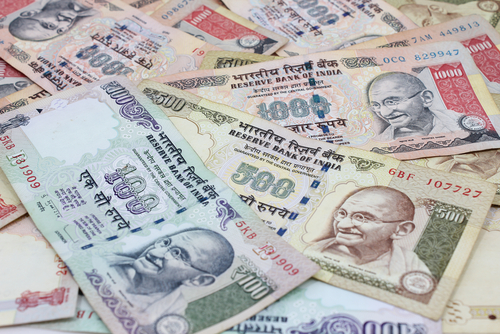
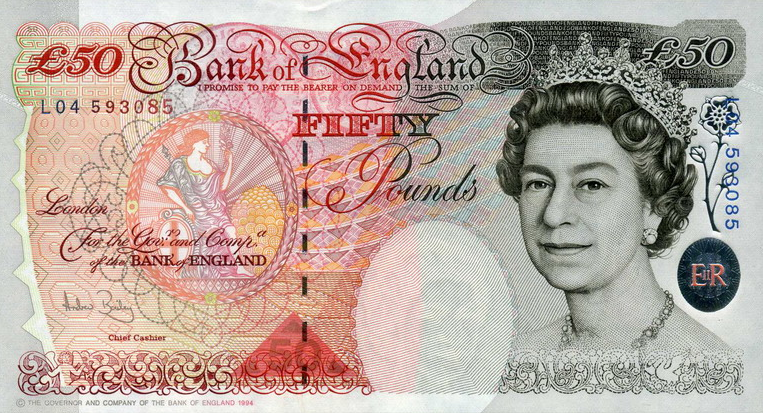
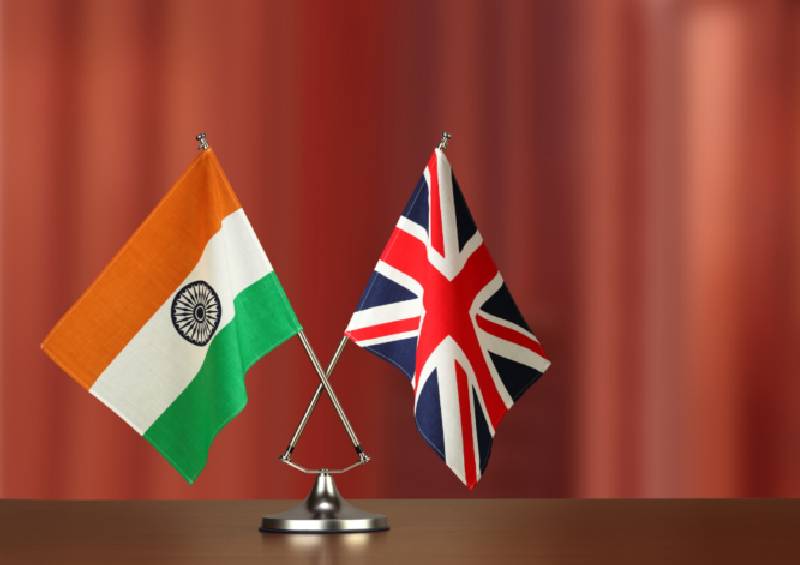
Keir Starmer and Narendra Modi brokered a “free trade agreement” yesterday that is expected to lift the UK economy by £4.8 billion annually, with £6 billion in investments by Indian and British corporations. The deal comes after nearly four years of negotiations and is seen as a major step forward for the two nations.
This is not a true free trade deal. Tariffs on UK goods will be reduced from 15% to 3%. Both Indian and British parliaments must approve of the measure which will take months to approve. Indian exports previously faced duties up to 20%, but the UK is now offering 99% duty-free access for Indian exports. India will go further to reduce duties on some key exports like whisky which will see an immediate deduction from 150% to 75%, followed by a reduction to 40% over the next decade. Autos exports from the UK will also see a sharp decrease from 110% to 10%.
The deal will also expand market access for high-skilled laborers seeking employment in the UK. With a few sector prohibitions, Indian professionals may now work for up to two years in the UK without the need to be based in the UK. Those workers will be eligible for a three-year exemption from social security as well. Public procurement opportunities will be widely available to UK businesses seeking to invest in India.
Some estimate that UK exports to India are expected to increase by 60% to £15.7 billion by 2040 under the new deal, with UK imports from India expected to rise by 25% or £9.8 billion by 2040. The UK government believes its GDP will increase by £4.8 billion annually if parliaments pass the measure.
The UK government also believes that the framework will create thousands of jobs. Critics believe that the deal is partial to Indian professionals who require lower wages to maintain the same lifestyle as someone living in the UK. The agreement also does not open India’s financial and legal services sectors to UK corporations. The deal does not include protections for labor rights or public health. There are other sector related issues, especially regarding coal, as many believe the safeguards for workers and the environment are not present.
India opposes the UK’s carbon border tax and adherence to the climate change net zero agenda that has been suffocating energy sectors. For 2025, the official carbon price per ton of CO2 is set at £41.84 under the UK Emissions Trading Scheme. The Carbon Price Support (CPS) is an additional tax on top of the ETS that is set at £18 per ton of CO2 for fossil fuels used to generate electricity. Beginning in 2027, the UK plans to introduce a Carbon Border Adjustment Mechanism (CBAM) tax on carbon of imported goods such as steel, iron, hydrogen, cement, fertilizers, and aluminum.
Starmer made it clear that the UK is still planning to reduce carbon emissions by 68% by 2030, with the goal of reaching net-zero by 2050. Free trade is a move in the right direction, yet, there will be noteworthy issues ahead as the two governments are not aligned on key issues. The legal and financial sector access will need to be discussed, but the climate change agenda is the stronger problem as the UK is not adhering to a plan that is unfeasible both economically and logistically.
Posted originally on Jul 24, 2025 by Martin Armstrong
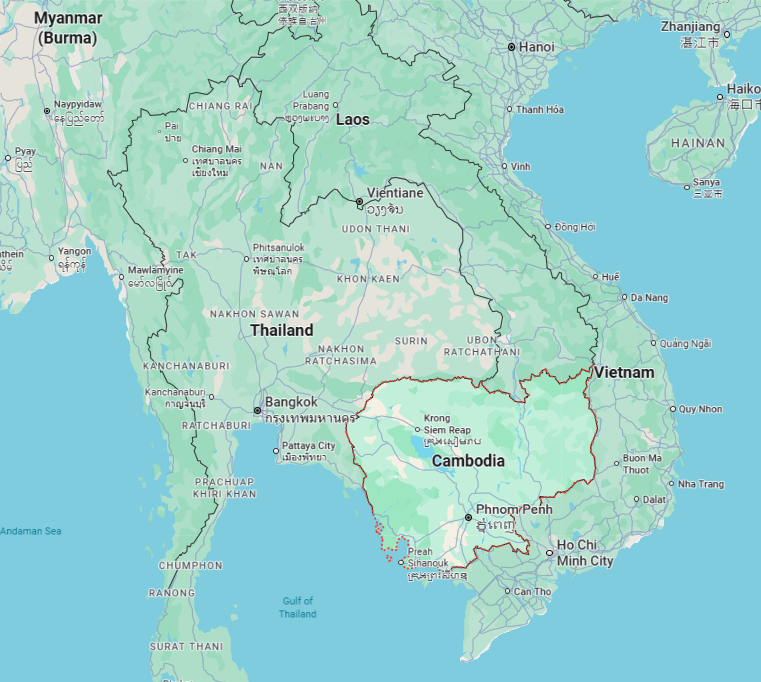
For hundreds of years, the two Southeast Asian neighbors, Cambodia and Thailand, have engaged in occasional military conflicts and nationalist rivalry centered on a disputed border. We’re getting reports from Thailand that an F16 bombed a Cambodian military target.
This border conflict actually dates back to a map made in 1907, when Cambodia was a French colony. The map serves as the foundation for Cambodia’s claims to certain regions of the border. Thailand disputed this French colonial map due to its ambiguity. Like Ukraine, this is over territory, and we are not even talking about a significant amount of land.
According to Thai officials, Cambodia has recently planted land mines that wounded their soldiers in the province of Ubon Ratchathani. Cambodia claims that the explosion took place within its Preah Vihear region and calls Thailand’s assertions “baseless.”
The border dispute concerns a 508-mile border that has been contested since the borders were established following French occupancy of Cambodia more than a century ago. As a result, numerous conflicts have arisen over resources and territory. In 2008, tensions escalated when Cambodia attempted to register the 11th-century Hindu temple, Preah Vihear Temple, which was in dispute between Cambodia and Thailand. This ancient Hindu temple has been the center of territorial disputes for many years.in the disputed region as a UNESCO World Heritage Site, a move that Thailand strongly objected to. There have been intermittent conflicts over the years in which both sides have lost soldiers and civilians.
Cambodia has imposed a full embargo on importing anything from Thailand, ranging from fruits and vegetables to electricity and the internet, as well as any cultural content whatsoever. In return, Thailand has blocked all internet services used by the Cambodian authorities. They have also significantly restricted land crossings into Cambodia and prohibited gambling-related travel by tourists.
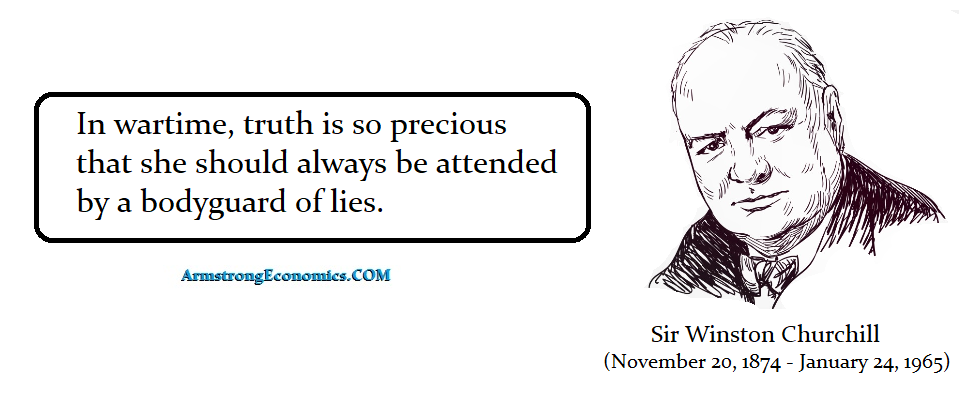
Thai and Cambodian troops in a disputed area are now engaging in direct conflict. Thailand’s military said Cambodian troops opened fire first, while Cambodia’s Ministry of National Defence said its troops acted in self-defence after coming under attack. As Churchill said, the TRUTH needs a bodyguard of lies during war to protect it. Our sources indicate that fighting is ongoing in several locations along the border. Thailand has recalled its ambassador to Cambodia, and Cambodia has withdrawn its diplomats from Thailand, ordering all Thai diplomats to leave the country.
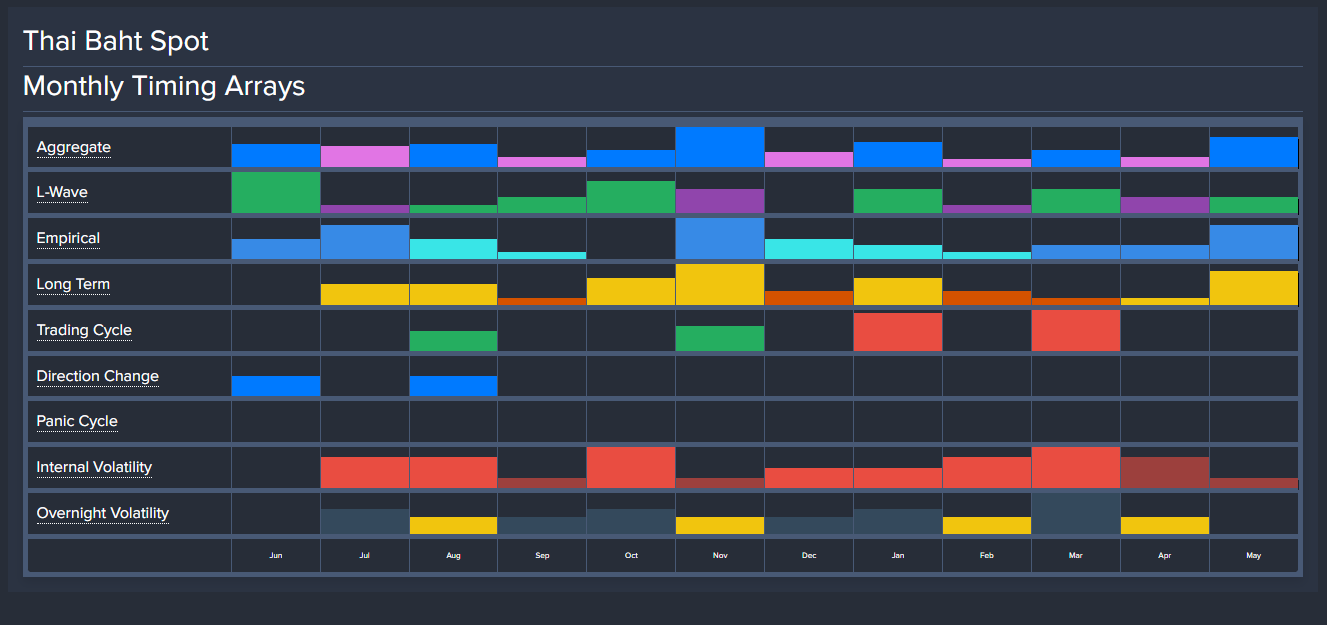
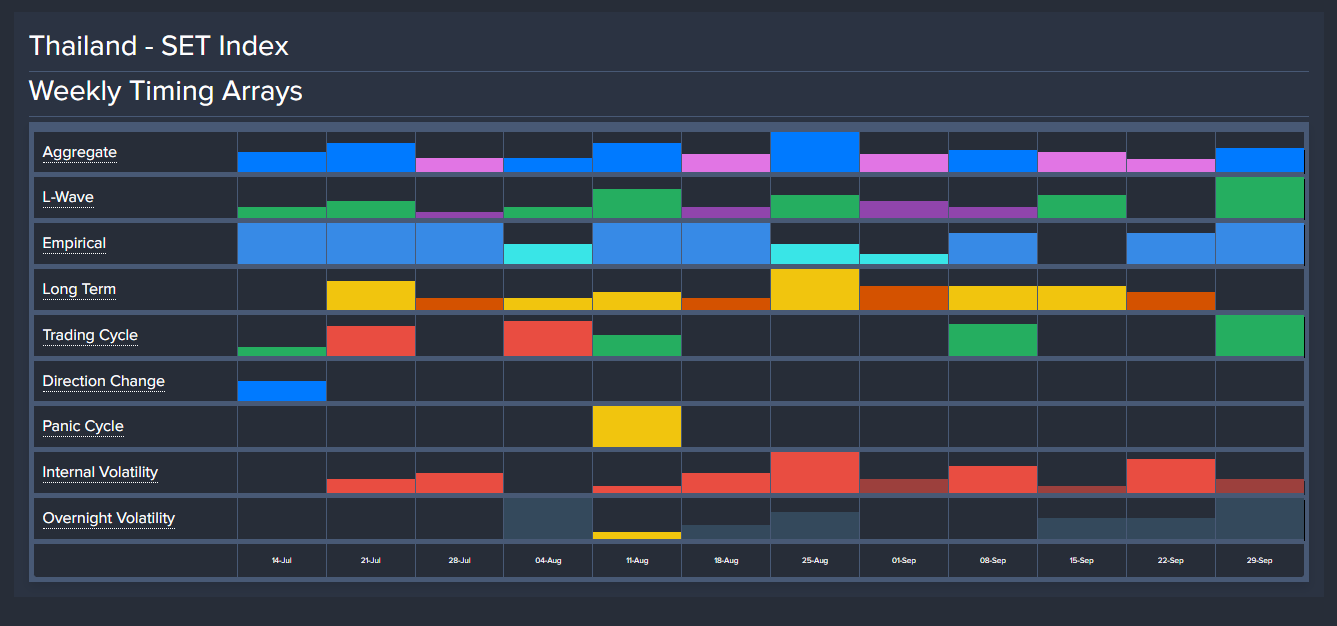
Our War Model for the region turned up in July, which correlated with the timing array on the Baht, starting with the rise in volatility in July. This even came down to the week on the Thai SET share market as well.
Posted originally on Jul 23, 2025 by Martin Armstrong
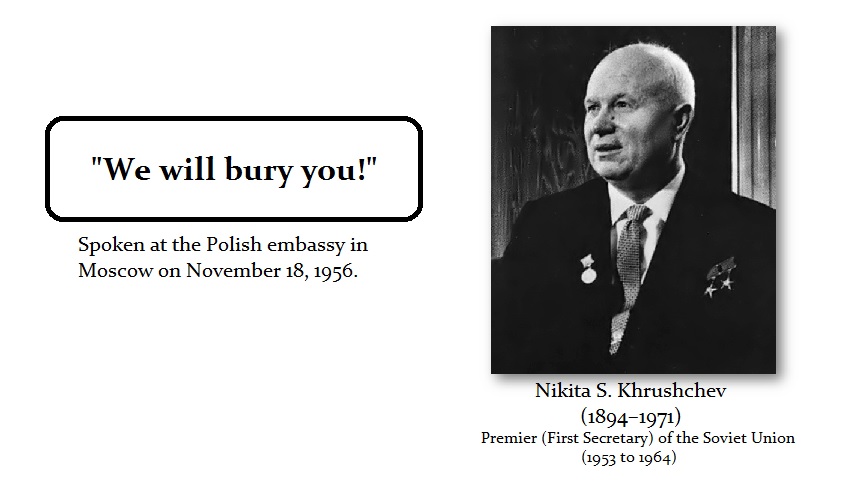
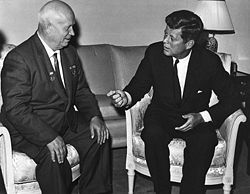
Neoconservatives (neocons) are a faction within U.S. foreign policy circles who advocate for an aggressive, interventionist approach to promoting American interests and values abroad, which is the cover story, along with spreading democracy, which we do not even experience. Their hostility toward Russia stems from several key ideological and strategic motivations that date back to when Khrushchev said, “We will bury you,” a philosophical boast that he believed communism would defeat capitalism, much like Sparta defeated Athens.
Neoconservatives view Russia under Putin as an authoritarian, revisionist power that suppresses democracy, violates human rights, and threatens liberal democratic values, including the WOKE agenda. They see regime change or containment as necessary to weaken Russia’s influence. Russia was communist, but that fell. They are now capitalists, but they have shifted their focus from communism to authoritarianism, which is indistinguishable from that of any Western country. We may elect a president as Russia does, but we have unelected moles within the Deep State that act in their own self-interest. In Europe, the head of the EU does not stand for an election, nor does anyone in the Commission. Ursula was appointed on December 1st, 2019. She has NEVER stood for any democratic position in history, yet she calls Putin a dictator who has stood for election.
Many neocons (especially older figures) retain a Cold War mindset, seeing Russia as the successor to the Soviet Union—an existential adversary that must be confronted rather than accommodated. They distrust diplomacy with Moscow, believing it only emboldens aggression. They act with their disdain and aggression, insisting it is self-defense because that is what Russia intends.
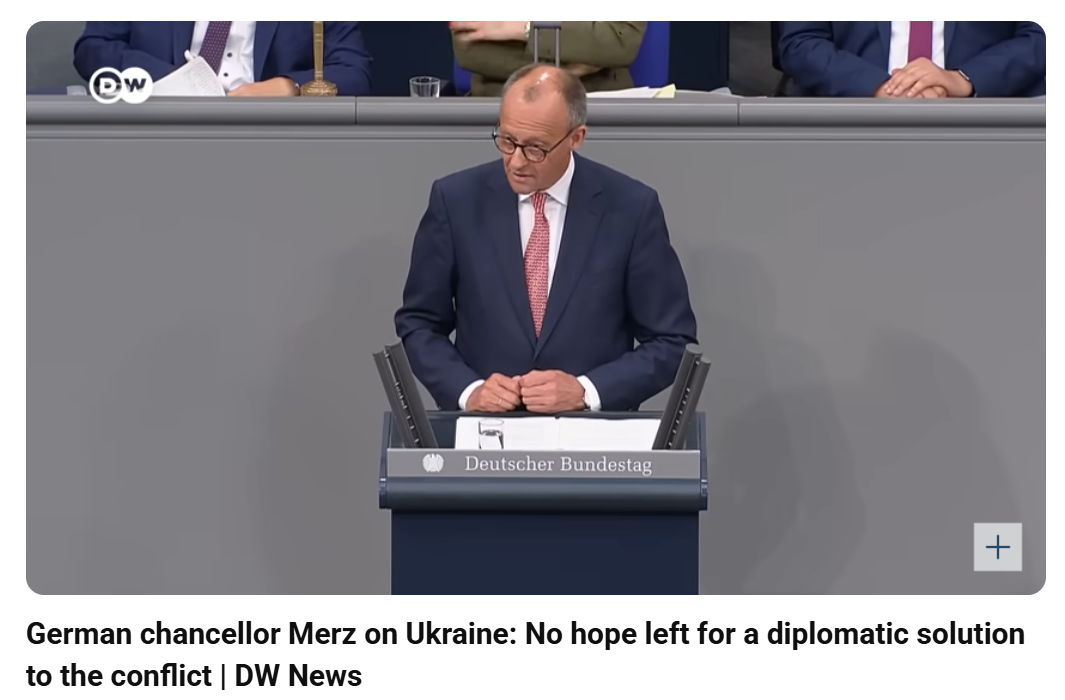
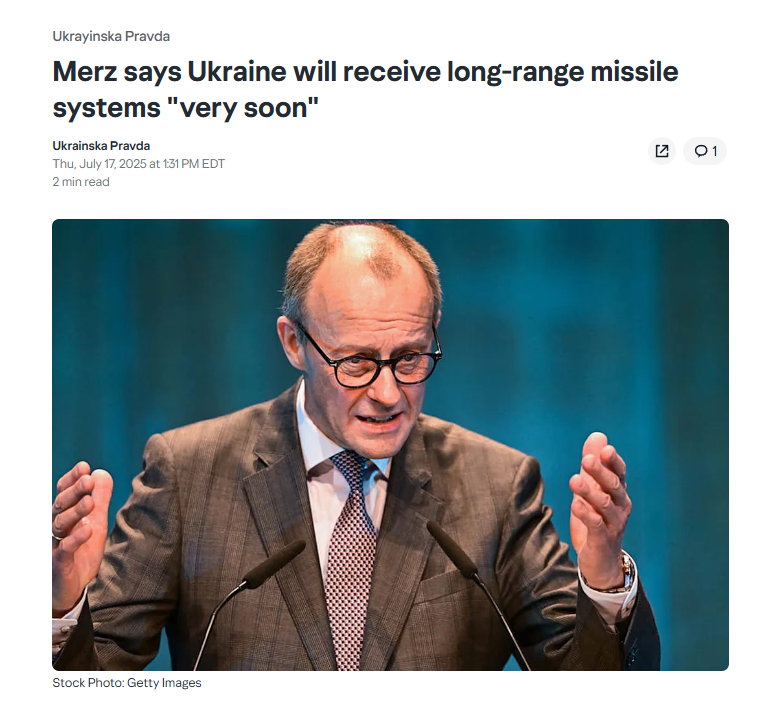
While the AFD in Germany opposes supplying Ukraine with endless weapons, Merz is a diehard Neocon and is doing everything in his power to ensure that Germany is attacked to justify World War III. He has insisted on an exception for deficit spending, ending Germany’s austerity, all for defense. He says there is no diplomatic solution, and this is right out of the Neocon Playbook – never talk to the enemy, for they may lead to peace.
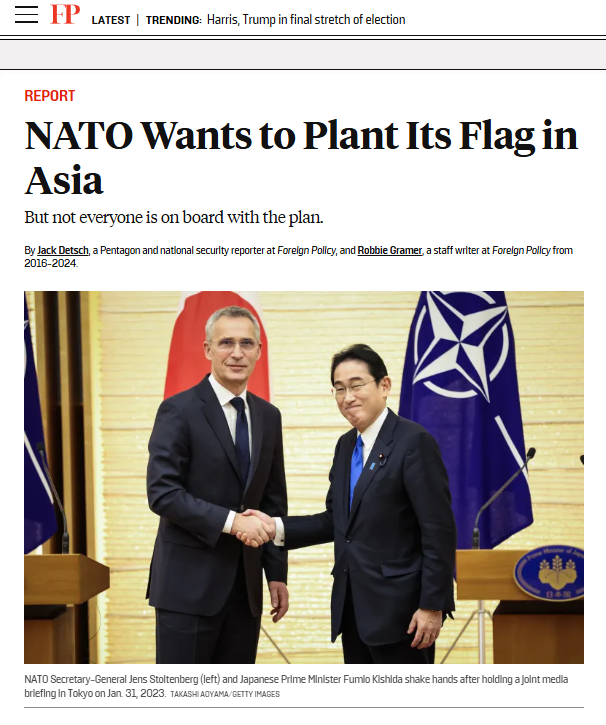
Neoconservatives push for NATO expansion (e.g., advocating for Ukraine’s membership) and support arming proxy forces (like in Syria or Ukraine) to roll back Russian influence. They view this as a means to solidify U.S. global hegemony. They have promoted NATO expansion to Asia and have wanted to open NATO headquarters in Japan.
Neocons often argue that showing restraint (e.g., not responding forcefully to Russian actions in Crimea or Syria) encourages further aggression. They favor military buildups, sanctions, and regime-change strategies to pressure Moscow. Yet, they have never won a single aggressive war since World War II. Robert S. McNamara even apologized for taking the USA into Vietnam, admitting that they believed Russia was involved, “We were wrong. It was just a civil war.”
Critics argue that neoconservatives are influenced by defense contractors and lobbyists who benefit from prolonged conflict. While not all neocons are directly tied to these interests, most are closely tied to them. Their policies align with a permanent war economy. Lindsey Graham, a U.S. Senator, and his most significant political contributors include industries such as defense, healthcare, and finance. For example, his top defense donors are Defense contractors Boeing and Lockheed Martin.
Senators John McCain and Lindsey Graham have supported the idea of Georgia joining NATO, emphasizing the importance of strengthening ties and security in the region. They have advocated for NATO enlargement to include Georgia as part of a broader strategy to counter Russian influence. Then with a straight face, the Neocons claim Putin’s Russia as an imperialist power seeking to dominate Eastern Europe (e.g., Ukraine, Georgia) and the Middle East, which are their exact goals. They believe that only forceful U.S. action can prevent Russian hegemony in these regions, necessitating confrontation.
Yet, when General Wesley Clark went to the Pentagon after 911, he was told they were invading IRAQ and intended to take seven countries simply because they claimed they used to be leaning toward Russia. Yet they insist that Russia is imperialistic when it does the same thing.
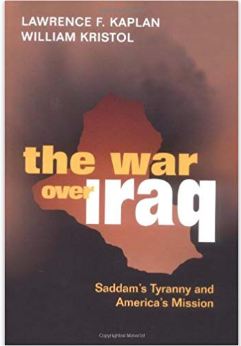
Some neocons prioritize Russia because they grew up hating Russians. This is their historical baggage (Cold War-era policymakers dominate their ranks). They instigated the Ukraine War to draw Russia into a direct confrontation and have no problem sacrificing Eastern Europeans to kill Russians. Bill Kristol even argued that invading Iraq would somehow bring peace to the Middle East, when this was supposed to be step one for the invasion of the Middle East.
The Neocons who now control Germany, France, the Netherlands, Britain, Poland, all the Baltics, and Scandinavia have succeeded in usurping power to create WWIII. Sweden was neutral in WWII – today they joined NATO and have placed a target on the back of every citizen. They do not care about any Eastern European. They are merely pawns on their chessboard to conquer Russia.
They told the Ukrainian people in 2014 to overthrow their government, for this was their moment for peace. Then they instructed the UNELECTED government to attack the Donbas and start this civil war to draw in Russia.
China is harder to confront militarily without incurring catastrophic economic consequences, as it is becoming the largest economy in the world. China is the largest economy in the world, when calculated using Purchasing Power Parity data from the World Bank (with growth estimates from the IMF), and including estimates of the undervaluation of GDP, adding the grey market of China, which is extensive. The underground economy in China is much larger than in the USA or Europe.
Criticism of Neocon Policies
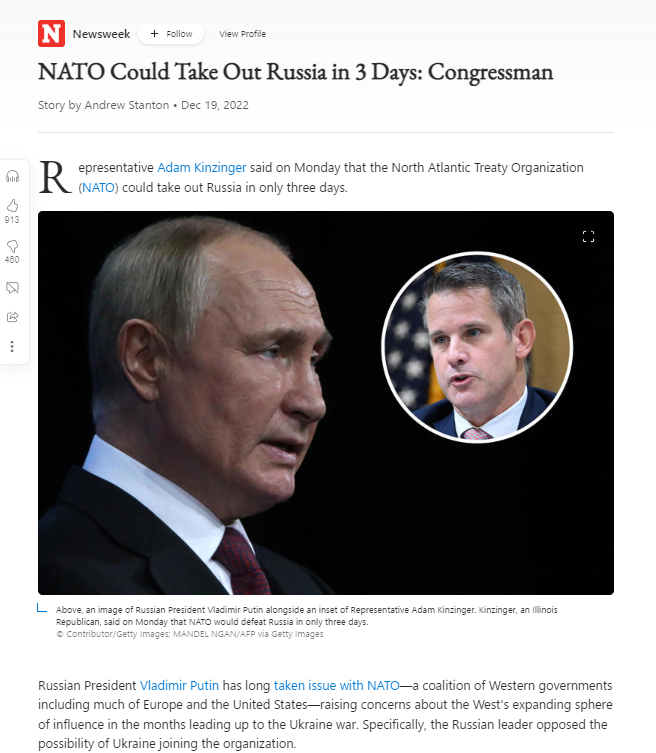
Opponents argue that neoconservatives always overestimate U.S. power (e.g., Iraq War blowback. Neocons like Kinzinger have actually claimed the US can defeat Russia in 3 days.
The Neocons have escalated risks of nuclear war, pushing NATO to Russia’s borders, begging for a fight. They lied to Gorbachev, telling the press they never “promised” that they would not move nukes right to Russia’s border. Our Neocon did the very same thing that Khruschev did in 1962. The Russians at least staged a coup and removed Khrushchev, who was replaced by Brezhnev. There is a movie, The Courier, about how a Russian was tipping off the US about the missiles heading to Cuba. These Neocons have sought to surround Russia with nukes right up to their borders. They deny their actions and claim this is self-defense, when in fact it is offensive, trying to provoke war.
The Cuban Missile Crisis occurred in October 1962 and was a 13-day confrontation between the United States and the Soviet Union over the deployment of Soviet nuclear missiles in Cuba.
October 22: Kennedy announces the discovery of the missiles in a televised address and imposes a naval blockade (quarantine) around Cuba to prevent further Soviet shipments.
October 24-25: Soviet ships approach the blockade but stop or turn back, avoiding direct conflict.
October 26-27: Tense negotiations between the U.S. and USSR. Soviet leader Nikita Khrushchev sends two conflicting messages—first offering to remove missiles if the U.S. promises not to invade Cuba, then demanding the U.S. also remove missiles from Turkey.
October 27 (“Black Saturday”): A U.S. U-2 plane is shot down over Cuba, killing pilot Rudolf Anderson. The U.S. prepares for possible military action.
October 28: Khrushchev announces the withdrawal of Soviet missiles from Cuba in exchange for a U.S. promise not to invade Cuba and a secret agreement to remove U.S. missiles from Turkey, which was withheld from the public to make it sound as if only Russia backed down.
The Neocons constantly undermine diplomacy (rejecting détente in favor of perpetual confrontation). They cannot accept the fact that the Soviet Union collapsed with communism, which was the archenemy. They transformed their hatred of communism into racism against all Russians. Friends from Germany report that they can “feel” war is in the air.
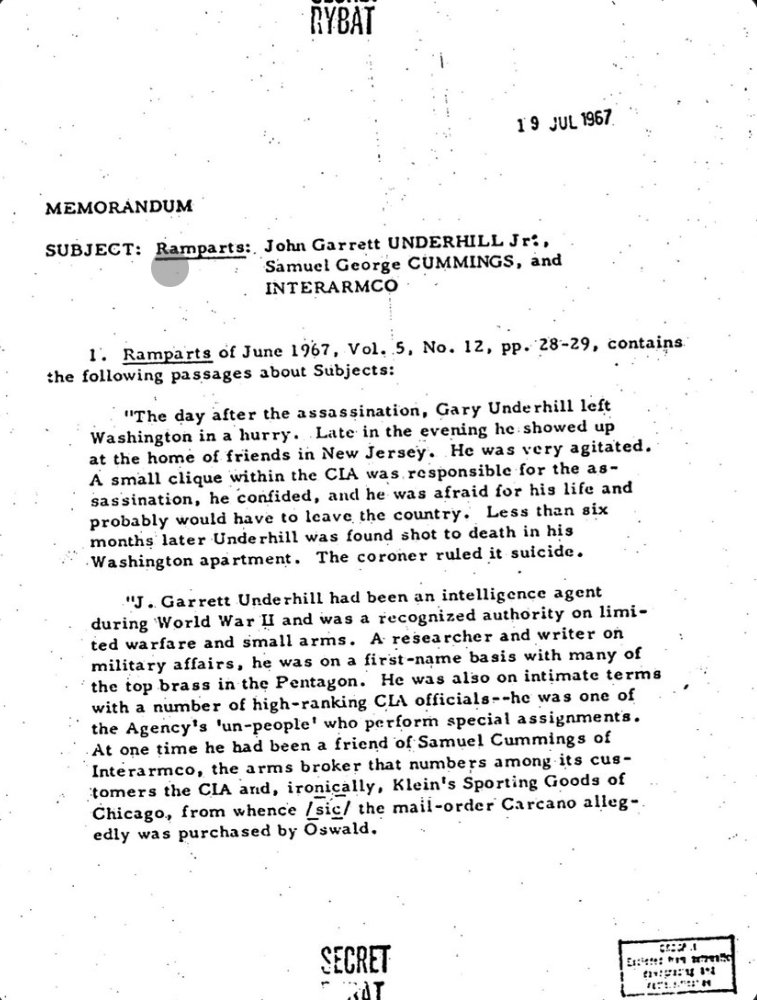
One document that the CIA has been hiding is the Gary Underwood document that states plainly that the CIA ASSASSINATED Kennedy. The reason this is important is that the Neocons are still running the show, lie about everything, and are in complete control of Europe, and are moving to achieve their ultimate goal – the total destruction of Russia, which is not fulfilling Ukraine’s ethnic cleansing of all Russians.
Conclusion
Neoconservatives see Russia as an ideological and strategic enemy that must be defeated rather than negotiated with. Their influence ensures hardline policies persist, even when they risk unintended consequences. They never consider the people they send into battle. They never consider the national debt or that no nation has ever benefited from prolonged war. They lie about absolutely everything and always claim that their enemy will attack, so they need to attack first using proxies like Ukraine or Vietnam.
They started Ukraine right on schedule – 51.6 years from the Cuban Missile Crisis. The next 8.6-year wave targeted 2022, which peaks in 2027. Russia came to the rescue of the Donbas in 2022.
Posted originally on Jul 24, 2025 by Martin Armstrong
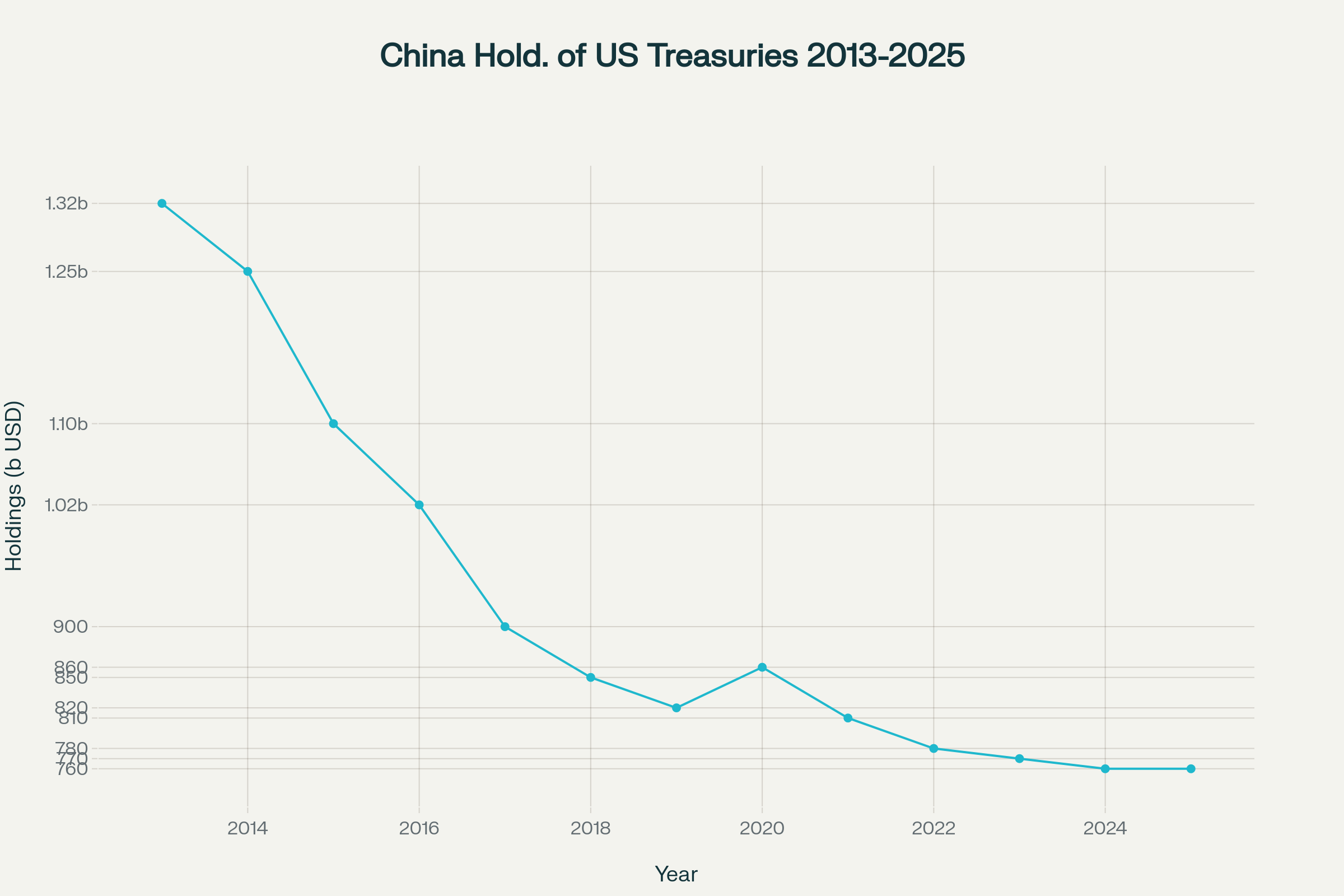
China has been offloading its US Treasury holdings for years. Once the top holder of US debt, China cut its US Treasury holdings for the third consecutive month this May. Total holdings have fallen to $756.3 billion from $757.2 billion in April, according to the US Treasury, marking the lowest debt held since May 2009.
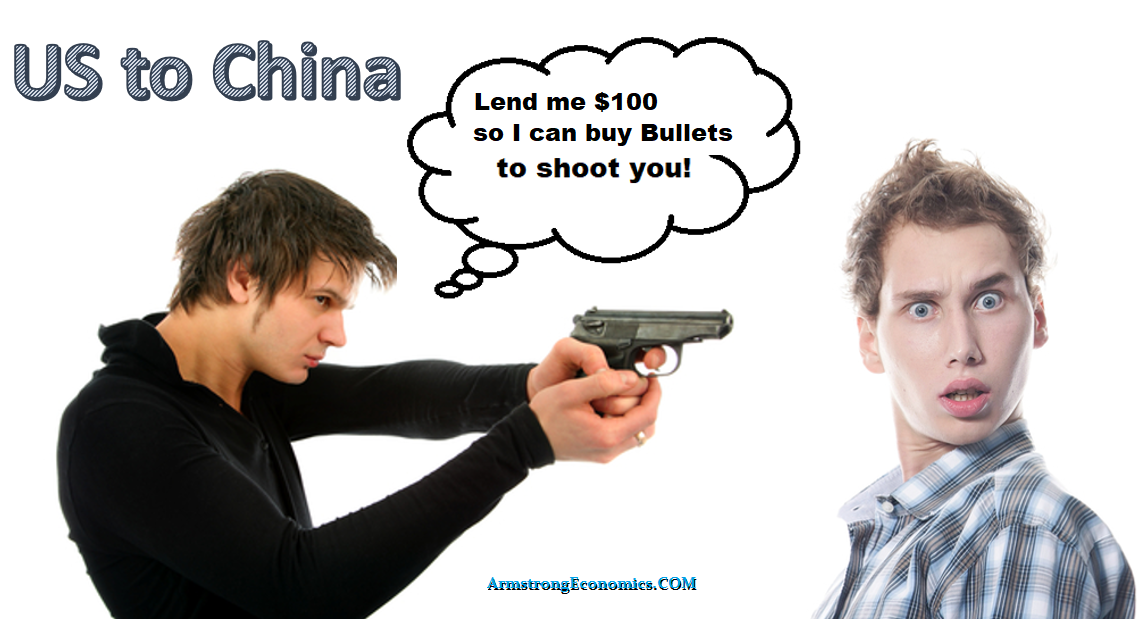
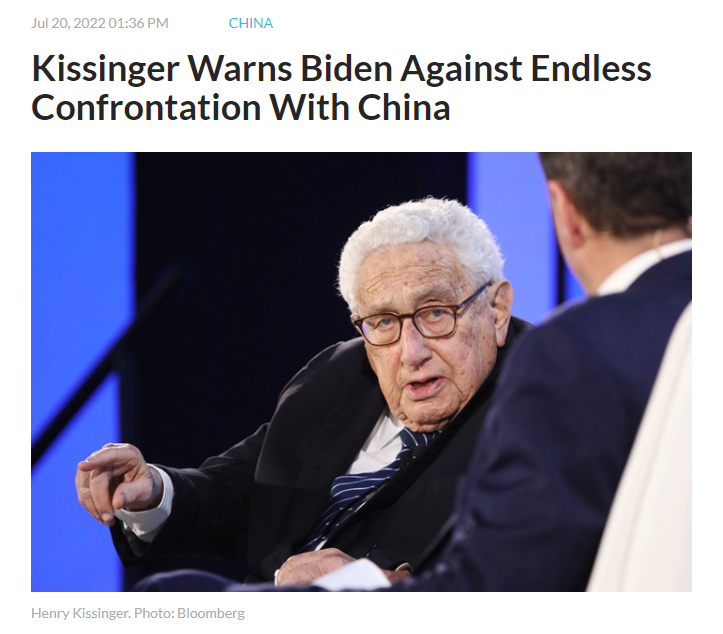
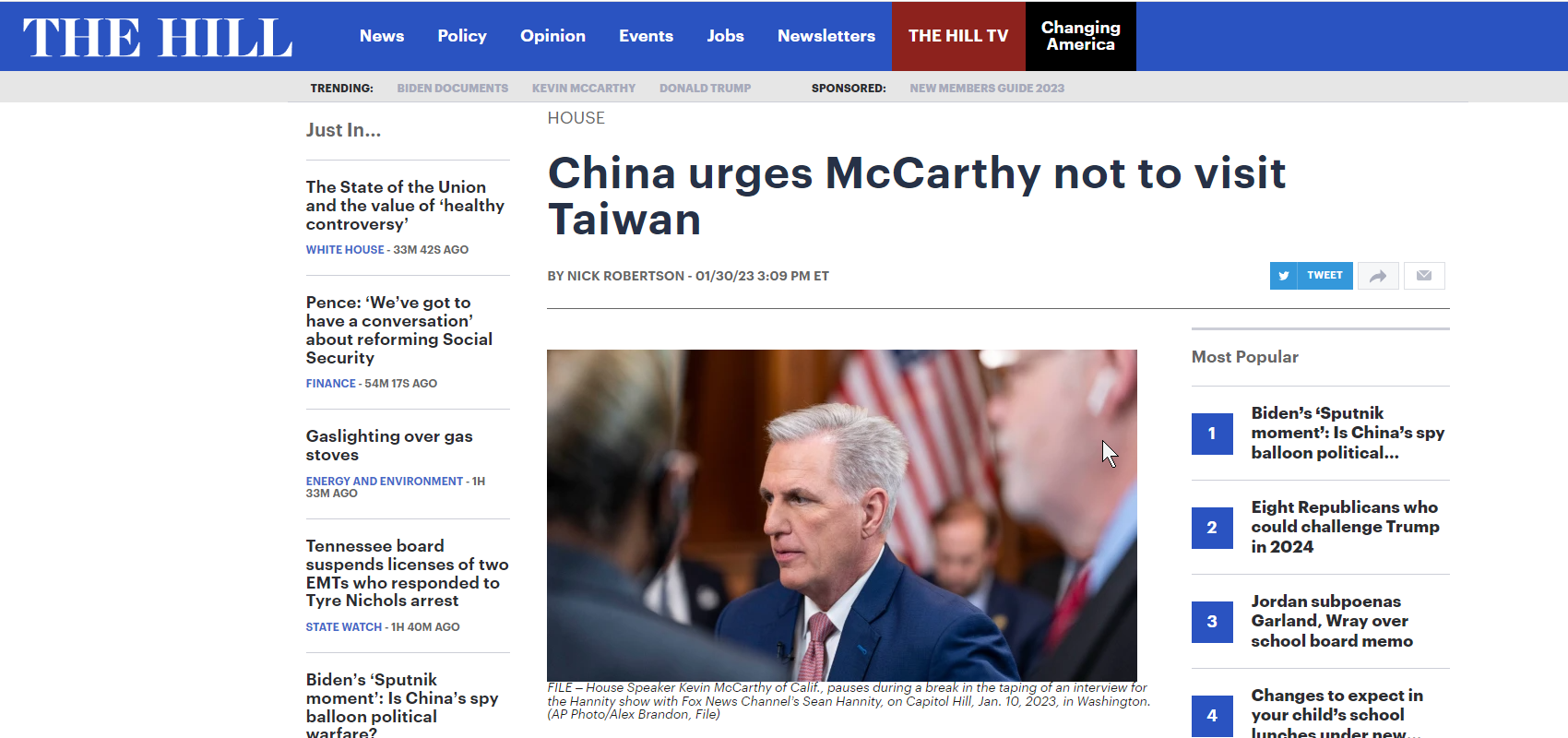
As of 2024, China has reduced its holdings by approximately 30% over a four-year period. China was able to use the exchange rate to buy yuan when the currency depreciated. China seemed to be assisting Trump years ago in lowering the dollar to ease trade frictions. That is no longer the case here as the United States began engaging in economic warfare when it pushed Russia off SWIFT, implemented sanctions, and confiscated private assets. Politicians have threatened China with economic warfare over Taiwan, and there is no incentive to hold the debt of your political enemy. It is akin to holding a gun to someone and asking them to lend you money with the promise to pay it back.
In 2013, China held $1.317 trillion in US Treasury securities at its peak holding. Geopolitical rivalry followed as China increased its military presence in the South China Sea and the US responded by forming alliances with neighboring Asian nations and conducting military operations near Taiwan. Former President Obama and Xi Jinping met in 2013 as well amid ongoing conflict regarding arms sales to Taiwan, cyber espionage accusations, and disagreements over North Korea. China offloaded $550 billion in US Treasuries by the end of 2013 and Japan became the largest holder of US debt.
Let us not forget that the Ukraine war sprang up in 2014, and the West installed its puppet government. China observed and responded accordingly. Tensions heightened in 2015 when China continued to assert its dominance in the South China Sea. The US refused to accept the One China policy, despite desperately needing China to remain an ally. Trump’s first term marked ongoing trade wars between the US and China that turned into outright hostility. The Hong Kong protests of 2019 further strengthened ties as the US aligned itself with Hong Kong and once again dismissed the One China policy.
By 2020, China was akin to Russia in terms of being the “communist” enemy of the West. Mike Pompeo delivered a speech in which he declared the end of an era of engagement with China due to intellectual property theft, territorial claims, and human rights abuses. Both Trump and Biden blacklisted Chinese companies and spoke of an ongoing need to distance the US from China rather than form a concrete alliance with its top trading partner.
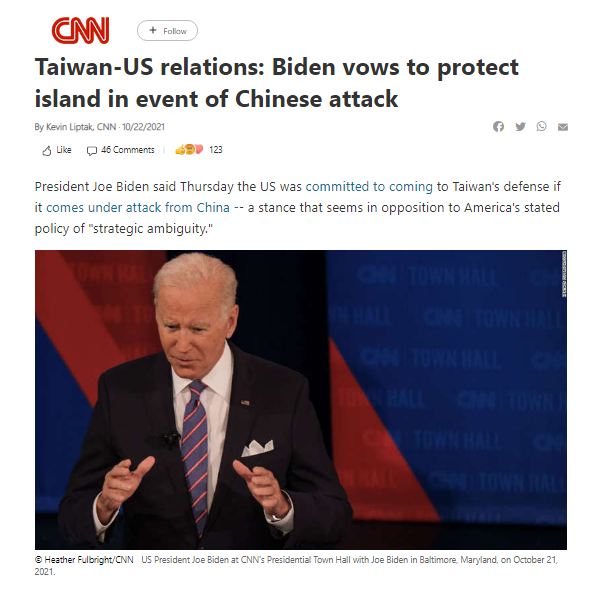
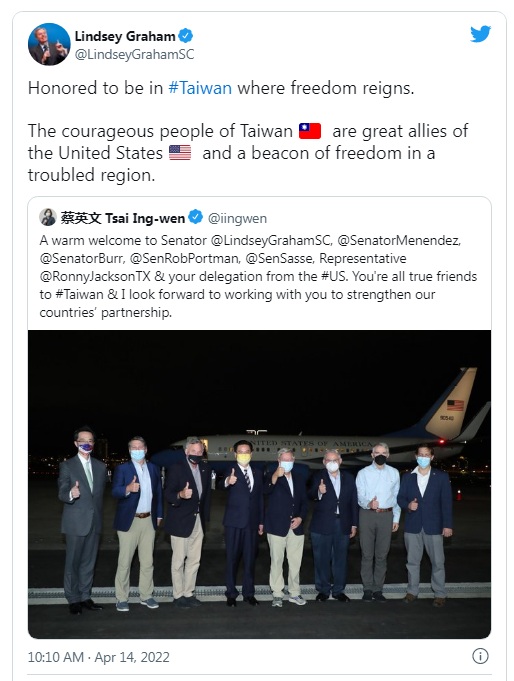
By 2022, we had Nancy Pelosi and other top politicians visiting Taiwan to show their support for sovereignty. The US vowed to intervene if China attempted to reclaim its territories. Three years ago, the Chinese government warned the provinces and private companies not to borrow dollars. The people and institutions were free to do as they pleased, despite China being deemed an evil communist nation by the West.
All of this was a political farce as the West is selective about which nations it wants to be the moral police over. China will never have the incentive to take on more debt of an enemy nation. The Fed desperately needed China’s participation as its plan was to roll over its debts perpetually, but that is now out of the question. Japan is facing a massive crisis and will be the first to default. What will the US do when no one is willing to buy its debt?
Posted originally on Jul 24, 2025 by Martin Armstrong
Over 8,000 bank branches are expected to close worldwide in 2025. Approximately 3,200 of those closures will take place in the United States. Q1 experienced 148 net branch closures in the US, with all major banks slated to close branches throughout the year.
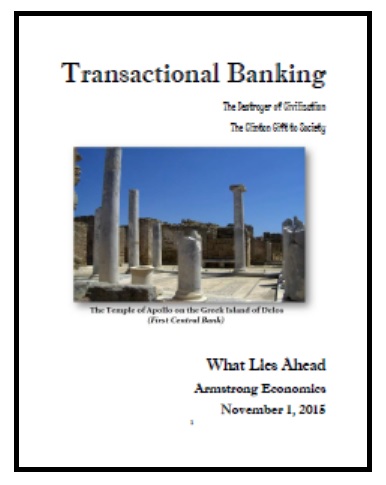
These are merely bank closures and not bank failures, although two smaller US banks did fail this year. People simply prefer online banking as we have made the switch from relational to transactional banking.
Bankrate conducted a survey that found 77% of Americans prefer online digital banking, yet other surveys believe the figure is closer to 89%. Digital banking has been rising in popularity in recent years, up from 203 million domestic users in 2022 to the 216.8 million projected users in 2025. The survey found that 34% of consumers use online banking on a daily basis, consistently checking their account and transactions. There has even been a 19% increase in use among the 65+ crowd who is least likely to use digital services.
The total number of bank branches across the US fell below 65,000 in Q2. Texas, New York, and California saw the largest decrease in brick-and-mortar locations. Many branches that chose to remain open are only offering drive thru services. One in three banks has closed in rural areas as there is no demand, and the Federal Reserve noted in its annual Banking Access Report that the number of “banking deserts” across the Midwest is rising.
Banks have no overhead with digital banking services and they do not need to hire staff. The cost-per-transaction for in-person banking is $4.00 compared to only $0.04 for digital. AI is rapidly replacing bank tellers with a 3 to 1 ratio.
The trend is global. The United Kingdom anticipates 370 to 450 branch closures this year. Germany and France are facing 1,100 closures combined. The Asia-Pacific region of the world saw a 16% reduction in bank branches from January to May 2025. Certain nations like Malaysia and Thailand also offer branchless micro-banking kiosks to substitute relational banking.
The money in your bank account is already just an electronic book entry. Not only is there less demand for face-to-face banking, but they are also preparing for CBDCs as bank branches are unnecessary without physical paper money. You can deposit a check on your phone or at a kiosk, but e-checks are rising in popularity. The only thing left for a branch is safe deposit boxes, and the government assumes you are hiding cash there anyway. Relationship banking is becoming a thing of the past, the latest casualty in the cycle of creative destruction.
Posted originally on Jul 23, 2025 by Martin Armstrong
Ground beef is the new egg as the media has turned its attention to a new grocery item impacted by inflation. The average price for a pound hit $6.12 in June, up 12% YoY, and the highest price recorded since the government began collecting data in the 1980s.
Some news outlets blame tariffs on Brazil that have not yet gone into effect, but Brazil only imports 5-7% of the overall supply. The United States chiefly supplies itself with ground beef, with domestic production accounting for 75-80% of the overall supply. The problem is that the US has had six consecutive years of herd contraction, and the current supply is unable to meet demand. As of January 2025, cattle inventory reached 86.7 million head, 1% down YoY, and the smallest inventory since 1951.
One must recall how the previous administration was pushing forth the net-zero emission agenda. Farmers willingly reduced herd size to avoid threats of taxation. From 2021 to 2022, the EPA touted a 2% drop in methane from enteric fermentation, but that was primarily due to shrinking beef cattle populations.
Weather was also a main driver as droughts that began around 2020 in abundant farm areas cut down cattle size. Overall inflation has caused the cost of food to soar for farmers as well, with feeder cattle prices up 9% YoY.
The US increased beef imports by 24% from 2023 to 2024 to offset domestic constraints. Australia supplies around 7% to 10% of all beef, followed by Brazil, with New Zealand accounting for 3% to 4% of the supply, Uruguay for 2% to 3%, and Argentina with 1% to 2% of the total supply. Still, America is largely self-sufficient in supplying ground beef.
Now this is simply the ground beef supply as live cattle is a different trade. Naturally, the US looks to its neighbors, Mexico and Canada, for live imports, with Canada supplying 15% to 20% of live cattle and Mexico supplying up to 15%. Even though the US has the lowest head inventory on record since 1951, the majority of live cattle used to create ground beef is domestic. Now, Mexico has a massive screwworm outbreak from late 2024 to the present day. The US suspended all live cattle imports from Mexico in May to prevent the disease from spreading, which lasted into July and impacted peak seasons.
Ground beef prices are up due to an imbalance in supply and demand. The headlines are blaming Trump tariffs for this inflation without understanding that prices naturally rise when demand outweighs supply.
Posted originally on Jul 23, 2025 by Martin Armstrong
The people of every Build Back Better nation have been suffering the repercussions of open border policies. Civil unrest has erupted in nearly every European nation as the people refuse to sit idle as their demographics forcibly change. A recent survey in Spain by El Mundo found that 70% of Spaniards support mass deportation.
Among the PP Party, 92% of respondents stated that the government needed to implement a mass deportation program. Even the Socialist Party, which supported open border policies, sees that it is no longer feasible, with 57% stating they now favor mass deportations. Only the far-left Sumar Party, far smaller than the main parties in the nation, would like to leave the borders open, with 67% rejecting deportations.
Spain was once a transit country for migrants to reach other destinations. As government policy shifted to be favorable to migrants, those illegally entering chose to stay in Spain. Since 2020, Spain has experienced an astounding 650% increase in family reunification visas, according to the Ministry of Inclusion, Social Security, and Migration. These are merely the people on record who were granted permission to stay and do not account for those illegally living within Spain’s borders.
Permits were granted to 43,848 people in March 2020. Exactly five years later, Spain granted permits to 328,841 people. These people claim to have family ties to legal citizens or residents, and the permits grant them temporary residency that can be renewed.
Spain experienced a 96% surge in illegal entries between January and June 2024. The majority (167%) of illegal migrants are finding their way to the mainland through the Canary Islands, with the majority of migrants coming from West African nations such as Mali, Senegal, and Morocco. The journey is extremely dangerous, and while figures are unknown, it is believed that 10,000 people died attempting to cross the Mediterranean or Atlantic to the promised land of Spain. There has also been a concerning uptick in unaccompanied minors, with over 6,000 finding their way to the Canary Islands by August 2024. No one can protect these children from exploitation and trafficking because open border policies are an illegal practice granted permission to operate by leftist governments.
Prime Minister Pedro Sánchez’s liberal government favors open border policies and approved a plan to grant 900,000 illegal immigrants legal status over the next three years. Those 10,000 people died because his policies state that people may stay if they find their way into the nation. He does not care that the people of Spain are demanding closed borders.
Spain’s birth rate is the lowest on record since 1941 at 1.19 per woman. The government believes that the nation will need 25 million new migrants over the next 30 years to maintain the workforce and social welfare systems. Mass replacement theory is real.
Top bureaucrat Hillary Clinton admitted the concept: “It’s all in there—the return to the nuclear family, the return to being a Christian nation, return to producing a lot of children, which is sort of odd since the people who produce a lot of children are immigrants.” This ties into the Marxist concept of terminating the nuclear family and undermining religion.
Spain and every other open border nation will become unrecognizable if policy does not change.
Posted originally on Jul 23, 2025 by Martin Armstrong
Senators Kevin Cramer (R-ND) and John Fetterman (D-PA) have introduced bipartisan legislation, the Payment Choice Act, which would require businesses to accept cash payments. Money is merely the medium of exchange that someone is willing to accept for goods or services. Businesses across America have inadvertently contributed to the push toward a cashless society by refusing to accept cash as a form of payment.
“Any person engaged in the business of selling or offering goods or services at retail to the public who accepts in-person payments at a physical location … shall accept cash as a form of payment for sales made at such physical location in amounts up to and including $500 per transaction,” the measure stipulates, in part.
The war on cash is part of the broader agenda to eliminate all financial privacy and control every transaction. Refusing to accept cash is not merely a business decision but a step toward a totalitarian digital monetary system. Why bother with cash if you cannot use hard currency to pay for goods and/or services? Governments and central banks are pushing digital currencies to track, tax, and control every penny in circulation. If businesses start denying cash, they’re doing the state’s dirty work for them unintentionally.
Certain businesses prefer the convenience of credit cards and not all payment systems are equipped to accept cash. Yet, as Senator Cramer stated in his argument when proposing the bill, physical cash is legal tender, and businesses are limiting consumer choice by forcing the use of debit and credit cards for transactions. Then you have businesses that pass on the 3% transaction fee to consumers, adding to inflationary pressures. “Do you accept cash?” has become a common courtesy, as consumers are aware of the need to travel with a card to ensure purchases. Naturally, governments have cracked down on businesses that only accept cash, as they assume these businesses are attempting to avoid taxation. This is the first piece of legislation that actually supports the consumer over the government it is refreshing to see it gain bipartisan support.
The bill makes exceptions for businesses that have “a sale system failure” or those that do not have enough cash available to provide change. In fact, companies would not be required to accept $50 or $100 bills under this legislation to prevent the latter. It is quite disappointing to see the freedoms many are willing to relinquish in the name of convenience.
Once cash is gone, you’ll have no ability to opt out. So yes, we need to protect cash, and that may require legal guarantees that it remains a valid and accepted form of payment.
Posted originally on Jul 22, 2025 by Martin Armstrong
Investors continue to snap up residential properties, as real estate has evolved into an investment class of its own. New reports show that between 2020 and 2023, investors were responsible for 18.5% of home purchases. In the first three months of 2025, investors composed 27% of all residential properties, marking the highest share in half a decade, according to BatchData.
High mortgage rates, coupled with high property values, have caused many would-be buyers to reconsider their purchases. Investors have fewer constraints, leading to the purchase of 265,000 residential properties during Q1, or a 1.2% YoY rise. However, we are seeing a decrease in institutional investments in real estate. The big money is not looking at real estate in this environment. Although investors accounted for 1.2 million homes in 2024, only 20% of the 86 million single-family homes in America are investor-owned.
Mom-and-pop investors who own between one and five homes purchased 85% of all investor-owned residential properties, with those owning between six and ten properties securing 5% of the market. Institutions owning 1,000 or more properties account for only 2.2% of investor-owned homes.
Purchasing real estate amid record-low rates was a no-brainer for investors, and institutions in particular, who had the liquidity to outbid competitors with cash offers. As interest rates rise, the cost of financing becomes prohibitive even for institutions. Institutions rely on leverage to enhance returns, and when borrowing costs rise, the math simply doesn’t work anymore. Real estate is an illiquid asset. In a world moving toward capital controls and rising geopolitical tensions, institutions are reallocating toward assets with more mobility. Capital is no longer looking at real estate as a long-term store of value. It’s moving into tangible assets that are more liquid—commodities, energy, gold, and equities.
The available real estate inventory is at its highest level since the pandemic, but the sector has become stagnant as homes sit on the market for far longer. So while institutions have the capital, interest rates aside, they are not looking at mere rental or flipping income. People investing in real estate in this environment are seeking a modest additional income.
Institutions are not interested in buying and holding tangible assets in a volatile environment where returns are not guaranteed. Look at New York City, for example—people are fleeing ahead of an incoming socialist local government that has promised to raise taxes on top earners. Real estate is no longer the safe bet it once was due to a lack of confidence in future regulation.
I have created this site to help people have fun in the kitchen. I write about enjoying life both in and out of my kitchen. Life is short! Make the most of it and enjoy!
This is a library of News Events not reported by the Main Stream Media documenting & connecting the dots on How the Obama Marxist Liberal agenda is destroying America