German Grocers Warn Consumers of Significant Second Wave Price Increases


Posted originally on the conservative tree house on April 3, 2022 | Sundance

The inflationary impact to any specific country is directly proportionate to the scale of the government intervention in the COVID lockdown spend.  Almost all of the nations who deployed the WEF program are in the same inflationary position.

The U.S., U.K., New Zealand, Australia, Canada and the EU, within which Germany is the largest economy, all followed the WEF spending instructions.

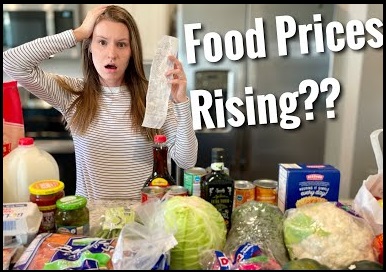
(Germany) – According to the German Retail Association (HDE), consumers should prepare for another wave of price hikes for everyday goods and groceries.

Even before the outbreak of war in Ukraine, prices had risen by about five per cent “across the product range” as a result of increased energy prices, HDE President Josef Sanktjohanser told the Neue Osnabrücker Zeitung on Friday.

With Russia’s invasion hitting economies and the supply chain harder, yet another series of price increases is on the horizon. “The second wave of price increases is coming, and it will certainly be in double figures,” Sanktjohanser warned. (read more)

Every time the supermarket checkout rings, a yellow vested rebel is created.

Report: Chicken, Pork and Beef Prices Likely to Skyrocket Due to Massive Increases in Feed Costs


Posted originally on the conservative three house on April 1, 2022

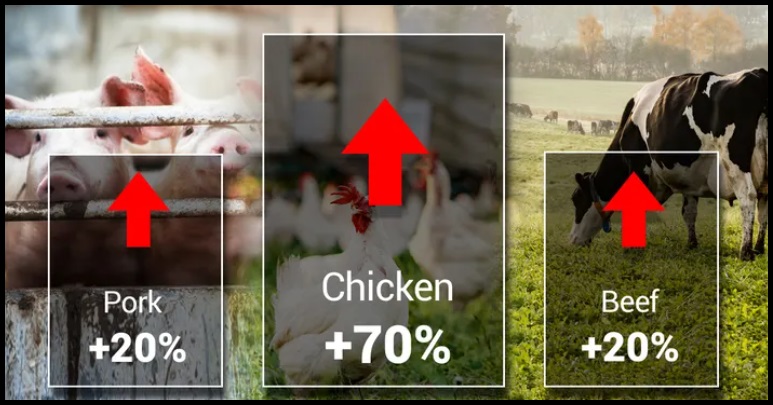
Hopefully this does not come as a surprise to readers here; however, according to analysis by industry insiders, Chicken prices are likely to increase by 70% this year once the full price increases in grain, used as feed, start to take hold.  Overall, we will likely see a leveling off in beef prices, but pork (due to soybeans) and chicken (due to grain) will increase significantly.

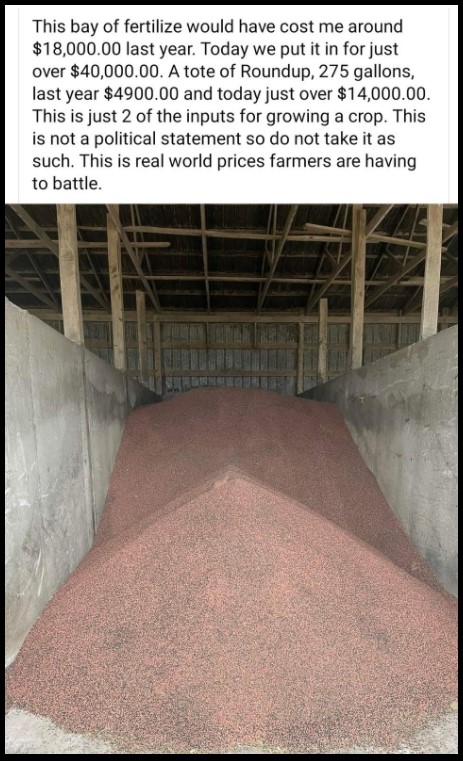
The issue is one we noted in December of last year when identifying the downstream consequences of fertilizer and component products used for the production of corn, wheat and soybeans crops. “You might say those crops do not seem like they are that important.  However, keep in mind that Corn, Wheat and Soybeans represent the baseline for not only grain production in the U.S, but they are also the primary feed products for proteins: chicken, pork and beef.” {Go Deep}

(Fox Business) – Evercore ISI issued a protein inflation note this week projecting that most protein prices are forecasted to increase “substantially” due to the higher feed costs, with chicken breast reaching as high as 70% year-over-year in the first half of 2022.  The analysis said pork and ground beef could climb as high as 20% year-over-year during the same period. (more)

That was last year. Those prices have doubled since then. GO DEEP

These anticipated price increases now being projected are what CTH refers to as the tail end of the second inflation wave.  We entered the second wave last month driven by massive fuel and gasoline increases.  Those costs will join with the fertilizer costs and create a snowball effect in the food sector.

Statistically the 2022 inflationary measure will look lower, because when the biggest part of the second wave hits, it will be cycling around in comparison time to the beginning of the first wave in 2021.  The percentage of change will be lower; however, the actual dollar increase in this second wave on food products will be higher than the first.

March Jobs Report Shows Increase of 431,000 Jobs Added


Posted originally on the conservative tree house on April 1, 2022 | Sundance 

My apologies in getting late to this but the BLS has completely revamped the way they calculate employment and all of the familiar data tables are revised. So, it takes a little longer to get to cut through the clutter and get to the data that matters.

Overall, the BLS report [DATA Here] shows 431,000 jobs regained in March from the government closures during the pandemic.

Despite the job regain number being less than expected, it’s not bad at all.

As expected, leisure and hospitality jobs [Table B-1] showed the strongest rebound with 112,000 jobs. With 25,000 job gains in hotels and 61,000 in food services (restaurants).  A little more than 2 million jobs have been regained in the last year from the COVID-19 lockdowns in this sector.

There are a few troubling indicators like a decrease in residential building jobs (-2,600), and a surprising decrease of 6,000 jobs in trucking and transportation.  Retail overall gained 49,000 jobs with most of them in the food and beverage sales sector.  However, retail furniture stores lost 1,600, electronics stores lost 1,300 and garden supply stores lost 1,900.

The retail job pattern would seem to indicate consumer spending being squeezed and priorities on spending leading to job losses in non-priority retail shops.  Boosting the disposable income concern, is a statistically significant loss of 5,000 jobs in the retail beauty and personal care stores.

On the upside, business and professional service jobs in March had a nice lift with 102,000 jobs added.

Overall, as we would expect, the national employment picture looks much like the economy that overlays it.  Jobs in food creation, sales and distribution are holding strong as a consumer priority.   However, jobs in convenience stuff, indulgent stuff, and luxury sector items are contracting.  Meanwhile the job losses in trucking are a little odd.

Wages have increased 5.6% on a yearly basis, but still significantly lags inflation.   The average workweek and overtime declined slightly in March (0.1/hrs), so there’s not any real demand side pressure visible upon the manufacturing workforce.

Finally, a White House Journalist Ask a Direct and Pertinent Question About Rising Prices and Inflation


Posted originally on the conservative tree house on April 1, 2022 | Sundance

Apparently, this question was asked by Jacqui Heinrich (Fox News) at the tail and of the White House presser.  The question is the first time this year that a stenographer for the regime has accurately put correct context on the inflation talking points from the White House.

As each datapoint from the economy has been reported, the White House has blamed Russia and Vladimir Putin for the bad economic data.  However, as Heinrich accurately states, none of the resulting impact from the Russian invasion of Ukraine has been quantified in the data.  That post Russian invasion data begins in March, will not surface until reports later this month.  WATCH:

Good question. Finally.

We Are in Trouble, White House Journalist Asks Senior WH Official if Farmers Should Change Crops This Year


Posted originally on the conservative tree house on March 28, 2022 

There are often questions raised about whether the crises created by the Biden White House policy are incompetence or intentional.  For the group that believes ‘incompetence‘ is behind the chaos, well, they gained a significant data point today.

During a White House press briefing a reporter asks, “My question is about how the White House plans to prepare for food shortages, particularly as it comes to wheat …. should U.S. farmers grow more wheat this year instead of corn and soybeans given the possible food shortages?”

The Chair of the Council of Economic Advisers, Cecilia Rouse, answered” …”farmers respond to price signals. So, with the price of food rising, they will be responding by making additional plantings and trying to take advantage of the increased price signal.  So, the market will work as the market will work.”  Please WATCH 16:32 Prompted

The reporter and the Chair of the CEA seemingly have no idea how long it takes to farm or grow a crop.  As if switching from corn to wheat was just a Monday decision.  Good grief, June/July harvests for winter wheat this year were planted in October of last year.

Changing a crop in the spring for harvest in the summer is not akin to changing your regular order of beverages at Starbucks.

The Coming Dust Bowl – 2025-2027?


Armstrong Economics Blog/Agriculture Re-Posted Mar 22, 2022 by Martin Armstrong

QUESTION: Marty; You have been the first to warn of food shortages and to stockpile for the years ahead. With Russia and Ukraine accounting for 30% of global wheat, you have warned that we are looking a shortages into 2032. Does this mean the war will last for 10 years?

LC

ANSWER: No, the forecasts for shortages into 2024 are actually divided into two primary causes. There was a major crisis in crop failures in 1846-1847, which also provided the economic reasons for the 1848 Communist Revolutions throughout Europe when agriculture was 70% of the economy back then. This was followed by the next great drought which became known as the “Dust Bowl” during the years of 1935-1936. Note, this had nothing to do with CO2 and the Industrial Revolution. While the Dust Bowl was a 10 year struggle for farmers, it certainly varied from city to city. Generally 1935 to 1936 was the worse of it and by 1937 the trend began to reverse.

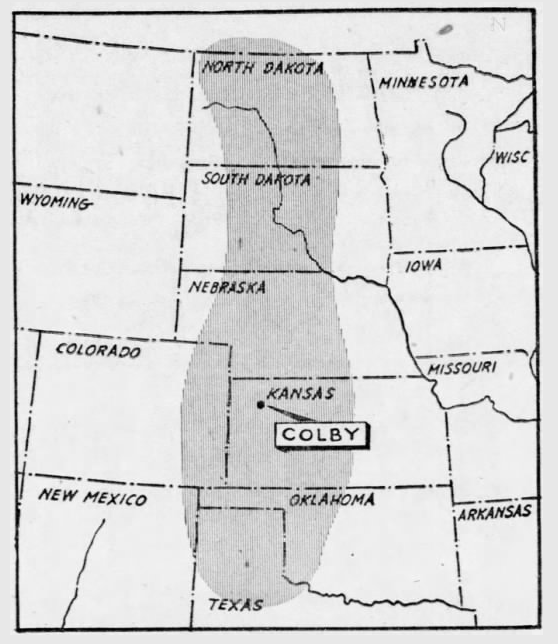
Our model warns that we may see another severe drought probably between 2025 to 2027 in both the US and Canada. The drought conditions are already beginning and this is in line with our model which warns it will expand into the 2025-2027 period.

Therefore, to answer your question more directly, it appears that we have a shortage first instigated by the outrageous stupidity of COVID management, and this is the accelerated by the War Cycles, and it will conclude with the weather cycle which will only add to the shortages post-2024.

Tenuous Winter Wheat Crops Could Become Problematic


Posted originally on the conservative tree house on March 20, 2022 | Sundance

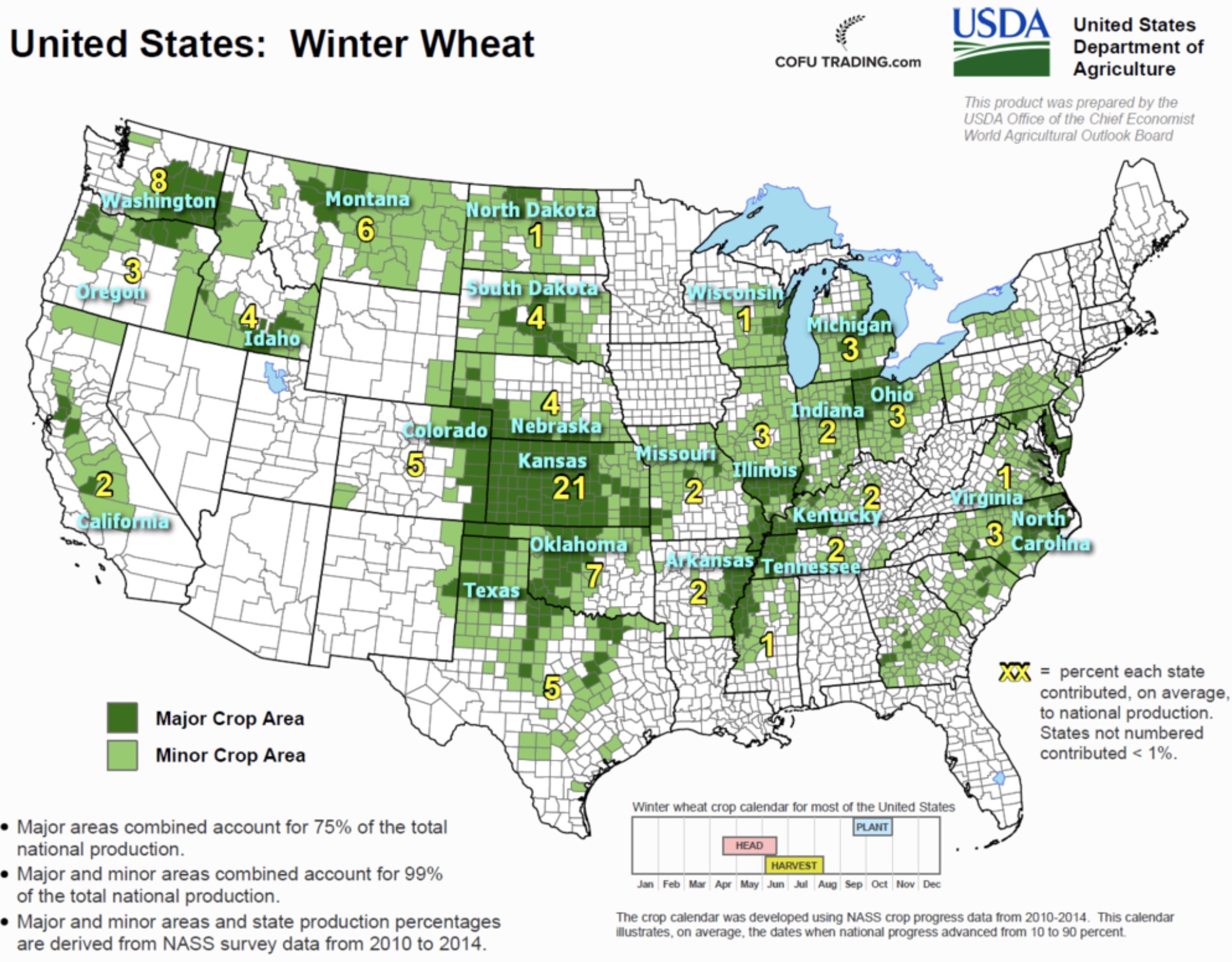
Wheat is an essential grain harvest in the overall food chain.  Winter wheat is planted in October and harvested the following June and July, however, the U.S. crop this year is in a tenuous position because of severe drought in the plains.  Kansas represents about a quarter of the U.S. harvest and is currently suffering through an extended dry season.

Last week, “Kansas Governor Laura Kelly declared a drought emergency, warnings and watches for every county in Kansas on Thursday due to dry conditions causing high fire danger.” (link)

We need to keep an eye on this, and it would be wise to make proactive preparations now for the possibility of a severe shortage.  This potential is what has driven the price of wheat futures, and when combined with the issues in Europe’s largest wheat producer, Russia, there’s a very real possibility of a global shortage of wheat.

The early March warnings are beginning to become more important.  “The world has grown hugely dependent on Ukraine and Russia for their wheat, a crop used in everything from bread to couscous and noodles. The nations account for a quarter of global trade. They are also cheap suppliers, which makes their exports favorites for importers in the Middle East and North Africa, including in Egypt, the world’s biggest wheat buyer.” (link)

Back to the U.S.A:

March 14 (Reuters) – A worsening drought in the southern U.S. Plains is threatening the region’s winter wheat crop just as the Ukraine crisis dents global supplies.

Some farmers in southwestern Kansas, the top U.S. wheat producing state, have not received much measurable rain or snow since October. Winter wheat is planted in autumn, lays dormant in winter and begins sending up green shoots in spring. Proper soil moisture is critical at this stage for the crop to thrive.

More than half of Kansas was classified as under severe drought or worse as of March 8, the driest conditions since 2018, according to the National Drought Mitigation Center. Severe drought is also covering three-quarters of Oklahoma and more than two-thirds of Texas, both of which also are large wheat producers.

Water woes follow a freak December windstorm that swept away some topsoil in parts of the U.S. wheat belt, damaging some cropland.

U.S. hard red winter wheat represents nearly half of the country’s overall wheat production and is milled mainly for bread flour. A reduced crop could further stoke food inflation that the United Nations Food and Agriculture Organization (FAO) said was the highest-ever in February. The FAO’s Food Price Index averaged 140.7 points last month, a 20.7% increase from a year earlier and surpassing the 2011 record.

U.S. wheat futures soared to the highest levels in 14 years early last week as the Russia-Ukraine conflict pushed two of the world’s largest wheat exporters out of the market, leaving importing countries scrambling for replacement sources.

Meanwhile, the winter wheat crop in China, the world’s largest producer of the grain, is expected to be among the worst ever after heavy rainfall delayed planting. (read more)

We need to watch this one closely, and it would not be a bad idea to purchase some of your own bread making supplies a little earlier for storage.

Wheat, corn and soybeans are the foundation of the U.S. food supply. They are primarily used as ingredients in processed foods, oils, and are fed to the cattle, hogs, and poultry that supply meat and eggs for the American diet.  When those grain harvests go up in price, the downstream increase in price is far reaching.

Lara Logan Gives a Brutally Honest Assessment of Ukraine and U.S. Politics


Posted originally on the conservative tree house on March 20, 2022 | Sundance

Lara Logan is not the type of journalist who will pull punches when she shares insight and information.  Logan cuts to the chase and avoids pretending the issues are something other than what reality exists.

In this short interview segment, Lara Logan outlines her brutally honest perspective on why Ukraine is ultimately so important to people in power within the DC system. {Direct Rumble Link Here WATCH:

Bloomberg Has Inflation Advice for Proles Making Less Than $300k a Year – Shut Up, Eat Lentils, Ride the Bus and Kill Your Pets


Posted originally on the conservative tree house on March 19, 2022 | Sundance

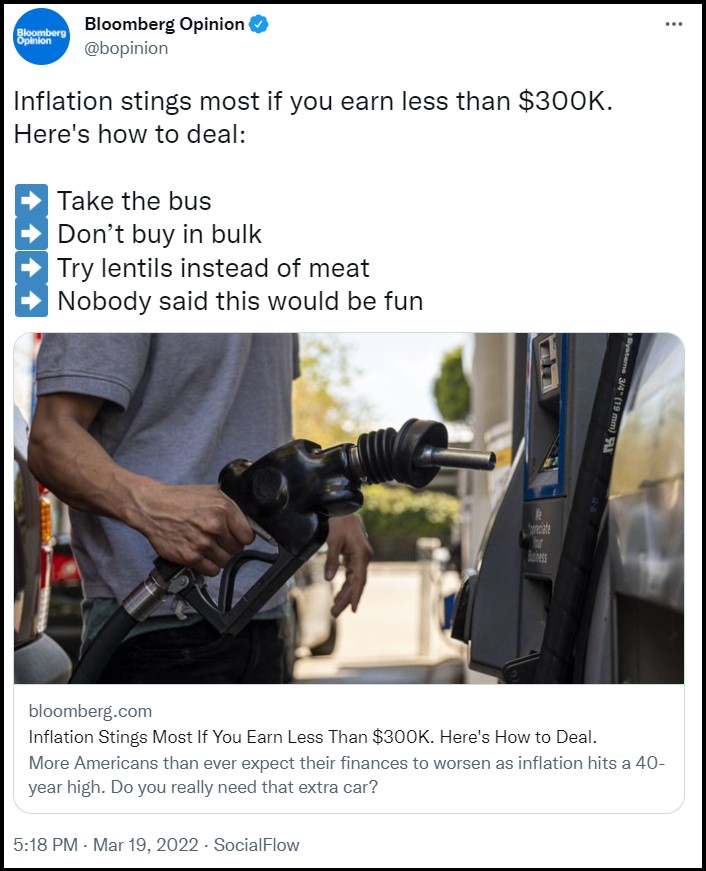
You might wonder what the ruling class thinks of how inflation is hitting middle America.   For insight into their perspective, Bloomberg News just published some suggestions for all the unwashed masses – as defined as those who don’t earn $300,000 per year.

The advice includes, shut up about the price of food, and eat lentils instead of meat. Quit bitching about gasoline prices, and just ride the bus, and the coup de grâce, “If you’re one of the many Americans who became a new pet owner during the pandemic, you might want to rethink those costly pet medical needs.”

Yeah, they said that.  Us pesky proles and our pets are just mucking up the planet for the rest of them.

Tweet Source Link – Article Link ]

The ‘inflation sucks, but that’s your issue, not ours’ article is authored by Teresa Ghilarducci.  According to her self-described bio, she “is the Schwartz Professor of Economics at the New School for Social Research. She’s the co-author of “Rescuing Retirement” and a member of the board of directors of the Economic Policy Institute.”

So, the think-tank economists who shape policy have a solution for all the complaining scrubs earning less than $300,000/yr who are now dealing with the inflation that leftist policy has created.  The elitist arrogance, in the “no one said this would be fun” approach, is quite remarkable.  However, it does show the snob-set no longer feel the need to filter their elitism.

The class gap has always existed, and whenever leftist policies are in place, that gap gets wider every second.

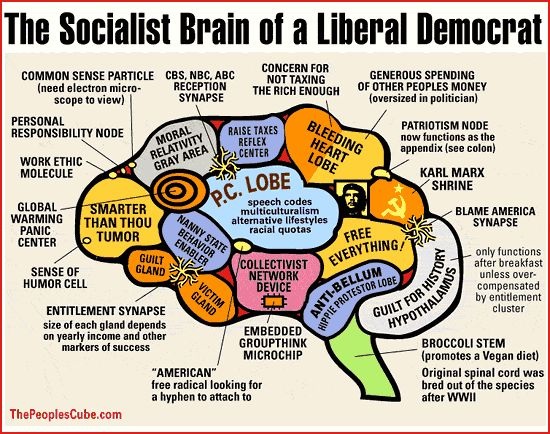
It would appear that somewhere in the recesses of Ms. Ghilarducci’s frontal cortex, she has snuffed out the glowing ember of the common sense particle given by her parents.  In the brain of the Bloomberg author, the synapse for the common sense particle was pinched between the ‘Smarter than thou tumor‘ and the expanding grey brain matter of moral relativity needed to sit and type this bulls**t.

Within her diatribe, you can see the author is lacking a guilt hypothalamus, which removes any feeling of being uncomfortable in her elitist pontifications. She types away, without a clue, as the party groupthink metastasizes in her brain.

The working class really, I mean REALLY, needs to stop servicing the group who hold this mentality.  I’ve said this before and I’ll repeat it again. Don’t do their shopping, don’t make them coffee, don’t pick up their trash, don’t clean their pools, cook their meals, accept their laundry or dry cleaning, or facilitate any process in their lives.

Don’t serve them, don’t wait on them, don’t deliver to them; instead, make them do everything themselves, and you know what will happen – they’ll collapse.

Americans Want Energy Independence


Armstrong Economics Blog/Energy Re-Posted Mar 17, 2022 by Martin Armstrong

Americans want President Biden to “green light the restart of the building of the Keystone XL pipeline that would transport oil from Canada’s oil sands region through the Midwest to refineries in Texas.” Maru Public Opinion for Postmedia noted in a poll that 71% of Americans support the idea. Around 39% state they favor the idea very much, while another 32% reported somewhat favoring the idea. Around 16% somewhat oppose the idea, and 13% remain very opposed. “It would appear that the public, given the current circumstance, has decided that this is a bipartisan solution to what is now an unprecedented circumstance,” John Wright, Maru Public Opinion’s executive vice-president, stated.

If Joe Biden didn’t kill the project the moment he took office, it would be ready for operation in Q1 of 2023. Experts say it would now take much longer to complete the pipeline amid supply shortages. Last week, Democrats blocked a motion put forward by Republicans called the American Energy Independence from Russia Act to once again prevent America from becoming energy independent.

“This week our president — our American president — asked Venezuela and Saudi Arabia to increase oil production, asked them to boost their output so that American consumers wouldn’t see a spike in gas prices,” Rep. Dan Crenshaw (R-TX) said. “Surely, [Biden] knows we can also boost domestic production right here at home. Surely he knows that domestic production supports American jobs, and surely he knows that domestic production is cleaner, by far, than foreign production.”

That’s right — Biden turned to hostile dictators for help instead of tapping into the numerous options he has available at home. His policies are disingenuous and do not represent the wishes of the people who allegedly elected him.