Joe Biden Pushing Vaccine Booster, But Only 20 Million Have Decided to Remain on Ronacoaster


Posted originally on the conservative tree house on October 25, 2022 | Sundance 

During a vaccine promotion today where Joe Biden received his COVID-19 vaccine booster, he mentioned that only 20 million Americans had decided to remain on the vaccine ronacoaster and get the booster shot.

Interestingly, there was a representative from Albertsons in attendance.  Kroger and Albertsons have a pending merger deal.  Curious timing.

[Transcript HERE]

White House – […] Good afternoon.  I’m here today with my COVID team, as well as leaders from some of America’s top pharmacies: Walgreens, CVS, Rite Aid, Albertsons.  And we’re here with a simple message: Get vaccinated.  Update your vac- — your COVID vaccine.
 
It’s incredibly effective.  But the truth is, not enough people are getting it.  We’ve got to change that so we can all have a safe and healthy holiday season.  That’s why I’m getting my shot updated today. (more)

The Albertsons and Kroger Merger Faces Legislative Scrutiny as European Company Ahold Assembles Competitive Bid


Posted originally on the conservative tree house on October 22, 2022 | Sundance 

Last week we discussed the announcement of a $24.6 billion merger deal between Kroger and Albertsons supermarkets {Go Deep}.  The majority stockholders in both companies are institutional investment groups, Blackrock, Vanguard and Cerberus.

The merger would consolidate the second and third largest food retailers in the U.S. and would certainly dilute the competitive dynamic amid the supermarket industry.  Concern over price controls and decreased competition has now arrived on the desks of DC legislators who are reviewing the deal.

(Reuters) – […] U.S. Democratic Senator Amy Klobuchar and Republican Senator Mike Lee were quick to say that they would hold a hearing to discuss the merger. A European interloper could make deal plans even harder.

Frans Muller, Chief Executive of Stop & Shop owner Ahold Delhaize (AD.AS), has made no secret of his desire to consolidate U.S. grocers. The Netherlands-based firm is already the fourth largest grocery chain. If it managed to cobble together a better offer than Kroger’s bid for Albertsons, it would become the second largest supermarket. Plane spotters tracked two Albertsons jets next to Ahold Delhaize’s U.S. base in Massachusetts in early August. Ahold declined to comment.

Ahold can also afford a chunky deal. The Dutch grocer has debt of just 2 times its $6.7 billion of EBITDA estimated for this year, according to Refinitiv. That’s 50% less than the average. If investors reckoned there was merit in a deal, Muller could also use equity to beef up the offer. At more than 12 times, Ahold’s price-to-earnings ratio is a fifth higher than Albertsons’, giving it currency.

Aspects of the deal might make it easier for antitrust authorities to get comfortable, too. Kroger and Albertsons would have a combined market share of 13%, whereas a deal with its Dutch rival gives much less of the pie. Ahold focuses on the East Coast of America whereas Albertsons has a big presence on the West Coast. So regulators wouldn’t have to worry about a larger Kroger shutting down competing Albertsons stores.

[…] U.S. senators who scrutinise antitrust issues expressed “serious concerns” about grocery company Kroger’s plan to buy rival Albertsons, and said they would hold a hearing in November on the $25 billion deal.

The announcement by Democratic Senator Amy Klobuchar, chair of the Senate Judiciary Committee antitrust panel, and Republican Senator Mike Lee confirmed a previous report by Reuters.

A Kroger spokesperson said the company looked forward to the hearing. “We welcome the opportunity to outline how this transaction will benefit America’s consumers by expanding access to fresh, affordable food,” the company said in a statement.

The Federal Trade Commission is expected to review the deal to ensure it complies with antitrust law. (read more)

This might be one of those rare times when a legislative and regulatory review may actually be beneficial to the outcome for the consumer.

December 16, 2020, Dozen Large Eggs $1.79

October 11, 2022, Dozen Large Eggs $7.29

(Source)

(DCBusinessDaily) – […] Scott Rasmussen Number of the Day shows 76% of voters have seen their grocery prices go up in the last month. The poll also found 60% of voters believe prices will continue to rise. Additionally, 54% of voters say gas prices have gone up in the last month and 59% believe gas prices will continue to go up. Ballotpedia’s poll methodology surveyed 1,200 registered voters from Oct. 6-8. According to the Ballotpedia website, the poll was lightly weighted by geography, gender, age, race, education, internet usage and political party to reflect a fair balance of voters across the country. The margin of sampling error is +/- 2.8 percentage points.

The U.S. Bureau of Labor Statistics issued its latest Consumer Price Index (CPI) summary for the nation on Oct. 13, which found that the rate of inflation over the last 12 months stands at 8.2%. It rose 0.4% in September. In the last year, food costs have risen by 11.2%, energy costs have increased by 19.8%, gas prices have risen by 18.2% and the cost to purchase a new vehicle has increased by 9.4%. (more)

The Next Winter of Death


Armstrong Economics Blog/Corruption Re-Posted Oct 18, 2022 by Martin Armstrong

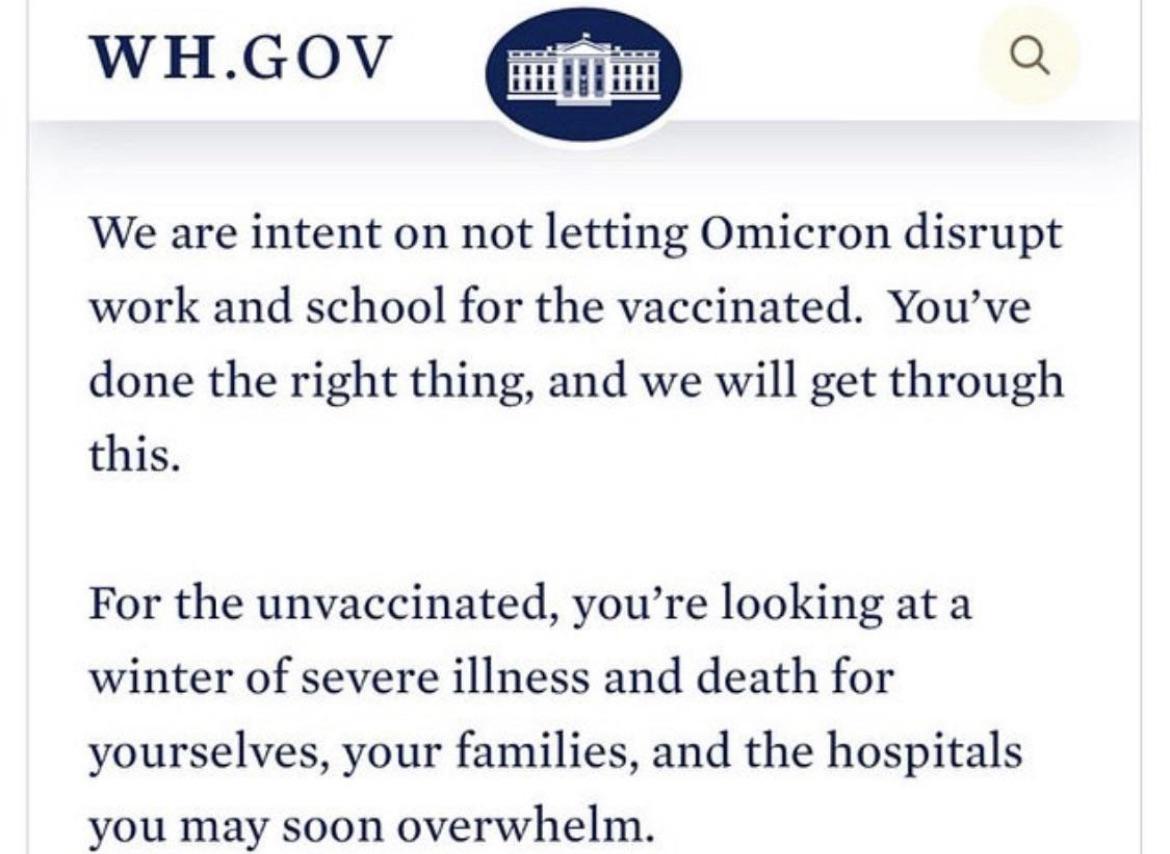
Remember when Biden publicly chastised the unvaccinated population last year? Do the “right thing,” and you will “get through this.” Those selfish enough to choose medical autonomy, the president stated, were “looking at a winter of severe illness and death for yourselves, your families, and the hospitals you may soon overwhelm.”

We have definitive proof that Pfizer did not test the vaccine against transmission. Governments globally pushed a false narrative, a blatant lie, to force people to take these vaccines. Biden’s memorable speech demonized a portion of the population. You will get sick because of them.

Now that the lie has finally been revealed, the White House is still pushing Americans to receive yet another booster. Headlines are appearing across the liberal news about the “temperatures dropping,” as if that is a factor. Look into it yourself, and you will notice the “temperatures dropping” fear-mongering in the media as if COVID and not the depletion of energy resources should be the catalyst for fear.

The White House expected between 13 and 15 million Americans over the age of 12 to receive another dangerous booster. That means only 5% of the eligible population is willing to play along with the COVID games. Washington and the CDC will unleash a marketing campaign to sell the toxins one way or another, but fewer will comply. Politico reported that they expect less than 30% of the population to receive the next shot.

The next winter will be one of death and destruction, but not because of COVID. The energy crisis will cause death and destruction, as will the war in Ukraine and every nation it “may soon overwhelm.”

Leading Edge of Field to Fork Inflation Starts to Arrive in September Producer Price Index


Posted originally on the conservative tree house on October 12, 2022 | Sundance 

The “Producer Price Index” (PPI) is essentially the tracking of wholesale prices at three stages: Origination (commodity), Intermediate (processing), and then Final (to wholesale). Today, the Bureau of Labor and Statistics (BLS) released September price data [Available Here] showing another 8.5% increase year-over-year in Final Demand products at the wholesale level.  However, that’s not the bad news in this data.

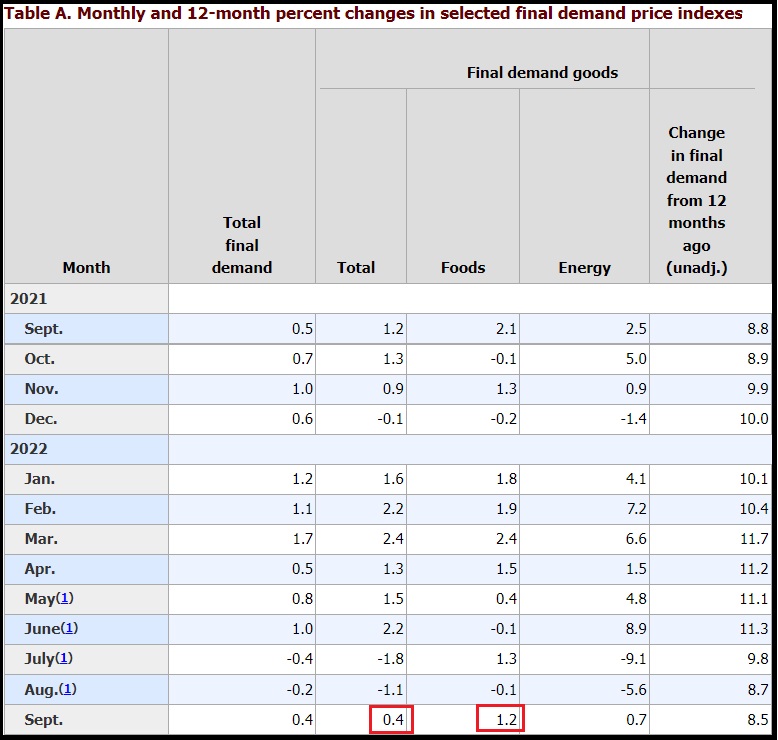
While the overall September PPI was higher than expected at 0.4%, the Final Demand Producer Price for food products in September was a whopping 1.2% (14.4% annualized).

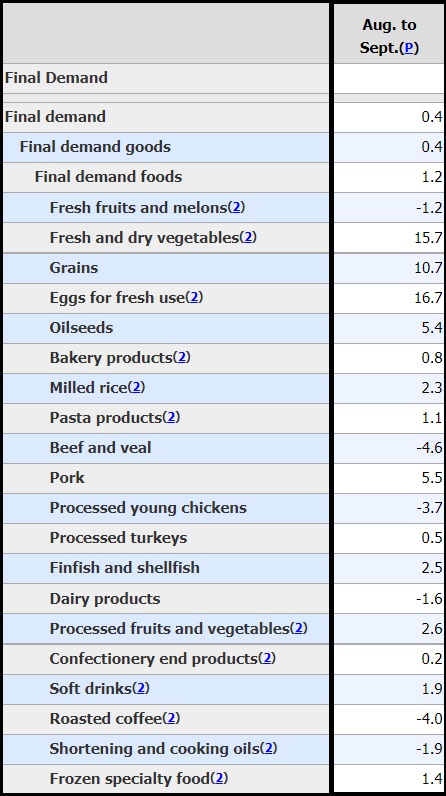
The BLS notes the driver by saying, “a major factor in the September increase in prices for final demand goods was a 15.7-percent advance in the index for fresh and dry vegetables. Prices for diesel fuel, residential natural gas, chicken eggs, home heating oil, and pork also moved higher.”

That’s a 15.7% increase in price, in one month, for fresh and dry vegetables.  Annualized that’s a rate of price increase of 188.4% for vegetables.   Remember the warning about farm costs (energy, fertilizer, fuel) driving field to fork inflation at harvest?  This is the leading edge of that third wave of food price increases.

I have modified BLS Table-2 to focus specifically on food costs.  The data is on left.

You will note that ‘row crops’ are the big drivers along with grain and seed products.  This is exactly as we predicted it would be because those specific farming costs are the ones with greatest increase from energy, fuel, fertilizer, weed and insect control, and diesel costs.

All of those higher costs have been growing in the fields and will now surface at harvest.   The higher farm costs transfer from the field to the fork via the food supply chain.  This is only the leading edge of the price increase.

In October 2021 we first warned of the food price increases coming in distinct waves.  The first was Jan, Feb and March 2022.   The second wave was May through July 2022.  This third wave will be bigger than the first two and starts arriving this month, October 2022.

People laughed at me when I said in late 2022 eggs were going to reach .50¢ EACH ($6/doz).

Well, in September the price of fresh eggs jumped 16.7% in a single month.  That’s an annualized rate of price increase for eggs over 200%.

With hindsight you can clearly see the three waves of food price increases (BLS Table A):

Get ready and shop smart.

The October, November and December price increases in the grocery store are going to make the prior fresh food increases look small, as the full increased costs of farming operations starts to arrive at the supermarket.   Unfortunately, this will coincide with a wave of gasoline price increases, and the prices of natural gas are already skyrocketing.

.

Holiday Expenses Rise in Canada


Armstrong Economics Blog/Canada Re-Posted Oct 10, 2022 by Martin Armstrong

Wishing our friends in the north a happy Thanksgiving.

Canada’s Thanksgiving is not as widely celebrated as America’s November feast. However, outside Quebec, around 90% of Canadians plan to celebrate the holiday. Everything from fuel to food is more expensive this year. Statistics Canada reported a 10.8% rise in food prices this August, marking the fastest pace of food inflation since 1981.

The Agri-food Analytics Lab (AAL) and Angus Reid conducted a survey (sample size 1,244) to see how Canadians plan to celebrate the holiday this year. Turkey prices have risen 16% per kilogram this year. In British Columbia, 29% of respondents said that they would be making changes to the meals they typically prepare due to food prices, while 25% in Alberta and 20% in Manitoba said the same. Around 19% of those celebrating in Ontario will be changing the menu due to costs, followed by 17% in the Atlantic, 10% in Quebec, and 8% in Saskatchewan.

In addition to turkey prices increasing, potatoes have spiked by 22% this year. Bread and dairy prices have gone up 13%, while cranberries have increased by 12%. Prices vary based on location, but they’re up in every province. So many are grateful for the harvest, albeit less bountiful.

Categories: Canada

Dallas Fed: Over Half of Americans Experienced Real Wage Declines This Year


Armstrong Economics Blog/Inflation Re-Posted Oct 10, 2022 by Martin Armstrong

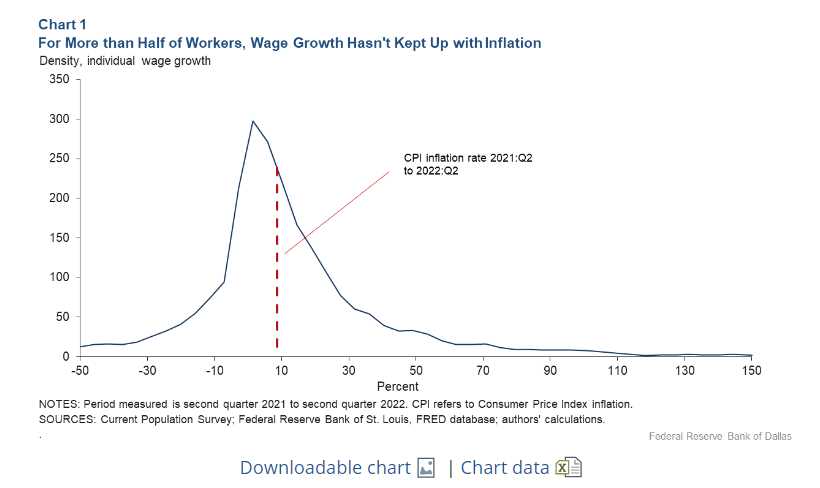
The Dallas Federal Reserve found that the decline in real wages is at a severity not seen in 25 years. Simply put, when adjusted for inflation, American’s paychecks are down despite wages going up. The median decline in real wages surpassed 8.5% this September.

"How severe are the losses for workers experiencing negative real wage growth? For the 53.4 percent of such workers in second quarter 2022, the median decline (that is, half of the declines were larger and half smaller) in real wage growth was 8.6 percent."

After examining real wages over the course of 12 months, the Dallas Fed found that 53.4% of all workers experienced real wage declines. Additional taxes under Biden have added to real wage decline as well. Peter C. Earle of the American Institute for Economic Research estimates that someone earning $70,000 annually now has $4,500 less in buying power in New York. “The bill for the Covid mitigation policies is due,” Earle said. “Record levels of fiscal and monetary policy expansion in the first half of 2020 are wrecking the purchasing power of the dollar. Thus even without a pay cut, wage earners are effectively earning less over time.”

The average median decline over the past 25 years has been 6.5% with real wage declines reaching between 5.7% to 6.8%. Inflation is simply too severe to compensate for any additional wages. The Fed continued to say:

"Despite the stronger wage growth due to the tightness of the labor market, a majority of workers are finding their wages falling even further behind inflation. For workers who experienced a decline in their real wage in second quarter 2022, the median decline was 8.6 percent.

While the past 25 years have witnessed episodes that show either a greater incidence or larger magnitude of real wage declines, the current time period is unparalleled in terms of the challenge employed workers face."

Interview: The World According to Martin Armstrong


Armstrong Economics Blog/Armstrong in the Media Re-Posted Sep 29, 2022 by Martin Armstrong

Click here to listen to my latest interview with Kerry Lutz from the Financial Survival Network.

Commentary from Kerry:

The world is a mess and things aren’t getting better. There’s no end in site to the Ukraine war and the situation in Europe keeps getting worse and worse. We sit down with Martin Armstrong to get the latest update. He sees gold going much higher in Q1 2023. The loss of faith in all governments keeps increasing. China is a lost cause as well. But the US is a beneficiary of everyone else’s misery. That’s just the way the world works.

Martin sees a major backlash coming in the aftermath of the 2022 mid-term elections. His model is questioning whether or not the 2024 presidential election will even take place. What could possibly happen to stop it and does it matter anyway? This is a must listen to interview.

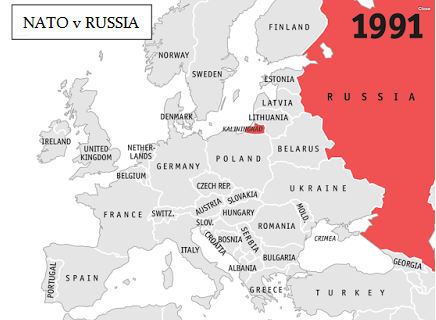
NATO Preparing for World War


Armstrong Economics Blog/War Re-Posted Sep 29, 2022 by Martin Armstrong

I know for a fact that the US military is deploying some reservists to Romania to train European soldiers. The reservists have been told that the war will escalate, and as a soldier told me, “things are getting really bad over there.” They will be training the Europeans to fight against Russians for at least six months. NATO is constructing a battlefield in Romania for this extensive training. The Cincu military training facility already exists but is undergoing a massive expansion.

This is precisely what Russia feared long before entering Ukraine. I reported that Russia knows it is fighting the West and not simply Ukraine. NATO has increased its presence around Eastern Europe this year and has no plans to de-escalate the situation. There are over 40,000 troops on the ground across Eastern Europe, and more are set to arrive. In fact, NATO will establish four additional “multinational battle groups” in Hungary, Romania, Slovakia, and Bulgaria.

Colonel Vincent Minguet, the commander of the NATO Combat Group in Romania, said the plan is for “the creation of a permanent, stronger battalion, with more heavy weapons, to prevent any aggression or any destabilization in Romania.” Alarmingly, Minguet believes that training will last for four or five years. They are planning for a long-term ongoing battle fought among numerous nations, aka a world war.