India Angers China with Neutrality on Taiwan


Posted originally on Jun 12, 2024 By Martin Armstrong 

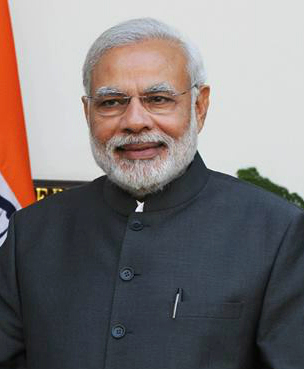
Modi

India has made an attempt to remain neutral throughout this massive world conflict. They are in BRICS, conduct business with the West, and abstained from voting for ceasefire between Israel and Palestine. Yet it is not possible to remain neutral amid such intense tensions between nations. India recently angered China by accepting a congratulatory message from Taiwan’s newly appointed president.

“I look forward to closer ties as we work towards mutually beneficial economic and technological partnership,” Indian Prime Minister Narendra Modi told Lai Ching-te after Taiwan’s new president congratulated him on his re-election. Lai Ching-te posted on social media that he looks forward to “enhancing the fast-growing Taiwan-India partnership.”

Taiwan is expected to hire up to 100,000 Indian workers, while India is posed to open trade with Taiwan. India does not officially have a stance on the One China policy but China views any neutrality as aggression. Chinese Foreign Ministry spokesperson Mao Ning released a statement after the short interaction between Modi and Lai Ching-te.

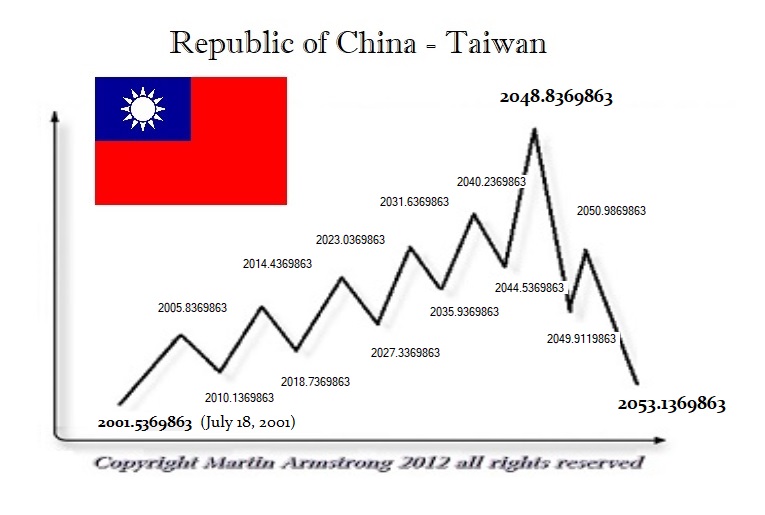
Taiwan ECM 2

First of all, there is no such thing as ‘president’ of the Taiwan region. As for your question, China opposes all forms of official interactions between the Taiwan authorities and countries having diplomatic relations with China. There is but one China in the world. Taiwan is an inalienable part of the territory of the People’s Republic of China,” Ning said when asked about the Modi-Lei exchange. “The one-China principle is a universally recognised norm in international relations and a prevailing consensus in the international community,” Mao said, adding, “India has made serious political commitments on this and is supposed to recognise, be alarmed about and resist the Taiwan authorities’ political calculations. China has protested to India about this.”

India has been on the rise. It is willing to conduct business with anyone, but that may come at a price if it angers the wrong trading partners. Taiwan and India signed the Bilateral Investment Agreement (2018), Air Services Agreement (2016), and Labor Cooperation Pact (2024). Trade between India and Taiwan reached $7.7 billion in 2021, and over 100 Taiwanese companies are now invested in India.

It remains to be seen how long India can remain neutral, not just in the Indo-Pacific but amid growing global tensions. Still, India is prioritizing domestic interests first and foremost and reaping the benefits.

India Sets Export Restrictions on Popular Ingredient


Posted originally on Dec 11, 2023 By Martin Armstrong 

India 12 2020 Protest Farmers

Onions are the latest food staple facing extensive export restrictions in an effort to control domestic prices ahead of India’s 2024 national election. The Indian government has banned the export of onions until March 31, following similar measures for wheat and rice. These actions aim to boost domestic food supply and shield consumers from rising costs.

The nation is also restricting the usage of sugar cane juice in biofuel production to grow its reserves.  The nation has also curbed wheat and rice exports in recent years and imposed significant duties. The restrictions have led to concerns about food inflation, prompting the government to take steps to stabilize the food supply.

The current food inflation rate in India is 6.61% as of October 2023, according to the Ministry of Statistics and Programme Implementation. This marks a slight decrease from the previous month’s rate of 6.62%. The cost of food in India increased by 6.61% in October 2023 compared to the same month in the previous year. The inflation rate for food in India is expected to be 5.90% by the end of the current quarter, but the government is preparing for higher food prices GLOBALLY.

As for the central bank, the Reserve Bank of India’s decision to leave its key policy rate unchanged has raised worries about higher food prices. The average retail prices of onions, rice, sugar, and tomatoes in India have seen noteworthy increases compared to the previous year.

Panic Buying Starts Again


Armstrong Economics Blog/Agriculture Re-Posted Jul 29, 2023 by Martin Armstrong

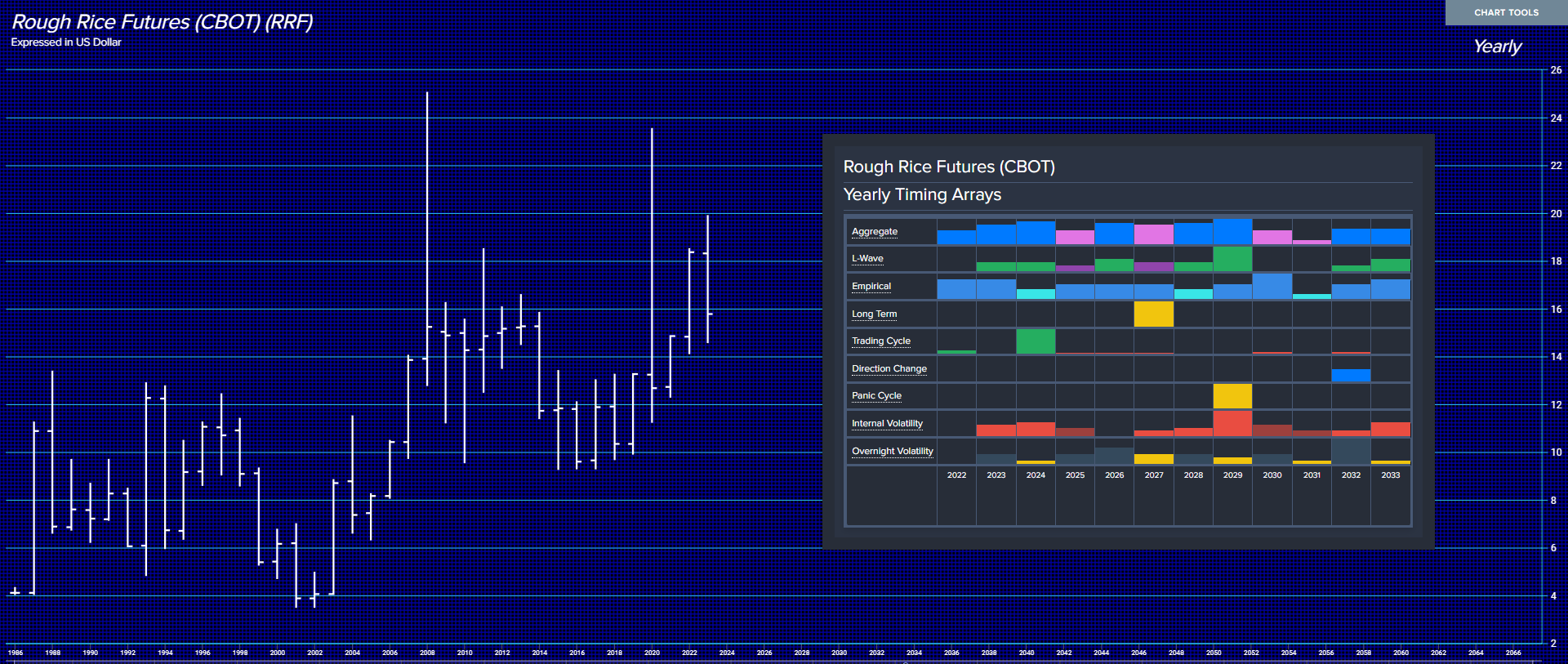
First, it was toilet paper, then baby formula, and now it’s non-basmati rice that people are running to the stores and buying in bulk. India has put into effect on July 20th the ban on non-basmati rice in order to calm domestic prices. According to the International Food Policy Research Institute, the global rice market prices have already risen 15%-20% since September of 2022. People have already started panic buying in Texas, Washington, Michigan, and other states. It has not hit every state yet; the impact of this ban has been more so in the regions of larger Indian-origin populations. Most grocery stores have already allegedly limited one bag of rice per customer. Wholesalers and other companies have been adjusting prices which leads to price gouging, so rice is selling for double than usual.

Rice was already at a high point price-wise during Covid-19 and with the war in Ukraine, it gouged the cost of wheat, causing rice production to increase. Allegedly, according to a store owner, there has not been a date specified that this ban in India exports will lift. He is suggesting that this ban will be anywhere from 6-8 months.

Socrates has projected that volatility would rise starting here in 20203, and prices should rise further into 2024. Thereafter, geopolitical instability may further impact supply.

Iran and Saudi Arabia – Mutual Friends


Armstrong Economics Blog/World Trade Re-Posted Jun 7, 2023 by Martin Armstrong

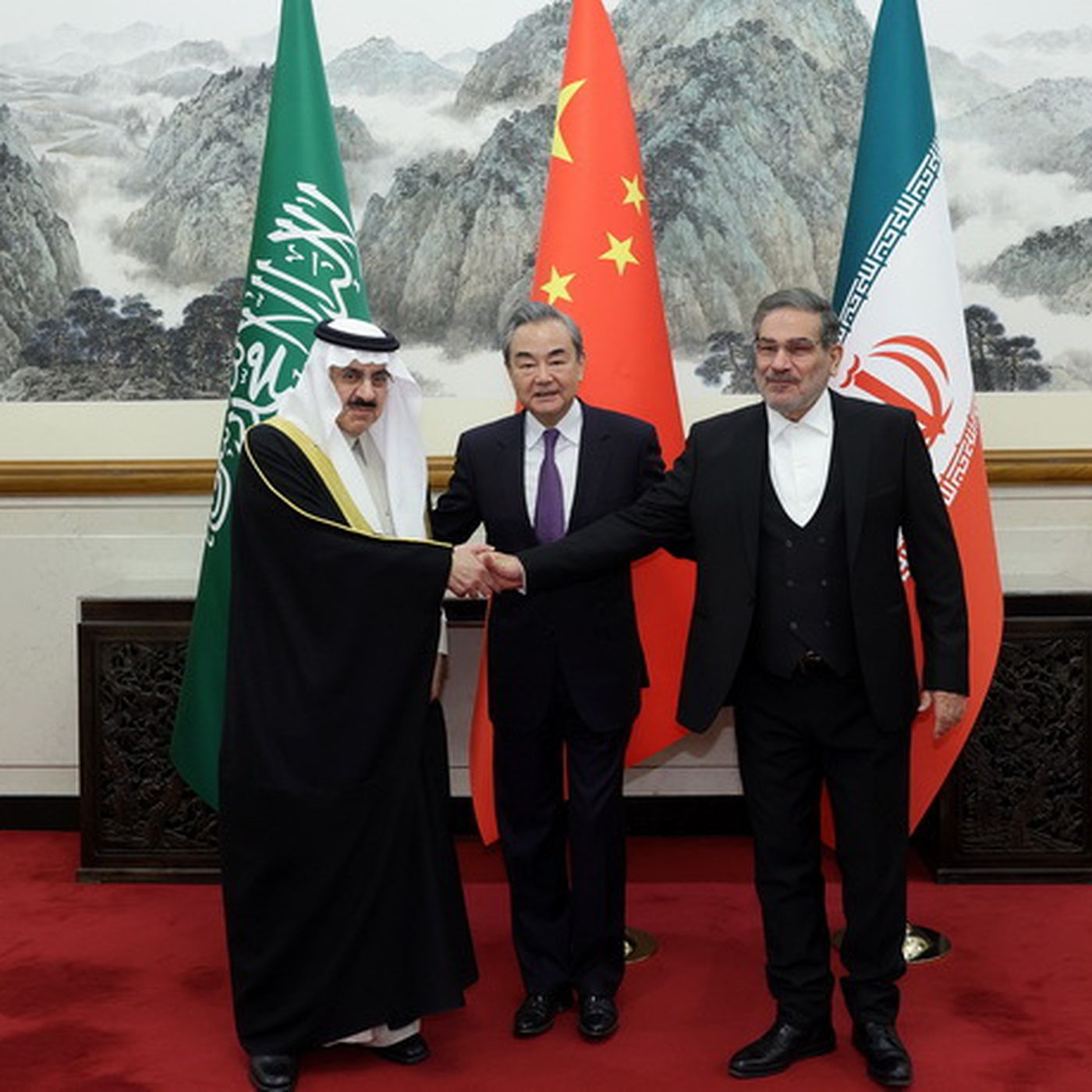
Iran and Saudi Arabia are now mutual friends through China. The two countries had been sworn enemies since the beginning of time, representing conflicting Shiite and Sunni Muslim groups that have been battling since their religion was founded. They were murdering one another through a proxy war in Yemen that has left over 150,000 dead. Then the unthinkable happened – the two nations came together at the request of China and made amends.

Chinese President Xi Jinping made them an offer they couldn’t refuse – the potential to form a strong alliance through trade without Western influence. Saudi Arabia issued a shocking press release in March, given the deep hatred it had for Iran. Saudi Arabia stated it was keen on “developing good neighborly relations…in light of their brotherly ties.”

Now, Iran announced it is reopening its embassy in Saudi Arabia as the two continue to put their differences aside for the prospect of economic prosperity. The embassy closed abruptly in 2016 after Saudi Arabia executed a Shiite cleric, leading to mass protests outside the embassy in Tehran. Riyadh and Tehran have not had diplomatic relations since.

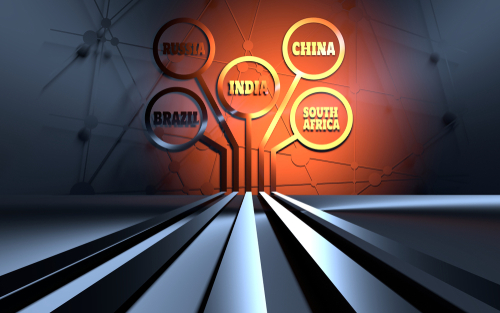
Iran and Saudi Arabia would like to join the BRICS alliance between Brazil, Russia, India, China, and South Africa. If the two nations join, all major energy exporters will be within this alliance. BRICS currently contains 42% of the global population and over a quarter of the global economy. There would be absolutely no need for Western interference, and the threat of sanctions would hold little meaning. Saudi Arabia has already begun settling some oil transactions in the yuan instead of the dollar. Iran has been aggressively trading with the bloc; non-oil trade between BRICS and Iran reached $38.43 billion in the 2022-2023 fiscal year, marking a 14% year-on-year increase. China is Iran’s top trading partner in the BRICs alliance, with $30.32 billion of the aforementioned funds going directly to Beijing. An alliance could mean economic domination.

China seems to have done the unthinkable by brokering a peace treaty between the two nations. Opening an embassy signals that the countries are now ready to begin diplomatic relations once again. The BRICS alliance is growing stronger by the day, and there are rumors of the UAE, Egypt, Algeria, Bahrain, and even Turkey requesting to join. As our models have been warning, China is posturing itself to claim the throne of the financial capital of the world by 2032.

South Africa Offers Putin Diplomatic Immunity Ahead of BRICS Summit


Armstrong Economics Blog/War Re-Posted May 31, 2023 by Martin Armstrong

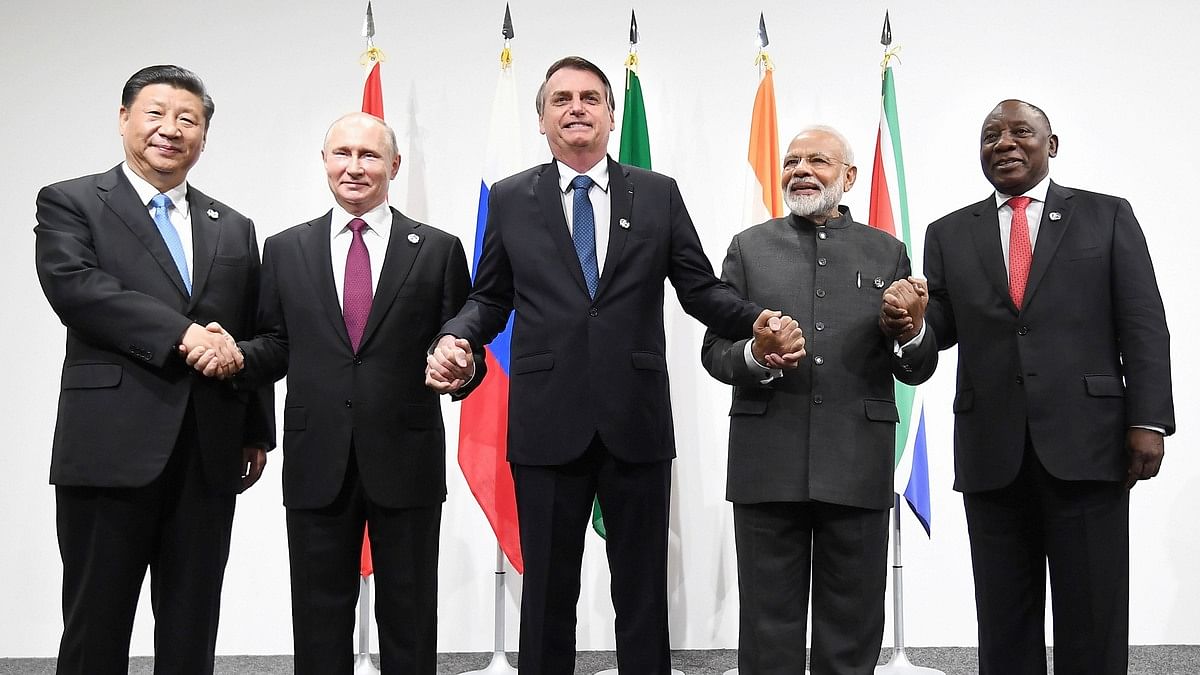
The BRICS (Brazil, Russia, Iran, China, South Africa) alliance is stronger than ever. The 15th annual meeting will be hosted in Cape Town, South Africa, and government leaders are urging all to attend. However, the International Criminal Court (ICC) has an outstanding warrant for the arrest of Vladimir Putin and South Africa is a member state.

President Cyril Ramaphosa understands the importance of the BRICS alliance and considered abandoning the ICC entirely before backtracking on his stance. Instead of leaving the ICC, South Africa now declares that it will grant diplomatic immunity to Putin to permit him to attend. “It is hereby published for general information that the Minister of International Relations and Cooperation, in terms of section 6(2) of the Diplomatic Immunities and Privileges Act 2001, has recognised (the meetings),” the department said. The terms in the United Nations Convention should prevent the ICC from arresting Putin, who is considered a war criminal for the invasion of Ukraine.

Specifically, the ICC charged Putin “for the war crime of unlawful deportation of population (children) and that of unlawful transfer of population (children) from occupied areas of Ukraine to the Russian Federation (under articles 8(2)(a)(vii) and 8(2)(b)(viii) of the Rome Statute).” Commissioner for Children’s Rights in the Office of the President of the Russian Federation, Maria Alekseyevna Lvova-Belova, is also wanted by the ICC for the same charges. The Kremlin has denied that the deportations were forced and said that they were attempting to save Russian children living in Ukraine. Ukraine only entered the ICC in March of 2022, but numerous countries, including China and the United States, do not recognize “the court of last resort.” Lvova-Belova told news outlets that she was proud of her work in removing children from an active war zone. “It’s great that the international community has appreciated the work to help the children of our country, that we do not leave them in the war zones, that we take them out, that we create good conditions for them, that we surround them with loving, caring people,” she stated.

So, will Putin take the risk? On the one hand, his presence would signal that he is unafraid of international law. On the other hand, the Neocons would delight in an opportunity to arrest the Russian president to begin WW3. A country would need to be extremely careful to arrest the head of a country with nuclear capabilities in the middle of a war.

South Africa Confirms Likelihood of Saudi Arabia Joining BRICS Economic Alliance


Posted originally on the conservative tree house on October 17, 2022 | Sundance

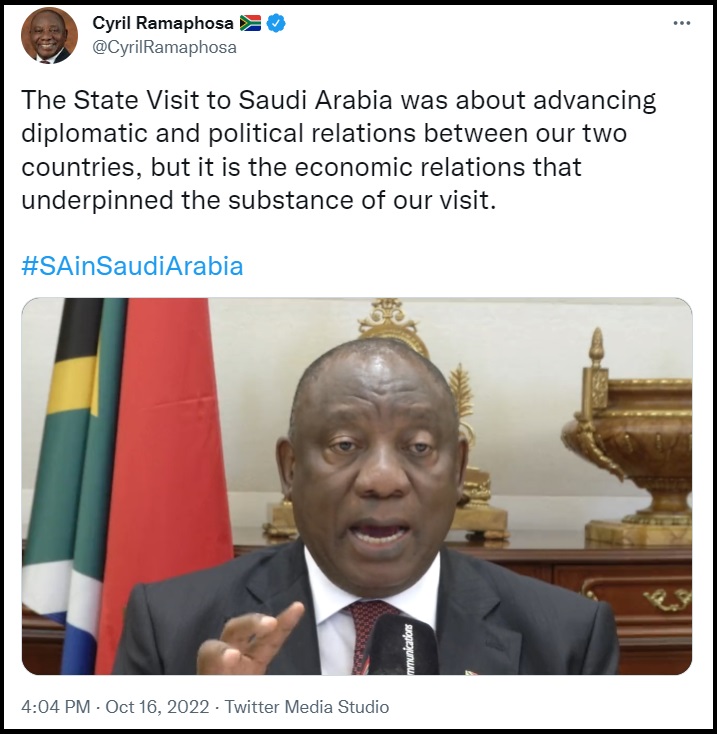
South African President Cyril Ramaphosa held a two-day summit with Saudi Arabia on mostly economic matters.

At the conclusion of the summit, he confirmed the intent of Saudi Arabia to join the BRICS economic coalition, which should not come as a surprise given the previous statements by Saudi leader and Crown Prince Mohamed Bin Salman (MbS).

(MSM) Ramaphosa confirms Saudi Arabia wants to join Brics family.  This was revealed by President Cyril Ramaphosa during his two-day state visit to the kingdom on Sunday.

“The Crown Prince (prime minister Mohammad bin Salman bin Abdulaziz al Saud) did express Saudi Arabia’s desire to be part of Brics and they are not the only country,” said Ramaphosa. He confirmed this on Sunday during an engagement with the media.

Brics held its first summit in 2009, with SA joining the following year. The bloc has generally been seen as an alternative to the dominance of the western economies.

“We did say that Brics having a summit next year under the chairship of South Africa in SA and the matter is going to be under consideration.

“A number of countries are making approaches to Brics members, and we have given them the same answer that it will be discussed by the Brics partners and thereafter a decision will be made.” (read more)

Since the outset of the Western Alliance sanctions against Russia, we have been predicting an increased geopolitical influence from the BRICS team.  A global financial and economic cleaving is underway created by the western nations chasing ideological climate change energy policy, while the rest of the world remains pragmatic toward oil, coal and natural gas as energy resources.

We have been closely monitoring the signs of a global cleaving around the energy sector taking place.  Essentially, western governments’ following the “Build Back Better” climate change agenda which stops using coal, oil and gas to power their economic engine, while the rest of the growing economic world continues using the more efficient and traditional forms of energy to power their economies.

(July 2022) […] “This accession, if Saudi joins it, will balance the world economic system, especially since the Kingdom of Saudi Arabia is the largest exporter of oil in the world, and it’s in the G20,” Hamed said. “If it happens, this will support any economic movement and development in the world trade and economy, and record remarkable progress in social and economic aspects as Saudi Arabia should have partnerships with every country in the world.” (read more)

That would essentially be the end of the petrodollar, and -in even more consequential terms- the end of the United States ability to use the weight of the international trade currency to manipulate foreign government.  The global economic system would have an alternative.  The fracturing of the world, created as an outcome of energy development, would be guaranteed.

Keep in mind, in early June Federal reserve Chairman Jerome Powell stated, “rapid changes are taking place in the global monetary system that may affect the international role of the dollar.”  {LINK}

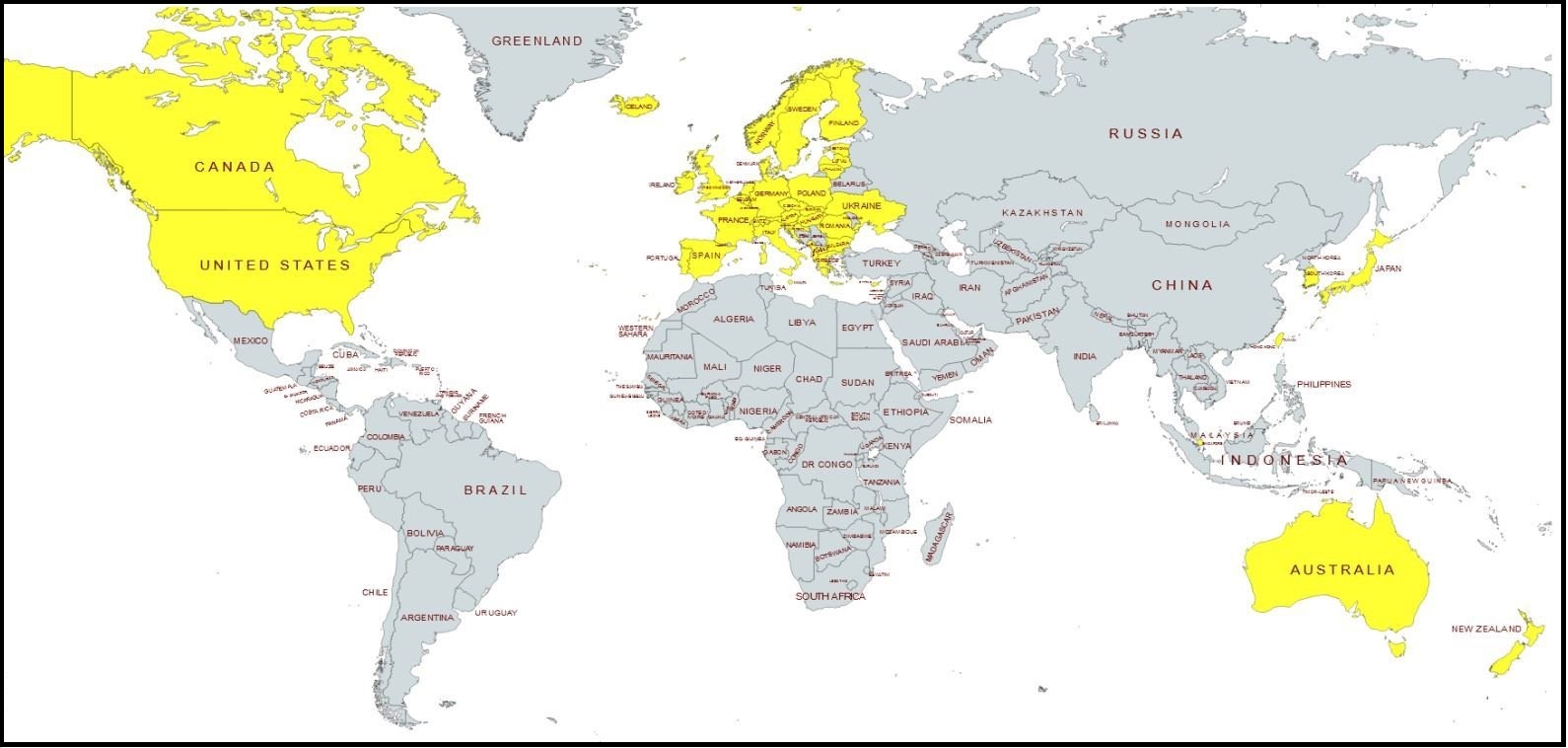
The western alliance (yellow) would be chasing climate change energy policy to power their economies.  The rest of the world (grey) would be using traditional and more efficient energy development.  The global cleaving around energy use would be complete.

This is not some grand conspiracy, ‘out there‘ deep geopolitical possibility, or foreboding likelihood as an outcome of short-sighted western emotion.  No, this is just a predictable outcome from western created events that pushed specific countries to a natural conclusion based on their best interests.

You can debate the motives of the western leaders who structured the sanctions against Russia, and whether they knew the outcome would happen as a consequence of their effort, but the outcome was never really in doubt.  Personally, I believe this outcome is what the west intended. The people inside the World Economic Forum are not stupid – ideological, yes, but not stupid. They knew this global cleaving would happen.

For a deep dive on BRICS, as predicted by CTH, {SEE HERE}.  The bottom line is – the 2022 punitive economic and financial sanctions by the western nations’ alliance against Russia was exactly the reason why BRICS assembled in the first place.

Multinational corporations in control of government are what the BRICS assembly foresaw when they first assembled during the Obama administration.  When multinational corporations run the policy of western government, there is going to be a problem.

In the bigger picture, the BRICS assembly are essentially leaders who do not want corporations and multinational banks running their government. BRICS leaders want their government running their government; and yes, that means whatever form of government that exists in their nation, even if it is communist.

BRICS leaders are aligned as anti-corporatist.  That doesn’t necessarily make those government leaders better stewards, it simply means they want to make the decisions, and they do not want corporations to become more powerful than they are.  As a result, if you really boil it down to the common denominator, what you find is the BRICS group are the opposing element to the World Economic Forum assembly.

The BRICS team intend to create an alternative option for all the other nations. An alternative to the current western trade and financial platforms operated on the use of the dollar as a currency.  Perhaps many nations will use both financial mechanisms depending on their need.

The objective of the BRICS group is simply to present an alternative trade mechanism that permits them to conduct business regardless of the opinion of the multinational corporations in the ‘western alliance.’

The BRICS team, especially if Saudi Arabia, Iran and Argentina are added creating BRICS+, would indeed be a counterbalance to the control of western trade and finance.  This global cleaving is moving from a possibility to a likelihood.  If Saudi Arabia joins BRICS the fracture becomes almost certain.

India’s Rice Exports in Jeopardy


Armstrong Economics Blog/World Trade RE-Posted Sep 13, 2022 by Martin Armstrong

India is the largest rice exporter in the world. The nation saw the highest volume of rice exported last year at 18.75 million metric tons. In contrast, the second-largest exporter, Vietnam, sold about 6.5 million metric tons of rice that same year. Rice is the main staple in diets throughout the world. In the midst of food shortages, the Indian government decided to impose a 20% export duty on rice.

Importers are not too keen on the new export levy, and the plan has backfired. One million tons of grain now stand idle at Indian ports as buyers are refusing to pay the additional 20%. BV Krishna Rao, President of the All India Rice Exporters Association (AIREA), has stated that India has stopped loading all vessels with rice shipments. Another problem is that many buyers already paid for their orders but are now expected to pay an additional 20%. The margin for rice is small, and most buyers are not willing to cut into profits.

Perhaps the Indian government would like the world to see it has a stronghold over the world’s rice supply. India currently sells to over 150 countries and now has leverage, considering the ongoing food shortages.

Australia and India Form an Alliance to Lessen Reliance on China


rmstrong Economics Blog/World Trade Re-Posted May 5, 2022 by Martin Armstrong

Trade tension between China and Australia has hit a new peak, with Australia now seeking to limit trade with China entirely. Former Australian Prime Minister Tony Abbott said that India will replace China in trade. “For economic reasons, we’re gonna [sic] have to replace China in supply chains and frankly, there is no better substitute for China and so many of their supply chains than India, given India’s very sophisticated manufacturing base,” Abbott stated.

Abbott accused China of “weaponizing trade” and “bribing or bullying other countries around the region.” Australia is now aiming for a $100 billion bilateral trade deal with India. India and Australia entered a free trade agreement in April entitled the “Australia-India Economic Cooperation and Trade Agreement” (ECTA) after over a decade of negotiations. The deal will increase trade between the nations from $27.5 billion in 2021 to $45 billion over the next five years. The agreement also seeks to increase duty-free imports on Indian products and eliminate over 85% of tariffs on Australian goods to India.

China blocked Australian imports during COVID after politicians requested an independent review of the Wuhan virus leak. China later allowed Australian goods to enter the country but increased tariffs significantly. The two nations withdrew from major projects shortly after, such as China’s Belt and Road Initiative.

China recently shut down its largest port and has been contributing to the supply chain crisis. They have had notoriously difficult trade negotiations with most of their largest trading partners. Although the models indicate China will eventually become the financial capital of the world, the road there will be a long one.

The Declaration for the Future of the Internet


Armstrong Economics Blog/BigTech Re-Posted May 3, 2022 by Martin Armstrong

The internet has become the main source of social interaction, entertainment, and media. Almost everything we do is tied to the internet, which was once a free space. Governments across the world are now attempting to control the world wide web. In fact, the US, EU, and 32 other nations have announced a “Declaration for the Future of the Internet.”

The declaration claims to promote “interconnected communications” and “democracy, peace, the rule of law, sustainable development, and the enjoyment of human rights and fundamental freedoms.” They would like to make the internet accessible to everyone, and while this may sound good and well on the surface, the motive behind this declaration is to give governments full control over the internet.

The fine print reads:

“Over the last two decades, however, we have witnessed serious challenges to this vision emerge. Access to the open Internet is limited by some authoritarian governments and online platforms and digital tools are increasingly used to repress freedom of expression and deny other human rights and fundamental freedoms. State-sponsored or condoned malicious behavior is on the rise, including the spread of disinformation and cybercrimes such as ransomware, affecting the security and the resilience of critical infrastructure while holding at risk vital public and private assets.”

“Disinformation” is the new hot-button word for government censorship. Uncoincidentally, this declaration comes the same week that US President Biden arranged a “Disinformation Governance Board” with members who solely support his agenda and are willing to hide his lies. “Disinformation” allows governments to determine what is factual.

“Online platforms have enabled an increase in the spread of illegal or harmful content that can threaten the safety of individuals and contribute to radicalization and violence. Disinformation and foreign malign activity is used to sow division and conflict between individuals or groups in society, undermining respect for and protection of human rights and democratic institutions.”

Governments across the globe are on board with the Great Reset, and censoring society’s main medium of connectivity will provide them with the power to dumb down the masses and track the opposition. Countries that openly censor their internet such as Russia and China have not signed this declaration, as they do not care if their censorship is packaged in a nice collaborative declaration with other nations. At least the internet users in those nations are aware that what they read online is censored. The truth will always exist, but it will be harder to find it in the future.

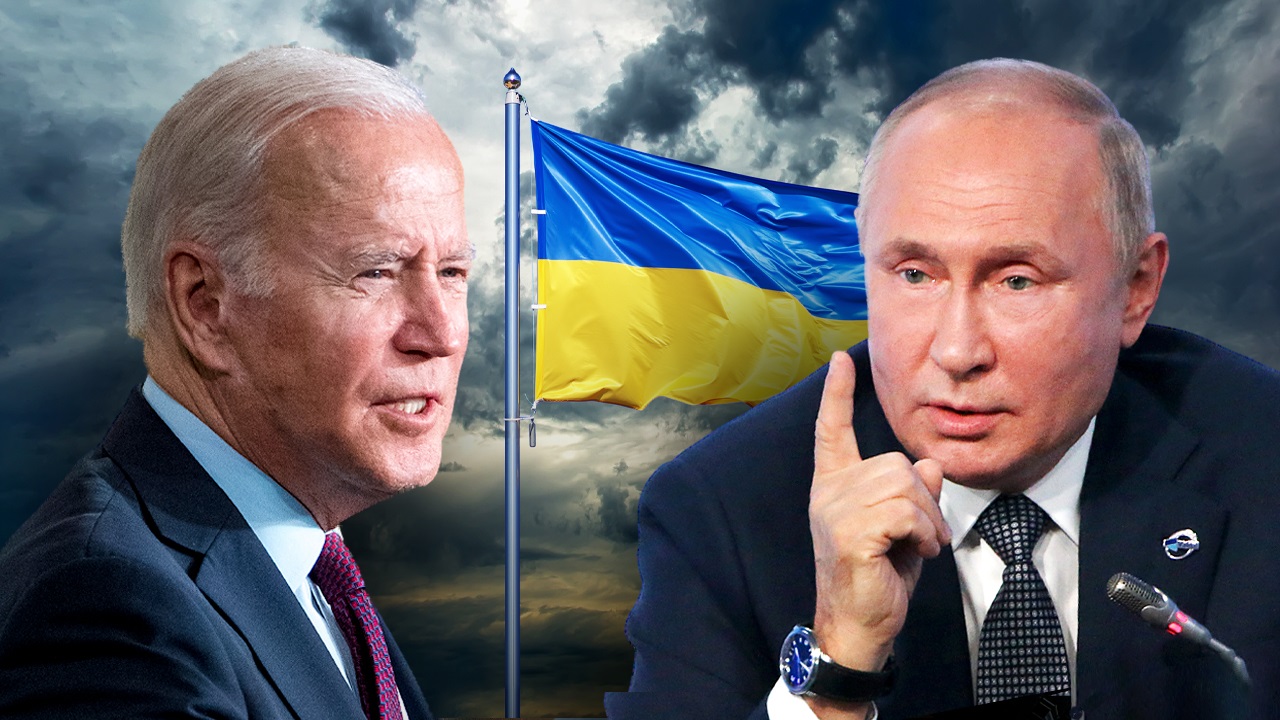
Biden Calls Russia Military Operation in Ukraine “Genocide”, Commits Additional $800 Million in Weapons Today


Posted originally on the conservative tree house on April 13, 2022 | Sundance

Yesterday in Iowa, Joe Biden called the Russian military operation in Ukraine a “genocide,” which has a very specific set of legal definitions to it.

When asked if he had seen enough evidence to support that statement Biden responded:

“Yes, I called it genocide.  It has become clearer and clearer that Putin is just trying to wipe out the idea of even being — being able to be Ukrainian.  And the amount — the evidence is mounting.  It’s different than it was last week.  The — more evidence is coming out of the — literally, the horrible things that the Russians have done in Ukraine.  And we’re going to only learn more and more about the devastation. And we’ll let the lawyers decide internationally whether or not it qualifies, but it sure seems that way to me.”  (link)

Several ground reports from European journalists indicate the U.S. military is running all of the combat operations inside Ukraine. A French reporter said on Euro News, “I thought I was with the international brigades, and instead I was facing the Pentagon.”  Now today, Joe Biden announces he is arbitrarily sending U.S. combat helicopters into the conflict.

[Tweet Link]

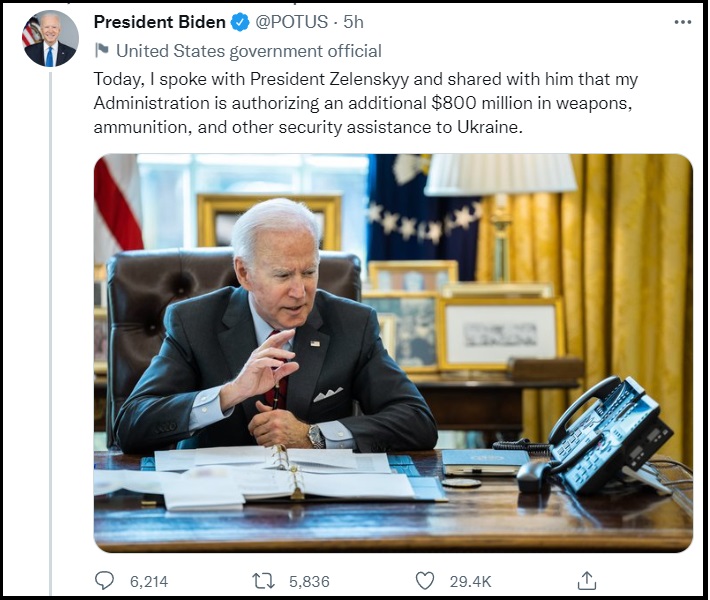
(WHITE HOUSE) – I just spoke with President Zelenskyy and shared with him that my Administration is authorizing an additional $800 million in weapons, ammunition, and other security assistance to Ukraine.

The Ukrainian military has used the weapons we are providing to devastating effect. As Russia prepares to intensify its attack in the Donbas region, the United States will continue to provide Ukraine with the capabilities to defend itself.

This new package of assistance will contain many of the highly effective weapons systems we have already provided and new capabilities tailored to the wider assault we expect Russia to launch in eastern Ukraine. These new capabilities include artillery systems, artillery rounds, and armored personnel carriers. I have also approved the transfer of additional helicopters. In addition, we continue to facilitate the transfer of significant capabilities from our Allies and partners around the world. 
 
The steady supply of weapons the United States and its Allies and partners have provided to Ukraine has been critical in sustaining its fight against the Russian invasion. It has helped ensure that Putin failed in his initial war aims to conquer and control Ukraine. We cannot rest now. As I assured President Zelenskyy, the American people will continue to stand with the brave Ukrainian people in their fight for freedom. (link)

White House spokesperson Jen Psaki was asked about this escalation earlier today:

.

The Biden administration is all-in for this Ukraine proxy war, taking all actions to highlight a zero-sum position.