Posted originally on the CTH on January 31, 2023 | Sundance
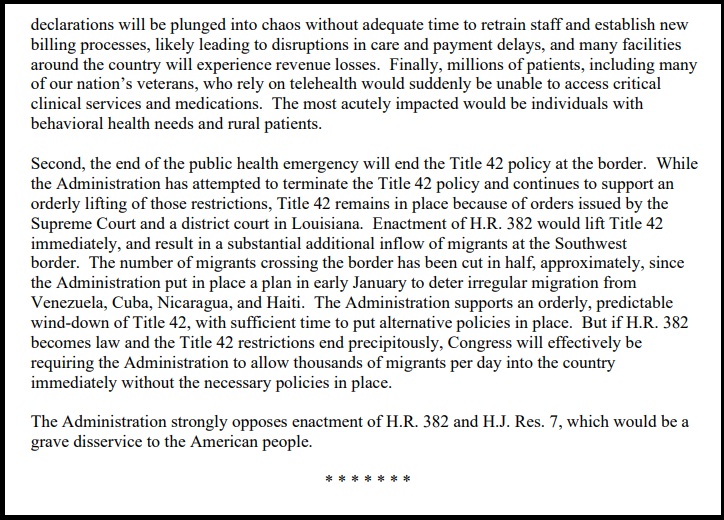
On the literal eve of a House vote to end the COVID emergency through legislation, the White House announced they would end the COVID-19 Emergency Declaration on May 11th. [pdf here]
The managers of Biden knew they would face a bipartisan vote to end the power of the dictatorial fiat known as the COVID emergency, so they quickly rushed to give Democrats in congress cover for voting against the legislative end.
In the end this is all a matter of pure politics and posturing for narrative control, because the Democrat controlled Senate is not going to take up the House bills.
WASHINGTON DC – […] The two bills – the Pandemic is Over Act and the Freedom for Health Care Workers Act – were planned by Republicans last week; and late Monday, the White House announced that it will terminate the national COVID emergency on May 11. The White House also announced its opposition to the two bills up for a vote today.
But Republicans pressed ahead anyway and easily passed both measures despite the GOP’s narrow majority in the House.
The Pandemic is Over Act, which would end the public health emergency, passed 220-210 in a vote that saw every Republican vote for it and every Democrat vote against it. But the Freedom for Health Care Workers Act, which would end the vaccination requirement for federal health care workers, passed 227-203 with help from seven Democrats.
Those Democrat votes came even though Democrat leaders on the House floor argued against both bills. Rep. Frank Pallone, D-N.J., said he opposes the Pandemic is Over Act because it would “abruptly and irresponsibly end the COVID-19 public health emergency virtually overnight,” and Democrats on the floor similarly argued against the bill to end the vaccine requirement. (read more)
Predictably the White House is claiming that if the COVID-19 emergency is over, then Title-42 immigration restrictions -which are based on the emergency- should end. This means even more illegal aliens crossing the U.S. southern border, an outcome the Biden team embrace.
Posted originally on the CTH on January 29, 2023 | Sundance
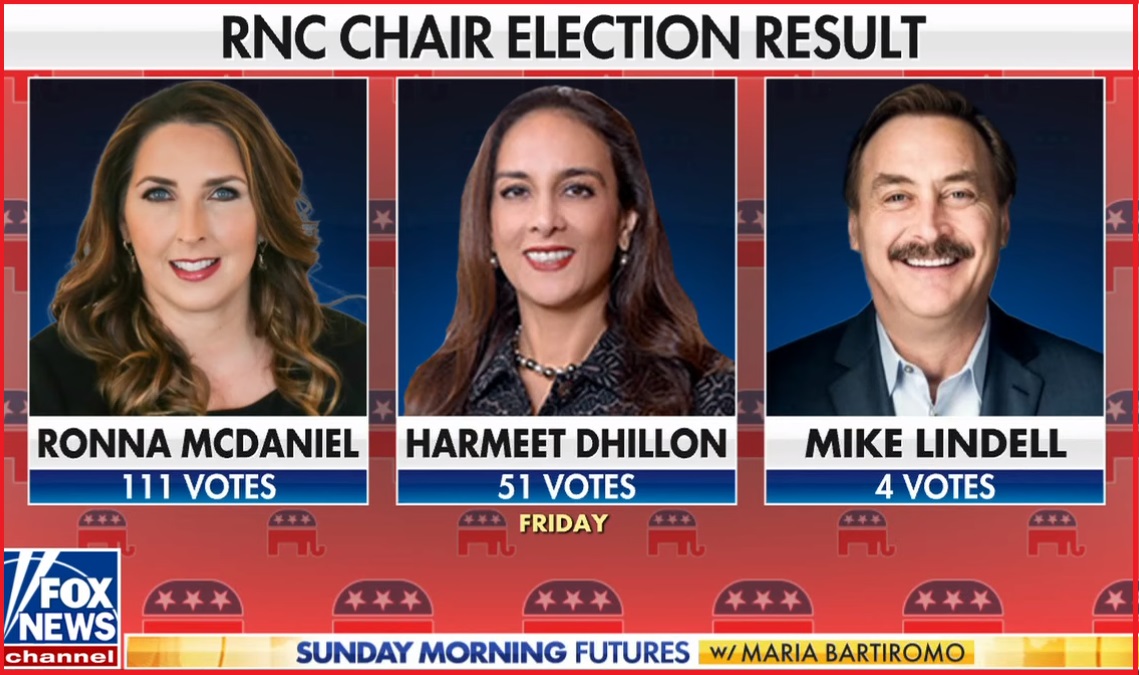
There is something quite hypocritical about Harmeet Dhillon criticizing the RNC over not winning elections yet taking millions in legal fees from the RNC and never winning an election related case.
Harmeet is as successful a lawyer for the RNC as the private corporation is at winning elections; yet for some reason, people choose not to see it.
Harmeet Dhillon is successful at collecting legal fees from the RNC club, and the RNC club is successful at collecting donor contributions from Wall Street, Hedge fund managers, corporations and billionaires. No one in this process has been successful at collecting ballots, because the club priorities have always been on the money gathering operations, Dhillon’s disingenuous claims notwithstanding.
In this interview segment, Dhillon talks about losing her bid for the RNC chair position, while also talking about the need for structural reform to the way the RNC operates. The fundamental change needed is accurately pointed out; however, you cannot change a system simply by retooling the same people who have been inside the system when the broken operations were created. Ronna McDaniel and Harmeet Dhillon are cut from the same cloth. WATCH:
Posted originally on the CTH on January 29, 2023 | Sundance
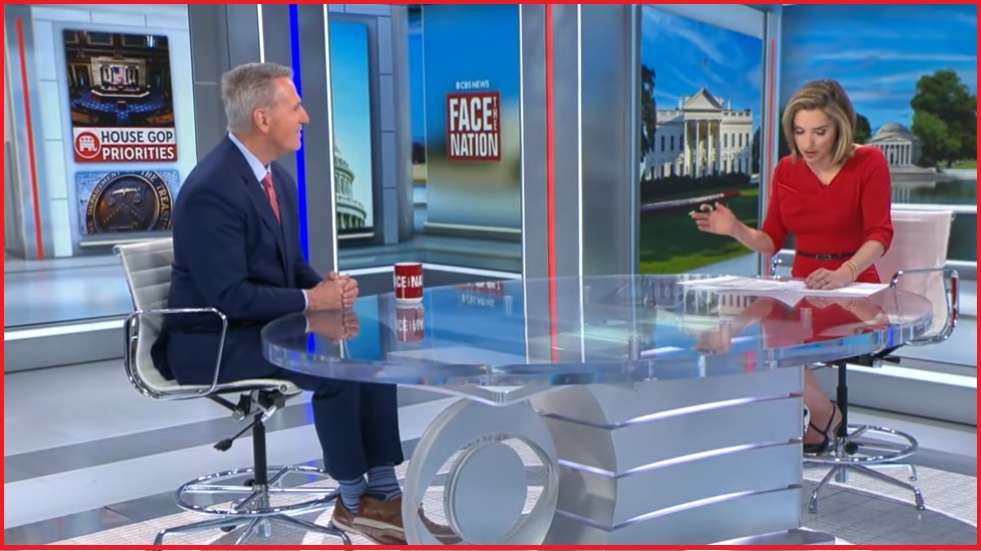
With talking points in hand CBS’s Margaret Brennan drops all pretenses and goes straight into her role as defender of the Biden regime in the White House.
House Speaker Kevin McCarthy appears on Face the Nation for a dueling narrative contest with Ms. Brennan. WATCH (transcript below):
REPRESENTATIVE KEVIN MCCARTHY (R-California): Good morning. Thanks for having me back in studio.
MARGARET BRENNAN: It must be sobering to hear that reminder.
REPRESENTATIVE KEVIN MCCARTHY: Well, it took me a little while to get there, but it feels good.
(LAUGHTER)
MARGARET BRENNAN: Well, you are here now at this key moment in time. And I want to get to some of the top agenda items.
You have accepted an invitation to meet with President Biden. When will that happen, and what offer will you put on the table?
REPRESENTATIVE KEVIN MCCARTHY: Well, we’re going to meet this Wednesday.
I know the president said he didn’t want to have any discussions, but I think it’s very important that our whole government is designed to find compromise. I want to find a reasonable and a responsible way that we can lift the debt ceiling, but take control of this runaway spending.
I mean, if you look at the last four years, the Democrats have increased spending by 30 percent, $400 billion. We’re at a 120 percent of GDP. We haven’t been in this place to debt since World War 2. So we can’t continue down this path.
And I don’t think there’s anyone in America who doesn’t agree that there’s some wasteful Washington spending that we can eliminate.
MARGARET BRENNAN: Mm-hmm.
REPRESENTATIVE KEVIN MCCARTHY: So, I want to sit down together, work out an agreement that we can move forward to put us on a path to balance, at the same time, not put any — any of our debt in jeopardy at the same time.
MARGARET BRENNAN: But avoid a default, in other words?
REPRESENTATIVE KEVIN MCCARTHY: Yes.
MARGARET BRENNAN: But do you have any indication that the president is willing to discuss both lifting the debt ceiling and the issue of future spending?
REPRESENTATIVE KEVIN MCCARTHY: Well, if he’s changed his mind from his whole time in the Senate and vice president before — I mean, he literally led the talks in 2011 and he praised having those talks. This is what he’s always done in the past.
And if he listens to the American public, more than 74 percent believe we need to sit down and find ways to eliminate this wasteful spending in Washington. So, I don’t believe he would change his behavior from before, and I know there’s a willingness on our side to find a way that we can find a reasonable and responsible way to get this done.
MARGARET BRENNAN: But, right, I mean, you know why I’m asking that…
REPRESENTATIVE KEVIN MCCARTHY: Yes.
MARGARET BRENNAN: … in terms of not linking one as leverage for the other.
REPRESENTATIVE KEVIN MCCARTHY: Yes.
Well, in my first conversation — and, to be fair, the president, when he called me to congratulate winning speaker, this is one of the first things I brought up to him. And he said we’d sit down together.
Now, I know his staff tries to say something different, but I think the president is going to be willing to make an agreement together.
MARGARET BRENNAN: Well, we’ll watch for that on Wednesday.
REPRESENTATIVE KEVIN MCCARTHY: I’m hopeful, yes.
MARGARET BRENNAN: I want to dig into what you are willing to put on the table because Republicans campaigned on fiscal responsibility.
You promised you won’t spend more next year than you did last year. Are you willing to consider any reductions to Social Security and Medicare?
REPRESENTATIVE KEVIN MCCARTHY: No. Let’s take those off the table. We want to…
MARGARET BRENNAN: Completely?
REPRESENTATIVE KEVIN MCCARTHY: Yes.
I mean, if you read our commitment to America, all we talk about is strengthening Medicare and Social Security. So — and I know the president says he doesn’t want to look at it, but we’ve got to make sure we strengthen those. I think…
MARGARET BRENNAN: What do you mean by strengthen them? You mean lift the retirement age, for example?
REPRESENTATIVE KEVIN MCCARTHY: No, no, no.
What I’m talking about, Social Security and Medicare, you keep that to the side. What I want to look at is, they’ve increased spending by 30 percent, $400 billion, in four years. When you look at what they have done, adding $10 trillion of debt for the next 10 years in the short time period, if you just look a month ago, they went through and they never even passed a bill through appropriations in the Senate.
While Mr. Schumer has been leader, he’s never passed a budget. He’s never passed the appropriation bill. He simply waits to the — to the end of the year and allowed two senators who are no longer here to write a $1.7 trillion omnibus bill. I think we…
MARGARET BRENNAN: You want to work with Democrats to come to agreement on a budget?
REPRESENTATIVE KEVIN MCCARTHY: Yes.
MARGARET BRENNAN: Is that what you’re saying?
REPRESENTATIVE KEVIN MCCARTHY: Yes, I — I first think our very first responsibility, we both should have to pass a budget. We both should have to pass the appropriations bill, so the country can see the direction we’re going.
But you cannot continue the spending that has brought this inflation, that has brought our economic problems. We’ve got to get our spending under control.
MARGARET BRENNAN: OK, just fact-check, though, 25 percent of the debt was incurred during the last four years of the Trump presidency. I mean, this is cumulative debt over many, many years.
REPRESENTATIVE KEVIN MCCARTHY: Yes, well, over the short — this time period.
MARGARET BRENNAN: Yes.
REPRESENTATIVE KEVIN MCCARTHY: But you’ve also found that you had a pandemic.
MARGARET BRENNAN: Right.
REPRESENTATIVE KEVIN MCCARTHY: And, as that pandemic comes down, those programs leave. I have watched the president say he cut it.
No, it is spending $500 billion more than what was projected. They have spent more. And we’ve got to stop the waste.
MARGARET BRENNAN: Is defense spending on the table?
REPRESENTATIVE KEVIN MCCARTHY: Well, look, I — I want to make sure we’re protected in our defense spending, but I want to make sure it’s effective and efficient.
I want to look at every single dollar we’re spending, no matter where it’s being spent. I want to eliminate waste wherever it is.
MARGARET BRENNAN: But when you became speaker, you did come to that agreement I have referenced of capping ’24 spending at ’22 levels.
REPRESENTATIVE KEVIN MCCARTHY: Well, look, listen…
MARGARET BRENNAN: So that would call for reductions.
REPRESENTATIVE KEVIN MCCARTHY: Well, I mean, look, you’re going to tell me, inside defense, there’s no waste? Others? I mean…
(CROSSTALK)
MARGARET BRENNAN: So defense spending is up for negotiation?
REPRESENTATIVE KEVIN MCCARTHY: They spend a lot of — I think everything, when you look at discretionary, is sitting there.
It’s like every single household. It’s like every single state. We shouldn’t just print more money. We should balance our budget. So I want to look at every single department. Where can we become more efficient, more effective, and more accountable? That should be…
MARGARET BRENNAN: So, more efficiencies in Social Security and Medicare as well?
REPRESENTATIVE KEVIN MCCARTHY: The one thing I want to say, we take Social Security…
MARGARET BRENNAN: Completely?
REPRESENTATIVE KEVIN MCCARTHY: … and Medicare off the table.
MARGARET BRENNAN: Would you support a short-term debt limit extension until September, buy more time for talks?
REPRESENTATIVE KEVIN MCCARTHY: Look, I don’t want to sit and negotiate here.
I would rather sit down with the president, and let’s have those discussions. The one thing I do know is, we cannot continue the waste that is happening. We cannot continue just to spend more money and leverage the debt of the future of America.
MARGARET BRENNAN: Right.
REPRESENTATIVE KEVIN MCCARTHY: We’ve got to get to a balanced budget.
MARGARET BRENNAN: Well, and I think many people would agree with you on the issue of fiscal responsibility, but there’s that deadline on the calendar in terms of facing potential default.
Are you saying…
REPRESENTATIVE KEVIN MCCARTHY: Well, wait. Wait a minute…
MARGARET BRENNAN: … you will guarantee the United States will not do that?
REPRESENTATIVE KEVIN MCCARTHY: Listen, we’re not going to default.
But let me be very honest with you right now. So we hit the statutory date. But let’s take a pause. We have hundreds of billions of dollars. This won’t come to fruition until sometime in June. So the responsible thing to do is sit down like two adults and start having that discussion.
MARGARET BRENNAN: Mm-hmm.
REPRESENTATIVE KEVIN MCCARTHY: Unfortunately, the White House was saying before, like, they wouldn’t even talk.
MARGARET BRENNAN: Right.
REPRESENTATIVE KEVIN MCCARTHY: I’m — I’m thankful that we’re meeting on Wednesday, but that’s exactly what we should be doing.
And we should be coming to a responsible solution. Every family does this. What is — what has happened with the debt limit is, you reached your credit card limit. Should we just continue to raise the limit? Or should we look at what we’re spending?
MARGARET BRENNAN: Well, it’s paying past commitments.
REPRESENTATIVE KEVIN MCCARTHY: If Chuck Schumer — yes, but if — no, no.
Chuck Schumer never passed a budget since he’s been leading. He’s never passed an appropriation bill. Those are the most basic things that Congress should do. And what — if you’re going to show to the American public where you want to spend your money, and if you’re going to ask the hardworking taxpayer for more of their money, you first should lay out how you’re going to spend it, and you should eliminate any waste, so you don’t have to raise more taxes.
MARGARET BRENNAN: But just to put a fine point on it, because it matters a lot to the markets in particular, you will avoid a default? You will not let that happen on your watch?
REPRESENTATIVE KEVIN MCCARTHY: Look, there will not be a default.
But what is really irresponsible is what the Democrats are doing right now, saying you should just raise the limit.
MARGARET BRENNAN: But would you…
REPRESENTATIVE KEVIN MCCARTHY: I think…
MARGARET BRENNAN: Would you get in the way — if 15 Republicans came to you and said they would be willing to raise the debt limit…
REPRESENTATIVE KEVIN MCCARTHY: The only person — but let me be very clear.
MARGARET BRENNAN: … would you allow them to do so with Democrats?
REPRESENTATIVE KEVIN MCCARTHY: The person — the only person who is getting in the way right now is the president and Schumer. They won’t even pass a budget. They won’t even negotiate. We have now until June.
I want to make sure we have something responsible, something that we can move forward on and something that we can balance our debt with. So I’m looking for sitting down. That’s exactly what I have been asking for. The only one who’s playing with the markets right now is the president to have the idea that he wouldn’t talk.
Does the president really believe and, really, all your viewers, do you believe there’s no waste in government? Do you believe there was no waste in that $1.7 trillion? That’s what we were spending just four weeks ago. So, I think the rational position here is, sit down, eliminate the waste and put us on a path to balance.
MARGARET BRENNAN: We’ll watch for that meeting on Wednesday.
I want to ask you about your vision of leadership. You made a number of deals within your party to win the speakership. Senator Mitch McConnell, your Republican colleague, said: “Hopefully McCarthy was not so weakened by all this that he can’t be an effective speaker.”
How can you effectively govern with a very narrow majority and when your conference is so divided?
REPRESENTATIVE KEVIN MCCARTHY: Well, that may be somebody else’s opinion. So let’s just see what my father always said. It’s not how you start. It’s how you finish.
So, let’s — you see what happened in the first week. So, in the very first week, we have passed what? We repealed the 87,000 IRS agents. We bipartisanly created a new Select Committee on China, where 146 Democrats joined with us.
We bipartisanly passed to stop the Strategic Petroleum Reserve being sold to China, where 113 Democrats joined with us. We have just now, for the first time on the House — it hasn’t happened in seven years, the entire time the Democrats were in the majority, where you had an open rule.
And let me explain what that is. An open rule allows every single member of the House to offer an amendment on a bill. So what I’m trying to do here is let every voice in America have their ability inside the House. We opened the House back up so the public could actually join.
MARGARET BRENNAN: So you’re arguing you haven’t been weakened? But…
REPRESENTATIVE KEVIN MCCARTHY: I — no, it’s only been strengthened.
Maybe people didn’t like what they saw that we didn’t win on the very first vote, but that was democracy. And what you found at the end of the day, we’re actually stronger.
MARGARET BRENNAN: Well, I would…
REPRESENTATIVE KEVIN MCCARTHY: You know what else?
MARGARET BRENNAN: Yes.
REPRESENTATIVE KEVIN MCCARTHY: We changed it where members of Congress now have to show up for work. I know, in the Senate, they don’t come very often.
But if you look what we’ve been able to do, we’re transforming Congress. We’re looking for solutions.
MARGARET BRENNAN: But you also allowed one — just one member now can force a vote to oust you as speaker.
REPRESENTATIVE KEVIN MCCARTHY: OK.
MARGARET BRENNAN: How can you expect to serve in the next two years in this role?
REPRESENTATIVE KEVIN MCCARTHY: Exactly how every other speaker has served with that.
MARGARET BRENNAN: Without those rules like that right now.
REPRESENTATIVE KEVIN MCCARTHY: No.
MARGARET BRENNAN: That’s a risk.
REPRESENTATIVE KEVIN MCCARTHY: OK.
MARGARET BRENNAN: I mean, do you really think you can control the Freedom Caucus and some of those more conservative members who gave you such a hard time?
REPRESENTATIVE KEVIN MCCARTHY: Everybody has a voice.
But let me — let me explain that. That one vote to vacate, that’s not new. That’s been around for 100 years. The only person who took it away when they got a small majority was Nancy Pelosi. So, Nancy felt she did not have the power to stay in office if that was there. I’m very comfortable in where we are.
MARGARET BRENNAN: OK.
REPRESENTATIVE KEVIN MCCARTHY: So I don’t have any fear in that.
MARGARET BRENNAN: You don’t regret any of the concessions you made?
REPRESENTATIVE KEVIN MCCARTHY: The only concession I made was taking it from five to one, where it’s been around for 100 years.
MARGARET BRENNAN: I want to ask you about some of the makeup of your caucus.
REPRESENTATIVE KEVIN MCCARTHY: Yes.
MARGARET BRENNAN: According to CBS records, 70 percent of the House GOP members denied the results of the 2020 election.
You’ve put many of them on very key committees, Intelligence, Homeland Security, Oversight. Why are you elevating people who are denying reality like that?
REPRESENTATIVE KEVIN MCCARTHY: Well, if you look to the Democrats, their ranking member, Raskin, had the same thing, denied Trump when Bush was in there. Bennie Thompson, who was the…
(CROSSTALK)
MARGARET BRENNAN: Did you see those numbers we just put up there?
REPRESENTATIVE KEVIN MCCARTHY: Did you see the — yes.
MARGARET BRENNAN: Seventy percent.
REPRESENTATIVE KEVIN MCCARTHY: Did you also be fair and equal and where you looked at Raskin did the same thing. Bennie Thompson, who’s a ranking member and was the chair?
These individuals were chair in the Democratic Party.
MARGARET BRENNAN: I’m asking you, as leader of Kevin McCarthy’s House…
REPRESENTATIVE KEVIN MCCARTHY: But I’m also — I’m also…
MARGARET BRENNAN: … why you made these choices. These were your choices.
REPRESENTATIVE KEVIN MCCARTHY: Yes, They’re my choices, but they’re the conference choices.
But I’m also asking you, when you look to see just Republicans, Democrats have done the same thing. So maybe it’s not denying. Maybe it’s the only opportunity they have to have a question about what went on during the election.
So, if you want to hold Republicans to that equation, why don’t you also hold Democrats? Why don’t you hold Jamie Raskin? Why don’t you hold Bennie Thompson, when Democrats had appointed them to be chair? I never once heard you ask Nancy Pelosi or any Democrat that question when they were in power in the majority, when they questioned…
MARGARET BRENNAN: You’re talking about things going back to 2000, which was a time…
REPRESENTATIVE KEVIN MCCARTHY: Well, you’re talking about…
MARGARET BRENNAN: … when I didn’t have this show back then…
REPRESENTATIVE KEVIN MCCARTHY: Yes.
MARGARET BRENNAN: … which is why I’m asking you now about your leadership.
REPRESENTATIVE KEVIN MCCARTHY: No, on, but they were — they were in power last Congress. So, why — why…
MARGARET BRENNAN: But you’re talking about questions from 2000 election.
REPRESENTATIVE KEVIN MCCARTHY: But you’re asking me about that happened to another Congress.
MARGARET BRENNAN: About these choices you just made, you just made.
REPRESENTATIVE KEVIN MCCARTHY: You’re asking about questions for another Congress.
So, the only thing I’m simply…
MARGARET BRENNAN: This is your Congress.
REPRESENTATIVE KEVIN MCCARTHY: These — these are members who just got elected by their constituents, and we put them into committees, and I’m proud to do it.
MARGARET BRENNAN: Let me ask you about some specifics then. Marjorie Taylor Greene, you put her on a new subcommittee to investigate the origins of COVID.
REPRESENTATIVE KEVIN MCCARTHY: Yes.
MARGARET BRENNAN: She compared mask requirements to the type of abuse Jews were subjected to during the Holocaust. She called for Fauci to be arrested and imprisoned, and she spread conspiracy theories.
How is anyone supposed to take that work seriously and find that work credible?
REPRESENTATIVE KEVIN MCCARTHY: Very well. You look at all of it, so you have all the questions out there. I think what the American public…
MARGARET BRENNAN: You think these are legitimate questions?
REPRESENTATIVE KEVIN MCCARTHY: I think what the American public wants to see is an open dialogue in the process. This is a select committee where people can have all the questions they want, and you’ll see the outcome.
MARGARET BRENNAN: You know that there is a lot of doubt about institutions and faith in institutions in this country.
REPRESENTATIVE KEVIN MCCARTHY: Oh, yes, when you saw what happened in Congress where they had proxy voting, where bills didn’t go through committees, and you…
(CROSSTALK)
MARGARET BRENNAN: I don’t think most people know what proxy voting is.
REPRESENTATIVE KEVIN MCCARTHY: Well, let — well let — Well, let’s explain what proxy…
MARGARET BRENNAN: But — but approval…
(CROSSTALK)
REPRESENTATIVE KEVIN MCCARTHY: But I think it would be fair to your viewers…
MARGARET BRENNAN: Approval level, according to Gallup, of Congress is at 22 percent. Approval level of journalists is also not very high, I will give you that.
But doesn’t it further wear down credibility when you put someone who is under state, local, federal, and international investigation as a representative of your party on committees?
REPRESENTATIVE KEVIN MCCARTHY: Are you talking about Swalwell?
MARGARET BRENNAN: I’m talking about George Santos…
REPRESENTATIVE KEVIN MCCARTHY: No, I…
MARGARET BRENNAN: … representative from New York.
REPRESENTATIVE KEVIN MCCARTHY: Well, we should have that discussion. So let’s have that discussion.
You want to bring up Santos, and let’s talk about the institution itself, because I agree wholeheartedly that Congress is broken. And I think your — I think your listeners or viewers should understand what proxy voting was, because it never took place in Congress before.
MARGARET BRENNAN: But I’m asking you about George Santos.
REPRESENTATIVE KEVIN MCCARTHY: I know you asked me a question. Let me ask you.
MARGARET BRENNAN: Because you could put it to a vote to try to oust him.
REPRESENTATIVE KEVIN MCCARTHY: You asked me a question. I would appreciate if you let me answer.
So let’s go through this, because it’s not one simple answer. Congress is broken, based upon what has transpired in the last Congress. The American public wasn’t able to come in to see us. People voted by proxy, meaning you didn’t have to show up for work, Bills didn’t go — have to go through committee.
So what I’m trying to do is open the people’s house back for the people so their voice is there, so people are held accountable.
So, now, as I just had in the last week, for the first time in seven years…
MARGARET BRENNAN: Yes.
REPRESENTATIVE KEVIN MCCARTHY: … every member got to vote.
MARGARET BRENNAN: If you got a third of your caucus to vote to oust him, you could do so.
(CROSSTALK)
MARGARET BRENNAN: Do you — you don’t think you could get your Republicans to do that?
REPRESENTATIVE KEVIN MCCARTHY: I wasn’t finished answering the question.
So, if every single new person brought into Congress was elected by their constituents, what their constituents have done is lend their voice to the American public. So those members can all serve on committee.
Now, what I’m trying to do is change some of these committees as well, like the Intel Committee is different than any other committee.
MARGARET BRENNAN: So, you’re just not going to answer the question I asked?
REPRESENTATIVE KEVIN MCCARTHY: Well, no, I — no, you don’t get a question whether I answer it. You asked a question. I’m trying to get you through that.
MARGARET BRENNAN: I don’t think you’ve said the name George Santos, like, once.
(LAUGHTER)
MARGARET BRENNAN: I have asked you a few times.
REPRESENTATIVE KEVIN MCCARTHY: But you know what? I just — but — but…
MARGARET BRENNAN: You’re talking about proxy voting and other things.
REPRESENTATIVE KEVIN MCCARTHY: No, no, no, but — no, you started the question with Congress was broken, and I agreed with you.
MARGARET BRENNAN: No. Congress…
REPRESENTATIVE KEVIN MCCARTHY: But I was answering the question of how Congress is broken and how we’re changing it.
So, if I can finish the question that you asked me, how Congress is broken, I equated every single member…
MARGARET BRENNAN: Yes.
REPRESENTATIVE KEVIN MCCARTHY: … that just got elected by their — by their constituents. They have a right to serve.
MARGARET BRENNAN: OK.
REPRESENTATIVE KEVIN MCCARTHY: So that means that Santos can serve on a committee…
MARGARET BRENNAN: OK.
REPRESENTATIVE KEVIN MCCARTHY: … the same way Swalwell, who had a relationship with a Chinese spy.
MARGARET BRENNAN: Speaker…
REPRESENTATIVE KEVIN MCCARTHY: But they will not serve on Intel, because I think…
(CROSSTALK)
MARGARET BRENNAN: They’re wrapping me in the control room, because we have a break.
REPRESENTATIVE KEVIN MCCARTHY: Well that’s unfortunate. I wish I could answer the question.
MARGARET BRENNAN: I have to leave it there. I would love to have you back.
REPRESENTATIVE KEVIN MCCARTHY: I would love to be able to come back and have time to answer the questions.
MARGARET BRENNAN: OK. We’ve spent a lot of time here, and I have more questions for you.
Posted originally on the CTH on January 29, 2023 | Sundance
The Senate Select Committee on Intelligence, SSCI, is the epicenter of the larger intelligence apparatus that controls government. It was/is the SSCI who helped to create the weaponized system we call the Fourth Branch of Government. The SSCI is the institutional origin where the outcomes of the FISA courts, domestic surveillance, and downstream consequences of the Patriot Act are supported and facilitated.
Because of their unique role in creating our national security state, where U.S. citizens are regarded as the potential threat to the interests of that state, the SSCI is a unique stakeholder in retaining the corrupt systems of domestic surveillance power. No institution within the elected legislative branch of government has done more to destroy the freedom and constitutional protections within the U.S. than the Senate Select Committee on Intelligence.
The intelligence community interacts with the SSCI with that benefactor/beneficiary alignment in mind. This is why the SSCI claims such bipartisanship, and why the corporate media herald the SSCI as an important functional tool. Without the assistance of the SSCI, the U.S. domestic surveillance state could not exist. When the IC feels threatened, they run to the SSCI for protection.
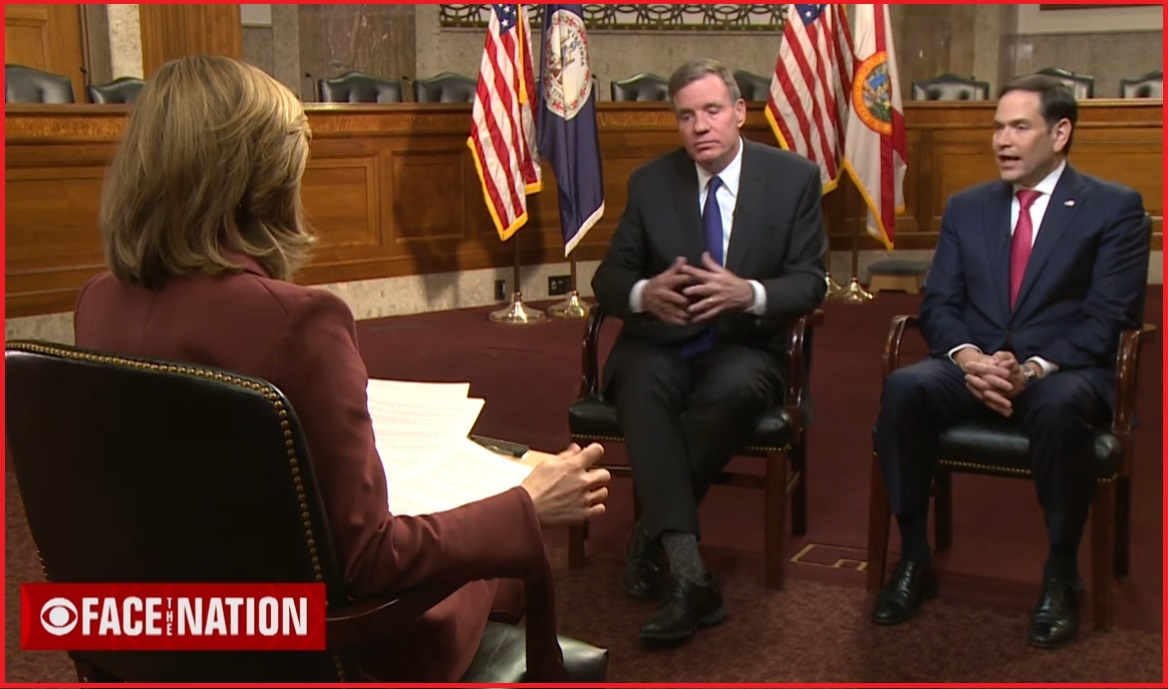
The chair (Warner) and vice-chair (Rubio) of the committee are also members of the Gang of Eight, intelligence oversight group. It is laughable to see Senator Mark Warner decry the possibility of national security leaks and compromises within the classified document issue. Warner himself was the most consequential leaker during the Trump-Russia investigation (Wolfe leak of FISA application), and the SSCI facilitated everything that happened in the Mueller investigation. [WATCH, Transcript Below]
[Transcript] – MARGARET BRENNAN: Let’s start on the news of the moment. I know the two of you were briefed by the Director of National Intelligence Avril Haines. Do you have any timeline in terms of when you will get visibility into the documents of classified material that both President Biden and President Trump had in their residences?
SEN. MARK WARNER: Margaret, unfortunately, no. And this committee has had a long bipartisan history of doing its job. And our job here is intelligence oversight. The Justice Department has had the Trump documents about six months, the Biden documents about three months, our job is not to figure out if somebody mishandled those, our job is to make sure there’s not an intelligence compromise.
And while the Director of National Intelligence had been willing to brief us earlier, now that you’ve got the special counsel, the notion that we’re going to be left in limbo, and we can’t do our job, that just cannot stand. And every member of the committee who spoke yesterday and I wanted the director to hear this, regardless of party said, we are united in we have to find a way to do our job. That means we need these documents, we need that assessment.
MARGARET BRENNAN: But the intelligence community would say their hands are tied, because this is an ongoing active Justice Department investigation. So what would meet the level of- of addressing your concerns without compromising that?
SEN. MARCO RUBIO: Well, I don’t know how congressional oversight on the documents, actually knowing what they are, in any way impedes an investigation. These are probably materials we already have access to. We just don’t know which ones they are. And it’s not about being nosy.
You know, here’s the bottom line: if in fact, those documents were very sensitive, materials were sensitive, and they pose a counterintelligence or national security threat to the United States, then the intelligence agencies are tasked with the job of coming up with ways to mitigate that. How can we judge whether their mitigation standards are appropriate, if we don’t have material to compare it against, and we can’t even make an assessment on whether they’ve properly risk assessed it?
So we’re not interested in the timeline, the tick-tock, the who got what, who did that? Those are criminal justice matters, to the extent that that’s what it is. That’s not what we’re interested in. We deserve and have a right and a duty to review what the materials were so we can have a better understanding of not just, you know, what the agency is doing about it, but whether it’s sufficient.
MARGARET BRENNAN: Does the director even know what the materials were?
SEN. WARNER: Well, we got a bit of vagueness on that because again, I believe you want to make sure the intelligence professionals and not political appointees were making some of that, that makes sense to me. But I would even think that if the- President Trump and President Biden would probably want to have this known if they say there’s no there there. Well, you know, there may still be violations on handling.
But we got to tell the American people and our colleagues, because we’re the only ones who have access to this information, that there’s not been an intelligence compromise. And again, this notion that when there was a special prosecutor appointed, they’re not exactly the same circumstances. But remember, this committee spent years doing the investigation into Russian meddling during the 2016 election, and there was a special prosecutor and Bob Mueller’s investigation going on simultaneously.
SEN. RUBIO: Let me tell you how absurd this is, there isn’t a day that goes by that there isn’t some media report about what was found where, what some sort of characterization of the material in the press. I just saw one this morning again. So somehow, the only people who are not allowed to know what was in there are congressional oversight committees.
But apparently, the media leaks out of the DOJ are unimpeded in terms of characterizing the nature of some of the materials that were found, plus whatever the individuals involved are telling the media. So it’s an untenable situation that I think has to be resolved.
MARGARET BRENNAN: But, you know, there’s an argument that there’s a diminishing value to intelligence over time, some of it’s time sensitive. The idea that some of these documents go all the way back to when President Biden was a senator, does that suggest that there’s something more than a problem in the executive branch?
SEN. WARNER: Agreed. That’s why the notion of ‘We’re not going to give the Oversight Committee the ability to do its job until the special prosecutor somehow says it’s OK,’ doesn’t- doesn’t hold water. That’s not going to stand with all the members of Congress–
MARGARET BRENNAN: So do you want to see these 300 documents from Trump?
SEN. WARNER: I think we need to see- chances are, we have a right as not only members of the Intelligence Committee, but as part of the leadership to read virtually every classified document. We’re part of the so-called Gang of Eight. We may have seen these documents, we just need to know, are these the ones that were potentially mishandled, and that mishandling is not our responsibility, our responsibility is to make sure the intelligence and the security of the United States have been compromised. And you’re absolutely right that some of these may have been years old.
So this idea that we’re not going to get that access just, again, we all agreed, and I think the director heard lot- loud and clear from all of us. It’s just not tenable. And it begs the bigger question and again, which Marco and I have agreed to jointly work on, that we got- we got a problem in terms of both classification levels, how senior elected officials, when they leave government how they handle documents. We’ve had too many examples of this. And again, I think we’ve got the bipartisan bona fides, to say, let’s put them in place on a going forward basis, a better process.
SEN. RUBIO: And let me just add on the age of the documents, it’s true, the information in and of itself may be dated and irrelevant at this point. But the- but having access to that information reveals how you gathered, whether it was a human source or–
SEN. WARNER: Sources and methods.
SEN. RUBIO: And so the- the- even though the information itself might no longer be very relevant, it does reveal how we collect information and thereby cost us those accesses and potentially cost someone you know, again, we don’t know what’s in the material, potentially put someone in harm’s way.
MARGARET BRENNAN: So you- you threatened to withhold some funding to some of the agencies yesterday.
SEN. RUBIO: Well, what I said is that, you know, I’m not in the threat business right now. But we certainly are- there are things we need to do as a committee every year to authorize the moving around of funds. I think the Director of National Intelligence and other heads of intelligence agencies are aware of that.
You know, at some point, I’d prefer for them just to call us this morning or tomorrow or whenever and say, ‘Look, this is the arrangement that we think we can reach so that the overseers can get access to this.’ I’d prefer not to go down that road. But it’s one of the pieces of leverage we have as Congress. I’m not, we’re not going to sit here and just issue press releases all day.
SEN. WARNER: And one of the things that I wanted Director Haines to hear and I think she was in a bit of an untenable position yesterday, she had been willing to brief earlier before the special prosecutor. I wanted her to hear that this was not just Senator Rubio and I, this was all of the members of the committee, on both ends of the political spectrum, saying, we’ve got a job to do, we’re going to do it, we’re going to figure out- we’re not in the threat business. But we’re going to figure out a way to make sure that we get that access so that we can not only tell the American people, but we’ve got another 85 U.S. senators who are not on the Intelligence Committee, who look to us to get those assurances.
MARGARET BRENNAN: How much are your hands tied, though, in terms of this part of government and classified- classification really being over in the executive to a large extent? Like, what is it that you as lawmakers can do? Is it new regulation when it comes to transitions–
SEN. WARNER: The Director of National Intelligence is the individual that’s the chief officer for intelligence classification. I think, and there’s been a number of other members of the Senate, both parties have been working for years, on the notion that we over classify the number of things that we read in a SCIF that somehow then appear in the newspaper begs the question, it’s kind of been an issue that’s been bubbling for a long time–
MARGARET BRENNAN: Over classification.
SEN. WARNER: –I think this, I think this series of events, pushes it to the forefront. And again, we have the power to write legislation, which then executive agencies have to follow–
MARGARET BRENNAN: In terms of record keeping.
SEN. WARNER: In terms of record keeping. In terms, literally, at least guidance on classification issues. I mean, there has been, and again, this Director of National Intelligence, I’m going to give her credit, she has been at least acknowledging and long before this issue came up, said we need to work on this issue of declassification, over classification. Every director says it, and then it kind of gets pushed- pushed back, I think. One good thing that may come out of this is that we’re going to find a way to resolve this issue on a going forward basis.
MARGARET BRENNAN: So it sounds like we found one area of bipartisan agreement already here that there needs to be some kind of legislation around classified materials–
(CROSSTALK)
SEN. WARNER: I actually think you’re gonna find a lot- on our committee –
SEN. RUBIO: On our committee–
SEN. WARNER: –you’re gonna find an awful lot more than one.
MARGARET BRENNAN: Where does this rank in terms of priority? Dealing with the classified crisis?
SEN. WARNER: Well the immediacy of it right now, and the notion and again, I would- I don’t know what President Trump and President Biden are thinking about this. But I would think they would like some recognition that these documents, hopefully and as Marco said, are not disclosing sources and methods, are not so current that there may be a- a violation of American national security. We just don’t know.
So I think we need to get this resolved sooner than later. In terms of the specific case, the Trump and Biden documents, we’ve not really focused as much on the Pence documents. But who knows what additional shoes may fall.
SEN. RUBIO: Yeah, and I don’t want to speak for Mark. Obviously, the immediacy of this moment is big. But I think we- the- on the broader set of issues, we still have this reauthorization of [Section] 702, an important authority for our government.
And then more broadly, I just think the world looks so different than it did when I started out in this committee. When I first got to the Senate, the principal focus of foreign policy and national security issues were counterterrorism. And those are still very important, but we’re now in a world increasingly revolves around great power competition: China, the Russian invasion of Ukraine, and then some of the threats posed by Iran, North Korea and other rogue states.
So whether our intelligence agencies have adjusted quickly enough to that new reality, and- and the- and the- obligations that poses I think, is from a big picture perspective, in my mind, one of the things we really have to spend time on.
SEN. WARNER: And the thing that I think we’re getting- our committee has got some- some record on. I mean, I personally believe the competition, technology competition, in particular, with China is the issue of our time. And remember, it was this committee that first spotted, pointed out, the problems with the Chinese telecommunications provider, Huawei, as a national security threat.
And we built, frankly, even under President Trump, an approach to say we need to make sure that we get it out of our networks, and then convince our allies to do that. It was our committee, again, who first pointed out the challenges that, in the semiconductor industry, which we had dominated in this country–
MARGARET BRENNAN: Computer chips–
SEN. WARNER: In the- computer chips- in the 80s, and 90s, that we were falling behind, literally to the point that no cutting edge semiconductor chip was even being made in America. And we built them, the legislation around the so-called CHIPS bill.
I think there are other technology domains: artificial intelligence, quantum computing, advanced energy, synthetic biology, where we need to do the similar kind of bipartisan deep dives, to say, how do we make sure America and our friends stay competitive with a China that is extraordinarily aggressive in these fields and making the kind of investments, frankly, that we used to make post-Sputnik?
MARGARET BRENNAN: Right, and I want to ask you about that, because President Biden is reportedly close to issuing an executive order when it comes to restrictions on U.S. investments in- in China. But there’s concern about risking further escalation. What’s your view on how far that action should go? And where do you all pick up in terms of lawmakers?
SEN. RUBIO: Well, I think there’s two things. The first is the Chinese have found a way to use capitalism against us. As- as- and what I mean by that is the ability to attract investment into entities that are deeply linked to the state. That military commercial fusion that exists in China is a concept that we don’t have in this country. We have contractors that do defense work, but there is no distinction in China between advancements in technology, biomedicine, whatever it might be, and the interest of the state.
And then the second is obviously the access to our capital markets. And the third is the risk posed, we don’t up to this point, have not had levels of transparency in terms of auditing and the like, on these investments of- the- into these companies. What- when you invest in these companies in U.S. exchanges, you don’t have nearly as much information about the- the bookkeeping of those companies as you would an American company or European company, because they’ve refused to comply with those restrictions.
So there’s systemic risk to our investments, and then there’s also the geopolitical reality that American capital flows are helping to fund activities that are ultimately designed to undermine our national security. So it’s a 21st century challenge that we really have to put our arms around.
SEN. WARNER: And again, this is something- I think and I fall under this category, beginning of the 20th century, I was a big believer that the more you bring China into the world order, the more things will all be copacetic. We were just wrong on that.
The Communist Party, under President Xi’s leadership, and my beef is, to be clear, with the Communist Party, it’s not with the Chinese people or the Chinese diaspora wherever it is in the world, but they basically changed the rules of the road. They made clear in Chinese law that every company in China’s ultimate responsibility is to the Communist Party, not to their customers, not to their shareholders. We’ve seen at- at the level of 500 billion dollars a year of intellectual property theft. We have actually in a bipartisan way- over the- didn’t get a lot of attention- over the last seven years, have been out and we’ve done 20 classified briefings for industry sector, after industry sector, about these risks. Frankly, pre-COVID, we kind of got nods, but you know, some pushback because a lot of companies are making–
MARGARET BRENNAN: Because companies just wanted access to the market regardless of the risk–
SEN. WARNER: Were making a lot of- were making a lot of money off Chinese tech companies.
MARGARET BRENNAN: Exactly. Exactly.
SEN. WARNER: Now, post-COVID, I think there is an awakening that this is a real challenge and I think the good news is that not only is there awakening, you know, in America, but a lot of our allies around the world are seeing this threat as well. So I think, you know, we need to build this kind of international coalition, because the technology- who wins these technology domains, I think will win the race in the 21st century.
SEN. RUBIO: I- I think those–
MARGARET BRENNAN: So you want restrictions on biotech, battery technology, semiconductors, artificial intelligence?
SEN. WARNER: I want to have an approach that says we need to look at foreign technology investments, foreign technology development, regardless of the country, if it poses a national security threat, and have some place that can evaluate this. We kind of do this ad hoc at this point. You know, we- we- years back, there was a Russian software company, Kaspersky. Again, Marco was one of the first ones who said, ‘My gosh, we got to get this off the GSA acquisition list.’ We worked together on Huawei, I’m sure we’re going to talk about TikTok. We need a frame to systemically look at this. And frankly, if it goes just beyond the so-called CFIUS legislation about inbound or outbound investment.
MARGARET BRENNAN: That’s a committee that looks at national security risks.
SEN. RUBIO: But understanding that for- you know, 20 years ago, everybody thought capitalism was going to change China. And we woke up to realization that capitalism didn’t change China, China changed capitalism. And they’ve used it to their advantage and to our disadvantage. And not simply from an old Soviet perspective to take us on from a geopolitical or military perspective, they’ve done so from a technological and industrial perspective. And so you have seen the largest theft and transfer of intellectual property in the history of humanity occur over the last 15 years, some of it funded by American taxpayers. That has to stop. It’s undermining our national security, and giving them an unfair advantage and these gains that they’re making.
SEN. WARNER: And let me just echo- you know- I’m old enough to remember- you know, the challenges with the Soviet Union. The Soviet Union was an ideological threat, and a military threat. It really was never a first class, economic threat. China, we have ideological differences. They have a growing military, but domain after domain, they are a- right with us in certain areas, even ahead of us, in this kind of technology, on much. And I agree with Marco again, the ability to kind of manipulate our system, the kind of combination of command and control with certain tenets of capitalism. They have an authoritarian capitalism that for awhile worked pretty well. I don’t think it works as well as our long-term system. But we have to inform all of our industry and frankly, all our allies about this challenge.
MARGARET BRENNAN: They have the biggest hacking ability program than any other nation. Intelligence community says they’re the world leader in surveillance, in censorship. How restricted should their ability to access this market be?
SEN. RUBIO: Let me put it to you this way, I think it is nearly impossible for any Chinese company to comply with both Chinese law and our expectations in this country. Chinese law is very clear. If you’re a Chinese company, and we ask you for your data, we ask you for your information, we ask you for what you have, or we ask you to do something, you either do it, or you won’t be around. (continue reading)
Nikki Haley was always going to run in 2024 for the GOP nomination – SEE OUR ARCHIVES – this was never in question. All of her moves have been predictable since she left the administration in January 2019. However, Nikki Haley is also not necessarily running for the office of the President, she’s running to be in a power position for the office of the President. In the current construct, she’s positioning to be Ron DeSantis’ vice-presidential candidate pick.
2021: …”“I don’t think [Trump’s] going to be in the picture,” she said, matter-of-factly. “I don’t think he can. He’s fallen so far.” […] “We need to acknowledge he let us down,” she said. “He went down a path he shouldn’t have, and we shouldn’t have followed him, and we shouldn’t have listened to him. And we can’t let that ever happen again.” (link)
A few weeks later: …”Out of respect I would never do anything to go against [Trump], he knows that. I would have a conversation with him and talk to him about it should we decide we want to pursue it; but, um, no, I have a great respect for him and I would never consider running against him.” (link) Video Prompted:
Thus, you see the conniving lying of Nikki Haley. (Anticipate video disappearing)
In the role she has carved out and accepted, Nikki Haley is going to be the biggest attacker of President Trump on behalf of the management team protecting Ron DeSantis. Nikki has a very specific set of skills, including her willingness to be nasty – that makes her perfect for this role. Haley will be the tip of the spear, providing Ron DeSantis the opportunity to pretend he is just above it all.
Trump also knows DeSantis is pretending right now, and I have no doubt he can see the role Nikki Haley is positioned to play. Watch Trump continue hitting DeSantis as Haley moves in for cover.
You might remember President Trump hitting Xi Jinping of China every time Kim Jong-un of North Korea did a directed by Beijing stupid thing. He’ll do the same thing here. DeSantis in the role of Chairman Xi and Haley in the role of Chairman Kim. Each time Haley does the passive aggressive slaps, Trump will hit DeSantis with something.
Haley has no chance at the nomination. Coastal establishment Republicans love her, but that only means she will have money, not votes. The Republican voting base has seen through her schemes and wind-testing for years. Haley is not stupid, she knows this. Heck, even Liz Cheney polls higher than Nikki Haley.
Haley’s positioning right now is for 2023 power and influence despite her lack of base voter support. The best she can hope to achieve in 2024 is a VP pick to get her in the target zone.
Trying to rewrite history is not going to help her.
Posted originally on the conservative tree house on January 29, 2023 | Sundance
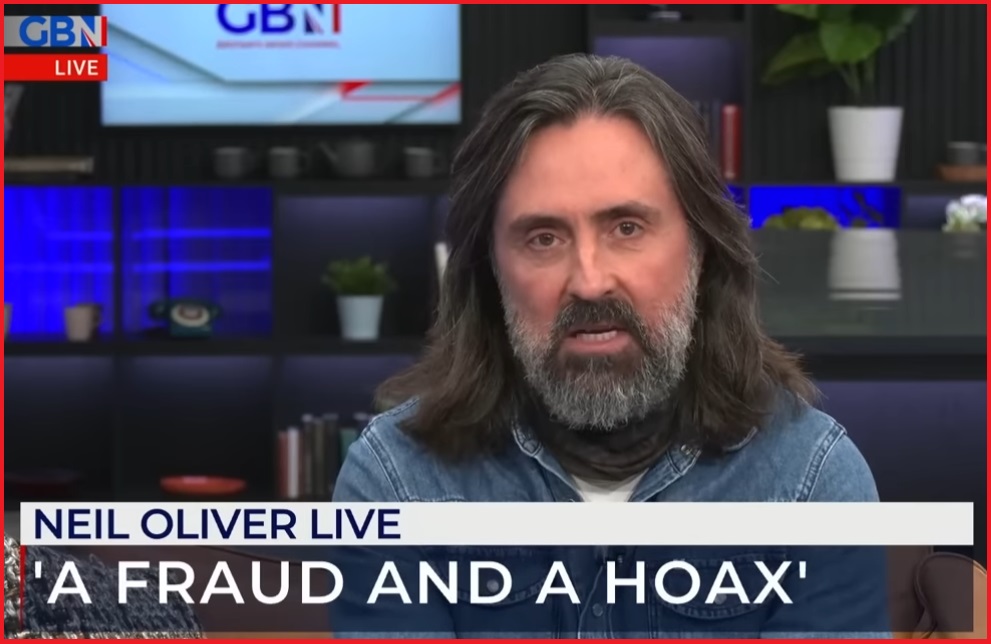
U.K. pundit Neil Oliver used his weekend monologue to outline the great pretending being deliberately pushed by the groups of western leaders who attend meetings at the World Economic Forum.
The pretending outlined in the context used by Oliver is the classic ‘bait and switch.’ The people are baited into believing the purpose of policy or advocacy is one thing, but the true goal is something completely different. What Oliver encapsulates as the ‘bait and switch’ is the underline for the modern ‘pretending’, where government officials pretend the end goal is something completely different than it is.
Oliver walks through examples of the ‘bait and switch’ as it is currently being deployed, and using those examples he culminates the discussion with the reality hidden behind the digital identity. Once everyone can be assigned a digital id, then government can transfer income to a digital currency; then that same government can start introducing the restrictions on what may be purchased in order to ‘save the planet’, which is to say the real goal of total control surfaces. WATCH:
The German Federal Foreign Minister has actually come out and bluntly said: “We are at war with Russia.” I have been warning from the outset that the West has been the aggressor and deliberately did what it could to compel Putin to invade the very same way that Roosevelt did to Japan (1) by imposing an energy embargo (2) seizing all their assets in the USA, and (3) threatening to blockade any attempt to get energy from any other place. There were senate investigations into this very question that Roosevelt deliberately compelled Japan to attack Pearl Harbor just so he could then enter World War II whereas the people and Congress refused to fight Europe’s war. That view of distrust of FDR was so great, it compelled the US Senate to hold hearings into what did FDR know in advance of the Pearl Harbor attack.
Here we have the same pattern.
(1) In 2014 US installs an interim government in Ukraine which is unelected and immediately sense troops to attack the Donbas for wanting to separate from Ukraine after its own revolution
(2) West engages in the Minsk Agreement whereby Merkel has come out and acknowledged it was in bad faith and intended only to allow Ukraine to build its army while making a fool out of Putin for trusting the West
(3) Zelensky is elected promising to end corruption and the civil war with Russia
(4) VP Kamila Harris at Munich Security Conference tells Ukraine they should join NATO
(5) On February 23rd, 2022, Zelensky announces that Ukraine should rearm itself with nuclear weapons
February 24th, 2022, Putin intervenes to support the Donbas. If the United States even exists after World War III which they are promoting, then we would no doubt have a similar investigation into the deliberate policies that have rejected any possible peaceful negotiations and promoted war for the total destruction of Russia.
Putin has responded by saying that Germany is still occupied by the United States and it does as it is told. Indeed, all of Europe is totally out of its mind. You cannot push Russia into a corner and resurrect the old Iron Curtain this time from our side. That will NEVER bring peace and stability. Europe is indeed the monkey dancing to the tune of the organ grinder.
Running our war models, 2023 was the start and January was the target. I wish these forecasts were wrong. If Europe is going to even survive beyond 2027, it has better wake the hell up. The EU itself may not exist beyond 2024.
World Peace is attainable if we just look at Rome. After conquering various states, what kept them together? It was economics. Once everyone shared a common market, then the people benefited by manufacturing products and selling them to everyone else in the empire. We have taken the opposite approach adopting the theories of Karl Marx worrying about local jobs. It does not pay for the people to impose trade barriers so someone can grow a head of lettuce in the desert and sell it for $25. If another nation can produce a product at half the cost, that is not saving a local job, it is exploiting everyone else in the economy to pay higher prices for something that could be obtained far less. It REDUCES the standard of living for the whole – it does not advance society.
When people in Russia and China are linked economically with the consumers in America, then the governments are LESS LIKELY to push for war when that will undermine their people and their economic power. Blowing everyone else seems to be fund for politicians
Rome has shown us the way to peace. We ignore the lessons from history at our own peril.
Posted originally on the CTH on January 21, 2023 | Sundance
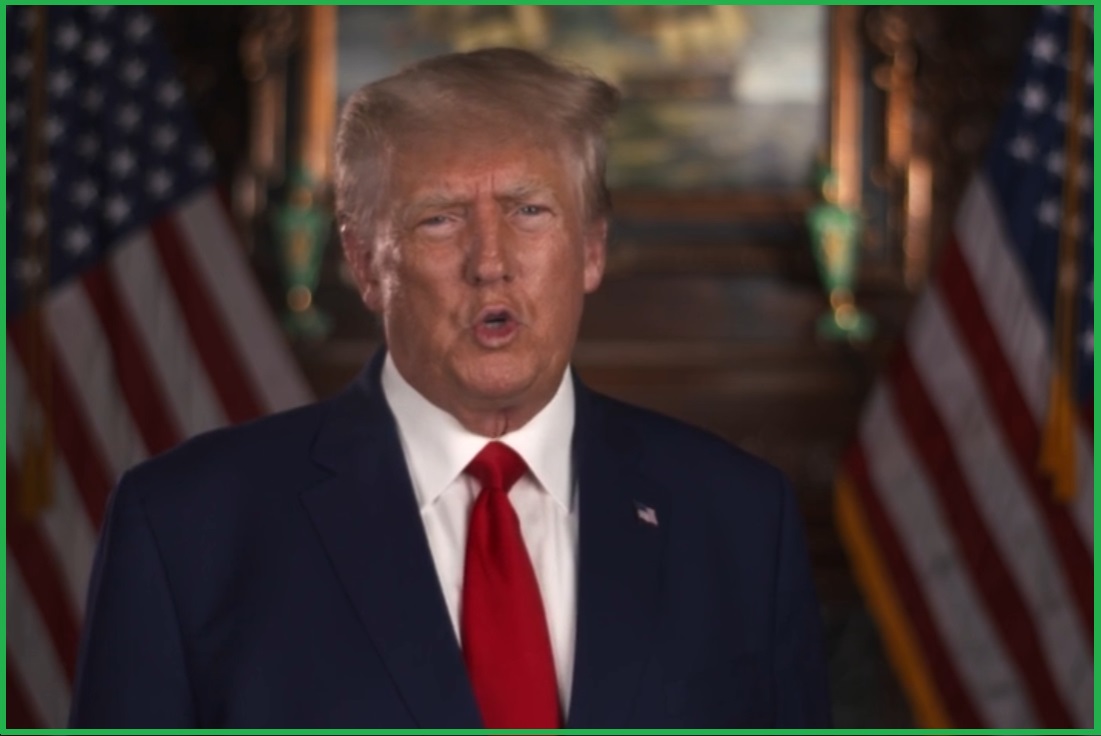
President Trump transmitted a message to congress, warning them not to cut Social Security and Medicare {Direct Rumble Link}. Many politicians and pundits will look at Trump’s position from the perspective of it being a good position to campaign on for older voters, but that’s not the core of his reasoning.
In 2016 CTH was the first place to evaluate the totality of President Trump’s economic policies; specifically, as those policies related to the entitlement programs around Social Security and Medicare. We outlined how the approach Trump was putting forth and the way he was approaching the issue. In the years that followed, he was right. He was creating a U.S. economy that could sustain all of the elements the traditional political class were calling “unsustainable.”
Before getting to the details, here’s his video message and policy as delivered yesterday. WATCH:
Fortunately, we do not have to guess if President Trump is correct. We have his actual economic policy results to look at and see how the expansion of the economy was creating the type of growth that would sustain Social Security and Medicare. This was/is MAGAnomics at work.
♦ On Social Security – Unlike many other 2016 Republican candidates, Donald Trump did NOT call for rapid or wholesale changes to the current Social Security program; and there’s a very good reason why he was the only candidate who did not propose wholesale changes.
With the single caveat of “high income retirees” (over $250k annually), which previously Trump said he was open to negotiating on, President Trump does not consider these programs as “entitlements”. The American people pay into them, and the federal government has an obligation to fulfill the promises made upon collection.
To fully understand how Donald Trump views the solvency of Social Security, you must again understand his economic model and how it outlines growth.
The issue with Social Security, as viewed by Trump, is more of an issue with receipts and expenditures. If the aggregate U.S. economy is growing by a factor larger than the distribution needed to fulfill its entitlement obligations, then no wholesale change on expenditure is needed. The focus needs to be on continued and successful economic growth.
What you will find in all of Donald Trump’s positions, is a paradigm shift he necessarily understood must take place in order to accomplish the long-term goals for the U.S. citizen as it relates to “entitlements” or “structural benefits”.
All other candidates and politicians begin their policy proposals with a fundamentally divergent perception of the U.S. economy.
The customary political economy theory, carried by most politicians, positions them with an outlook of the U.S. economy based on “services”; a service-based economic model.
While this economic path has been created by decades old U.S. policy and is ultimately the only historical economic path now taught in school, President Trump initiated his economy policy with the intention to change the dynamic entirely, and that’s exactly what he did.
Because so many shifts -policy nudges- have taken place in the past several decades, few academics and even fewer MSM observers, were able to understand how to get off this path and chart a better course.
Donald Trump proposed less dependence on foreign companies for cheap goods, (the cornerstone of a service economy) and a return to a more balanced U.S. larger economic model where the manufacturing and production base can be re-established and competitive based on American entrepreneurship and innovation. This is the essence of MAGAnomics.
The key words in the prior statement are “dependence” and “balanced”. When a nation has an industrial manufacturing balance within the GDP there is far less dependence on the economic activity in global markets. In essence the U.S. can sustain itself, absorb global economic fluctuations and expand itself or contract itself depending on the free market.
When there is no balance, there is no longer a free market. The free market is sacrificed in favor of dependency, whether it’s foreign oil or foreign manufacturing, the dependency outcome is essentially the same. Without balance there is an inherent loss of economic independence, and a consequential increase in economic risk.
No other economy in the world innovates like the U.S.A. President Donald Trump saw/sees this as a key advantage across all industry – including manufacturing and technology.
The benefit of cheap overseas labor, which is considered a global market disadvantage for the U.S., is offset by utilizing innovation and energy independence. This was the core of the economic program that created so much immediate GDP growth in 2017, 2018 and 2019.
2017: […] “This policy will be successful in moving the U.S. economy away from low-growth secular stagnation towards significantly more buoyant performance. We would not be taken by surprise by a doubling of the growth rate of real GDP in the U.S. over the next two years, nor by a further significant move up of equity valuations and a material further appreciation of the dollar.” ~ David Folkerts-Landau, Chief Economist, Deutsche Bank
The third highest variable cost of goods beyond raw materials first, labor second, is energy. If the U.S. energy sector was unleashed -and fully developed- the manufacturing price of any given product would allow for global trade competition even with higher U.S. wage prices. This is why President Trump traveled to Saudi Arabia as his first foreign trip, followed closely by a trip to Asia. He was putting the basics of his U.S. economic policy into place.
Additionally, the U.S. has a key strategic advantage with raw manufacturing materials such as: iron ore, coal, steel, precious metals and vast mineral assets which are needed in most new modern era manufacturing. President Trump proposed we stopped selling these valuable national assets to countries we compete against – they belong to the American people; they should be used for the benefit of American citizens. Period. This was the central point of the Steel and Aluminum tariffs.
EXAMPLE: Prior to President Trump, China was buying and recycling our heavy (steel) and light (aluminum) metal products (for pennies on the original manufacturing dollar) and then using those metals to reproduce manufactured goods for sale back to the U.S.
As President, Donald Trump stopped that practice immediately, triggering a policy expectation that we do the manufacturing ourselves with the utilization of our own resources. Then he leveraged any sales of these raw materials in our international trade agreements.
When you combine FULL resource development (in a modern era) with the removal of over-burdensome regulatory and compliance systems, necessarily filled with enormous bureaucratic costs, Donald Trump began lowering the cost of production and the U.S. became globally competitive. In essence, Trump changed the economic paradigm, and we no longer were a dependent nation relying on a service driven economic model.
The cornerstone to the success of this economic turnaround was the keen capability of the U.S. worker to innovate on their own platforms. Americans, more than any country in the world, just know how to get things accomplished. Independence and self-sufficiency are part of the DNA of the larger American workforce.
In addition, as we saw in 2018 and 2019, an unquantifiable benefit came from investment, where the smart money play -to get increased return on investment- became putting capital INTO the U.S. economy, instead of purchasing foreign stocks.
With all of the above opportunities in mind, this is how President Trump put us on a pathway to rebuilding our national infrastructure.
The demand for labor increased, and as a consequence so too did the U.S. wage rate which was stagnant (or non-existent) for the past three decades.
As the wage rate increased, and as the economy expanded, the governmental dependency model was reshaped and simultaneously receipts to the U.S. treasury improved.
More money into the U.S Treasury and less dependence on welfare/social service programs have a combined exponential impact. You gain a dollar and have no need to spend a dollar – the saved sum is doubled. That was how the SSI and safety net programs were positioned under President Trump. Again, this is MAGAnomics.
When you elevate your America First economic thinking you begin to see that all of the “entitlements” or expenditures become more affordable with an economy that is fully functional.
As the GDP of the U.S. expands, so does our ability to meet the growing need of the retiring U.S. worker. We stop thinking about how to best divide a limited economic pie and begin thinking about how many more economic pies we can create. Simply put, we begin to….
…. Make America Great Again!
We know it works, because we have the results to cite.
It was the Fourth Quarter of 2019…..
Right before the pandemic would hit a few months later…. Despite two years of doomsayer predictions from Wall Street’s professional punditry, all of them saying Trump’s 2017 steel and aluminum tariffs on China, Canada and the EU would create massive inflation, it just wasn’t happening!
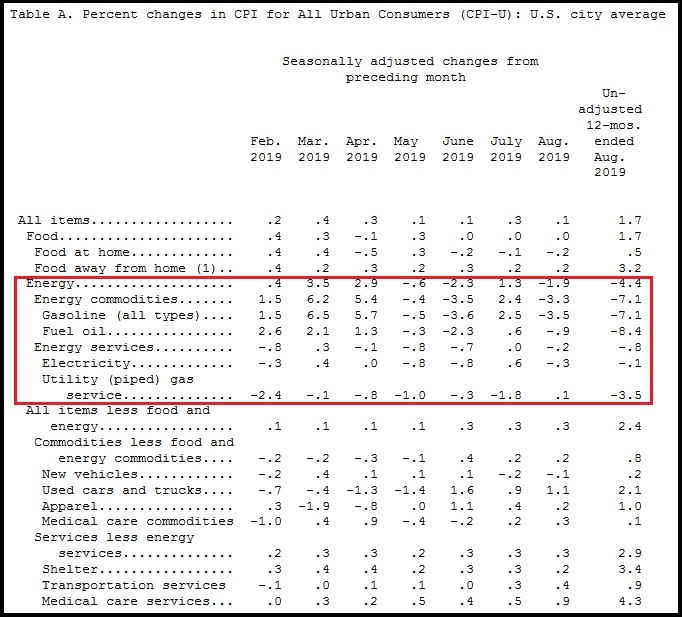
Overall year-over-year inflation was hovering around 1.7 percent [Table-A BLS]; yup, that was our inflation rate. The rate in the latter half of 2019 was firmed up with less month-over-month fluctuation, and the rate basically remained consistent. [See Below] The U.S. economy was on a smooth glide path, strong, stable and Main Street was growing with MAGAnomics at work.
A couple of important points. First, unleashing the energy sector to drive down overall costs to consumers and industry outputs was a key part of President Trump’s America-First MAGAnomic initiative. Lower energy prices help the worker economy, middle class and average American more than any other sector.
Which brings us to the second important point. Notice how food prices had very low year-over-year inflation, 0.5 percent. That is a combination of two key issues: low energy costs, and the fracturing of Big Ag hold on the farm production and the export dynamic:
(BLS) […] The index for food at home declined for the third month in a row, falling 0.2 percent. The index for meats, poultry, fish, and eggs decreased 0.7 percent in August as the index for eggs fell 2.6 percent. The index for fruits and vegetables, which rose in July, fell 0.5 percent in August; the index for fresh fruits declined 1.4 percent, but the index for fresh vegetables rose 0.4 percent. The index for cereals and bakery products fell 0.3 percent in August after rising 0.3 percent in July. (link)
For the previous twenty years food prices had been increasingly controlled by Big Ag, and not by normal supply and demand. The commodity market became a ‘controlled market’. U.S. food outputs (farm production) was controlled and exported to keep the U.S. consumer paying optimal prices.
President Trump’s trade reset was disrupting this process. As farm products were less exported the cost of the food in our supermarket became reconnected to a ‘more normal’ supply and demand cycle. Food prices dropped and our pantry costs were lowered.
The Commerce Dept. then announced that retail sales climbed by 0.4 percent in August 2019, twice as high as the 0.2 percent analysts had predicted. The result highlighted retail sales strength of more than 4 percent year-over-year. These excellent results came on the heels of blowout data in July, when households boosted purchases of cars and clothing.
The better-than-expected number stemmed largely from a 1.8 percent jump in spending vehicles. Online sales, meanwhile, also continued to climb, rising 1.6 percent. That’s similar to July 2019, when Amazon held its two-day, blowout Prime Day sale. (link)
Despite the efforts to remove and impeach President Trump, it did not look like middle-class America was overly concerned about the noise coming from the pundits. Likely that’s because blue-collar wages were higher, Main Street inflation was lower, and overall consumer confidence was strong. Yes, MAGAnomics was working.
Additionally, remember all those MSM hours and newspaper column inches where the professional financial pundits were claiming Trump’s tariffs were going to cause massive increases in prices of consumer goods?
Well, exactly the opposite happened [BLS report] Import prices were continuing to drop:
This was a really interesting dynamic that no-one in the professional punditry would dare explain.
Donald Trump’s tariffs were targeted to specific sectors of imported products. [Steel, Aluminum, and a host of smaller sectors etc.] However, when the EU and China respond by devaluing their currency, that approach hit all products imported, not just the tariff goods.
Because the EU and China were driving up the value of the dollar, everything we were importing became cheaper. Not just imports from Europe and China, but actually imports from everywhere. All imports were entering the U.S. at substantially lower prices.
This meant when we imported products, we were also importing deflation.
This price result is exactly the opposite of what the economic experts and Wall Street pundits predicted back in 2017 and 2018 when they were pushing the rapid price increase narrative.
Because all the export dependent economies were reacting with such urgency to retain their access to the U.S. market, aggregate import prices were actually lower than they were when the Trump tariffs began:
[…] Prices for imports from China edged down 0.1 percent in August following decreases of 0.2 percent in both July and June. Import prices from China have not advanced on a monthly basis since ticking up 0.1 percent in May 2018. The price index for imports from China fell 1.6 percent for the year ended in August.
[…] Import prices from the European Union fell 0.2 percent in August and 0.3 percent over the past 12 months.
So yes, we know President Trump can save Social Security and Medicare by expanding the economy with his America First economic policy. We do not need to guess if it is possible or listen to pundits theorize about his approach being some random ‘catch phrase’ disconnected from reality. Yes folks, we have the receipts.
This was MAGAnomics at work, and this is entirely what created the middle-class MAGA coalition. No other Republican candidate has this economic policy in their outlook because all other candidates are purchased by the Wall Street multinationals.
America First MAGAnomics is unique to President Trump because he is the only one independent enough to implement them.
Authors note as said in 2016: “If I absolutely did not believe this economic model was doable, I would never expand the concept and place advocacy upon it. I am an absolute believer that we can, as a nation, reignite a solid manufacturing base and generate an expanding middle class.” Yes, I bet on Trump, and he was right.
Posted originally on the CTH on January 18, 2023 | Sundance
Curious news about Jack’s Magic Coffee Shop, aka ‘The Twitter’, surfaces as the social media company announces that to save money, they will shut down the Sacramento data center and substantially downsize the Atlanta data center.
Oddly enough, the Atlanta data center is in the same regional complex as Georgia Tech University, which is the same university under U.S. government contract (think Rodney Joffe and the Trump-Russia Alfa Bank hoax) for cybersecurity research efforts.
[NOTE: Shortly after Twitter expanded its data center in Atlanta, on Nov 29, 2016, Georgia Tech received a $17.3 million contract from the U.S. Dept of Defense for “cybersecurity” research. Three days later, Georgia Tech announced new collaboration with China’s Tianjin U, which hosts the APT hacker groups and is a partner of China Telecom and Huawei. Funny that, and you already know my suspicions, so I digress.]
(Data Center Dynamics) – Twitter is shutting down its data center in Sacramento, and will downsize its facility in Atlanta, Platformer’s Zoë Schiffer reports. The decision was previously rumored in November.
The company operates three main facilities in the US, with its remaining site in Portland, Oregon, expected to take the increased load. It is not clear if Twitter has done an analysis of the migration and whether the remaining servers can handle the load – when the Sacramento data center collapsed in September it caused a system outage. The move is expected to happen as soon as early January.
Twitter also has cloud contracts with Amazon Web Services and Google Cloud, but new owner Elon Musk is believed to be trying to renegotiate the contracts and cut expenses.
At the same time, he said that he plans to release new services that will require more storage and compute, including long-form high resolution video.
Former Twitter employee Sasha Solomon, who was fired after tweeting “sighhhhhhhhhhhhhhh” about Musk’s acquisition, responded to the data center closure report with: “Omfg like good luck when a failover needs to happen. So excited to see what 1-ish data center can do with all of Twitter’s traffic.” (read more)
This downsizing and reorganization of the background data-processing is happening at the same time the Daily Mail is discussing the financial viability of Twitter [SEE HERE].
Now, I don’t want to go down that rabbit hole again, but if Elon Musk was notified the US Govt was no longer going to subsidize the extreme data processing costs (coffee making), due to a lessening of the ‘national security partnership‘ per se’, then wouldn’t it make sense to start shutting down and downsizing costly data centers.
I have created this site to help people have fun in the kitchen. I write about enjoying life both in and out of my kitchen. Life is short! Make the most of it and enjoy!
This is a library of News Events not reported by the Main Stream Media documenting & connecting the dots on How the Obama Marxist Liberal agenda is destroying America















 Centinel2012