Will Coins Survive The Monetary Crisis?


QUESTION:  Hi Armstrong,
I continue to read your blog for 2 years I say and find it educational.
I wanted to know what will happen to U.S. coins like pennies and nickels when the base metals are worth more than the coin value.
Will the U.S. allow hoarders/collectors to exchange them for spot metal value or melt value? either one would be of course more than 0.01 for the penny and more than 0.05 for the nickel.
I hope to hear my answer on the blog

A

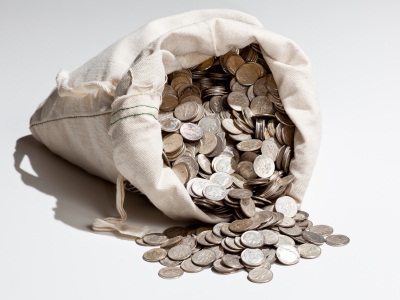
ANSWER: When silver was removed from the coins after 1964, at first it was illegal to melt the coins down. The FBI were prosecuting people for melting the coins they called defacing. However, that quickly faded out as the law did not support their theory of defacement. $1,000 bags of US silver coin traded even on the futures market in New York.

This time around, it is not likely that we would see confiscation. We could once again see bags of coins trading as was the case even into the later 1970s.

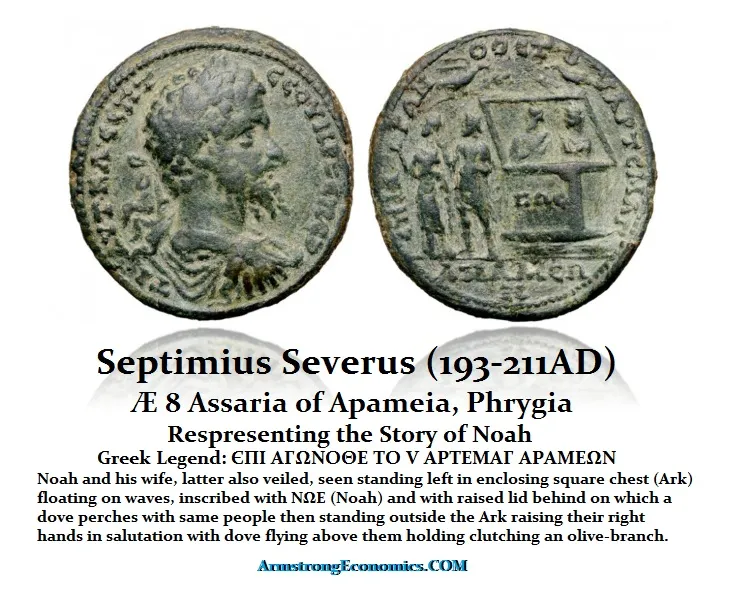
The Noah Coinage of Phrygia


QUESTION: Dear Mr. Armstrong,
I have a question please, taking the lead from your recent article in your blog “Noah’s Ark Commemorated on Roman Coins”
Question: Do you happen to have found a copy of the Apion Treatise (answers to Josephus) in your historical searches? (Apion — Historian from Alexandria)
Background: Titus Flavius Josephus, born in 37 AD in Jerulasem, 160 years before Septimus reign introduced to the Roman elite to the Jewish mythology of the Bible thru his writings. The historian Apion from Alexandria wrote a treatise answering to the historical claims of Josephus. Josephus also responded with his treatise – Against Apion, which has survived. Apion’s Treatise is not published or found (lost??), according to the results of my searches.
Can you please enlighten me.
Thank you Kindly,

DGP
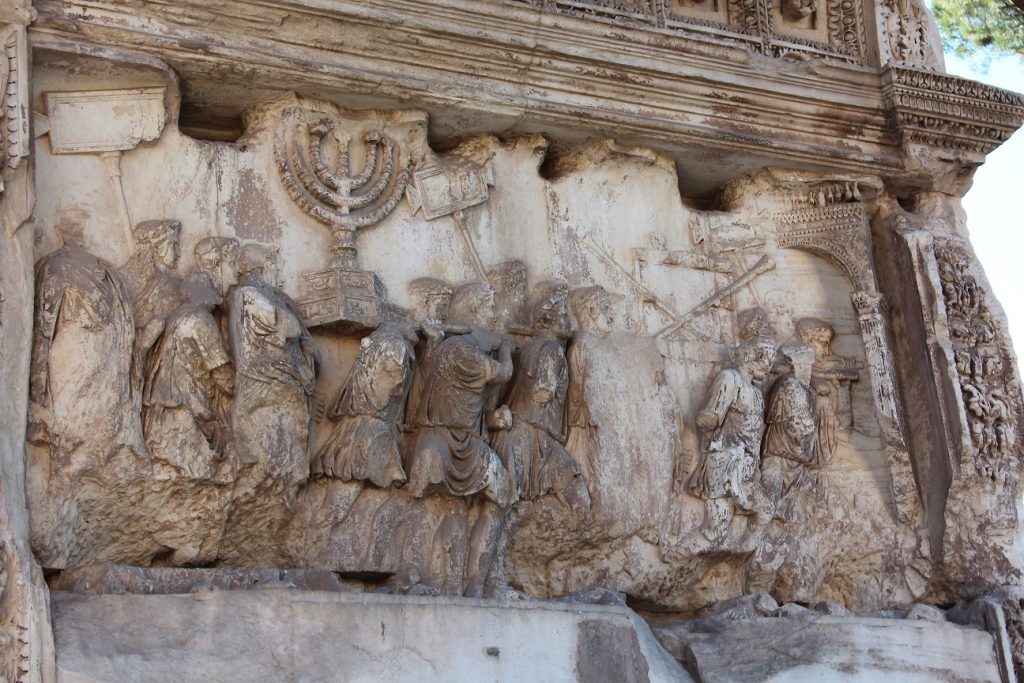
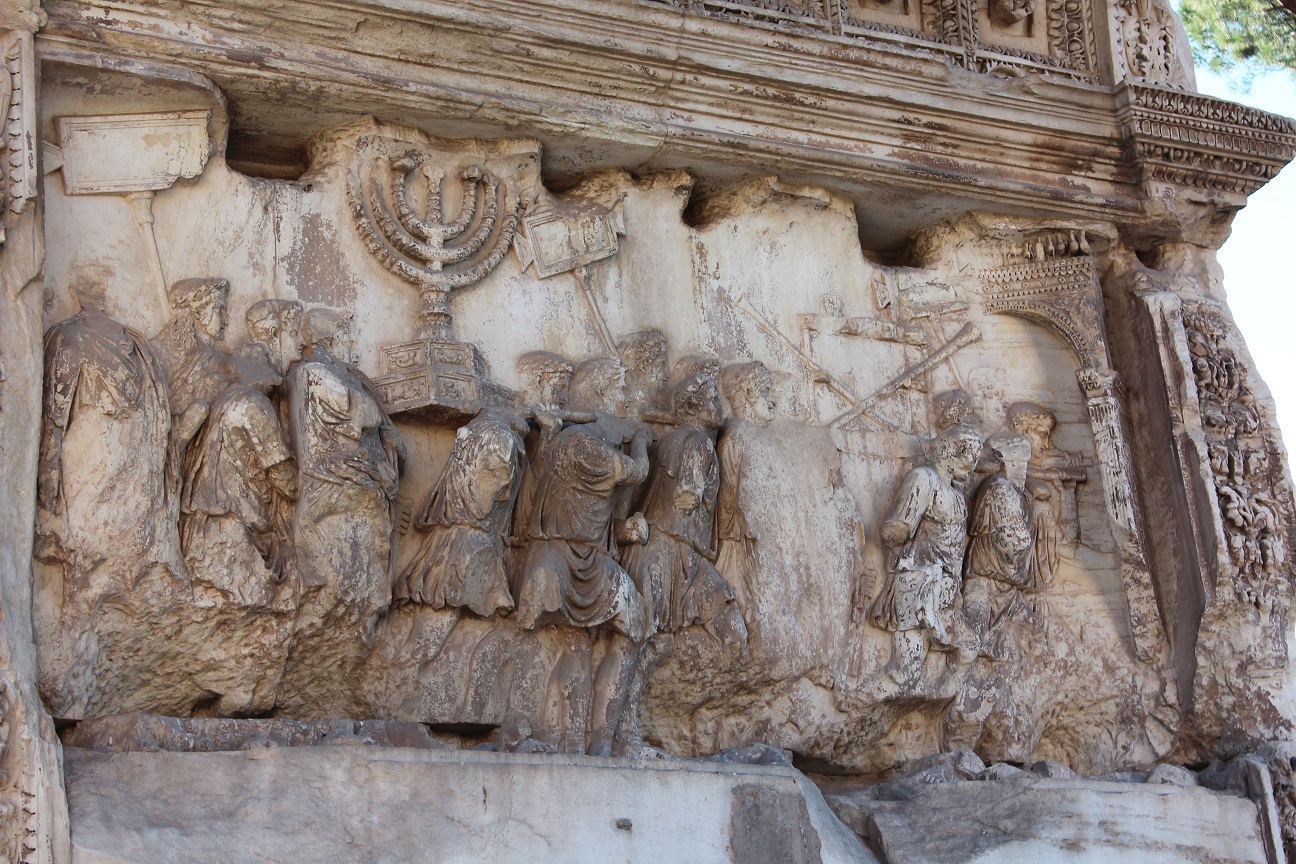
ANSWER: Josephus has been a contemporary historical source with respect to the conquest of Judaea by the Romans under the command of Vespasian (69-79AD). It is also true that he became an adviser to Vespasian’s son Titus (79-81AD). However, most of his writings appear to be really trying to redeem himself among his fellow Jews. In the Preface to Jewish Wars, Josephus actually criticizes historians that misrepresented the events of Roman-Jewish War. He wrote: “they have a mind to demonstrate the greatness of the Romans, while they still diminish and lessen the actions of the Jews.”

The Jewish War was a very big and profound event. It came after the death of Nero (54-68AD) and the empire was plunged into civil war. Vespasian (69-79AD) was vying to be emperor and the Jews looked at this opportunity to seek independence from Rome. However, like Catalonia in Spain, if they are allowed to just leave, this threatens not just Spain but would encourage others to leave the EU. This is precisely the same set of facts that existed following the death of Nero in 68AD.
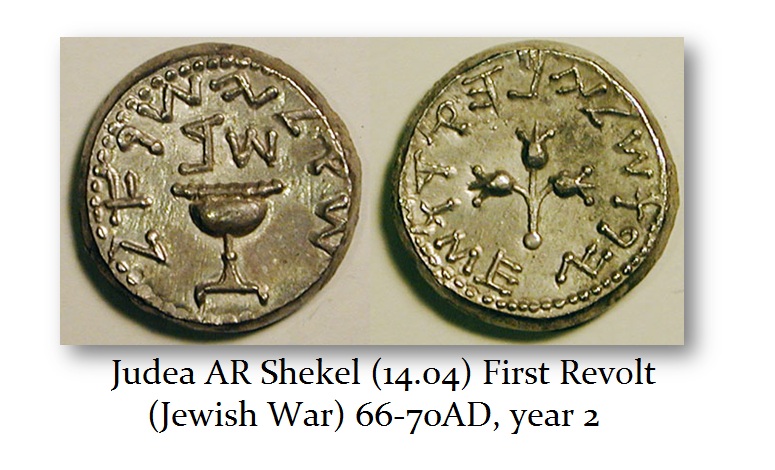
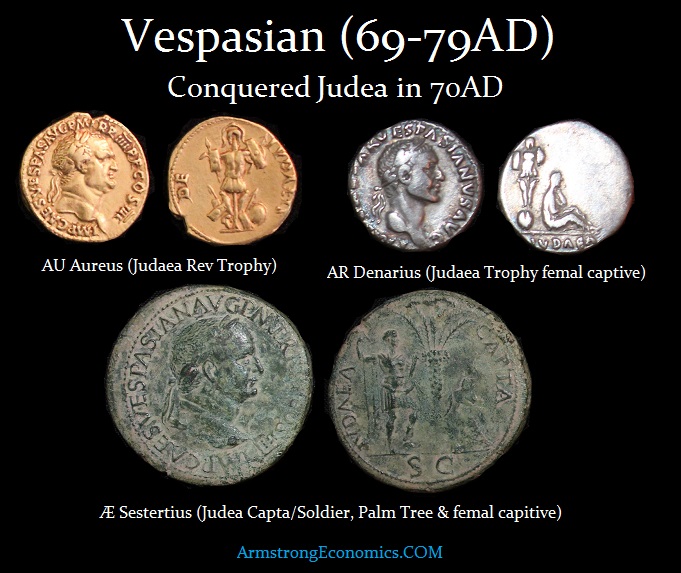
If Judaea was allowed to just leave, other provinces would have done the same. They even issued their own coinage. Thus, the punitive actions of Vespasian against the Jews must be understood within this context. We have the victory over the Jews appears on coins of Vespasian of every denomination.

It is highly unlikely that the other works of Josephus were widely read by Romans. Josephus’s Against Apion is a two-volume defense of Judaism as classical religion and philosophy. Josephus stressed its antiquity and suggested that the Greek religions lacked that ancient tradition and were more modern. Josephus attacks the Greek writer Apion and his anti-Judaic allegations. So once again, this appears to be a work that may be also out of guilt that he supported the Romans to pick the winning side.

The bronze coin pictured above of Apameia was struck for Septimius Severus (192-211AD). The reverse legend mentions the city’s AGONOTHETES (chief organizer of the games) or chief magistrate, ARTEMAS, who probably was Jewish. Noah’s name, given in Greek as NOE, which appears on the ark. The subject matter does appear to be very popular and it may be entirely attributed to Jewish magistrates. Apameia was a city in Phrygia, which during the 3rd century AD, was under Roman rule. The Noah coin design must have been very popular since it was struck for the emperors even after Septimius Severus such as Severus Alexander (222-235AD), Gordian III (238-244AD), Philip I (244-249AD), and Trebonianus Gallus (251-253AD), over the course of 61 years.
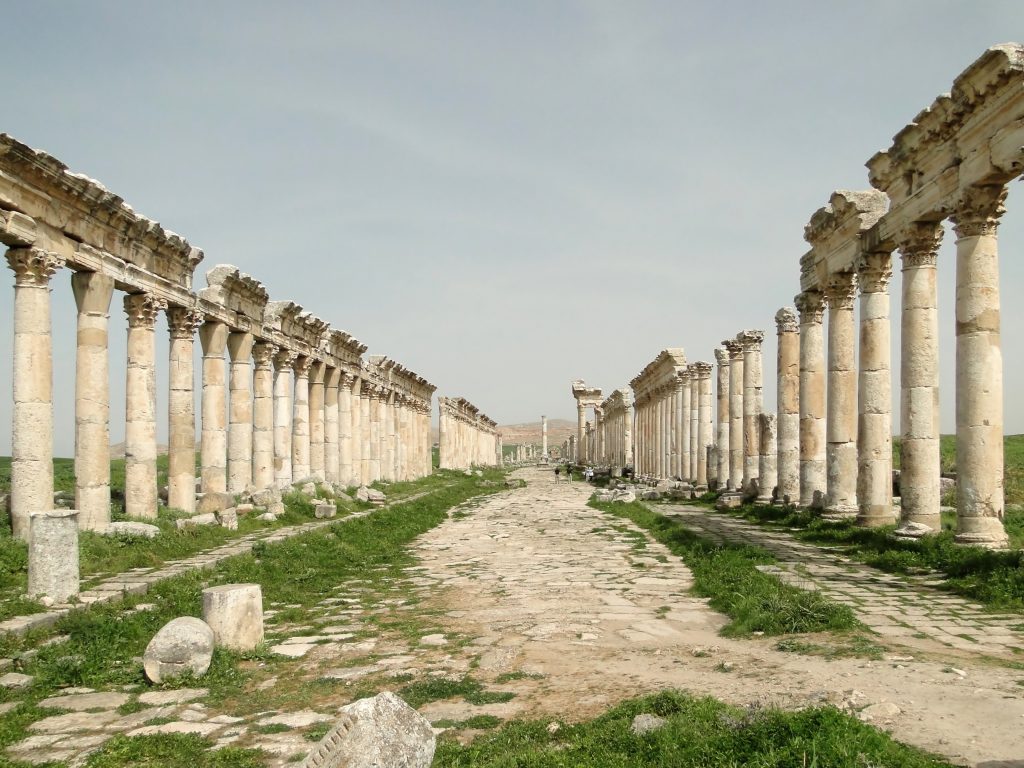
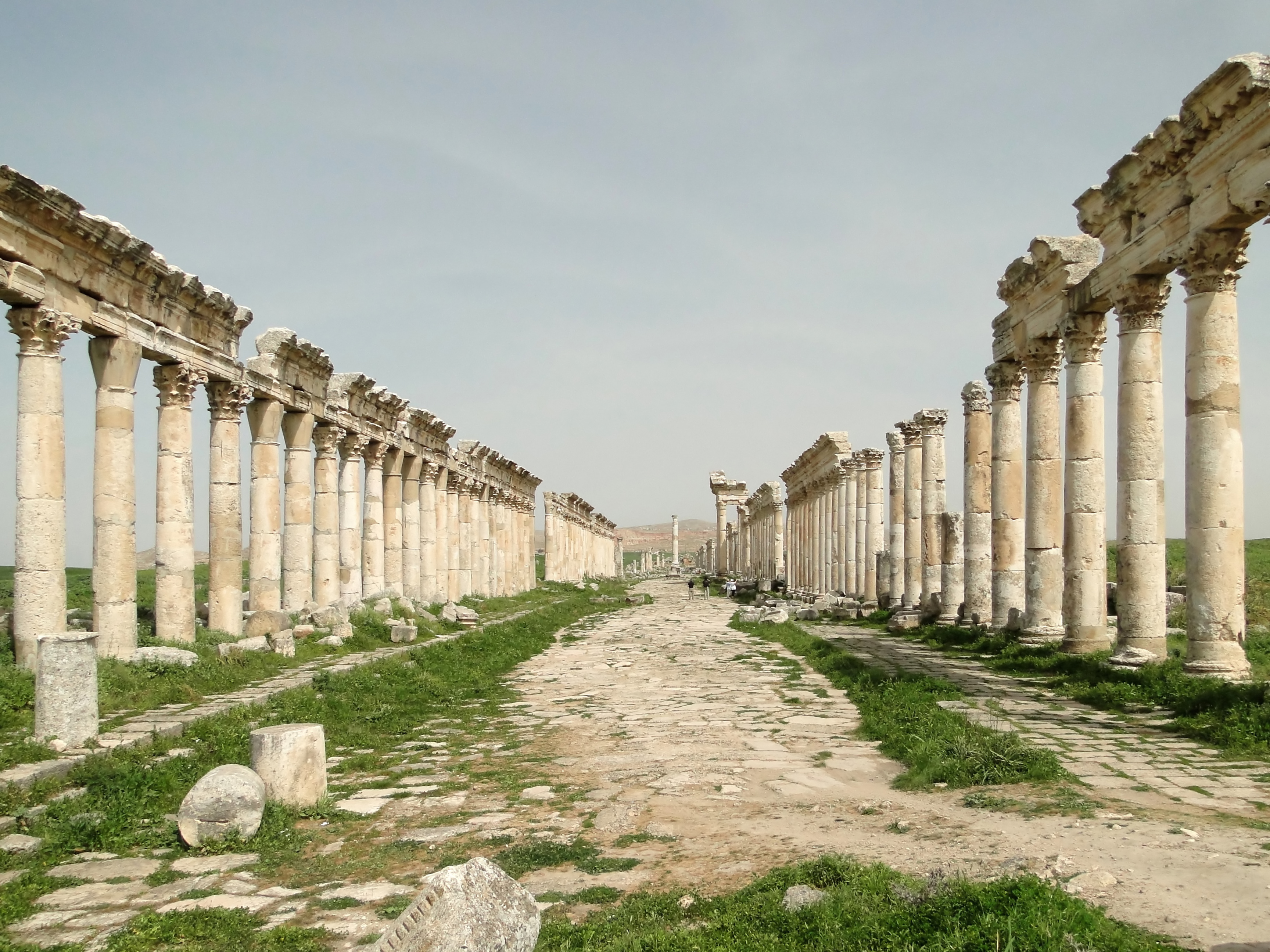
Apameia was a merchant city (today Dinar in western Turkey) whose ruins remain to this day. It was a very prosperous city during Roman times. It was a trade/commercial center that was connected to Asia by caravans carrying silks, spices, incense, perfumes, and medicines. The population of the city was very much like London and New York; very cosmopolitan with a mixture of Phrygians, Lydians, Cappadocians, Pisidians, Greeks, Romans and Jews. The common bond was mercantilism. They were a society composed of traders.
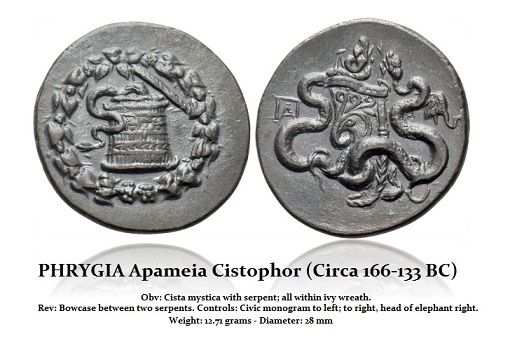
The origin of the city was founded by Phrygians prior to 1,000 BC and it was named Celaenae. It was located in a well-watered oasis at the source of the Meander River. Its coinage from the 2nd century BC shows an elephant head which is a clear symbol of its connection with Asia through trade. This city sat on the ancient old ‘Royal Road’ from the Middle East to the Aegean Sea that was originally constructed by the Persians some 500 years before this coin was struck. The location afforded Apameia control over all the caravan routes from Asia. Even when Alexander the Great invaded this region, he made the city one of his military bases.
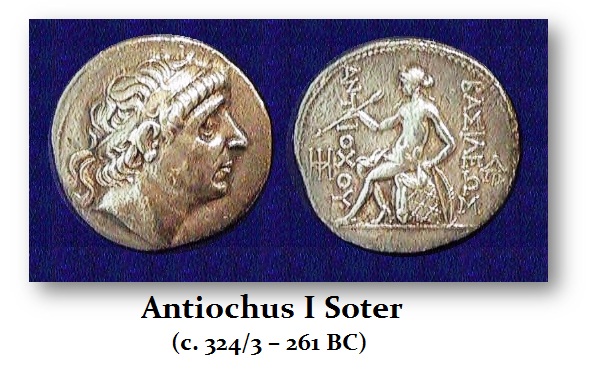
Following the death of Alexander, it fell to the control of Antiochus I Soter (280-261BC)(meaning Savior) of the Syrian/Seleukid Empire. Antiochus I built a new city in 270BC below the citadel of Ceaenae and named it Apameia after his mother. Then Antiochus brought Babylonian Jews to serve as garrison soldiers, civil servants and royal administrators in his new city. This is most likely the connection why we ultimately find Noah coins being struck in this city. Some argue this was a punishment because the Jews had resisted Alexander’s conquest of Babylon where they lived at that point in history.
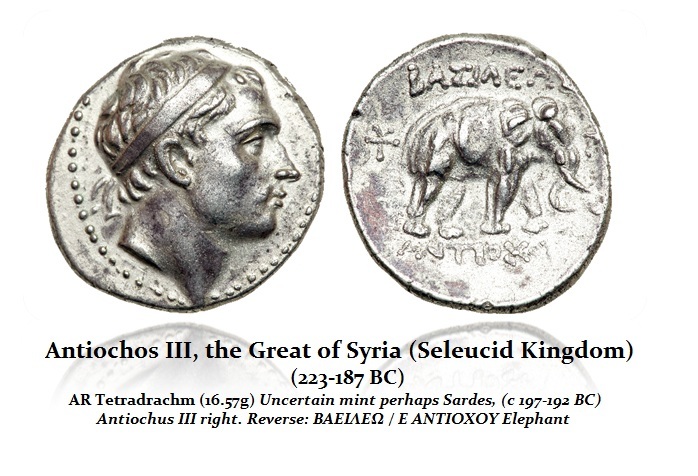
The Antiochus III (223-187BC), the Great, brought another large group of Persian Jews to Apameia in 188BC. Josephus in his work, ‘Antiquities of the Jews’ said that Antiochus III settled 2,000 Jewish families from Babylon in Lydia and Phrygia. Josephus goes on to say that these Jews were given special privileges including tax exemptions for ten years and were permitted to adhere to their own customs, laws, and religion. (Antiquities, Book XII, iii.4). These settlers may account for the large communities of Jews that suddenly emerged in the ancient Asian cities of Antioch, Apameia, Delos, Ephesus, and Sardes.

It is clear that by the time we reach Septimus Severus at the end of the 2nd century AD, the Jews had risen to high political positions in the city. Therefore, the Noah coins are unique to this city and are a reflection of the cosmopolitan culture that existed thanks to commerce. The ark is portrayed as a kibotos, which was an Apameian packing case used in trade with a lid. This is, therefore, blending the trade of the city with the Jewish parable.

 

Our Proprietary US Share Market Index Measuring the degree of Overbought Securities


QUESTION: Where does your overbought index stand on the stock market?

KL


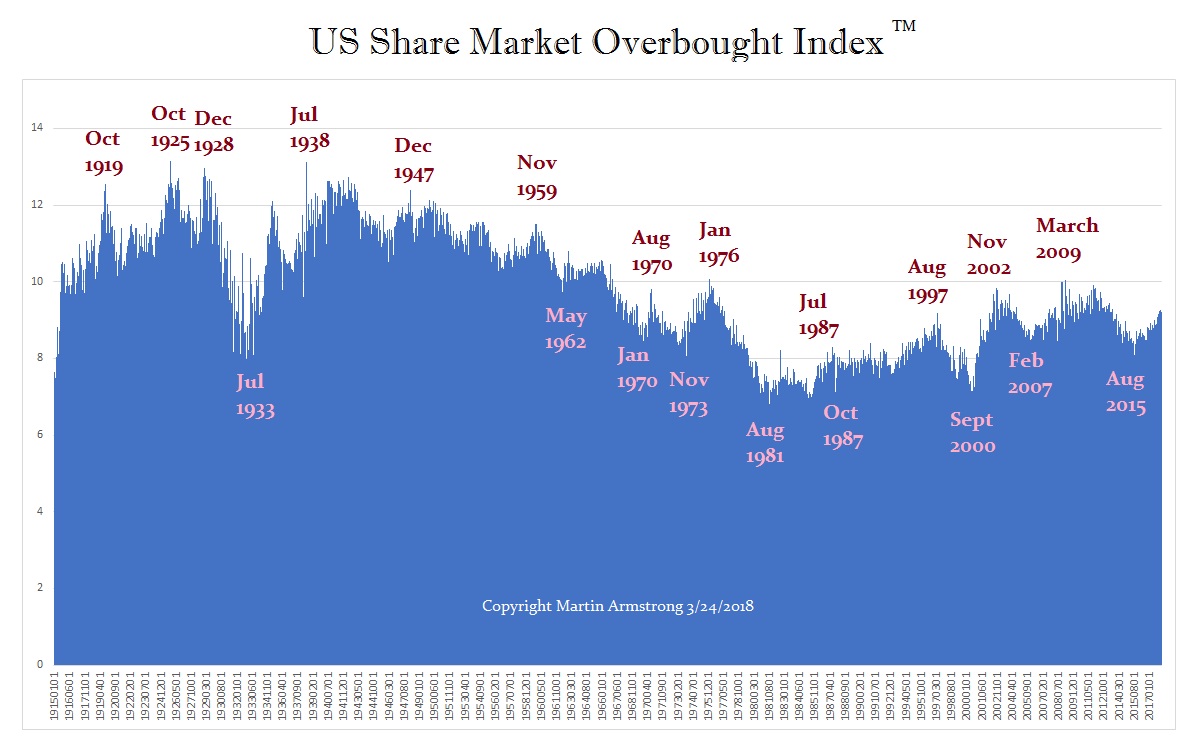
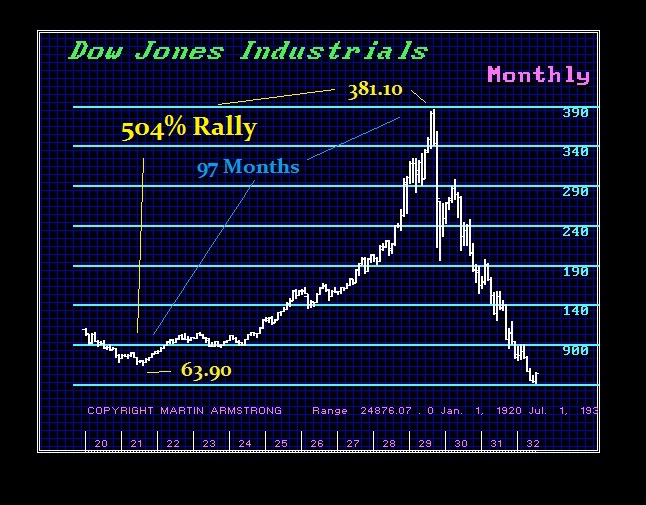
ANSWER: This Index is proprietary. It peaked at 12.55 during October 1919 as capital had flowed to the United States due to World War I. The Index then declined thereafter into the August 1921 bottom at 10.40. From this point, the Index rallied into October 1925 peaking at 13.16, fell back for 15 months bottoming again in October 1927. The final rally lasted 14 months peaking at 12.95. The bottom came in July 1933 about 13 months after the actually low in nominal dollar terms during June 1932.

In nominal terms, the Dow tested the 1,000 level in 1966, 1968, and 1973 and again in 1980. We can see the shift in trend that came following the historical low in 1981. The core of this index is capital flows so it tends to reflect just how capital flees and concentrates moving relative to US assets. Looking at the most famous bull market of the Roaring ’20s, the duration was 97 months which we exceeded from the 2009 low in April 2017. The 2009 low was 6469.95 and the January high was 24,741.70. which was a rally of only 282% – not anywhere close to the Roaring ’20s.

This index is proprietary and it affords us a look at the asset class from a global perspective. This is part of the reason we have been warning that the bull market is by no means overbought and the bulk of forecasting out there has made this the most hated bull market in history because they look only at the nominal index without placing it within its global context.


President Trump Infrastructure Speech Richfield Ohio – 2:00pm Livestream


Today President Trump is traveling to Richfield, Ohio, to visit a union technical training facility for welding and heavy equipment. While there the President will deliver a speech about rebuilding infrastructure in America.  Anticipated start time 2:00pm EST.

UPDATE: Video Added

WH Livestream Link – RSBN Livestream Link – CNBC Livestream Link

Final U.S.T.R. 301 Report On China Trade Policies and Intellectual Theft…


United States Trade Representative Robert Lighthizer releases the final report into Chinese trade practices including intellectual theft:

https://www.scribd.com/embeds/375056913/content?start_page=1&view_mode=&access_key=key-ikcrKkfRNxfhughFkXe9

.

Ambassador Lighthizer also appeared on CNBC for a discussion of content:

Final Fourth Quarter GDP Increase 2.9% (exceeds expectations), Third Quarter Revised Upward to 3.2%…


The final quantification of the Bureau of Economic Analysis fourth quarter GDP growth rate was released today, reflecting an anticipated increase from the prior two estimations. The last revised estimation of GDP growth (February) was +2.5%, the final revised estimate is +2.9% growth.

A massive increase in consumer spending (+4%) around the October through December 31st time-frame (Q4) was offset by those dollars purchasing a large portion of imported products.  The GDP growth deduction from import purchases was 1.99%. [See table #2, line 50 pdf here]

In short, American consumers spent significantly more than usual in the holiday season; however, many of those purchases were foreign goods.

From the BEA Report – Real gross domestic product (GDP) increased at an annual rate of 2.9 percent in the fourth quarter of 2017 (table 1), according to the “third” estimate released by the Bureau of Economic Analysis. In the third quarter, real GDP increased 3.2 percent.

The GDP estimate released today is based on more complete source data than were available for the “second” estimate issued last month. In the second estimate, the increase in real GDP was 2.5 percent. With this third estimate for the fourth quarter, the general picture of economic growth remains thesame; personal consumption expenditures (PCE) and private inventory investment were revised up. (more)

We anticipated this adjusted increase back when the first BEA result was posted, for two reasons: #1) The original estimations were contingent upon almost no domestic inventory remaining at the end of Q4 (highly unlikely); #2) The import deduction was the largest deduction in the past decade (possible, but again too early to quantify). The resulting adjustments announced today reflected exactly these two items.

(Via CNBC) While robust consumer spending curbed the accumulation of inventories, the slowdown in inventory investment was not as steep as previously reported.

Inventory investment rose at a rate of $15.6 billion in the fourth quarter instead of the previously reported $8.0 billion pace. (link)

Look closely at the last part from CNBC above.  The BEA underestimated inventory investment by 50%?  Think about that….  you don’t miss figures by that amount unintentionally.  It’s called ‘sandbagging’.  I digress.

The bottom line – in Q4 we exported more than the past 4 years (+.83%), but we imported more than any time in the past ten years (-1.99%). The net impact was a deduction from GDP growth by -1.16%.

[*note* a reasonable correction in the trade imbalance of 25% (through smart trade deals) means the Q4 GDP could have been actually 3.5% instead of 2.9%]

The cumulative net result was an end of year (measured from the fourth quarter of 2016 to the fourth quarter of 2017), real GDP increase of 2.6 percent, compared with an increase of 1.8 percent during 2016.

MAGAnomics works.  We just need to support Trump and keep on keeping-on.

Now think about this….

President Trump appointed Gary Cohn to keep Wall Street invested; and throughout 2017 the Trump administration kept their trade cards close to the chest – it worked.  The Stock Market bought into the ploy that POTUS Trump would not disrupt the dynamics of Wall Street’s multinational global trade ideology.

However, they were not paying attention to the granular details under the radar, as evidenced by the action of Treasury Secretary Stephen Munchin, Commerce Secretary Wilbur Ross and U.S. Trade Representative Robert Lighthizer.  Throughout 2017 there was a ton of pre-positioning of assets taking place.

As soon as Team Trump gained massive increases in Wall Street (stock market) evaluations, we now enter year two where President Trump dispatches Gary Cohn and enlists Peter Navarro to carry out the MAGAnomic America-First agenda which includes rapid-fire renegotiated trade deals.

Brilliant strategery.

Bigly.

…in addition to MAGAnomic winning, you might just stop a nuclear war with North Korea.

Stay small, think BIGLY.

MAGAstrong

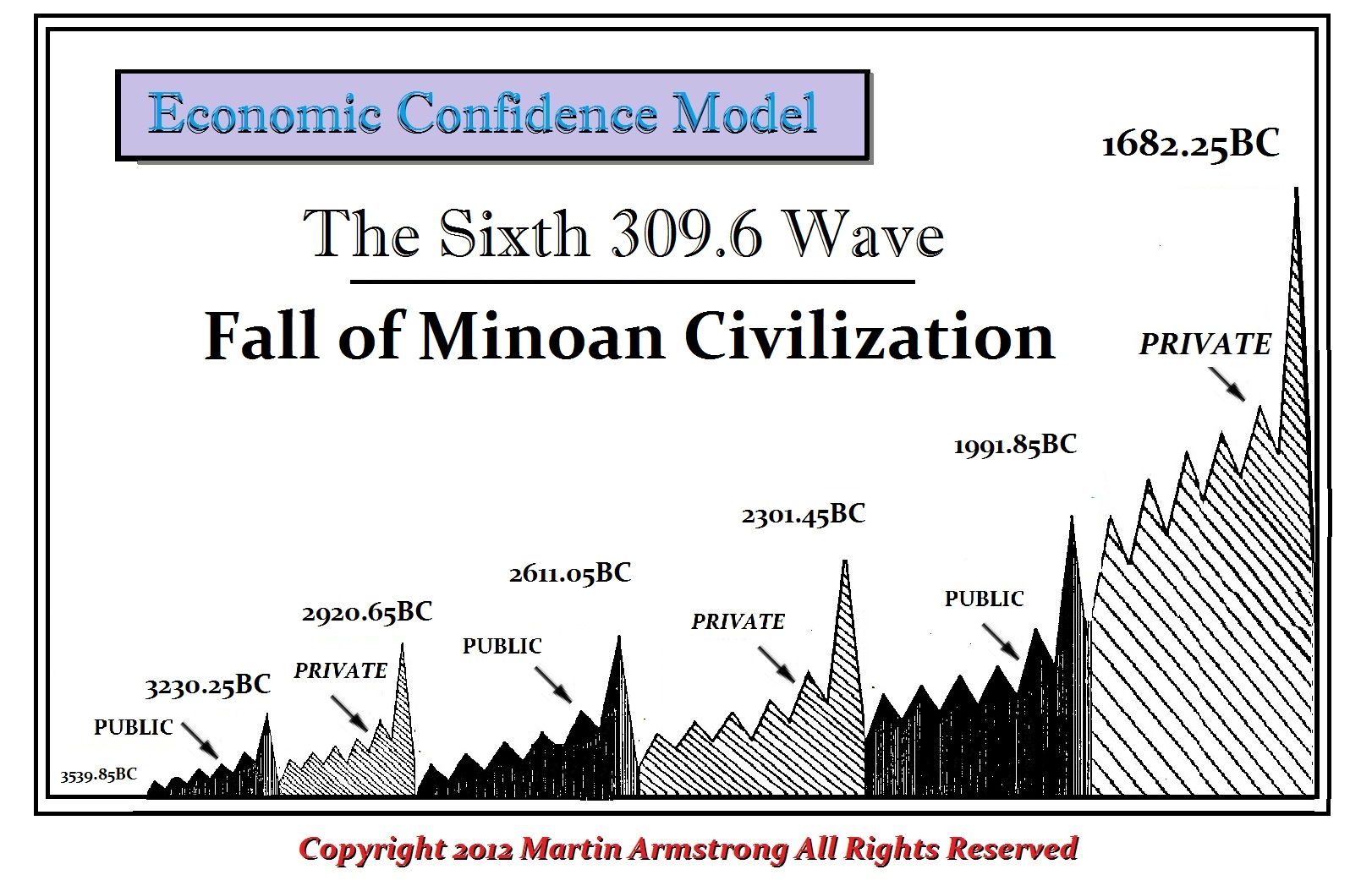
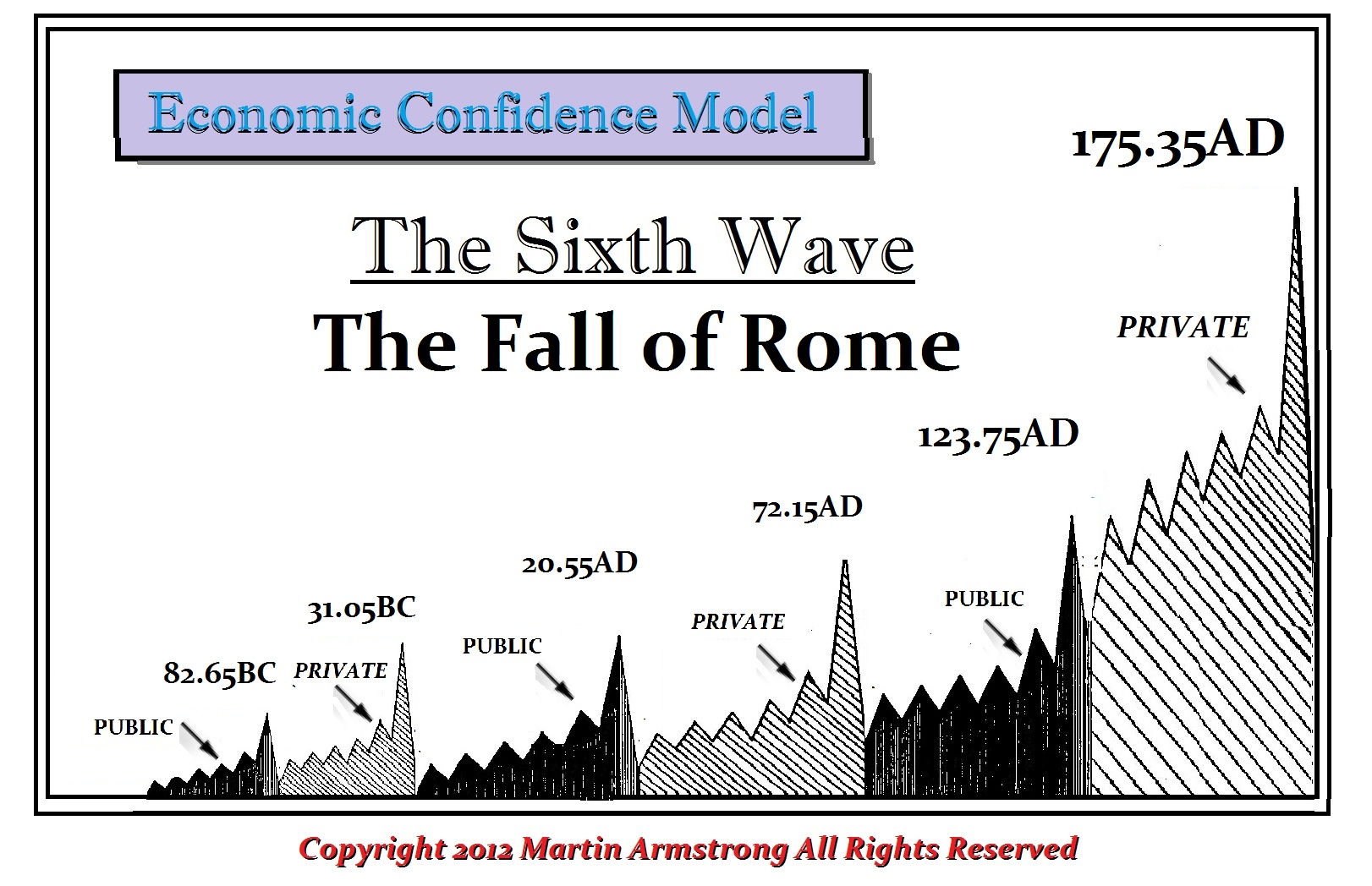
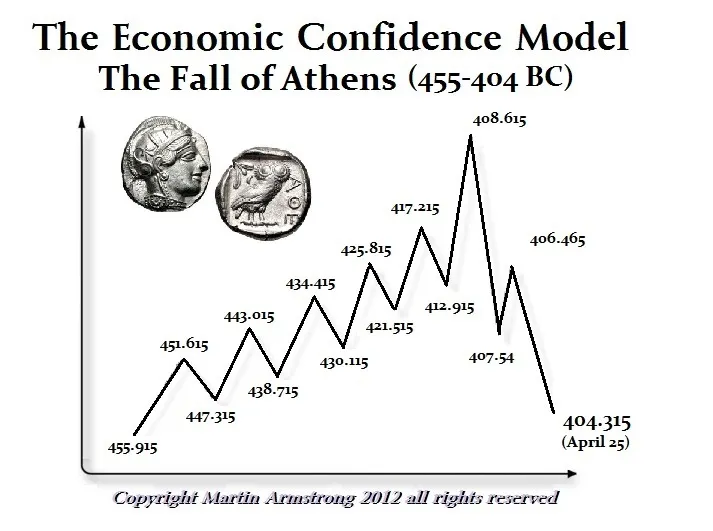
The Economic Confidence Model began with Recorded History


QUESTION: How far back have you tested your Economic Confidence Model?

GP

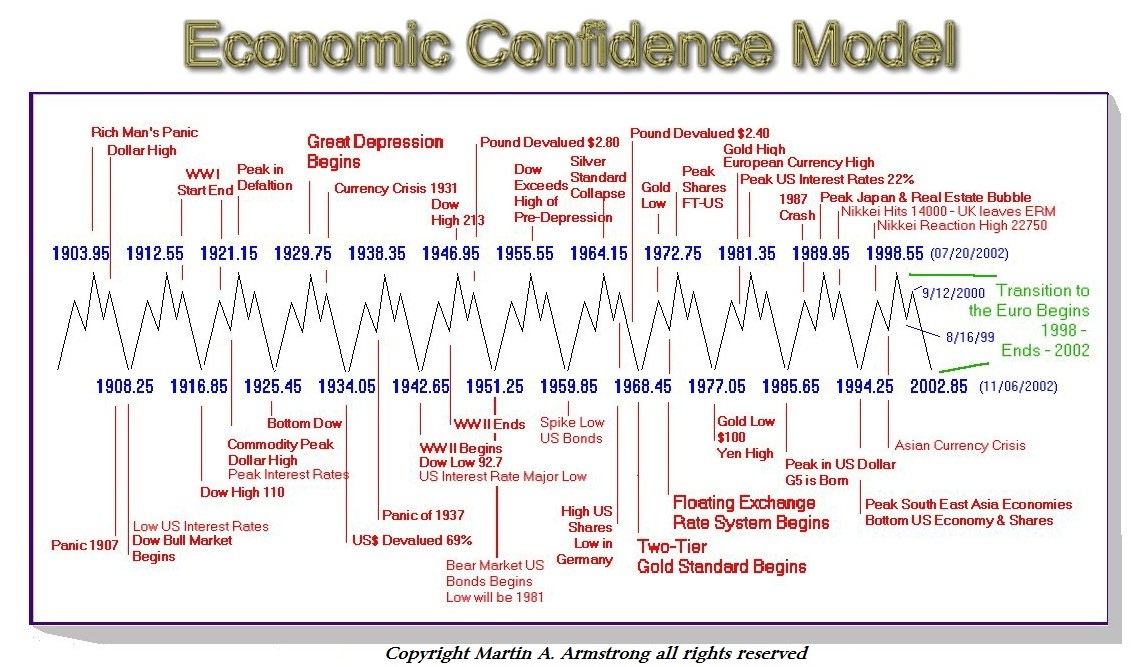
ANSWER: To the start of recorded history. Each wave has been identified and numbered. It is very remarkable how history conforms cyclically to this frequency.


It has been tested on every culture and empire from Asia to Europe.

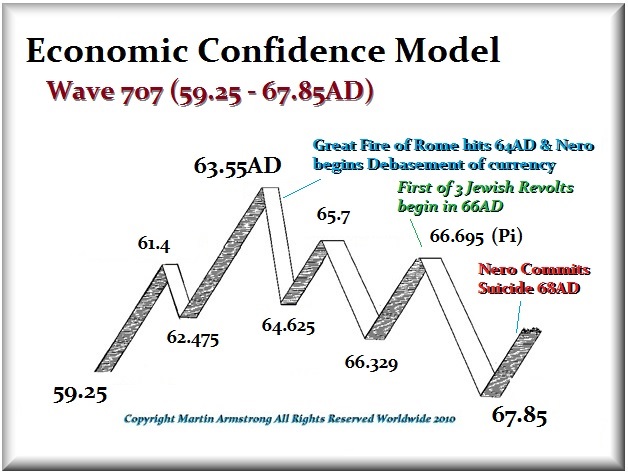
Here is a more modern perspective on the various events that took place.

When will North Korea Rise to Overthrow Kim Jung Un?


QUESTION: You said that Kim Jung Un was at risk of being overthrown and therefore he would have to shift direction or go to war. When do you see North Korea falling?

PP

ANSWER: When Korea was split in 1945 into communist North against the South, the terrain has always dictated the situation. About 65% of Korea’s heavy industry was located in the north, but, due to the harshness of the terrain, only 37% of its agriculture existed in the North. This is why the North often has bouts of famine.


ECM-Dynamic


I have warned that the Economic Confidence Model has three distinct components. There is the main wave frequency based upon Pi of 8.6 years which builds into 6 waves forming the major wave of 51.6 years which seems to be the generational shifting wave that manifests in political changes between public and private trends.

Then there is the Volatility Wave component. This is what causes one 8.6 year wave to be more pronounced than another. The volatility component has a frequency of 6 years which is a slower moving wave taking 12 unit waves to build into the ultimate volatility peaks of 72-year intervals.

The Schema Frequency I do not reveal. To put this in context, it is the DNA wave of a coded pattern throughout time. This will be the last thing I ever reveal if I decide to do so. The jury is still out. This is what everyone has tried to get from me for so long. It is the key to the interaction of waves.

On August 8th, 1945 (1945.602), the Soviet Union declared war on Japan. Soviet troops advanced and the US government feared Russia would occupy the whole of Korea. On August 10th, the US government proposed the 38th parallel division.

Therefore, the 72-year of volatility began during the summer of last year – 2017.602 (August 7th). Communism fell on its 72-year cycle (1917-1989). The Soviet Union broke up 2 years into that cyclical event. This places the same timing risk cor North Korea going into 2019-2020.

The 51.6-year cycle from 1945 (1997.202) marked the start of the 1997 Asian Currency Crisis. Kim Jung Un was conducting missile tests that began on February 12, 2017, last year, which was just a KN-15 Pukguksone type. Thereafter tests took place on March 6th, March 22nd, April 5th, April 16th, April 29th, May 14th, May 21st, May 29th, and June 8th. The intercontinental ballistic missile tests began with the Hwasong 14 on July 4th, probably because of the American Independence holiday. That is when the attention began to really turn to North Korea and that began almost to the day of the 72-year turning point.

The entire world is going to go nuts 2031/2032. There will not be a country that is spared from political and economic events. The risk a serious famine in North Korea which could result in the people rising up will arrive in 2023. That pressure will begin here this year 2018.70 – which will be September 13th, 2018. This appears to the turning point that is not just concerning North Korea. It is appearing around the world in many markets. The risk for political change in North Korea comes into play as soon as 2019/2020.

KORUS Agreement Announced – Details of Historic Trade Deal and Repositioning Between U.S. and South Korea…


JOINT STATEMENT – Today, Ambassador Lighthizer and Minister Kim are pleased to announce that the United States and the Republic of Korea have reached an agreement in principle on the general terms of amendments and modifications to the United States-Republic of Korea Free Trade Agreement (KORUS FTA). The nations have also agreed on terms for a country exemption for the Republic of Korea from tariffs imposed on steel imports under Section 232 of the Trade Expansion Act of 1962 pursuant to Presidential Proclamation 9705, as amended.  The arrangement with respect to steel imports is expected to take effect on May 1, 2018.  (link)

Ever since the original 2012 US-Korea free trade agreement (KORUS) went into effect, the U.S. trade deficit in goods with Korea increased by over 73 percent from $13.2 billion to $22.9 billion (2017), while the overall deficit increased by 70 percent from $6.3 billion to $10.7 billion (2017).  President Trump committed his administration to changing this immediately and renegotiating a deal that benefited the United States.

“The improved KORUS agreement reflects the President’s leadership in delivering more reciprocal trade outcomes benefiting U.S. workers, exporters, and businesses. The United States and Korea have strengthened an important economic relationship by agreeing to substantial improvements to KORUS that will help rebalance our trade, reduce our trade deficit, and expand U.S. export opportunities.”  ~ U.S. Trade Representative Robert Lighthizer

Here’s the historic details:

♦ 1. PROCESS FOR KORUS AMENDMENTS AND MODIFICATIONS

As directed by the President and with authority provided under the terms of KORUS, the U.S. Trade Representative has worked to resolve issues through the Joint Committee process under the Agreement.

In July 2017, Ambassador Lighthizer initiated trade discussions with Korea, leading to special sessions of the KORUS Joint Committee in 2017 and further negotiations for KORUS amendments and modifications in 2018.

Once completed, the amendments and modifications to KORUS will undergo the United States’ and Korea’s respective domestic review procedures. For the United States, modifications to the U.S. tariff schedule will undergo consultation and layover procedures provided under the implementing act for the KORUS Agreement, which include a 60-day consultation period with Congress.

♦ 2. KEY NEW KORUS FTA OUTCOMES

In these discussions, the United States achieved steps to improve the large trade deficit in industrial goods and to address KORUS implementation concerns that have hindered U.S. export growth.

◊ U.S. Truck Tariffs: Korea will extend the phase out of the 25% U.S. tariff on trucks until 2041, or a total of 30 years following the implementation of the KORUS FTA in 2012. (currently scheduled to phase out by 2021).

◊ Growing U.S. Auto Exports: Exports of U.S. motor vehicles to Korea will be improved through the following steps:

  • Greater Access for U.S. Exports: Korea will double the number of U.S. automobile exports, to 50,000 cars per manufacturer per year, that can meet U.S. safety standards (in lieu of Korean standards) and enter the Korean market without further modification.
  • Harmonization of Testing Requirements: U.S. gasoline engine vehicle exports will be able to show compliance with Korea’s emission standards using the same tests they conduct to show compliance with U.S. regulations, without additional or duplicative testing for the Korean market.
  • Recognition of U.S. Standards for Auto Parts: Korea will recognize U.S. standards for auto parts necessary to service U.S. vehicles, and reduce labeling burdens for parts.
  • Improvements to CAFE Standards: Korea will expand the amount of “eco-credits” available to help meet fuel economy and greenhouse gas requirements under the regulations currently in force, while also ensuring that fuel economy targets in future regulations will be set taking U.S. regulations into account and will continue to include more lenient targets for small volume manufacturers.

◊ Customs Improvement: Korea will address long-standing concerns with onerous and costly verification procedures through agreement on principles for conducting verification of origin of exports under KORUS and establish a working group to monitor and address future issues that arise.

◊ Pharmaceutical Reimbursements: Within 2018, Korea will amend its Premium Pricing Policy for Global Innovative Drugs to make it consistent with Korea’s commitments under KORUS to ensure non-discriminatory and fair treatment for U.S. pharmaceutical exports.

♦ 3. CURRENCY AGREEMENT

◊ The U.S. Department of the Treasury is leading discussions on currency with Korea’s Ministry of Strategy and Finance.

◊ An agreement is being finalized on robust provisions to prohibit competitive devaluation and exchange rate manipulation in order to promote a level playing field for trade and investment. Strong commitments on transparency and accountability are included in the provisions.

♦ 4. OUTCOMES FOR SECTION 232 EXEMPTION FOR KOREA

  • The President’s action under Section 232 of the Trade Expansion Act of 1962, as amended, is designed to protect U.S. national security given the massive and persistent global excess capacity for steel and aluminum and the threatened impairment of U.S. national security from imports of such products.
  • As the President’s proclamations state, the United States is willing to work with any country with which we have a security relationship to find alternative ways to address the threatened impairment of the national security caused by imports of steel and aluminum.
  • The United States has a strong and enduring security relationship with Korea.
  • U.S. negotiations with Korea have resulted in a satisfactory alternative for addressing U.S. national security concerns with respect to steel imports.
  • Korean imports of steel products into the United States will be subject to a product-specific quota equivalent to 70% of the average annual import volume of such products during the period of 2015-17. This will result in a significant reduction in Korean steel shipments to the United States.

(Link to USTR News Release)