Posted originally on CTH on June 13, 2025 | Sundance
The Justice Department has announced that a USAID official named Roderick Watson, 57, of Woodstock, Maryland, and three corporate executives, Walter Barnes, 46, of Potomac, Maryland; Darryl Britt, 64, of Myakka City, Florida, and Paul Young, 62, of Columbia, Maryland, have pleaded guilty to a decade long scam involving bribery using USAID funds and awarded government contracts.
Roderick Watson took bribes and directed over $550 million to the three USAID contractors. [SEE DETAILS HERE]
DOJ – […] According to court documents, beginning in 2013, Watson, while a USAID contracting officer, agreed with Britt to receive bribes in exchange for using Watson’s influence to award contracts to Apprio. As a certified small business under the SBA 8(a) contracting program, which helps socially and economically disadvantaged businesses, Apprio could access lucrative federal contracting opportunities through set-asides and sole-source contracts exclusively available to eligible contractors without a competitive bid process.
Vistant was a subcontractor to Apprio on one of the contracts awarded through Watson’s influence. After Apprio graduated from the SBA 8(a) program and it was no longer eligible to be a prime contractor for new contracts with USAID under this program, the scheme shifted so that Vistant became the prime contractor and Apprio became the subcontractor on USAID contracts awarded through Watson’s influence between 2018 and 2022.
During the scheme, Britt and Barnes paid bribes to Watson that were often concealed by passing them through Young, who was the president of another subcontractor to Apprio and Vistant. Britt and Barnes also regularly funneled bribes to Watson, including cash, laptops, thousands of dollars in tickets to a suite at an NBA game, a country club wedding, downpayments on two residential mortgages, cellular phones, and jobs for relatives.
The bribes were also often concealed through electronic bank transfers falsely listing Watson on payroll, incorporated shell companies, and false invoices. Watson is alleged to have received bribes valued at more than approximately $1 million as part of the scheme. (read more)
Posted originally on CTH on June 9, 2025 | Sundance
Tucker Carlson traveled to France in order to interview Telegram Founder and CEO Pavel Durov who remains in French detention as he awaits the judicial system to release him. Telegram is used as a messaging ap by over a billion users worldwide. Pavel Durov was accused of noncompliance with EU judicial demands and arrested during a holiday last year. He remains under quasi-detention confinement.
Many people have increasingly expressed annoyance at the change in Tucker Carlson’s interview style. The increased interruptions, wandering rambling that takes the point off subject, inappropriate -borderline annoying- laughter at the wrong moments, and increasing Hannityesque behavior has been a sidebar topic of conversation. However, this is the first interview in which I can say these distracting interview traits have become unbearable.
I really wanted to hear from Durov, but I could not survive the inappropriate timing of the interruptions, and increasingly odd mannerisms from Mr Carlson. From a mental strength, stability and intellectual perspective, Carlson is way over his head trying to interview Durov. Perhaps that explains the performative and seemingly odd behavior of Tucker in this interview. It gets worse as it progresses. See for yourself. WATCH:
.
Pavel Durov is a very deliberate man with an exceptionally stable disposition. He is one of the most important people in the world of information, communication and the free exchange of ideas. Yeah, I’m a little frustrated with this missed opportunity to go into important considerations in the world of information sharing.
Chapters: 0:00 Being Arrested in France 10:57 France’s Attempt to Humiliate and Tarnish Durov 15:54 Did the Russian Government Ever Try to Arrest Durov? 17:21 How Telegram Makes Money 20:04 Are They Attacking Durov Because He’s Russian? 21:19 Did Anyone Defend Durov? 24:23 What Did Durov Do in Jail? 25:17 Is Durov Allowed to Leave France? 30:37 The Real Reason They’re Attacking Durov 31:56 Europe’s Mission to Make Privacy Illegal 39:20 France’s Confiscation of Durov’s Phone 40:47 The Investigation Into Durov 56:52 How Telegram Stays Neutral in Global Politics 58:44 The Advancements of Encryption Technology 1:00:47 Is There Anything That Can Prevent a Government From Spying on You? 1:02:42 The Importance of Disconnecting 1:04:40 Durov’s Thoughts on Ross Ulbricht 1:06:54 Will Durov Stay in France After the Investigation?
Posted originally on Jun 9, 2025 by Martin Armstrong
Switzerland-based Credit Suisse Services AG pleaded guilty to conspiracy to defraud the United States by enabling ultra-wealthy Americans to hide assets in offshore accounts. The agency admitted to hiding over $4 billion from the IRS in at least 475 offshore accounts between 2010 and 2021.
As reported by the DOJ: “Credit Suisse Services AG entered into a non-prosecution agreement (NPA) with the Justice Department’s Tax Division and U.S. Attorney’s Office for the Eastern District of Virginia in connection with U.S. Accounts booked at Credit Suisse AG Singapore. Under the NPA, Credit Suisse Services AG agreed to cooperate with the Justice Department in ongoing investigations and to pay significant monetary penalties for maintaining accounts in Singapore on behalf of U.S. taxpayers who were using offshore accounts to evade U.S. taxes and reporting requirements.”
Credit Suisse openly helped clients conceal assets from the IRS and took measures to ensure that the tax authority would not target their clients’ funds. The agency concealed income, falsified records, fabricated fake donations, and serviced over $1 billion in accounts out of compliance with US regulations.
The practice has become commonplace. The Singapore branch was found guilty of the precise crime in 2023 in a $2.6 billion scheme that ran between 2014 and 2023, but the agency received a mere slap on the wrist. The bank continued to serve undeclared accounts. The agency is receiving a slap on the wrist once more as it is required to pay $510.6 million in penalties, restitution, forfeiture, and fines. This is basically the cost of doing business, and potentially an advertisement for Credit Suisse.
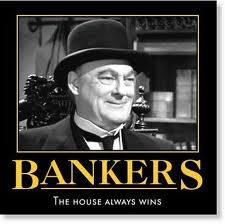
This is the game. Big institutions are protected while smaller players are thrown in prison. If the average American failed to file their taxes, or misses a deadline for that matter, the government penalizes them by seizing up to 100% of the unpaid tax. If the amount unpaid exceeds $65,000, the US government will revoke your passport. If the US government deems that someone intentionally evaded taxes, as is the case with Credit Suisse, they send them to prison for up to five years, with the average sentence for knowingly evading taxes being 16 months. Credit Suisse may have paid the fine, but the bankers involved will face zero repercussions. The banks always claim ignorance, the regulators balance fines with cover-ups, and the press accepts the payout as punishment.
Posted originally on Jun 5, 2025 by Martin Armstrong
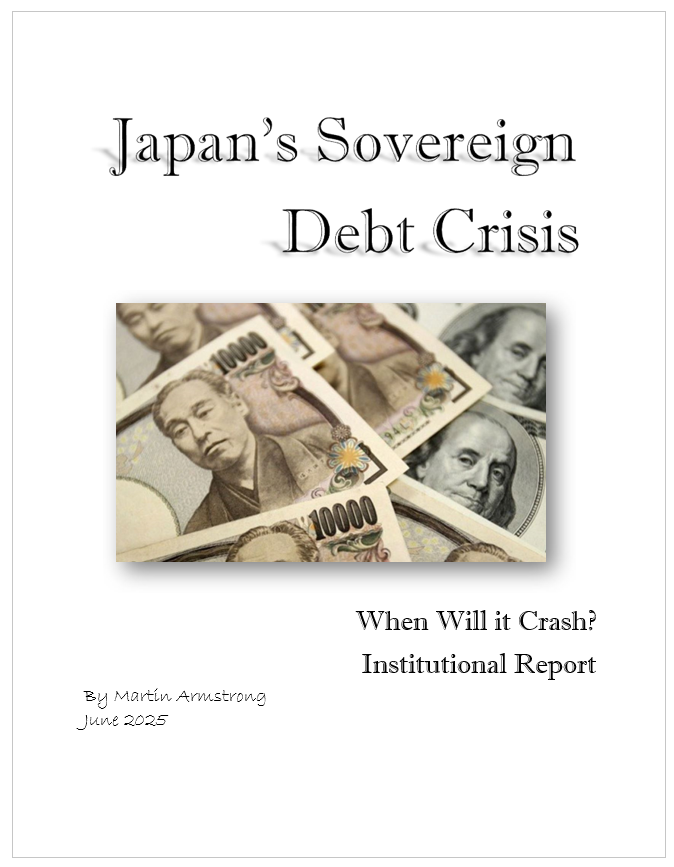
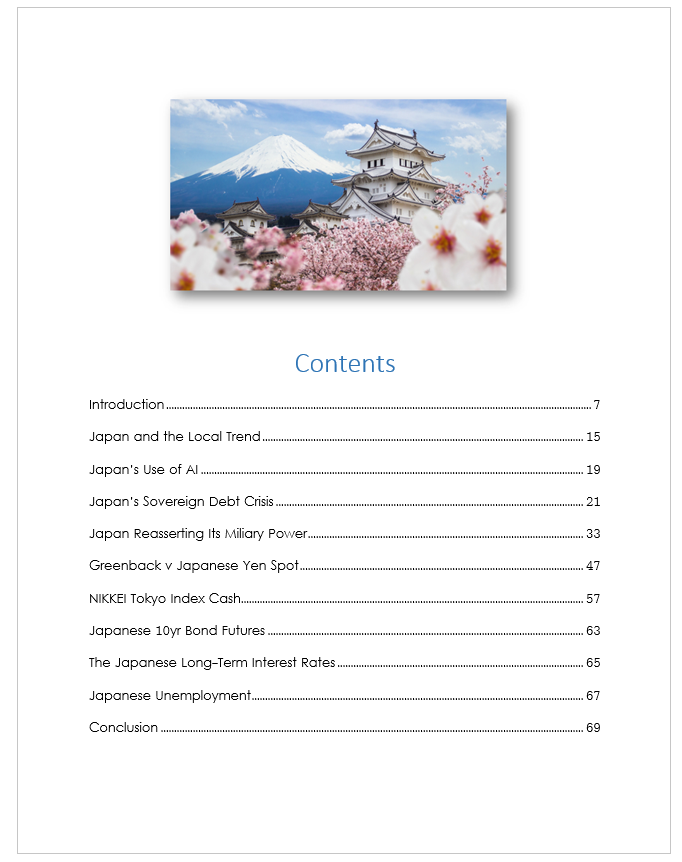
This is the first installment for our Institutional Clients concerning the two countries at the greatest risk of DEFAULT – Japan and Germany. We have provided the forecast for Japan’s default and explained in detail the internal battle between the Government, the Bank of Japan, and the Private Sector. This report exposes the truth about who holds what and the threat to instability as Japan also tries to cozy up close to NATO as a diversion for its fiscal mismanagement.
Investors have long fretted about the sustainability of Japan’s government debt as other nations, including Germany, are facing unsustainable fiscal mismanagement across the developed world. Japan has garnered the most attention due to its highest debt load relative to economic output and the heaviest debt-service burden. At the same time, the excuse has been that they are mostly self-funded, and as such, appearances are deceptive. Still, all Western nations are on a collision course with a sovereign debt crisis that will bring them all crashing down when the line at the door stops buying the new debt to roll over the old.
Japan’s fiscal mismanagement is not significantly worse than that of others. The pandemic, climate change, sluggish growth, and financial crises, accompanied by a lack of confidence, have led to an increase in government debt for many wealthy countries. At more than 250% of GDP, Japan’s gross debt stands out. Combined with sluggish growth and a shrinking population, many financiers and economists see it as an existential risk. The real question this report addresses is the real story behind the curtain, and when does this come to a head?
Posted originally on Jun 4, 2025 by Martin Armstrong
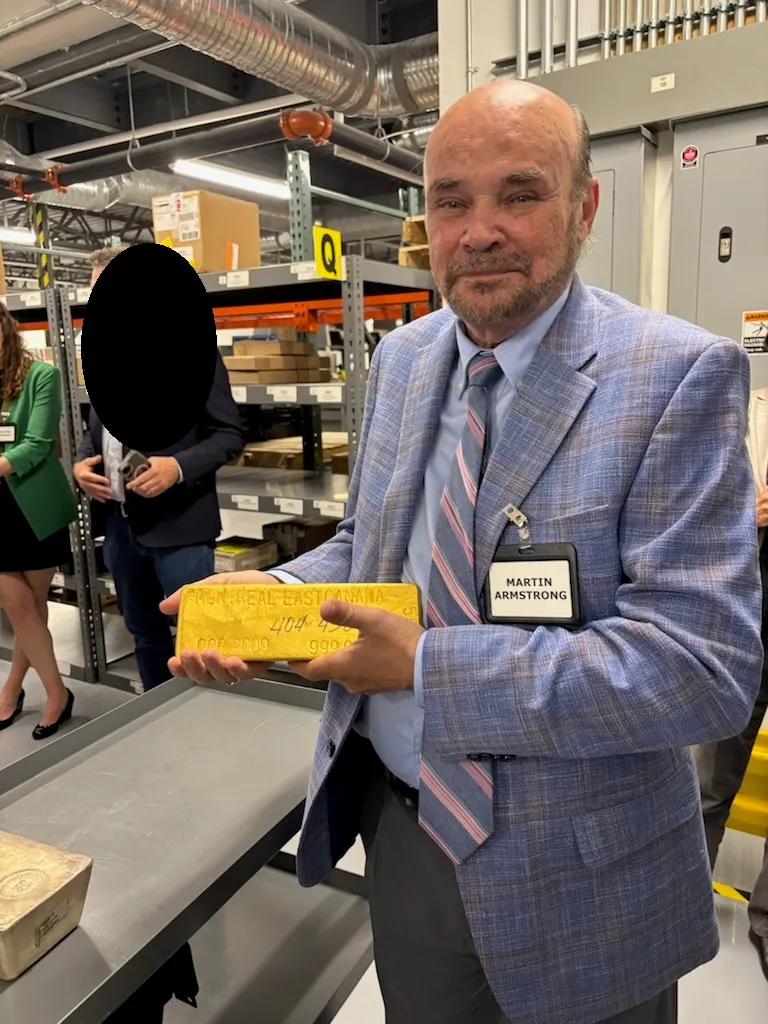
Holding a 400 oz Gold Bar – Central Bank Standard
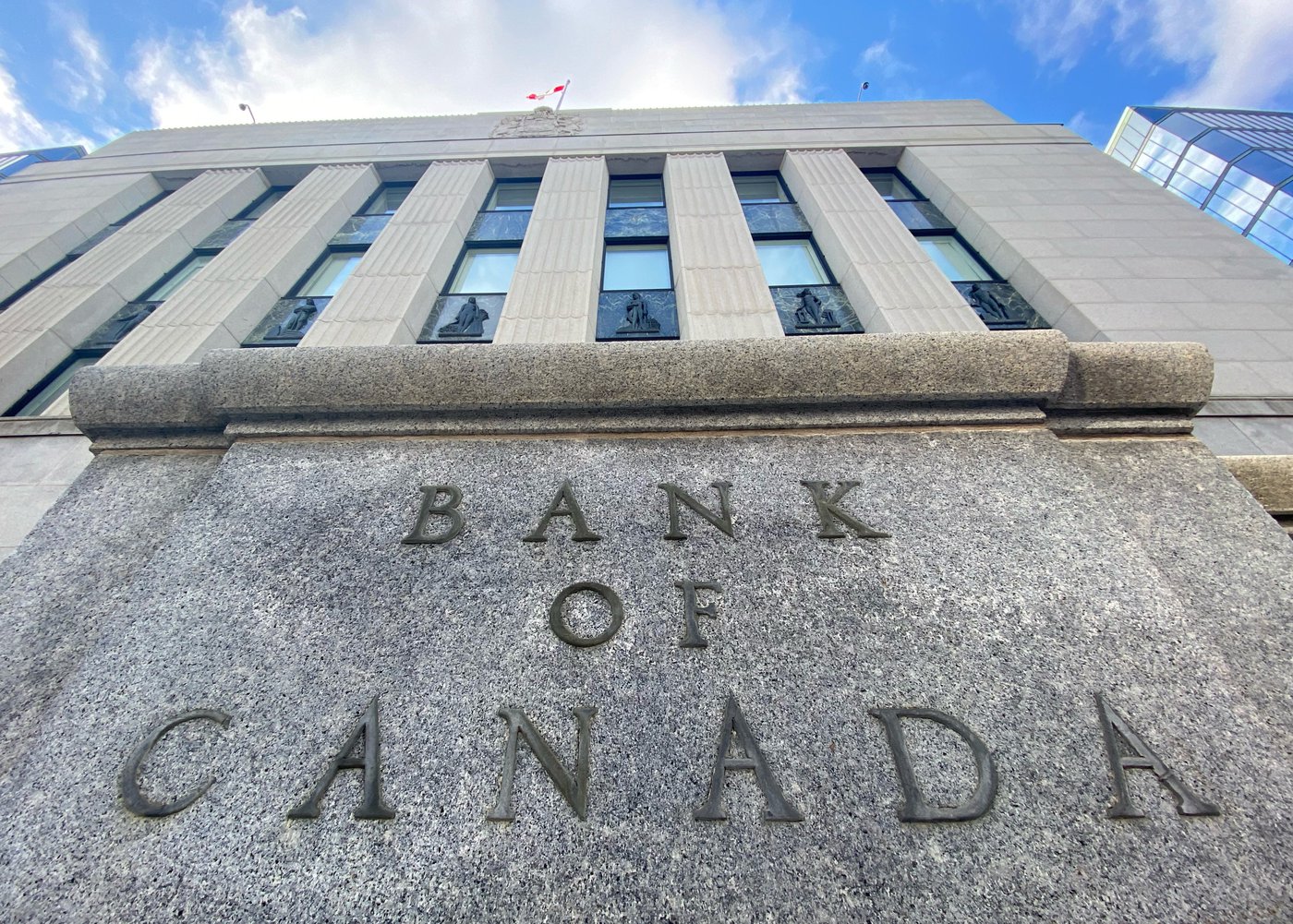
QUESTION: Hello Martin – Here in Canada, we have a vexing question – why no Gold Reserves at BofC? USA has a date with destiny aka Ft Knox Audit that Trump and Bessent seemed engaged on this file but are preoccupied lately with a litany of distractions, I’m 74 with health issues surfacing, which rearrange one’s priorities – many millions of Boomers in same boat – but that’s the price you knew was coming
jw
ANSWER: Canada’s lack of significant gold reserves is the result of a deliberate policy decision spanning several decades, primarily driven by the following reasons:
Opportunity Cost: Gold pays no interest or dividends. The Bank of Canada (BoC) decided it could achieve better returns by holding interest-bearing assets like foreign government bonds (US Treasuries, German Bunds, etc.) and deposits.
The Shift to More Liquid Assets: The BoC prioritized holding foreign exchange reserves (primarily US dollars, euros, yen, etc.), which are highly liquid and easily used for direct intervention in currency markets to stabilize the Canadian dollar (CAD).
Canada began the process of gradually selling off its gold in the 1980s, when gold rallied to $875 on January 21, 1980, and then began a 19-year decline to $250. Canada significantly accelerated its gold sales during the 1990s and early 2000s under the leadership of Finance Minister Paul Martin and Governor Gordon Thiessen, aiming to optimize reserve asset management. By 2016, Canada sold its last significant holdings. As of today, Canada’s official gold reserves are reported as zero tonnes (or negligible amounts – e.g., 77 ounces reported in 2022, worth a trivial sum relative to total reserves). In essence, Canada decided that the costs and lack of yield associated with holding large gold reserves outweighed the traditional benefits. They opted instead to hold foreign currencies and bonds that are easier to use for market intervention and generate income, relying on the strength of the Canadian economy itself to support the value of its currency.
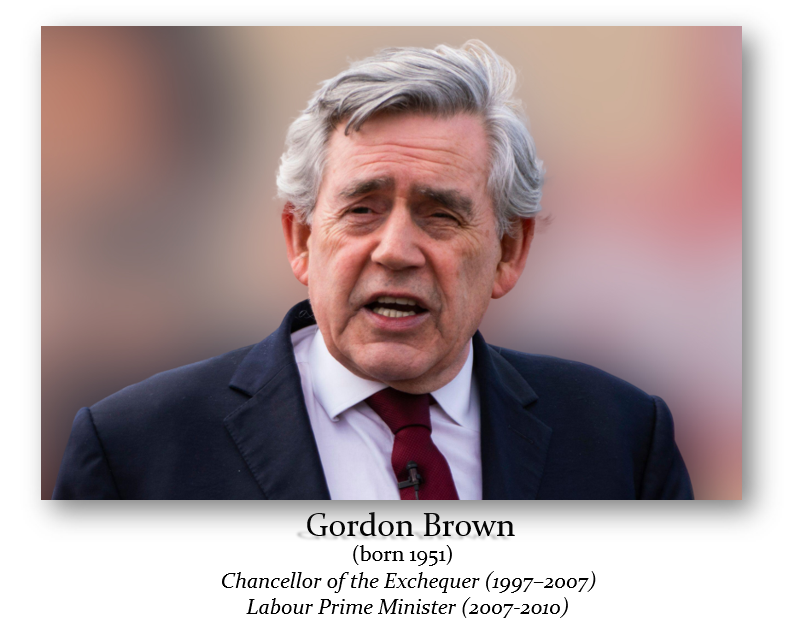
Gordon Brown, as Labour Chancellor of the Exchequer (1997-2007), authorized the sale of a very significant portion (roughly half) of the UK’s gold reserves. He was a member of the Labour Party, which viewed gold as a rich man’s toy. He sold approximately 395 tonnes of gold. The sales took place between July 1999 and March 2002. This represented about 58% of the UK’s total gold reserves at the time (which were around 715 tonnes before the sales). After the sales, the UK’s reserves stood at about 310 tonnes, where they remain today. The sales occurred during a period when the gold price was near a 20-year low, averaging around $275 per ounce. Shortly after the sales concluded, the gold price began a historic bull run, rising dramatically over the next decade to peak over $1,900 per ounce in 2011. This timing led to massive criticism that the UK sold at the absolute bottom of the market, potentially losing billions of pounds in potential value. The period is often referred to as the “Brown Bottom” in financial circles. Brown was ignorant of how markets function. He announced in advance the strategy to sell its gold reserves, so the market held back, anticipating a greater supply. The proceeds were invested in foreign currency and government bonds. While these assets generated interest income, the capital appreciation of gold vastly outstripped the returns on those bonds over the following years.
The head of the Bank of Canada during the main phase of Canada’s gold reserve sell-off (mid-to-late 1990s) was Gordon Thiessen (born 1938). He served as Governor from February 1, 1994, to January 31, 2001. Thiessen spent his entire career within the Bank of Canada, joining in 1963. However, it was his predecessor, John Crow (1987-1994), who began reducing its gold reserves significantly in the 1980s. While the Bank of Canada managed the sales operationally, the ultimate decision to sell the gold rested with the Government of Canada (specifically, the Minister of Finance and the Department of Finance). The Bank acted as the government’s agent in this matter.
I have created this site to help people have fun in the kitchen. I write about enjoying life both in and out of my kitchen. Life is short! Make the most of it and enjoy!
This is a library of News Events not reported by the Main Stream Media documenting & connecting the dots on How the Obama Marxist Liberal agenda is destroying America








 Centinel2012