Biden Has Ensured the Fall of the USA


Armstrong Economics Blog/Energy

Posted Oct 19, 2022 by Martin Armstrong

Spread the love

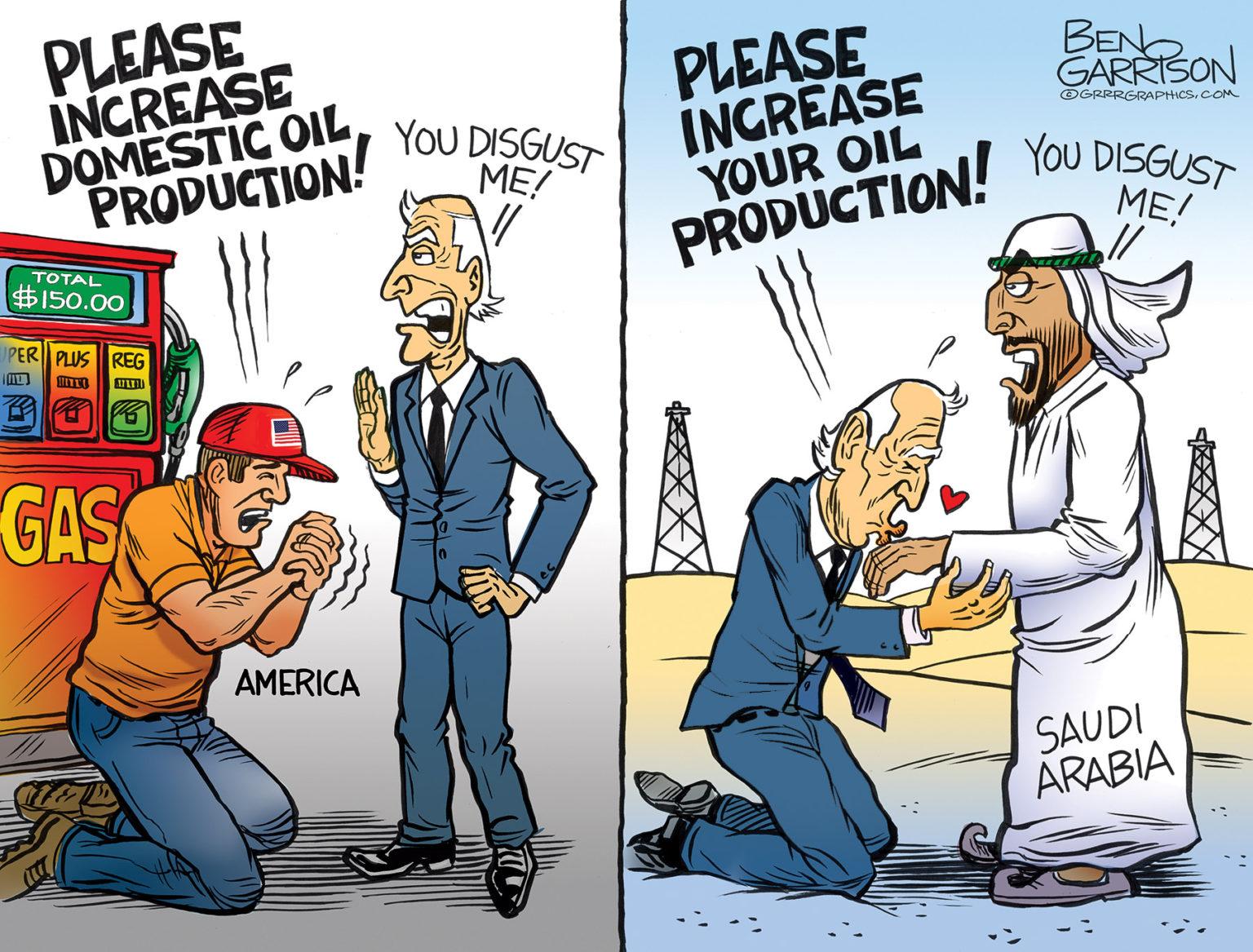
QUESTION: Marty, do you think that electric cars should be avoided? What do you see for the future? Biden looks like he has undermined Israel all over pleading for low gasoline prices.

thank you

FG

ANSWER: The goal of energy independence was achieved under Trump. Now, under Biden, he had depleted the oil reserves all to save the Democrats from their own policies of ending fossil fuels. Worse still, the Biden Administration has now opened the door to the decline and fall of the United States for another oil embargo would be devastating to the US economy and the people are totally unaware of how vulnerable their livelihood now stands thanks to the Democrats.

I’m sure the Democrats will be writing in as always. All I can say is PLEASE look at this objectively and do not vote simply because of party politics. Depleting the strategic oil reserves to just try to bullshit everyone for the midterm election and then afterward, screw you and your family, shows that they are counting on your stupidity and your bias.

I have studied military tactics. All they need do is cut off all oil again, the US will crumble, and your very job will be at risk if companies can no longer function. This is all total bullshit. It should be a crime for any president to take the strategic reserves for personal political gain. This is no different than robbing money from the Treasury.

I have warned, Beware of oil prices in 2023. Biden has completely undermined the security of the United States into 2032. The Arabs know see the crisis that they face. They would be insane to do anything that benefits the Biden Administration or the EU. Forcing prices to skyrocket will be the only thing to force political change from this climate insanity.

Electric cars are not practical. They may be ok as a second car for around town. But I would look at hybrids for we do not have the power grid to support electric cars. In addition, the first think you do in war is take down the power grid. With electric cars and digital currency, you complete shut down an opponent. Brain dead – just brain dead.

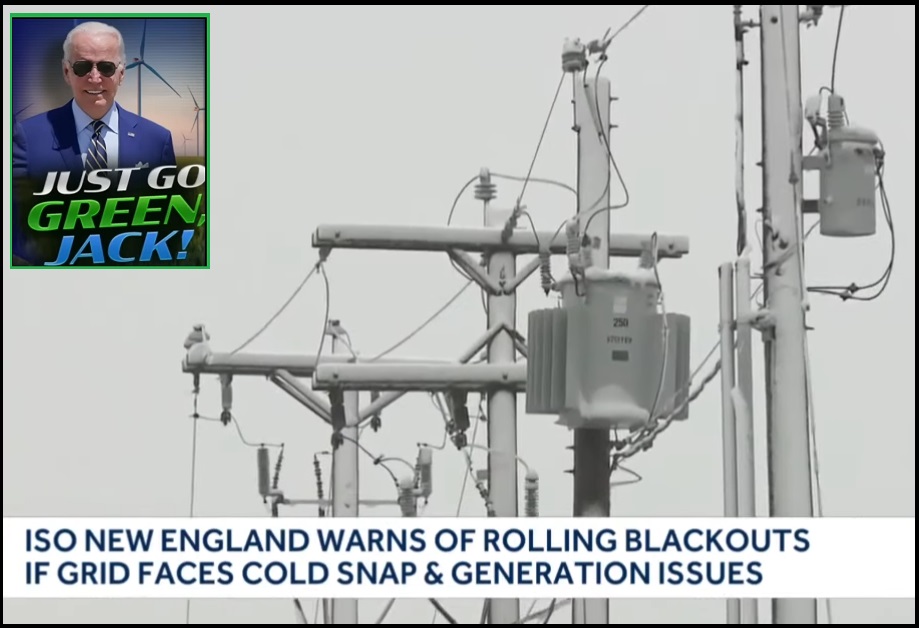
New England Power Officials Warn of Pending Winter Crisis as Natual Gas Prices Skyrocket and Electricity is Likely to be Rationed


Posted originally on the conservative tree house on October 18, 2022 | Sundance

New England consists of six states in the US Northeast, Connecticut, Maine, Massachusetts, New Hampshire, Rhode Island, and Vermont.  The states have been warned by regional ISO electricity providers for several years about their vulnerability if the winter weather is harsh and there is a significant increase in demand for home heating.  Those warnings are now multiplied by the massive price increases for natural gas.

Keep in mind as all these natural gas and LNG issues surface, the U.S. has been exporting natural gas to Europe as part of the Biden effort to subsidize the NATO effort against Russia.  Prices for natural gas have skyrocketed, and now shortages of the fuel source for energy production may create even bigger problems for New England.

[Via Zero Hedge] – […] The region’s power mix changes have left it increasingly reliant on international NatGas spot markets. State governors have asked US Energy Secretary Jennifer Graholm to waive the Jones Act and allow foreign-owned tankers to ship LNG from the US Gulf region. 

All of this has led to New England residents facing some of the highest electricity bills in years. Heating season is already underway. 

New England ISO expects the grid will be stable if there’s a mild-to-moderate winter. However, if there’s an extreme cold spell across the Northeast, then grid chaos could unfold: “The grid overall is in a much tighter position.

“If we get a sustained cold period in New England this winter, we’ll be in a very similar position as California was this summer,” Nathan Hanson, a senior vice president of energy and commercial management of LS Power Development LLC, which has two NatGas power plants in New England, warned. (more)

According to the U.S. Energy Information Association (IEA), U.S. storage of Liquified Natural Gas (LNG) is 12% below the five-year average (LINK).  Additionally, the IEA is expecting the U.S. to export 11.7 billion cubic feet of LNG per day during the fourth quarter of 2022 — up 17% from the third quarter. The destination of that export is Europe.

Consider that 43% of U.S. households use natural gas for home heating, and power suppliers use natural gas to create electricity.  With the massive 2022 exports of LNG to Europe (+17% in fourth quarter alone), that means lower domestic supplies and increased prices here in the United States for electricity and home heating.  We are seeing and feeling these massive price increases right now.

Barrons – […]  If you need more evidence of the impact of natural gas exports on prices, just compare supply and demand fundamentals for the year leading up to February 2020 (the last pre-pandemic month) versus the year leading up to this May (the most recent month with full federal data). Annualized production rose over the period, while domestic consumption remained roughly flat. Yet LNG exports almost doubled—a surge that tightened U.S. gas markets and doubled the price that U.S. consumers pay for the fuel. 

The growth of global demand for U.S. LNG can be tied to many market forces, including the shortfalls in Europe due to Russia’s manipulation of European Union gas markets. Sustained high demand in wealthy Asian nations has contributed to export growth as well. And so has the U.S. gas industry’s dogged determination to ship its wares to the highest bidder, foreign or domestic. 

Russia’s role has been particularly critical in the rise of global LNG demand. As Russia choked off gas shipments to Europe, EU buyers have turned to global LNG markets to make up the shortfall. Global LNG prices rose in response, and U.S. LNG companies ramped up output, shipping more cargoes to Europe. But Russia responded by further clamping down on gas supplies to the EU—a vicious circle that has hurt Europe’s economy even more severely than it has harmed America’s.

There’s little sign that U.S. gas prices will ease in the coming years. Freeport’s demand will be back online soon enough, and there are three other massive LNG export projects under construction, with more than a dozen of others waiting for financing.

[…] Curiously, federal regulators have consistently found that the gas export projects are in the public interest—meaning they were in the economic interest of LNG companies and gas drillers. But now, exports are creating sky-high costs for U.S. consumers, and drillers are reluctant to boost gas output lest prices fall back to earth. So, it’s high time to consider whether soaring U.S. LNG exports are actually in America’s interest—or if, instead, runaway LNG exports are fueling energy inflation and undermining the nation’s economic competitiveness. (read more)

Not only are U.S. taxpayers directly paying for the majority of costs in Ukraine, but we are also subsidizing the European Union by exporting LNG and driving up the price for energy here at home.  Here’s the Wall Street Journal talking about the risks to New England:

[Via Wall Street Journal] – New England power producers are preparing for potential strain on the grid this winter as a surge in natural-gas demand abroad threatens to reduce supplies they need to generate electricity.

New England, which relies on natural-gas imports to bridge winter supply gaps, is now competing with European countries for shipments of liquefied natural gas, following Russia’s halt of most pipeline gas to the continent. Severe cold spells in the Northeast could reduce the amount of gas available to generate electricity as more of it is burned to heat homes.

The region’s power-grid operator, ISO New England Inc., has warned that an extremely cold winter could strain the reliability of the grid and potentially result in the need for rolling blackouts to keep electricity supply and demand in balance. The warning comes as executives and analysts predict power producers could have to pay as much as several times more than last year for gas deliveries if severe weather creates urgent need for spot-market purchases.

“The most challenging aspect of this winter is what’s happening around the world and the extreme volatility in the markets,” said Vamsi Chadalavada, the grid operator’s chief operating officer. “If you are in the commercial sector, at what point do you buy fuel?”

Power producers in New England are limited in their ability to store fuel on site and face challenges in contracting for gas supplies, as most pipeline capacity is reserved by gas utilities serving homes and businesses. Most generators tend to procure only a portion of imports with fixed-price agreements and instead rely on the spot market, where gas prices have been volatile, to fill shortfalls. (more)

.

The Great Economic Pretending Has Become Absurd, WSJ Economists Ignore Current Reality and Ponder Possibility of Recession in 2023


Posted originally on the conservative tree house on October 18, 2022 | Sundance 

I do not know how to describe this with the Through The Looking Glass absurdity it deserves.

The ability of financial media and national economists to suspend accepting current reality, while making claims about the possibilities for next year, is ridiculous. Ask me why this era of great economic pretending is underway, and I have no answer. The intellectual dishonesty is beyond my comprehension.

The first and second quarters of the U.S. economy showed negative Gross Domestic Product valuations (GDP). We just finished the third quarter (July, Aug, Sept) and the likelihood of another negative GDP is high. Production is down, demand is down, consumer spending is down, inventories are climbing, and the economy is contracting. We are in a literal, technical and structural recession. Considering the Q1 and Q2 outcomes, we have been in a recession all year.

The Wall Street Journal publishes an article citing several notable economists who are putting the likelihood of a 2023 recession at 63%.

(WSJ) – […] On average, economists put the probability of a recession in the next 12 months at 63%, up from 49% in July’s survey. It is the first time the survey pegged the probability above 50% since July 2020, in the wake of the last short but sharp recession.

Their forecasts for 2023 are increasingly gloomy. Economists now expect gross domestic product to contract in the first two quarters of the year, a downgrade from the last quarterly survey, whereby they penciled in mild growth.

[…] Forecasters have ratcheted up their expectations for a recession because they increasingly doubt the Fed can keep raising rates to cool inflation without inducing higher unemployment and an economic downturn. Some 58.9% of economists said they think the Fed will raise interest rates too much and cause unnecessary economic weakness, up from 45.6% in July. (read more)

They are analyzing a pending recession in 2023 without even admitting we are in a recession right now. AT THIS VERY MOMENT.  We have two consecutive negative quarters of economic growth behind us (another Q3 result pending), and these economists are discussing a recession “next year“?

I feel like I’m behind a mirror in a parallel universe looking at financial pundits and economists pretending our reality is something completely different from what it is.   This is madness.

♦ “Managing the transition,” is a phrase we have heard often – but what does it mean?

This is the only explanation I can fathom for this era of great pretending.

As you are well aware the various western nation central banks including the U.S. Federal Reserve, have raised interest rates into a global economic contraction, a drop in demand.  Raising interest rates into a contracting economy is counterintuitive, it runs against the expressed interest of government to grow economic conditions.  However, there is a purposeful design to the contradiction.  [A TLDR Version Here]

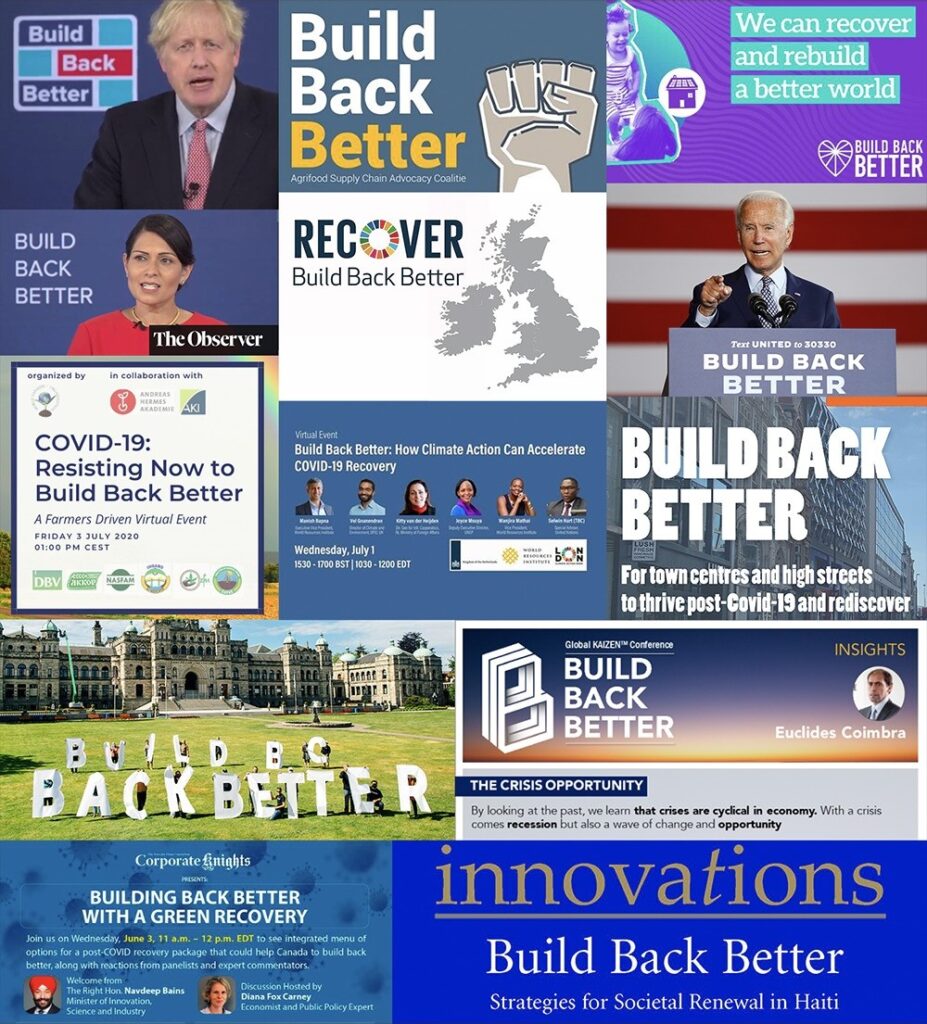
The central bankers are trying to support western government policy.  Unfortunately, the government policy they are under obligation to support is the fundamental shift in energy development, or what the World Economic Forum (Davos Group) has called the “Build Back Better” climate change agenda.

Monetary policy can only impact one side of the inflation challenge.  The western bankers (EU central bank, U.S. federal reserve bank, and various banking groups) are raising interest rates in order to “tame inflation” by “taming demand.”  However, as you know the global economic demand has been declining for several quarters.  There is no excess demand, and there hasn’t been demand side pressure all year.

Raising interest rates into an already contracting economy does one thing, it speeds up the rate of economic contraction.

Economic contraction is the lowering of economic activity.  Raise interest rates -in a general sense- and businesses invest less, borrowers borrow less, consumers purchase less, employers expand less, and the economy overall slows down. When the economy turns negative, meaning less products and services are produced, we enter a recession. Some businesses and employers do not survive a recession and subsequently unemployment rises.

During recessionary periods people buy less stuff, people have less income stability, and economic activity drops.  When the banks raise interest rates into an economy that is already stalled or contracting, unemployment and general pain on Main Street increases.  Workers are laid-off, incomes shrink, consumer spending drops and that leads to less employment.  Recessions are bad for middle-class and working-class people.   This is what the Wall Street Journal is describing for 2023.

“Employers are expected to respond to lower growth and weaker profits by cutting jobs in the second and third quarters. Economists believe that nonfarm payrolls will decline by 34,000 a month on average in the second quarter and 38,000 in the third quarter. According to the last survey, they expected employers to add about 65,000 jobs a month in those two quarters.” (link)

From the perspective of the western politicians and central banks, there is one benefit from a recession…. Energy use drops.

People travel less; businesses operate shorter work schedules; manufacturing stops; overall fewer goods are produced because less consumer spending is taking place.  From the perspective of the groups who want to see overall energy consumption drop, a recession is a good thing.

A recession also brings along a natural drop in energy prices as less overall energy is used inside an economy that is slowing, stalled or contracting.

Oil prices drop as less oil is needed for the manufacturing of goods.  Energy use in transportation also drops and generally gasoline prices drop because less transportation fuel is needed, because fewer goods are being transported.  When the economy goes into a recession, energy use and prices always drop.

Put these factors together and you start to see how the transition to a new western energy policy, the Build Back Better agenda, benefits from a recession.

This is the essential understanding needed to reconcile why central banks would intentionally create an economic contraction.  This is the great pretending. The bankers are supporting the governmental objective of transitioning the western economy into a new energy system away from oil, coal and natural gas.

The banks are supporting the policy makers.  However, the central banks cannot openly admit what they are doing to support the politicians and policy makers.

In this weird new era, the banks are being instructed to support the policy makers without actually admitting they have changed their monetary mission.  The central bankers will continue to say their job is to manage and/or balance employment and inflation.  However, what they will not admit is their unspoken agenda to support the political decisions.

Instead, almost all the central banks are saying their interest rate hikes are intended to cool inflation by lowering demand.

However, it is not excess demand that is driving inflation; it is the policy making behind the energy transition that is driving higher costs on everything.  The origin of inflation is on the supply side.

The supply-side of the inflation dynamic is being overwhelmed by massive increases in energy costs which are the results of intentional western policy.  Extreme increases in consumer prices are the outcome of these energy price increases.  The overwhelming majority of consumer price inflation is being caused by energy policy, not demand.

The various central banks and monetary policymakers know this.  In fact, they are lying about their motives.  They have to lie, because if they were to tell the truth there would be an uprising, and the success of the energy agenda would be put at risk.

In order to support the energy objectives of the various governments’, the central banks are trying -and succeeding- to lower economic activity.

Less economic activity means lower energy needs.  This is what they call “managing the transition” to the new economy based on “sustainable energy.”

The banks and policy makers are ultimately managing the economic decline in order to Build Back Better in the future.  This is why the originating charter of the central banks is being ignored, and the banks are raising interest rates into an already contracting economy.

None of this is being done accidentally.  All of this is being done with forethought and implicit intention.

Unfortunately, for the average person this means the banks and policy makers have entered a phase where it is in their interests to shrink the global economy.  They are trying to control the collapse of the various economies by working together.  This is what they mean by “managing the transition.”

Managing the transition means less jobs, less work, a lower standard of living, and a period of extreme financial pressure for the average person.

Eventually, we will reach a point where the government(s) will need to step in and fill the gap from the declined economic activity.  Bailouts and subsidies will be needed as they were in the COVID lockdowns.  Unemployed workers and the people being impacted by a prolonged economic recession will need subsidies in order to survive.

The government policy makers are planning to do just that, spend more.  They practiced during the COVID economic lockdowns, now they seem to be positioning to execute a similar policy path as they manage the energy transition.

We have only just entered the beginning phase of this Build Back Better agenda.  No one, including the banks and policy makers, have any idea how long this is going to take.

We could be in this period of severe economic contraction for several years, perhaps decades, until their grand design of a new energy future is complete.  This has been the discussion at the World Economic Forum (WEF), as the instructions were passed out.

The entire time the western government architects are doing this, they must keep the demand for traditional energy products like coal, oil and gas at the lowest level possible.  That is why the central banks and politicians must keep economic activity at the lowest -yet survivable- rate possible.

Financial analysts and economists are pretending not to know this is our reality.  All the pretending in the world will not change the reality on Main Street; pretending will only create a divide between those who admit and those who deny.

The next President will be the political leader who admits the reality and affirms the proper cause.

NBC Nibbles Carefully During Report on Fall Harvest Inflation


Posted originally on the conservative tree house on October 13, 2022 | Sundance

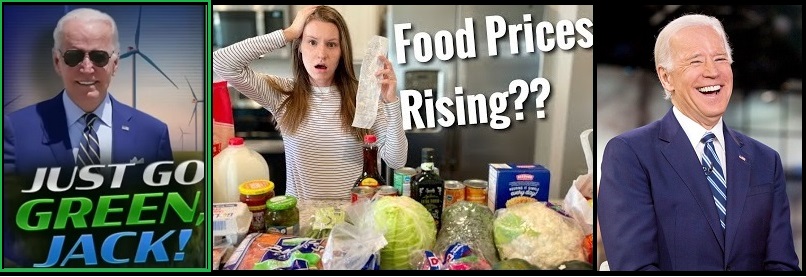
In this brief segment on fall harvest inflation, NBC notes consumer prices for food stuffs continue increasing regardless of the economic action by the Biden administration. The reason is very simple and is outlined within the segment by Jacob Goebbert, the Goebbert’s farm general manager.  WATCH:

.

The current inflation is embedded in the cost of products, because it’s a supply side issue.

Financial “experts” can shout all day long about the fiscal policy (spending) being the origin of inflation (ie. demand side), they’re wrong.  Our current inflation cycle, most notably evident within massive increases in food prices, is a supply side issue created by the increased energy costs.  Full stop.  It’s a Biden policy outcome.

Social Security Administration Announces 2023 Cost of Living Adjustment (COLA) at 8.7 Percent, Biggest Inflation Driven Increase Since Jimmy Carter Era


Posted originally on the conservative tree house on October 13, 2022 | Sundance

Joe Biden’s economic and energy policies have resulted in another record matching former President Jimmy Carter.  The Social Security Administration (SSA) has announced an inflation driven increase in SAA benefits of 8.7% beginning in January 2023.  This is the largest cost of living adjustment in 40 years.

(Social Security Administration) – Approximately 70 million Americans will see a 8.7% increase in their Social Security benefits and Supplemental Security Income (SSI) payments in 2023. On average, Social Security benefits will increase by more than $140 per month starting in January.

Federal benefit rates increase when the cost-of-living rises, as measured by the Department of Labor’s Consumer Price Index (CPI-W). The CPI-W rises when inflation increases, leading to a higher cost-of-living. This change means prices for goods and services, on average, are higher. The cost-of-living adjustment (COLA) helps to offset these costs.

We will mail COLA notices throughout the month of December to retirement, survivors, and disability beneficiaries, SSI recipients, and representative payees. But if you want to know your new benefit amount sooner, you can securely obtain your Social Security COLA notice online using the Message Center in your personal my Social Security account. You can access this information in early December, prior to receiving the mailed notice. Benefit amounts will not be available before December. Since you will receive the COLA notice online or in the mail, you don’t need to contact us to get your new benefit amount.

If you prefer to access your COLA notice online and not receive the mailed notice, you can log in to your personal my Social Security account to opt out by changing your Preferences in the Message Center. You can update your preferences to opt out of the mailed COLA notice, and any other notices that are available online. Did you know you can receive a text or email alert when there is a new message waiting for you? That way, you always know when we have something important for you – like your COLA notice. If you don’t have an account yet, you must create one by November 15, 2022 to receive the 2023 COLA notice online. (more)

A 25% increase in the rate for those who qualify for federal food stamp assistance….

An 8.7% increase in the rate for those who qualify for Social Security benefits….

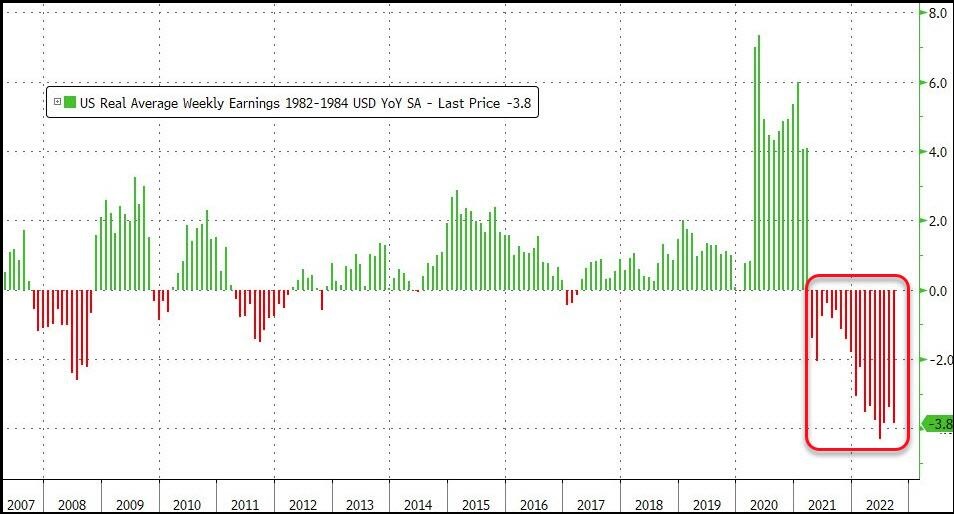
Meanwhile real wages decreased 3.8% in September and the borders are wide open for cheap labor to pour in.

September Consumer Price Index Shows Inflation Continuing to Rise More Than Expected, Fed Raising Rates Having No Impact Because it is NOT Demand Side Inflation


Posted originally on the conservative tree house on October 13, 2022 | Sundance

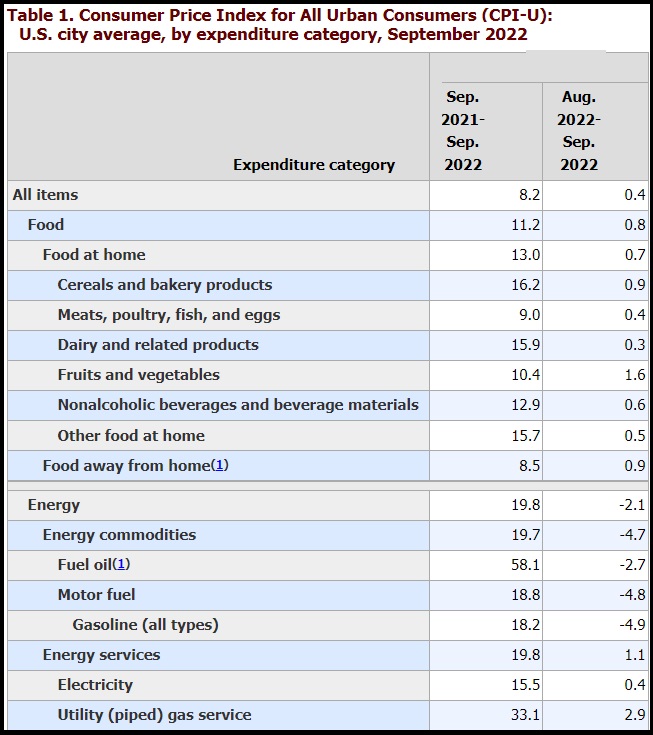
The Bureau of Labor and Statistics released the September Consumer Price Index (CPI) today [DATA HERE].  The financial and business media call the continued rise of consumer inflation “unexpected,” however, the results are not a surprise to those who are not pretending.

This CNBC headline highlights the economic pretense still entrenched: “Inflation increased 0.4% in September, more than expected despite rate hikes.”  Those who are not pretending fully understand the economic dynamic, but you will not find reality expressed by the mainstream media.

FED rate hikes can only impact the demand side of the inflation issue. U.S (and global) inflation is NOT the result of excess demand. It has not been driven by demand for over a year.  The root cause of inflation is on the supply side. That root is grounded in the energy policy making everything entering the marketplace more expensive.

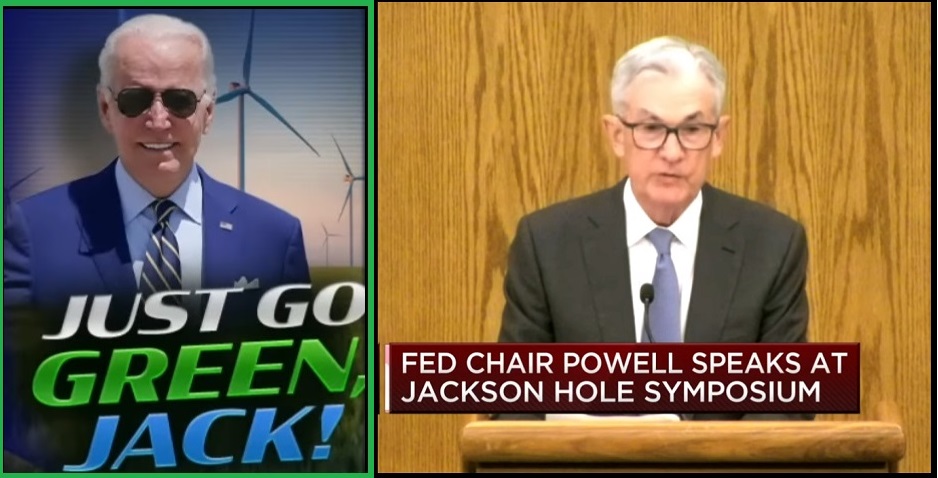
The historic rise in energy prices; the result of Joe Biden’s specific energy policy to limit oil, gas and coal as energy resources; are what have driven inflation throughout the economy.  The monetary policy (Fed policy) continues to pretend this dynamic does not exist.  The FED is trying to support the political policy, but the bloom is off the ruse.

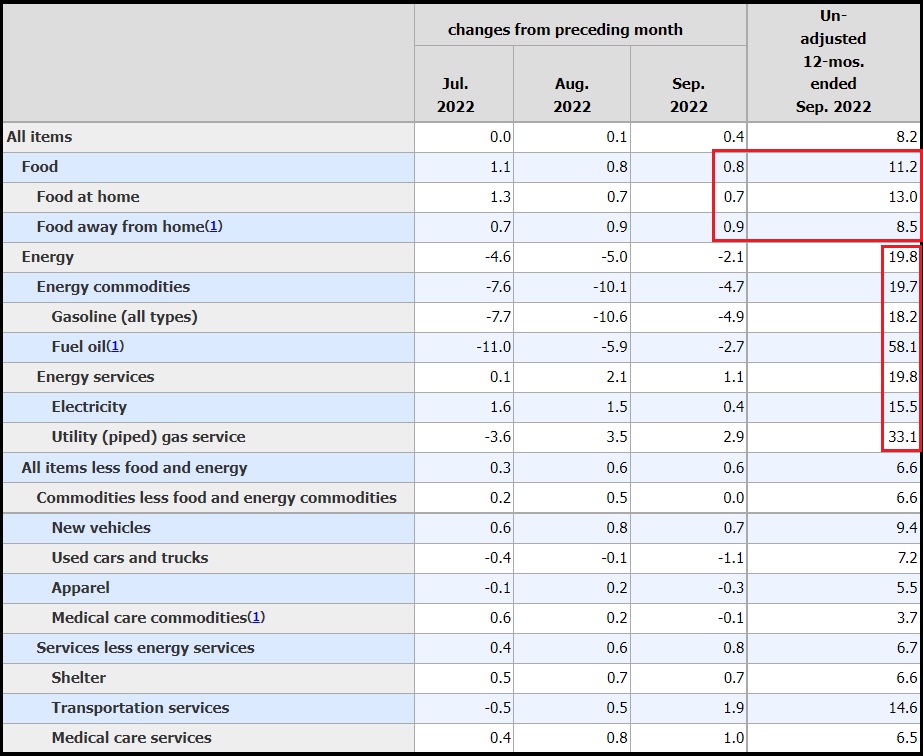
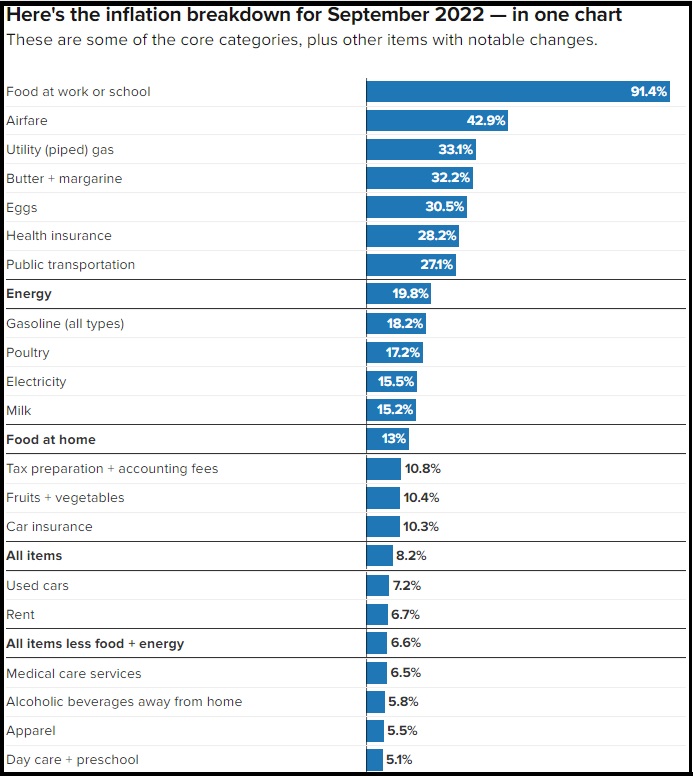
Overall inflation increased 0.4% in September, leading to a result of 8.2% year over year.  Food and energy prices continue driving inflation, additionally core inflation (everything except food and energy) continues to be driven by the originating issue of extreme energy costs.

Everything costs more because energy costs more.  That is the reality of this inflation issue.

[Modified Table-1, removing the noise]

(CNBC) […] “The Federal Reserve has made it very clear they’re committed to price stability, they’re committed to reducing the inflationary pressures,” said Michelle Meyer, chief U.S. economist at the Mastercard Economics Institute. “The more inflation comes in above expectations, the more they’re going to have to prove that commitment, which means higher interest rates and cooling in the underlying economy.”

Another large jump in food prices boosted the headline number. The food index rose 0.8% for the month, the same as August, and was up 11.2% from a year ago.

That increase helped offset a 2.1% decline in energy prices that included a 4.9% drop in gasoline. Energy prices have moved higher in October, with the price of regular gasoline at the pump nearly 20 cents higher than a month ago, according to AAA.

Closely watched shelter costs, which make up about one-third of CPI, rose 0.7% and are up 6.6% from a year ago. Transportation services also showed a big bump, increasing 1.9% on the month and 14.6% on an annual basis. Medical care services costs rose 1% in September.

The rising costs meant more bad news for workers, whose average hourly earnings declined 0.1% for the month on an inflation-adjusted basis and are off 3% from a year ago, according to a separate BLS release.  Inflation is rising despite aggressive Federal Reserve efforts to get price increases under control. (more)

I feel like we are living in a parallel universe, where this grand game of pretense continues.

Every financial pundit knows the root cause of inflation is Joe Biden’s energy policy, yet they maintain the lies in order to protect the regime.

Raising interest rates in a supply side inflation economy only does one thing, it makes the economy contract faster.  The only reason to intentionally shrink the economy is to try and reduce the demand for energy resources as part of the “transition to a green economy.”  Together, the Biden administration and Federal Reserve are trying to lower economic output to meet a lowered amount of energy being produced.  That is the reality of our situation.

They are destroying the working and middle class in order to chase their climate change agenda.  These people must be removed from power.

Real Average Hourly Wages Continue to Decline as Inflation Destroys Economy and Now Hours Worked is Contracting


Posted originally on the conservative tree house on October 13, 2022 | Sundance

The Bureau of Labor and Statistics (BLS) released the September wage report [DATA HERE] delivering worse economic news for workers.

Real wages are dropping at a historic rate as inflation continues to rise and as a result wages buy less.

[BLS] “Real average hourly earnings decreased 3.0 percent, seasonally adjusted, from September 2021 to September 2022. The change in real average hourly earnings combined with a decrease of 0.9 percent in the average workweek resulted in a 3.8-percent decrease in real average weekly earnings over this period.” (link)

REAL WAGE CHART:

As the Biden economic/energy policy and Federal Reserve monetary policy merge together, the economy shrinks.  As the economy shrinks, fewer goods and services are purchased.  As less consumer goods are purchased, employment hours drop.  As employment hours drop, wages decline.

Declining wages combined with increased inflation forms the perfect storm against middle-class and working-class families.  This dynamic means lowered income and higher prices for essential goods and services like food, fuel, energy and housing.  It’s not difficult to see why this is happening.

The declining wage rates, and the more substantive drop in real wage rates due to massive inflation, are specifically hitting the lower tier of the working class harder.  Yet despite this, Biden is intent on importing even more economic migrants to put even more downward pressure on wages for the working class.

These are very real outcomes of policy.  Working class Blacks and Latinos will feel this even more, yet this is the special interest group that Democrats claim to support.  The reality is exactly opposite from the narrative sold by the Biden administration.

The Democrats know this. These outcomes are not accidental; they are a feature not a flaw in their policy.  This is why they need to keep spending to retain the ruse.

There’s no way around this.  Despite the pundit and financial class selling a counter-narrative, home prices will crash, and unemployment will go up.  I know this is directly against the current talking points, but the statistical reality is clear.

CTH was the first place who said a year ago that home sales will plummet, that is starting to happen right now.  There’s no way for it not to happen, the big picture tells us why.

Leading Edge of Field to Fork Inflation Starts to Arrive in September Producer Price Index


Posted originally on the conservative tree house on October 12, 2022 | Sundance 

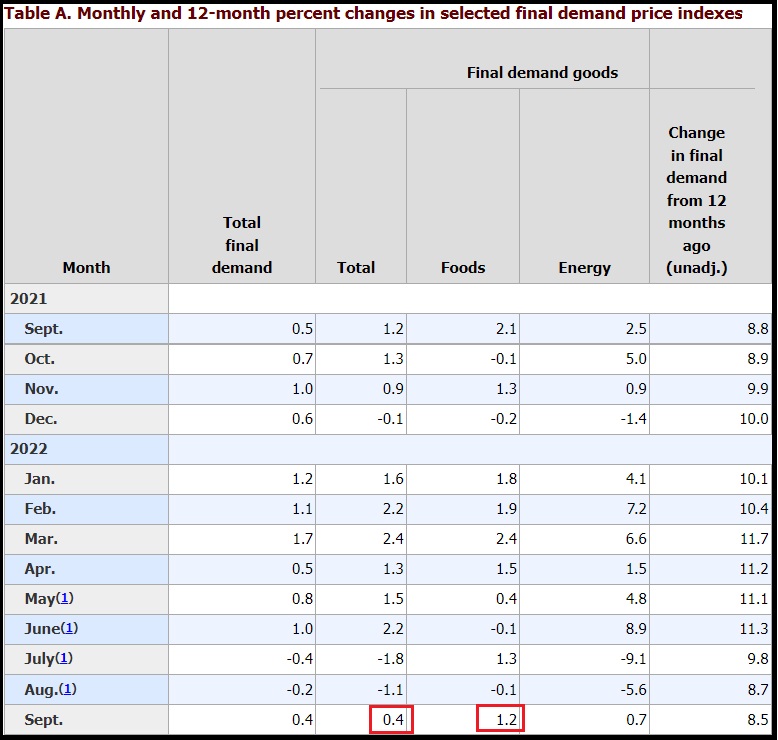
The “Producer Price Index” (PPI) is essentially the tracking of wholesale prices at three stages: Origination (commodity), Intermediate (processing), and then Final (to wholesale). Today, the Bureau of Labor and Statistics (BLS) released September price data [Available Here] showing another 8.5% increase year-over-year in Final Demand products at the wholesale level.  However, that’s not the bad news in this data.

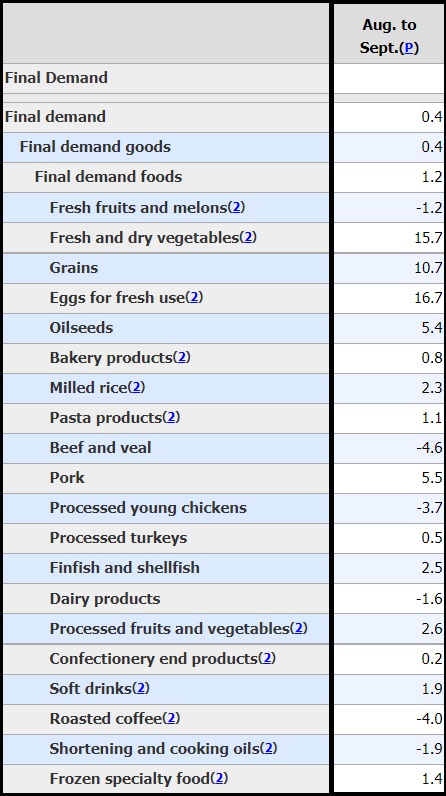
While the overall September PPI was higher than expected at 0.4%, the Final Demand Producer Price for food products in September was a whopping 1.2% (14.4% annualized).

The BLS notes the driver by saying, “a major factor in the September increase in prices for final demand goods was a 15.7-percent advance in the index for fresh and dry vegetables. Prices for diesel fuel, residential natural gas, chicken eggs, home heating oil, and pork also moved higher.”

That’s a 15.7% increase in price, in one month, for fresh and dry vegetables.  Annualized that’s a rate of price increase of 188.4% for vegetables.   Remember the warning about farm costs (energy, fertilizer, fuel) driving field to fork inflation at harvest?  This is the leading edge of that third wave of food price increases.

I have modified BLS Table-2 to focus specifically on food costs.  The data is on left.

You will note that ‘row crops’ are the big drivers along with grain and seed products.  This is exactly as we predicted it would be because those specific farming costs are the ones with greatest increase from energy, fuel, fertilizer, weed and insect control, and diesel costs.

All of those higher costs have been growing in the fields and will now surface at harvest.   The higher farm costs transfer from the field to the fork via the food supply chain.  This is only the leading edge of the price increase.

In October 2021 we first warned of the food price increases coming in distinct waves.  The first was Jan, Feb and March 2022.   The second wave was May through July 2022.  This third wave will be bigger than the first two and starts arriving this month, October 2022.

People laughed at me when I said in late 2022 eggs were going to reach .50¢ EACH ($6/doz).

Well, in September the price of fresh eggs jumped 16.7% in a single month.  That’s an annualized rate of price increase for eggs over 200%.

With hindsight you can clearly see the three waves of food price increases (BLS Table A):

Get ready and shop smart.

The October, November and December price increases in the grocery store are going to make the prior fresh food increases look small, as the full increased costs of farming operations starts to arrive at the supermarket.   Unfortunately, this will coincide with a wave of gasoline price increases, and the prices of natural gas are already skyrocketing.

.

The Bank of Canada Should Admit QE FAILED


Armstrong Economics Blog/Canada Re-Posted Oct 11, 2022 by Martin Armstrong

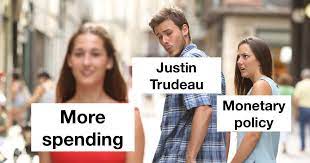
In 2020, Pierre Poilievre, chief Conservative spokesman on finance issues, said Canada’s central bank “should not be an ATM for Trudeau’s insatiable spending appetites.” Conservatives cooperated with the Liberals when it came to COVID-19 emergency spending. Everyone was in on that power grab. Now the nation is in worse shape, further in debt, and inflation is soaring.

Yet, Trudeau continues to spend recklessly without hesitation. The Bank of Canada (BoC) should remain neutral on political issues. Similar to the Federal Reserve, the BoC is the largest buyer of domestic debt. In response to criticism, the bank launched a social media campaign to deflect blame. “#YouAskedUs if we printed cash to finance the federal gov’t. We didn’t,” the Bank of Canada tweeted on August 25. Due to the pandemic, the central bank “took various measures, like buying bonds, to support and ensure a strong and stable #economy,” the bank tweeted. “We bought existing gov’t bonds from banks on the open market. Why? This helped unblock frozen markets at the start of the #pandemic. It let households, companies and governments access funding when they really needed it.”

This is the problem with those who believe they can manipulate the economy. Governments completely shut down the world for over a year and then claimed that they needed to spend as much as possible to save us from the crisis they created. “We did not use cash to pay for the bonds. We bought the bonds with settlement balances — a kind of central bank reserve — not with bank notes,” the bank continued to Tweet back in August. Basically, the strategy all along was Quantitative Easing. It failed.

They artificially lowered rates for too long and purchased government debt with no method for repayment. Their stupid idea of Quantitative Easing and lowering rates were under their theory that people would borrow if it were cheap enough. The central banks fail to understand that people will absolutely not borrow at any rate if there is no confidence. It has become conventional wisdom that when all else fails to make economies grow, create new money and buy government bonds. Of course, the “all else” never includes deregulation and lowering taxes.

Now Governor Tiff Macklem is posting videos on Twitter to explain why the bank raised rates by 300 bps in the past six months. Yes, “inflation is too high,” as Macklem pointed out, but he’s acting a bit too late. “It is by raising interest rates that we’re going to slow spending in the economy, give the economy time to catch up and take the steam out of inflation,” Macklem said in the video. “That’s gonna [sic] get inflation back down.” WHAT ABOUT GOVERNMENT SPENDING? Monetary policy does not align with the bank’s goals, as Trudeau’s continued spending will prolong inflation.