The Federal Reserve Cannot Combat Inflation Alone


Armstrong Economics Blog/Inflation Re-Posted Jun 17, 2022 by Martin Armstrong

Fed Chair Jerome Powell was notably frustrated when pressured about the Fed’s role in inflation. During his Q&A session this Wednesday, Powell plainly stated that the Federal Reserve alone could not combat inflation. It is far more complex than simply raising rates and hoping for the best. The Federal Reserve cannot increase the supply to meet demand. They have no say over clogged ports and closed factories. The Federal Reserve cannot reverse Biden’s policies that have made America energy-dependent, nor can it reserve sanctions against countries that hold essential supplies. As an independent entity, the Federal Reserve has no control over tariffs or diplomatic relations with regard to trade. Notably, the Federal Reserve cannot combat excessive government spending.

The US just sent another billion to Ukraine and plans to continue funding another endless war that does not support any domestic policy objectives. Jerome Powell has no control over the promises politicians make on the campaign trail to distribute free money to the public in exchange for votes. At any moment, lawmakers can implement policies that completely throw the entire economy off track. They had no say in the lockdowns or restrictions that crippled the economy in 2020.

The Federal Reserve miscalculated the situation by artificially lowering rates for a long time. They failed to look at other clear examples, such as Japan, and realize what has and has not worked historically. Powell admitted long ago that he misjudged the severity of inflation and was wrong to call it “transitory.” Unfortunately, when people in power make mistakes, the repercussions cause global shockwaves. Although separate entities, the White House needs to help the Federal Reserve tame inflation by re-evaluating its policies that are directly causing prices to rise.

Putin: They Even Named Inflation After Me


Armstrong Economics Blog/World Trade Re-Posted Jun 17, 2022 by Martin Armstrong

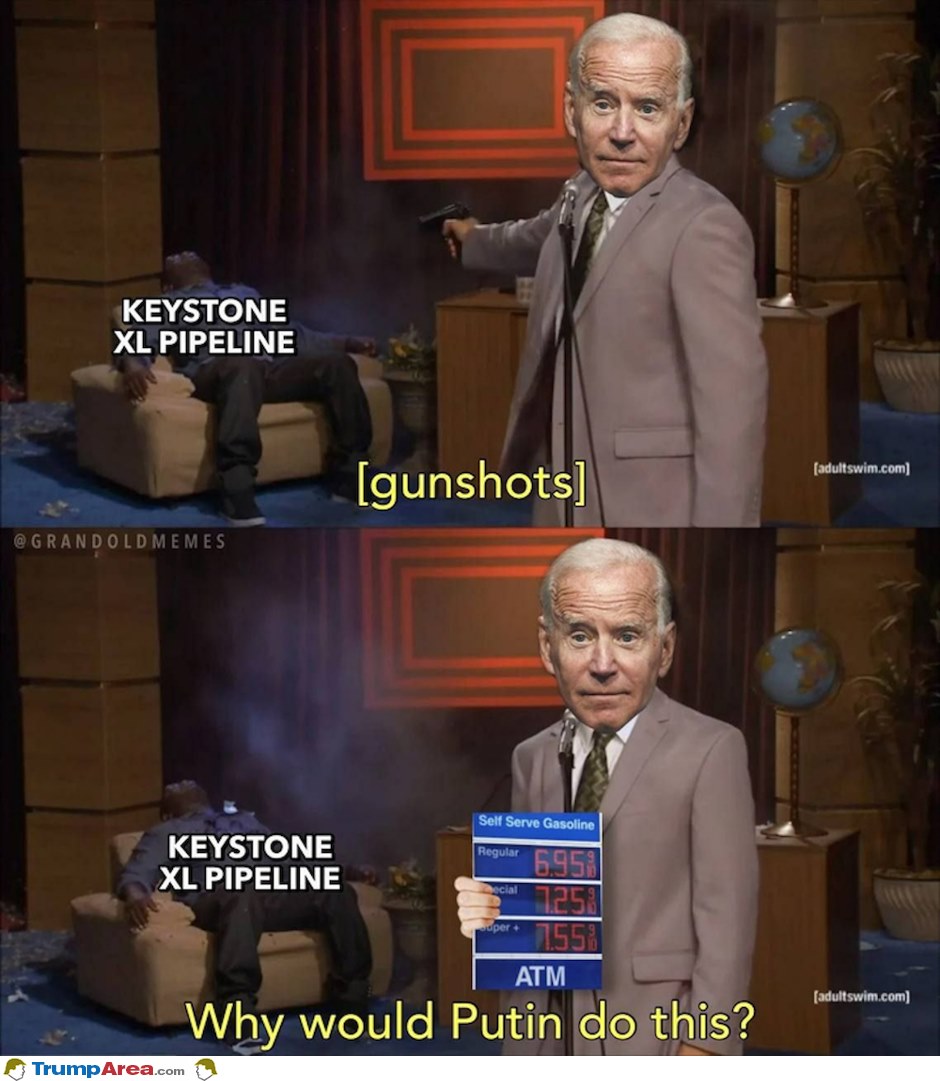
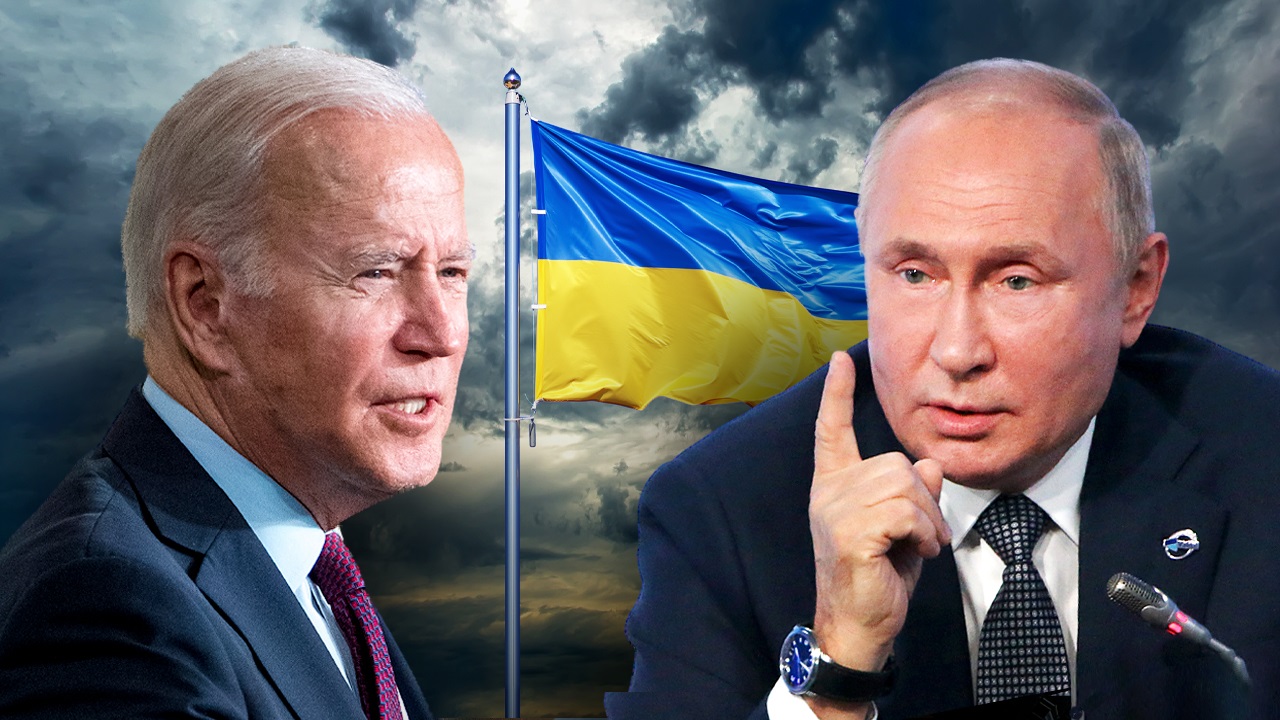
Vladimir Putin is not suffering from sanctions. The West has shot itself in the foot by banning essential Russian imports without an alternative in place. “They even named inflation after me,” he joked, hinting at the “Putin price hike” western politicians have been declaring.

The difference now, according to Putin, is that the West attempted to shun Russia. “In the Soviet times when we cut ourselves off, created the so-called Iron Curtain, we created it with our own hands,” he admitted. Putin admitted the Iron Curtain was a mistake that he has learned from. Anyone claiming Putin is pro-Communist or eager to bring back Cold War-era policies is sadly mistaken.

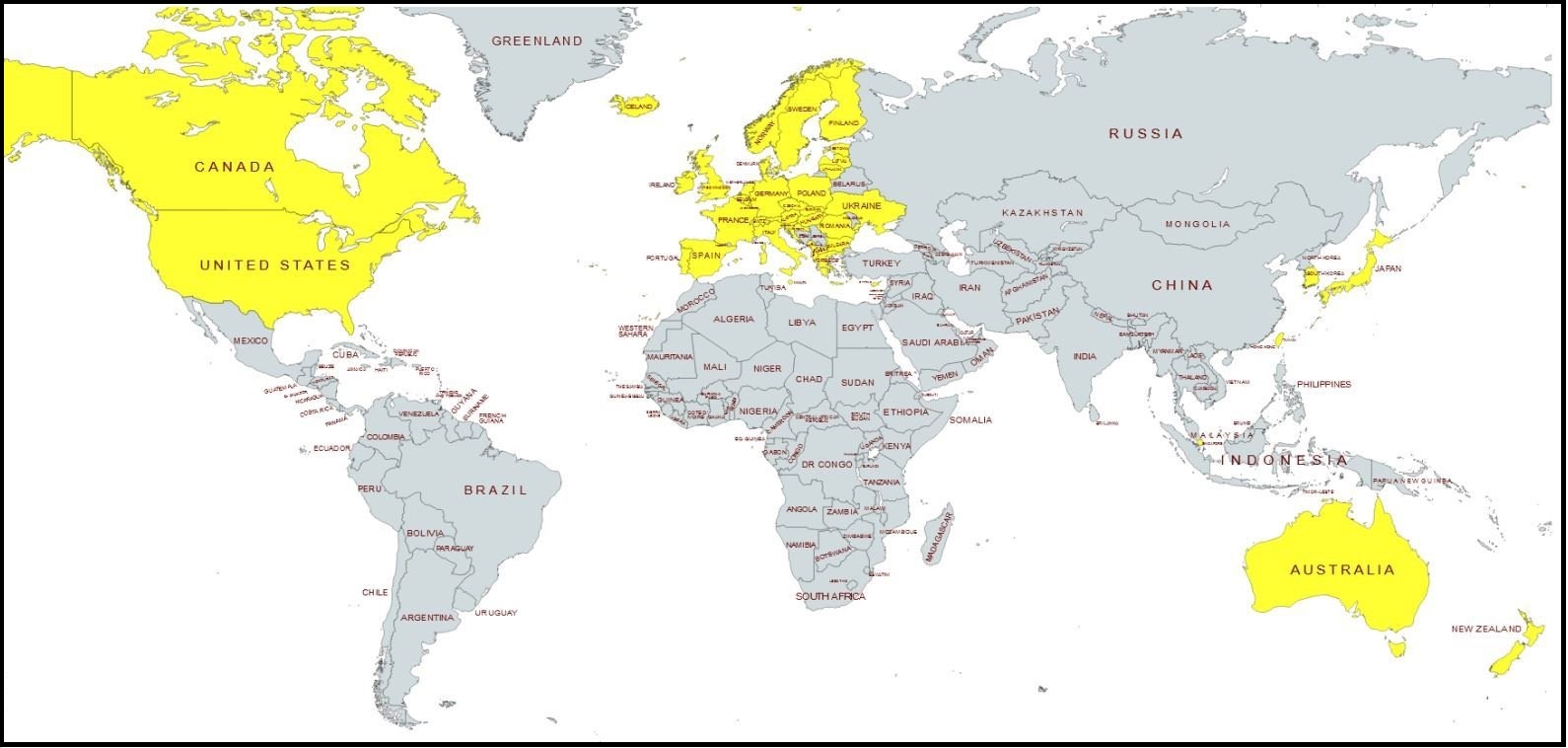
As I have mentioned, Russia has created a new G8. They have alliances with Brazil, Indonesia, China, Mexico, Iran, and Turkey. They claim that this new G8 will not partake in sanction wars and noted that they are already 24.4% ahead of the former G8 in terms of GDP per capita. They are welcoming new alliances as well. Countries previously begged to join Western coalitions, but they are now failing due to a flawed design from the outset. All of this is part of what our computer has been indicating – the financial capital of the world is beginning to drift from West to East.

Russia Gas to Europe to Stop


Armstrong Economics Blog/Energy Re-Posted Jun 16, 2022 by Martin Armstrong

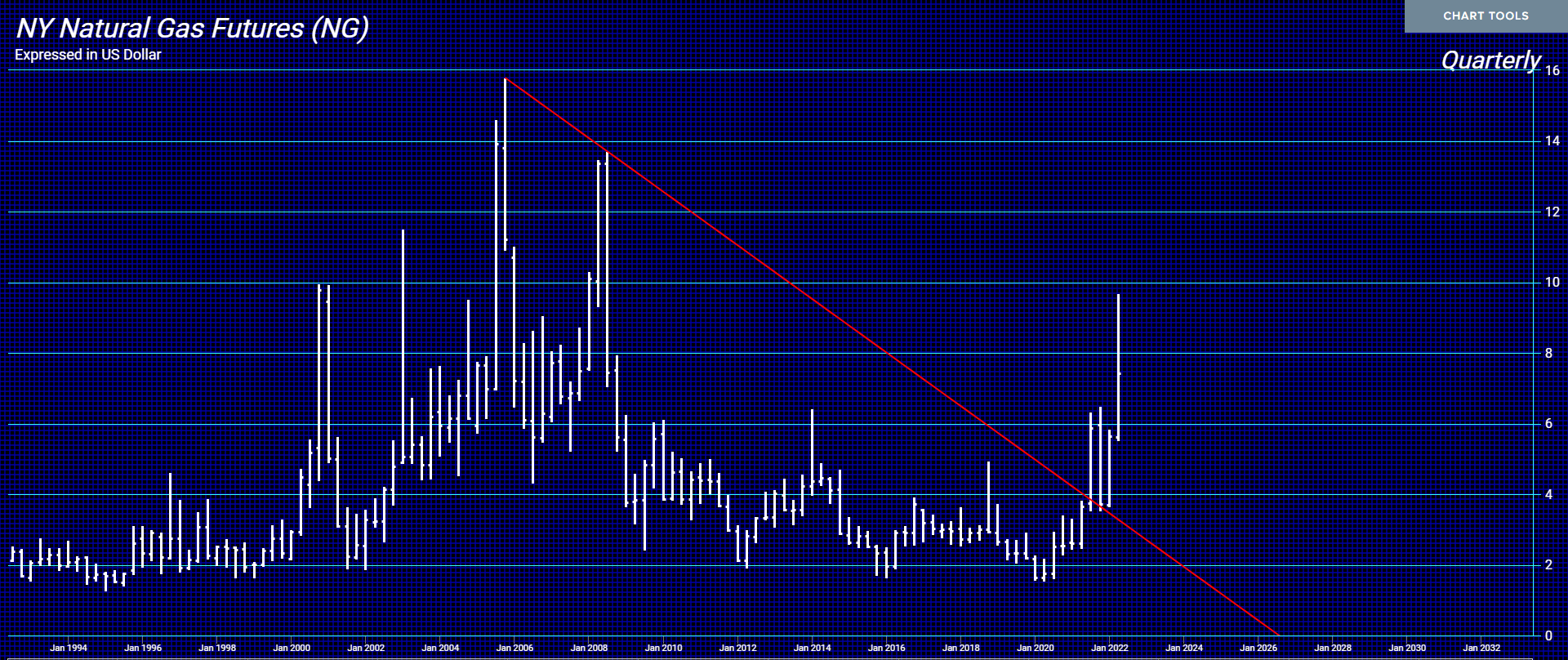
The Russian EU Ambassador has informed the EU that gas will stop through Nordstream because a turbine that was needed was stuck in Canada because of the sanctions. Then the biggest gas field in Siberia is now on fire. That can also provide an excuse to reduce gas delivery to Europe. This will also add to the reduction in gas supply to Europe This is making things very interesting. If Gas bottoms next week, we could be looking at much higher volatility thereafter. For now, a June closing above 625 will keep the market in a broader-term support position but a real breakout would require a close for June above 795.

Pope Francis Believes Russia Was Provoked


Armstrong Economics Blog/War Re-Posted Jun 16, 2022 by Martin Armstrong

Pope Francis has been advocating for peace between Ukraine and Russia. He has condemned Russia’s “brutality” and said he believes Putin miscalculated the duration of the war. “They encountered a brave people, a people who are struggling to survive and who have a history of struggle,” he said. Yet the Pope is now coming under pressure for suggesting that the war could have been avoided. No one has more “behind the curtain” information than the Vatican.

Before Russia invaded Ukraine on February 24, there were signs that NATO and Ukraine were “barking at the gates of Russia.” Even the Pope has admitted the West was eager for war profits and that the conflict was “either provoked or not prevented.”

The head of the Catholic Church stated: “But the danger is that we only see this, which is monstrous, and we do not see the whole drama unfolding behind this war, which was perhaps somehow either provoked or not prevented. And note the interest in testing and selling weapons. It is very sad, but at the end of the day that is what is at stake,” he added. This is not a matter of “good and bad” as the “roots and interests [are] very complex.”

Furthermore, Pope Francis met with an unnamed Russian head of state shortly before the war began. He noted, as I have reported, that Russia was fearful of an imminent attack. “Yet here the situation is even more complex due to the direct intervention of a ‘superpower’ aimed at imposing its own will in violation of the principle of the self-determination of peoples,” he explained. This war is far more complex than Russia v Ukraine. It has become a proxy war instigated by NATO.

Tucker Carlson Interviews American Rancher about Extreme Kansas Heat Causing Cattle Loss


Posted originally on the conservative tree house on June 16, 2022 | Sundance

There have been several videos on social media about a significant loss of cattle in Kansas due to extreme heat.  During a segment on his broadcast tonight, Tucker Carlson interviews cattleman Steve Stratford about the circumstances and the potential impact to the U.S. beef supply.  WATCH:

Elon Musk Talks With Twitter Staff During All Hands Meeting, Video


Posted originally on the conservative tree house on June 16, 2022 | Sundance 

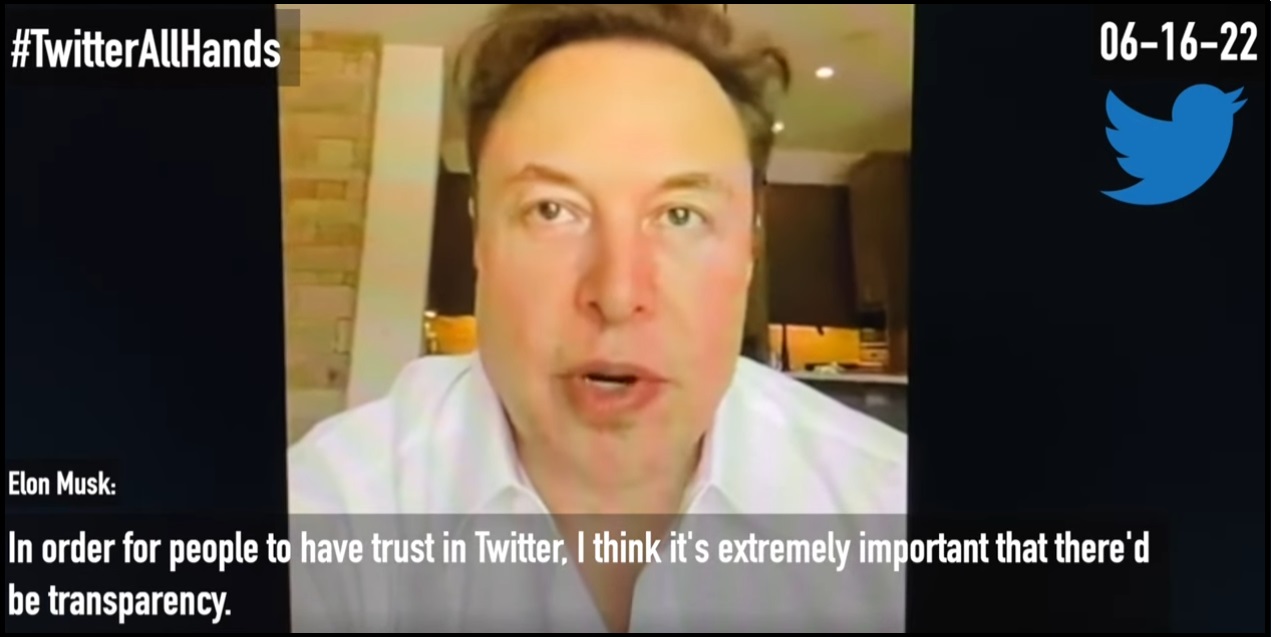
Project Veritas has published another recording of an internal Twitter all hands meeting wherein Elon Musk addressed thousands of employees for the first time since news broke of his plans to acquire the company. On the call, Musk described his affinity for Twitter and said the platform was best for “getting a message out” but noted that he was concerned about the platform as it currently stands, reiterating previous statements he’s made about bots, spam, and censorship.

“I think it’s essential to have free speech,” Musk said in response to a question about his highly publicized goal to bring free speech to the platform. When pressed about what that might mean in the context of animal abuse, sexual content and offensive tweets, Musk maintained his stance. “I think there’s also, there’s freedom of speech and freedom of breach, so I think people should be allowed to say … pretty outrageous things that are within the balance, the law, but, but then they don’t, you know, get amplified,” Musk added.  WATCH:

.

Russian Oil Revenue Returns to Pre Sanction Levels in May


Posted originally on the conservative tree house on June 16, 2022 | Sundance 

Western sanctions against Russia have been used primarily to obfuscate the cause of western inflation and keep the citizen pitchforks from reaching various government offices.  So far, the strategy -assisted by western media- has been mostly successful.

However, the International Energy Agency (IEA) is reporting that despite the western sanctions against Russia, the Russian energy sector is having no trouble finding customers for its oil sales.  With global oil prices at their highest rates in years, in part driven by the energy policy of the same western leaders who triggered the sanctions, Russia is getting just as much economic benefit as it was before the sanctions regime was triggered.

(EU FINANCE) – Russia continued to rake in oil revenues in May despite a global boycott from companies and most countries following its invasion of Ukraine, a new report has shown.

The International Energy Agency (IEA) said the Kremlin’s oil-export revenues surged to around $20bn last month, an 11% increase from the month before, despite shipping lower volumes.

Its latest monthly report, published on Wednesday, said this takes Moscow’s total revenue for shipping oil and crude products roughly back to levels before the invasion of Ukraine. Russian exports fell by about 3% due to lower oil-product flows, the Paris-based agency estimates.

Meanwhile, crude shipped during the month grew by nearly 500,000 barrels a day compared to the start of the year, largely thanks to higher deliveries in Asia.

“China and India, which have both sharply increased crude oil purchases from Russia, are net product exporters and have no need to lift Russian products,” it said. (read more)

There it is, Samsung Signal Flare, Demand Side Contraction, Inventories Too High, Request Suppliers Stall Shipments


Posted originally on the conservative tree house June 16, 2022 | Sundance 

We have been waiting for the non-essential durable goods side of the manufacturing sector to start showing evidence of demand side contraction in consumer purchases.  There have been subtle sector-by-sector indicators of consumer spending shifts for several months; however, today we get the direct evidence from Samsung.

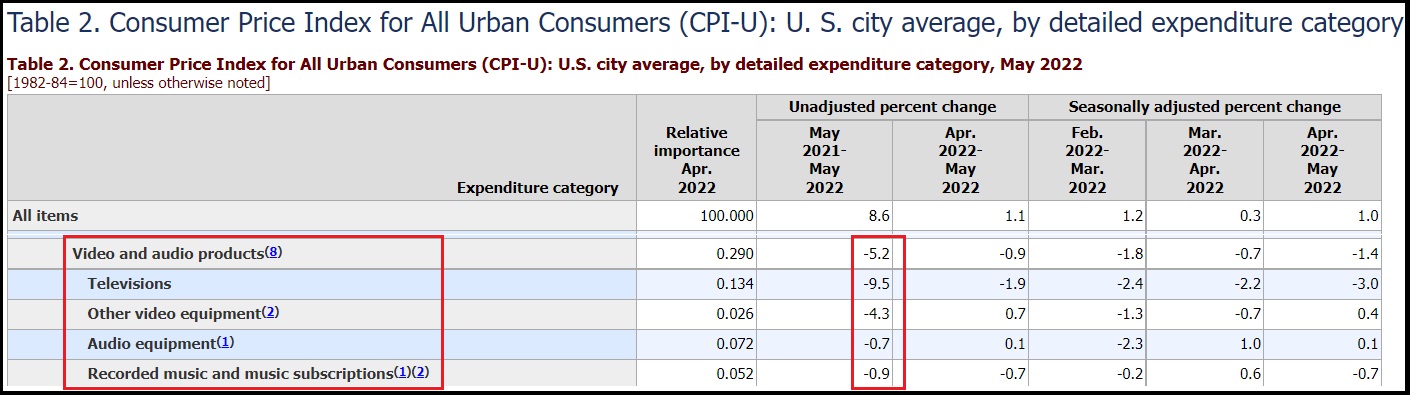
Samsung is one of the leading manufacturers of consumer electronics and products that require chips.  For three months the electronics sector has shown background signals that inventory was not moving.  One of the more recent indicators of a demand side contraction was the lack of upward price pressure inside the electronics sector.  Essentially, consumers are not purchasing the current inventory, so prices are actually dropping in this segment.  [SEE TABLE 2, CPI Chart]:

Despite overall inflation of 8.6% within the CPI, deep inside the category indexes you will note that electronic prices are actually dropping.  Televisions -9.5%, Video equipment -4.3%, etc.  Video and audio products overall dropped in price 1.4% for May, and dropped 5.2% year-over-year.

The supply chain in this sector is lengthy. Meaning inventory builds slowly as consumers stop purchasing in the USA.  Retail store inventory turns slow, store inventory climbs, then warehouses inventories climb as stores do not need product. The negative boxcar effect travels back to the manufacturer overseas over the course of several purchase cycles.  Eventually, everyone within the sector is telling the supplier we do not need product.  Then the manufacturer has to quickly slowdown raw material.

Due to lengthy supply chains, including trans-pacific shipments, the process to stop deliveries in this electronic goods sector is around 90-days before the drop in retail sales reaches the manufacturer to stop production.  Here is the announcement from Samsung:

TAIPEI/ SEOUL — Samsung Electronics is temporarily halting new procurement orders and asking multiple suppliers to delay or reduce shipments of components and parts for several weeks due to swelling inventories and global inflation concerns, sources have told Nikkei Asia.

The notification by the South Korean tech titan applies to components for multiple key product lines, including TVs, home appliances and smartphones, four people familiar with the situation said, and the postponement of orders involves a wide range of components across chips, electronics parts and final product packages.

The move by Samsung, the world’s No. 1 smartphone and TV maker and one of the leading home appliance providers, is the latest sign that electronics makers are pessimistic about the economic outlook amid global inflation risks.

Samsung told suppliers that the company needs to closely review its inventory levels of both components and final products to ensure stock on hand is manageable, according to the sources. Two people said the move will last until the end of July. One of the people said shipments from that source’s company have not been completely halted but the volume of the company’s planned shipment to Samsung for July has been slashed by 50%.

Samsung’s inventory assets reached 47.6 trillion won ($36.9 billion) at the end of March, up from 41.4 trillion won in December, according to its first quarter earnings report. The ratio of inventory assets to total assets also jumped to 10.8% from 9.7% during the same period. (read more)

Various Wall Street economists and MSM pundits have stated, erroneously – and many intentionally, there has been no evidence of a demand side contraction.  However, CTH reviews of the data have shown exactly the opposite.  There are multiple indicators of demand side contraction, including drops in retail sales units that goes all the way back to last holiday season.

Yesterday the U.S. Dept of Commerce released the May retail sales [pdf DATA HERE], showing a 0.3% drop in retail sales for the month.

Retail sales -as measured in units purchased- have been in a contracting position since June of 2021.  When the current data shows a drop of -0.3% in May, the actual drop in retail sales is much, much greater.  The dept of commerce calculates retail sales in dollars.  When prices are 20% higher and sales are low, retailers are selling less stuff (fewer units) at higher prices.  This has been the reality of our economy for several months.  This is also why productivity has been declining for more than a year.

If you take the 8.6% inflation rate (far understated) and an aggregate drop in sales of 0.3% (again, far understated as a measure of inflation), that means consumers are spending limited incomes on critical or essential purchases like housing, food, fuel and energy.  Consumers are not purchasing durable goods; people are hunkering down.

Yearly retail sales (May ’21 compared to May ’22) are +8.1%.  However, yearly retail inflation for the same period is +8.6%.  Again, reflecting that less stuff is being purchased inside the economy at higher prices.  If the commerce dept was measuring actual units being purchased, we would be seeing massive drops in sales.

Samsung is reacting to a demand side contraction.

The European Debt Crisis 2023-2024


Armstrong Economics Blog/Central Banks Re-Posted Jun 16, 2022 by Martin Armstrong

The European Central Bank has announced that it plans to create a new tool to tackle the risk of eurozone fragmentation, which is the new term for divergence among member states. They are adopting this tactic out of fears of a new European debt crisis that is inevitable. From the very beginning when the EU Commission was charged with designing the Euro can to our conference in London in 1997, I warned that the promises that everyone would be paying the same rate of interest merely because they were creating a single currency was a complete fantasy. I further warned that this would lead to the collapse of the Euro if not the entire EU.

I explained that they were comparing the Euro to the Federal Debt of the US when the failure to consolidate the debts of the EU meant that the real outcome would be like the USA at the state level. A single currency did not mean that every state paid the same interest rates in the USA and that would be the ultimate reaction of the free markets. We are now in the 24th years of the Euro and its survival because deb stable post-2024.

The ECB’s decision has come as a surprise following an emergency meeting to address higher borrowing costs for many European governments on an uneven playing field. The ECB made a statement:

“Since the gradual process of policy normalization was initiated in December 2021, the Governing Council has pledged to act against resurgent fragmentation risks.”

“The pandemic has left lasting vulnerabilities in the euro area economy which are indeed contributing to the uneven transmission of the normalization of our monetary policy across jurisdictions,” 

The comments are trying to explain the recent surge in bond yields over the past week or so as capital is starting to smell a rat. ECB has implied a more aggressive policy tightening is coming but it still failed to deliver any new measures that would support the growing unrestrained debt load. With Green governments seizing power, and the absurd sanctions on Russia, it is hard to see where there is any understanding of fiscal management on the horizon.

European capital is now very concerned about financial “fragmentation” meaning the disparity among member states in interest rates. There is clearly a rise in rates in Southern Europe compared to northern. The ECB is now saying that it will “reinvest redemptions” from its emergency bond-purchasing program. So in other words, it will NOT reduce its balance sheet concerning bonds that are under pressure for that will force greater disparity ahead – i.e. fragmentation.

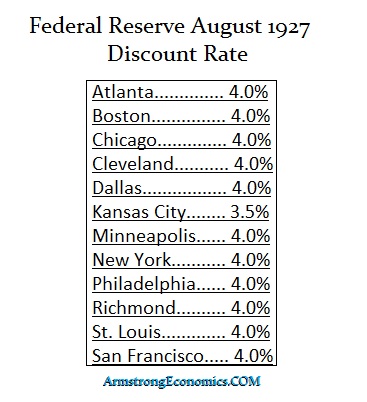
The ECB claimed that its commitment to the euro is its anti-fragmentation policy. They have said that this commitment “has no limits.” Previously, Southern EU states faced materially higher borrowing costs in the wake of the sovereign debt crisis back in 2011. This is a complete disaster for the failure to have consolidated the debt meant that their idea of one monetary policy for 19 different fiscal positions cannot possibly work. I tried to explain to them from the beginning that the 12 original branches of the Fed were independent and they would raise or lower rates depending upon the regional impact. It was Roosevelt who usurped that authority and created one rate for all in 1935 creating the new head branch in Washington.

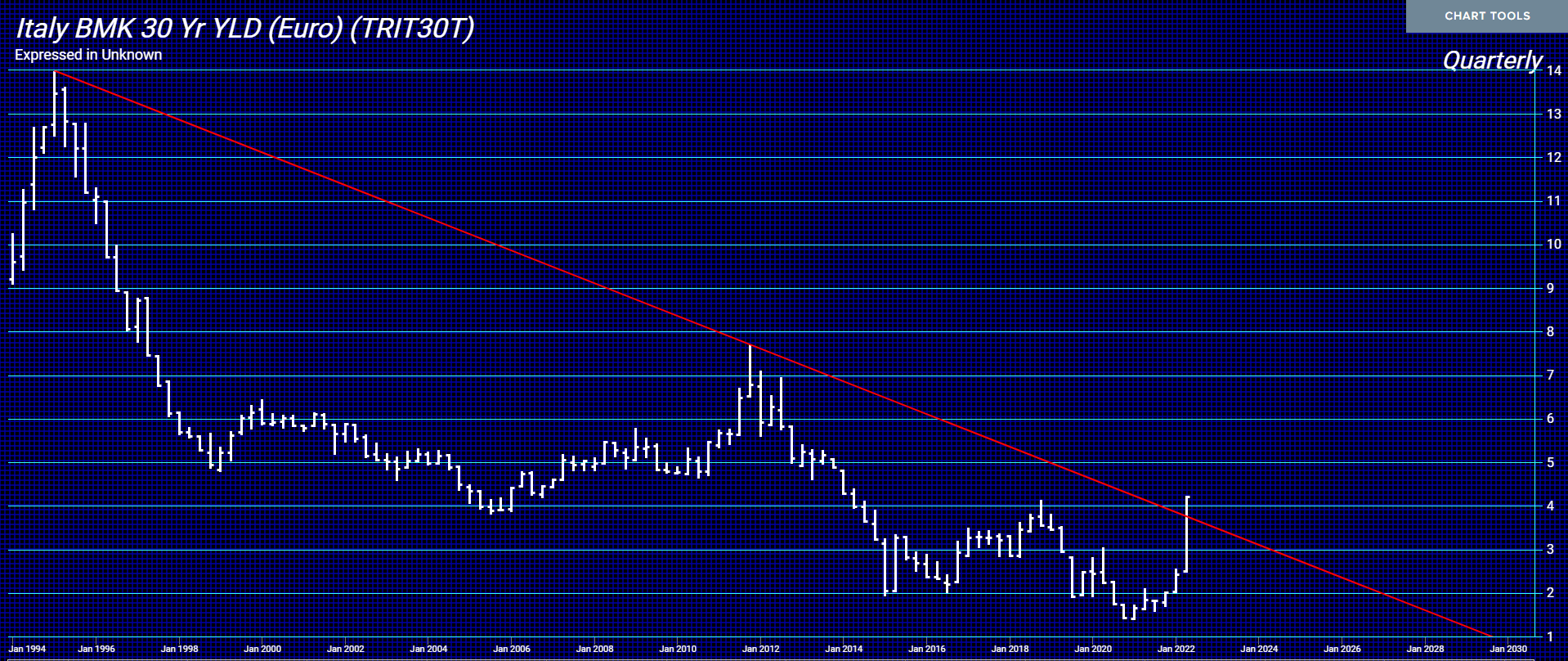
The yield on the Italian bonds traded over 4% and has broken through the Downtrend Line. While people hope that the ECB’s announcement in this unscheduled emergency meeting means they will be in control, this is more like the 5-time-divorced soul getting married again for the sixth time confirming that hope can triumph over experience. The broader long-term is that borrowing costs will have nowhere to go but higher.

The ECB’s decision to reinvestment what it previously bought merely confirms that there is a serious sovereign debt crisis unfolding.

CNN Puts Inflation into a Political Context


Posted originally on the conservative tree house on June 15, 2022 | Sundance

The people controlling policy behind the Biden administration do not care about polling or political consequence.  Biden is the one-term disposable tool for their collective effort to fundamentally change the United States.  They have a singular focus on pushing the most destructive and consequential Green New Deal policy regardless of collateral damage.  For them, using Joe Biden is a one-way ticket.

That said, none of the current political officeholders within the Democrat apparatus are going to escape the blast radius from this chaos.  CNN runs a segment asking the question, how bad is the damage going to be from the Joe Biden economic policy?  WATCH (90 secs):

.