NAFTA Watch – President Trump Phone Call With Enrique Peña Nieto…


Consider this a kick-off to my official NAFTA watch.  Readers will note my earlier spidey-sense prediction of NAFTA withdrawal announcement in/around the end of February through March.   I cannot see a delay in an announcement extending beyond March 2018.  Ergo, CTH is fine-tuning the radar to watch closely.

The fatal flaw within NAFTA has not been addressed.  Neither Canada nor Mexico has even slightly indicated a willingness to engage talks over the fatal flaw.

Exactly the opposite happened earlier this month when Canada signed up to the TPP deal.

The agreement has yet to be ratified by Canadian Parliament, and many are nervous, but it will likely get done.

The NAFTA decision will be the biggest political and economic decision in the Trump administration so far, and the corporate GOPe response is anticipated to be beyond ugly.  Additionally, it would be intellectually dishonest not to accept there are very specific interests watching these pages as part of their proactive strategy. (Hi, Tom)

That said, if you were Mexican President Enrique Peña Nieto and you noted the specificity of the current trade-policy planetary positions; and you were overlaying the preparatory action taken by Justin from Canada; and you understand there are factually hundreds of billions in play; you would be a fool not to go past past Economy Minister Ildefonso Guarjardo and directly engage the ultimate decision-maker, U.S. President Donald Trump, out of an urgent need to evaluate the survivability of your economic surroundings.  It would be imprudent not to prepare yourself:

(White House) President Donald J. Trump spoke today with President Enrique Peña Nieto of Mexico to offer condolences to the families of the victims of the helicopter accident in Oaxaca. President Peña Nieto returned the sentiment and expressed Mexico’s solidarity with the United States following the high school shooting in Parkland, Florida. President Trump underscored his commitment to expanding cooperation between the United States and Mexico on security, trade, and immigration.

The basic issue is a simple one – for the United States NAFTA has a fatal flaw.  Canada and Mexico are used by China, Europe and Asian nations as a way to work-around direct trade with the U.S. and those nations use NAFTA as a backdoor into the U.S. market. It works out great for Canada and Mexico, but terrible for the U.S.

It is a structural issue and no amount of negotiation is going to remove the fatal flaw unless Canada and Mexico agreed to terms that are directly against their prior financial interests.  Absolutely ZERO action has been taken to address this issue through six rounds of prior NAFTA discussion.  Round six ended with VERY terse words from U.S. Trade Representative Robert Lighthizer specifically over this issue.

Justin from Canada recently signed up to the Trans-Pacific Partnership.  With that decision the fatal flaw -from a U.S. perspective- just became the final straw to end the U.S. participation in NAFTA.

The U.S. cannot make any bilateral trade deals with TPP nations while those same TPP nations have an alternative access route to the U.S. market through Canada via NAFTA.

Therefore the only way for President Trump to finish a trade agreement with South Korea (current tense negotiations – see Samsung etc.) is to first remove their NAFTA alternative. Anticipating this reality S-Korea also filed a WTO trade challenge earlier today.

Absent of massive last-minute economic concessions (I’m talking full-blown acquiescence) by Canada and Mexico there is no alternative other than for President Trump to withdraw.

Understandably, South Korea is currently hosting the U.S. Olympics and it would have been extremely poor form, very impolite, and economically very destabilizing for Moon Jae-in if POTUS Trump had made the NAFTA announcement in the months/weeks leading up to their international spotlight event.  [It’s not only CTH who follow the global tentacles of multinational trade decisions.]

However, with the Olympics ending next week that diplomatic hurdle is removed… the countdown clock now officially begins.

President Trump Signs Memorandum To Regulate “Bump Fire Stocks”…


While speaking during a White House ceremony earlier today President Trump announced he has directed Attorney General Jeff Sessions to develop regulations surrounding “bump fire stocks”, noting the intended regulation would be an actionable step to help prevent future mass shootings.

During his remarks President Trump noted: “We cannot merely take actions that make us feel like we are making a difference, we must actually make a difference.” The decision to eliminate ‘bump-fire stocks’ is smart policy and politically.

On the policy side the regulatory move is in line with already existing rules on firearms that ban auto-fire weapons. On the political side the memorandum stops opposition from saying the President is not taking action; the regulatory memorandum reflects action taken by President Trump that was not taken by President Obama.

(From the memorandum) After the deadly mass murder in Las Vegas, Nevada, on October 1, 2017, I asked my Administration to fully review how the Bureau of Alcohol, Tobacco, Firearms and Explosives regulates bump fire stocks and similar devices.

Although the Obama Administration repeatedly concluded that particular bump stock type devices were lawful to purchase and possess, I sought further clarification of the law restricting fully automatic machineguns.

Accordingly, following established legal protocols, the Department of Justice started the process of promulgating a Federal regulation interpreting the definition of “machinegun” under Federal law to clarify whether certain bump stock type devices should be illegal. The Advanced Notice of Proposed Rulemaking was published in the Federal Register on December 26, 2017. Public comment concluded on January 25, 2018, with the Department of Justice receiving over 100,000 comments.

Today, I am directing the Department of Justice to dedicate all available resources to complete the review of the comments received, and, as expeditiously as possible, to propose for notice and comment a rule banning all devices that turn legal weapons into machineguns.

Although I desire swift and decisive action, I remain committed to the rule of law and to the procedures the law prescribes. Doing this the right way will ensure that the resulting regulation is workable and effective and leaves no loopholes for criminals to exploit. I would ask that you keep me regularly apprised of your progress.

You are authorized and directed to publish this memorandum in the Federal Register. ~President Donald J Trump (White House Link)

President Trump Hosts Public Safety Medal of Valor Awards…


Earlier today President Trump hosted an event ceremony honoring Public Safety Medal of Valor recipients.  The President began his remarks with comments on the Parkland FL school shooting.

The Evolution of Growing Food


QUESTION: Mr. Armstrong; You previously mentioned that we can grow crops inside warehouses without the sun or soil. How did mankind survive the last mini Ice Age wit dropping temperatures as we have seen in recent winters here in Europe?

LW

ANSWER: With each cycle, we tend to improve upon technology. Being able to grow food inside will be an important advance for us during this cycle. You can set one up in your basement.

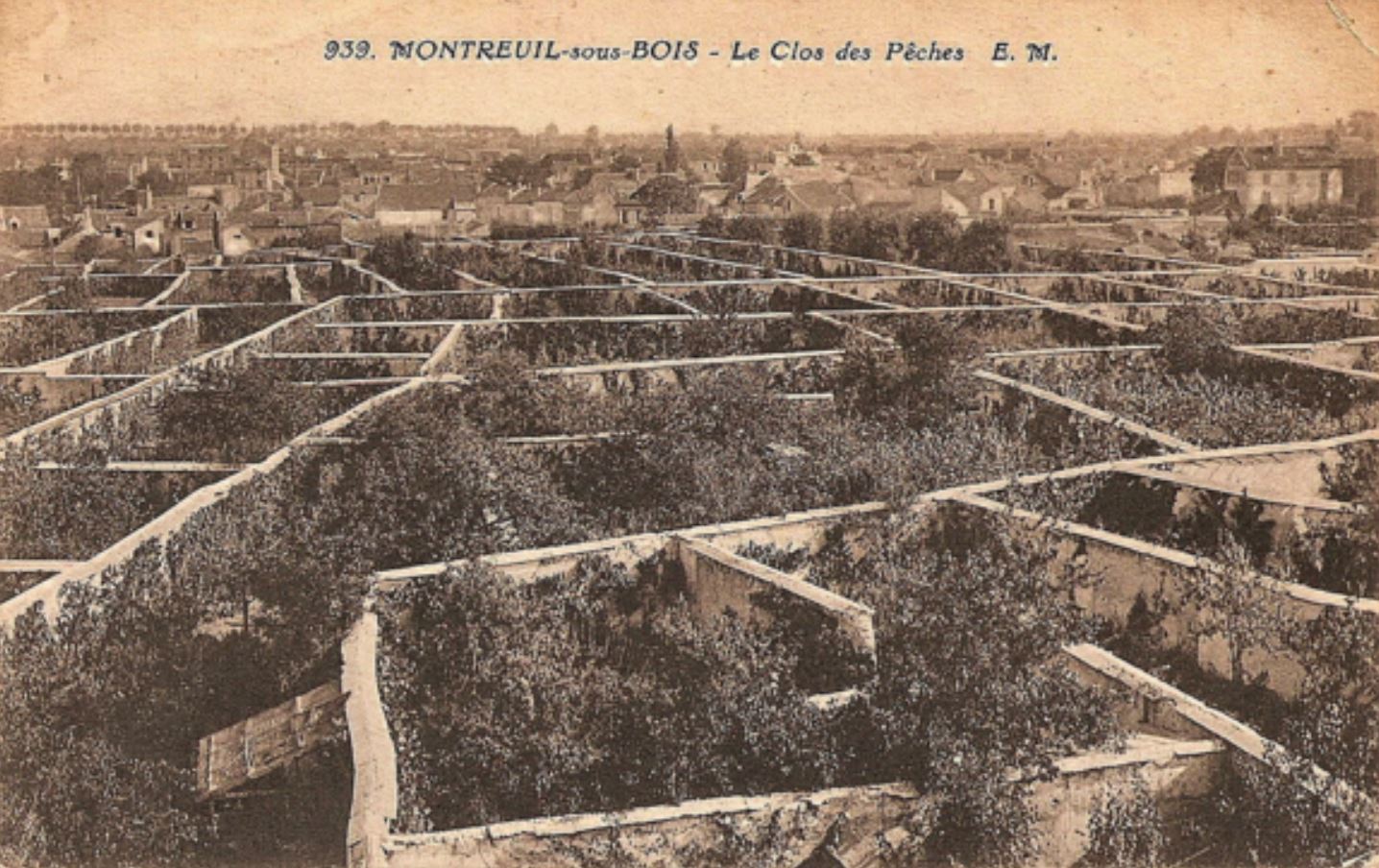
Previously, there was the invention of the fruit wall which appeared around the beginning of the Little Ice Age that ran the course of about 200 years from about 1550 to 1850.

The invention of the fruit wall saved society. They built walls which reflected sunlight during the day essentially using solar energy to improve growing conditions. These walls also absorbed solar heat, which in turn was slowly released during the night, preventing frost damage. They created a warmer microclimate 24 hours per day.

Fruit walls also protected crops from cold blasts of winds from the north as we are experiencing today. They eventually began to construct wooden canopies to shield the fruit trees from rain and hail. They would also use mats suspending then from the walls in case of bad weather. I remember my grandfather loved figs and he had fig trees he would wrap during the winter to protect them in New Jersey. In Europe, these fruit walls were used as far north as England and the Netherlands.

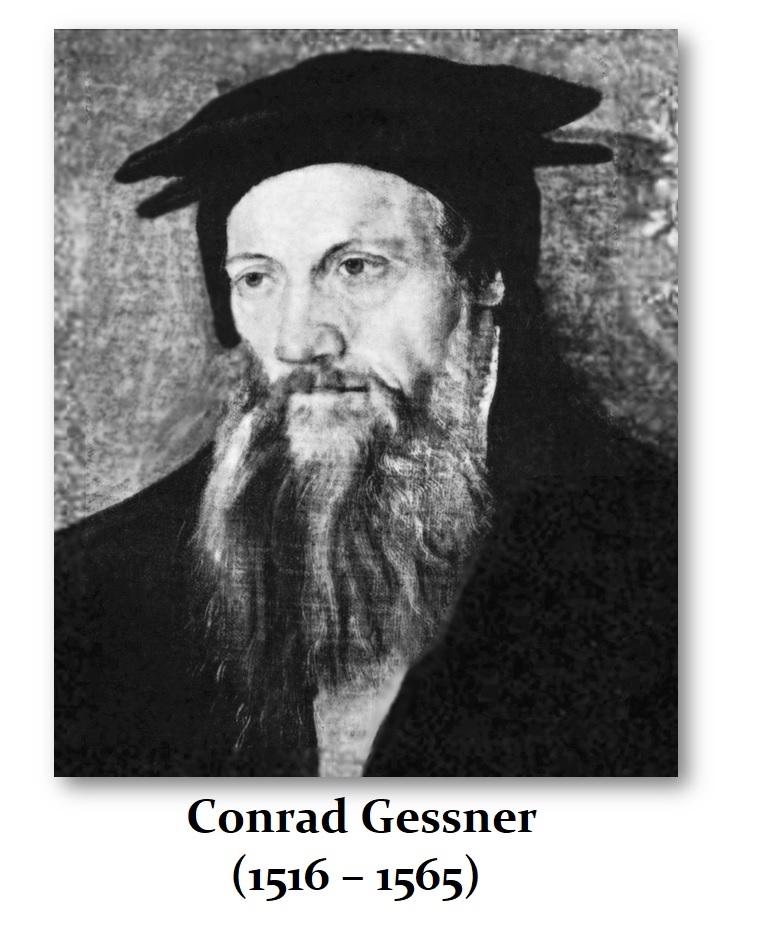
Conrad Gessner (1516 – 1565) was a true Renaissance man. He was a Swiss physician, naturalist, bibliographer, philologist, zoologist, and a botanist. He wrote of the effect of the Fruit Walls which then popularized them in Europe.

The French began to improve the technology by pruning the branches of the fruit trees in such ways that they could be attached to a wooden frame on the wall.

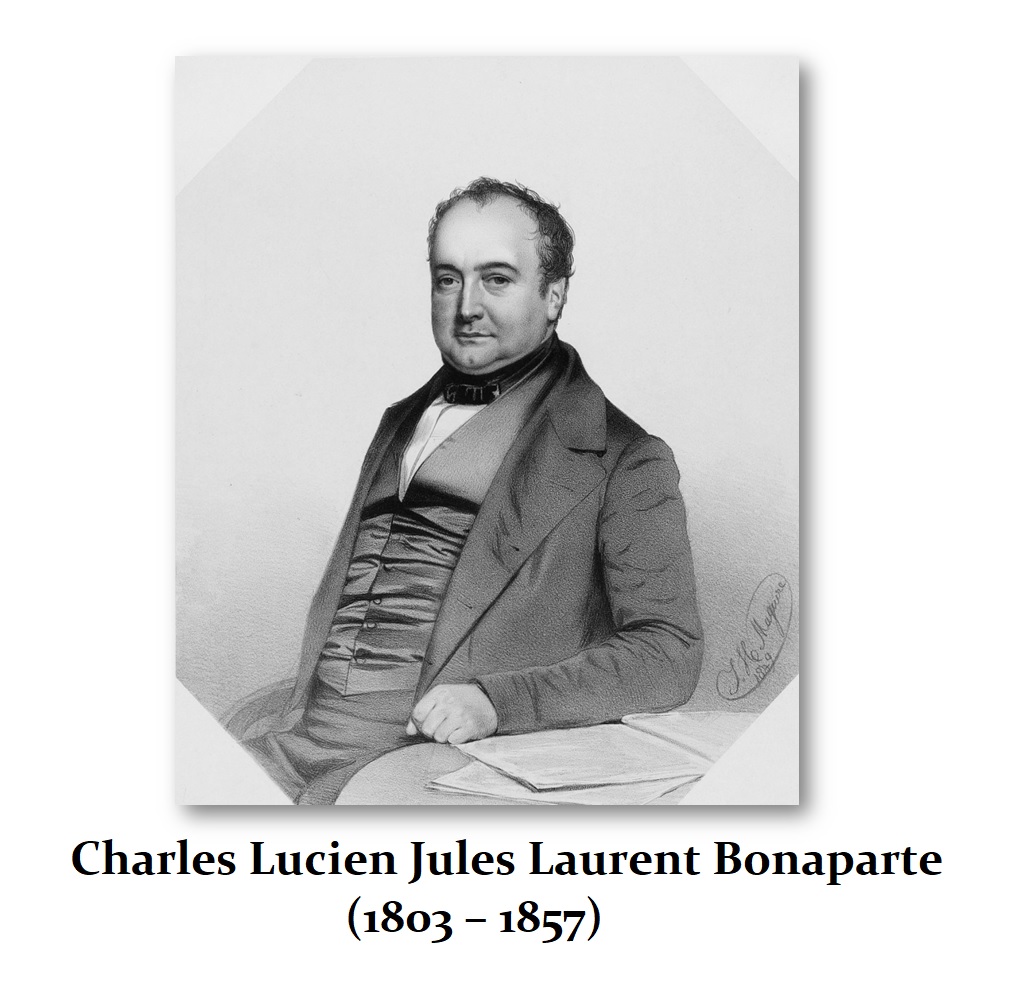
The French botanist Charles Lucien Bonaparte (1803 – 1857) is credited with building the first practical modern greenhouse in Leiden, Holland, during the 1800s to grow medicinal tropical plants. The French called their first greenhouses orangeries since they were used to protect orange trees from freezing. Today, Holland grows more food in greenhouses than any other country.

metropolis-farms-24

Today, the next step forward is growing food in warehouses without the sun or earth.

Commerce Secretary Wilbur Ross Completes Section 232 Steel and Aluminum Reports – Recommends Tariffs…


Last year President Donald Trump requested a national security Section 232 trade-investigation, to conducted by the U.S. Department of Commerce and Secretary Wilbur Ross, specifically focusing on U.S. steel and aluminum manufacturing.

The discussion continued last week as President Trump met with a group of republican and democrat members of congress to talk about trade policy and focus attention on the lack of American steel and aluminum production.   [The responses from the republican participants was very enlightening and disappointing.]

On Friday Commerce Secretary completed the industrial review and provided President Trump with trade recommendations to consider given the nature of the national security compromise.   See Outline Here.

Recommendations of the Steel Report:  Secretary Ross has recommended to the President that he consider the following alternative remedies to address the problem of steel imports:

  1. A global tariff of at least 24% on all steel imports from all countries, or
  2. A tariff of at least 53% on all steel imports from 12 countries (Brazil, China, Costa Rica, Egypt, India, Malaysia, Republic of Korea, Russia, South Africa, Thailand, Turkey and Vietnam) with a quota by product on steel imports from all other countries equal to 100% of their 2017 exports to the United States, or
  3. A quota on all steel products from all countries equal to 63% of each country’s 2017 exports to the United States.

Each of these remedies is intended to increase domestic steel production from its present 73% of capacity to approximately an 80% operating rate, the minimum rate needed for the long-term viability of the industry. Each remedy applies measures to all countries and all steel products to prevent circumvention.

The tariffs and quotas would be in addition to any duties already in place. The report recommends that a process be put in place to allow the Secretary to grant requests from U.S. companies to exclude specific products if the U.S. lacks sufficient domestic capacity or for national security considerations. Any exclusions granted could result in changed tariffs or quotas for the remaining products to maintain the overall effect.

[FULL REPORT pdf retracting national security issues]

Recommendations of the Aluminum Report:

Secretary Ross has recommended to President Trump three alternative remedies for dealing with the excessive imports of aluminum. These would cover both aluminum ingots and a wide variety of aluminum products.

  1. A tariff of at least 7.7% on all aluminum exports from all countries, or
  2. A tariff of 23.6% on all products from China, Hong Kong, Russia, Venezuela and Vietnam. All the other countries would be subject to quotas equal to 100% of their 2017 exports to the United States, or
  3. A quota on all imports from all countries equal to a maximum of 86.7% of their 2017 exports to the United States.

Each of the three proposals is intended to raise production of aluminum from the present 48% average capacity to 80%, a level that would provide the industry with long-term viability. Each remedy applies measures to all countries and all steel products to prevent circumvention.

The tariffs and quotas would be in addition to any duties already in place. The report recommends that a process be put in place to allow the Secretary to grant requests from U.S. companies to exclude specific products if the U.S. lacks sufficient domestic capacity or for national security considerations. Any exclusions granted could result in changed tariffs or quotas for the remaining products to maintain the overall effect.

[FULL REPORT pdf with redacted national security issues]

The reports are currently under consideration by the President, and no final decisions have been made with regard to their contents. The President may take a range of actions, or no action, based on the analysis and recommendations provided in the reports. Action could include making modifications to the courses of action proposed, such as adjusting percentages.

The President is required to make a decision on the steel recommendations by April 11, 2018, and on the aluminum recommendations by April 19, 2018.  (Commerce Link)

Those who have followed the issue closely will note how China uses third-party nations as shipping ports in an attempt to hide their steel and aluminum dumping.  Therefore instead of playing the never ending game of whack-a-mole, Secretary Ross is taking the approach to identify “global” steel and aluminum imports.

Hopefully President Trump will accept and implement this approach shortly.

School Shooting Was Outcome of Broward County School Board Policy – Now Local and National Politicians Weaponize Kids for Ideological Intents…


CTH has intentionally stayed away from discussion of the Parkland school shooting as we watched and reviewed the response.  However, it’s time to call the Broward School Board officials to task and simultaneously prepare the class-action lawyers to cripple the system.

Broward County schools intentionally created polices from 2010 through 2016 that culminated in the 2018 mass school shooting in Parkland.  We know this with great specificity because five years ago we warned Broward County Florida school board members this could happen.

In 2012 and 2013 while doing research into the Trayvon Martin shooting we discovered an alarming set of school policies being enacted in Miami-Dade and Broward County Florida.  The policies were called “diversionary programs” and were essentially about stopping High School students from being arrested. Law enforcement was instructed to avoid arrests and defer criminal conduct to school administrators.

Students who engaged in violence, drug sales, robberies, burglaries, theft and other various crimes were intentionally kept out of the criminal justice system.  County administrators and School Superintendents told local and county law enforcement officers to stop arresting students.

2013 […] Broward, the nation’s seventh largest district, had the highest number of school-related arrests in Florida in the 2011-2012 school year, according to state data. Seventy-one percent of the 1,062 arrests made were for misdemeanor offenses. (more)

Unfortunately, the school board mandated policies came into conflict with law and order. The problem of the conflicted policy -vs- legality worsened over time as the police excused much more than misdemeanor crimes.  Over time this culminated in police officers falsifying documents, hiding criminal activity, lying on official police reports and even hiding stolen merchandise police retrieved from high school students.

In 2012 Trayvon Martin was one of those students. –SEE HERE–

It was our initial FOIA requests to the Miami Dade School Police Department which revealed the secret discipline and diversionary program Trayvon Martin was granted to avoid a criminal record.    The School Board and M-DSPD kept trying to hide the issue; they delayed responses and charged us thousands for FOIA information; but we knew this story was huge… so we kept going.

Specifically Trayvon Martin’s criminal conduct was hidden behind school discipline.  Stolen jewelry was recorded as random ‘found items’ (the jewelry just intentionally placed in storage with no investigation), Trayvon’s possession of marijuana was similarly obfuscated, and all of the incident reports were intentionally falsified by officials and School Resource Officer, Daryl Dunn,  to avoid the Criminal Justice system.

mdspd 22

It is all well documented.  None of this is supposition.  Our research discovered sworn affidavits from the police department HERE.  No-one was ever been held to account – it was just too politically dangerous an issue.

SRO Dunn never filed a criminal report, nor opened a criminal investigation, surrounding the stolen jewelry. Instead, and as a result of pressure from M-DSPD Chief Hurley to avoid criminal reports for black male students, Dunn wrote up the jewelry as “found items”, and transferred them, along with the burglary tool, to the Miami-Dade Police property room where they sat on a shelf unassigned to anyone for investigation.

A separate report of “criminal Mischief” (T-08809) was filed for the additional issue of writing “WTF” on a school locker. [It was the search for the marker used to write the graffiti that led to the backpack search].

The school discipline, “suspension”, was attached to the graffiti and not the stolen jewelry.

oCTOBER 2011 - 1

The connections between the Police Burglary report and the School Report of “found items” were never made because the regular police detective in charge of the Burglary case had no idea the School Police Dept. had filed a “found items” report.

Two differing police departments, and the School Officer, Dunn, intentionally took the criminal element out of the equation – instead preferring “school discipline” and not “criminal adjudication”.  (more)

And it wasn’t just Trayvon Martin, there were hundreds of similar actions taken by conflicted School Resource Officers – totaling thousands of crimes over the course of just the first few years of these programs (2010 through 2013).

CTH contacted the Miami-Dade School District, every single school board member, and the Broward County School District – to warn them of what was taking place.

We provided thousands of pages of sworn affidavits and transcribed testimony from law enforcement. We spent several thousand dollars locating, transcribing and assembling the documents and evidence; and hundreds more hours compiling all the information.  –SEE HERE– We sent all of it to both school districts and both school superintendents.

Their response: “go away”.

The school board’s in Miami-Dade and Broward County had created a disastrous scheme and it didn’t take long to see where this was going.   The scheme was supported by President Obama’s federal education policy, and executive orders –SEE HERE– and people like Jesse Jackson –SEE HERE– In August of 2012 President Obama issuing an “executive order”  establishing the White House Initiative on Educational Excellence. Effectively placing “quotas” on school discipline based on race.

Broward County, even went one step further.  They stopped arresting students and then changed the policy of suspension.  Broward enhanced their program in 2013:

Broward’s Collaborative Agreement on School Discipline was announced in early November. Instead of suspensions, students can now be referred to the PROMISE program, where they receive counseling for several days and then return to school. A host of non-violent misdemeanors no longer require an arrest, though officers can sometimes override that if they feel it is necessary (“I wanted to make sure deputies always had discretion,” says Scott Israel, Broward County’s sheriff). The school district’s Office of Minority Male Achievement reviews data to ensure that punishments for minor infractions and racial disparities are on the decline. (read more)

So what happens when you stop arresting students for clear criminal conduct and then lessen the school punishment therein?…. You get this:

The Department Of Justice – Civil Rights and School Discipline October 21st 2010

2010 – In recent years, many school districts across the country have begun to adopt strict zero-tolerance discipline policies that impose increasingly harsher punishments for seemingly minor infractions. These disciplinary measures – in-school or out-of-school suspensions, alternative school placements, expulsions, and referrals to police departments and juvenile authorities – disrupt a student’s education and diminish their chances for success.

For too many students, these school-imposed sanctions lead to the criminal justice system, a pathway commonly referred to as the School-to-Prison Pipeline. Regrettably, studies have shown that children of color are disproportionately affected by zero-tolerance policies, a trend that increases already significant disparities.  (read more)

2010 – ERIC HOLDER – Never before have our two agencies come together in this way – or brought together such a large and diverse group of partners – to discuss the best ways to ensure that civil rights and educational opportunities are protected for every student, at every level, and in every community…But it is just the beginning of what I know – and I pledge – will be an ongoing conversation about how we can better understand the causes, and most effectively remedy the consequences, of disparities in student discipline. I want to assure all of you that for me, for Secretary Duncan, for the agencies we lead, and for the administration – this work is a top priority.

US DOJ October 2010

Justin From Canada Attempts Backup Option for Trade Mistakes, Fails Miserably…


NAFTA is as precarious as a slow-spinning plate on a stick. Mexico and Canada are both  taking half-hearted turns recharging the momentum – while simultaneously looking for trade options due to, well,.. the inevitable.

The basic issue is a simple one; for the U.S. NAFTA has a fatal flaw. Canada and Mexico are used by China and Asian nations as a way to work-around direct trade with the U.S. and use NAFTA as a backdoor into the U.S. market.  It works out great for Canada and Mexico, but terrible for the U.S.  It’s a structural issue and no amount of negotiation is going to remove the fatal flaw unless Canada and Mexico agree to terms that are directly against their current financial interests.

Ergo POTUS Trump is positioned to withdraw.

Trying to keep the U.S. in NAFTA, but understanding the likelihood of exit, Justin from Canada originally approached China for a big trade deal.  Justin didn’t find Happy Panda in his discussions; instead he found The Red Dragon behind the Panda mask.  China was willing to talk trade, but China tiered their approach because Canada is only valuable to China as long as the NAFTA door is open.  Without NAFTA China has no use for Canada.

Justin left China with dragon burns and immediately realized his trade cards were getting weaker by the day…. so he had to sign-up for the Trans-Pacific-Partnership.  Unfortunately for Justin, though some think he didn’t realize the consequence, signing TPP guaranteed POTUS Trump would exit NAFTA.

Why?  Because if the U.S. stayed in NAFTA the TPP nations would now have a collective backdoor into the valuable U.S. market through Canada.  The NAFTA fundamental flaw just became more flawed.

Mexico discovered the same.  China will talk expanded trade, but only on tiered terms. One tier with NAFTA (good stuff for Mexico); one tier without NAFTA (not as good for Mexico).

The $20 trillion U.S. market is what China wants access to; Xi Jinping doesn’t care about Canada or Mexico – beyond how each of them can benefit China’s products entering the U.S. market.

China plays a zero-sum game; if it doesn’t benefit China, it isn’t done.

So Justin from Canada now realizes he nailed his nations’ trade feet to ASEAN economies [sans Trump’s BFF golf partner Shinzo Abe (Japan)], who care about Canada as a door to the U.S. more than an actual trade partner.  FUBAR eh’?

Simultaneously, Justin from Canada still has red-face from Beijing burns and has to accept he just guaranteed: “no U.S. NAFTA deal is possible”.

Where does rainbow socks turn now…. India.  Except, well,… there’s a problem.

You see, while Justin from Canada was trying to find his way through the China, ASEAN and  TPP trade matrix, POTUS Trump and India’s Prime Minister Modi were hugging it out on trade deals; with U.N. Ambassador Nikki Haley courting the national Indian crowd.

Yup, Justin from Canada shows up in India, and the airport -much like the rest of the diplomatic venues- is empty.  POTUS Trump arrived early and stole all the trade hugging last year; then used a geopolitical strategy of punching Pakistan in the teeth to elevate his own Indian magnanimity.   A bazillion India peeps loves-them-some-Trump now.

More FUBAR eh’?

So Justin from Canada is traveling around India with his family and not getting any love.

Oh dear.

POTUS Trump began with China (Feb ’17). Outlines drawn. Handshakes. But he did so knowing he was dealing with Xi Jinping the dragon, not the panda.   Trump acted like he was accepting magnanimous panda, his granddaughter helped exhibit panda deference, but all while Trump was really viewing Xi with dragon-face.  Brilliant.

POTUS Trump then expanded economic influence through Saudi Arabia and the GCC creating new economic allies based on new definitions; and strategic security partnerships without the traditional U.S. cultural demands.  Stunning results ongoing.

POTUS Trump worked quickly through the economics of Europe gauging who was on-board and who was not.  France, Poland, Hungary all quickly joined up. Germany and the U.K. not-so-much… [Two visits to Macron and a reciprocal state visit soon] …Now go look at the economic results each EU state is facing; look who is winning.

POTUS Trump moved quickly on India as leverage with China trade discussions.  If China does stupid,… Trump hugs Modi tighter.   Trump kicks Pakistan in teeth with brutal truth over Afghanistan and their co-dependent enabling of Taliban.  Modi smiles bigger still.

POTUS Trump moved BIGLY in Asia.  Trump gave BFF Shinzo Abe first place. Japan has golden ticket to U.S. market based on reciprocity – everything is possible and Abe is on top of the world.  Trump knows China will *ONLY* do that which is in their interests… and he knows Xi Jinping needs the U.S. more than the U.S. needs China.  Worst part for Xi is he knows that Trump knows…

We always knew there was a generally good trade strategy visible from POTUS Trump, but it needs to be said that NO-ONE realized just how well thought out it really is.   Now I know what this guy does instead of sleeping… he maps out the matrix of trade leverage and economic strategy….. it’s almost absurd how keenly insightful Trump is on the geopolitical side of economics.

Our president has flaws and faults, we all accept that…. but he is engaging in international economics with a mastery never seen by a U.S. president.  EVER.

That truth is why the multinationals (corporations and banks) hate him so much, yet fear him a thousand times more.  If you doubt, or perhaps just need confirmation,  just look at what happened in Davos.

…“it is much safer to be feared than loved because …love is preserved by the link of obligation which, owing to the baseness of men, is broken at every opportunity for their advantage; but fear preserves you by a dread of punishment which never fails.”

~Niccolò Machiavelli, The Prince

Right Angle: Seriously?


Barack Obama’s official portrait was unveiled this week. There’s so many things to say about it and so little time…

Cryptocurrency Maybe Become a Tax Nightmare


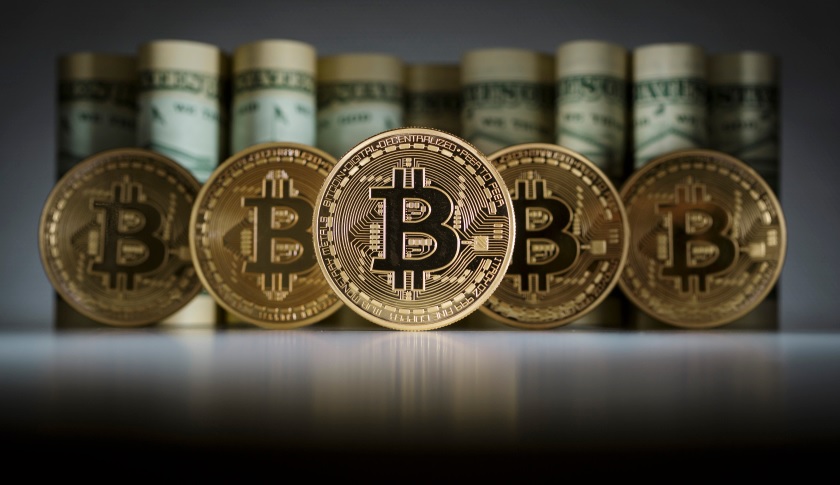
Credit Karma is reporting that of the first 250,000 tax filings, less than 100 people reported owning any cryptocurrency. Credit Karma is reporting that only 0.04% of cryptocurrency-traders are paying taxes to Uncle Sam.

The dangerous aspect here is the IRS got over 20,000 names from the exchanges and they will match their accounts to tax returns. Anyone who thinks this is an alternative currency that circumvents taxes and the central banks will have a new reality after April 15th. They will know everyone who has bought or sold any cryptocurrency.

Volatility – What is It?


QUESTION: Dear Martin,

In the private blog you mentioned a few times that the volatility will rise again in the week of the 12th. When you mention volatility, do you mean volatility as measured by the VIX index?


So far the VIX has lost around 1/3 this week so I suppose you mean something else?

Thanks!

JWD


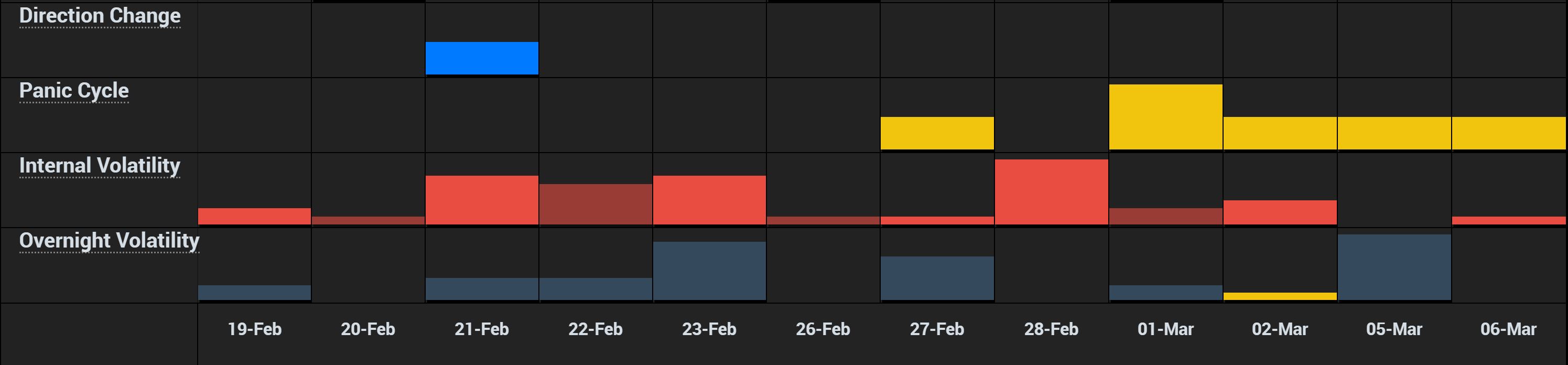
ANSWER: The VIX is not a true indicator of volatility. We have three main volatility measurements and each is different.

(1) you have the traditional measurement of close to close. That is interesting, but it does not truly capture the concept of volatility.

(2) Then there is intraday volatility which we measure and simply the percentage movement between the high and low of that session. You can have a 1,000 point swing in the Dow intraday yet close nearly unchanged. The first volatility measurement would never even show a blip.

(3) The third measurement is overnight volatility. This is measured from the previous close to the open of the current day session. For example, Monday, February 5th the Dow opened at 25337.87 compared to Friday’s closing of 25520.96 gapping down.

Our indicators are intended for trading, unlike the VIX. In our Arrays, you will see Overnight Volatility, Intraday Volatility, and Panic Cycles, which are extreme moves in one direction or an outside reversal which exceeds the previous session high and penetrates the previous secession low.


The VIX is a convoluted formula that does not reflect trading but more of a trend lending itself to manipulations. Hence, the VIX is not very reliable. The VIX is a measure of expected volatility calculated as 100 times the square root of the expected 30-day variance (var) of the S&P 500 rate of return. The variance is annualized and VIX expresses volatility in percentage points.

Volatility Index VIX Futures

where var = (365/30) x Expected 30-day variance.

The 30-day variance is the sum of squared standard deviations st (“volatilities”) of the S&P 500 rate of return at every point in time t during the 30 days:

Volatility Index VIX Futures