Religious Persecutions have impacted Political-Economy


QUESTION: hi martin

question for you
if we fed the data and all the info you had on ISLAM – CHRISTIANITY – JUDAISM etc and all other religions into SOCRATES
and ask it …..what would its preferred choice be ……of RELIGION and what should the world follow…………what would SOCRATES say?
have you ever tried this thought experiment?
Regards
SS
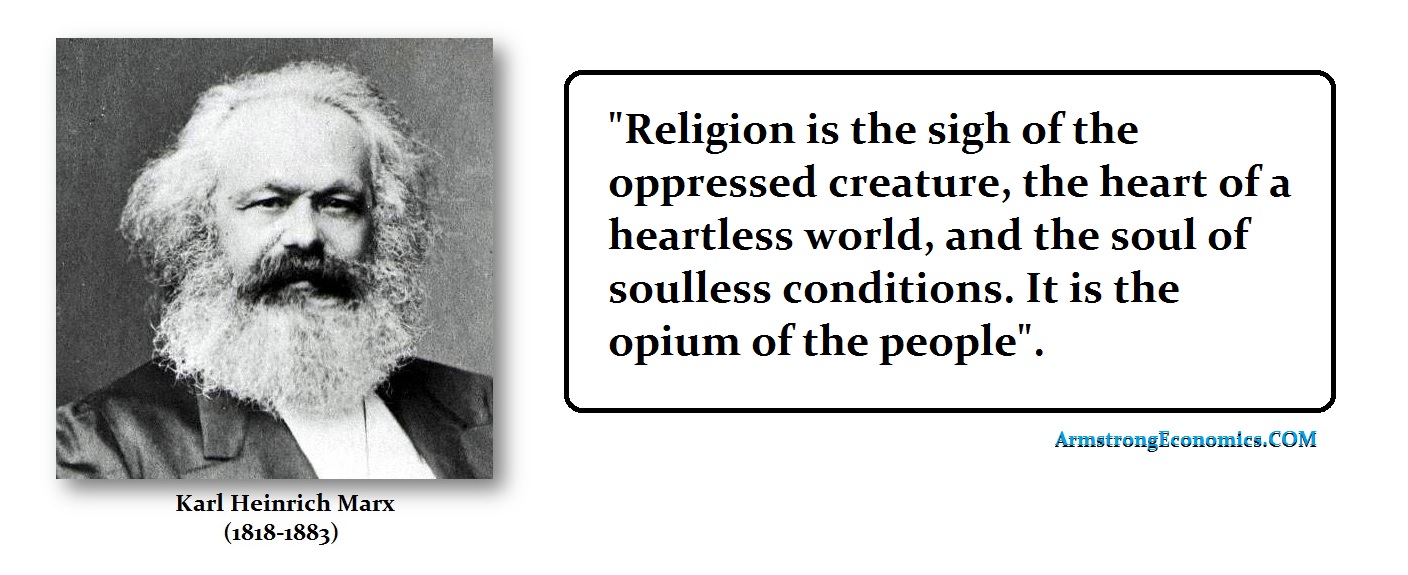
ANSWER: Interesting question. I do not believe it would pick one for that is a subjective decision. It would forecast trends, but not which religion is better. What it does do is it will forecast religious upheaval, which is tied to economics. Change the economy and you create change in religion. The introduction of Communism followed Marx in banning religion.
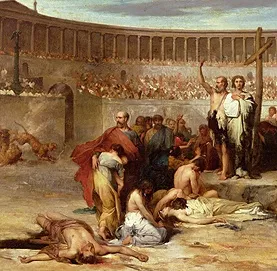
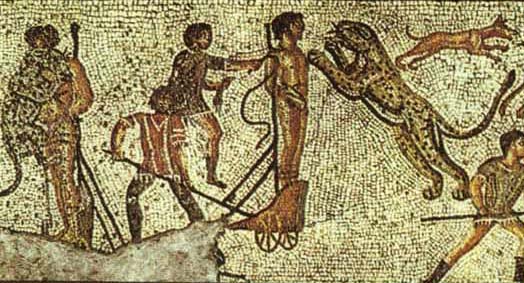
During the 3rd century, it was the collapse of the monetary system of Rome that sparked the biggest wave of Christian persecutions. Why? The Pagans believed the gods were angry because the Christians would not pray to them. So the evils befalling upon the empire was blamed on the Christians. In turn, the Christain said their gods were impotent and only the true God would save them. Eventually, many Pagans left and became Christians praying for help.
Then there was the Spanish Inquisition headed by Tomás de Torquemada (1420–1498). Even the Pope came out against it. Nonetheless, the Spanish Crown used religion as the pretense to confiscate property and attacked both the Jews and the Arabs. This caused the Jews to flee mostly to the Netherlands. This is where banking and insurance became major in Amsterdam.
So religious persecutions have been had a major impact upon economics and the rise and fall of empires, nations, and city-states.

Long Conversation – President Trump Talks To Russian President Putin…


Yesterday while exiting the White House, President Trump told reporters he had just finished a 90 minute phone call with Russian President Vladimir Putin:

“We had a great call with President Putin. We’re talking about peace in Syria — very important. We’re talking about North Korea. We had a call that lasted almost an hour and a half. We’ve just put out a release on the call. But we’re talking very strongly about bringing peace for Syria. We’re talking about very strongly about North Korea and Ukraine.” (transcript)

Important to note that conversation was longer than would have been possible at any of the Bilat’s (Bilateral Discussion) during the ASEAN Summit or APEC Meeting in Asia.  A further review of the White House readout:

President Donald J. Trump today spoke with President Vladimir V. Putin of Russia for more than one hour. The presidents affirmed their support for the Joint Statement of the United States and the Russian Federation, issued at the Asia-Pacific Economic Cooperation Summit on November 11.

Both presidents also stressed the importance of implementing U.N. Security Council Resolution 2254, and supporting the U.N.-led Geneva Process to peacefully resolve the Syrian civil war, end the humanitarian crisis, allow displaced Syrians to return home, and ensure the stability of a unified Syria free of malign intervention and terrorist safe havens.

The two presidents affirmed the importance of fighting terrorism together throughout the Middle East and Central Asia and agreed to explore ways to further cooperate in the fight against ISIS, al-Qaeda, the Taliban, and other terrorist organizations.

President Trump and President Putin also discussed how to implement a lasting peace in Ukraine, and the need to continue international pressure on North Korea to halt its nuclear weapon and missile programs. (link)

♦President Trump wants Putin to withdraw any strategic interference surrounding the North Korea denuclearize plan he has assembled with regional allies and China.  President Putin would prefer being able to retain a position of influence toward the DPRK.

♦Russian President Putin seems to want Trump to shift/modify his position on allowing Bashir Assad to remain in power in Syria.  President Trump and SoS Rex Tillerson have outlined a prior plan for a regional governorship and a unity government framework.

It would appear there’s some deal-making in the works.


Is DNC Chair Tom Perez Trying “Broken Arrow” 2018?…


Aside from the common vernacular of ‘broken arrow‘ referencing a loss of a nuclear weapon it also means:

“a code phrase that a ground unit is facing imminent destruction from enemy attack and all available air forces within range are to provide air support immediately.”

In essence, with enemy completely overwhelming a position – a military commander calls in direct fire upon themselves in a last-ditch effort to at least retain some of their own forces in the aftermath.

For the sake of this discussion do not consider the reference ‘federal politicians’ (ie. DC congress and Senate); but rather consider the term “broken arrow” a metaphor for the totality of the past eight years and the collapse of the Democrat political apparatus in state House seats and state Senate seats.

Currently:

  • State House Majority Control: 38 states Republican / 12 states Democrat
  • State Senate Majority Control: 37 states Republican / 17 states Democrat / 1 state tied.
  • State Governors: 34 Republican / 15 Democrat / 1 Independent

If you put a blue marble on a table for each of the Democrat politicians in state office and a red marble on the table for each of the Republican politicians in state office the table would be roughly 65% red marbles and 35% blue marbles.

If you are DNC Chairman Tom Perez the challenge is daunting.  However, one rather extreme strategy would be to call in a “broken arrow” sledgehammer on the entire table.  If your attack smashed a quarter of the total marbles, the majority of the marbles smashed would be red.  Yes you would lose some blue marbles that way but your losses would be less than your opponent simply because you have less marbles on the table.

Still with me?

OK.  Now, think of that sledgehammer as “Sexual Harassment Claims”.

See the strategy?

Your political enemy has twice the exposure to risk.  Hollywood starts the narrative, and the Media can be counted upon to assist the strategy by over emphasizing the scale of the enemy losses and downplaying the scale of the friendly losses.

If you started with a total of 1,000 marbles (650 red, 350 blue) and lost 25% in the strike, the end result would be 250 casualties (163 red, 87 blue).  You would have killed off twice as many state/national republicans as you would state/national democrats.

It’s an extreme strategy; it’s a desperate strategy; but it’s a strategy nonetheless.    This is DNC Chairman Tom Perez we are talking about.  Former head of the DOJ Civil Rights Division (CRS); before becoming Obama’s head of the Department of Labor.

Perez is a life-long fellow Alinsky traveler inside the cause; and was ‘installed’ as DNC Chair the same way Hillary Clinton was installed as candidate in 2016.

Democrats, the institutional system that is constructed of people, are pretty good political strategists but their modern Achilles heel is their lack of patience.  The system supporting the ideological hand of Perez is demanding immediacy – they’re desperate.

The 2010 (“shellacking” of Obama) through 2014 gains were all Tea Party.  The 2016 gains, including the presidency, was MAGA; the evolution of the exact same people.  The Trump MAGA Team in 2016/2017 was the Tea Party Team in 2009/2010.  The commonality was/is ‘cold anger‘.  Strategic. Purposeful. Resolute. Deliberate. Long-term and sequential.

Current 2017 Democrat anger is hot.  It’s reactionary; easily provoked to act to spite itself. That anger is fueling stupid…. It thrashes. Look around, it’s childish.

Play stupid games, win stupid prizes.

Try stupid strategy, win stupid consequences.

Roy Moore Campaign Officials Hold Press Conference (Video)…


Alabama campaign officials who support Roy Moore held a press conference yesterday to outline the reason for their continued support.  Additionally, several officials confronted and deconstructed the accusations.

The audio is a little sketchy in the beginning:

The Hidden Risk of Broker/Clearer


QUESTION: Dear Mr. Armstrong, Thank you for your work in “educating” us in your “University of the Conscious Investor”! My question relates to your “Trading a Vertical Market” report. I am slowly digesting this report which is truly fascinating and a must read for any rational minded investor. My experience tells me (and you have reaffirmed this within your report) that being able to trade correctly for the market is critical. In analyzing the correct actions we must take I have reached the conclusion that we must also investigate deeply the trading company we use and how any wild ride will impact their ability to actually fund the successful trades we have managed to get into and out of. I recently was issued new T&C’s for my accounts to accept and that makes for scary reading in the light of any major reset or mammoth gap or moves we anticipate. How would you recommend we evaluate the companies actually holding the bag to be able to pay up at the end of the day? This appears to me to be a most crucial question in the light of what Socrates is pointing out.

Be Well,

ANSWER: Yes, you are absolutely correct. Your broker/clearer is an additional risk.

 The kind of market conditions we are about to face will force questions beyond extreme volatility, no bids and the gapping of price and trade. What Traders must realize is that these extreme price actions themselves trigger increased margins, which again could trigger a liquidity crisis. Under such panic moves, prices can gap ‘without’ a trade and is worth remembering people sell what they can not what they should. This forces other markets to move just to raise cash. If market movements are violent everyone is pulled into the mix.

This is when you have to hope that every one of your fellow account owners (under the broker/clearer you are using) is liquid enough to honor margin requirements. This type of information is rarely going to be available to all and so makes many remain vulnerable.

Just to make you aware, it is possible that your money is vulnerable even if you do not have an open position and is just sitting with your clearer if they were to fail.

A lot of people lost money in the MF Global Scandal.


The Political Crisis in Germany Changes the Game


Merkel faces the worst crisis of her career and many behind the curtain are starting to wonder if she will even survive. The German Federal President Steinmeier could not actually order new elections immediately. The procedure in this regard is quite complicated in Germany. The earliest possible alternative would be to hold new elections come the spring of 2018. It is likely that the AFD is likely to gather even greater support from new elections. Nonetheless, the CDU will continue to support Merkel at least right now. However, the CDU has been severely weakened by the election and if we do not see new elections until the spring, there is a distinct possibility that Merkel’s support even within the CDU could collapse if they see the AfD will win even greater support.

The head of the Federation of German Industries (BDI), Dieter Kempf,  has chastised the political leaders calling on the SPD, FDP and Greens to form a coalition. The price that the SPD will demand is that Merkel leaves before they would consider any compromise. There is just bad blood now between the SPD and CDU. Of course, this makes it even more likely we see and even more difficult Brexit. The practical crisis is the fact that Merkel must attend to domestic issues and will not truly have the time or authority to assume a leadership role in Brussels.

This turmoil in German politics is actually shifting the stage to Macron. The uncertainty in Germany may be opening the door for Macron to reform the EU and the Eurozone pushing Germany to second place. The political fortunes for the EU may be far more uncertain than many suspects.

From a market perspective, political uncertainty in Europe still creates uncertainty in markets rather that confidence.

Are We Losing the Training Ground for Trading?


COMMENT: Dear Mr. Armstrong,

Really glad that you again warn us of impending famine moving into 2020 – 2030 and give us ample time to prepare though many still do not believe in your forecast. Your blog have done a great service to humankind.

Also pertaining to your recent article pertaining to skills needed to be a successful traders or fund managers. I tend to agree that going against majority view at important turning points require nerve of steel to pull the trigger. Not many can do it as emotions can overwhelm our decisions. Being a fund manager myself, I find that how we perform and react during bear markets, crisis and panic moments will distinguish me from others (my peers). During rising tide, our performance mask our real ability to handle crisis.

As you say, life is a journey of learning. Socrates provides a valuable tool for my investing journey while your blog helps in allowing me to view the world in different dimensions. I do make mistakes along the way but thank God I become a better investor as day goes by.

Regards,

SS
Malaysia

REPLY: Yes. Funds that are just a buy and hold are not traders. The regulation also creates much of the problem. Because we have the CFTC and the SEC, these two agencies do FAR MORE HARM than good. They each have their own lobbyists to retain and expand their power. I was once offered a fund to manage in the USA with $50 billion+. The problem that confronted me was the blunt fact it was a buy and hold affair. Because it was equity, it would come under the SEC. I would not be allowed to hedge using futures greater than 15% at the time or else I would then violate the CFTC rules and cross into a futures fund. This was all because of a turf war between the two agencies. In other words, if I saw an imminent crash, I could not protect my clients by hedging more than 15%. You had to sell outright everything, which would then also raise red flags. I turned down the offer for I felt my reputation would be destroyed because I would have to suffer a serious loss and could not prevent it. That was while hedge funds were created offshore because you could not trade everything do to regulation to create government jobs rather than provide the best management service for investors.

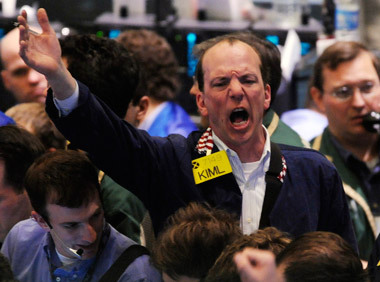
Because of the regulation, the field is dominated by buy-and-hold managers who have no real trading skill because they were never allowed to trade. Then you have exchanges closing the floor pits and going all electronic. It was the floor trading that forged the souls of traders. You could smell the blood from the screams on the floor. Today, that is reduced to just flashes of light. Actually trading with other people is who you learned to trade. Dealing Rooms were set up with everybody on one floor – not in cubicles. You heard the phones ringing on every desk when the markets were hot. It was that interaction that made great traders. Eliminating that human interaction makes me wonder if we are not losing the core of understanding markets.

MAGA Brilliant – Multidimensional Economic Policy – Trade Shift to Durables…


Go through the archives and you’ll note a strategy unfolding that few, including us, could fully conceptualize when it first appeared.  Way back when candidate Trump first began to put his economic plans into platform outlines the subtle signature was there, but few were paying attention.

In order to reverse three decades of middle-class economic erosion, there were indicators that Trump’s strategy was a radical change in approach.  In essence the strategy was to split the economic policy into two areas and sequence the policy: highly-consumable goods (first) and durable goods (second).

Both product sectors have historically been viewed and approached by economic policy makers using a single financial strategy.  That singular approach gave rise to Wall Street benefiting and Main Street suffering.  Investment-class gained; middle-class suffered.

Trump outlined an approach –albeit vaguely– that was multidimensional.

His policy would first target multinational corporations, using the U.S. Treasury (Mnuchin) to weaken their grip and influence; simultaneously, he would use energy policy to drive down domestic prices in highly-consumable products (fuel, food, energy sector).  These sectors are not measured in fed inflation indexes; however, if lowered, these facets of consumer spending can also increase the amount of disposable income available for workers.

In essence, expand the economy by lowering the aggregate cost of living for the middle-class who live paycheck-to-paycheck.  Use fiscal policy (and trade policy), to entice domestic investment and create jobs; and ultimately put upward pressure on wages.

That’s where we are now.

The second aspect of Trump economic policy is geared toward ‘durable goods’.  That’s where the trade imbalance plays a larger role in the strategy.

As the economy expands, Americans can now afford rises in the prices of durable goods.  However, as with all manufacturing systems -geared toward retaining market share inside a consumer economy (ie. the U.S. market)- the foreign creators will first seek to retain competitive pricing structure by making efficiencies within their own business models.

When foreign manufacturers entering a phase of cost-cutting analysis (note Team Trump just left Asia) you immediately hit them with stronger forecasted trade rules on their products.  The manufacturers financial analysis then has to contain the possibility of new rules.  That’s where Commerce Secretary Wilbur Ross and U.S. Trade Representative Robert Lighthizer come in:

(Story Link)

On Oct. 5, the ITC [International Trade Commission] voted unanimously in favor of Whirlpool, which brought a complaint forward accusing Samsung and LG Electronics, its South Korean competitors, of flooding U.S. markets with cheap washing machines and pricing out domestic manufacturers. While the ITC didn’t say material harm was coming from South Korea in particular, Whirlpool alleged the country’s manufacturers shifted production into other countries (Thailand and Vietnam) in order to avoid U.S. anti-dumping tariffs imposed in previous years.

The ITC’s recommendations will be sent to President Donald Trump, who will have two months to make a final decision.

This second phase is where the two economic engines: Wall Street and Main Street; begin to come into parity again.   The FED does measure the cost of durable goods in their inflation index.  Rises in durable goods are recorded in inflation indexes and fiscal policy (interest rates) is influenced accordingly.

Trump’s phase-one befuddled the FED who have been perplexed over inflation being virtually non existent.  Most of the reason for this disconnect has been the downward price pressure on (non-measured) highly-consumable goods; and static prices on (measured) durable goods.  The FED can see the economy expanding, but they cannot, or at least couldn’t until now, reconcile the lack of inflation.

Wages are growing, albeit modestly at first – but now gaining speed, as a result of economic expansion and increased employment.  This wage growth, in combination with keeping downward pressure on high-consumable prices, allows Trump to begin a series of aggressive trade policies that will slowly raise durable good prices.

The trade policy, tightly executed by Trump, Mnuchin, Ross and Lighthizer, will put increased pressure on manufacturers to make products in the U.S.  In turn this puts further demand on U.S. workers; which, in turn drives up the wages to afford the prices of durable goods as they increase.

Simultaneously, it must be remembered that every dollar removed from imports actually increases the GDP.  The value of all imported goods is deducted from the combined value of all goods and services we produce.   If we drop $1 billion in imports on Washing Machines, and simultaneously manufacture $1 billion on Washing Machines in the U.S., the U.S. GDP gains $2 billion in value.  The U.S. economy actually expands by more than $2 billion because the attached manufacturing wages are also inside the U.S.

This multi-prong approach is one of the reasons why it just doesn’t seem to be part of the strategy to keep the U.S. inside NAFTA as it currently is constructed.  Perhaps, just perhaps, the NAFTA exercise is more optical than actual.  Perhaps, it’s more about the outside world seeing the U.S. trade position as executed, than actually negotiating….

Media Ignores Key Alabama Witness Reports That Refute Roy Moore Accuser…


On top of the original story told by Gloria Allred falling apart; and on top of Allred refusing to produce the yearbook from the accuser that she highlighted as evidence; the Alabama campaign of Roy Moore has been contacted by several key witnesses who refute the story described by Gloria Allred’s client and media accuser Beverly Nelson.

Interestingly, the witnesses who have direct and specific knowledge of the events Mrs. Nelson described in 1977 already told the media her story didn’t make sense and provided specific examples that refute the claims of Mrs. Nelson.  However, after waiting to see their accounts told by the media, and seeing nothing, the witnesses realized the media was hiding them.

GADSDEN, Ala. – On Monday evening, the Moore Campaign unveiled statements from key witnesses that completely bust the story of Beverly Nelson and Gloria Allred and further reveal an unconscionable bias on the part of state and national press to hide the truth from Alabama voters who will undoubtedly see through the “fake news” and elect Judge Moore for the man that they have always known him to be.

[…]  These witnesses have shared their testimony with multiple news outlets. The outlets have failed to report.

Rhonda Ledbetter, a retired public school teacher who is currently the senior choir director at a Baptist church and teaches children at a local, church-sponsored day care center, was a waitress at Olde Hickory House for almost three years from 1977-1979. She was a college student at Jacksonville State University at the time and worked varying shifts at different times of day, multiple days a week during the time of her employment.

She said in a statement:

“When I heard Beverly Nelson’s story, there were several details that were different from what I remember. I was nervous at coming forward because of all the attention this story has gotten, but as a moral and ethical person I had to speak up about what I know to be true.

I was a waitress at Olde Hickory for almost three years from 1977-1979, and I never saw Roy Moore come in to the restaurant. Not one time. And I would have noticed because most of our customers weren’t wearing suits, especially not at night. Many customers worked at Goodyear next door and would stop in on their way to and from work, and I don’t remember anyone from the courthouse coming in at all. That just wasn’t our crowd.

“A few things stuck out to me. First, Nelson said she was 15 years old when she started working there but you had to be 16. I don’t remember her from my time there, and I don’t remember any 15-year-olds working there at all.

“Second, Nelson said the restaurant closed at 10 p.m. but I know the earliest it closed was 11, though I believe it was midnight. I’m certain of that because Goodyear employees came in to eat after their shift ended at 10:00 p.m., so there’s no way we would have closed at that time.

“Third, the area wasn’t dark and isolated as she described. Rather, the building was right off the busy four-lane highway and people and cars were always around. The restaurant had a wrap-around porch, like the ones at Cracker Barrel restaurants, and there were lights all around the sides of the building. So it wasn’t dark and anyone in the parking lot was visible from the road.

“Fourth, the dumpsters were to the side of the building, not around back and there sure wasn’t room to park in between the building and the dumpsters. People from the kitchen would take trash out of the side door and throw it right into the dumpsters. We were always told to park on the side of the building, because there just wasn’t much room behind it. I don’t remember there being an exit from the back of the parking lot, there would barely have been enough room to turn a car around.

“I came forward because from what I’ve seen, the media is only interested in reporting one side of this story. In fact, Dixon Hayes from WRBC in Birmingham asked for former employees to contact him but never responded when I told him I never saw Roy Moore come into Olde Hickory House during the three years I worked for. Two other news outlets in the state asked to interview me and I agreed, but neither one has aired my interview and I have to wonder why they don’t think the people of Alabama deserve to hear anything that counteracts the accusations against Judge Moore.

It’s not for me to say whether or not something happened, I can only tell the truth about factual details that I know for sure. I think all Alabamians deserve to have all of the facts so they can decide for themselves what the truth is. Despite what the national media and people in DC might say, Alabama voters are intelligent and have common sense. We don’t need anyone to tell us how to vote or to explain to us what really happened. We will make that decision and I just wanted to do my part in sharing the truth on some of these important facts. I, like all Alabama voters, want any and all information that can shed light on the truth.”

Johnny Belyeu, Sr. is a former police officer with over two decades of experience with the Etowah County Sheriff’s Department and the Gadsden Police Department. He said in a statement:

“I was an officer with the Etowah County Sheriff’s Department in the 1970s which means I worked in the courthouse and knew who Roy Moore was since he was the Deputy District Attorney at the time. I was a regular customer at Olde Hickory House, and I never once saw Judge Moore come in there. If he had I would have immediately recognized him. I also never met Beverly Nelson during any of the many times I frequented the restaurant, and I can’t say that she even worked there.”

Renee Schivera of Huntsville, Alabama stated:

“I was a waitress at the Olde Hickory House during the summer of 1977, before my senior year of high school. When I heard Beverly Nelson’s story the first thing that stuck out to me was that I don’t remember Roy Moore ever coming into the restaurant. I also don’t remember her working there.

The other thing that struck me as odd is that from my best recollection, the dumpsters were to the side of the building. I just know they were visible from the road, and not back behind the building. But the main thing is that if someone came in almost every night we knew who they were, and I never saw Roy Moore there. As a Christian woman, I wouldn’t lie for anyone and I am only sharing what I know because it’s the truth.”

(SOURCE)

Signed in December?  Two inks? Two different hand writings?  A signature lifted from divorce documents?…  Eye witnesses refuting the accusations….

It is clear from a simple review of the inscription that two inks were used, and two different types of handwriting appear present.

Providing further evidence toward Moore’s defense, he notes the “DA” following the signature are specifically the same as the divorce documents he signed for Mrs. Nelson in 1999 (see below):

The “D.A.” does not stand for District Attorney, it stands for “Delbra Adams”, Judge Moore’s former assistant who started working for him in 1987, ten years after the “DA” which appears in Mrs. Nelson’s yearbook.

The evidence showing Beverly Nelson and Gloria Allred manufactured the yearbook as support for a thinly veiled political hit and scurrilous claim seems overwhelming and presumably that’s why she is refusing to allow independent inspection.

In addition to being a dubious lawyer with a career containing several fraudulent claims against republican political opposition (ex. Herman Cain and Donald Trump), Gloria Allred is also a DNC delegate political activist.

NAFTA Round #5 Reaches Impasse on Critical Auto Sector – Canada/Mexico Balk At Rules of Origin…


$64 billion of the current annual trade deficit with Mexico stems from the auto sector alone.

For over a decade auto manufacturers have moved to Mexico in order to import parts from Asia, assemble and install them, and then ship the completed cars into the U.S. through NAFTA without duties (tariffs).

The U.S. auto ancillary business groups (parts suppliers) have been pushed out of competition in the auto sector by this corporate profit strategy.  Thousands of U.S. jobs have been lost in both the plant assembly and the ‘auto-parts’ manufacturing sector.

CTH has called attention to this bastardized supply chain for years.  Foreign auto-parts, made by foreign workers, assembled into U.S. owned manufacturing, and sold as U.S. automobiles. The weird supply chain and assembly process is essentially a multinational corporate scheme (in the auto sector) which exploits one of the loopholes in the 25-year-old NAFTA agreement.

If the assembly plant was on U.S. soil the foreign (mostly Asian) parts would be taxed as imported parts.  However, so long as the assembly is in Mexico (or Canada), the origin of the parts is currently irrelevant, and the finished automobile crosses the border into the U.S. avoiding the taxes using NAFTA.

Keep in mind, the auto manufacturing sector, not just U.S. assembly plants but also European auto-makers, have made capital investments into Mexico, based on this NAFTA loophole as part of their business model. They don’t want this cost/profit plan disrupted.

Along comes U.S. Trade Rep. Robert Lighthizer and U.S. Commerce Secretary Wilbur Ross and say: NO MORE.

If you are going to consider it a North American Free Trade Agreement vehicle,  then an established percentage of that vehicle should actually have to come from North America; just as importantly, that percentage should be high.

That’s the basic argument behind the “rules of origin” part of NAFTA. If you are going to call it a “North American vehicle”, then the parts should come from North America.  Makes rational sense, no?

The U.S.A. position is that half of content for ‘American-built’ autos should be produced in the United States; and the regional (NAFTA) vehicle part content requirement should be increased to 85 percent from the current 62.5 percent.

Mexico and Canada do not want rules of origin because they want to use their workers to assemble vehicle parts from other nations and sell into the U.S. as “American Autos”.  They correctly fear that if American cars must actually contain American content, and be assembled by actual Americans, then the American Auto-Manufacturers will move their auto plants to America.

The auto-industry, who have invested tens-of-millions in the current scheme, wants to keep the entire source of origination a hidden secret from the public.  They are not too keen on American consumers finding out that Japanese, Chinese, Indonesian, Korean and Vietnamese parts are actually behind the American badges.

Additionally, the European Auto-Manufacturers who are also building in Mexico and Canada don’t want to lose the NAFTA loophole that lets them assemble outside the U.S. and get their vehicles into the American market.

The current system employs lots of Mexican and Canadian workers who assemble foreign parts into American vehicles that are then sold into the U.S. as “American Cars”.

If “rules of origin” are forced upon them, there’s no incentive -beyond labor- for the U.S. auto corporations to continue making cars in Mexico and/or Canada.  Simultaneously, the vast majority of the assembly is now automated (with human assistance), so the labor costs are currently smaller as a percentage of the overall cost of manufacturing.

Automation and modern efficiencies in human assisted robotics mean the labor cost incentive is not as valuable as it once was for manufacturing.  In the modern auto-era it’s the quest for cheaper parts that is now driving the business model; hence, the “rules of origin” exploitation.

MEXICO CITY (Reuters) – Canada and Mexico will rebuff the United States over its demand for tougher NAFTA automotive content rules, top officials said on Monday as negotiations to renew the treaty bogged down with only a few months to go.

[…]  Canadian and Mexican negotiators will address the U.S. auto demands on Tuesday, the final day of the fifth round of talks to update the North American Free Trade Agreement, chief Mexican negotiator Ken Smith told reporters.

Although the talks are due to wrap up in March 2018 after a seventh and final round, they are deadlocked over a series of hard-line proposals the United States unveiled at the fourth round last month.

“It’s definitely slowed down from the previous round,” said a Canadian source with direct knowledge of the talks. “There has been no progress in the contentious chapters.”

Canadian and Mexican officials have complained repeatedly about what they see as U.S. inflexibility. A spokeswoman for the U.S. Trade Representative declined to comment.

Mexico and Canada fear Trump will follow through on a promise to pull out of NAFTA, causing disruption and economic damage. The Canadian dollar edged lower against its U.S. counterpart on Monday, in part because of concerns about the negotiations. (read more)

This is where we must fight the lobbyists.

You must remain engaged and understanding of the issues within these and other trade disputes.  President Trump is wearing the bullet-proof vest, but you must engage your congressman to let him/her know you support the administration and their objectives in these Trade deals.

Your congressional representative is being lured with millions of millions of dollars from lobbyists who work for the multinational corporations.  They will try to retain their financial position.  YOU must educate yourself and your family on these issues.

Together we must engage and fight.  This is the president we have been waiting for.  Don’t expect he can do this on his own.  Make your voice heard.