Kaja Kallas displayed her incompetence as she is conflicted by personal hatred of Russians. Despite her catastrophic meeting with China’s High Commissioner for Foreign Relations, she tried to lecture him about EU values and democracy when neither she nor Ursula had been elected. She then demanded that China submit to the rules-based order of the EU and unimaginably demanded that China condemn Russia’s military operation in Ukraine, cease providing support, and use its influence to tell Putin to surrender and stop Russia’s advance westward.
Wang Yi respectfully stated that China was not helping Russia in the conflict with Ukraine. He added that he had no intention of interfering in that conflict. Moreover, he bluntly informed Kallas that China had no intention of standing idly by and watching Russia lose. He stated that China believes that if Russia were defeated, the EU and NATO would turn on China next. It was reported that observers never saw Wang Yi so angry at the arrogance of Kallas.
As Sun Tzu said, you must know your enemy and yourself to be able to succeed. If you do not know either, you will be defeated. Here, Lavrov and he view from a speech just the other day, the Russian interpretation of what is truly going on.
Posted originally on CTH on July 29, 2025 | Sundance
The reality of the U.S-Canada economic relationship and the position of President Donald Trump is not that difficult to understand if you take all the disparate datapoints and quotes from Trump and put them into context.
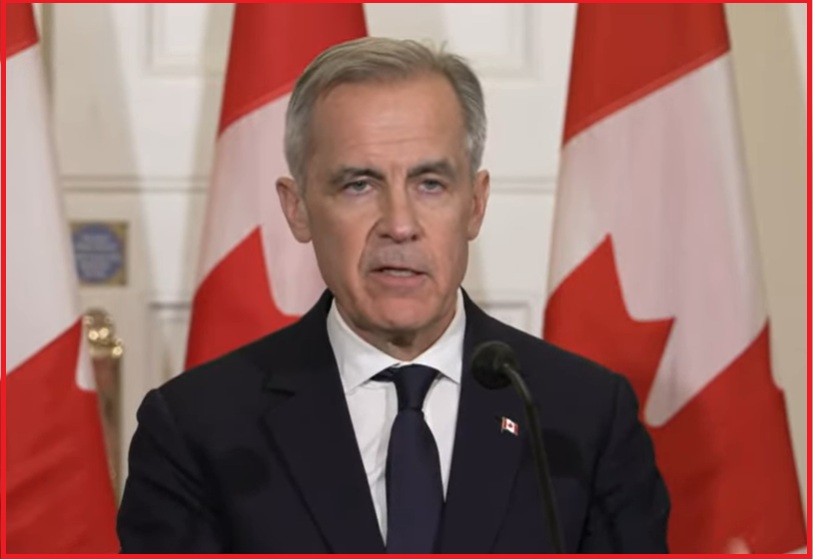
During a White House meeting with Mark Carney, President Trump essentially told the Canadian Prime Minister why he was in no hurry to get to a deal with Canada.
The 35% tariffs on non-USMCA goods are going to trigger on August 1st, because the main priority of Trump -looking toward Canada- is to dissolve the USMCA.
During the May 6th oval office meeting with Carney, President Trump was discussing the USMCA and said: “As you know it terminates fairly shortly. It gets renegotiated fairly shortly.” … “This was a transitional deal, and we’ll see what happens, we’re going to start renegotiating that” … “I don’t know if it serves a purpose anymore.” …. “And the biggest purpose it served was, we got rid of NAFTA.”
To understand why President Trump wants to dissolve the USMCA {SEE HERE}. To understand the technical value of dissolving the USMCA {SEE HERE}. It’s not a complicated economic analysis; it’s common sense.
Currently, approximately 60% of the traded goods and services between the U.S. and Canada are covered by the USMCA; the remaining 40% will be hit by tariffs on August 1st at a 35% rate.
When the USMCA is renegotiated, predictably dissolved in favor of two bilateral trade agreements – one for Mexico and one for Canada, all of the U.S-Canada trade sectors will be part of the enlarged free trade negotiation. As a result, there is absolutely no motive to engage in trade discussions now.
♦ President Trump’s position is essentially to talk about the details when the USMCA is dissolved; hence, the ambivalence.
Politico is noting the Canadian trade team simply doesn’t understand this. “[D]espite months of back and forth, the terms for a deal have not yet been set, a senior government source said, with the White House informing the Canadian side that Trump is more focused on securing deals with other partners like India.”
(Politico cont..) […] Earlier this month, Canada conceded that any deal with Trump is likely to include tariffs.
Carney’s government wants stability around the tariffs Trump invoked using Section 232 of the Trade Expansion Act.
They are crushing Canada’s auto, steel, aluminum and forestry industries. Trump also plans to hit imported copper with 50 percent tariffs starting Aug. 1 — with semiconductor and pharmaceutical imports likely to follow.
Canada ultimately wants the tariffs eliminated or lowered to a fixed level that doesn’t fluctuate, the senior government official said. “If we know what world we’re going into, then we can have better plans and policies to attract investment.”
Canada’s premiers say the unpredictability is punishing the economy.
“Private investment is not growing because everybody’s on pause,” Quebec Premier François Legault told reporters last week. “They are waiting to see what will happen. I’ve been in business — it’s about the worst thing you can have is uncertainty.” (read more)
The certainty the Canadians are looking for can be found easily if they stop pretending.
(1) U.S. tariffs against non-USMCA products from Canada will go into effect on August 1st. (2) As soon as the USMCA is reopened, it will be dissolved. (3) After the USMCA dissolution, a bilateral free trade agreement between the USA and Canada will be negotiated.
Every current effort by Canada to change the nature of the trade system, between now and the reopening of the USMCA (to dissolve it), is futile.
Again, I’m not exactly sure why this reality is so challenging for the Canadian govt to understand.
Posted originally on Jul 28, 2025 by Martin Armstrong
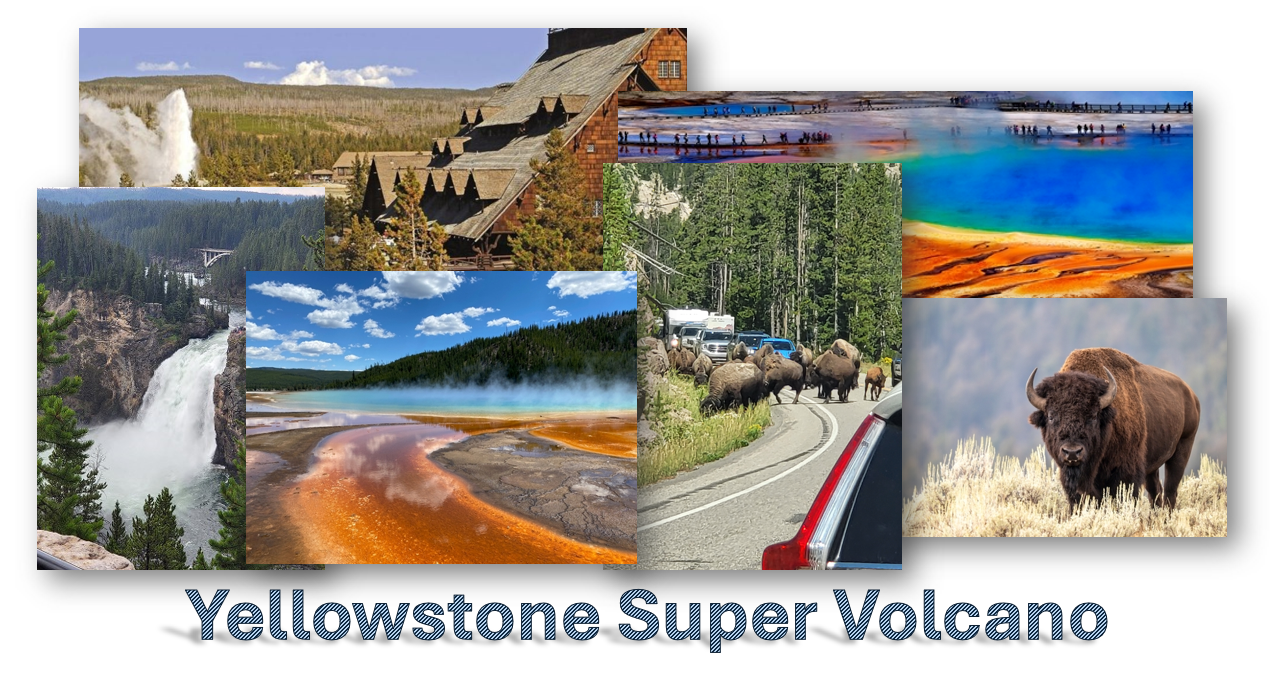
According to the United States Geological Survey (USGS), a supervolcano is any volcanic center that has explosively erupted at least 1,000 cubic kilometers (240 cubic miles) of fresh volcanic material in a sudden, violent manner. Yellowstone is a supervolcano, one of the largest and most active volcanic systems in the world. It has produced some of the most massive eruptions in Earth’s history. The Yellowstone Caldera was formed by a series of catastrophic supereruptions over the past 2.1 million years.
Huckleberry Ridge Eruption (2.1 million years ago) was one of the largest volcanic eruptions ever recorded. It ejected about 2,450 cubic kilometers of material. It managed to form the Island Park Caldera (the first Yellowstone caldera).
Then there was the Mesa Falls Eruption (1.3 million years ago). This was a smaller but still massive eruption that ejected about 280 cubic kilometers of material. That created the Henry’s Fork Caldera.
Then came the Lava Creek Eruption (approximately 640,000 years ago). This was the most recent supereruption, ejecting approximately 1,000 cubic kilometers of material, which formed the Yellowstone Caldera (approximately 30 x 45 miles wide).
Based on these estimates, the cycle of a supervolcano would be about 486,000 years. I would suspect the real number may be 430,000 since this Pi frequency governs the universe. The precession of the Equinoxes is approximately 25,800 years, which is 3 times 8,600 years.
The volcanic activity is never confined to a single volcano. They correlate to activity. Yes, there were significant volcanic eruptions between 150 AD and 200 AD. One of the most notable was the 186 AD eruption of Lake Taupō (New Zealand), also known as the Hatepe eruption. That was a big one, VEI 7, one of the most powerful eruptions in the last 5,000 years. This produced massive pyroclastic flows and ashfall that caused global climatic effects and a volcanic winter. The Chinese recorded red sunsets and Roman texts around this time. Of course, Mount Vesuvius (Italy) made its famous 79 AD eruption, and Vesuvius remained active, with possibly more minor eruptions around this time of 150AD.
In more modern times, Yellowstone has experienced smaller eruptions and lava flows, with the most recent one occurring approximately 70,000 years ago. A massive reservoir of molten rock currently lies beneath Yellowstone, fueling its geysers and hot springs. The volcano is perhaps overdue for an eruption. If it erupted, it could be catastrophic (global climate effects, ash fallout), but the most likely activity would be smaller lava flows.
The supervolcano eruptions were the Yellowstone Lava Creek eruption (USA, ~640,000 years ago), which ejected about 1,000 km of material, and the Youngest Toba eruption (Indonesia, 74,000 years ago), which ejected about 2,800 km of material. The most recent supereruption (defined as ejecting at least 1,000 cubic kilometers of volcanic material) was the Oruanui eruption of Taupō Volcano in New Zealand about 26,500 years ago (during the Last Glacial Maximum). That ejected approximately 1,170 km (280 cubic miles) of material and had a VEI of 8 (Volcanic Explosivity Index).
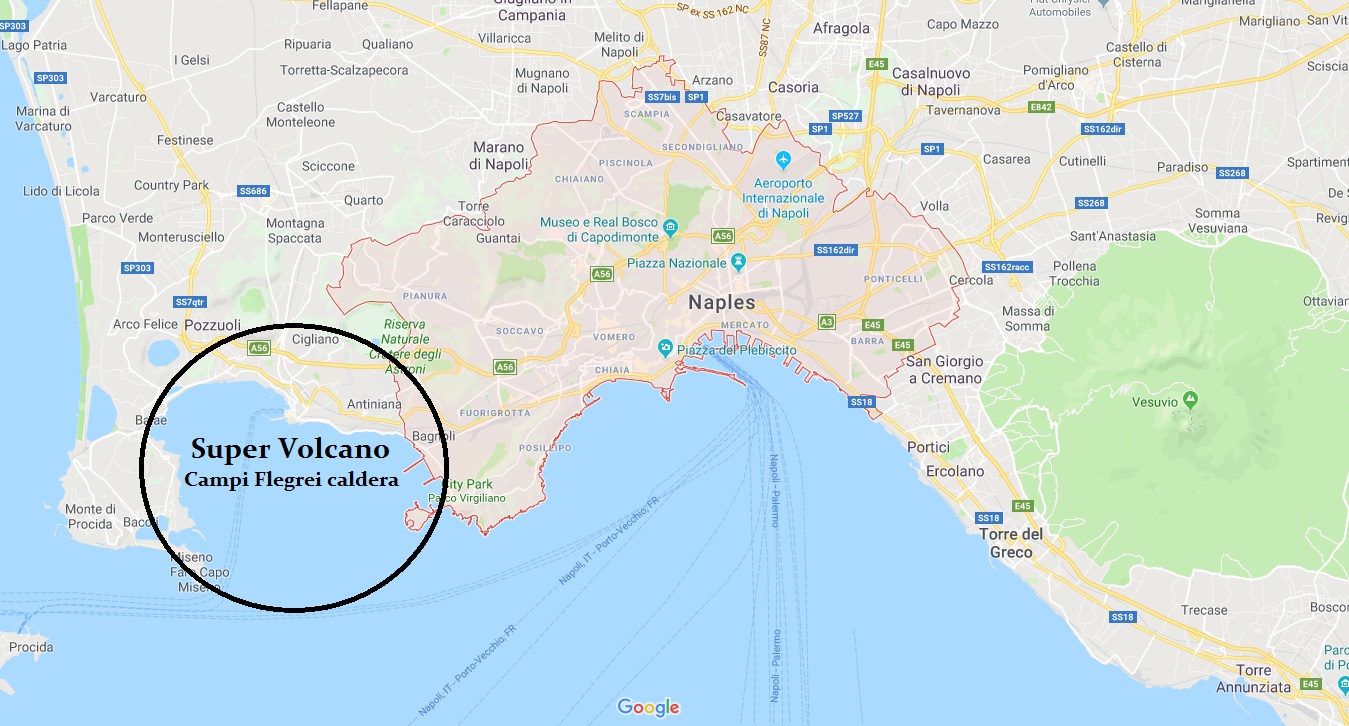
There are several supervolcanoes around the world, and perhaps the most recent one to erupt was in Italy. The term “supervolcano” has been popularized by the BBC and the Discovery Channel’s 2005 story on Yellowstone. Campi Flegrei qualifies as a supervolcano due to its past eruptions exceeding 1,000 km³ of ejecta (when combining its largest events). Currently, Italy’s Campi Flegrei volcano has been showing signs for the first time in nearly 400 years that it is still active and capable of causing significant disruption, potentially affecting a large number of people. It is one of the most dangerous, given its proximity to the population. Campi Flegrei is experiencing heightened activity, including increased seismic activity and ground uplift. Scientists are closely monitoring the situation due to the potential for phreatic (steam-driven) explosions and the region’s history of volcanic activity.
Aside from Yellowstone, the largest volcanic eruption in the Northern Hemisphere in the past 100,000 years has been attributed to a Supervolcano, which erupted some 39,400 years ago in what is known as the Phlegraean Fields near Naples, Italy. This has been documented from several sources. The ashes from this eruption were dispersed over the entire eastern Mediterranean and as far as central Russia. This was a huge event that also triggered a Volcanic Winter, and that is the worst thing for the rest of the world, which resides at a safe distance from the actual Supervolcano.
Naples, Italy, is situated near the Campi Flegrei (Phlegraean Fields), a vast volcanic region that encompasses a supervolcano. While not a single mountain-like volcano, Campi Flegrei is an enormous caldera system formed by massive eruptions. Campi Flegrei is still active and considered one of the world’s most dangerous volcanoes.
The Campanian Ignimbrite Eruption (39,000 years ago) is one of the most significant volcanic eruptions in European history. This resulted in a volcanic winter. This most likely impacted Neanderthal populations and early modern humans. This may have even contributed to the extinction of the Neanderthals around 40,000 years ago. Perhaps their loss in numbers allowed the arrival of modern humans in Europe. Neanderthal-derived DNA has been identified in the genomes of most contemporary populations, with notable variations by region. It accounts for 1–4% of modern genomes for people outside Sub-Saharan Africa. This suggests that perhaps the survivors did interbreed with modern humans, suddenly, due to a volcanic eruption. Who knows, if Yellowstone erupts, the survivors may witness interbreeding between Democrats and Republicans – something unthinkable today.
We then see the Neapolitan Yellow Tuff Eruption (15,000 years ago), which was smaller but still significant eruption (40 km of material). That one formed much of the volcanic landscape around Naples.
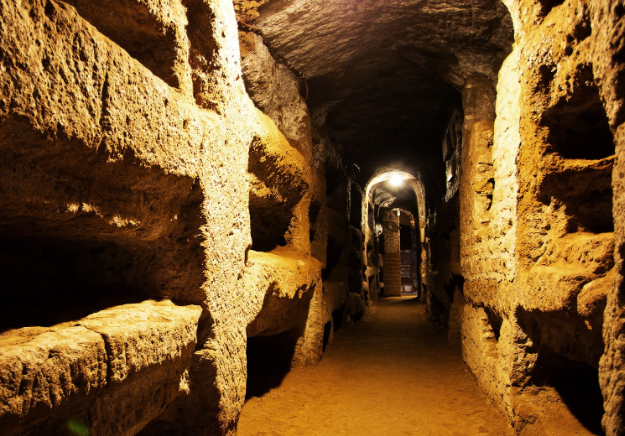
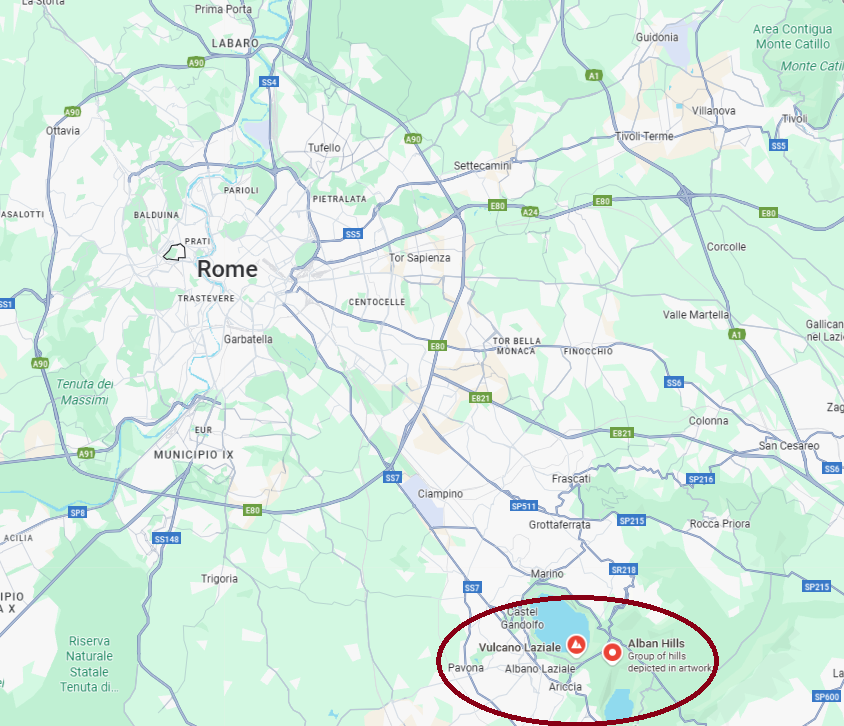
Anyone who has visited the catacombs in Rome will notice that they are carved out of tuff, a soft type of rock formed from consolidated volcanic ash. This material comes from ancient volcanic eruptions in the region, particularly from the Alban Hills volcanic complex (Colli Albani), located southeast of Rome. The most significant eruption responsible for the tuff used in Roman catacombs and other ancient constructions is believed to be the Pozzolane Rosse eruption, which occurred around 456,000 years ago.
The Pozzolane Rosse eruption was a volcanic event associated with the Colli Albani (Alban Hills) volcanic complex, located about 20 km southeast of Rome, Italy. A distinctive red-brown pyroclastic deposit (ignimbrite) that covers parts of Rome and its surroundings. The Romans later used the material as pozzolana, a key ingredient in hydraulic cement.
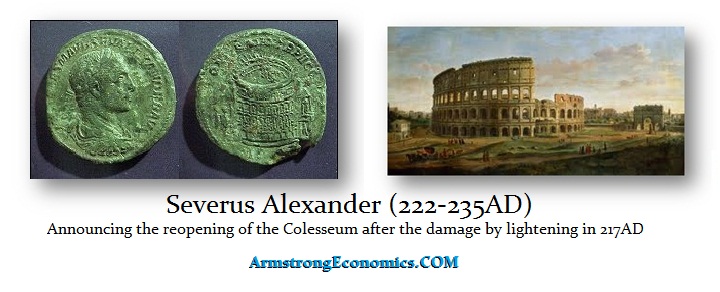
The ancient Romans were pioneers in developing concrete, utilizing volcanic materials to make it exceptionally durable. Their concrete, known as opus caementicium, was a key factor in the longevity of Roman structures, such as the Pantheon, Colosseum, and aqueducts, many of which still stand today.
The Romans mixed:
Lime (from heating limestone)
Volcanic ash (from regions like Pozzuoli, near Mount Vesuvius)
Water
Aggregates (rocks, broken pottery, or brick)
This combination created a pozzolanic reaction, forming a strong, water-resistant binder. The volcanic ash (called pozzolana) reacted with lime to produce a cement that even hardened underwater—crucial for Roman harbors and bridges. Cracks could “re-seal” due to ongoing chemical reactions with water. However, it was this invention of concrete that is the reason their structures have lasted 2,000+ years. Modern concrete often degrades in decades and is unmatched by the Roman formulas.
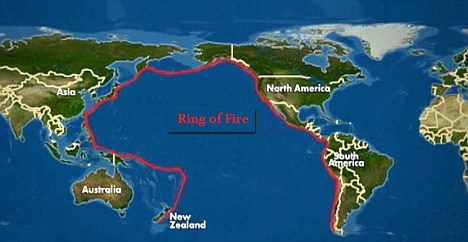
When we correlate all the data, what is striking is that approximately 90% of the world’s earthquakes, including most of the world’s largest earthquakes, occur along the Ring of Fire. I have personally experienced it in Vancouver, Tokyo, Australia, and New Zealand, all on one trip. It seemed to be following me with the first one hitting in Toronto. The Ring of Fire is home to 75% of the world’s volcanoes and 90% of its earthquakes. We’re talking about a massive 24,900-mile horseshoe-shaped zone that basically wraps around the Pacific Ocean like a geological death grip. In 2024, a total of 1,374 earthquakes with a magnitude of 5+ or more were recorded worldwide as of December that year.
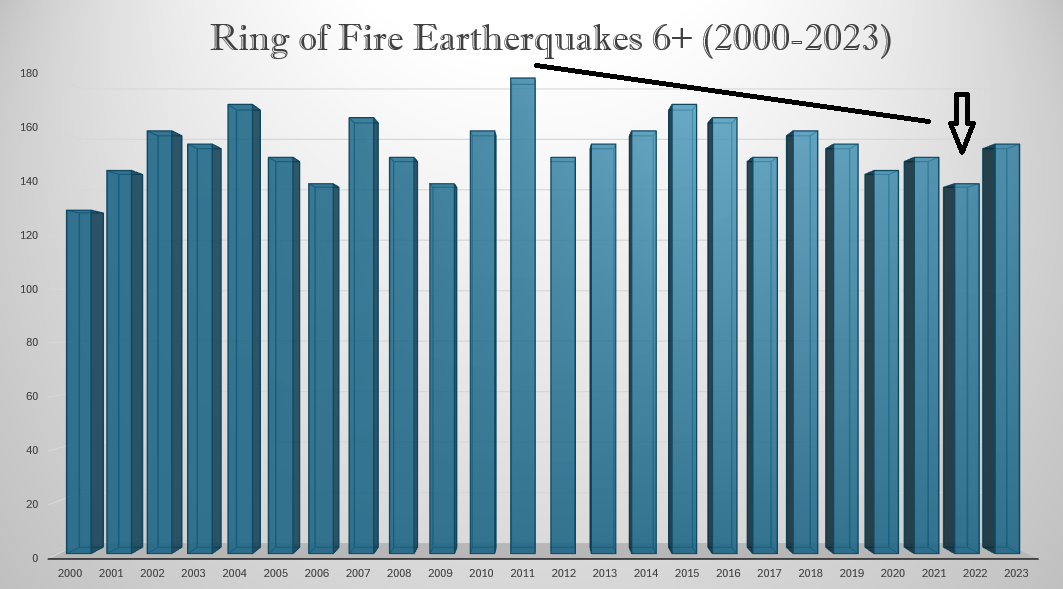
Running that through Socrates revealed a cycle low was due in 2022 following the major high in 2011. This filtered it down to earthquakes that were 6.0 or higher. There were the 2004 (Sumatra M9.1), 2011 (Japan M9.0), and 2010 (Chile M8.8), which all saw spikes due to mega-thrust earthquakes.
The Ring of Fire typically experiences 150–170 M6.0+ quakes annually. The Deadliest Events were as follows:
2004 Indian Ocean Tsunami (M9.1) – 230,000 deaths.
2011 Tohoku Earthquake (M9.0) – 16,000 deaths.
2010 Chile Earthquake (M8.8) – 500 deaths.
We observed slightly lower activity in 2022, but large quakes still occurred (e.g., the 2021 Alaska M8.2 earthquake). (Data Sources: USGS Earthquake Catalog (USGS.gov))
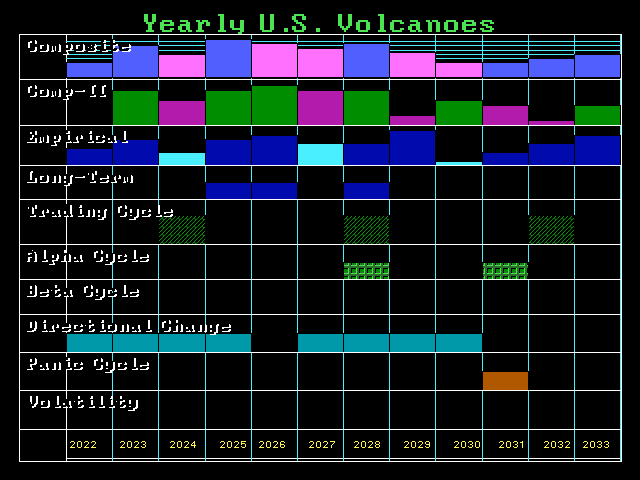
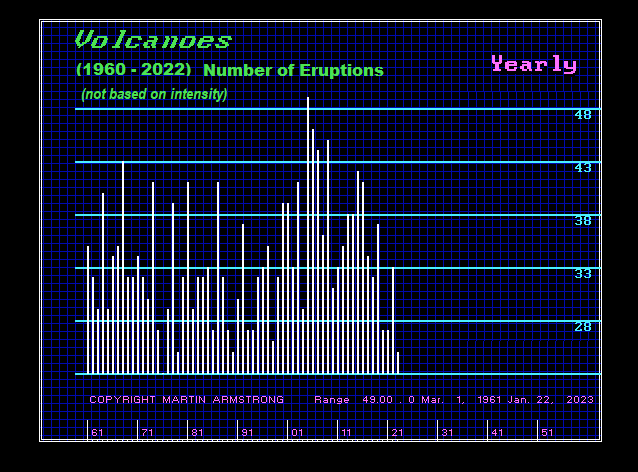
We warned back in 2022 that we had a string of Directional Changes between 2022 and 2025. We may be looking at rising volcanic activity into 2025. Our computer has identified a rise in volcanic activity during solar minima, which then produces more gamma rays that tend to penetrate the Earth’s surface. This current Solar Wave 25, which our model still shows ideally should peak perhaps here in July, then from here on out we will see a move into 2028/2029 for solar minimum. We are witnessing large ejection flares from the sun that were greater than most expected.
Initial predictions suggested a relatively weak maximum around July 2025. However, observed activity has been significantly stronger than predicted. Sunspot numbers, solar flares, and coronal mass ejections (CMEs) have consistently exceeded forecasts. Based on this intense activity, the peak (maximum) is now expected sooner and potentially higher than initially thought. The Sun has been very active recently, with frequent sunspot groups, powerful solar flares (including numerous X-class flares), and significant geomagnetic storms causing widespread auroras (even at unusually low latitudes) in May 2024.
What we must understand about cycles is that, given our entry into this high in July 2025, we have witnessed much higher volatility than expected. This suggests that, as we turn back down into solar minimum, ideally reaching the bottom of the ECM in 2028 or early 2029, the resulting decline should be lower than expected. Whenever you rise with greater volatility, it is like a market that crashes harder. That said, if we are to experience a similar event to the Sun falling into a Maunder-minimum-like (inactive) state (1645-1715), which created the mini-Ice Age, it appears that we must be concerned, as it has been 309.6 years since that event in general. If we observe an equally violent contraction, then we should expect greater activity from the Ring of Fire, and that 2022 marked a significant low in earthquakes.
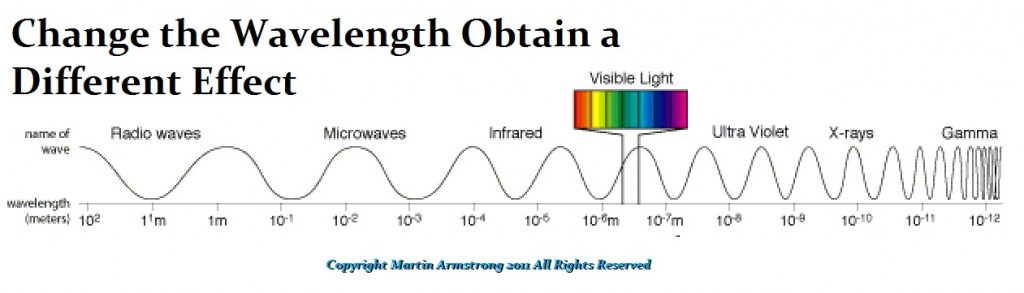
Solar Minima appear to be occurring close to a 309.6-year cycle. There have been many studies on the impact of UV and gamma radiation during solar changes and events. Gamma rays are a form of electromagnetic radiation, as are radio waves, infrared radiation, ultraviolet radiation, X-rays, and microwaves. Gamma rays can be used to treat cancer, and astronomers study gamma-ray bursts. What becomes concerning is the potential for a pole shift. The poles on the sun shift every 11 years, meaning it takes 22 years to complete the cycle. The Moon does not have a global magnetic field today, so it doesn’t experience regular pole shifts like the Sun or Earth.
My concern on a correlation basis is that what we do know is that the Earth’s magnetic field has been weakening over the past 160+ years (by about 9% per century since 1840). Then there is the South Atlantic Anomaly (a region over the Atlantic where the field is unusually weak), which some scientists suggest could be an early sign of instability, and this is growing. Studies of past reversals (like the Laschamps Excursion, 41,000 years ago) show that field strength drops significantly before a reversal.
It appears that as the field weakens, this should result in greater volatility in volcanic activity as we enter solar minimum. That raises the risk of a catastrophic volcanic winter period after 2029, which would extend into our computer target for 2032. This is why I suggest that you should have 2 years of food in reserve. What correlates with all of this is the disease cycle. Plagues follow volcanic winters for food production declines, and as malnutrition rises, so does disease.
I believe that people prefer to assume uniformity rather than a catastrophe. When people raise the question of a pole shift, they write it off as a Y2K Alarm Bell and thus a conspiracy theory. A stalagmite-based paleomagnetic record of the post-Blake excursion reveals that repeated polarity drifts have occurred during periods of low geomagnetic field intensity, approximately 100,000 years before present, around the time of the Naples Supervolcano eruption. One surprisingly abrupt centennial reversal transition occurred in 144,000 years, providing unprecedented evidence that raises fundamental questions about the speed of geomagnetic field shifts. Such rapid polarity changes could severely affect satellites and human society in the future if the current geomagnetic field intensity continues to decrease.
We have a pole shift, climate change, and volcanic eruptions seem to be interlinked on a correlated basis. Our correlation models have indicated that this is something that warrants further investigation. For the first time, laying out this record yields a single geological archive, establishing a precise chronological order. These types of events can occur, perhaps even instantly. Scientists for decades argued that such earth changes were slow, gradual events. Then the discovery of the frozen woolly rhinos and mammoths ignited the Enlightenment era.
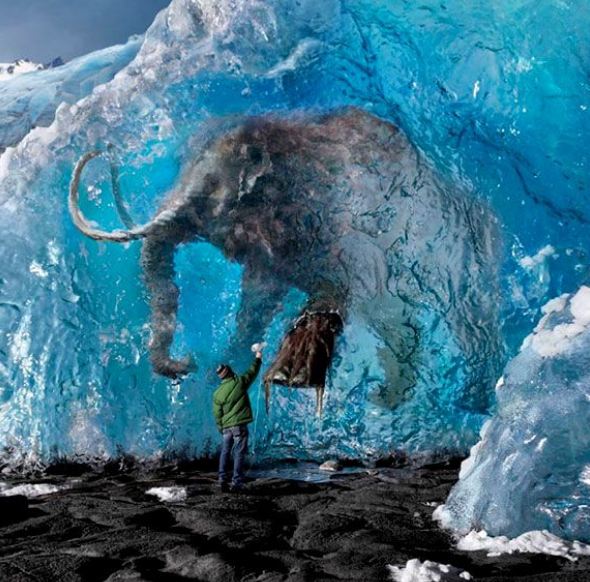
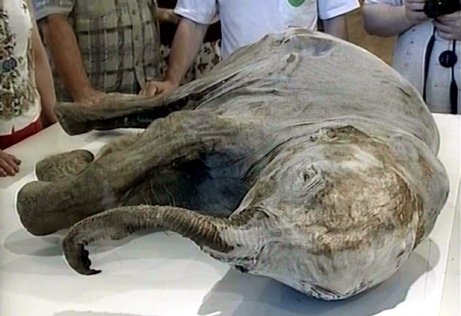
The discovery of frozen woolly mammoths with food still in their stomachs is one of the most fascinating pieces of evidence supporting the idea that a sudden, catastrophic climate shift in the past may be the norm, not the exception. Many mammoths (like the famous Beresovka mammoth) were found with undigested food in their stomachs and mouths, including grasses, buttercups, and other temperate plants. This suggests they died suddenly, with no time to digest their last meal. Some specimens were so well-preserved that their flesh was still edible when discovered.
The traditional gradual ice-age theory cannot explain how mammoths froze so quickly that their stomach contents remained intact. A sudden, extreme drop in temperature possibly due to a cosmic impact, volcanic activity, or a geomagnetic shift. Some have suggested that there was massive flooding or mudslides from melting permafrost or glacial outbursts that buried them rapidly before scavengers could decompose them. A pole shift or rapid climate change could cause Arctic regions to freeze almost instantly. This is the catastrophic view of panic-like cycles in a sudden market crash versus the uniform belief that the government can control the economy. Mainstream science often favors slow climate change, but the frozen mammoths suggest a rapid, catastrophic event was the outcome. This Gradialism/Uniformity view vs Catastrophism simply does not hold up with the evidence and is more like Marx and Keynes, who defy the business cycle and argued that government can control the economy and lead us to the land of utopian economics.
The Younger Dryas Impact Hypothesis (around 12,800 years ago) suggests a comet impact triggered abrupt cooling, possibly explaining the mammoths’ sudden demise. But would a comet spark instant cold to freeze the mammoths before they swallowed their meal? The frozen mammoths with food in their stomachs indicate a near-instantaneous freezing event, challenging the idea of slow climate change. Whether due to a pole shift, cosmic impact, or another catastrophic event, these findings suggest that Earth’s past may have experienced abrupt, violent changes rather than gradual processes.
Consequently, the discovery of the frozen mammoth in 1787 following the woolly rhinoceros in 1772 sparked the imagination that truly contributed to the “Age of Enlightenment” where there was a burst of knowledge erupting in every field of inquisition. Such finds of frozen mammoths in Siberia continue to this day. This has challenged theories on both sides of the debate to explain how such catastrophic events can occur. These frozen animals in Siberia suggest strange events are possible. This is what sparked the entire consideration that perhaps cycles existed in nature, as well as in economies and societies.
Posted originally on CTH on July 22, 2025 | Sundance
I’ll repeat it as much as needed, until it sinks in.
The U.S-Canada trade deal status is simply a no-brainer. President Trump will answer questions about Canada and tariffs, he’ll put people into seats to discuss trade with the Canadian delegation, and he’ll give every outward appearance of being favorable to Prime Minister Mark Carney…. BUT…
In the background, Trump is simply waiting for the USMCA timeline to trigger a renegotiation. President Donald Trump is ambivalent to the trade partnership with Canada. This moot-status reality is why there’s no substantive engagement.
‘No deal’ -until USMCA redo- is a win for President Trump.
For some bizarre reason that I simply cannot fathom, almost every Canadian politician seems entirely oblivious to this reality. Instead, Canadian Trade Minister Dominic LeBlanc and Mark Carney’s chief-of-staff, Marc-André Blanchard are once again coming to DC to ride their bicycles in slow circles at the bottom of the White House driveway while staring in the windows.
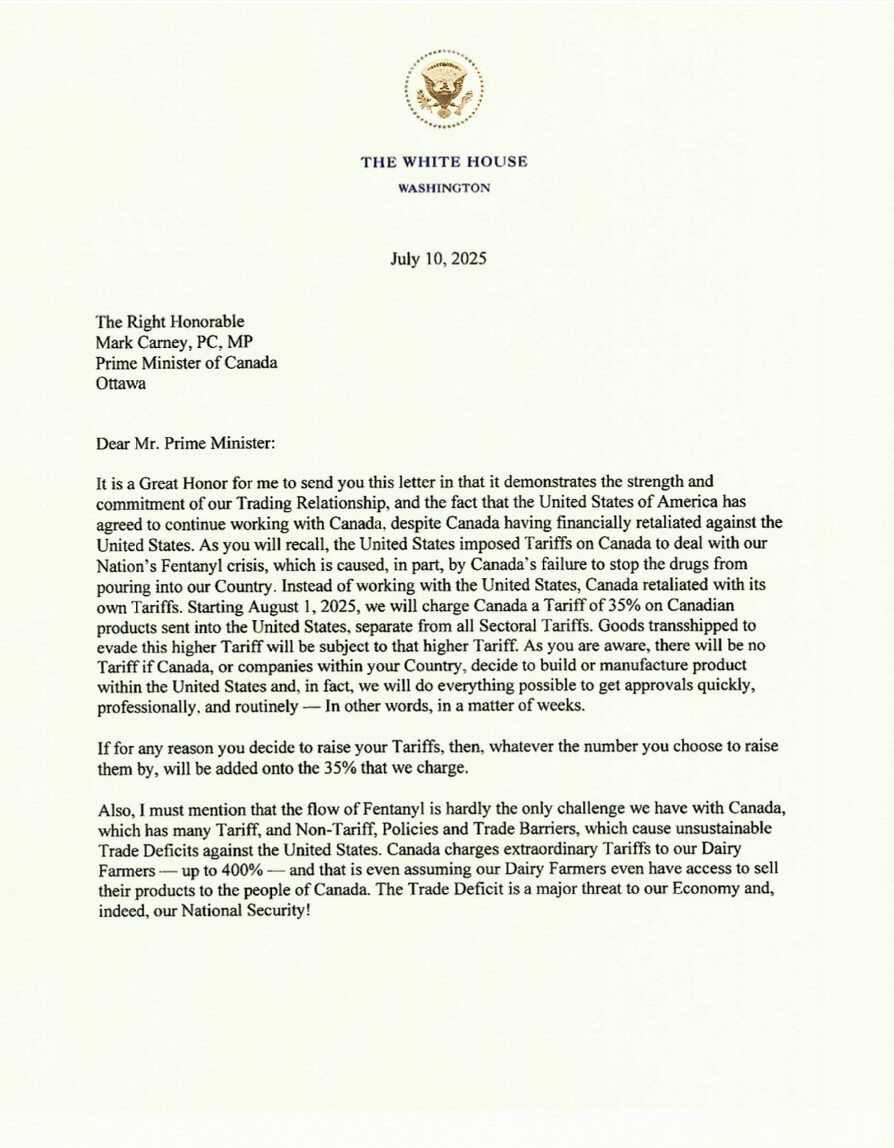
An article in Politico notes the Canadian premiers are now accepting the August 1st deadline will pass without any agreement, and the 35% reciprocal tariffs on non-USMCA products (meaning a lot of stuff) is going to trigger.
Literally, everything from Canada that has a non-USMCA component is going to be tariffed. Think about all the stuff from China, Asia (writ large) and Europe that Canada assembles for finished goods. All of that stuff will be subject to the tariffs.
That said, there’s good news coming from the recent meeting between Prime Minister Carney and the Premiers. Within their statement they use the term “developing large infrastructure projects.” That’s Canadian political codespeak for them realizing they are going to have to get back to regular energy development, raw material use/refinement and ACTUAL MANUFACTURING.
Canada is going to have to bring back their ‘dirty’ industrial jobs.
For our Treehouse friends in Canada, this is very good news. The Canadian assembly economic model has to change in order to get compliant with U.S. trade rules. THAT’S TRUMP’S ENTIRE POINT!
The environmentalists within Canada will not like this, but economically they will have no choice; it’s the only way to avoid a complete economic depression.
HUNTSVILLE, Ontario — Prime Minister Mark Carney and Canada’s premiers are tempering expectations that they’ll strike a new economic and security deal with Donald Trump by the end of the month.
“We would like to have the ideal deal, as fast as possible. But what can we get?” Quebec Premier François Legault said Tuesday. “You almost need to ask Donald Trump, and I’m not even sure he knows himself what he wants.”
It’s a shift in tone from the premiers and Carney, who ran for election on his economic record, arguing he’d be the best person to negotiate with the president. But Canada is finding it harder than it looks.
Carney met the premiers in Muskoka, cottage country north of Toronto, to update them on Canada-U.S. negotiations.
As the leaders emerged from a three-hour meeting, they downplayed hopes of an Aug. 1 deal, arguing that achieving a “good deal” is more important than hitting a deadline.
[…] As the negotiations continue, the premiers spent Tuesday carving out a strategy to offset the economic impact of Trump’s tariffs on the aluminum, steel, auto and lumber sector. They spoke about developing large infrastructure projects, breaking down trade barriers between provinces and encouraging a “buy Canadian” approach. (READ MORE)
Canada is going to go into a deep economic recession; there’s no way to avoid it. However, if they restart their industrial base, drop the ridiculous ‘green’ energy stuff, start exploiting their own natural resources and train an apprentice generation -just like we are trying to do- then Canada can bounce back stronger than ever.
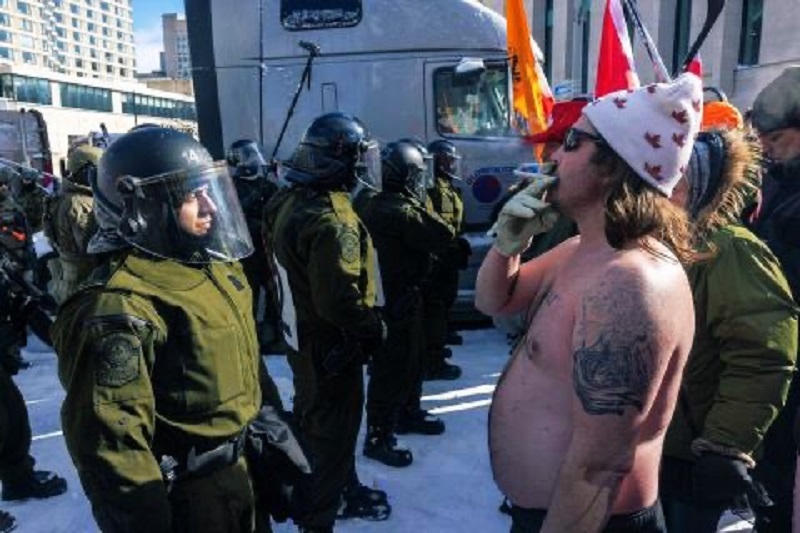
We know there are Canadian wolverines who understand this concept; we saw thousands of them in the Truckers’ vaccine strike. Make Canada Great Again, by Making Dirty Jobs Great Again, eh?
Posted originally on CTH on July 21, 2025 | Sundance
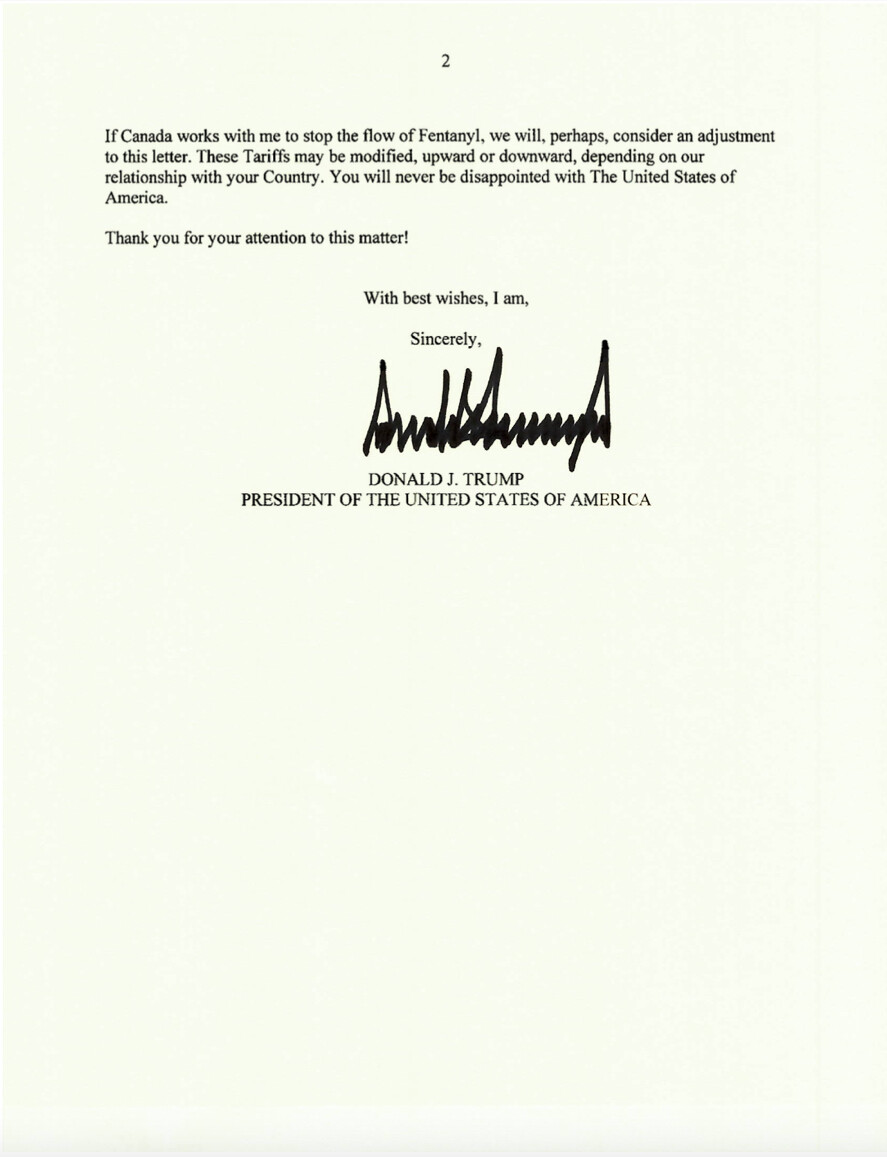
In 2018, Canadian Prime Minister Justin Trudeau relied heavily on House Speaker Nancy Pelosi for assistance when the U.S. and Mexico constructed the majority of the USMCA trade pact. Today, Canadian Prime Minister Mark Carney takes the same approach.
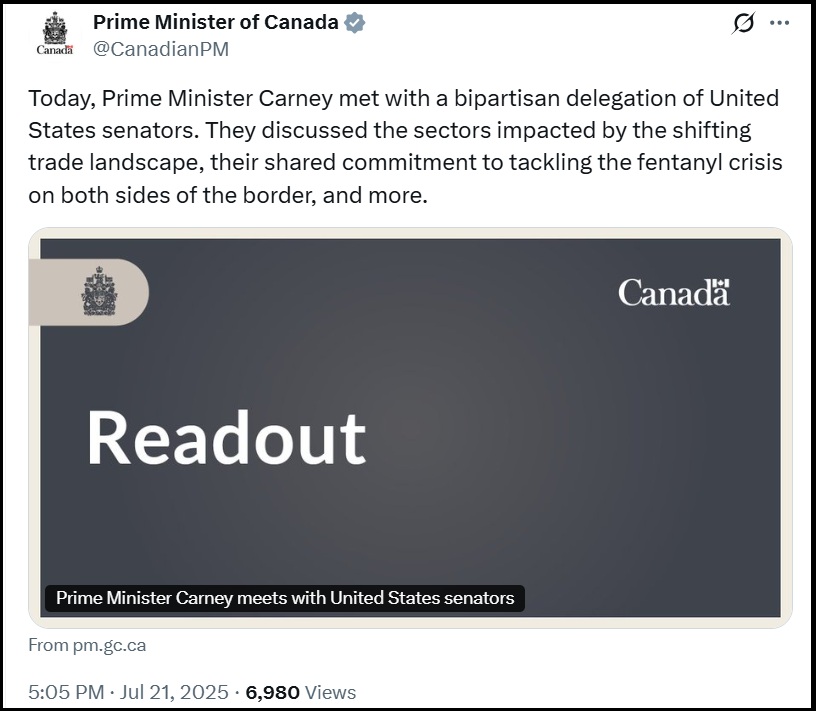
PRESS RELEASE – “Today, the Prime Minister, Mark Carney, met with a bipartisan delegation of United States senators in Ottawa. The Senator for Oregon, Ron Wyden, the Senator for Alaska, Lisa Murkowski, the Senator for New Hampshire, Maggie Hassan, and the Senator for Nevada, Catherine Cortez Masto, were present.” (more)
The 35% tariffs against Canada are scheduled to go into effect on August 1st.
As noted by President Trump in his remarks during Prime Minister Mark Carney’s visit to the White House, Trump plans to renegotiate the USMCA and end the trilateral agreement in favor of two bilateral trade deals.
During the Oval Office meeting President Trump said, “As you know [USMCA] terminates fairly shortly. It gets renegotiated fairly shortly.” Then the biggest statement, “This was a transitional deal, and we’ll see what happens, we’re going to start renegotiating that”… “I don’t know if it serves a purpose anymore.” …. “And the biggest purpose it served was, we got rid of NAFTA.”
President Trump is going to exit the trilateral USMCA in favor of two distinctly different bilateral trade agreements between the U.S and Mexico, and the U.S and Canada. The only consideration now is the timing. President Trump is 100% focused on the BIG ECONOMIC PICTURE; it’s not about the politics, it’s all about the economics.
Posted originally on Jul 21, 2025 by Martin Armstrong
Vladimir Putin has 580 billion additional reasons not to end the war. German Chancellor Friedrich Merz entered office with a clear intent to usher Germany into World War III. Not only has Merz mobilized troops and the largest military spending package in modern European history, but he is now demanding that Russia pay reparations amid an ongoing conflict.
“Growth, market freedom, our energy security, as well as the extraordinary strain on our social systems caused by war refugees: all of this is linked to the war in Ukraine,” Merz said ironically, as Europe would not have these problems if it didn’t embed itself in the middle of the conflict. “The reconstruction of Ukraine is not just a matter of the future… Day after day, we are ensuring that life in Ukraine can continue despite all of Russia’s daily and especially nightly attacks.”
Merz believes that Russia must pay at least 500 billion euros ($580 billion USD) in reparations. His comments were made at the same July 10 conference where European Commission President Ursula von der Leyen announced “the largest equity fund globally to support (Ukraine’s) reconstruction” worth 2 trillion euros.
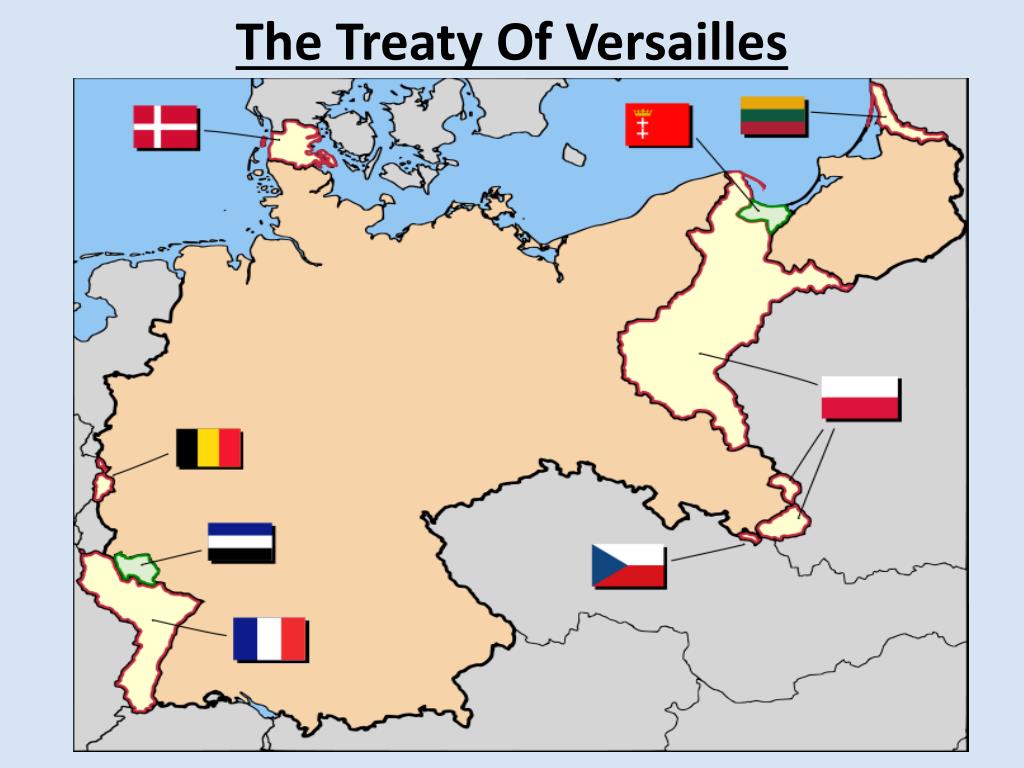
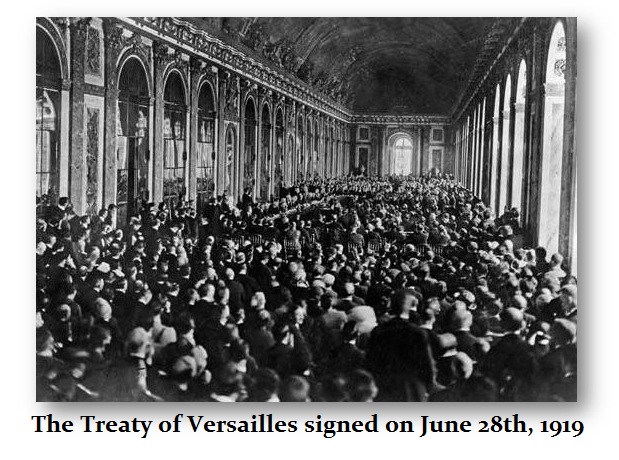
The G7 nations have already seized $300 billion in foreign Russian assets. Perhaps Merz forgets the repercussions of the Treaty of Versailles after the first World War in 1919. France and Britain, still obsessed with revenge for their own wartime losses, forced Germany to accept total responsibility for a war that was triggered by a single assassination in the Balkans. Germany was stripped of territory, disarmed, and then burdened with reparations so astronomical they could never be repaid.
The German people were humiliated, starving, and desperate. Hyperinflation destroyed their savings and created a depression felt through the generations. The Weimar Republic was a puppet regime enforced by foreign powers. That anger fermented into nationalism, and history repeated — as it always does. This is precisely what gave rise to Adolf Hitler, and if the people think Vladimir Putin is malicious, they are ill-prepared for the hardliners standing behind him, eagerly awaiting their opportunity to take on NATO. Putin has been attempting to end this conflict, but has been prevented from doing so by the Western neocons who removed the possibility of peace.
When you back a nation into a corner, destroy its economy, and humiliate its people, you guarantee a future war. The Russia-Ukraine war has been escalating and neocons like Merz are ensuring that the embers ignite until a fire roars through Russia and Ukraine before engulfing the rest of the world.
I have created this site to help people have fun in the kitchen. I write about enjoying life both in and out of my kitchen. Life is short! Make the most of it and enjoy!
This is a library of News Events not reported by the Main Stream Media documenting & connecting the dots on How the Obama Marxist Liberal agenda is destroying America




 Centinel2012