Armstrong Economics Blog/Corruption
Re-Posted Jun 14, 2019 by Martin Armstrong
QUESTION: With the private vs public debt and interest rate discussion, nobody is mentioning things like government legislation to forcing people to buy government debt. For example 401’s, IRA’s… must have or be in government debt.
Your thoughts?
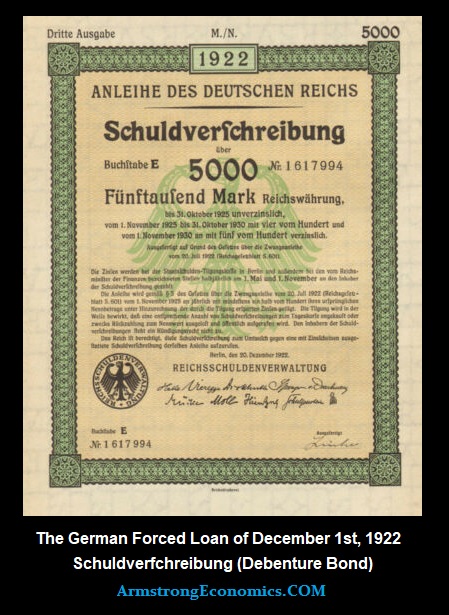
ANSWER: Governments have often resorted to forced loans. When Italy was in trouble, they took 90-day paper and converted it to 10-year paper. Most people are clueless about the German hyperinflation. They assume it was due to the government printing money. The spark was December 1922 when the government confiscated 10% of everyone’s property and handed them bonds as a forced loan. Confidence completely collapsed at that moment.
This is all part of the process of the decline in confidence in the government. This is why the system is unsustainable. We will be heading into a great monetary crisis very soon.
U.S. Identifies Iran as Responsible for Two Tanker Ship Attacks in Gulf of Oman Today…
June 13, 2019
In the early hours of this morning, two vessels transiting through the Strait of Hormuz towards the Indian Ocean were attacked by unknown entities causing hull breach explosions that rendered the vessels inoperable. The sailors were evacuated.
The Norwegian owned “Front Altair” (cargo: 75,000 tonnes of naphtha), and the Japanese owned “Kokuka Courageous” (cargo: 25,000 tonnes of methanol) were struck in the Gulf of Oman; the same strategic sea lane where four oil vessels were sabotaged last month.
Secretary of State Mike Pompeo has identified Iran as the government responsible for the attacks. [Press Conference Video]
.
No doubt Iran feels empowered to attack Western interests partly due to the support expressed by former Secretary of State Kerry and former President Obama. Both have created an open window for Iran by undermining President Trump.
(Via Daily Mail) […] The Altair had been loaded at a port in the Gulf with a petroleum product known as naphtha, and was on its way to the Far East.
The Altair’s cargo was worth more than $30million, according to estimates from trade sources.
Meanwhile, a shipping broker said the Kokuka, which flies under Panama’s flag, had suffered an explosion after an ‘outside attack’ which may have involved a magnetic mine.
The company operating the ship, which was heading to Singapore, said the attack had caused ‘damage to the ship’s hull starboard side.’
The Kokuka’s 21 crew were picked up by the nearby Vessel Coastal Ace, leaving the tanker adrift and empty after an engine room fire.
One of the crew members was slightly injured in the incident and received first aid on board the Coastal Ace, while the Kokuka’s methanol cargo is said to be intact. (read more)
The oil tanker attacks came as Japanese Prime Minister Shinzo Abe (left) met Iran’s supreme leader, Ayatollah Ali Khamenei in Tehran today
AOC & Buffett Think Alike?
Armstrong Economics Blog/Politics
Re-Posted Jun 11, 2019 by Martin Armstrong
Alexandria Ocasio-Cortez (AOC) attacked corporate politics, influence, and greed. She echoed Warren Buffett who recently told shareholders that if a bank needs a government bail-out, the responsible CEO and his or her spouse should lose their net worth. Interesting comment on Buffett’s part when he lent $5 billion to Goldman Sachs to prevent their bankruptcy during the 2008-2009 crash. It seems Buffett does not practice what he preaches
The Future – Which Door to Enter
Armstrong Economics Blog/Economics
Re-Posted Jun 9, 2019 by Martin Armstrong
QUESTION: Good day Mr. Armstrong, I have been a student of yours since 2001 and am always amazed at your work. I am not one that can afford to go to your seminars, but would love to know all that you discuss there. Could you write a book about what all is discussed there?
My question is, I am in the process of moving from California, due to politics and their financial mismanagement. I am in escrow, but I am afraid of where to put my money from the sale of my home, it is my retirement, as I have put all of my savings into the home over the years. I plan on moving to a location with lower taxes and lower home prices and purchasing a home much less in price and save the rest of the money in case social security runs out. Are banks going to be a safe place to put money, or maybe a high paying dividend stock, or should I just bury it in my new homes backyard?? This is really quite frightening as I do not want to be forced out into the streets as a poor person after working hard for 65 years! We are very, very frugal so do not need a lot of income, just do not want to loose what we have. Thank you so much, and sorry to bother you, as I know you are very busy.
Bill
ANSWER: U.S. banks will probably be safe in general for the next two years. Just anything you put in a bank, do not lock it in long-term. Stay short-term — 2021 is where things start to go nuts.
As far as good equities, we will be in a position to look at that next year. As far as places, look at Texas or Florida. Florida has the better place for housing (homestead). Also, there is a high concentration of retired people in Florida. That provides greater resistance to dramatic changes
China – the Financial Capital of the World After 2032
Armstrong Economics Blog/China
Re-Posted Jun 8, 2019 by Martin Armstrong
QUESTION:
Marty,
You keep stating that the center of Finance will move to China. However, the world distrusts China, rightly so. How can they become the Financial Center if no one trusts them?
RLK
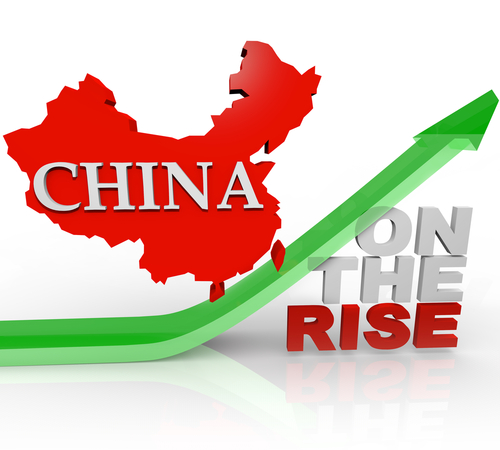
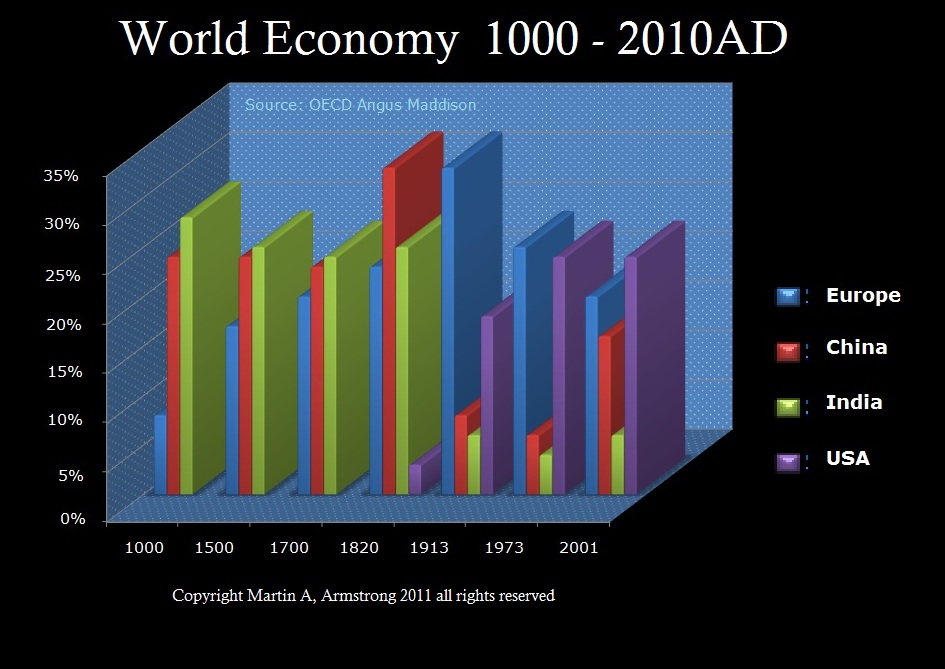
ANSWER: That will come only after 2032. Keep in mind, the West will be tested and the failed system of continually borrowing is why the confidence in the West will break. After that, it will become the lesser of two evils. The financial capital of the world always migrates. The British never saw how America could take their crown. Throw in a world war, and capital moves. I have dealt with this issue in detail. That report is available (see the Store for “China on the Rise”). It is available in printed form or in digital forma
Schengen Agreement Dead – Killed by Refugees
Armstrong Economics Blog/European Union
Posted Jun 6, 2019 by Martin Armstrong
COMMENT: Dear Martin,
you are once more right with your view’s. EU’s Schengen agreement is going to die. From May 1st on, anybody in the EU has to carry an “A1 Certificate” if he or she is going on a business trip to avoid “social insurance fraud”. If not, you could be fined by up to 10.000,00 Euro.
Best regards
AC
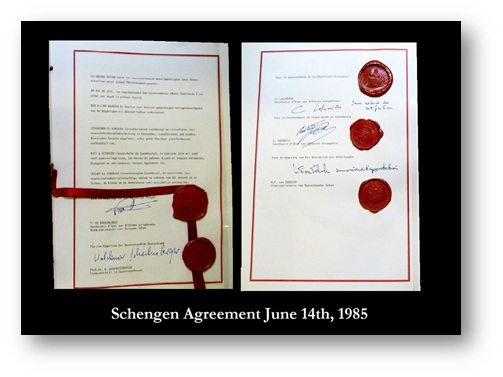
REPLY: The cornerstone of the EU was to be the freedom of movement to create the United States of Europe. This became known as the Schengen Agreement to create a borderless Europe signed on June 14, 1985, between five of the then ten member states of the EU. It proposed the gradual abolition of border checks at the signatories’ common borders. Measures proposed included reduced speed vehicle checks, which allowed vehicles to cross borders without stopping, allowing residents in border areas the freedom to cross borders away from fixed checkpoints, and the harmonization of visa policies. However, this Schengen Agreement did not come into effect until March 26, 1995 (1995.232). It eliminated border checks among its members and allowed foreign visitors to travel throughout the area using one visa.
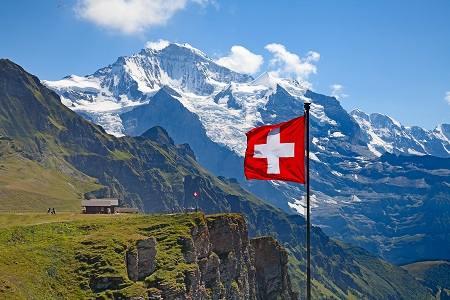
Britain has been preventing those non-EU citizens with Schengen visas from freely crossing the border into Britain. Someone from Ukraine with an EU visa cannot travel to Britain and subsequently to many former British Commonwealth states, such as the Bahamas, even for a vacation. Switzerland also is experiencing an anti-EU immigration trend.
This is what they always do. They cannot repeal the Schengen Agreement, for that would defeat the entire premise of the EU in creating the United States of Europe. They are using health insurance to prove you are really a citizen or legitimate resident of your country. It is always the same — wordsmithing. This is not my simple opinion. The Schengen Agreement was dead once they allowed the refugees into Europe.
The Endless Hunt for Taxes
Armstrong Economics Blog/The Hunt for Taxes
Re-Posted Jun 4, 2019 by Martin Armstrong
QUESTION: Martin – Just read your latest on Lewrockwell.com, regarding taxation. I think the most basic, simplistic explanation you can put forward about income taxation, now in 2019, is that governments are taking directly out of our paychecks, while at the same time, printing money like deranged lunatics. Why tax my labor income if you (the government / CB’s) can just print as much fiat as they need? What do they need to dip into my paycheck for 30% before the money even hits my bank account, when they can just print what they need. Maybe it is because of their greed and lack of morality know no bounds. We are being ruled by tyrannical, Marxist inspired lunatics.
CN
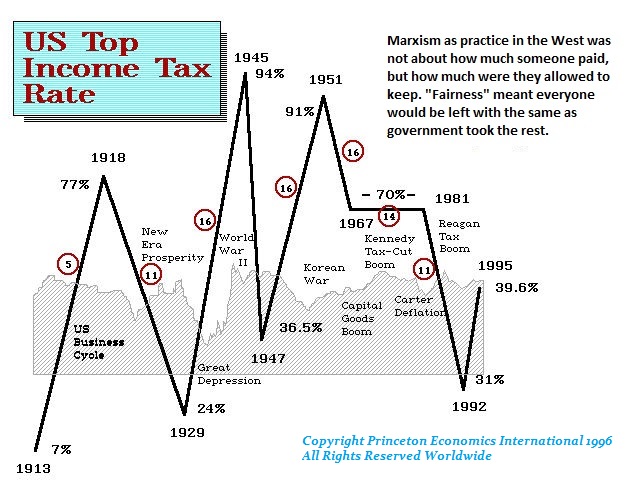
ANSWER: That is my point. When money was precious metals, then taxation made sense. However, most taxes are initially implemented with such modest amounts like 2% for the first income tax in Britain back in 1799. People accept such modest levels. Even the American Revolution was fought over a tax of about 7%. Today, under the influence of Marx, taxes have risen to insane levels. A woman may have fought for the right to work with the Suffrage Movement, but today, it now takes two incomes to support a family because of the levels of taxation. The burden of direct taxation is seriously reducing our standard of living.
Taxes should be fixed because they can raise taxes at will. This is why you also have lobbyists who then fund their campaigns for loophole
The Country The World Says Doesn’t Exist
Swiss Occupational Pension Plan Turns Out to be a Ponzi Scheme?
Armstrong Economics Blog/Pension Crisis
Re-Posted May 31, 2019 by Martin Armstrong
In Berne, Switzerland, there has been a redistribution in occupational pensions which has revealed that it too is not a funded pensions plan as people previously assumed. For at least twelve years, pension fund monies have flowed from the employed to the pensioners. The amount has reached a tremendous scale with funds in the order of more than 90 billion francs being redistributed during these years. This is the result of data collected by PPC Metrics, the pension advisor for the SonntagsZeitung.
The AHV pension scheme is heavily redistributed in the pay-as-you-go system, but the occupational pension schemes should have been fully funded. With low-interest rates, the presumed fully funded occupational pension plan is now also operating as a Ponzi scheme. The prospect of future payments has been called into question
UBS to Begin Charging Fees to Withdraw Cash
Armstrong Economics Blog/The Hunt for Taxes
Re-Posted May 31, 2019 by Martin Armstrong
UBS will charge a 2 franc fee for withdrawing cash at the bank counter beginning in July, be it a withdrawal in CHF from a UBS private account or from a UBS current account. Thus, UBS stands (at least for now) pretty much alone. A survey of various institutions revealed that hardly any banks charge cash for cash withdrawals at the counter. One of the few exceptions is the Zürcher Kantonalbank (ZKB). Exceptions to this rule are customers with a private or savings account of the “ZKB inclusive base” package. These customers pay 5 francs for payments at the counter in francs or foreign currencies. However, industry observers expect other banks to follow UBS’s example soon, given the pressure on earnings.