April 22, 2019
The 2019 Easter White House celebration takes place today with the 2019 Easter Egg Roll event. President Trump and First Lady Melania start the festivities:


The 2019 Easter White House celebration takes place today with the 2019 Easter Egg Roll event. President Trump and First Lady Melania start the festivities:
Published on Apr 22, 2019
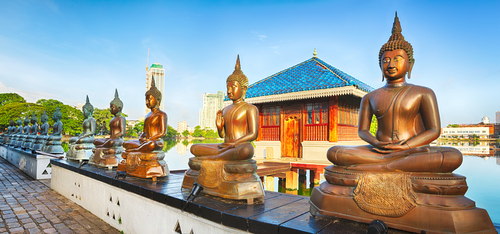
At least 207 people were killed and hundreds more injured on Easter Sunday in Sri Lanka. Suicide bombers sought to kill Christians in a coordinated attack simultaneously targeting churches and luxury hotels. The explosions took place miles apart, and the targets included three Christian churches holding Easter services and three hotels. In addition to those who were killed, at least 450 were wounded, according to officials. Most, if not all of the explosions, were detonated by suicide bombers, according to the Sri Lankan Defense Ministry.
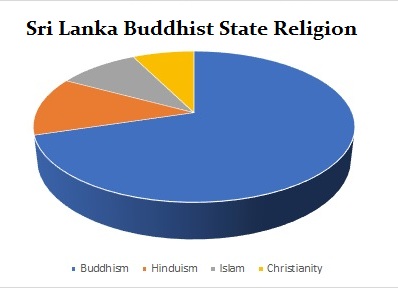
The more interesting aspect concerning this terrorist act is the fact that Sri Lanka is a Buddhist country, not Islam. The attack on Christians in a Buddhist country by Islamic terrorists raises the deep concerns that Christians will become targets anywhere and it would seem that this is perhaps deliberately trying to create a religious war.
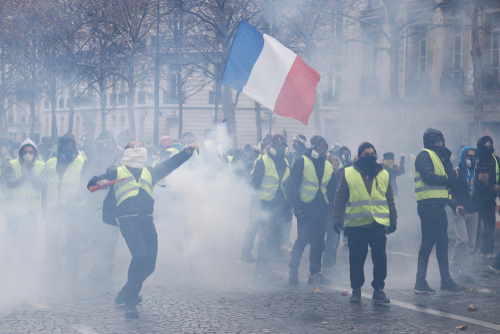
The Yellow Vest movement is turning into a major confrontation demanding Macron leave office. The French police are now protesting after 28 officers have committed suicide so far in 2019. This is double the amount recorded at the same time last year. While the press tends to focus on complaints of a lack of resources, unpaid overtime, and inefficient management, they are not speaking about the social isolation the police are starting to experience as they defend the government against the people.
I have written before about the Nika Revolt of 532AD where the local police and troops refused to defend the emperor Justinian. He almost fled Constantinople until his wife directed him to call in an army which was not Greeks. They came into the city and slaughtered some 30,000 protesters. What the French police are experiencing is this very same conflict. This is why Brussels wants a European Army for they would have no conflict with the French people if they are not French. The police may yet turn against the French government and if that happens, then we have a French Revolution. The revolution in Ukraine turned when the police saw that Yanukovich brought in Russians to defend himself. Then and only then did the Ukrainian police turn against Yanukovich and he had to flee. This is standard developments throughout all historical civil unrest movements defining the line when crossed it becomes a revolution.
.
Gospel LK 24:1-12
At daybreak on the first day of the week
the women who had come from Galilee with Jesus
took the spices they had prepared
and went to the tomb.
They found the stone rolled away from the tomb;
but when they entered,
they did not find the body of the Lord Jesus.

While they were puzzling over this, behold,
two men in dazzling garments appeared to them.
They were terrified and bowed their faces to the ground.
They said to them,
“Why do you seek the living one among the dead?
He is not here, but he has been raised.
Remember what he said to you while he was still in Galilee,
that the Son of Man must be handed over to sinners
and be crucified, and rise on the third day.”
And they remembered his words.
Then they returned from the tomb
and announced all these things to the eleven
and to all the others.
The women were Mary Magdalene, Joanna, and Mary the mother of James;
the others who accompanied them also told this to the apostles,
but their story seemed like nonsense
and they did not believe them.
But Peter got up and ran to the tomb,
bent down, and saw the burial cloths alone;
then he went home amazed at what had happened.
Easter is historically the most confusing holiday. Besides the calculation being complex, the traditions are also a blend of various different cultures. I have written how New Year’s Eve is really a Roman tradition celebrating the god Janus who was pictured with two faces one looking back and the other to the future. Christmas is December 25th was selected because it was a pagan festival for the sun god Sol. Today, like Veteran’s Day, the original meaning fades into history and people just enjoy the day off. More or less, December 25th was just embedded in the culture so it was easier to just rename it Christmas than outlaw the holiday.
 Then there is the tradition of Easter. Where does the word even come from? Was this too a pagan ritual transformed into Christianity? The holiday was originally called Eostre as late as the 8th century. It is mentioned by Saint Bede who was an English Benedictine monk at the monastery in the Kingdom of Northumbria of the Angles. He noted the native Anglo-Saxon calendar in De Temporum Ratione (On the Reckoning of Time) had named April as Eostremonath after the goddess Eostre who he tells us she was associated with the spring and was a time when “feasts were celebrated” in her honor.
In Germany, there was Jacob Grimm, known for his fairytales. He seems to have borrowed the Anglo-Saxon goddess calling her Ostara explaining that she was “the divinity of the radiant dawn, upspringing light, a spectacle that brings joy and blessing.” In Christianity, Easter is preceded by Lent, which was to reflect a period of fasting in memory of Christ’s 40 days in the wilderness. Nonetheless, in medieval times, this was also a period of ending winter when the food stored from the summer was naturally running low. The spring fever we tend to feel is also felt by animals and this is when hens to start laying and cows begin to give milk. Easter was a natural feast celebrating the end of winter’s hardship.
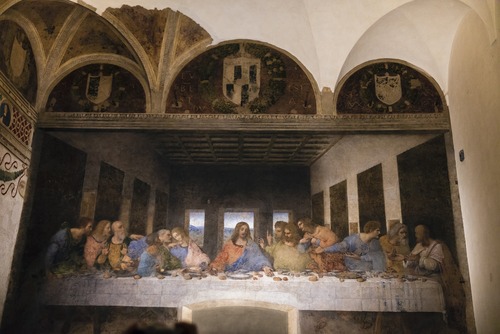
The Last Supper by Leonardo da Vinci in the refectory of the Convent of Santa Maria delle Grazie
We know that Easter is associated with the lamb which comes from Jewish tradition at Passover and of course, Jesus and his disciples celebrated with their Last Supper. The date is also tied to the Jewish festival of Passover. So Easter is not a pagan ritual historically as was Christmas. But it is still a blend of cultures that seem to have all come together to form what we call Easter retaining the Anglo-Saxon goddess name.
Now we have to understand where did the bunny laying eggs come from or the traditional Easter Egg hunt that they even practiced on the lawn of the White House. The earliest documented mention of decorating eggs for Easter comes in 1290 England. There, buried in the household accounts of King Edward I for 1290, we discover records for the purchase and decoration of 450 eggs that were dyed and some were gilded with gold probably for the special guests. The English tradition was for children to play with their “pace-eggs” by rolling them on the ground before eating them. Hence, the Easter eggs are rolled on the lawn of the White House, which seems to be a tradition that began in 1878.
The tradition of a bunny rabbit seems to have begun in Bavaria (southern Germany). There appears to be the origin of a hunt for children to find eggs that were hidden in the garden. They were supposed to have been placed there by a rabbit or hare. There are some accounts dating back to the early 17th century where they also eat the rabbit. This may be part of the spring feast. Accounts are not very clear from that period in time. But we know there was a hunt looking for eggs placed there by a rabbit, which they may have eaten as well. We do know that in England they would hunt rabbits and eat them for the spring which dates back to the 16th century.
An Easter tradition of eggs makes sense insofar as it was the symbol of life. The rabbit seems to be just the traditional meal after winter. Thus, Easter is a curious blend of customs that are connected with celebrating spring and the end of a hard winter, with the resurrection of Christ and thus the egg being life, the lamb is the sacrifice, and the rabbit was just a good meal.
 Today we observe Good Friday, the day of the death of Jesus. Many Christian Churches have different ways of observation, to prepare us for the coming resurrection of the Lord on Easter Sunday. Today, the sacrifices we have made during Lent culminate in our internalization of the great offering of Christ’s life. If we have been diligent in our Lenten preparations, Good Friday hits us with a power and force that brings us, literally and figuratively, to our knees with the grasp of what Jesus poured out for us. It becomes personal, a tiny sliver of the cross is buried in our heart. And so each year, we find that we give ourselves over to Christ just a little more through this time of penance and reflection.
It is our wish here in the Tree that you all, so dear to us, and to each other, have a blessed and holy weekend, this most holy time of the year. May the lamb’s Good Friday sacrifice lead you to the joy we rightfully claim on Easter Sunday. This post mentions some things from my Catholic “language” or viewpoint, if you will. I would love to have you share some of the traditions and customs from your church or family with us. Are there special observations and services at your church this weekend?
The Easter Triduum, the marking of the days of Jesus’ passion and resurrection, the most important time of the church year, begins with the evening Mass of Holy Thursday, reaches its high point in the Easter Vigil, and closes on Easter Sunday evening. After preparing during the days of Lent, we celebrate these holiest of days in the Church year.
From John, Chapter 19:
Then Pilate tried to release him, but the Jewish leaders told him, “If you release this man, you are no friend of Caesar’s. Anyone who declares himself a king is a rebel against Caesar.
At these words Pilate brought Jesus out to them again and sat down at the judgement bench on the stone paved platform. It was now about noon of the day before Passover.
And Pilate said to the Jews, “Here is your King!”
“What? Crucify your king?” Pilate asked. “We have no King but Caesar,” the chief priests shouted back.
So they had him at last, and he was taken out of the city, carrying his cross to the place known as “The Skull,” in Hebrew, “Golgotha.” There they crucified him and two others with him, one on either side, with Jesus between them. And Pilate posted a sign over him reading “Jesus of Nazareth, the King of the Jews.” The place where Jesus was crucified was near the city; and the signboard was written in Hebrew, Latin, and Greek, so that many people read it.
Then the chief priests said to Pilate, “Change it from ‘The King of the Jews’ to ‘He said, I am King of the Jews.’ ”
Pilate replied, “What I have written, I have written. It stays exactly as it is.”
 When the soldiers had crucified Jesus, they put his garments into four piles, one for each of them. But they said, “Let’s not tear up his robe,” for it was seamless. “Lets throw dice to see who gets it.” This fulfilled the scripture that says, “They divided my clothes among them, and cast lots for my robe.” So that is what they did.
Standing near the cross were Jesus’ mother, Mary, his aunt, the wife of Cleopas, and Mary Magdalene. When Jesus saw his mother standing there beside me, his close friend, he said to her, “He is your son.”
And to me he said, “She is your mother.” And from then on, I took her into my home.
Jesus knew that everything was now finished, and to fulfill the scriptures said, “I’m thirsty.” A jar of sour wine was sitting there, so a sponge was soaked in it and put on a hyssop branch and help up to his lips.
When Jesus had tasted it, he said, “It is finished,” and bowed his head and dismissed his spirit.

Today we would like to invite you to share with us your reflections, your thoughts, your favorite readings on Good Friday. We sincerely hope that you will join in this conversation as a sharing of our common faith, an active searching, united in asking in this small way for God’s blessing upon His world this Easter Triduum. So many of us see change as something that is all or nothing. We postpone the changes we need to make in our lives to improve our relationship with God because we aren’t mentally “ready” to make that leap. In reality, our path to God is made in tiny steps, small differences, the little things that take us one step closer in faith.
We ask you to join us, help us, take that step. Together and seperately, may we aid each other through our words and prayers, to make this Good Friday an opening for the light that is Christ to penetrate our darkness.
I would also like to share a paragraph from The Catechism of the Catholic Church.
In Her Magisterial teaching of the faith and in the witness of her saints, the Church has never forgotten that “sinners were the authors and the ministers of all the sufferings the Divine Redeemer endured.” Taking into account the fact that our sins affect Christ himself, the Church does not hesitate to impute to Christians the gravest responsibility for the torment inflicted upon Jesus, a responsiblity with which they have all too often burdened the Jews alone.
I have created this site to help people have fun in the kitchen. I write about enjoying life both in and out of my kitchen. Life is short! Make the most of it and enjoy!
De Oppresso Liber
A group of Americans united by our commitment to Freedom, Constitutional Governance, and Civic Duty.
Share the truth at whatever cost.
De Oppresso Liber
Uncensored updates on world events, economics, the environment and medicine
De Oppresso Liber
This is a library of News Events not reported by the Main Stream Media documenting & connecting the dots on How the Obama Marxist Liberal agenda is destroying America
Australia's Front Line | Since 2011
See what War is like and how it affects our Warriors
Nwo News, End Time, Deep State, World News, No Fake News
De Oppresso Liber
Politics | Talk | Opinion - Contact Info: stellasplace@wowway.com
Exposition and Encouragement
The Physician Wellness Movement and Illegitimate Authority: The Need for Revolt and Reconstruction
Real Estate Lending


