Posted originally on the conservative tree house on August 31, 2022 | Sundance
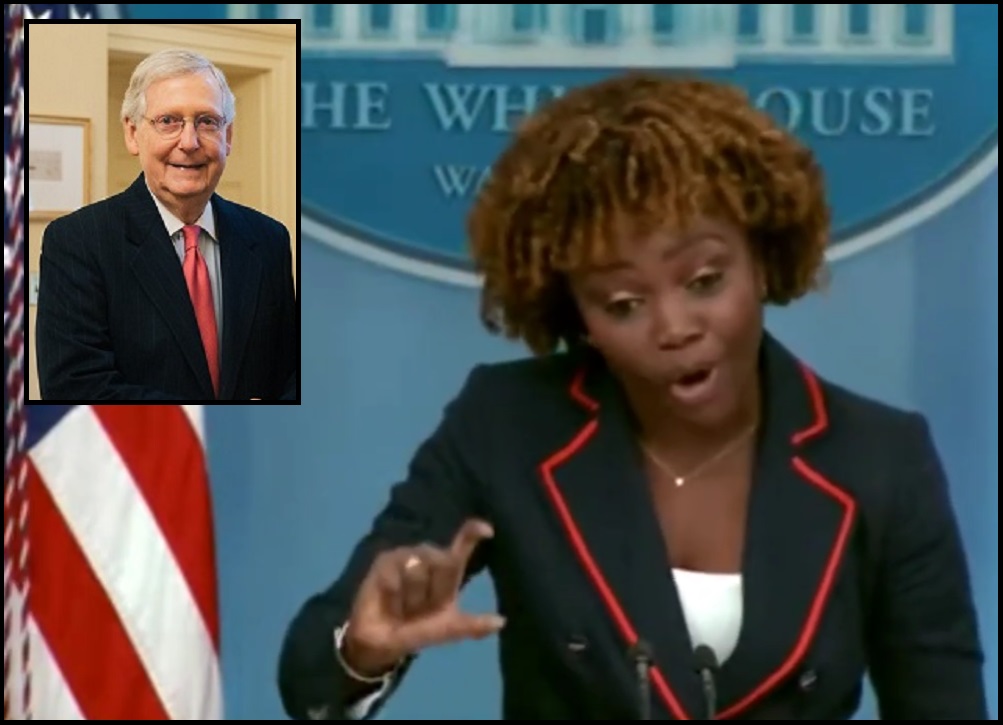
Mitch McConnell and Joe Biden are in agreement on the main midterm election issue. Their synergy leads to the current state of our political dynamic in the United States, as expressed moments ago in the official position of the Biden administration from the White House. Also, please note Press Secretary Karine Jean-Pierre read the sentences she just stated for the public record. WATCH:
…”The way that he sees it, the MAGA republicans are the most energized part of the republican party. Uh, that extreme, this is an extreme threat to our democracy, to our freedom, to our rights. They just don’t respect the rule of law. You heard that from the President. They are pursuing an agenda that takes away people’s rights“…
The worst aspect of this is the inability of people who are voting republican, so see that statement from the White House as in total alignment with Mitch McConnell and the professional republican political system. It’s not just the opinion of Joe Biden, the mental trap people fall into is not recognizing this anti-MAGA perspective, is the opinion held within the RNC and Republican political apparatus.
Both wings of the UniParty view President Trump’s economic nationalism and America-First agenda, as a threat to their affluence, influence and power. Both wings of the Uniparty see Trump supporters as the “extreme threat.” One wing is openly stating it, the other wing is working diligently -and deceptively- on the same agenda.
Once you accept the republican apparatus is intent on removing that threat, then you begin to see who they are constructing in the background to remove it. However, it is in the accepting of that baseline where most voters get so uncomfortable, they will deny it at all costs in order to retain their stability. And I do mean, deny it at all costs.
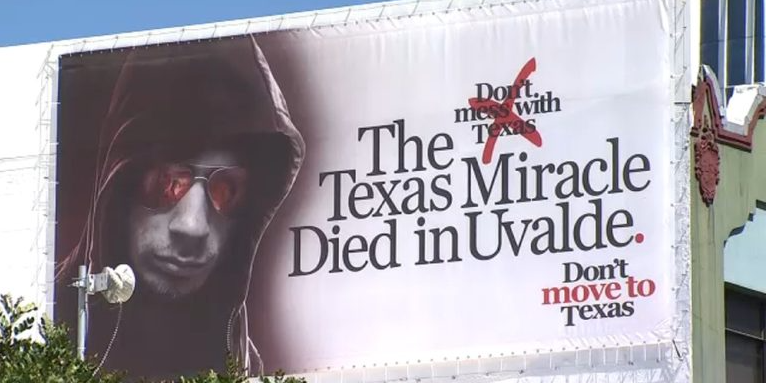
“The Texas miracle died in Uvalde,” the billboards states. It is in bad taste to use a school shooting to promote an agenda. The gunman was apprehended by a Texas resident with a gun. The police failed those children. None of this has anything to do with California’s policies; crime is not as prominent in Texas.
Between 2020 and 2021, over 25,000 fled California to Texas, according to the US Census data. Overall, over 360,000 people left California in 2021. Most cite that California has become completely unaffordable, with the median home price at about $797,470. Companies have fled California since the beginning of the pandemic to tax-friendly states. They lost huge job creators and revenue makers such as Facebook, Twitter, Dropbox, SpaceX, and Tesla, to name a few. Another less discussed reason is the intense woke rhetoric spewed by Newsom and others. Theft has basically become legal. Despite the beautiful scenery and weather, people simply do not want to live in the Golden State for a plethora of reasons.
Posted originally on the conservative tree house on August 29, 2022 | Sundance
During his opening monologue tonight, Tucker Carlson becomes the first mainstream pundit to point out the lies in the central bank argument.
The federal reserve and EU central banks claim they are raising interest rates to stop inflation by slowing demand. A demand side approach. However, it isn’t demand driving inflation; it’s the cost of energy driving inflation. That’s a supply side issue.
The central banks cannot admit what they are doing, or people would catch on. They are intentionally reducing economic activity in order to support having scarce energy production. WATCH:
Posted originally on the conservative tree house on August 29, 2022 | Sundance
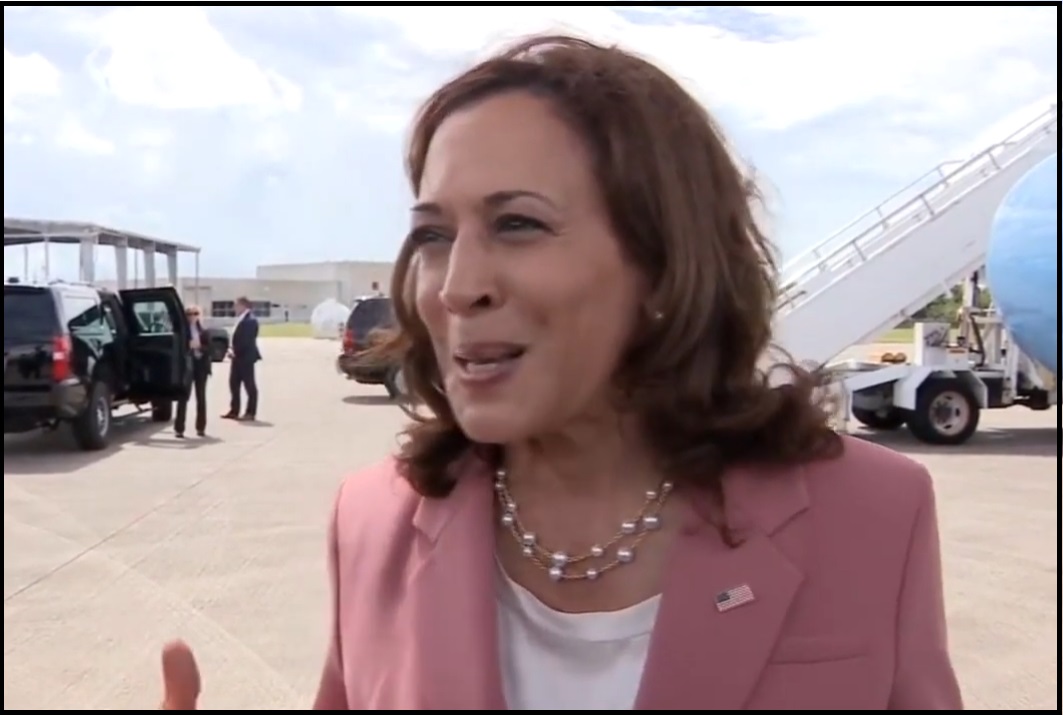
Kamala Harris was asked today about who will be paying for the massive student loan forgiveness and bailout program. She never answered the question but chuckled her way through a social justice and equity response, or something…. WATCH:
Posted originally on the conservative tree house on August 28, 2022 | Sundance
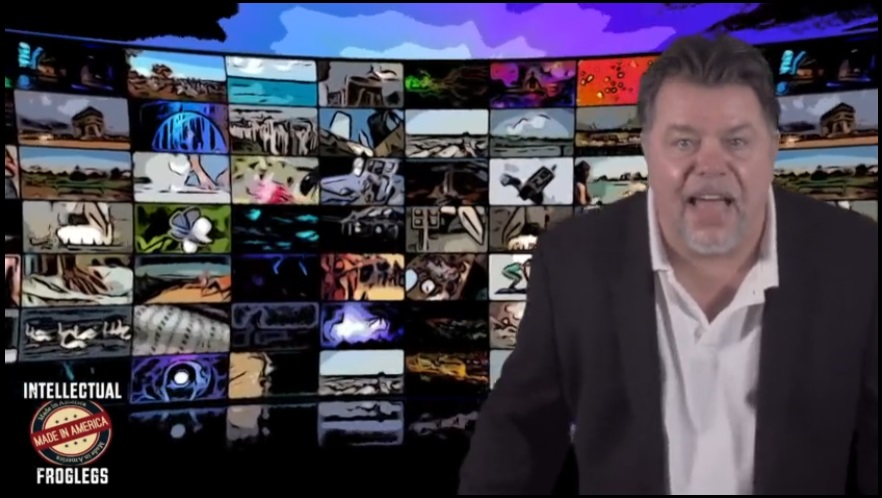
Comrades, the dissident messenger known as Joe Dan Gorman has surfaced again, just long enough to transmit another Tokyo Rose’ broadcast in a coded frequency only receivable by patriots with a funny bone. This natural coded messaging ensures communists and leftists are incapable of receiving it.
The August edition comes from deep in the underground bunker of the Rebel Alliance. Pull out those super-secret decoder rings, and enjoy the transmission before the deep state satellite interception trucks show up on your driveway…
Posted originally on the conservative tree house on August 26, 2022 | Sundance
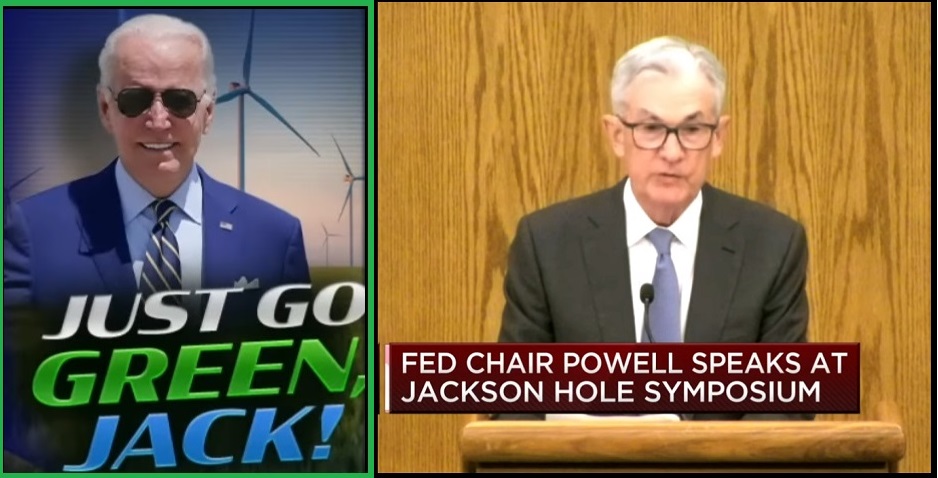
When Chairman Powell says things are really, really going to suck as monetary policy tries to support Biden’s goals to reduce energy supplies, will people believe him?
The agenda of the federal reserve was clearly outlined today in the remarks from Chairman Powell in Jackson Hole, Wyoming. The Fed chair is trying to manage the economic policy transition by reducing economic activity to match intentionally diminished energy supplies. Lowering economic activity drops demand for energy. Unfortunately, as admitted by Powell today, this means a period of “some pain” for Americans as the central banks join together in an effort to lower consumption. WATCH:
What does “some pain” mean? It means lower incomes, higher prices, lowered standards of living and more scarce resources. During this transition to owning nothing and being happy about it, the pain is your wealth being stripped as the economy is intentionally diminished.
We will not be able to afford much; we won’t be able to afford the foods we want; we will not be able to purchase anything except the essentials, and those essentials will cost much more; we won’t be able to vacation, travel, or enjoy recreational activities; we won’t be able to afford any indulgences; but at the end of the process, we will learn to live more meager existences based on lowered expectations needed for sustaining the planet. Pay no attention to the elites who don’t have those concerns, comrade.
[Transcript] – POWELL: “At past Jackson Hole conferences, I have discussed broad topics such as the ever-changing structure of the economy and the challenges of conducting monetary policy under high uncertainty. Today, my remarks will be shorter, my focus narrower, and my message more direct.”
“The Federal Open Market Committee’s (FOMC) overarching focus right now is to bring inflation back down to our 2 percent goal. Price stability is the responsibility of the Federal Reserve and serves as the bedrock of our economy. Without price stability, the economy does not work for anyone. In particular, without price stability, we will not achieve a sustained period of strong labor market conditions that benefit all. The burdens of high inflation fall heaviest on those who are least able to bear them.
Restoring price stability will take some time and requires using our tools forcefully to bring demand and supply into better balance. Reducing inflation is likely to require a sustained period of below-trend growth. Moreover, there will very likely be some softening of labor market conditions. While higher interest rates, slower growth, and softer labor market conditions will bring down inflation, they will also bring some pain to households and businesses. These are the unfortunate costs of reducing inflation. But a failure to restore price stability would mean far greater pain.
The U.S. economy is clearly slowing from the historically high growth rates of 2021, which reflected the reopening of the economy following the pandemic recession. While the latest economic data have been mixed, in my view our economy continues to show strong underlying momentum. The labor market is particularly strong, but it is clearly out of balance, with demand for workers substantially exceeding the supply of available workers. Inflation is running well above 2 percent, and high inflation has continued to spread through the economy. While the lower inflation readings for July are welcome, a single month’s improvement falls far short of what the Committee will need to see before we are confident that inflation is moving down.
We are moving our policy stance purposefully to a level that will be sufficiently restrictive to return inflation to 2 percent. At our most recent meeting in July, the FOMC raised the target range for the federal funds rate to 2.25 to 2.5 percent, which is in the Summary of Economic Projection’s (SEP) range of estimates of where the federal funds rate is projected to settle in the longer run. In current circumstances, with inflation running far above 2 percent and the labor market extremely tight, estimates of longer-run neutral are not a place to stop or pause.
July’s increase in the target range was the second 75 basis point increase in as many meetings, and I said then that another unusually large increase could be appropriate at our next meeting. We are now about halfway through the intermeeting period. Our decision at the September meeting will depend on the totality of the incoming data and the evolving outlook. At some point, as the stance of monetary policy tightens further, it likely will become appropriate to slow the pace of increases.
Restoring price stability will likely require maintaining a restrictive policy stance for some time. The historical record cautions strongly against prematurely loosening policy. Committee participants’ most recent individual projections from the June SEP showed the median federal funds rate running slightly below 4 percent through the end of 2023. Participants will update their projections at the September meeting.
Our monetary policy deliberations and decisions build on what we have learned about inflation dynamics both from the high and volatile inflation of the 1970s and 1980s, and from the low and stable inflation of the past quarter-century. In particular, we are drawing on three important lessons.
The first lesson is that central banks can and should take responsibility for delivering low and stable inflation. It may seem strange now that central bankers and others once needed convincing on these two fronts, but as former Chairman Ben Bernanke has shown, both propositions were widely questioned during the Great Inflation period.1 Today, we regard these questions as settled. Our responsibility to deliver price stability is unconditional. It is true that the current high inflation is a global phenomenon, and that many economies around the world face inflation as high or higher than seen here in the United States.
It is also true, in my view, that the current high inflation in the United States is the product of strong demand and constrained supply, and that the Fed’s tools work principally on aggregate demand. None of this diminishes the Federal Reserve’s responsibility to carry out our assigned task of achieving price stability. There is clearly a job to do in moderating demand to better align with supply. We are committed to doing that job.
The second lesson is that the public’s expectations about future inflation can play an important role in setting the path of inflation over time. Today, by many measures, longer-term inflation expectations appear to remain well anchored. That is broadly true of surveys of households, businesses, and forecasters, and of market-based measures as well. But that is not grounds for complacency, with inflation having run well above our goal for some time.
If the public expects that inflation will remain low and stable over time, then, absent major shocks, it likely will. Unfortunately, the same is true of expectations of high and volatile inflation. During the 1970s, as inflation climbed, the anticipation of high inflation became entrenched in the economic decisionmaking of households and businesses. The more inflation rose, the more people came to expect it to remain high, and they built that belief into wage and pricing decisions. As former Chairman Paul Volcker put it at the height of the Great Inflation in 1979, “Inflation feeds in part on itself, so part of the job of returning to a more stable and more productive economy must be to break the grip of inflationary expectations.”2
One useful insight into how actual inflation may affect expectations about its future path is based in the concept of “rational inattention.”3 When inflation is persistently high, households and businesses must pay close attention and incorporate inflation into their economic decisions. When inflation is low and stable, they are freer to focus their attention elsewhere. Former Chairman Alan Greenspan put it this way: “For all practical purposes, price stability means that expected changes in the average price level are small enough and gradual enough that they do not materially enter business and household financial decisions.”4
Of course, inflation has just about everyone’s attention right now, which highlights a particular risk today: The longer the current bout of high inflation continues, the greater the chance that expectations of higher inflation will become entrenched.
That brings me to the third lesson, which is that we must keep at it until the job is done. History shows that the employment costs of bringing down inflation are likely to increase with delay, as high inflation becomes more entrenched in wage and price setting. The successful Volcker disinflation in the early 1980s followed multiple failed attempts to lower inflation over the previous 15 years. A lengthy period of very restrictive monetary policy was ultimately needed to stem the high inflation and start the process of getting inflation down to the low and stable levels that were the norm until the spring of last year. Our aim is to avoid that outcome by acting with resolve now.
These lessons are guiding us as we use our tools to bring inflation down. We are taking forceful and rapid steps to moderate demand so that it comes into better alignment with supply, and to keep inflation expectations anchored. We will keep at it until we are confident the job is done.” [Transcript End]
While many are praising Biden for maintaining his campaign promise to cancel student debt, others are furious that the costs will be passed on to the taxpayers. Even Mitt Romney accused Biden of bribing voters before the midterms. “Biden’s student loan forgiveness plan may win Democrats some votes, but it fuels inflation, foots taxpayers with other people’s financial obligations, is unfair to those who paid their own way & creates irresponsible expectations,” the perhaps most liberal Republican senator wrote on Twitter.
Under the plan, borrowers earning under $125,000 annually will receive a $10,000 debt cancelation, while Pell Grant recipients will see a $20,000 reduction. The Penn Wharton School conducted a study in which they believe this program will cost the average taxpayer $2,000. The study found:
"We estimate that a one-time maximum debt forgiveness of $10,000 per borrower will cost around $300 billion for borrowers with incomes less than $125,000. This cost increases to $330 billion if the program is continued over the standard 10-year budget window. Eliminating the borrower income limit threshold produces a 10-year cost of $344 billion. Increasing the maximum amount forgiven to $50,000 per borrower increases the total cost to as much as $980 billion."
Yet, this does nothing to prevent predatory lending, albeit dismissing some interest on loans. This does not reinstate Glass Stegall, the provision that Bill Clinton erased to make student debt non-dischargeable in the case of bankruptcy. In fact, Clinton’s top financial advisor, Larry Summers, believes that this measure will increase inflation. “It consumes resources that could be better used helping those who did not, for whatever reason, have the chance to attend college. It will also tend to be inflationary by raising tuitions,” Summers wrote on his Twitter page. He also warned against continuing the moratorium of benefits expected to last until the end of the year.
Some state that we should be happy for those who are receiving relief, but the true culprits are the predatory lenders offering asinine interest rates and the universities that continually raise their fees. It also causes a disconnect between classes as those who chose trade school or blue-collar roles to avoid college fees will not be too fond of this initiative. It certainly will not help America’s plea to recruit more military personnel either. This is a temporary solution to a deeper problem.
President Biden agreed to waste billions on the Democrat-supported Inflation Reduction Act. According to a survey of 1,500 Americans as presented by the Epoch Times, neither Democratic nor Republican citizens believe this expensive act will combat rising prices.
Respondents were asked if they believed that the bulk of the package, the $369 billion set aside for climate change initiatives, would reduce inflation. Only 13% said they believed fighting climate change would combat inflation, while 26% admitted they had no clue. Yet, 38% replied by saying it will increase inflation, and an additional 22% think it will have no impact.
Only 8% of Republicans polled agreed with the act (no voting Republican lawmakers supported the measure), while 23% of Democrats were in favor. Around 68% of Republicans warned that the bill would increase inflation; 40% of Independents agreed, as did 17% of Democrats.
This leads one to believe that the measure would never have passed if the taxpayers had the opportunity to vote on how their money was spent. The Congressional Budget Office admitted that the measure would have a negligible effect on inflation. Currently, American households are paying an additional $717 per month due to inflation. This act will only cause Americans to be treated as criminals by the growing and armed IRS, which is training to use lethal force against civilians. Audits will soar, small and medium businesses will suffer, and no one besides those supporting the Green agenda will benefit from the Inflation [Expansion] Act.
I have created this site to help people have fun in the kitchen. I write about enjoying life both in and out of my kitchen. Life is short! Make the most of it and enjoy!
This is a library of News Events not reported by the Main Stream Media documenting & connecting the dots on How the Obama Marxist Liberal agenda is destroying America





 Centinel2012